
Economy
Succession and Obligation of Leadership


By Jerome-Mario Utomi
Am I a good leader? I do not know and I guess no one else does. The people, the future and history will stand judged and I will accept their judgments no matter what they might be. Nevertheless, I am fully convinced that I am leading my people, not only on the right part but on the only one available -Mohammed bin Rashid Al Maktoum, Vice President and Prime Minister of the United Arab Emirate (UAE).
Presently, the global community is in agreement that Nigeria is blessed with abundant resources –both human and natural. But in spite of these resources, development professionals are concerned that the nation is equally littered with a huge number of ‘coercive’ and selfish leaders as against truly ‘democratic, pace-setting and coaching’ leaders.
Essentially also, Nigerians, particularly the poor masses, are aware of these disappointing performances of their leaders and need no one to remind them. They are visible realities.
Aside from these failures exacerbated by public office holders/policymakers non-recognition that the efficiency of the government does not only affect the performance of the public sector –but affects that of the whole country including the private sector, Nigerians have in the past six years watched the country lie prostrate and diminish socially and economically with grinding poverty and starvation driving more and more men into the ranks of beggars, whose desperate struggle for bread renders them insensible to all feelings of decency and self-respect while the privileged political few continue to flourish in obscene and splendour as they pillage and ravage the resources of our country at will.
Also rings apprehension is the awareness that with less than two years to the expiration of this administration, there is neither a sincere desire among elected officials to engage best minds to help get the answers and deploy the resources we need to move into the future or engineer a sustainable process of generational change in the nation’s leaders structure via recruitment and allocation of rightful leadership positions to, but youthful Nigerians.
From the above realities, the following questions may be asked; what is the obligation of leadership in any given society, state or nation? What is giving a boost to Nigeria’s poor leadership that is notoriously reputed for, and devoid of a sincere succession plan?
Why is such negative leadership practice gradually becoming a norm in Nigeria? Why are public office holders in Nigeria reluctant to alleviate the real condition of the poor, the deprived, the lonely, and the oppressed or at the very least, get into their lives and participate in their struggle? How come public office holders in Nigeria are never willing to give, train, or admit youths into leadership apprenticeships? Why is this practice of leadership type characterized as self-centred and non-coaching? Why is Nigeria’s leadership ideology not based on considerations such as; meritocracy, pacesetting, people-focused but primarily on mundane factors such as tribal/ethnicity, religion, power rotation and federal character? Why has leadership in the country seriously failed to provide security and pursuit of the economic welfare of citizens which are the only two constitutional responsibilities of the state which all leaders must achieve?
To many, the answer to the above is signposted in leaders’ ground propensity/penchant for corruption, cronyism, backdoor or under the counter leadership approach/ practices. Others argue that more often, leaders believe that knowledge is power and that they retain power only by keeping what they know to themselves. Their implicit strategy is to preserve their leadership discretion by deliberately leaving the rules for success and failure vague. In their calculation, it is better to maintain control by keeping the people at arm’s length as bringing them close would represent a threat.
Could this be the only explanation?
Definitely not! There also exist public office holders in Nigeria who understand power as the ability to protect their interest and not as an opportunity to engineer social, political and economic prosperity.
However, one can make a stronger case as to why Nigeria’s leadership challenge is a crisis.
To support this claim, this piece will bring to mind/cast a glance at how Kuen Yew, Pioneer Prime Minister of Singapore used creative leadership prowess characterized by talent hunt, education, leadership apprenticeship/ coaching, to stamp out leadership mediocrity in Singapore, and in its place, install sustainable leadership excellence for the nation via the establishment of succession structure/culture that allows brilliant minds to collide and create.
Let’s listen to Lee; our greatest task was to find the people to replace my ageing ministers and me. My colleagues and I had started to search for younger men as possible successors in the 1960s. We could not find them among the political activists who joined the PAP, so we scouted for able, dynamic, dependable, and hard-driving people wherever they were to be found.
In the 1968 general election, we fielded several PhDs, bright minds, and teachers at the universities, professionals including lawyers, doctors, and even top administrators as candidates. In by-elections in 1970 and 1972, we fielded several more. We soon discovered that they needed to have other qualities besides a disciplined mind able to marshal facts and figures, write a thesis for a PhD, or be a professional.
Leadership, he added, is more than just ability. It is a combination of courage, determination, commitment, character, and ability that makes people willing to follow a leader. We needed people who were activists with good judgment and interpersonal skills. The search became more urgent at each subsequent election because I could see that my colleagues were visibly slowing down.
To do this, Lee said something interesting; I had to find and get into the office a group of men to provide Singapore with effective and creative leadership. Had I left it to chance, depending on the activists coming forward to join us, I would never have succeeded. We set out to recruit the best into the government. The problem was to persuade them to enter politics, get themselves elected, and learn how to move and win people over to their side. It was a slow and difficult process with a high attrition rate. Successful, capable professionals and executives are not natural political leaders, able to argue, cajole, and demolish the argument opponents at mass rallies, on television, and in parliament.
To see how wide the net must be cast for talent, I had only to remember that the best ministers in my early cabinets were not born in Singapore. Three-quarters of them had come from outside Singapore. The net that brought in my generation of leaders was thrown in a big sea that stretched from South China across Malaysia, to South India and Ceylon.
Whenever I had a lesser minister in charge, I invariably had to push and prod him, and later to review problems and clear roadblocks for him. The end result was never what could have been achieved. When I had the right man in charge, a burden was off my shoulders. I needed only to make clear the objectives to be achieved, the time frame within which he must try to do it, and he would find a way to get it done, he concluded.
Indeed, while the above account in my view sums up the obligation of leadership, this piece must underline without fail that Nigeria and Nigerians need leaders like Lee of Singapore and Mohammed bin Rashid Al Maktoum of UAE to lead them not only on the right part but on the only one available.
Jerome-Mario Utomi is the Programme Coordinator (Media and Public Policy), Social and Economic Justice Advocacy (SEJA), Lagos. He could be reached via [email protected]/08032725374.







By Adedapo Adesanya
The NASD Over-the-Counter (OTC) Securities Exchange extended its stay in the south territory with a decline of 0.56 per cent on Wednesday, April 2.
This brought down the market capitalisation by N13 billion to N2.417 trillion from N2.430 trillion, and downed the NASD Unlisted Security Index (NSI) by 22.57 points to 4,062.87 points from the previous session’s 4,062.87 points.
It was observed that the NASD exchange ended with three price gainers and three price losers during the trading day.
MRS Oil Plc depreciated by N19.00 to close at N171.00 per unit compared with the previous price of N190.00 per unit, NASD Plc lost N4.14 to trade at N37.36 per share compared with Wednesday’s N41.50 per share, and Central Securities Clearing System (CSCS) Plc gave up N2.00 to sell at N78.00 per unit versus N80.00 per unit.
On the flip side, FrieslandCampina Wamco Nigeria Plc appreciated by 19 Kobo to N93.00 per share from N92.81 per share, Food Concepts Plc expanded by 15 Kobo to N2.87 per unit from N2.72 per unit, and Great Nigeria Insurance (GNI) Plc improved by 2 Kobo to 52 Kobo per share from 50 Kobo per share.
Yesterday, the volume of securities dipped by 91.8 per cent to 260.2 million units from 3.2 billion units, the value of securities went down by 98.1 per cent to N154.2 million from N8.3 billion, while the number of deals soared by 53.3 per cent to 46 deals from 30 deals.
GNI Plc was the most active stock by value on a year-to-date basis with 3.4 billion units worth N8.4 billion, followed by CSCS Plc with 56.9 million units valued at N3.9 billion, and Okitipupa Plc with 27.5 million units traded for N1.8 billion.
The most traded stock by volume on a year-to-date basis was also GNI Plc with 3.4 billion units sold for N8.2 billion, trailed by Resourcery Plc with 1.1 billion units exchanged for N415.7 million, and Infrastructure Guarantee Credit Plc with 400 million units transacted for N1.2 billion.
By Adedapo Adesanya
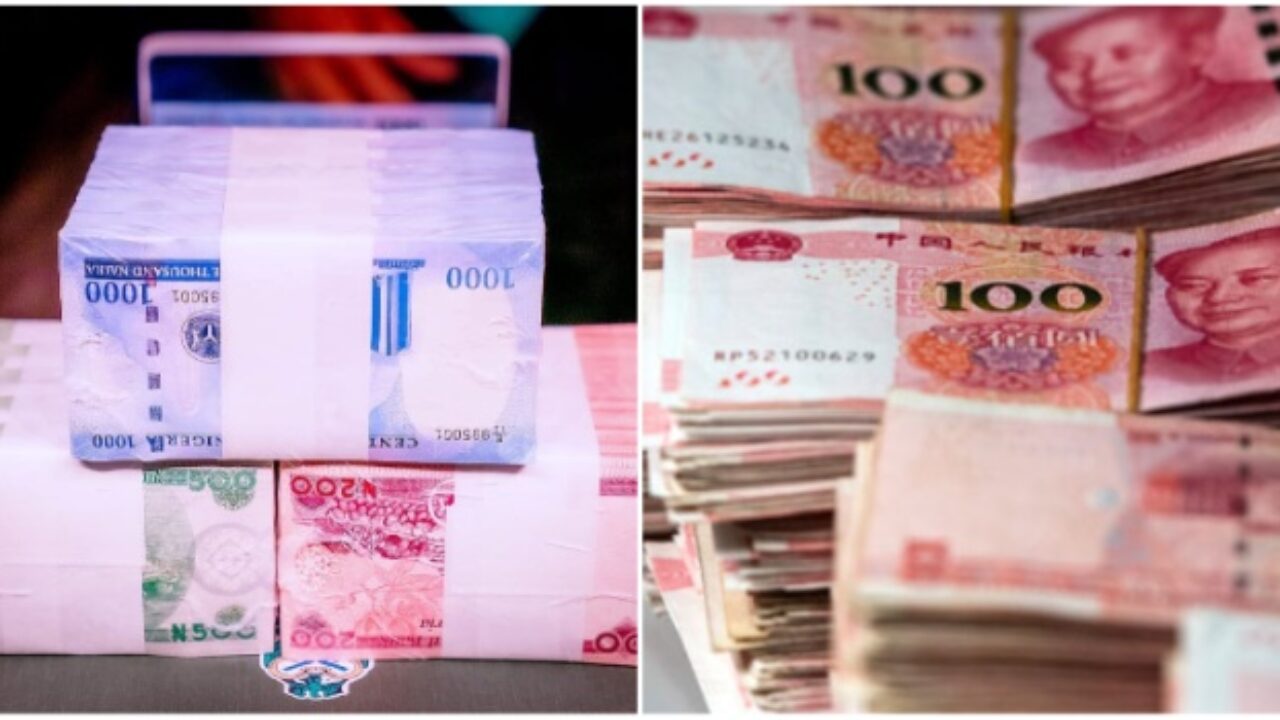
The Naira dropped N2.09 or 0.15 per cent against the United States Dollar in the Nigerian Autonomous Foreign Exchange Market (NAFEX) on Thursday, April 2, to trade at N1,380.79/$1 compared with Wednesday’s rate of N1,378.70/$1.
However, it appreciated against the Pound Sterling in the official market by N2.77 to quote at N1,824.86/£1 versus the N1,836.57/£1 it was traded at midweek, and improved its value against the Euro by N10.54 to N1,591.92/€1 from N1,602.46/€1.
Yesterday was the last trading session of the week for the local currency in the spot market, as the market will be closed on Friday and Monday for the Easter Holiday.
At the black market, the Nigerian Naira maintained stability against the greenback yesterday at N1,405/$1, but gained N8 at the GTBank FX counter to settle at N1,388/$1, in contrast to the previous session’s N1,396/$1.
Pressure eased on the domestic currency as strong policy indicators have helped calm the majority of worries within the financial systems. Particularly in the remittance segment, the apex bank has directed all International Money Transfer Operators (IMTOs) to route remittance transactions through designated Naira settlement accounts in banks, a move aimed at boosting transparency and channelling more foreign exchange into the formal market.
This helps take off pressure from the foreign reserves, which have fallen below the $50 billion mark as they are gradually decreasing rather than falling sharply.
Meanwhile, the cryptocurrency market was bullish on Thursday, as macro sentiment shifted against recent optimism after reports that Iran is drafting a protocol with Oman to manage traffic through the Strait of Hormuz, easing concerns about disruptions to a key global oil route.
The remarks came after U.S. President Trump on Wednesday night vowed to hit Iran “extremely hard” in the coming weeks and that the Strait of Hormuz would “open naturally” once the war ends.
Cardano (ADA) chalked up 1.9 per cent to trade at $0.2435, Dogecoin (DOGE) grew by 1.2 per cent to $0.0912, Ethereum (ETH) appreciated by 0.8 per cent to $2,066.37, Bitcoin (BTC) added 0.5 per cent to sell at $67,080.53, Solana (SOL) increased by 0.5 per cent to $79.91, and Ripple (XRP) jumped 0.2 per cent to $1.31.
Conversely, Binance Coin (BNB) dipped 0.7 per cent to $586.90, and TRON (TRX) depreciated by 0.3 per cent to $0.3147, while the US Dollar Tether (USDT) and the US Dollar Coin (USDC) closed flat at $1.00 each.

By Dipo Olowookere
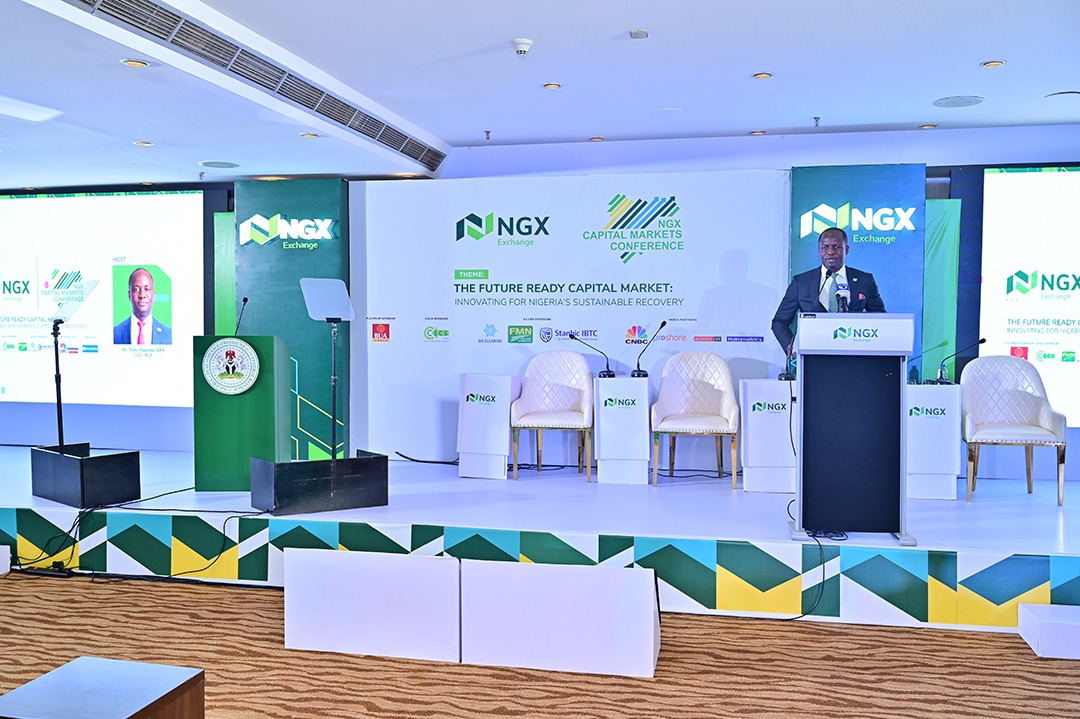
The local stock market was relatively flat on Friday, as the bears and the bulls shared the spoils of war, though investor sentiment turned bullish compared with the preceding session’s bearish posture.
Data from the Nigerian Exchange (NGX) Limited showed that the All-Share Index (ASI) was marginally down by 4.66 points as it ended at 201,698.89 points versus Wednesday’s 201,703.55 points, and the market capitalisation slightly contracted by N3 billion to N129.806 trillion from N129.809 trillion.
Customs Street was shut on Friday because of the public holidays declared by the federal government today and next Monday.
Business Post reports that John Holt declined by 9.91 per cent to N15.45, Abbey Mortgage Bank shed 9.60 per cent to trade at N8.95, International Energy Insurance slipped by 6.48 per cent to N3.32, Chams shrank by 5.30 per cent to N3.75, and Tantalizers depreciated by 5.18 per cent to N4.03.
On the flip side, Unilever Nigeria improved by 10.00 per cent to N103.40, Fortis Global Insurance gained 9.82 per cent to trade at N1.23, Multiverse appreciated 9.81 per cent to N20.15, Legend Internet advanced by 9.38 per cent to N6.30, and Zichis grew by 9.02 per cent to N14.14.
The market breadth index was positive during the trading session, as there were 35 appreciating stocks and 24 depreciating stocks.
Yesterday, investors traded 560.0 million equities valued at N19.3 billion in 49,676 deals, in contrast to the 815.5 million equities worth N33.3 billion transacted in 52,641 deals in the preceding day, representing a drop in the trading volume, value, and number of deals by 31.33 per cent, 42.04 per cent, and 5.63 per cent, respectively.
Secure Electronic Technology dominated the activity log with 59.7 million shares valued at N61.1 million, Wema Bank exchanged 52.0 million equities worth N1.4 billion, VFD Group transacted 36.0 million stocks for N410.5 million, Access Holdings sold 35.3 million shares valued at N914.8 million, and Chams traded 31.0 million equities worth N115.0 million.
-
 Feature/OPED6 years ago
Davos was Different this year
-
Travel/Tourism10 years ago
Lagos Seals Western Lodge Hotel In Ikorodu
-

 Showbiz3 years ago
Estranged Lover Releases Videos of Empress Njamah Bathing
-
 Banking8 years ago
Sort Codes of GTBank Branches in Nigeria
-

 Economy3 years ago
Subsidy Removal: CNG at N130 Per Litre Cheaper Than Petrol—IPMAN
-

 Banking3 years ago
Sort Codes of UBA Branches in Nigeria
-

 Banking3 years ago
First Bank Announces Planned Downtime
-

 Sports3 years ago
Highest Paid Nigerian Footballer – How Much Do Nigerian Footballers Earn