
Education
5 Ways Technology Can Ease the Stress of the ‘Back to School’ Rush


Detty December is over and students, teachers and parents alike are all trying to get through the mad rush of Back to School and get back into the swing of things.
Parents, who are just settling back to work after the restful holiday, face multiple tasks such as beating morning traffic to get their children to school on time, making sure that daily school supplies are lined up and ready to use, while also taking time out of their busy schedules to help their children with homework, among other things.
For parents trying to ease their Back to School stress, here are five ways that technology can help:
Set reminders with Assistant: Setting reminders is a smart way to remember all the things that are important for school- from lunches to school events. You can easily create reminders with the help of Google Assistant. Using your mobile device or phone, simply say, “Hey Google, set a reminder”, or “Hey Google, remind me to dry clean my children’s uniform at noon tomorrow.” Google Assistant will go on to set a reminder and send you a notification when it is close to the time.
Beat the traffic with Maps: You can get real-time information about traffic jams and delays using Google Maps, helping to plan better routes for school runs. Parents preparing to take their children to school every morning can make use of Google Maps to check for alternative routes and the Estimated Time of Arrival (ETA) to ensure they get to school before the bell rings.
Complete homework with Search: Not all parents are subject matter experts but they do often have to play the role of designated tutor, or help out with homework. In some cases, parents have forgotten how to solve simple math problems or they may not have the answers to some basic science questions. A quick search on Google can help find solutions to difficult questions. Parents should, however, allow their children to generate the answers to their homework questions before searching Google for the answer.
Watch video tutorials on YouTube: YouTube is great for watching explanatory videos that are fun, informative and educational. For example, parents can watch videos that reveal how to solve a quadratic equation and brush up their knowledge to help their children with their homework. There are also a variety of educational videos for children that can help parents tutor children who wish to learn more beyond their school work.
Keep kids safe with Family Link: Children today spend more time online than ever before. As such, it is important to help them develop healthy online habits and make sure they are protected from ills such as online predators and cyberbullies. Family Link allows parents to set digital rules to help guide their children as they learn and explore online. The app helps children make good decisions about what they do on their devices and even shows teacher-recommended apps that can be added to their devices.
It can be overwhelming for parents to balance their own professional endeavours with the demands of their children’s rigorous education but technology can sometimes help to lighten the load.












By Modupe Gbadeyanka
The monthly subvention to the Edo State University, Iyahmo, has been increased to N250 million from N100 million by the state governor, Mr Monday Okpebholo.
A statement issued on Monday by the Chief Press Secretary (CPS) to the Governor, Mr Patrick Akhere Ebojele, said a grant of N2 billion has also been approved to improve infrastructure in the institution.
Speaking at the commissioning of an e-library and the flagging off of a fitness centre and a health facility in the school, Mr Okpebholo said the funding support is to strengthen the institution’s capacity and improve learning conditions.
“Today is a great day for Edo State University, Iyamho. Since assuming office, our administration has remained committed to repositioning the education sector in Edo State.
“The Ehi Aganmonmen Business Administration E-Library, the Peter Omoh Dunia Fitness Centre, and the Edo State University Health Centre are clear symbols of progress, partnership, and shared responsibility in advancing education and health in Edo State,” he said.
Governor Okpebholo further acknowledged the collective support from stakeholders, including a parent who volunteered to sponsor the architectural designs and the Vice-Chancellor, Professor Adetimirin, who donated one month of his salary.
“If you, the vice chancellor, can donate your salary, why will the Edo state government not donate towards the university projects they are carrying out? On this note, the Edo State government will give you (the school) N2 billion,” he declared.
“I also understand that a parent has offered to sponsor the designs, and our amiable Vice-Chancellor, Prof. Adetimirin, has donated his one-month salary to support the projects. These are not small things — these are sacrifices that speak louder than words,” he added.
On healthcare infrastructure, the Governor expressed support for the university’s plan to upgrade its medical facility.
“I commend the university for the new Health Centre to replace the existing sick bay. This is an important step toward providing better healthcare services to our university community. I assure you of our continued support as we work together to bring this vision to reality,” the Governor said.
He charged students of the institution to use the facilities well, and tasked the university management to “ensure proper maintenance and sustainability of these facilities.”


By Adedapo Adesanya
Forty-five student-led ventures emerged as beneficiaries of a total pool of N2.2 billion in grants at the 2026 Student Venture Capital Grant (S-VCG) Finalist Bootcamp.
The programme of the federal government marks a significant boost to youth innovation under its entrepreneurship drive, announced earlier this year.
At the bootcamp’s closing ceremony and awards presentation held at the United Nations Development Programme (UNDP) office in Ikoyi, Lagos, the winners emerged after a rigorous selection process involving 65 finalists and assessment by a 12-member expert panel.
Speaking at the event, the Minister of Education, Mr Tunji Alausa, said the initiative underscores the government’s commitment to transforming tertiary institutions into centres of innovation, entrepreneurship and practical problem-solving.
He described the S-VCG programme as a key pillar of President Bola Tinubu’s Renewed Hope Agenda, aimed at enabling students to convert ideas into viable businesses.
Mr Alausa noted that each beneficiary can access up to N50 million in equity-free funding, alongside mentorship, incubation support and digital tools.
He added that the programme attracted more than 30,000 applications from 404 tertiary institutions nationwide, reflecting the growing culture of innovation among Nigerian youth.
Also speaking, the Minister of Communications and Digital Economy, Mr Bosun Tijani, commended participants for leveraging technology to develop solutions to real-world challenges.
He urged them to build scalable, tech-driven ventures capable of contributing to national development.
Also speaking, Minister of State for Education, Mrs Suwaiba Sa’id Ahmad, praised the finalists’ resilience and creativity, noting that initiatives like S-VCG are critical to nurturing problem-solving skills and fostering an entrepreneurial mindset among students.
Chairman of the Senate Committee on Tertiary Education and TETFund, Mr Muntari Dandutse, called for sustained investment in youth innovation to strengthen Nigeria’s knowledge-based economy.
On his part, the National Project Coordinator of the Special Programmes Operations and Implementation Unit, Mr Adebayo Onigbanjo, outlined the structure and long-term objectives of the programme, stating that it is designed to equip students with the resources and confidence needed to build sustainable ventures.
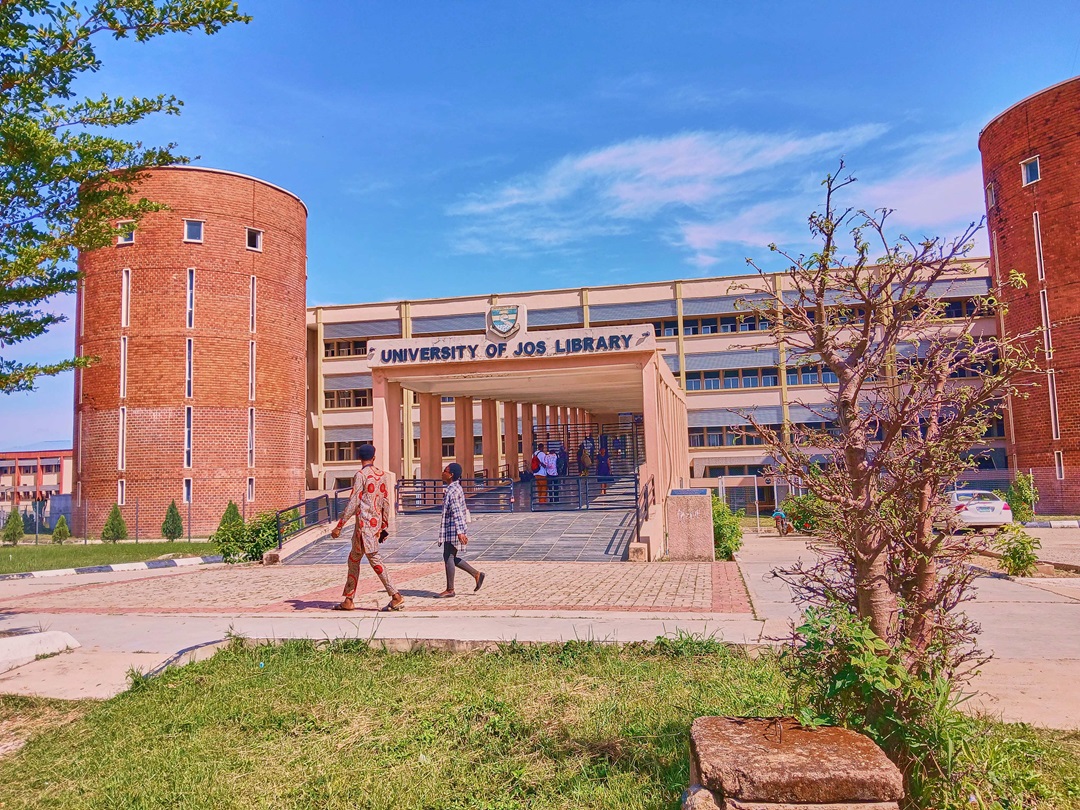
By Adedapo Adesanya
The University of Jos has suspended all examinations scheduled for Monday and Tuesday following growing tension in Jos, after a deadly attack in Anguwan Rukuba, Jos North Local Government Area of Plateau State.
The management of the institution also advised students and staff to remain indoors and stay vigilant.
According to reports, the attackers, who rode on motorcycles, stormed the community at about 7:30 pm while residents were going about their normal activities, firing indiscriminately and causing panic.
Many people were killed, while several others sustained injuries in the attack.
“The attackers just rode past and started shooting sporadically. People were running in different directions,” a source told Channels Television.
The broadcaster also reported that in the aftermath of the attack, angry youths reportedly blocked major roads within the community, raising fears of escalating tension.
UniJos, in a statement issued on Sunday by the Deputy Registrar, Information and Public Relations, Mr Emmanuel Madugu, said the incident had heightened tension, necessitating the decision.
“In view of the late evening fatal attacks by unknown gunmen on residents of Angwan Rukuba (an area that hosts many staff and students of the University), and the consequential tensions it has generated in and around the area and environs.
“The Vice Chancellor has directed that all examinations scheduled to hold on Monday, March 30, and Tuesday, March 31, 2026, are postponed, and will be rescheduled accordingly. That members of the University community be advised to be very vigilant and extra careful with their movements (On and off Campus) with IMMEDIATE EFFECT.
“For emphasis, members are strongly advised to AVOID COMING OUT VERY EARLY IN THE MORNING, and should REPORT IMMEDIATELY any sign or shadow of breach of the public peace to the University Security Division on 08035895323.
“University Management is actively liaising with the relevant Security agencies and monitoring the situation to ensure the safety of the lives of members of the University community. Further relevant updates will be communicated in due course,” the deputy registrar added.
-
 Feature/OPED6 years ago
Davos was Different this year
-
Travel/Tourism10 years ago
Lagos Seals Western Lodge Hotel In Ikorodu
-

 Showbiz3 years ago
Estranged Lover Releases Videos of Empress Njamah Bathing
-
 Banking8 years ago
Sort Codes of GTBank Branches in Nigeria
-

 Economy3 years ago
Subsidy Removal: CNG at N130 Per Litre Cheaper Than Petrol—IPMAN
-

 Banking3 years ago
Sort Codes of UBA Branches in Nigeria
-

 Banking3 years ago
First Bank Announces Planned Downtime
-

 Sports3 years ago
Highest Paid Nigerian Footballer – How Much Do Nigerian Footballers Earn