
Education
Commission on Child Destitution, ASUU Strike and Education Sector

By Jerome-Mario Chijioke Utomi
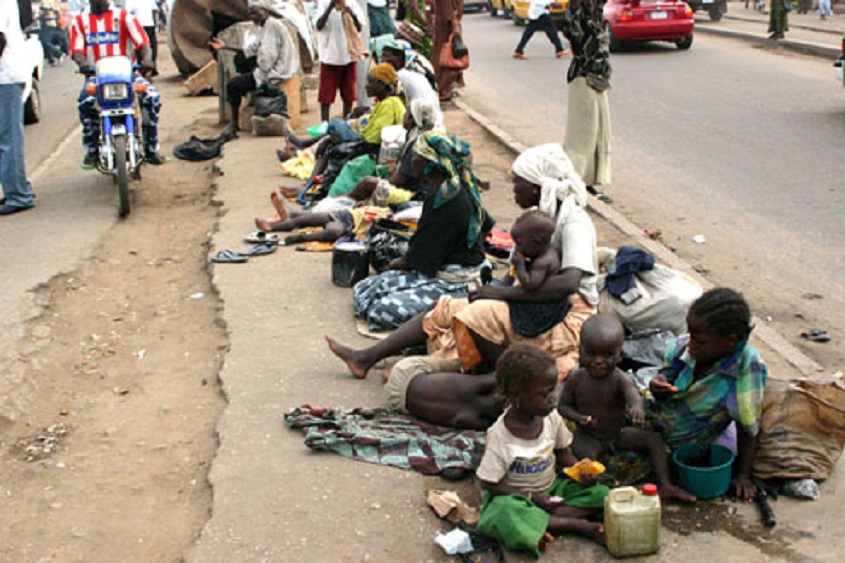
With the recent passage for the second reading of the Bill for an Act to establish the National Commission on Child Destitution in Nigeria, it is now evident that the nation handlers’ have finally come to the sudden realization that history has over these years thrust upon our generation an indescribably important destiny – to complete the process of learning and modernizations which our nation has too long developed too slowly, but which is our most powerful for world respect and emulation.
The bill, if passed, would provide the legal and constitutional frameworks for the eradication of child destitution in Nigeria. The bill would also result in taking formidable steps to mitigate the effects of the recurring cases of child destitution in the country. When established, the commission would serve as an intervention programme that would eradicate, rehabilitate and prohibit the menace of child destitution in Nigeria.
Without a doubt, there are many reasons that qualify the development as a right step taken in the right direction.
First, separate from the painful realization that 17 states in the country with the highest number of out-of-school children, 14 of them are in the North, and if the rate of out-of-school children is not curtailed, it would further worsen the insecurity that is currently bedevilling parts of the country. There is an accompanying belief that the latest bill, when passed, will strengthen the already existing Universal Basic Education Act 2003, which among other purposes is aimed at enforcing quality, compulsory, mandatory and free education up to secondary school three or equivalent and other purposes.
The second is that successive administrations in the country have done very little in arresting the situation. A particular report in 2013 described as mind-numbing the awareness that about 10.5 million Nigerian children of school age are not enrolled in schools. Out of this number, the report explained that about 9 million are children of beggars, fishermen and other less privileged people in the society.
The survey further showed that the population of out-of-school children in Nigeria had risen from 10.5 million to 13.2 million, the highest in the world, noting that; there is still a huge number of those who are in school, but are learning nothing, as schooling does not always lead to learning. In Nigeria, there are more non-learners in school than out of school.
Regardless of what you hear or read on the pages of the newspaper, this piece believes that despite the proposed National Commission on Child Destitution in Nigeria, it is still not an easy road for the Nigerian education sector but a tough and tumble ride. Even the practice of democracy in the country, contrary to earlier beliefs, has not helped to stop the pangs of challenges experienced by Nigerians in the sector.
Among many other comments in the recent past, I heard some say that across the globe, funding education now comes with a crushing weight that the government alone can no longer bear. To this group, it calls for public-private partnership and support from good-spirited individuals to the rescue.
Within this span, I have equally read an argument that our educational system is faulty just like every educational system is faulty. The United States educational system, they added, is faulty. If there is no fault in any system, then, there is no improvement. They concluded that what we call fault is a challenge and that is the basics of development. To the rest, our educational system is not faulty as it remains one of the systems that are still very sound and applauded across the world.
To illustrate this belief, the ongoing strike embarked upon by the Academic Staff Union of Universities (ASUU) to ensure the government stops reneging on agreements with the union has more than anything else made it clear that the nation’s public universities, principally the federal government-owned universities, are in trouble.
Aside from the fact that this is the second industrial action in less than two years, coupled with the fact that the system continues to frustrate the ambitions and aspirations of our youths; those that will provide the future leadership needs of the country, there are indeed reasons that characterize the current happenings as a troubling reality.
The most fundamental of the reasons is that the strike came a few days after President Muhammadu Buhari, in Abuja, while receiving members of the Nigeria Inter-Religious Council (NIREC) led by the co-chairs, the Sultan of Sokoto, Muhammad Sa’ad Abubakar, and the president of the Christian Association of Nigeria, Samson Olasupo Ayokunle, promised that the federal government remains committed to honouring promises made to ASUU to prevent disruptive strikes, engender uninterrupted academic programmes and improve funding of educational institutions.
The second stems from the words of Professor Emmanuel Osodeke, president of ASUU, who during a reported interview with the Channels Television, not only contradicted but proved as untrue the above pledge by Mr President. He ‘religiously’ explained how the FG has seamlessly become reputed for not keeping promises.
Let’s listen to him; “For the past nine years or so, they have been giving us promises but once the strike is over, they relapse. While noting that his colleagues are tired of these promises which they don’t fulfil, he added that what they want is action, maintaining that the union has sacrificed for the country’s educational system, concluding that ASUU will not back down on the current industrial action, since the federal government has become reputed for not keeping to its promises.
Looking above, it is evident that if the time-honoured aphorism which considers education as the bedrock of development is anything to go by and if the age-long belief that; with sound educational institutions, a country is as good as made, the institutions will turn out all rounded manpower to continue with the development of the society driven by well thought out ideas, policies, programmes, and projects remains a valid argument, then, we all have reasons not only to feel worried but collectively work hard to deliver the nation’s education sector.
Specifically, these challenges come in two forms; the first lays out the dilemma posed by the government’s underfunding of the public universities which as a consequence; impedes lecturers from carrying out scholarly research, truncates the academic calendar with strike actions, laces Nigerian universities with dilapidated and overstretched learning facilities with the universities producing graduates devoid of linkage with the manpower demand by the nation’s industrial sector.
The second challenge stems from the first but centres more particularly on thoughtless demand for fees of varying amounts/proposed by the school authorities-a development that is financially squeezing the life out of the innocent students and their parents.
The dilemma and menace posed by this practice indicate considerably higher risk and unless the government commits its resources to get to the root of the challenge, the potential consequence could be higher than that of other challenges currently ravaging the education sector.
By not taking the education sector seriously, one fact that the federal government failed to remember is that when human beings, through sound education, develop a higher order of thinking, the society gains an advantage in being able to anticipate emerging threats, they gain the ability to conceptualize instead of just perceiving.
But when they fail to acquire or deny the need, they will also gain the ability to conceptualize an imaginary threat and when a group of people are persuaded to conceptualize this imaginary threat, they can activate the fear response as powerfully as the real threat.
This fact partially explains the current fears and insecurity that have recently enveloped the country.
To further avert all these, governments at all levels must unlearn this attitude of the progressives’ non-recognition of the right to education as a human right despite their membership in a number of international conventions, including the International Covenant on Economic, Social and Cultural Rights where the right is respected.
Above all, the Buhari-led federal government must urgently commit to mind that globally; ‘the relationship between employers/employees is always strained, always headed toward conflict. It is a natural conflict built into the system.
Unions do not strike on a whim or use the strike to show off their strength. They look at strikes as costly and disturbing, especially for workers and their families. Strikes are called as last resort’. And any government that fails to manage this delicate relationship profitably or fails to develop a cordial relationship with the workers becomes an enemy of not just the workers but that of the open society and, such society will sooner than later find itself degenerate into chaos.
Utomi Jerome-Mario is the Programme Coordinator (Media and Public Policy), Social and Economic Justice Advocacy (SEJA), a Lagos-based non-governmental organisation (NGO). He can be reached via [email protected]/08032725374








By Modupe Gbadeyanka
The monthly subvention to the Edo State University, Iyahmo, has been increased to N250 million from N100 million by the state governor, Mr Monday Okpebholo.
A statement issued on Monday by the Chief Press Secretary (CPS) to the Governor, Mr Patrick Akhere Ebojele, said a grant of N2 billion has also been approved to improve infrastructure in the institution.
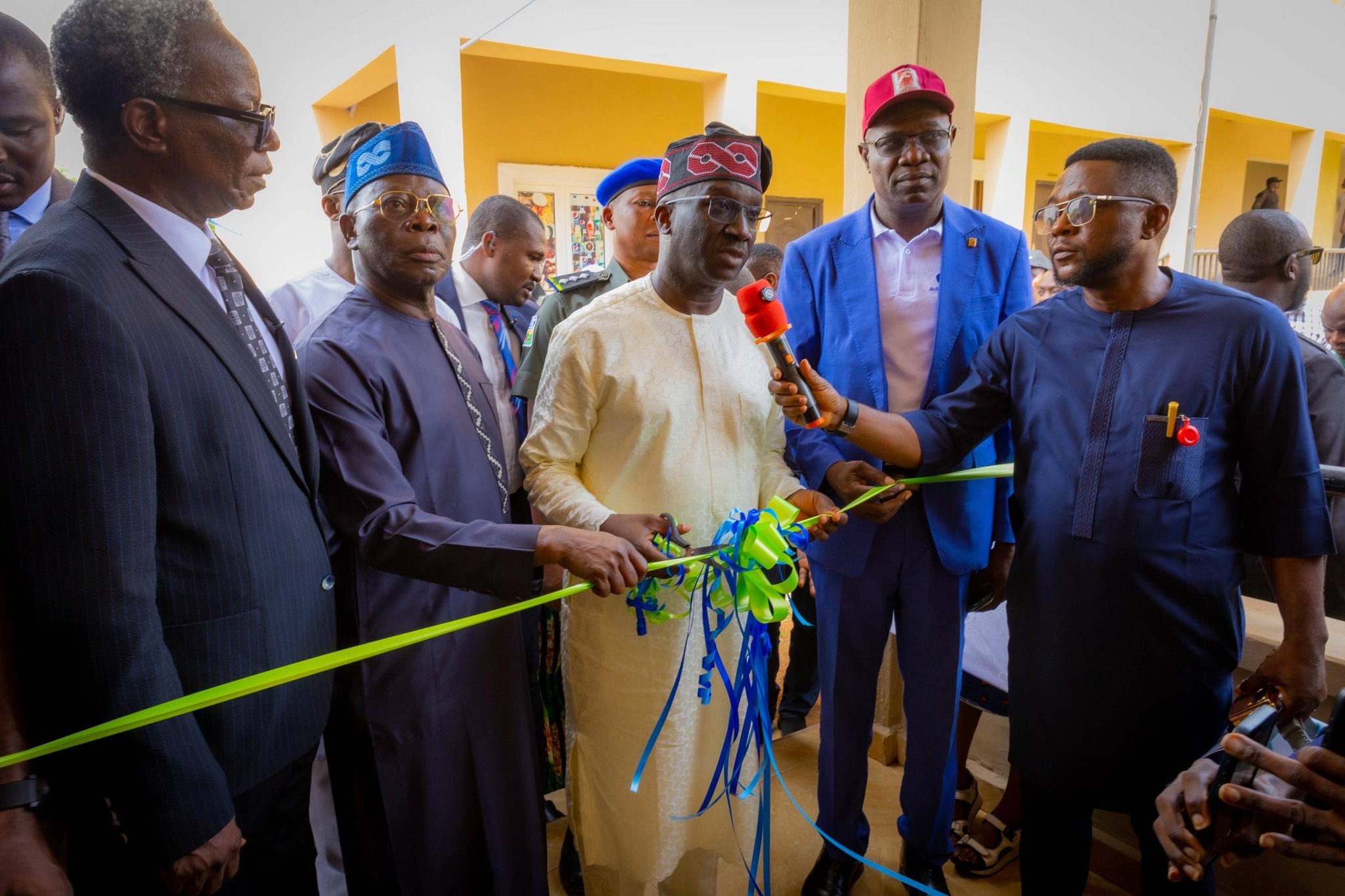
Speaking at the commissioning of an e-library and the flagging off of a fitness centre and a health facility in the school, Mr Okpebholo said the funding support is to strengthen the institution’s capacity and improve learning conditions.
“Today is a great day for Edo State University, Iyamho. Since assuming office, our administration has remained committed to repositioning the education sector in Edo State.
“The Ehi Aganmonmen Business Administration E-Library, the Peter Omoh Dunia Fitness Centre, and the Edo State University Health Centre are clear symbols of progress, partnership, and shared responsibility in advancing education and health in Edo State,” he said.
Governor Okpebholo further acknowledged the collective support from stakeholders, including a parent who volunteered to sponsor the architectural designs and the Vice-Chancellor, Professor Adetimirin, who donated one month of his salary.
“If you, the vice chancellor, can donate your salary, why will the Edo state government not donate towards the university projects they are carrying out? On this note, the Edo State government will give you (the school) N2 billion,” he declared.
“I also understand that a parent has offered to sponsor the designs, and our amiable Vice-Chancellor, Prof. Adetimirin, has donated his one-month salary to support the projects. These are not small things — these are sacrifices that speak louder than words,” he added.
On healthcare infrastructure, the Governor expressed support for the university’s plan to upgrade its medical facility.
“I commend the university for the new Health Centre to replace the existing sick bay. This is an important step toward providing better healthcare services to our university community. I assure you of our continued support as we work together to bring this vision to reality,” the Governor said.
He charged students of the institution to use the facilities well, and tasked the university management to “ensure proper maintenance and sustainability of these facilities.”


By Adedapo Adesanya
Forty-five student-led ventures emerged as beneficiaries of a total pool of N2.2 billion in grants at the 2026 Student Venture Capital Grant (S-VCG) Finalist Bootcamp.
The programme of the federal government marks a significant boost to youth innovation under its entrepreneurship drive, announced earlier this year.
At the bootcamp’s closing ceremony and awards presentation held at the United Nations Development Programme (UNDP) office in Ikoyi, Lagos, the winners emerged after a rigorous selection process involving 65 finalists and assessment by a 12-member expert panel.
Speaking at the event, the Minister of Education, Mr Tunji Alausa, said the initiative underscores the government’s commitment to transforming tertiary institutions into centres of innovation, entrepreneurship and practical problem-solving.
He described the S-VCG programme as a key pillar of President Bola Tinubu’s Renewed Hope Agenda, aimed at enabling students to convert ideas into viable businesses.
Mr Alausa noted that each beneficiary can access up to N50 million in equity-free funding, alongside mentorship, incubation support and digital tools.
He added that the programme attracted more than 30,000 applications from 404 tertiary institutions nationwide, reflecting the growing culture of innovation among Nigerian youth.
Also speaking, the Minister of Communications and Digital Economy, Mr Bosun Tijani, commended participants for leveraging technology to develop solutions to real-world challenges.
He urged them to build scalable, tech-driven ventures capable of contributing to national development.
Also speaking, Minister of State for Education, Mrs Suwaiba Sa’id Ahmad, praised the finalists’ resilience and creativity, noting that initiatives like S-VCG are critical to nurturing problem-solving skills and fostering an entrepreneurial mindset among students.
Chairman of the Senate Committee on Tertiary Education and TETFund, Mr Muntari Dandutse, called for sustained investment in youth innovation to strengthen Nigeria’s knowledge-based economy.
On his part, the National Project Coordinator of the Special Programmes Operations and Implementation Unit, Mr Adebayo Onigbanjo, outlined the structure and long-term objectives of the programme, stating that it is designed to equip students with the resources and confidence needed to build sustainable ventures.
By Adedapo Adesanya
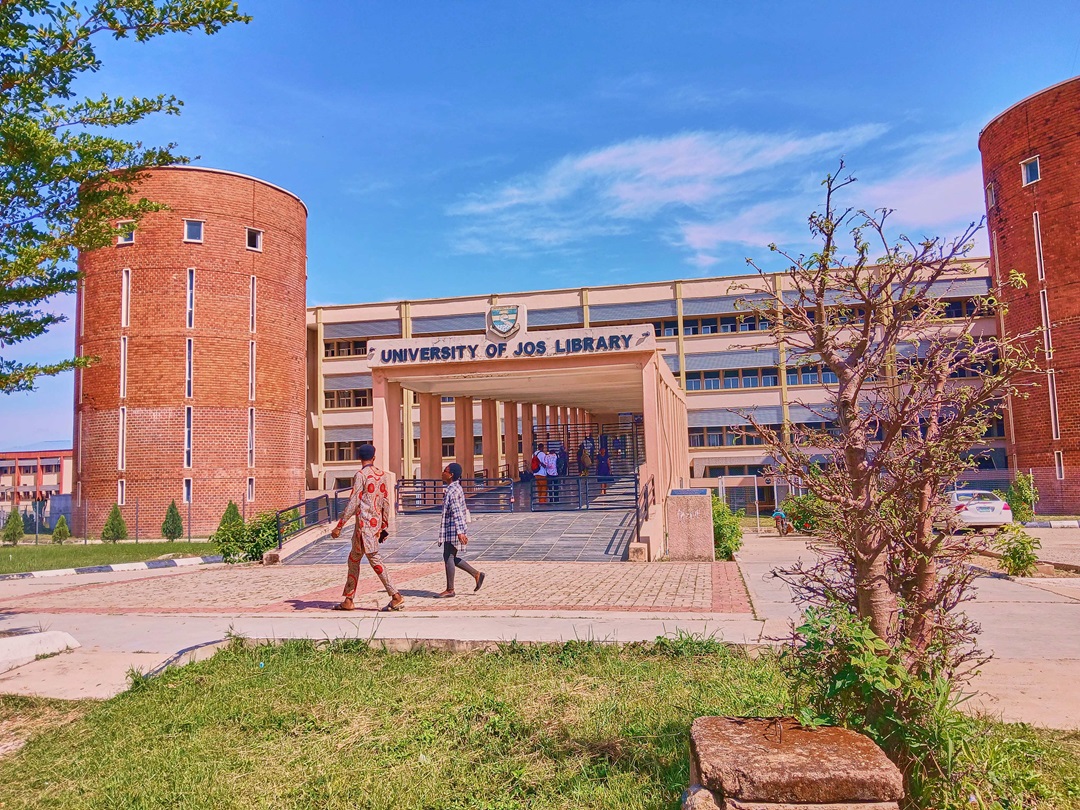
The University of Jos has suspended all examinations scheduled for Monday and Tuesday following growing tension in Jos, after a deadly attack in Anguwan Rukuba, Jos North Local Government Area of Plateau State.
The management of the institution also advised students and staff to remain indoors and stay vigilant.
According to reports, the attackers, who rode on motorcycles, stormed the community at about 7:30 pm while residents were going about their normal activities, firing indiscriminately and causing panic.
Many people were killed, while several others sustained injuries in the attack.
“The attackers just rode past and started shooting sporadically. People were running in different directions,” a source told Channels Television.
The broadcaster also reported that in the aftermath of the attack, angry youths reportedly blocked major roads within the community, raising fears of escalating tension.
UniJos, in a statement issued on Sunday by the Deputy Registrar, Information and Public Relations, Mr Emmanuel Madugu, said the incident had heightened tension, necessitating the decision.
“In view of the late evening fatal attacks by unknown gunmen on residents of Angwan Rukuba (an area that hosts many staff and students of the University), and the consequential tensions it has generated in and around the area and environs.
“The Vice Chancellor has directed that all examinations scheduled to hold on Monday, March 30, and Tuesday, March 31, 2026, are postponed, and will be rescheduled accordingly. That members of the University community be advised to be very vigilant and extra careful with their movements (On and off Campus) with IMMEDIATE EFFECT.
“For emphasis, members are strongly advised to AVOID COMING OUT VERY EARLY IN THE MORNING, and should REPORT IMMEDIATELY any sign or shadow of breach of the public peace to the University Security Division on 08035895323.
“University Management is actively liaising with the relevant Security agencies and monitoring the situation to ensure the safety of the lives of members of the University community. Further relevant updates will be communicated in due course,” the deputy registrar added.
-
 Feature/OPED6 years ago
Davos was Different this year
-
Travel/Tourism10 years ago
Lagos Seals Western Lodge Hotel In Ikorodu
-

 Showbiz3 years ago
Estranged Lover Releases Videos of Empress Njamah Bathing
-
 Banking8 years ago
Sort Codes of GTBank Branches in Nigeria
-

 Economy3 years ago
Subsidy Removal: CNG at N130 Per Litre Cheaper Than Petrol—IPMAN
-

 Banking3 years ago
Sort Codes of UBA Branches in Nigeria
-

 Banking3 years ago
First Bank Announces Planned Downtime
-

 Sports3 years ago
Highest Paid Nigerian Footballer – How Much Do Nigerian Footballers Earn