
Education
UNN, Others Hail NCC’s Involvements in Tertiary Education

By Dipo Olowookere
The Nigerian Communications Commission (NCC) has been commended for its interventions in tertiary education in Nigeria.
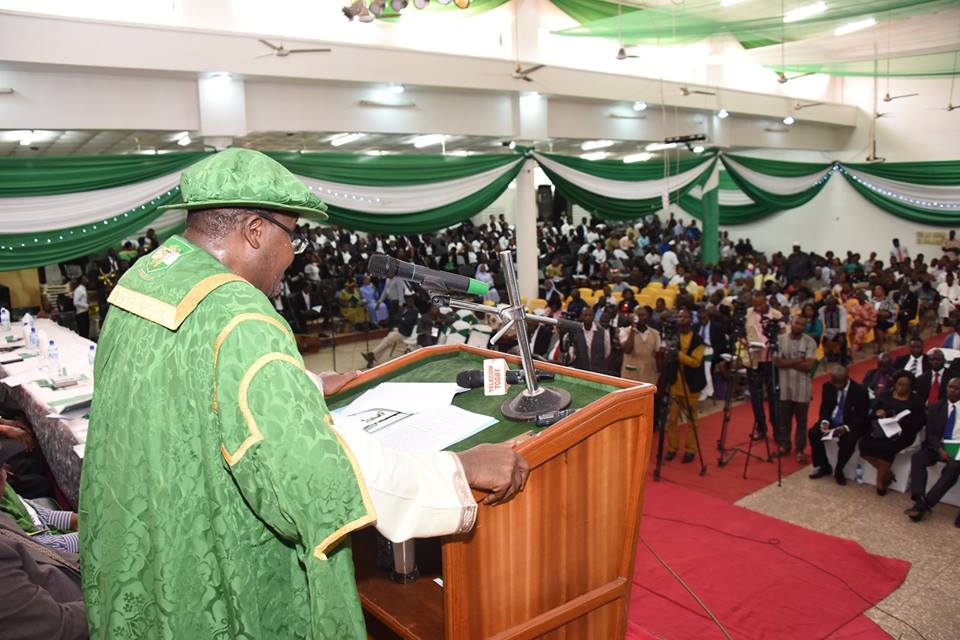
This commendation was made the 46th Convocation Lecture of the University of Nigeria (UNN) held at the Princess Alexandra/Unity Hall of the University’s Main Campus in Nsukka.
At the occasion, chaired by the President of National Industrial Court (NIC), Justice Babatunde Adejumo, the NCC was applauded for the great interventions it instituted to bridge the digital divide and to enhance national transformation
The entire university community led by the Vice Chancellor, Professor Benjamin Chukwuma Ozumba, gathered to receive the lecture delivered the CEO of NCC, Professor Umar Garba Danbatta.
Professor Danbatta recalled that the deployment of ICT infrastructure in the precinct of the Nigerian tertiary institutions nudged the establishment of the Nigerian Research and Education Networks (NgREN), which ensures that Universities communicate, collaborate, access and share resources. The overarching advantages in deploying ICT in education include the fact that through ICT, images can easily be used in teaching and improving the retentive memory of students; teachers can easily explain complex instructions and ensure students’ comprehension; and teachers are able to create interactive classes and make the lessons more enjoyable, which could improve student attendance and concentration.
He outlined and explained in details several intervention initiatives, programmes and projects the NCC inaugurated, and also mention the remarkable and measurable impact they have had on the realities in the education sector in Nigeria.
He said these programmes, projects and initiatives include:
Broadband infrastructure and facilities to the universities and other institutions of learning in Nigeria; and access programmes which include twelve (12) ICT/CBT Centres that are on-going under Stakeholders Initiated Project (SIP); as well as additional 4 skills acquisition Centres which are also scheduled for completion soon.
There is also the Tertiary Institution Knowledge Centers (TIKC), an initiative of the Universal Service Provision Fund (USPF), a Department in NCC. The TIKCs are designed to promote the use of ICT tools in teaching and learning at tertiary institutions and their neighbouring communities.
In addition to the above are the Digital Bridge Institute (DBI) Learning Centres established with training facilities and equipped with modern ICT infrastructure for training engineers, ICT professionals, policy makers, and regulators in the relevant and related sectors of the economy. Currently there are five (5) DBI learning centres across the country – Yola, Enugu, Asaba, Oshodi and Kano.
Still there is the National Teacher’s Institute e-Learning Centres. The USPF recently handed over an e-Learning Centre to the Management of the National Teachers’ Institute (NTI), Kaduna.
There are also Information Resource Centres (IRC), another USPF intervention project to create ICT-driven knowledge management (digital libraries) within the existing public libraries to enable e-libraries effective resource sharing and access to e-content. Beneficiary libraries are provided with desktop computers, server systems, UPS, printers, computer furniture, air conditioners, library software, scanner, 60 KVA generator and VSAT equipment with bandwidth. More than thirty (30) state libraries and twenty six (26) tertiary institutions across the geo-political zones of the country have benefited.
Another noble initiative is the University Inter-Campus Connectivity (UnICC) – The UnICC is a support project to the National Universities Commission’s Nigerian Research and Education Network (NgREN) project. Its primary purpose is to deliver broadband infrastructure and access to facilitate research and learning using Optic Fibre Cable (OFC). A total of 381.7 km OFC has been deployed in fifteen (15) Universities linking them with their medical colleges. The UNN enjoyed a total of 26.3 km of OFC capacity linking the University with its College of Medical Sciences at Ituku-Ozalla.
At the moment deployment of OFC is ongoing in another nine (9) Universities. There is also the UnICC Electronics Project which involves interconnecting end-user Electronics within the University Campus. Currently, provision of connectivity is ongoing in five (5) Universities across the country.
The Commission has provided data sharing platforms for learning and health system in Nigerian Universities and Teaching Hospitals, as well as training facilities with modern ICT infrastructure to promote learning and teaching in our institutions. These include: Data Sharing, e-learning Platforms and ICT Infrastructure to selected Universities across the country. The University of Nigeria Nsukka (UNN), Federal University of Technology Akure (FUTA), Ahmadu Bello University (ABU), Bayero University Kano (BUK), The Nigerian Defence Academy (NDA), Federal University of Technology Akure (FUA) and Federal University of Technology Yola (FUTY) have benefited.
In addition, the Data Sharing, e-Health Platforms and ICT Infrastructure to selected University teaching hospitals across the country has also been deployed at the University of Nigeria Teaching Hospital (UNTH), Obafemi Awolowo University Teaching Hospital (OAUTH), Bayero University Kano Teaching Hospital (BUKTH), Benue State University Teaching Hospital (BSUTH) and Usman Dan-Fodio University Teaching Hospital (UDUTH).
The Wireless Cloud, another companion project also provides the platform for supporting campus-wide wireless access to the Internet service for teaching, learning, research and development to faculty staff and students of the nation’s Colleges of Education, Polytechnics and Universities. In this project, the NCC provides the necessary infrastructure, including masts, antennae, networking and twelve (12) months bandwidth supply and maintenance support. The Wireless Cloud project has benefitted numerous tertiary institutions in all the six geopolitical zones and the Federal Capital Territory.
One of the central capacity building programmes of the NCC is the Advanced Digital Awareness Programme for Tertiary Institutions (ADAPTI) conceptualized to bridge the digital gaps that exists in academia by providing computers, other ICT equipment and the necessary facilities to provide lecturers, administrative staff and students with the requisite ICT skills essential for the 21st Century.
The Commission donates computers and other ICT equipment, which include scanners and printers to the beneficiary institutions. Yet, the provision of suites of e-Learning applications for academics and students in tertiary institutions across the country was instituted by the NCC to provide the tools that will enable familiarity and confidence in the utilization of ICT in teaching, research and learning. More than 300 institutions of higher learning are beneficiaries of the programme.
Percentage Distribution of NCC Training Programme in Tertiary Institutions
Type of Institution Percentage
Universities (Federal/State and Private) 46.88%
University Teaching Hospitals 6.25%
Polytechnics (Federal and State) 23.96%
Colleges of Education & Agriculture 22.92%
Total 100.00%
Professor Danbatta told the audience that the World Economic Forum ranked Nigeria 134th out of 144 countries evaluated with respect to infrastructure to justify NCC’s aggressive commitment to redressing the infrastructure deficit especially in the ICT sector which is within NCC’s purview.
In a very instructive analysis that captured the distinctive exponential capacity and the speed of multiplier effect of ICTs, Danbatta recalled that it took 100 years for the benefits of the printing press to reach 50 million people and it took 40 years for the radio to reach the same number of people, but it took just 4 years for modern ICT to reach 50 million people just 2 years for the mobile phone to reach the same number of people.
Conclusively, the EVC said the astonishing intervention of the NCC as narrated in the spectacular convocation lecture are important but more important is the optimization of the infrastructure through creativity and innovation to enhance growth and development of the nation – that, he emphasized will be the real digital transformation.
Justice Adejumo, Professor Joy Ezeilo, Dean Faculty of Law at UNN’s Enugu Campus (UNEC), scholars and many other stakeholders also made observations about the challenges in the sector that need to be addressed.
Professor Danbatta thanked them for all the kind words, comments and observations. He said there are a number of initiatives and directions NCC birthed to address the challenges of telecom consumers but people are not utilizing them adequately. He told the audience to use the Toll Free Line 112 for emergencies; and the equally Toll Free Number 622 for complaints about telecom service provision. The EVC bemoaned the low number of consumers who have activated the DO NOT DISTURB (DND) Code, 2442 and persuasively request the audience to amplify NCC’s voice by telling people to activate the Code in order to stop unwanted and unsolicited messages as well as calls from telemarketing companies riding on the crest of telecommunication infrastructure.








By Modupe Gbadeyanka
The monthly subvention to the Edo State University, Iyahmo, has been increased to N250 million from N100 million by the state governor, Mr Monday Okpebholo.
A statement issued on Monday by the Chief Press Secretary (CPS) to the Governor, Mr Patrick Akhere Ebojele, said a grant of N2 billion has also been approved to improve infrastructure in the institution.
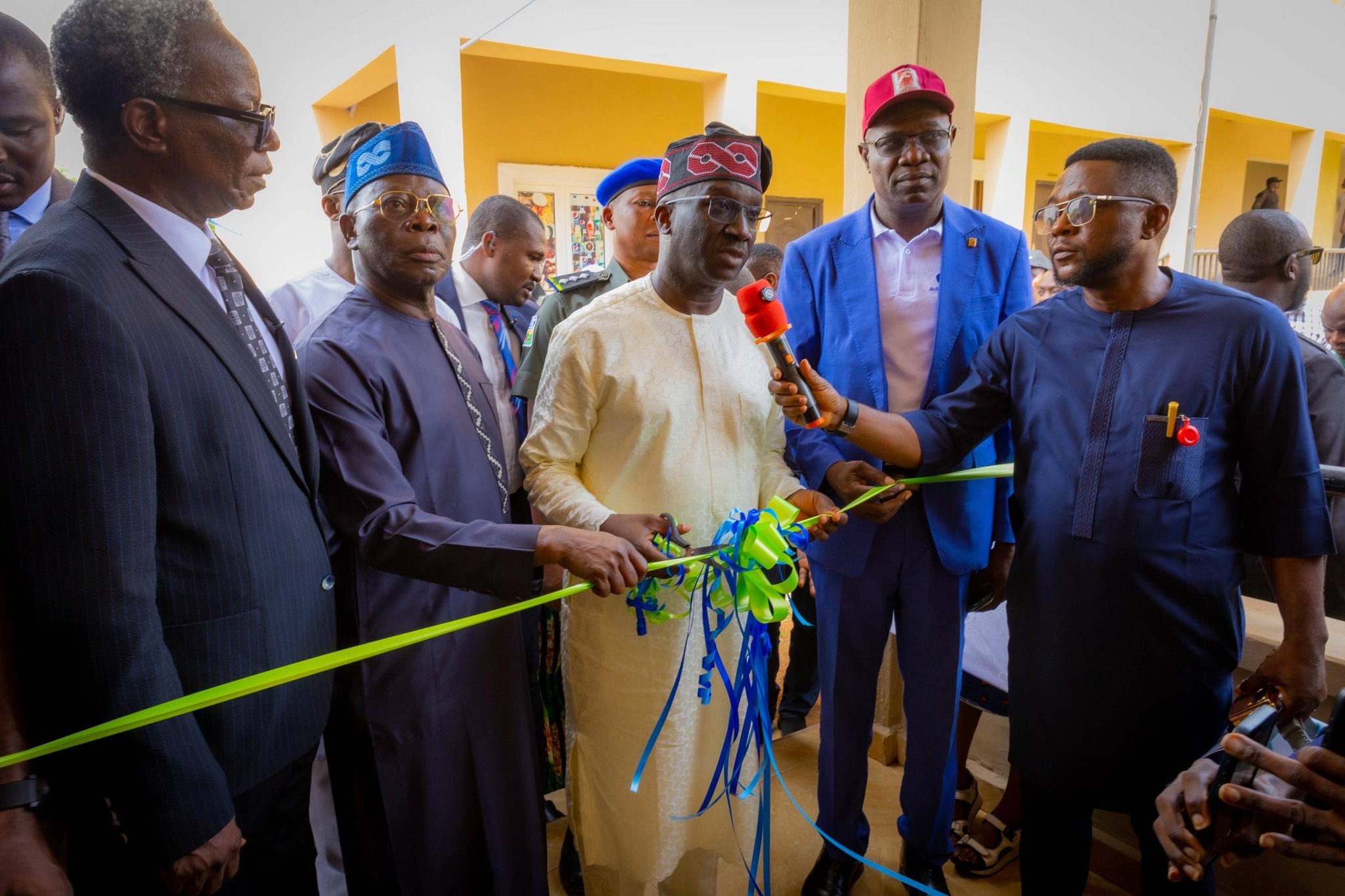
Speaking at the commissioning of an e-library and the flagging off of a fitness centre and a health facility in the school, Mr Okpebholo said the funding support is to strengthen the institution’s capacity and improve learning conditions.
“Today is a great day for Edo State University, Iyamho. Since assuming office, our administration has remained committed to repositioning the education sector in Edo State.
“The Ehi Aganmonmen Business Administration E-Library, the Peter Omoh Dunia Fitness Centre, and the Edo State University Health Centre are clear symbols of progress, partnership, and shared responsibility in advancing education and health in Edo State,” he said.
Governor Okpebholo further acknowledged the collective support from stakeholders, including a parent who volunteered to sponsor the architectural designs and the Vice-Chancellor, Professor Adetimirin, who donated one month of his salary.
“If you, the vice chancellor, can donate your salary, why will the Edo state government not donate towards the university projects they are carrying out? On this note, the Edo State government will give you (the school) N2 billion,” he declared.
“I also understand that a parent has offered to sponsor the designs, and our amiable Vice-Chancellor, Prof. Adetimirin, has donated his one-month salary to support the projects. These are not small things — these are sacrifices that speak louder than words,” he added.
On healthcare infrastructure, the Governor expressed support for the university’s plan to upgrade its medical facility.
“I commend the university for the new Health Centre to replace the existing sick bay. This is an important step toward providing better healthcare services to our university community. I assure you of our continued support as we work together to bring this vision to reality,” the Governor said.
He charged students of the institution to use the facilities well, and tasked the university management to “ensure proper maintenance and sustainability of these facilities.”

By Adedapo Adesanya
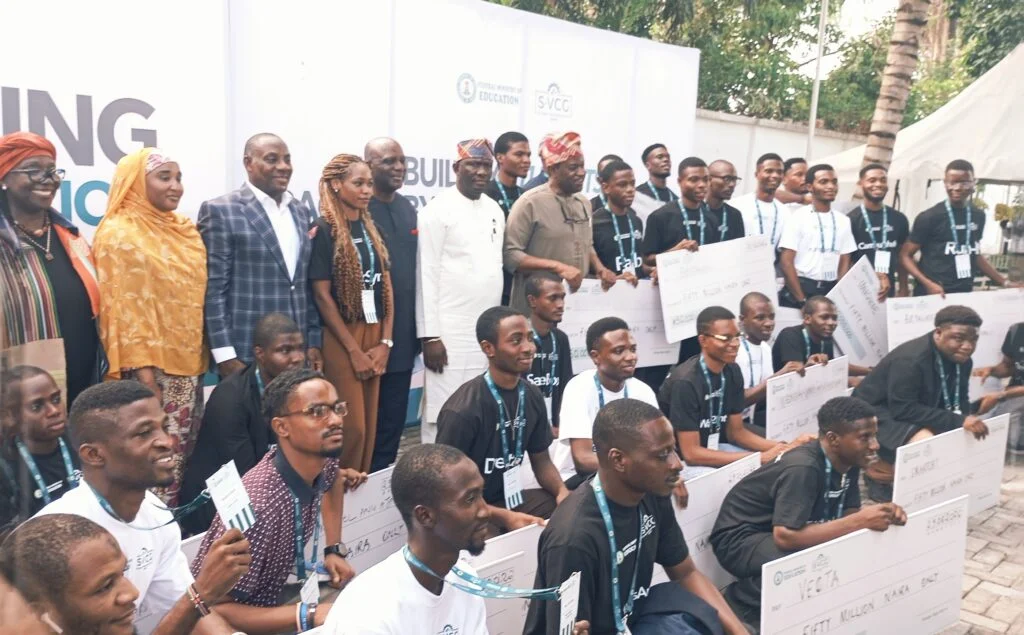
Forty-five student-led ventures emerged as beneficiaries of a total pool of N2.2 billion in grants at the 2026 Student Venture Capital Grant (S-VCG) Finalist Bootcamp.
The programme of the federal government marks a significant boost to youth innovation under its entrepreneurship drive, announced earlier this year.
At the bootcamp’s closing ceremony and awards presentation held at the United Nations Development Programme (UNDP) office in Ikoyi, Lagos, the winners emerged after a rigorous selection process involving 65 finalists and assessment by a 12-member expert panel.
Speaking at the event, the Minister of Education, Mr Tunji Alausa, said the initiative underscores the government’s commitment to transforming tertiary institutions into centres of innovation, entrepreneurship and practical problem-solving.
He described the S-VCG programme as a key pillar of President Bola Tinubu’s Renewed Hope Agenda, aimed at enabling students to convert ideas into viable businesses.
Mr Alausa noted that each beneficiary can access up to N50 million in equity-free funding, alongside mentorship, incubation support and digital tools.
He added that the programme attracted more than 30,000 applications from 404 tertiary institutions nationwide, reflecting the growing culture of innovation among Nigerian youth.
Also speaking, the Minister of Communications and Digital Economy, Mr Bosun Tijani, commended participants for leveraging technology to develop solutions to real-world challenges.
He urged them to build scalable, tech-driven ventures capable of contributing to national development.
Also speaking, Minister of State for Education, Mrs Suwaiba Sa’id Ahmad, praised the finalists’ resilience and creativity, noting that initiatives like S-VCG are critical to nurturing problem-solving skills and fostering an entrepreneurial mindset among students.
Chairman of the Senate Committee on Tertiary Education and TETFund, Mr Muntari Dandutse, called for sustained investment in youth innovation to strengthen Nigeria’s knowledge-based economy.
On his part, the National Project Coordinator of the Special Programmes Operations and Implementation Unit, Mr Adebayo Onigbanjo, outlined the structure and long-term objectives of the programme, stating that it is designed to equip students with the resources and confidence needed to build sustainable ventures.
By Adedapo Adesanya
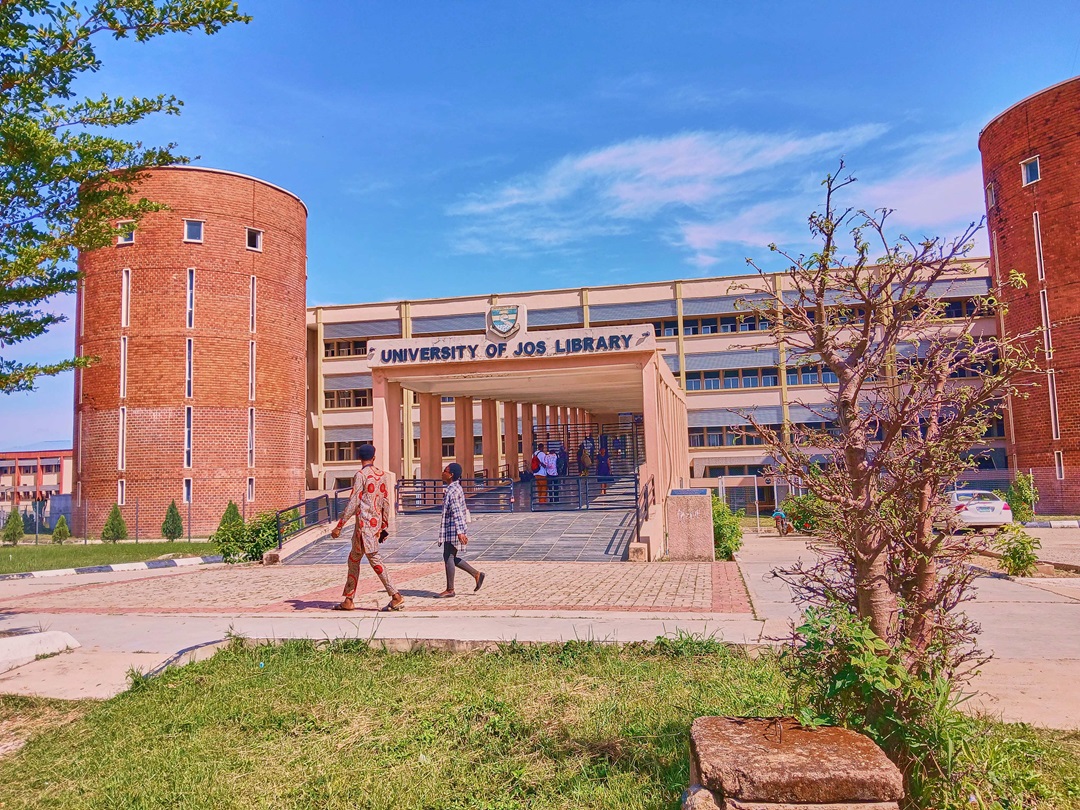
The University of Jos has suspended all examinations scheduled for Monday and Tuesday following growing tension in Jos, after a deadly attack in Anguwan Rukuba, Jos North Local Government Area of Plateau State.
The management of the institution also advised students and staff to remain indoors and stay vigilant.
According to reports, the attackers, who rode on motorcycles, stormed the community at about 7:30 pm while residents were going about their normal activities, firing indiscriminately and causing panic.
Many people were killed, while several others sustained injuries in the attack.
“The attackers just rode past and started shooting sporadically. People were running in different directions,” a source told Channels Television.
The broadcaster also reported that in the aftermath of the attack, angry youths reportedly blocked major roads within the community, raising fears of escalating tension.
UniJos, in a statement issued on Sunday by the Deputy Registrar, Information and Public Relations, Mr Emmanuel Madugu, said the incident had heightened tension, necessitating the decision.
“In view of the late evening fatal attacks by unknown gunmen on residents of Angwan Rukuba (an area that hosts many staff and students of the University), and the consequential tensions it has generated in and around the area and environs.
“The Vice Chancellor has directed that all examinations scheduled to hold on Monday, March 30, and Tuesday, March 31, 2026, are postponed, and will be rescheduled accordingly. That members of the University community be advised to be very vigilant and extra careful with their movements (On and off Campus) with IMMEDIATE EFFECT.
“For emphasis, members are strongly advised to AVOID COMING OUT VERY EARLY IN THE MORNING, and should REPORT IMMEDIATELY any sign or shadow of breach of the public peace to the University Security Division on 08035895323.
“University Management is actively liaising with the relevant Security agencies and monitoring the situation to ensure the safety of the lives of members of the University community. Further relevant updates will be communicated in due course,” the deputy registrar added.
-
 Feature/OPED6 years ago
Davos was Different this year
-
Travel/Tourism10 years ago
Lagos Seals Western Lodge Hotel In Ikorodu
-

 Showbiz3 years ago
Estranged Lover Releases Videos of Empress Njamah Bathing
-
 Banking8 years ago
Sort Codes of GTBank Branches in Nigeria
-

 Economy3 years ago
Subsidy Removal: CNG at N130 Per Litre Cheaper Than Petrol—IPMAN
-

 Banking3 years ago
Sort Codes of UBA Branches in Nigeria
-

 Banking3 years ago
First Bank Announces Planned Downtime
-

 Sports3 years ago
Highest Paid Nigerian Footballer – How Much Do Nigerian Footballers Earn