
Feature/OPED
In Praise of Nigeria’s Elite Memory Loss Clinic


By Busayo Cole
There’s an unacknowledged marvel in Nigeria, a national institution so revered and influential that its very mention invokes awe; and not a small dose of amnesia. I’m speaking, of course, about the glorious Memory Loss Clinic for the Elite, a facility where unsolved corruption cases go to receive a lifetime membership in our collective oblivion.
Take a walk down the memory lane of scandals past, and you’ll encounter a magical fog. Who remembers the details of the N2.5 billion pension fund scam? Anyone? No? Good. That’s exactly how the clinic works. Through a combination of political gymnastics, endless court adjournments, and public desensitisation, these cases are carefully wrapped in a blanket of vagueness. Brilliant, isn’t it?
The beauty of this clinic lies in its inclusivity. From the infamous Dasukigate, which popularised the phrase “arms deal” in Nigeria without actually arming anything, to the less publicised but equally mystifying NDDC palliative fund saga, the clinic accepts all cases with the same efficiency. Once enrolled, each scandal receives a standard treatment: strategic denial, temporary outrage, and finally, oblivion.
Not to be overlooked are the esteemed practitioners at this clinic: our very own politicians and public officials. Their commitment to forgetting is nothing short of Nobel-worthy. Have you noticed how effortlessly some officials transition from answering allegations one week to delivering keynote speeches on accountability the next? It’s an art form.
Then there’s the media, always ready to lend a hand. Investigative journalists dig up cases, splash them across headlines for a week or two, and then move on to the next crisis, leaving the current scandal to the skilled hands of the clinic’s erasure team. No one does closure better than us. Or rather, the lack thereof.
And let’s not forget the loyal citizens, the true heroes of this operation. We rant on social media, organise a protest or two, and then poof! Our collective short attention span is the lifeblood of the Memory Loss Clinic. Why insist on justice when you can unlook?
Take, for example, the Halliburton Scandal. In 2009, a Board of Inquiry was established under the leadership of Inspector-General of Police, Mike Okiro, to investigate allegations of a $182 million bribery scheme involving the American company Halliburton and some former Nigerian Heads of State. Despite Halliburton admitting to paying the bribes to secure a $6 billion contract for a natural gas plant, the case remains unresolved. The United States fined the companies involved, but in Nigeria, the victims of the corruption: ordinary citizens, received no compensation, and no one was brought to justice. The investigation, it seems, was yet another patient admitted to the clinic.
Or consider the Petroleum Trust Fund Probe, which unraveled in the late 1990s. Established during General Sani Abacha’s regime and managed by Major-General Muhammadu Buhari, the PTF’s operations were scrutinised when Chief Olusegun Obasanjo assumed office in 1999. The winding-down process uncovered allegations of mismanagement, dubious dealings, and a sudden, dramatic death of a key figure, Salihijo Ahmad, the head of the PTF’s sole management consultant. Despite the drama and the revelations, the case quietly faded into obscurity, leaving Nigerians with more questions than answers.
Then there is the colossal case of under-remittance of oil and gas royalties and taxes. The Federal Government, through the Special Presidential Investigatory Panel (SPIP), accused oil giants like Shell, Agip, and the NNPC of diverting billions of dollars meant for public coffers. Allegations ranged from falsified production figures to outright embezzlement. Despite detailed accusations and court proceedings, the cases were abandoned after the SPIP’s disbandment in 2019. As usual, the trail of accountability disappeared into thin air, leaving the funds unaccounted for and the public betrayed yet again.
Of course, this institution isn’t without its critics. Some stubborn Nigerians still insist on remembering. Creating spreadsheets, tracking cases, and daring to demand accountability. To these radicals, I say: why fight the tide? Embrace the convenience of selective amnesia. Life is easier when you don’t worry about where billions disappeared to or why someone’s cousin’s uncle’s housemaid’s driver has an oil block.
As World Anti-Corruption Day comes and goes, let us celebrate the true innovation of our time. While other nations are busy prosecuting offenders and recovering stolen funds, we have mastered the fine art of forgetting. Who needs convictions when you have a clinic this efficient? Oh, I almost forgot the anti-corruption day as I sent my draft to a correspondent very late. Don’t blame me, I am just a regular at the clinic.
So, here’s to Nigeria’s Memory Loss Clinic, a shining beacon of how to “move on” without actually moving forward. May it continue to thrive, because let’s face it: without it, what would we do with all these unsolved corruption cases? Demand justice? That’s asking a lot. Better to forget and focus on the next election season. Who knows? We might even re-elect a client of the clinic. Wouldn’t that be poetic?
Now, if you’ll excuse me, I have a new scandal to ignore.
Busayo Cole is a Branding and Communications Manager who transforms abstract corporate goals into actionable, sparkling messaging. It’s rumored that 90% of his strategic clarity is powered by triple-shot espresso, and the remaining 10% is sheer panic. He can be reached via busayo@busayocole.com.


By Louis Strydom
Last year, I argued in my piece Lean Carbon, Just Power that a limited and temporary increase in African carbon emissions is justified to meet the continent’s urgent electrification needs.
That position was not a retreat from climate ambition. It laid out a credible lean-carbon pathway that reconciles power systems development realities with climate arithmetic.
The central question remains: not whether emissions must fall, but how much temporary headroom is tolerable to accelerate energy prosperity for a continent responsible for roughly 4% of global CO2.
The flexibility equation
The future of Africa’s electrification is neither “all renewables tomorrow” nor “gas indefinitely”. Intermittent renewables alone cannot power the continent’s fragile grids at scale. Solar and wind require highly dispatchable power capacity to ensure the reliability of the system.
The real choice is not between renewables and fossil fuels in the abstract; it is between flexible firm power that complements solar and wind, and the de facto alternative: the increasing reliance on high-emissions diesel backup and widespread grid instability.
I argue that a realistic transition strategy must embrace “a capped carbon overdraft”: a strictly bounded, time-limited deployment of flexible power plants running on gas that supports the deployment of renewables and declines according to a binding schedule. This strategy means accepting minimal, temporary emissions to allow for a faster, cleaner and more resilient clean transition.
The response to this argument drew serious scrutiny. Three objections deserve a direct answer.
First: Does the case for flexible thermal power hold on a full life cycle basis?
It does. Our power system studies in Nigeria, Mozambique, and Southern Africa consistently reach the same conclusion – the least-cost long-term system is renewables-led, with flexible engines balancing variability. That holds across capital, fuel, maintenance, carbon pricing, and decommissioning. South Africa’s Integrated Resource Plan 2025, approved in October, makes the point concretely: it projects 105 GW of new capacity by 2039 with renewables as backbone, yet includes 6 GW of gas-to-power by 2030 explicitly for grid stability. Even the continent’s most industrialised economy concludes it needs dispatchable thermal capacity to underpin a renewables-heavy system. The question is not whether firm power is needed, but how to make it as clean and flexible as possible.
Second: Does this argument talk over Africa’s ambition to leapfrog fossil fuels?
No. It is designed around that ambition. Wärtsilä launched the world’s first large-scale 100% hydrogen-ready engine power plant concept in 2024, certified by TÜV SÜD, with orders opening in 2025. Ammonia engine tests now demonstrate up to 90% greenhouse gas reductions versus diesel. These are not roadmaps. They are ready-to-use technologies. The honest difficulty is timing. Sub-Saharan grids averaged 56 hours of monthly outages in 2024. The African diesel generator market is growing at nearly 7% a year, projected to reach 1.3 billion dollars by 2030. Nigerian businesses spend up to 40% of operational costs on fuel for backup power. That is the real counterfactual – not a continent neatly powered by sun and wind, but a billion-dollar diesel habit deepening every year the grid stays unreliable. Even Germany is tendering 10 GW of hydrogen-ready gas plants with mandated conversion by 2035 to 2040. If Europe’s largest economy needs transitional thermal flexibility to backstop an 80% renewables target, insisting low-income African nations skip that step is not climate leadership. It is development deferred.
Third: Does the carbon comparison include full life cycle methane?
It must. Methane leakage materially worsens the climate profile of gas-to-power because methane is a far more potent greenhouse gas than CO₂. If leakage exceeds a few per cent of production, gas loses its advantage over coal on a 20-year timeframe.
But the IEA notes that 40% of fossil methane emissions could be eliminated at no net cost with existing technology. My claim that gas has a lower footprint than coal is conditional on aggressive methane management – eliminating flaring and venting, enforcing measurement under frameworks like the EU Methane Regulation and OGMP 2.0. Without those conditions, the arithmetic fails. But the real choice in most African markets is not between pristine gas and pristine renewables. It is between ageing coal, a growing fleet of unregulated diesel generators, and new fuel-flexible plants that start or transition to gas and convert to hydrogen or ammonia on a contractual schedule. Displacing diesel and coal with well-managed gas in future-fuel-ready engines cuts CO₂, local pollution, and water use now, while building the infrastructure for fuels that eliminate fossil dependence.
The critics are right to demand rigour, full life cycle accounting, methane transparency, and credible timelines. Those are exactly the conditions that make a lean-carbon pathway work. Africa does not seek permission to pollute. It seeks the tools to end energy poverty while peaking emissions early and declining fast. Build engine power plants that run on available fuel today. Mandate their conversion tomorrow. The carbon overdraft stays small. The payback stays fast. And the technology to switch to sustainable fuels is already here.
Louis Strydom is the Director of Growth and Development for Africa and Europe at Wärtsilä Energy
You’re back home after mudik (homecoming), the suitcases are unpacked, and the excitement of being with family for Eid already feels like a long time ago. But just because Eid is over doesn’t mean the special connection of being with family has to fade. Here are the best group chat features for beating the post-Raya blues.
-
Keep The Vibe Going by Sharing Ramadan Highlights
-
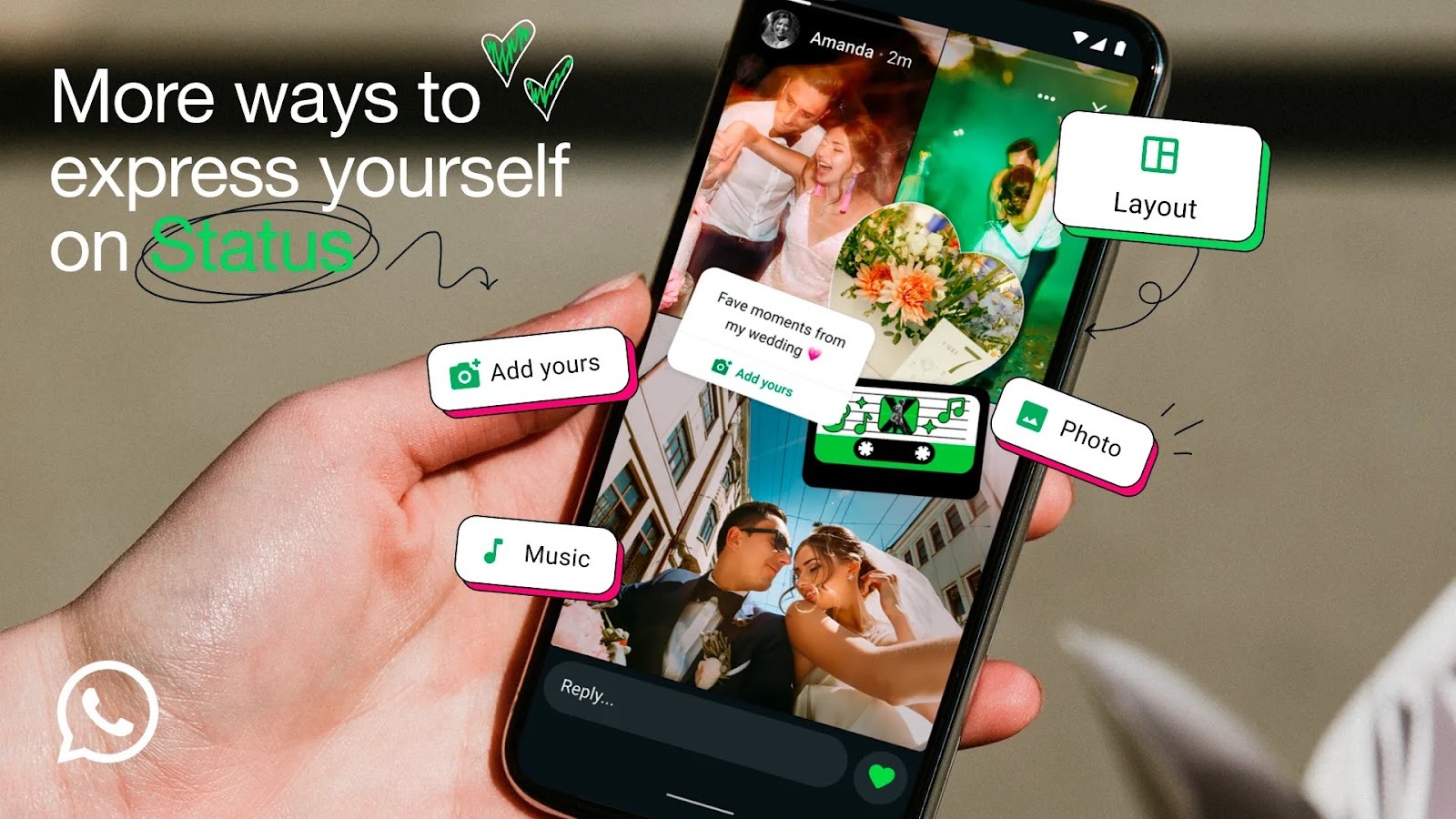
Keep the Memories Rolling with Status: Your Status feed doesn’t have to go quiet just because you’re back home. Post the most memorable throwback photos from the Eid reunion and add questions to spark responses like “What was your favourite Raya dish?” Add music and stickers to Status to keep the energy alive.
-
Express Yourself with Text Stickers: Turn inside jokes, family slogans, or a favourite Eid quote into a Text Sticker. It’s a quick, personalised way to add some warmth and humour to the group chat.
-
Skip the Stock Cards, Use Meta AI for a Personal Touch: Don’t just send a generic “Hi” or “Good morning” in the family chat. Use Meta AI to make your personalised greeting card or quickly transform a single photo into an animated image to send a heartfelt, animated check-in.
-
Schedule The Next Reunion
-
Plan Your Next Post-Raya Get-Together: The blues often hit when the fun ends. Keep spirits up by creating a new Event in the group chat right away. Add event reminders so everyone doesn’t miss the opportunity to connect.
-
Schedule a Call, Don’t Just Say “Call Me”: Carry on the family tradition of staying connected, even when you’re miles apart. Tap + then Schedule a call in the Calls tab to lock in a regular “Post-Raya Check-in” video call. Send a reminder so everyone can join on time.
-
Keep the Raya Spirit Alive by Getting Everyone Involved
-
Assign yourself a fun “tag” in the family group: Are you the one who always ends up cooking? Or the one who plans the itinerary for family trips? Or the master of GIFs who keeps everyone amused? Use the Member Tag feature in the group to give yourself a witty, funny, or practical role—”Next Event Planner” or “Tech Support Guru,” maybe?. Member tags can be customised for each group you’re in.
-
Share a Spontaneous ‘I Miss You’ Video: Did you just see something that reminded you of the reunion? Press and hold the camera icon to record a spontaneous Video Notes message. It’s faster than typing and instantly brings warmth and real-time emotion back into the group.
-
Digital Hugs: Making the Long-Distance Moment Count
-
Share a Moving Memory: Don’t just send a still photo. Share a Live or Motion Photo to capture the ambient sound and movement of a recent Eid moment. It makes your memories feel more vivid, personal, and real—a perfect antidote to feeling disconnected.
-
Your Group Chat Background: Create a vibe with Meta AI: Don’t settle for a plain background for your family group chat. Use Meta AI to generate unique, custom chat wallpapers that reflect something uniquely memorable to your family: be it food, travel or a sport that unites everyone. Every time you open the chat, you’ll feel the warmth, not the distance.
-
Make Sure No One Misses Out
No More FOMO: Send the Conversation History: Just added a family member who couldn’t make it to mudik? When adding a new member, you can now send up to 100 recent messages with the Group Message History feature. No need to recap; let them catch up instantly and feel included from the first tap.

By Olumide Balogun
Nigerians are natural explorers. Whether finding the best supplier in Balogun market, hunting down a recipe for party jollof, or looking for the most affordable flight out of Lagos, we are always searching.
Today, human curiosity is expanding, and the way Nigerians express it is evolving. We are speaking to our phones, snapping photos of things we like, and asking incredibly complex questions. For the Nigerian business owner, understanding this shift is a massive opportunity to get discovered by eager customers.
Here are four ways AI is rewriting how Nigerians search, along with simple steps to ensure your business is exactly what they find.
1. Visual Discovery is the New Normal
People are increasingly using their cameras to discover the world around them. Picture someone spotting a brilliant pair of sneakers in traffic and wanting to know exactly where to buy them. Today, shoppers simply take out their phones and search visually.
Tools like Google Lens now process over 25 billion visual searches every single month, and many of these searches are from people looking to make a purchase.
How to adapt: Your product’s visual appeal is paramount. Make sure you upload clear, high-quality images of your products to your website and social media. When a customer snaps a picture of a bag that looks like the one you sell, having great photos ensures your business pops up in their visual search results.
2. Conversations Replace Simple Keywords
Shoppers are asking highly nuanced, conversational questions. They are typing queries like, “Where can I find affordable leather shoes in Ikeja that are open on Sundays and do home delivery?”
To handle these detailed questions, new features like AI Overviews act like a superfast librarian that has read everything on the web. It provides users with a perfectly organised summary and links to dig deeper.
How to adapt: Answer your customers’ questions before they even ask. Create detailed, helpful content on your website and fully update your Google Business Profile. List your opening hours, delivery areas, and unique services clearly. This ensures the technology easily finds your details and recommends your business when a customer asks a highly specific question.
3. Intent Matters More Than Exact Words
Predicting every single word a customer might use to find your product is a huge task for any business owner. Thankfully, modern search technology focuses on the underlying need behind a search.
If someone searches for “how to bring small dogs on flights,” AI understands that the person likely needs to buy an airline-approved pet carrier. The technology looks at the true intent of the shopper.
How to adapt: You no longer need to obsess over guessing exact keywords. By using AI-powered campaigns, you allow the technology to understand your products and match them to the customer’s true needs. Your business will show up for highly relevant searches, bringing you customers who are actively looking for solutions you provide.
4. Smart Assistants Handle the Heavy Lifting
Running a business in Nigeria requires incredible hustle. Managing digital marketing on top of daily operations takes significant time and energy. The next frontier in digital advertising introduces agentic capabilities, which hold a simple promise of delivering better results for your business with much less effort.
The technology now acts as your personalised assistant.
How to adapt: You can simplify your marketing by using the Power Pack of AI-driven campaigns, including Performance Max. You simply provide your business goals, your budget, and your creative assets like photos and videos. The AI automatically finds new, high-value customers across Google Search, YouTube, and the web. It adapts your ads in real time to match exactly what the shopper is looking for, allowing you to focus on running your business.
The language of curiosity is constantly expanding. Nigerians are discovering brands in entirely new ways using cameras, voice notes, and highly specific questions. By understanding these behaviours and embracing helpful AI tools, you can let the technology connect eager customers directly to your digital doorstep.
Olumide Balogun is a Director at Google West Africa













-
 Feature/OPED6 years ago
Davos was Different this year
-
Travel/Tourism10 years ago
Lagos Seals Western Lodge Hotel In Ikorodu
-

 Showbiz3 years ago
Estranged Lover Releases Videos of Empress Njamah Bathing
-
 Banking8 years ago
Sort Codes of GTBank Branches in Nigeria
-

 Economy3 years ago
Subsidy Removal: CNG at N130 Per Litre Cheaper Than Petrol—IPMAN
-

 Banking3 years ago
Sort Codes of UBA Branches in Nigeria
-

 Banking3 years ago
First Bank Announces Planned Downtime
-

 Sports3 years ago
Highest Paid Nigerian Footballer – How Much Do Nigerian Footballers Earn