
General
$1.126bn Financing for Lagos-Calabar Coastal Highway Excites Tinubu

By Modupe Gbadeyanka
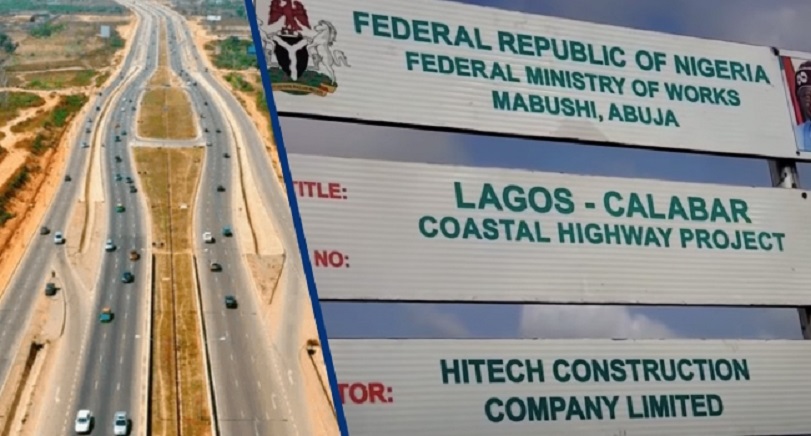
The successful closing of about $1.126 billion in financing for the execution of Phase 1, Section 2 of the Lagos–Calabar Coastal Highway has been welcomed by President Bola Tinubu.
A statement issued on Friday by the Special Adviser to the President on Information and Strategy, Mr Bayo Onanuga, disclosed that the funding package was secured by the Federal Ministry of Finance.
Mr Tinubu described this as a landmark because it marks a significant milestone in the delivery of Africa’s most ambitious and transformative infrastructure projects.
He praised the Ministries of Finance and Works and the Debt Management Office (DMO) for working together on the transaction, adding that the federal government will continue to explore creative financing to fund critical projects across the country.
“This is a major achievement, and closing this transaction means the Lagos-Calabar Coastal Highway will continue unimpeded. Our administration will continue to explore available funding opportunities to execute critical economic and priority infrastructural projects across the country,” the President was quoted as saying in the statement.
Phase 1, Section 2 covers approximately 55.7 kilometres, connecting Eleko in Lekki to Ode-Omi, key economic corridors and significantly enhancing national trade efficiency and logistics connectivity.
The successful financing follows the earlier closing of the $747 million financing for Phase 1, Section 1, and demonstrates the scalability and bankability of the Lagos–Calabar Coastal Highway project.
The financing was fully underwritten by First Abu Dhabi Bank (FAB) and Afreximbank, with partial risk mitigation support provided by the Islamic Corporation for the Insurance of Investment and Export Credit (ICIEC), marking ICIEC’s largest transaction since the country’s institutional and regulatory reforms. The structure reflects growing confidence in Nigeria’s reformed investment climate and its capacity to deliver infrastructure.
SkyKapital acted as Lead Financial Advisor, coordinating structuring, lender engagement, and execution. Environmental and Social advisory services were provided by Earth Active (UK), ensuring complete alignment with the IFC Performance Standards, the Equator Principles, and international ESG best practices. Hogan Lovells, as International Counsel, and Templars, as Nigerian Legal Counsel, led the legal advisory services.
Describing the transaction as a “defining moment in Nigeria’s infrastructure journey,” the Minister of Finance and Coordinating Minister of the Economy, Mr Wale Edun, said the fund will be deployed responsibly and judiciously to deliver on the project within timelines.
“The signing on December 19, 2025, of $1.126 billion financing for Phase one — section two of the Lagos-Calabar Coastal road marks a defining moment in Nigeria’s infrastructure journey, following the successful closing of the $747 million financing for Phase one section one on July 9, 2025.
“Collectively, these landmark transactions firmly establish the Lagos-Calabar Coastal Highway as one of the defining flagship projects of President Bola Tinubu’s Renewed Hope agenda, embodying the administration’s commitment to bold, transformational infrastructure.
“This financing is particularly notable as it represents, for the first time, a truly underwritten transaction of this magnitude for a Nigerian road infrastructure project. The facility was fully underwritten by First Abu Dhabi Bank ($626 million) and Afreximbank ($500 million), with partial coverage provided by ICIEC, making it the largest ICIEC-supported transaction since the institution’s creation,” Mr Edun said.
Construction is being executed by Hitech Construction Company Limited, whose rapid on-site progress and early opening of key road sections have earned commendation from lenders for engineering excellence, operational discipline, and execution speed.
In line with the federal government’s commitment to transparency and fiscal discipline, a comprehensive Value-for-Money (VfM) assessment was conducted by the Federal Ministry of Works in coordination with SkyKapital, and the assessment was independently reviewed and confirmed by GIBB.
The successful close of Phase 1, Section 2, represents a clear step-change in market confidence. It demonstrates Nigeria’s ability to move decisively from vision to execution and from reform to delivery.





By Adedapo Adesanya
The Minister of Power, Mr Adebayo Adelabu, says that electricity generation has improved between March 28 and April 10, 2026, following increased gas supply to thermal power plants.
In a statement via his Special Adviser on Strategic Communications and Media Relations, Mr Bolaji Tunji, the Minister said the improvement fulfilled his pledge at the Power Sector Working Group that electricity supply would improve within two weeks.
He said data from the period showed that actual power generation rose from about 3,951 megawatts on March 28 to over 4,300 MW on April 10.
He added that gas supply to thermal power plants increased from approximately 605 million standard cubic feet per day to over 704 million standard cubic feet per day within the same timeframe.
He also stated that mechanical availability remained stable, peaking at over 7,796MW in early April, while operational availability rose from about 4,208MW to a peak of over 4,694MW.
“Despite minor fluctuations recorded on some days, the overall trajectory points to a gradual recovery in the power sector, driven largely by improved gas supply and better coordination among critical stakeholders,” Mr Tunji said.
The spokesperson added that the correlation between gas availability and generation output underscored the need for sustained interventions in the gas-to-power value chain.
He disclosed that the minister recently inaugurated a Gas-to-Power Monitoring Committee to ensure improved coordination, real-time monitoring, and sustained gas supply to generating companies.
“The committee is expected to address bottlenecks in gas delivery, enhance synergy between gas producers and power generation companies, and ultimately guarantee a more stable and reliable electricity supply across the country.
“The Honourable Minister remains committed to ensuring that the modest gains recorded are not only sustained but significantly improved upon in the coming weeks,” Mr Tunji added.
The Minister assured Nigerians that ongoing reforms and targeted interventions in the sector would continue to yield measurable improvements, saying, “We are not there yet, but we will continue to ensure measurable improvements.”
Adelabu urged the new management of the Nigeria Electricity Management Services Agency (NEMSA) to improve its internally generated revenue and reduce dependence on government appropriation.
He also called for the establishment of more meter testing centres across the country and reiterated the need for collaboration between the National Power Training Institute of Nigeria (NPTIN) and NEMSA to address manpower shortages.
By Adedapo Adesanya
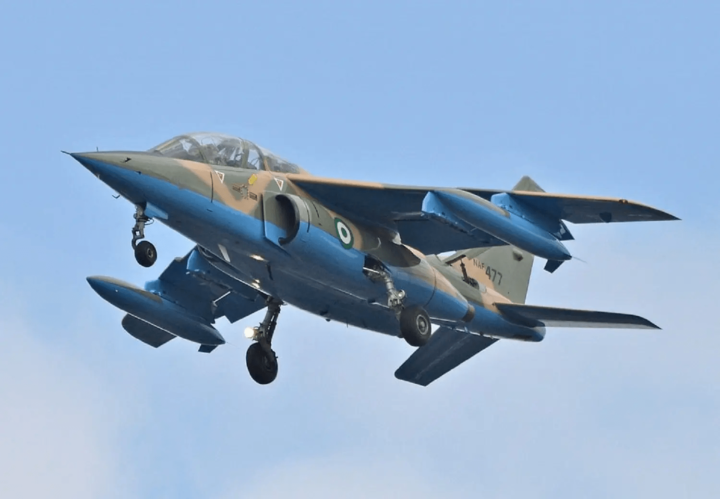
The Nigerian Air Force (NAF) is investigating the reported fatal civilian casualties during airstrikes while pursuing Islamist militants around Jilli Market, around the Borno-Yobe border near Fuchimiram village in the Geidam Local Government Area of Yobe State.
In a statement on Sunday, the Director of Public Relations and Information for the Nigerian Air Force, Air Commodore Ehimen Ejodame, said it “treats all reports of possible civilian harm with the utmost seriousness and empathy.”
According to eye witnesses and local government official accounts, at least 200 people are feared dead after Nigerian military jets struck the village market.
“In line with this commitment, the CAS has directed an immediate activation of the Civilian Harm Accident and Investigation Cell (CHAI-Cell) to immediately proceed to the location on a fact-finding mission on the allegation,” the statement read.
NAF maintained that it remained “firmly committed to professionalism, accountability, and transparency in the conduct of its missions.”
In an earlier statement, the Nigerian Air Force confirmed mop-up air strikes in the Jilli axis, but did not state whether any civilian casualties were recorded.
“Coming amid intensified efforts to track and neutralise terrorist elements responsible for recent attacks on security forces within the wider theatre, the follow-on strikes were aimed at fleeing remnants and regrouping cells seeking to exploit the difficult terrain,” NAF said.
However, Brigadier General Dahiru Abdulsalam, a military adviser to the Yobe state government, said, “Some people from Geidam LGA (local government area) bordering Gubio LGA in Borno state who went to the Jilli weekly market were affected.”
Several persons were feared killed and others wounded after the suspected accidental airstrikes at Jilli Market in the Geidam Local Government Area of Yobe State.
Jilli, a border community with Damasak in Borno State, is located over 200 kilometres from Damaturu, the Yobe State capital.
Lawan Zanna Nur Geidam, the councillor and traditional head of Fuchimeram ward in Yobe’s Geidam district, told Reuters that those injured were being taken to hospitals in Yobe and Borno.
“It’s a very devastating incident at Jilli Market. As I’m speaking to you, over 200 people have lost their lives from the air strike at the market,” he told Reuters.

Waka TV delivers the best premium streaming experience, access to 20,000+ live channels in Full HD & 4K, 140,000+ movies and series, and follow live sports from around the world.
It is compatible with all your devices. Enjoy smooth, buffer-free streaming with zero interruptions and 24/7 support.
Waka TV installs in just a few clicks on all your devices, Smart TV, smartphone, tablet or PC. Your access is activated within 10 minutes, and streaming starts immediately with zero hassle.
Waka TV offers a service focused on quality, reliability and the best value for money. Rugby, Basketball, Cricket, Tennis, Football, and all live sports are included in your premium IPTV subscription.
-
 Feature/OPED6 years ago
Davos was Different this year
-
Travel/Tourism10 years ago
Lagos Seals Western Lodge Hotel In Ikorodu
-

 Showbiz3 years ago
Estranged Lover Releases Videos of Empress Njamah Bathing
-
 Banking8 years ago
Sort Codes of GTBank Branches in Nigeria
-

 Economy3 years ago
Subsidy Removal: CNG at N130 Per Litre Cheaper Than Petrol—IPMAN
-

 Banking3 years ago
Sort Codes of UBA Branches in Nigeria
-

 Banking3 years ago
First Bank Announces Planned Downtime
-

 Sports3 years ago
Highest Paid Nigerian Footballer – How Much Do Nigerian Footballers Earn