
General
African Railway Leaders to Meet over Financing Challenges


Amidst funding crisis and outcry over likely debt crisis, a rail advocacy group, African Railway Roundtable, alongside a Swiss and South African rail associations, has scheduled a railway financing conference and exhibition for October 24, 2019.
The event scheduled for Abuja, the Nigerian capital, is co-sponsored by the Nigerian Federal Ministry of Transportation, German Friendship Society, South African Railroad Association, Railway Working Group of Switzerland among many other partners.
According to a statement issued by a director of the African Railway Roundtable, Mr Olawale Rasheed, high profile speakers lined up for this event include Ministers of transportation, heads of national railway agencies, finance professionals, Logistic experts alongside critical procurement decision makers; railway manufacturers and other stakeholders.
Commenting on the significance of the event, Mr Rasheed said “railway transport is a sector attracting passionate interest among African leaders with several governments embarking on ambitious railway expansion and modernization,” adding that “financing railway is a major headache for Africa.
“African leaders are challenged by funding and financing constraints in their bid to execute ambitious rail agenda. National capacity is limited. Borrowing raises fear of debt trap. Multilateral sources are equally facing shortfall and capacity crisis. The continent is in search of a workable sustainable financing and funding options to expand and upgrade the railway network system and benefits from the many advantages of railway transport.
“The Railway Financing conference will help participants to develop a greater understanding of the financing possibilities and options. The conference will present various financing paths while at the end forging a combined alternative to satisfying African yearning for an expanded railway network.
“The Railway Financing Conference 2019 is where leading government officials and experts will discuss the major funding challenges facing the railway sector, devise how to finance railway facilities, understand why new financial engineering is the answer and how new financing options are imperative if Africa is to reap the benefits of expanded railway system,” Mr Rasheed noted.
“A major part of the conference is exhibition pavilion for railway manufacturers and railway agencies to showcase services, products and investment opportunities. We expect exhibitors from all over the world,” the ARR director noted.



By Aduragbemi Omiyale
A technology company headquartered in The Hague, Netherlands, Zarttech, has apologised to individuals and partners affected by its decision to shut down its operations.
In a message, the organisation noted that while its chapter may have come to an end, the impact of the conversations it helped spark about African talent, global collaboration, and opportunity without borders continues to be part of a larger movement transforming the global technology landscape.
Zarttech was established to bridge the global tech talent gap by connecting diverse IT professionals with opportunities around the world. It sought to remove barriers that often prevent talented individuals from accessing global work, while promoting fairness and reducing bias in the technology recruitment process.
Through its work, Zarttech contributed to a broader shift in how Africa is perceived in the global technology ecosystem. By highlighting the expertise, creativity, and potential of African developers and technology professionals, the firm helped bring greater visibility to the continent’s growing pool of world-class talent.
Its mission was centred on creating opportunities that connect businesses with skilled professionals across Africa, Europe, and South America while demonstrating that innovation and excellence in technology know no geographic boundaries.
Beyond its business activities, Zarttech also supported initiatives aimed at empowering women in technology across Africa through training and education programs, reinforcing its belief that inclusive access to opportunity can help shape a more equitable global tech industry.

By Modupe Gbadeyanka
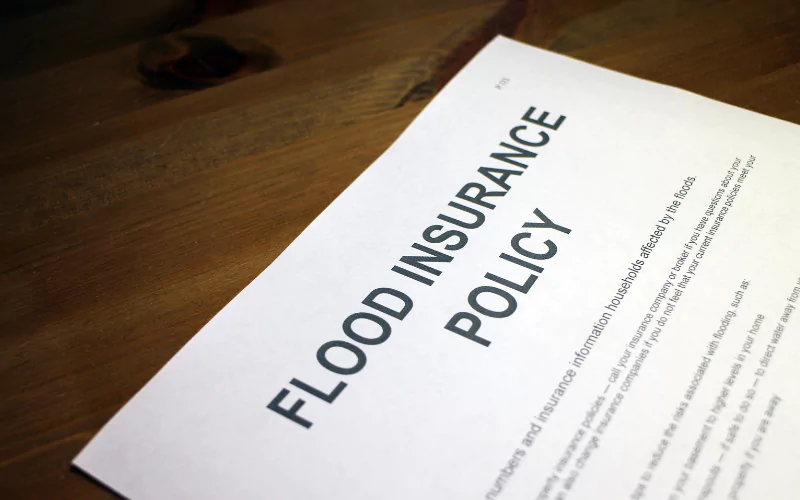
To protect residents, infrastructure and the economy, the Lagos State government has adopted a parametric flood-risk insurance policy designed by a team of Insurance Development Forum (IDF) member insurance organisations like AXA Climate, AXA Mansard, Swiss Re, flood modeller JBA Risk Management, satellite company ICEYE and African Risk Capacity Ltd.
The new insurance product will cover up to 4 million vulnerable people and secure up to $7.5 million for flood response and recovery in the aquatic state.
The policy’s activation is a major milestone for the Tripartite Agreement Programme, a public-private partnership among IDF, the United Nations Development Programme (UNDP), and the German Federal Ministry for Economic Cooperation and Development (BMZ) through the InsuResilience Solutions Fund (ISF), to build developing countries’ resilience to climate risk.
The insurance product has received regulatory approval, with placement enabled through 90 per cent of premium finance from the ISF for the first year, while Lagos State may raise the premium finance allocation beyond 10 per cent in the second and third years of the policy to ensure the sustainability of the protection provided by the product.
“Climate inaction could cost Lagos State just under $40 billion by 2050, with severe consequences for our people, infrastructure and economy. Our wetlands and biodiversity are also under threat.
“These realities demand urgent action. This pioneering parametric flood insurance policy strengthens our ability to protect lives, livelihoods and public finances while embedding climate risk management into Lagos State’s long-term development planning,” the Governor of Lagos, Mr Babajide Sanwo-Olu, stated.
Also commenting, the Head of Public Sector for AXA Climate and IDF Lagos Project co-Lead, Karina Whalley, said, “This policy demonstrates the power of insurance to enable preparedness ahead of and faster recovery after disasters, as well as greater financial resilience for governments; in short, future-ready nations. The product design harnessed our industry members’ technical expertise in flood risk modelling and parametric insurance to develop a scalable solution tailored to the needs of climate-vulnerable communities in Lagos.”
The Director-General for Multilateral Development Policy, Transformation, Climate, German Federal Ministry for Economic Cooperation and Development (BMZ), Dr Katharina Stasch, said, “This product highlights the impact that effective collaboration between governments, insurance and development partners can deliver.
“As climate risks continue to rise, BMZ is proud to have supported the Tripartite Agreement Programme’s efforts to scale sovereign risk finance and to witness the new alliances and models for cooperation emerging through the programme.”

By Adedapo Adesanya
The Federal Competition and Consumer Protection Commission (FCCPC) has tasked manufacturers, importers and service providers to prioritise product safety, warning that substandard goods threaten consumer trust and weaken Nigeria’s market system.
The commission issued the warning on Wednesday in Abuja on the back of the 2026 World Consumer Rights Day celebration and the 9th National Consumers Contest Awards, where regulators, industry stakeholders and consumer advocates gathered to review the state of consumer protection in the country.
The chief executive of the FCCPC, Mr Tunji Bello, said this year’s theme, Safe Products, Confident Consumers, highlights the direct connection between product safety and economic stability, adding that, “Where safety is uncertain, confidence declines. And where confidence declines, markets become weaker, less efficient, and less trustworthy.”
He expressed concern over persistent violations across sectors, noting that many products still fail to meet basic safety and quality benchmarks.
According to him, infractions include mislabelled goods, products that do not comply with minimum safety standards and, in some cases, deliberate disregard for regulatory requirements.
Mr Bello warned that such practices expose consumers to avoidable risks while creating unfair competition for businesses that comply with established rules.
Linking consumer protection to the federal government’s ongoing economic reforms under President Bola Ahmed Tinubu, Bello said strengthening regulatory compliance is essential to building transparent, investment-friendly markets.
“Consumer protection is a key part of that effort. Safe, reliable, and transparent markets support sustainable growth,” he said.
He reiterated that the Federal Competition and Consumer Protection Act (2018) guarantees consumers the right to safe, durable and fit-for-purpose products, stressing that businesses must promptly address safety concerns through product recalls, withdrawals and proper consumer notification.
The FCCPC boss warned that failure to comply, he warned, attracts regulatory sanctions.
Mr Bello disclosed that the FCCPC has expanded market surveillance operations, enhanced product testing capacity and intensified enforcement actions in priority sectors. He added that the Commission is strengthening collaboration with regulatory partners, including the Standards Organisation of Nigeria (SON) and the National Agency for Food and Drug Administration and Control (NAFDAC), to close enforcement gaps that allow unsafe products into the market.
Beyond enforcement measures, the FCCPC boss underscored the importance of consumer education, highlighting the role of the National Young Consumers Contest in promoting awareness and responsible purchasing behaviour among young Nigerians.
“Consumer protection is not only about enforcement. It is also about education, awareness, critical thinking, and responsible engagement,” Mr Bello said.
While clarifying that the FCCPC does not fix prices, he noted that transparency, fairness and adherence to safety standards remain fundamental to efficient market operations. He urged consumers to remain vigilant by examining products carefully and reporting unsafe or substandard goods.
The event drew participation from regulatory agencies, trade associations and media organisations, reinforcing calls for coordinated action to strengthen accountability across Nigeria’s marketplace.
“Safe and reliable markets depend on responsible business conduct, effective regulation, and informed consumer participation. That standard must be upheld consistently,” Mr Bello said.







-
 Feature/OPED6 years ago
Davos was Different this year
-
Travel/Tourism10 years ago
Lagos Seals Western Lodge Hotel In Ikorodu
-

 Showbiz3 years ago
Estranged Lover Releases Videos of Empress Njamah Bathing
-
 Banking8 years ago
Sort Codes of GTBank Branches in Nigeria
-

 Economy3 years ago
Subsidy Removal: CNG at N130 Per Litre Cheaper Than Petrol—IPMAN
-

 Banking3 years ago
Sort Codes of UBA Branches in Nigeria
-

 Banking3 years ago
First Bank Announces Planned Downtime
-

 Sports3 years ago
Highest Paid Nigerian Footballer – How Much Do Nigerian Footballers Earn