
General
EFCC Busts Yahoo Yahoo School in Ikotun Lagos

By Dipo Olowookere
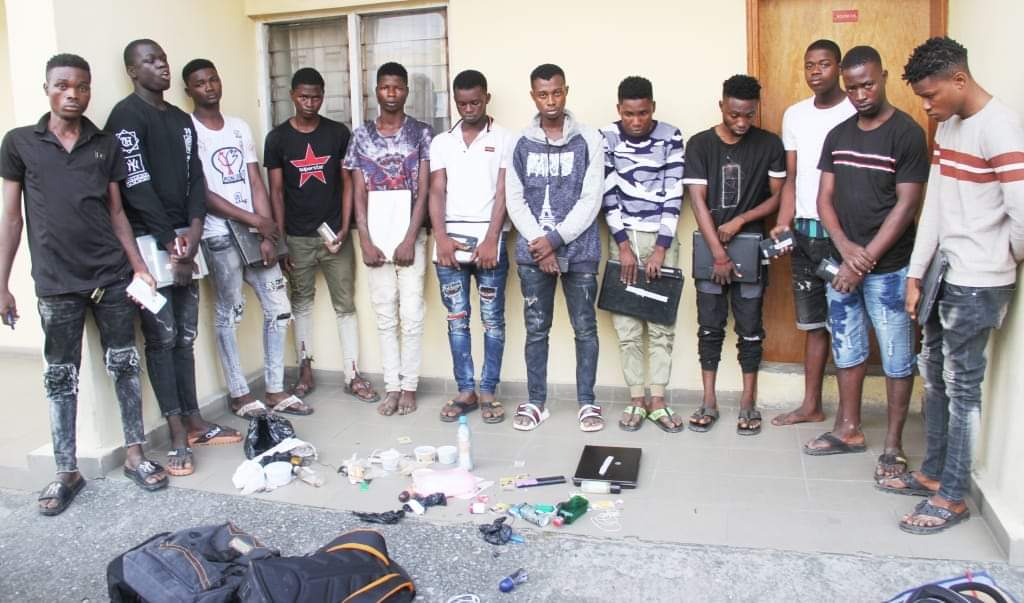
Operatives of the Economic and Financial Crimes Commission (EFCC) have arrested some suspected internet fraudsters known as Yahoo Boys in the Ikotun area of Lagos State.
A statement issued by the agency on Friday said the suspects, 12 in number, were apprehended at a Yahoo Yahoo school operated by one of them in the area.
According to the EFCC, the said internet fraud learning institution is run in a rented three-bedroom apartment in the suburb of the metropolis.
It said the place was raided with the arrest made following intelligence reports received from concerned members of the public about their alleged criminal activities.
“During the raid, some of the suspects attempted to flee by hiding on the roof of their apartment.
“Items recovered from the suspects include laptops and mobile phones,” the statement said.
The anti-graft agency gave names of the suspects as Oluwaseun Ogunbunmi, Haruna Yusuf , Olubori Hassan, Wasiu Idowu, Basit Adeniran, Aina Olajuwon, Okafor Joseph, David Ado, Olamide Ogunseye, Opeyemi Ahmed , Monsuru Amao, Taiwo Rasak.
The EFCC promised to charge the alleged internet fraudsters to court soon.
Meanwhile, the agency said, “As part of efforts to curb the menace of computer-based frauds, the EFCC is calling on members of the public to report any suspicious activities of internet fraudsters in their neighbourhood through the commission’s email address: in**@*********ia.org or the hotline: +2348093322644 (0809EFCCNIG).”



By Adedapo Adesanya
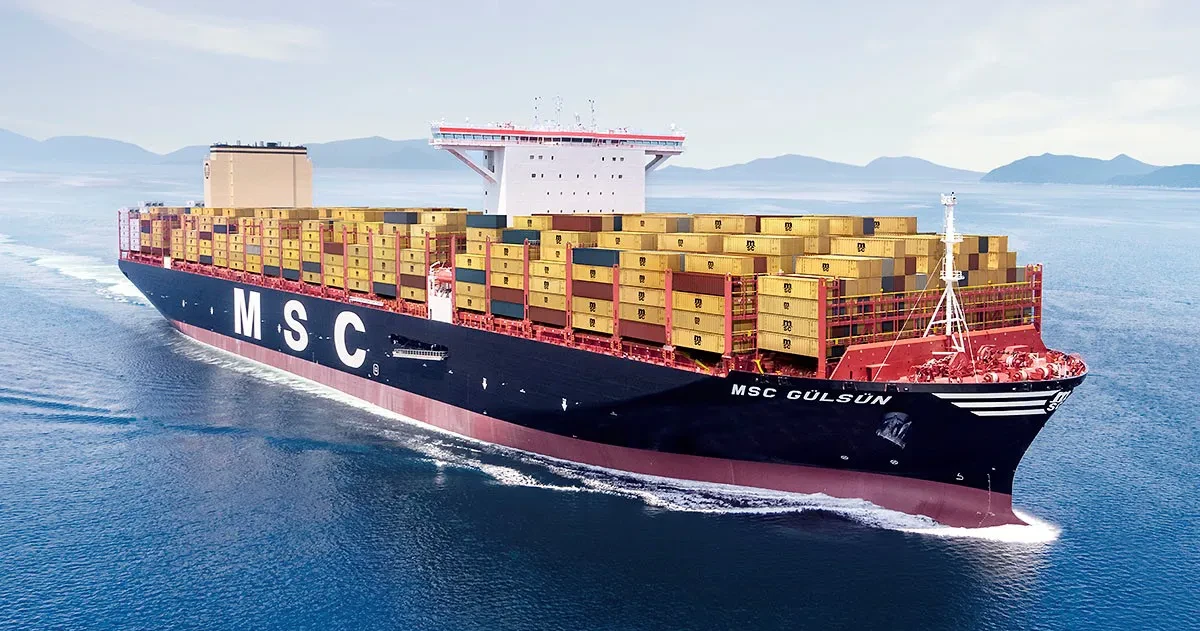
Switzerland-headquartered global shipping giant, Mediterranean Shipping Company (MSC), has complied with the directive of the Nigerian Shippers’ Council (NSC) to suspend the implementation of its new tariff pending consultations with stakeholders.
In a customer advisory titled Temporary Suspension of New Tariff Implementation, the shipping line stated that the tariff regime in place before the recent increase would remain effective until further notice.
Business Post reported a few days ago that freight forwarders picketed the offices of MSC, protesting the recent increase in shipping line tariffs. They blocked the regulators from accessing the MSC premises to address the matter.
Despite the protests, the council’s attempt to engage the aggrieved freight forwarders in discussions was resisted, as the protesters insisted that there was no basis for dialogue and vowed to continue the protest until the increased charges were immediately reversed.
In the latest directive, the shipping company said, “We wish to inform our esteemed customers that the recently implemented tariff adjustment has been temporarily suspended, following a directive from the NSC. This suspension is pending the conclusion of ongoing engagements and resolution with the regulator.”
“Accordingly, the tariff regime applicable prior to the recent increase will remain in force until further notice, as mandated.”
The company further assured customers that updates would be communicated once a final decision is reached by the Nigerian Shippers’ Council.
“We remain fully committed to regulatory compliance, transparency, and protecting the interests of our customers. Further updates will be communicated promptly once a definitive position is issued by the Nigerian Shippers’ Council. We appreciate your understanding and continued cooperation,” the advisory added.
NSC had warned that prolonged industrial disputes within the maritime sector could disrupt port operations and negatively impact trade and economic activities.
By Adedapo Adesanya
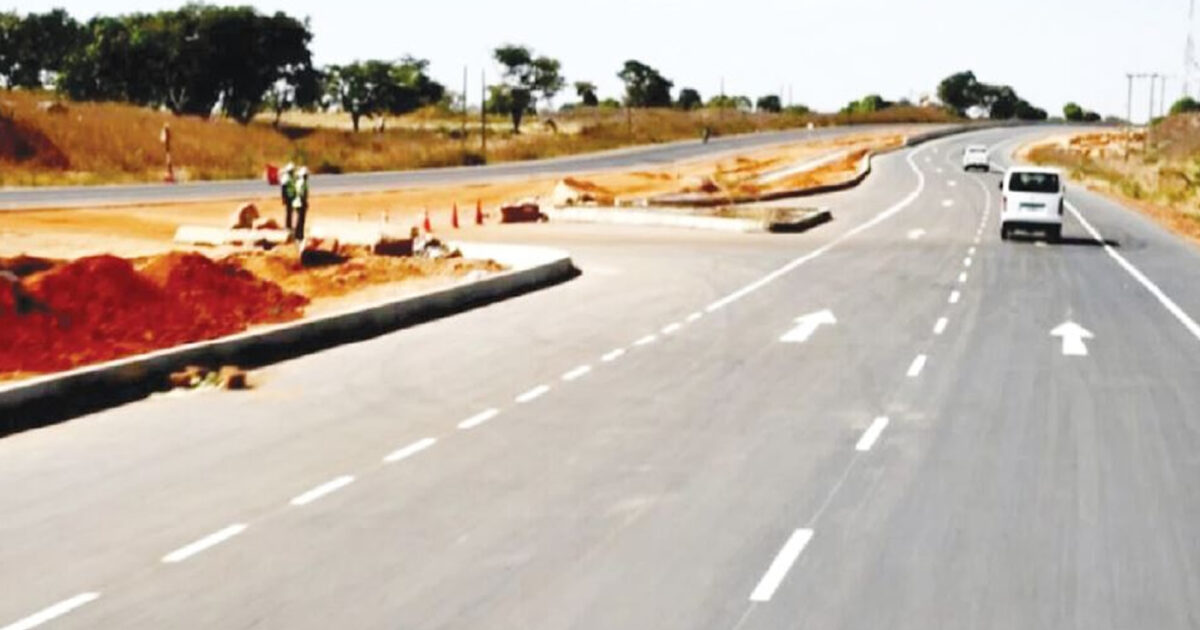
The Minister of Works, Mr David Umahi, has announced that motorists would begin using a crucial 15-kilometre section of the Enugu–Onitsha highway during the Easter period, describing it as a special intervention to ease travel.
Mr Umahi made the disclosure while inspecting the project in Enugu, expressing satisfaction with the quality of work and reaffirming the government’s commitment to delivering immediate relief to road users.
According to him, the section will be opened for use by the end of March, even if final touches such as road markings and median curbs are yet to be completed.
“We have directed the contractor to ensure that this stretch is accessible within the stipulated timeframe as part of efforts to reduce the burden on commuters,” he said.
The Minister emphasised that beyond short-term relief, the project is designed to ensure long-term durability, noting that the highway remains one of the most strategic transport corridors in Nigeria’s South-East.
He observed that roads in the region have long suffered from heavy congestion, frequent accidents, and poor pavement conditions, expressing optimism that ongoing reconstruction will permanently address these challenges.
Umahi linked the renewed infrastructure push to the commitment of President Bola Tinubu to the development of the South-East, while also highlighting the scale of inherited challenges in the sector.
He revealed that the federal government met outstanding road liabilities estimated at over N13 trillion across more than 2,000 projects as of May 2023, a situation he said has strained project delivery nationwide.
While acknowledging that delayed payments have slowed contractors’ pace of work, Umahi expressed confidence that progress would improve once funding issues are resolved.
“You cannot expect optimal performance when contractors are unpaid, but we appreciate their continued cooperation and trust in government,” he added.
The minister also commended Enugu State governor, Peter Mbah, for supporting the project, particularly in handling compensation for affected residents around the Abakpa flyover axis of the Enugu–Abakaliki highway.
He noted that the state government also facilitated the relocation of key infrastructure, including high-tension power lines and water pipelines, to ensure smooth execution of the project.
On his part, the resident engineer for the Enugu–Onitsha highway project, Mr Lawrence Ubi, confirmed that the 15-kilometre stretch is about 95 per cent complete.
He assured that the work meets required engineering standards and will be ready for public use within the agreed timeline, while appreciating the federal government’s continued support.

By Modupe Gbadeyanka
A total of 3,200 African entrepreneurs across 54 countries will participate in the 2026 Tony Elumelu Foundation (TEF) Entrepreneurship Programme.
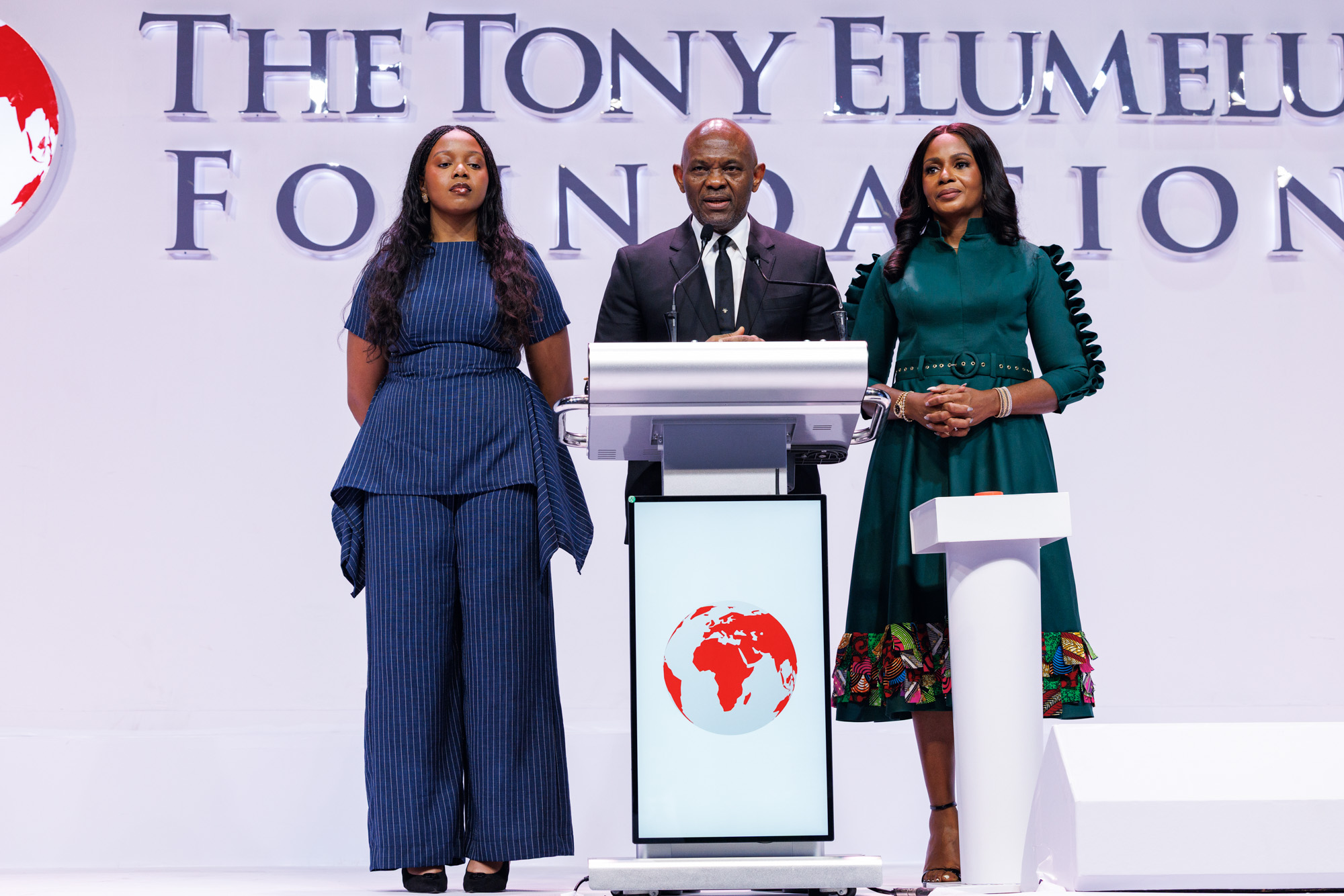
The beneficiaries were unveiled at the weekend, when the founder of the organisation, Mr Tony Elumelu, celebrated his 63rd birthday in Abuja.
Analysis showed that women accounted for 51 per cent of the cohort, which Mr Elumelu was proud of, saying it reflects merit-based selection and highlights the increasing leadership of African women in entrepreneurship.
“When opportunity is accessible, African women do not simply participate, they lead,” the philanthropist and chairman of Heirs Holdings, Transcorp Plc and UBA Group said.
The chosen business owners will each receive $5,000 in non-refundable seed capital, alongside access to mentorship, business training, and TEF’s proprietary digital platform, TEFConnect.
In his annual letter, Mr Elumelu emphasised that opportunity and prosperity can be intentionally created and scaled, saying, “Hope is not just a feeling, it is a system we can build”.
This underscores his long-standing belief in Africapitalism, the philosophy that Africa’s private sector must drive economic and social development.
Highlighting the programme’s growing impact, the Delta State-born businessman noted that the foundation has now disbursed over $100 million in funding to more than 24,000 African entrepreneurs since its inception. The programme continues to demonstrate strong outcomes, with 80 per cent of supported businesses scaling beyond the early stage, significantly outperforming global averages.
Collectively, TEF-supported entrepreneurs have generated over $4.2 billion in revenue, created 1.5 million jobs, and lifted more than 2.1 million Africans out of poverty, impacting over four million households across the continent.
Reflecting on the organisation’s journey since its launch in 2010, Mr Elumelu reiterated the vision to democratise opportunity and scale impact across Africa by investing in its most valuable resource, which is its people. He also expressed gratitude to partners, mentors, and stakeholders who continue to support the foundation’s mission of building a self-sustaining Africa.












-
 Feature/OPED6 years ago
Davos was Different this year
-
Travel/Tourism10 years ago
Lagos Seals Western Lodge Hotel In Ikorodu
-

 Showbiz3 years ago
Estranged Lover Releases Videos of Empress Njamah Bathing
-
 Banking8 years ago
Sort Codes of GTBank Branches in Nigeria
-

 Economy3 years ago
Subsidy Removal: CNG at N130 Per Litre Cheaper Than Petrol—IPMAN
-

 Banking3 years ago
Sort Codes of UBA Branches in Nigeria
-

 Banking3 years ago
First Bank Announces Planned Downtime
-

 Sports3 years ago
Highest Paid Nigerian Footballer – How Much Do Nigerian Footballers Earn