
General
FAAC Gives FG, 36 States, 774 Councils N2.001trn from July 2025 Earnings


By Aduragbemi Omiyale
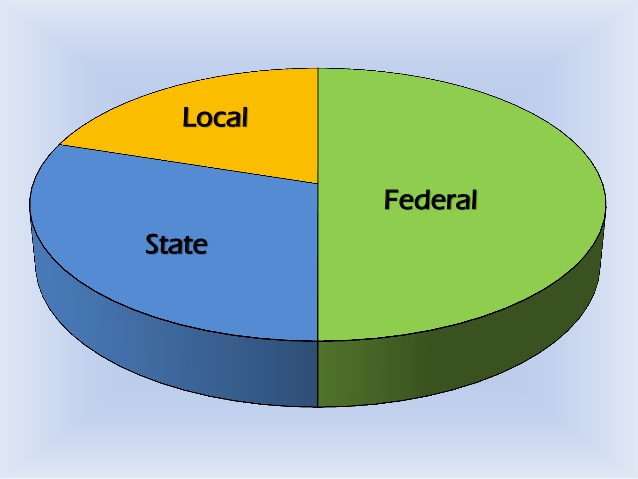
The sum of N2.001 trillion has been disbursed to the federal government, the 36 state governments, and the 774 local councils as allocation for August 2025 from the N3.836 trillion generated by the nation in July 2025.
The N2.001 trillion distributed to the three tiers of government comprised statutory revenue of N1.282 trillion, Value Added Tax (VAT) of N640.610 billion, N37.601 billion from Electronic Money Transfer Levy (EMTL), and N39.745 billion from exchange difference.
It was shared to the parties at the Federation Account Allocation Committee (FAAC) meeting for August held in Abuja.
The gathering, chaired by the Minister of Finance and Coordinating Minister of the Economy, Mr Wale Edun, had in attendance the Commissioners for Finance of the sub-nationals and others.
Business Post reports that Petroleum Profit Tax (PPT), excise duty, Electronic Money Transfer Levy (EMTL), and oil and gas royalty increased significantly, while Value Added Tax (VAT) and import duty increased marginally, as Company Income Tax (CIT) and CET levies decreased.
From the N3.836 trillion earned by the country, N152.681 billion was deducted for the cost of collection, and N1.683 trillion allocated for transfers intervention and refunds.
In a statement issued at the end of the meeting, it was disclosed that funds comprised gross statutory revenue, VAT, EMTL, and exchange difference, with the central government getting N735.081 billion, the states receiving N660.349 billion, the local government councils getting N485.039 billion, and the oil producing states going with N120.359 billion as their 13 per cent derivation mineral revenue.
It was disclosed that the gross revenue available from VAT was N687.940 billion compared with the N678.165 billion distributed in the preceding month, resulting in an increase of N9.775 billion.
From that amount, the sum of N27.517 billion was allocated for the cost of collection and N19.813 billion given for transfers, intervention and refunds.
The remaining sum of N640.610 billion was distributed to the three tiers of government, of which the federal government got N96.092 billion, the states received N320.305 billion and local government councils got N224.214 billion.
Accordingly, the gross statutory revenue of N3.070 trillion received for the month was lower than the sum of N3.485 trillion received in the previous month by N415.108 billion.
From the stated amount, the sum of N123.597 billion was allocated for the cost of collection and a total of N1.663 trillion for transfers, intervention and refunds.
The remaining balance of N1.282 trillion was distributed by the three tiers of government, with the federal government getting N613.805 billion, states receiving N311.330 billion, the councils receiving N240.023 billion and the oil producing states getting N117.714 billion as derivation revenue.
Also, the sum of N39.168 billion from EMTL was distributed this month as the national government took N5.640 billion, states got N18.801 billion, and local councils received N13.160 billion, while N1.567 billion was allocated for cost of collection.
Further, N39.745 billion from exchange difference was shared with the federal government going with N19.544 billion, the states getting N9.913 billion, the councils receiving N7.643 billion, and the oil producing states getting N2.645 billion.





Search Engine Optimization isn’t what it used to be.
Gone are the days of stuffing keywords, buying random backlinks, and expecting overnight rankings. Today, SEO is a sophisticated blend of technical precision, content authority, brand positioning, and strategic digital PR.
At RiseGrower.com, we’re launching with one mission:
To help brands grow through ethical, scalable, authority-driven SEO.
This isn’t just another SEO agency. This is the next evolution of ranking strategy.
🌍 SEO in 2026: What Has Changed?
Search engines—especially Google—have become dramatically smarter.
Modern ranking systems analyze:
- Topical authority
- Content depth and expertise
- User engagement signals
- Link quality (not quantity)
- Brand credibility
- Search intent satisfaction
SEO today is no longer about “gaming the algorithm.” It’s about becoming the most trusted answer in your industry.
That’s where RiseGrower comes in.
🚀 What RiseGrower.com Is Built For
We specialize in performance-focused SEO strategies designed to:
- Increase organic traffic
- Improve high-intent keyword rankings
- Strengthen domain authority
- Build sustainable backlink profiles
- Turn search visibility into revenue
Our approach combines:
- Advanced technical SEO audits
- Strategic content architecture
- Authority guest posting campaigns
- White-hat link acquisition
- On-page optimization
- Data-driven reporting
We don’t chase vanity metrics. We build growth systems.
🧠 Our Philosophy: Authority Wins
Search engines reward expertise and trust.
That’s why our strategy centers around three pillars:
1️⃣ Topical Authority
We help brands dominate entire keyword clusters—not just single keywords.
2️⃣ Editorial Authority
Through high-quality guest posting on real industry publications, we build contextual backlinks that move rankings safely and effectively.
3️⃣ Technical Excellence
From crawl optimization to structured data, we ensure search engines fully understand and prioritize your content.
🔥 Why Most SEO Strategies Fail
Many businesses struggle with SEO because:
- They focus only on backlinks without strategy
- They publish content without search intent research
- They ignore technical site health
- They chase short-term wins instead of long-term growth
SEO is not a trick.
It’s a system.
RiseGrower builds systems.
📊 Our Approach Is Data-Driven
Every campaign starts with:
- Competitive analysis
- Keyword gap research
- Link profile audit
- SERP intent mapping
We analyze what’s ranking—and why.
Then we engineer a strategy that outperforms it.
🏢 Who We Work With
RiseGrower is built for ambitious brands:
- SaaS companies
- eCommerce brands
- Agencies
- Startups
- Enterprise businesses
- Niche industry leaders
If your goal is sustainable organic growth, you’re in the right place.
⚖️ White-Hat SEO Only
We believe in:
- Real editorial placements
- Ethical outreach
- Genuine authority building
- Search engine compliance
We do not use:
- Private Blog Networks (PBNs)
- Spammy link schemes
- Automated backlink tools
- Manipulative ranking shortcuts
Long-term growth requires integrity.
📈 The Rise of Performance-Based SEO
The future of SEO isn’t “deliverables.”
It’s measurable outcomes.
At RiseGrower, we align our strategy with:
- Ranking milestones
- Traffic growth targets
- Lead generation goals
- Revenue impact
Because rankings are only valuable if they drive business growth.
🌟 What Makes RiseGrower Different?
We blend:
- SEO strategy
- Digital PR
- Authority guest posting
- Content intelligence
- Conversion-focused thinking
We don’t just improve rankings.
We build market leaders.
🔮 The Future of Search
AI-generated content is flooding the internet. Competition is rising daily.
Search engines will increasingly reward:
- Authentic expertise
- Brand mentions
- Trusted backlinks
- Valuable long-form content
- Real-world credibility
The brands that invest in authority now will dominate tomorrow.
RiseGrower was created for that future.
🚀 Launching Soon
RiseGrower.com is preparing to launch with a clear promise:
Growth through strategic SEO authority.
If you’re ready to:
- Outrank competitors
- Scale organic traffic
- Build long-term visibility
- Turn search into revenue
We’re ready to grow with you.

Wholesale marketplaces were created so that business owners could find profitable offers and make deals on B2B platforms worldwide. In addition to buyers and sellers, there are traders, distributors, logisticians, and other professionals on such platforms. Let’s take a closer look at these professions. Traders purchase goods in order to resell them at a higher price; speculation is allowed on B2B marketplaces and is a legal instrument. Distributors are the official representatives of the manufacturer, meaning you can purchase original products at the lowest price. Most often, goods are purchased in China and then transported by sea to European countries or North America. We suggest you try the Globy Platform, where the most reputable Asian distributors are registered. Logisticians can also register on Globy. They provide services for the transportation of goods by sea. The following are the advantages of Globy, which are mentioned most often:
- quick registration on the portal;
- website with simple navigation and management;
- excellent choice of reliable suppliers;
- most relevant products in the catalog;
- free registration;
- no commission.
Some B2B platforms process payments, but Globy allows participants to make money payments outside the platform using one of the secure methods. In addition, Globy does not charge a commission when concluding a purchase deal. To start working on the platform, you need to register in accelerated mode or fill out a form with your company’s details. You can be sure that your banking details, personal, and contact information are protected. Third parties can only see the information that you leave open. When registering, do not forget to enter your company’s contact information (messenger, phone, email) so that new partners can contact you. You can pay attention to the fact that the Globy catalog contains items without specifying a price, but the product profile contains the vendor’s contacts. You can contact the seller to discuss the deal details, determining the price of the product.
Logistics Tool on Globy
There is often a situation when the supplier does not provide transportation services and the buyer has to search for a carrier on their own. In fact, this problem is solved simply. Globy has a special tool that helps you quickly find a charterer. You would open the freight calculator and fill in all the fields in the suggested form. You would specify the sending and destination port, and don’t forget to specify the dates and choose the container size. If you want to place containers in an optimal way, then use the load calculator, which is also available for free on the official website. You can use these tools only after registration. You can log in quickly if you have a Google account or a LinkedIn profile. After entering the data, the freight calculator will process your request and provide a list of prices. You can select a suitable line and contact the charterer to discuss the details of the contract. It is recommended to choose a sea delivery with a minimum number of intermediate stops, in which case the cargo will arrive at the destination port faster.
Receiving Cargo at the Destination Port
Buyers should remember that you can check the cargo when it arrives at the port. If the rules of transportation were violated, there was a long delay, or the goods were damaged, you can refuse the cargo, explaining the reason. You can discuss a price reduction with the supplier if the product has lost its proper appearance or the packaging is damaged. You can evaluate the cargo yourself or with the help of third-party experts. It is best to carefully check the documentation when receiving the goods at the port. All documents must be executed in accordance with international law. You can register on Globy today, find the goods you need, and use the logistics tools for free. More than fifty-five thousand users have already been registered on the platform, which indicates the high authority of Globy. If you have any questions, you can ask them in the Help Center on Globy website.

By Adedapo Adesanya
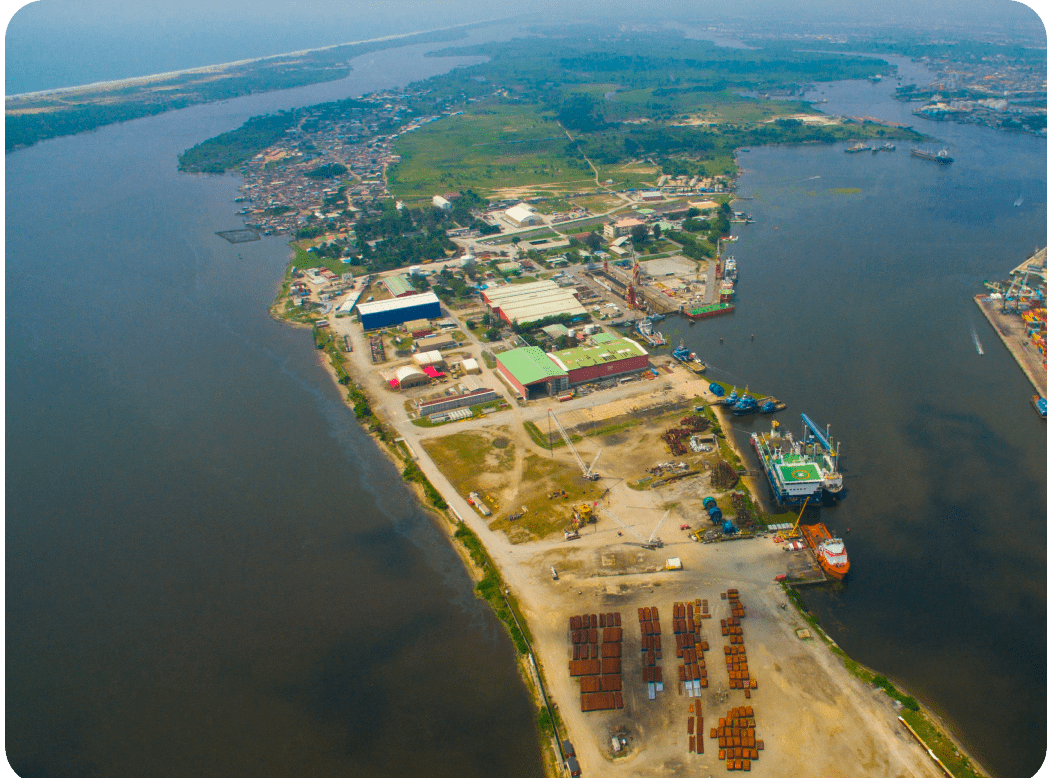
Shipping giant, Mediterranean Shipping Company (MSC), has signed a 45-year concession agreement with Nigerian maritime company, Nigerdock, to develop, operate and maintain a new container terminal at Snake Island Port in Lagos.
A statement by MSC on Thursday noted that the new container terminal would be completed by 2028 with a 910-meter quay, six Ship-to-Shore (STS) cranes, two ship berths, three barge berths, and up to 18 meters of draft.
The dedicated MSC terminal would be part of the company’s announced $1 billion investment in infrastructure and logistics in Nigeria.
“We are thrilled to take this step forward in our partnership with MSC to develop a world-class container terminal within Snake Island Port.
“This gives the world’s leading shipping line a home in Nigeria and brings significant foreign direct investment into the country to accelerate growth in the maritime and logistics industry,” it said.
Global shipping companies are pushing to secure long-term footholds in emerging markets as supply chains are reconfigured worldwide.
MSC said the terminal, to be built by ITB Nigeria and DEME Group, is expected to be ready by 2028.
It will occupy 30 hectares (74 acres) and feature a 910-metre (3,000 ft) quay capable of handling ship‑to‑shore cranes and mobile harbour cranes, serving both deep-sea vessels and barges.
MSC President, Mr Diego Aponte, said: “Completing this key phase in the development of Snake Island Container Terminal with Nigerdock and our trusted partners demonstrates MSC Group’s commitment to providing excellent service to our customers in Nigeria and throughout Africa.
“The new terminal will open up opportunities, enhance efficiency, and elevate Snake Island Port as a major global shipping centre.
“Together with our Group’s other long-term investments in Nigeria, it will generate many local jobs and significantly increase economic revenue and resilience.”
Snake Island Port is an 85-hectare facility operated by Nigerdock, a maritime and logistics company, and comprises three terminals serving the Lagos port complex.












-
 Feature/OPED6 years ago
Davos was Different this year
-
Travel/Tourism10 years ago
Lagos Seals Western Lodge Hotel In Ikorodu
-

 Showbiz3 years ago
Estranged Lover Releases Videos of Empress Njamah Bathing
-
 Banking8 years ago
Sort Codes of GTBank Branches in Nigeria
-

 Economy3 years ago
Subsidy Removal: CNG at N130 Per Litre Cheaper Than Petrol—IPMAN
-

 Banking3 years ago
Sort Codes of UBA Branches in Nigeria
-

 Banking3 years ago
First Bank Announces Planned Downtime
-

 Sports3 years ago
Highest Paid Nigerian Footballer – How Much Do Nigerian Footballers Earn