
General
FG Airlifts 355 Stranded Nigerians in Russia with N306m

By Dipo Olowookere
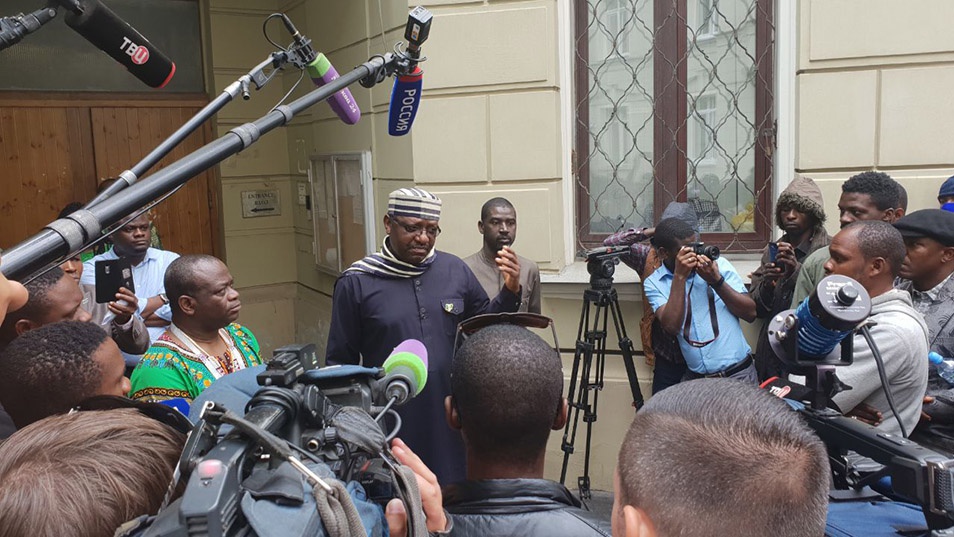
Not less than N306 million was used by the federal government to airlift some Nigerians, who travelled for the 2018 World Cup in Russia, but were stranded in the Eastern European country, back to Nigeria.
The stranded citizens returned to the country in two batches with the first set comprising 155 Nigerians and the second, 200 persons, including 17 Ghanaians.
Speaking in Abuja, Minister of Foreign Affairs, Mr Geoffrey Onyeama, stated that, “A week ago, we learnt that there was another huge number of Nigerians stranded and Russian authorities were going to take very strong measures and yet again, Mr President directed that another plane should be made available to go and bring them back. And they were 200 of them that were brought back yesterday (Sunday) at a cost of $1 million (about N306 million using the interbank rate of N306 per Dollar) to the country.
“It is a clear example that Mr President is determined to safeguard Nigerians and the interest of Nigerians wherever they might be compromised anywhere in the world. He was very quick to do this.”
The evacuation followed a directive by President Muhammadu Buhari to Mr Onyeama and his Aviation counterpart, Mr Hadi Sirika, to immediately evacuate the stranded Nigerians back to the country.
Mr Onyeama further said the amount was a lot of money at a time when the nation was unable to afford it, calling on Nigerians to travel to countries in a regular and legal manner.
Speaking further, the Minister said the Foreign Minister of Ghana, Shirley Ayorkor Botchway, who visited him earlier, expressed appreciation to the Nigerian government for airlifting the 17 Ghanaians back to the country.
According to Mr Onyeama, “And as it has also turned out, as the Minister of Foreign Affairs of Ghana was relating today, she was thanking Mr President because that same plane that brought back Nigerians, also brought back 17 Ghanaians who found their way this morning and were transported to Ghana.
“So, there again, we demonstrated our role as a Big Brother in Africa and becoming also our neighbour’s keepers by helping not only the Nigerians who were stranded there, but also Ghanaians who were stranded in Russians.”
Business Post reports that the soccer fans were stranded in Russia after their return tickets were cancelled allegedly by those who processed their visas for the tournament, which took place from June to July 2018.



By Adedapo Adesanya
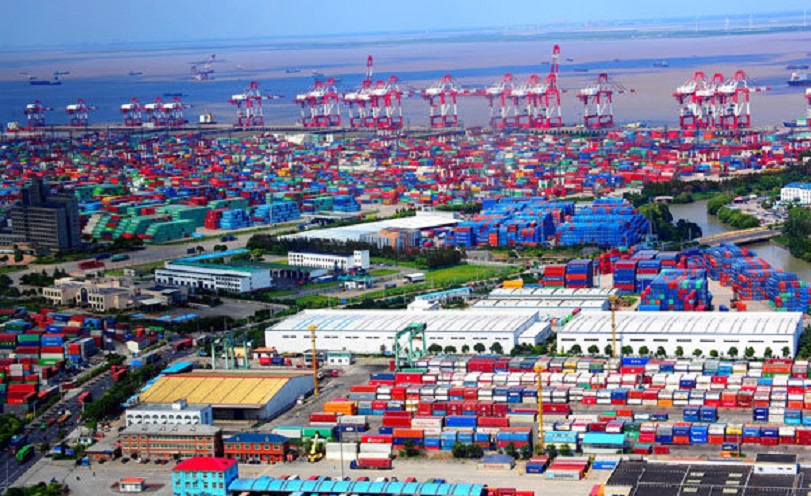
The Nigeria Customs Service (NCS), in partnership with the Presidential Enabling Business Environment Council (PEBEC), has launched a strategic reform agenda aimed at enhancing port efficiency and strengthening Nigeria’s trade competitiveness.
The initiative was unveiled on Tuesday, April 7, 2026, at the opening of a three-day operational workshop in Apapa, Lagos, themed Customs Leadership in Port Efficiency, Inspection Reform and Clearance Timeline.
Speaking at the event, the Comptroller-General of Customs, Mr Adewale Adeniyi, outlined a five-pillar strategy designed to transform port operations. The framework focuses on joint inspections, risk-based cargo clearance, optimisation of scanning infrastructure, enforcement of service timelines, and improved inter-agency collaboration.
Mr Adeniyi emphasised that the Service is shifting from policy formulation to effective implementation, stressing the need for consistent execution of established best practices.
He noted that the “workshop was aimed at bridging the gap between knowledge and action within the system.”
He further highlighted the transition to intelligence-led cargo processing, stating that ongoing investments in digital platforms and scanning systems must result in faster, more transparent clearance procedures for traders.
To ensure accountability, the Customs boss disclosed that the workshop would produce a reform execution matrix subject to close monitoring, adding that he would personally track progress reports.
He also urged officers to uphold professionalism, integrity, and commitment in the discharge of their duties.
In her remarks, the Director-General of PEBEC, Mrs Zahrah Mustapha-Audu, underscored the importance of adopting risk-based, data-driven inspection systems.
According to her, efficient and transparent border processes are essential to reducing the cost of doing business and improving Nigeria’s global trade standing.
Also speaking, the Deputy Comptroller-General in charge of Tariff and Trade, Mrs Caroline Niagwan, said the evolving mandate of the Service places it at the heart of trade facilitation and economic growth, adding that efficiency must be reflected across all commands.
As part of the engagement, the Customs and PEBEC delegation visited the National Single Window facility, where they held discussions with the Chairman of the Nigeria Revenue Service, Mr Zacch Adedeji, and other stakeholders to review progress and address operational challenges.
By Adedapo Adesanya
Madica, a structured investment programme for pre-seed African startups, has announced new investments totalling $600,000 in three tech-enabled startups, including Nigerian data startup, Biovana.
According to the initiative, these investments further reinforce Madica’s commitment to supporting founders and startups often excluded from traditional venture funding. The other startups include Tanzania’s Kilimo Fresh and Kenya’s Hakimu.
Each company has secured up to $200,000 in funding and will take part in Madica’s 18-month programme. This includes a tailored curriculum, hands-on mentorship, executive coaching, and two fully funded immersion trips to key technology ecosystems, both locally and internationally. The startups will also gain access to Madica’s global investor network, helping position them for growth and long-term success.
Madica’s programme seeks to counter the concentration of Africa’s tech funding in a few markets, verticals, and well-networked entrepreneurs and instead drive more equitable growth across the continent. This is done by backing a mix of underrepresented founders, startups from underserved regions, and innovators in overlooked sectors.
Launched in 2022, Madica is a sector-agnostic investment program designed to address structural gaps in Africa’s startup ecosystem. The program tackles key challenges startups face, such as limited access to capital, a scarcity of investors, and insufficient mentorship. It also provides the structured support necessary for startups to resolve critical issues and foster innovation, entrepreneurship, and wealth creation across the continent.
Kilimo Fresh (Tanzania), co-founded by Ms Baraka Chijenga and Mr Justice Mangu, connects smallholder farmers in Tanzania to reliable urban markets by aggregating, processing, and distributing fresh produce through a technology-enabled supply chain, aiming to reduce food waste.
Hakimu (Kenya), Hakimu, co-founded by Ms Rawan Dareer, Mr Ahmed Ahmed and Mr Ahmed Elbashir, is building a pan-African legal infrastructure leveraging the power of AI.
Biovana (Nigeria), co-founded by two female founders, Ms Estelle Dogbo and Dr Jumi Popoola, is a data harmonisation and certification platform focused on unlocking African health datasets for global pharmaceutical, AI, and clinical research applications.
Commenting on the new portfolio companies, Mr Emmanuel Adegboye, Head of Madica, said, “Each new investment brings us closer to the portfolio we set out to build, one that reflects the full breadth and diversity of African entrepreneurship. These three startups join a growing community of founders we’re backing with the resources, relationships, and runway they need to succeed at this early stage. The opportunity across the continent is enormous, and we’re committed to being a crucial and consistent partner in realising it.”
“Joining the Madica portfolio is a significant moment for Hakimu. We’re revolutionising access to justice across Africa, and having a partner that understands the specific challenges and opportunities of scaling in Africa makes a real difference,” said Ms Dareer, co-founder and CEO of Hakimu. “We’re grateful for the trust, looking forward to the hands-on support, and clear-eyed about the work ahead.”

By Adedapo Adesanya
President Bola Tinubu is expected to be among the leading public figures attending the next edition of the Africa CEO Forum, which will take place on May 14-15, 2026, in Kigali, Rwanda
A strong Nigerian private-sector delegation will also take part, including Mr Aliko Dangote, Mr Wale Tinubu, Mr Ofovwe Aig-Imoukhuede, Mrs Adesuwa Ladoja, Mrs Rachel More-Oshodi, Mrs Zouera Youssoufou, Mr Karim Noujaim, Mr Dany Abboud, Mr Ayo Otuyalo and Mr Chukwuerika Achum. Nigeria’s Coordinating Minister of Health and Social Welfare, Professor Muhammad Ali Pate, will also be present.
According to a statement on Tuesday, the 2026 edition will convene in Kigali to address a defining question for Africa’s future: how to achieve the scale necessary to compete, integrate and thrive in a fragmenting world.
It comes as global power dynamics continue to evolve, while the ability of Africa to rely on competitive, agile and internationally integrated corporate champions has become a defining corporate imperative. In this shifting global landscape, one lesson is clear: scale is no longer optional. It is the first line of defence.
Organised by Jeune Afrique Media Group and co-hosted by the International Finance Corporation (IFC), the Africa CEO Forum 2026 will convene Africa’s leading public and private decision-makers around a clear conviction: scale can only be achieved through shared African ownership.
The Forum will explore three strategic levers to build continental scale. First is shared equity, which will look to unlock cross-border equity investment to create multinational African champions. Mobilise African institutional capital across markets to strengthen resilience and enhance long-term returns.
Also, is shared infrastructure, which will take on designing complementary infrastructure to integrate African value chains. Champion transformative projects that serve regional, not merely national, needs and create truly connected markets.
Thirdly is shared frameworks, which is set to harmonise standards, rules and regulations to boost investor confidence and enable the free flow of capital, goods and services. Build future-proof digital rails for health, education, agriculture and cross-border payments.
Speaking on this, Mr Amir Ben Yahmed, President of the Africa CEO Forum, stated: “If Africa wants to compete in a world defined by scale, it must move beyond economic patriotism and embrace a new model: African capital investing together. Shared ownership, cross-border partnerships and continental ambition will define the economic future of Africa and the next generation of African champions.”
On his part, Mr Makhtar Diop, Managing Director at IFC, stated: “Africa has the capital and the opportunity to grow and create quality jobs. What matters now is putting that capital to work at scale. That means building trust, sharing risk, and investing across borders. The Africa CEO Forum brings leaders together to connect policy and private investment, and to help shape Africa’s next phase of growth.”
-
 Feature/OPED6 years ago
Davos was Different this year
-
Travel/Tourism10 years ago
Lagos Seals Western Lodge Hotel In Ikorodu
-

 Showbiz3 years ago
Estranged Lover Releases Videos of Empress Njamah Bathing
-
 Banking8 years ago
Sort Codes of GTBank Branches in Nigeria
-

 Economy3 years ago
Subsidy Removal: CNG at N130 Per Litre Cheaper Than Petrol—IPMAN
-

 Banking3 years ago
Sort Codes of UBA Branches in Nigeria
-

 Banking3 years ago
First Bank Announces Planned Downtime
-

 Sports3 years ago
Highest Paid Nigerian Footballer – How Much Do Nigerian Footballers Earn