
General
FG Moves to End Herdsmen/Farmers Conflict


By Dipo Olowookere
Steps are already being taken by the Federal Government to put an end to the incessant clashes between farmers and herdsmen across the country.
At the end of a security meeting in Benue State recently, which was attended by Inspector-General of Police, the Director-General, Department of State Security and the Commandant-General, Nigeria Security and Civil Defence Corps (NSCDC), Minister of Interior, Mr Abdulrahman Dambazau, said the move followed the spate of attacks nationwide between both parties.
During the meeting with the Governors of Benue, Niger, Kaduna, Adamawa, Taraba and Nasarawa states, as well as the Minister of Agriculture and Rural Development, Mr Audu Ogbeh, the Interior Minister explained that the meeting was on the directive of President Muhammadu Buhari.
According to him, Mr Buhari ordered him to visit the affected areas, where he roundly condemned the killings and also visited the injured in hospitals, adding that he had since reported back to the President.
Mr Dambazau disclosed that the Police Mobile Force, the Army, the Nigeria Security and Civil Defence Corps (NSCDC) and the Police Special Force have been mobilized to curtail the attacks in vulnerable areas.
He assured Nigerians that government would take all necessary steps to rein in the spate of criminal activities in the country, as the provision of security is the major responsibility of government.
The Minister stated that government was working to end the spate of attacks in the farming communities, reiterating government’s commitment to promoting peace and harmonious existence in those communities.
Also, speaking, the Minister of Agriculture and Rural Development, Mr Audu Ogbeh, said the Federal Government would soon establish the Agro-Rangers corps, which officers would provide security to farming communities in the country.



By Modupe Gbadeyanka
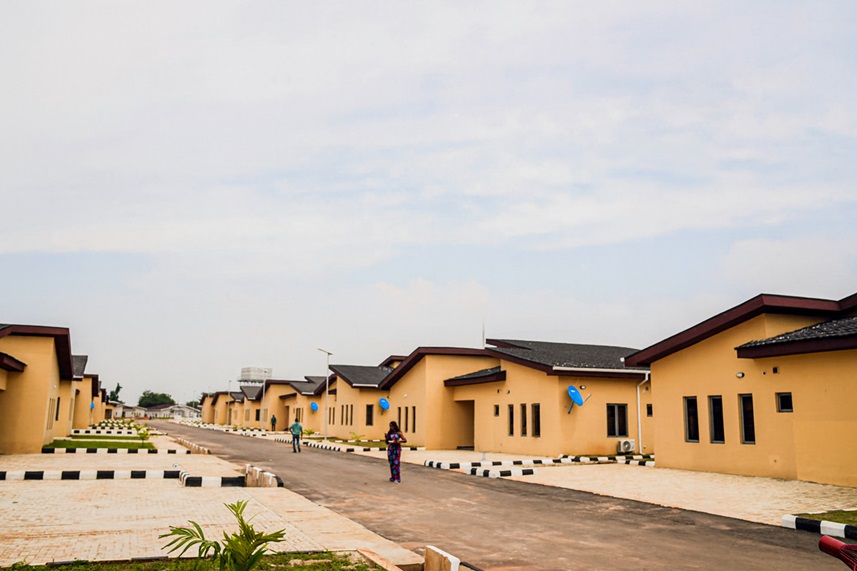
In further demonstration of its unwavering commitment to its workforce, Nigeria’s foremost power generation company, Egbin Power Plc, has unveiled 80 new residential housing units for employees within its plant premises in Egbin, Lagos State.
This comprises 40 fully furnished three-bedroom apartments and 40 furnished studio apartments, all designed to contemporary standards.
The units feature modern infrastructure and thoughtfully planned utilities, creating a safe, comfortable, and conducive living environment that supports both employee productivity and family well-being.
This strategic investment underscores the company’s philosophy that a well-supported workforce is fundamental to sustained operational excellence.
The new housing units are part of a holistic strategy to cultivate a stable, motivated, and future-ready workforce.
This strategy extends beyond infrastructure to encompass robust career development and recognition. Over the past three years, Egbin Power has promoted 112 employees across various cadres, reinforcing a culture that rewards merit, performance, and long-term dedication
“At Egbin Power, our people are our most valuable asset. Even amidst the prevailing liquidity and operational realities within the broader power sector, our focus on employee welfare has remained deliberate and consistent.
“This significant expansion of our residential estate is a tangible expression of that commitment.
“It is one of several key initiatives aimed at ensuring our employees feel genuinely supported, allowing them to thrive both personally and professionally,” the chief executive of Egbin Power, Mr Mokhtar Bounour, said.
Initiated in 2025 and completed in January 2026, this project is the latest milestone in Egbin Power’s structured and ongoing approach to enhancing employee welfare. It reflects the energy firm’s dedication to fostering a culture where every team member feels valued, secure, and motivated.

By Aduragbemi Omiyale
On Tuesday, March 10, 2026, at the Nigerian Exchange Group House in Lagos, the role of capital markets in promoting gender equality will be reemphasised through the closing gong ceremony in commemoration of International Women’s Day 2026.
The ceremony is part of the global Ring the Bell for Gender Equality campaign, which mobilises stock exchanges worldwide to expand women’s participation in the economy and advance gender-inclusive practices.
In Nigeria, the NGX Group is partnering with the Central Securities Clearing System (CSCS) Plc and Women in Management, Business and Public Service (WIMBIZ) to make it memorable under the theme Rights. Justice. Action. For ALL Women and Girls.
Dignitaries expected at the ceremony include the Minister of State for Foreign Affairs, Mrs Bianca Odumegwu-Ojukwu; the First Lady of Imo State, Mrs Chioma Uzodimma; the Executive Commissioner for Legal and Enforcement at the Securities and Exchange Commission (SEC), Ms Frana Chukwuogor; foremost actor, Ms Funke Akindele; a Director at the NGX Group, Ms Ojinnika Olaghere; and another staffer of NGX Group, Mrs Fatima Wali-Abdulrahman, alongside board members of NGX Group, regulators, capital market stakeholders, and industry leaders.
NGX Group is joining other exchanges worldwide in sounding the NGX Gong to underscore the importance of inclusive leadership, equal opportunities, and stronger market accountability in advancing gender equality.


By Adedapo Adesanya
The Executive Director/GCOO of Pathway Holdings Limited, Mrs Dolapo Akanbi-Alade, has called for increased inclusion of Nigerian women in finance as the world marks International Women’s Day 2026.
International Women’s Day 2026 is marked every March 8, and this year’s theme is Give To Gain.
In a statement shared with Business Post, Mrs Akanbi-Alade noted that while International Women’s Day highlights the need for gender equality, significant progress requires deliberate policies and systems that expand women’s access to finance and leadership opportunities.
She emphasised that many Nigerian women and women-led businesses still face limited access to finance, highlighting the urgent need for targeted inclusion initiatives.
“At Pathway Holdings, we empower women and give access to investment advisory, asset management, and lending solutions for institutions, high-net-worth individuals, and businesses. Ensuring that women and women-led enterprises can access these opportunities is critical to building a more inclusive financial system,” she added.
Mrs Akanbi-Alade said, “Women’s access to finance is not only a social responsibility but essential for national productivity and economic growth’’. She co-founded the following companies:
Pathway Asset Management Limited is registered and regulated by the Securities and Exchange Commission, Nigeria, as a Fund and Portfolio Manager. The product range includes Pathway Fixed Deposit Notes, Privately Managed Notes, Pathway Private Portfolio Management, Investment Advisory, and Mutual Funds, which will be launched soon.
Pathway Advisors Limited is registered and regulated by the Securities and Exchange Commission (SEC) as an Issuing House and financial adviser. Pathway Advisors’ services cover Mergers and Acquisitions (M&A), Capital-Raising, Financial Advisory, Rating Advisory, and Project and Structure Finance.
Fundbox Financial Services Limited is a wholly owned micro-lending company providing short-term personal and SME finance loans to salaried individuals, self-employed personnel, and small businesses. They offer services which include Cars4Cash, SME Loans, Personal Loans, and Group Employee Loans. Fundbox has successfully disbursed a wide range of loans to both corporate and individual clients, supporting their financial needs and business growth.
Pathway Holdings Limited is a notable investment holding firm focusing on private market investments, including private equity, private credit, and infrastructure. Pathway creates customised investment solutions for institutional investors and individuals, leveraging its extensive experience and local footprint.










-
 Feature/OPED6 years ago
Davos was Different this year
-
Travel/Tourism10 years ago
Lagos Seals Western Lodge Hotel In Ikorodu
-

 Showbiz3 years ago
Estranged Lover Releases Videos of Empress Njamah Bathing
-
 Banking8 years ago
Sort Codes of GTBank Branches in Nigeria
-

 Economy3 years ago
Subsidy Removal: CNG at N130 Per Litre Cheaper Than Petrol—IPMAN
-

 Banking3 years ago
Sort Codes of UBA Branches in Nigeria
-

 Banking3 years ago
First Bank Announces Planned Downtime
-

 Sports3 years ago
Highest Paid Nigerian Footballer – How Much Do Nigerian Footballers Earn
1 Comment