
General
Influencer Intros: Crafting Personal Brand Openers from Selfies and Snapshots


Every creator has a story, and it usually starts with one frame. The rise of short-form content has made the first impression more visual, personal, and faster than ever. Whether you’re an influencer, vlogger, or a small business owner, your video opener is a digital handshake that presents your branded universe to the world. That’s where Pippit, an AI video generator, comes into play, transforming ordinary selfies and pics into engaging intro reels that speak for you, before you even utter a word.
Let’s dive into how creators can reimagine their brand presence.
Why first impressions deserve moving images
Static graphics are wonderful, but movement is enchantment. A well-written intro video communicates your personality, tone, and values in an instant. It’s no longer an add-on, it’s embedded in your brand DNA. Consider how your audience scrolls: in seconds, they choose to stay or swipe. A brief, compelling intro crafted from your images can fill that gap. It personalizes your brand while maintaining you visually cohesive across platforms such as Instagram, YouTube, and TikTok.
Video intros make content creators:
- Recognizable — creates a visual cadence audiences associate.
- Relatable — incorporating personal touches with a professional edge.
- Repeatability — a signature intro can be repeated in campaigns or posts.
When a selfie becomes a story
That weekend brunch selfie? Or that behind-the-scenes photo of your studio setup? Those little, real images are the strongest. Rather than depending on posed shoots, creators now draw upon personal photos as the inspiration for short brand openers that are both natural and impactful.
These vignettes tend to start with a strong headshot, transition into motion graphics, and close with your logo or tagline. The outcome: a micro-narrative expressing your personality in less than ten seconds. Using apps like Pippit, this change does not involve editing skills, it’s about creativity, timing, and story rhythm.
The power of turning photos into presence
The transition from static posts to mobile identity content has revolutionized how creators craft their online presence. What would otherwise take days of editing takes mere minutes now. With AI tools automating transitions, effects, and overlays, you can concentrate on expression rather than execution.
A polished-looking intro video does more than raise your profile, it also speaks volumes about value and dedication. It shows that you’re serious about your craft, even if the material began as a selfie or loose snapshot. Contemporary branding isn’t perfect, it’s consistent. A handful of well-curated images, when animated, can be your visual DNA.
Beyond editing: building emotional hooks
Your influencer introduction should serve a purpose. Apart from showing images, it should sound like you. The emotional connection is what retains your audience beyond visual stimulus. Use color palettes that represent your personality, typography that reflects your tone, and transitions that are smooth and confident.
An intro video can be a moodboard on steroids. It sets the mood. It talks before you do. And most crucially, it builds anticipation, letting viewers know exactly what type of story or atmosphere they’re getting themselves into.
From image to video: the creative bridge
One of the most revolutionary aspects creators are adopting nowadays is image to video creation using Pippit. It enables artists, influencers, and even businesspeople to upload static images and instantly create visually appealing videos with motion, lighting, and subtle animation.
This not only saves time, but it breathes new life into old or less-refined photos. Your treasured moment of candor can now be looped, amplified, or reimagined as a cinematic shot that perfectly fits into your intro reel. A selfie, with some tweaking, becomes a slow pan. A logo becomes a radiant reveal. A smile is a moving statement.
How creators give selfies life with Pippit
Bridging snapshots and branded motion stories
Now that we’ve discussed the creative potential, let’s get down to business. Here’s how you can utilize Pippit.
Step 1: Upload your images
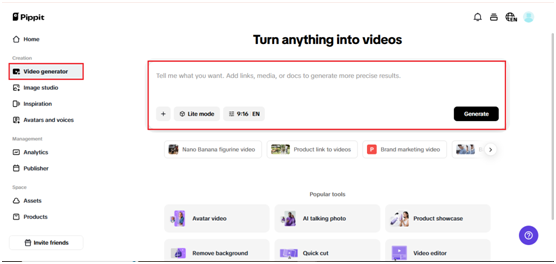
To start, log into Pippit and go to the page that has “Video Generator”. Click on “Add media” to upload any selfies or your own photos from your phone gallery or cloud storage or upload a link if your photos are available online. Once you have added the photos, click “Generate” and AI will automatically identify the key images and prepare the initial draft of your intro.
Step 2: Customize and generate
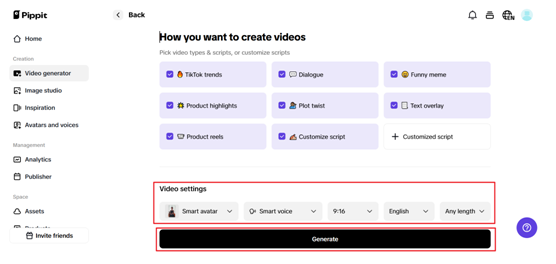
Once your preview screen opens, customize the content. You can reposition highlights, edit transitions and add text overlays. You can also select your video format, language of choice, appropriate length, and if you wish, you may also include an AI avatar if you want a consistent virtual ‘you’. When you are done customising, click “Generate” again.
Step 3: Export the video
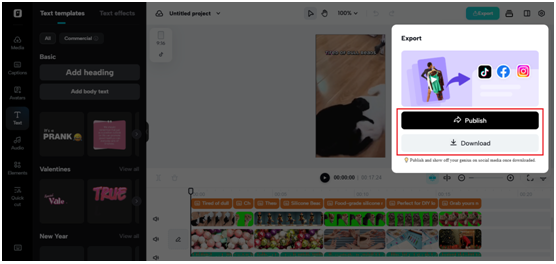
Preview your finished video; you may also click “Quick Edit” to adjust captions, voice, and avatar settings to your liking over and over again until it feels exactly how YOU would say it.

When you are satisfied, click “Export” and download your high-quality branded introduction.
Customizing the experience with AI avatars
Another emerging influencer branding trend is Pippit’s AI avatar technology. More and more creators now incorporate avatars into their intro videos as voiceover narrators, hosts, or visual stand-ins, allowing them to uphold consistent style and tone even when they’re not on-camera.
Picture your digital twin greeting your brand, inviting new followers, or recapping your mission. It’s personal branding on steroids. And when combined with your actual photos and voice, it develops a hybrid identity that’s both human and sci-fi.
A new era of personal branding
Influencer marketing isn’t about poses and filters anymore; it’s about personality and presence. Pippit’s creative tools empower all creators, whether beginner or pro, to craft intros that are cinematic in feel but genuine in spirit. Your brand has a visual voice that should speak louder than you. Beginning testing with Pippit today. Take those candid shots and transform them into compelling motion pieces that get your followers to stop, smile, and linger.
Make your first influencer intro today, and let your story move.




By Aduragbemi Omiyale
The sum of N3.3 trillion has been approved by President Bola Tinubu to finally clear the outstanding debts in the power sector.
A statement issued on Sunday by the Special Adviser to the President on Information and Strategy, Mr Bayo Onanuga, said the “long-standing debts accumulated between February 2015 and March 2025.”
It was stated that the payment plan for the debts under the Presidential Power Sector Financial Reforms Programme should restore reliable electricity to the country.
“Following verification, N3.3 trillion has been agreed as a full and final settlement, ensuring a fair and transparent resolution,” a part of the statement noted.
“Implementation has begun, with 15 power plants signing settlement agreements totalling N2.3 trillion. The federal government has already raised N501 billion to fund these payments. Out of the amount, N223 billion has been disbursed, with further payments underway,” it added.
The statement said, “With payments reaching the power value chain, generation will be more stable. With power plants supported, electricity reliability will improve.”
“This programme is not just about settling legacy debts. It is about restoring confidence across the power sector — ensuring gas suppliers are paid, power plants can keep running, and the system begins to work more reliably,” the Special Adviser to the President on Energy, Ms Olu Arowolo-Verheijen, was quoted as saying in the statement.
“It is part of a broader set of reforms already underway — including better metering and service-based tariffs that link what you pay to the quality of electricity you receive.
“The government is also prioritising power supply to businesses, industries, and small enterprises — because reliable electricity is critical to creating jobs, supporting livelihoods, and growing the economy.
“The goal is simple: more reliable power for homes, stronger support for businesses, and a system that works better for all Nigerians,” she added.
President Tinubu has commended all stakeholders who supported efforts to resolve the legacy issues in the power sector. He has also confirmed that the next phase (Series II) will begin this quarter.

By Adedapo Adesanya
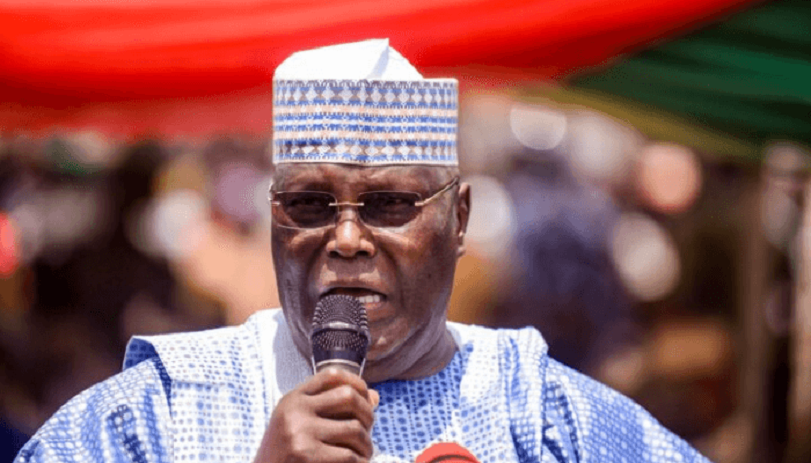
Former Vice-President Atiku Abubakar has hired Von Batten-Montague-York, L.C., a Washington-based lobbying firm, to protect and strengthen his “reputational standing” in the United States for $1.2 million.
According to The Cable, the contract agreement was signed by Mr Karl Von Batten, the managing partner at the firm, and Mr Fabiyi Oladimeji, a Nigerian politician, on March 9 and 10, 2026, respectively.
Based on a document filed with the US Department of Justice, one of the contract’s objectives entails that the firm will “counterbalance” the Nigerian government’s “lobbying narratives” in the US. It comes after the federal government reportedly spent $9 million to strengthen lobbying with the US government earlier this year.
Mr Abubakar, who is eyeing the Nigerian presidency, is currently with the African Democratic Congress (ADC). He will use the firm to “advance understanding” within US policymaking institutions of his “leadership posture and policy vision”.
Based on the contract details, the firm will facilitate and arrange meetings for the former vice-president to engage with US government officials and members of Congress.
Von Batten-Montague-York will also provide the politician with “guidance on policy positioning, reputational considerations, and engagement strategy”.
“These activities include lobbying and government affairs engagement with Members of Congress, congressional staff, and executive branch officials concerning issues related to democratic governance, regional stability, economic development, and U.S. engagement with Nigeria and the broader West African region,” part of the contract details reads.
“The Registrant (lobbying firm) may advocate for policies and perspectives aligned with the foreign principal’s stated positions, including matters relating to governance, economic policy, and bilateral relations with the United States.
“The Registrant also engages in promotion, perception management, and public relations activities designed to enhance understanding among U.S. policymakers and relevant stakeholders of the foreign principal’s policy positions, leadership posture, and strategic priorities.
“This includes the development of messaging strategies, narrative positioning, and reputational advisory services.
“In furtherance of these activities, the Registrant prepares, distributes, and may assist in the dissemination of informational materials, including briefing memoranda, policy papers, talking points, and related communications, intended to inform U.S. government officials and stakeholders.”
The former vice-president is expected to pay the $1.2 million for the 12-month contract in six instalments.
By Dipo Olowookere
The need for Africa to protect itself from many external shocks not of its making has again been emphasised by the African Development Bank (AfDB), the African Union Commission (AUC), the United Nations Development Programme (UNDP), and the UN Economic Commission for Africa (UNECA).
On the margins of the 58th session of the Economic Commission for Africa in Tangier, Morocco, the continent was tasked to strengthen regional integration, accelerate African-led financial solutions, and invest decisively in energy, food, and trade resilience so as to move from vulnerability to preparedness.
The meeting focused on the spikes in energy, food and fertiliser prices caused by the ongoing conflict in the Middle East.
The United States and Israel launched airstrikes on Iran in February 2026, and since then, global oil prices have surged by more than 50 per cent as of late March. Twenty-nine currencies in Africa have weakened, raising the cost of servicing external debt and importing food, fuel, and fertiliser.
Disruptions linked to Gulf energy supplies limit access to ammonia and urea during the critical March–May planting season. This will affect agricultural production, compounding risks of crisis and emergency levels of food insecurity, especially for low‑income households and import‑dependent economies.
To address these issues, the quartet has asked African leaders to, in the short-term, stabilise fuel, food, and fertiliser supply, and execute medium‑term reforms to strengthen energy security, targeted social protection, and regional trade under the African Continental Free Trade Area (AfCFTA).
They also tasked leaders to come up with long‑term structural reforms towards stronger domestic resource mobilisation and African financial safety nets, including accelerated implementation of the African Financing Stability Mechanism.
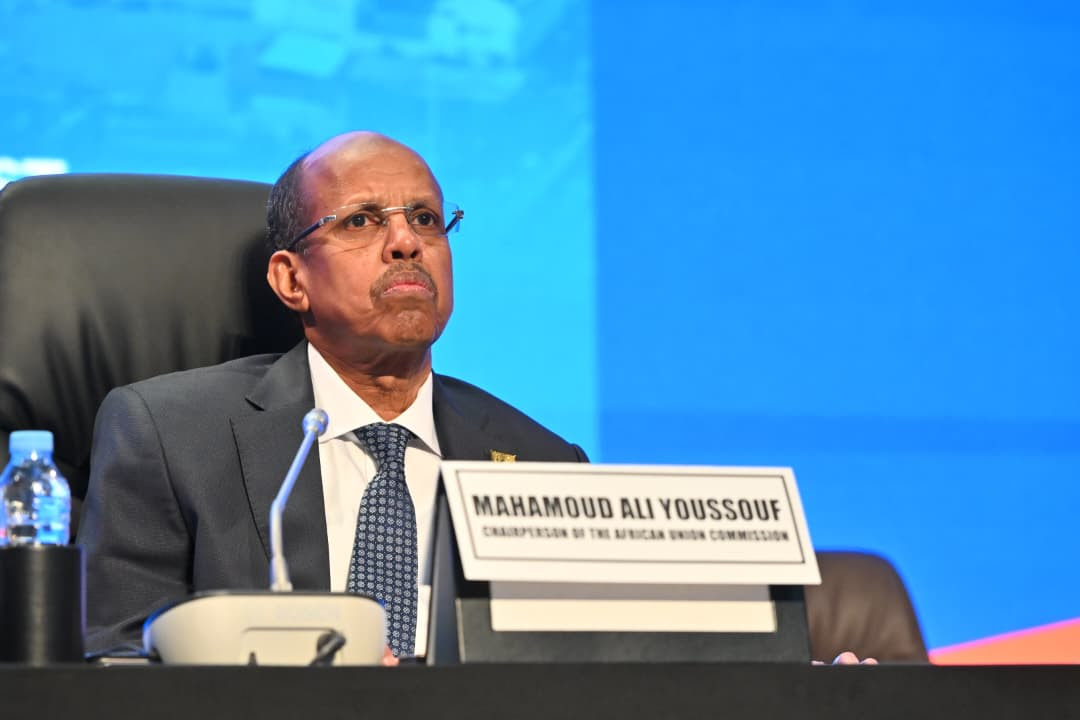
“Continued escalation of the conflict worsens global instability, with serious implications for energy markets, food security, and economic resilience, particularly in Africa, where economic pressures remain acute,” the chairperson of AUC, Mr Mahmoud Ali Youssouf, said.
Also commenting, the UN Under-Secretary-General and Executive Secretary of UNECA, Mr Claver Gatete, said, “Africa has been hit by too many external shocks not of its making. Crises like this reinforce why Africa must finance more of its own future and strengthen regional solutions that build resilience before the next shock hits.”
On her part, the UN Assistant Secretary‑General and Director of UNDP’s Regional Bureau for Africa, Ms Ahunna Eziakonwa, submitted that, “With the right mix of policy choices, financing tools, and political resolve, Africa can weather this shock and emerge more resilient, more self-reliant, and better positioned to shape its own economic future.”
“As global crises multiply, Africa’s response must evolve from managing shocks to fostering resilience. African institutions and development partners need to act swiftly and in concert, leveraging their comparative advantages to cushion short-term shocks while laying the foundations for long-term resilience,” the president of AfDB, Mr Sidi Ould Tah, stated.
-
 Feature/OPED6 years ago
Davos was Different this year
-
Travel/Tourism10 years ago
Lagos Seals Western Lodge Hotel In Ikorodu
-

 Showbiz3 years ago
Estranged Lover Releases Videos of Empress Njamah Bathing
-
 Banking8 years ago
Sort Codes of GTBank Branches in Nigeria
-

 Economy3 years ago
Subsidy Removal: CNG at N130 Per Litre Cheaper Than Petrol—IPMAN
-

 Banking3 years ago
Sort Codes of UBA Branches in Nigeria
-

 Banking3 years ago
First Bank Announces Planned Downtime
-

 Sports3 years ago
Highest Paid Nigerian Footballer – How Much Do Nigerian Footballers Earn