
General
Journalists to Win Millions of Naira in OnePipe Writing Challenge

By Dipo Olowookere
An opportunity has opened for financial journalists in Nigeria to win millions of Naira in the OnePipe Writing Challenge, which kicked off on Friday, February 25, 2022.
A statement issued by the foremost fintech API company disclosed that entries for the eight-week contest will close on April 14, 2022, with the three first-place winners getting N1 million each.
The winning entries must have successfully met the key guidelines like information sharing, idea definition, trend analysis and definition of concepts.
It was stated that the writing challenge will be judged by a panel of an expert in financial inclusion policy and digital money like Professor Olayinka David-West, Associate Dean, Lagos Business School; Mr Muyiwa Mutuloko, Editor, TechPoint Africa; and Mr Caleb Ojewale, Assistant Editor, BusinessDay.
All submitted articles should be 400-500 words in length and must have been published in recognised press media, while television or radio submissions must be at least 20mins long and must have been broadcast on any publicly available site such as YouTube or SoundCloud.
The organisers stressed that entries submitted without the required links or references will be disqualified and that entries will be judged based on material organisation, vocabulary, style, grammar, punctuation, spelling, neatness, reach and adherence to all other guidelines.
In the statement, it was disclosed that the OnePipe Writing Challenge is open to all forms of media, while submissions are welcome from journalists/press persons (individuals, either full time, part-time or freelance) who are presently employed in a magazine or general circulation newspaper published in Nigeria, whether daily or non-daily, broadcast or tabloid, news wire, internet publication, conventional or alternative, as well as syndicates and cooperatives that provide content for newspapers. Nominations may be made by editors, publishers, educators, journalistic groups and others.
Commenting on the initiative, the Operations Manager of OnePipe, Yvonne-Faith Elaigwu, said the company’s objective with the writing challenge is to promote financial literacy and enhance the financial experiences of people in Nigeria.
“We hope that the articles, stories, and news items produced by the press and media throughout this challenge will help everyone understand embedded finance and appreciate what the technology can achieve,” Elaigwu stated.
On his part, the founder and CEO of OnePipe, Mr Ope Adeoye, said, “The world needs a new type of financial services ecosystem, one where everyone has a role to play and everyone has some value to capture. This is what we embody at OnePipe; we help businesses across sectors to enjoy profitable participation in the fintech ecosystem.
“With our technology, we turn complex infrastructure into simple code so that businesses can focus on building market-defining products, provide their customers with credit, loan payment plans and seamless payment for services.”
Business Post reports that the OnePipe Writing Challenge aims to recognise finance-focused journalism and reward press reportage as it is part of the company’s efforts to promote and inspire more educational reporting and writing with particular emphasis on enhancing the awareness and understanding of embedded finance.
The firm intends to foster a deeper understanding of the importance of embedded finance in improving customer experience and satisfaction; while emphasising the value of good coverage and narrative as a cornerstone for enhancing public awareness of financial technology.
According to research, embedded finance will create $230 billion in income by 2025 across a variety of financial services. As the usage of this technology expands and becomes increasingly incorporated into non-financial platforms, it is critical that increased public awareness and understanding is generated.





By Adedapo Adesanya
The Federal Competition and Consumer Protection Commission (FCCPC) says it has expanded its market surveillance and product testing to electrical and electronic products to ensure strict regulatory compliance.
The organisation also said it was extending market surveillance to cables and other building materials due to significant product safety issues regarding collapsed buildings.
According to the Director of the Surveillance and Investigations Department at FCCPC, Mrs Boladale Adeyinka, there are products that did not meet basic safety and quality standards in circulation.
She noted that where business conduct raises concerns about consumer safety, such matters would be investigated.
Mrs Adeyinka said the commission was coordinating with various sector regulators to address weaknesses that permitted unsafe products to enter or remain in the market.
”When a product presents a risk, the law requires prompt collective action, including product withdrawal, product recall, and proper notice to the consumer.
“If you are producing products in Nigeria and you discover there is a safety concern or likely to be a safety concern with respect to products that you have rolled out in the market, you have an obligation to withdraw and recall them.
“You also give notice to consumers who have purchased those products to be able to make the remedial actions, particularly with products that may significantly affect the lives of consumers of those products.”
“These are not optional expectations but legal requirements under our law. They are statutory duties to ensure product safety and consumer welfare in Nigeria.
“Failure to act responsibly by recalling, withdrawing, and issuing consumer notice will attract strict and stiff regulatory response from the commission,” she added.
The official noted that, “Compliance is not a favour to the regulator,” she stated.
Mrs Adeyinka also said FCCPC, headed by Mr Tunji Bello, remained committed to effectively monitoring and enforcing compliance across the market.

By Aduragbemi Omiyale
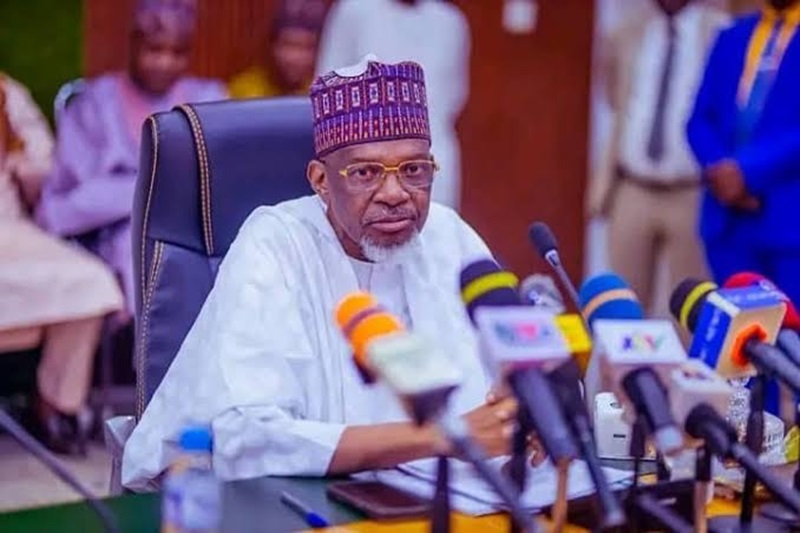
The Speaker of the Kebbi State House of Assembly, Mr Muhammad Usman Zuru, has died in an Egyptian hospital.
He was said to have breathed his last on Monday night at the North African healthcare facility.
Details surrounding his death last night have yet to be made public, but the Special Adviser to Governor Nasir Idris on Communication and Strategy, Mr Idris Zuru, said, “We are still gathering full details surrounding his passing. The government will make an official statement and announce burial arrangements in consultation with the family.”
“The death of the Speaker, Muhammad Usman Zuru, came to us as a rude shock. It is a painful loss not only to Kebbi State but to the entire nation,” the media aide further stated.
It was gathered that the late Speaker travelled to Egypt to receive treatment for an undisclosed illness.
Before his passing, the lawmaker represented Zuru Constituency in the Kebbi State House of Assembly.

By Adedapo Adesanya
The Nigeria Guild of Editors (NGE) and the Socio-Economic Rights and Accountability Project (SERAP) have called on President Bola Tinubu to investigate the alleged threat issued against Channels Television presenter, Mr Seun Okinbaloye, by the Minister of the Federal Capital Territory, Mr Nyesom Wike.
The groups, in a joint statement by NGE President, Mr Eze Anaba, General Secretary, Mr Onuoha Ukeh, and SERAP Deputy Director, Mr Kolawole Oluwadare, on Monday, condemned the remarks and urged the federal government to “promptly, thoroughly, transparently and effectively investigate the threat.”
They also called on the government to ensure the safety of Mr Okinbaloye and other journalists.
“The Tinubu government should urgently take all necessary measures to ensure the safety and security of Mr Okinbaloye and other journalists facing threats to their safety and security solely for peacefully exercising their human rights and carrying out their legitimate journalistic work,” the statement read.
Mr Wike had, during a media chat in Abuja last Friday, reacted to comments made by the broadcaster, surrounded by some media men.
“I was surprised yesterday (Thursday), totally surprised when I was watching Politics Today. Seun, if there was any way to break the screen, I would have shot him,” the Minister said.
Mr Okinbaloye had raised concerns about the 2027 elections, suggesting that the political space appeared to be tilting towards dominance by a single party, referencing internal issues within the African Democratic Congress (ADC).
Reacting, the NGE and SERAP warned that press freedom in Nigeria is under increasing pressure. The groups stressed that public officials must be open to scrutiny and criticism.
“We are seriously concerned that press freedom is in a ‘downward spiral,’ with increasing intimidation, harassment, threats, and attacks against journalists and media freedom across the country.
“Public figures, including politicians, are subject to a higher degree of scrutiny and criticism. The threat against Mr Okinbaloye illustrates the escalating threats to the safety and security of journalists and media freedom in the country,” the statement added.
They further argued that journalists retain their constitutional right to freedom of expression.
“Like every individual, Okinbaloye is entitled to exercise his right to freedom of expression as a fundamental human right, including the right to seek, receive, and impart information of public interest. His role as a journalist does not diminish or deprive him of this right,” they said.
The organisations noted that even though Wike had reportedly clarified his comments, such remarks should not have been made.
“Although Mr Wike has sought to clarify his remarks, the threat should never have been made in the first place. The objective of those who threaten journalists remains the same: to chill public interest reporting by increasing the risks faced by journalists. Such conduct undermines press freedom and democratic accountability. This must stop,” they said.
They also decried what they described as a culture of impunity surrounding attacks on journalists.
“The continuing failure by the Nigerian authorities to uphold press freedom and to effectively investigate and prosecute the growing cases of threats and attacks against journalists has emboldened those who wish to silence them,” the groups stated.
The groups urged the federal government to direct security agencies to investigate the alleged threat and bring perpetrators to justice.
They also called on the Attorney General of the Federation, Mr Lateef Fagbemi, to work with relevant agencies to address threats against journalists since May 29, 2023.
-
 Feature/OPED6 years ago
Davos was Different this year
-
Travel/Tourism10 years ago
Lagos Seals Western Lodge Hotel In Ikorodu
-

 Showbiz3 years ago
Estranged Lover Releases Videos of Empress Njamah Bathing
-
 Banking8 years ago
Sort Codes of GTBank Branches in Nigeria
-

 Economy3 years ago
Subsidy Removal: CNG at N130 Per Litre Cheaper Than Petrol—IPMAN
-

 Banking3 years ago
Sort Codes of UBA Branches in Nigeria
-

 Banking3 years ago
First Bank Announces Planned Downtime
-

 Sports3 years ago
Highest Paid Nigerian Footballer – How Much Do Nigerian Footballers Earn