
General
Sanwo-Olu Moves Quickly to Avert Huge Crisis in Lagos


By Dipo Olowookere
When on Sunday, March 29, 2020, President Muhammadu Buhari in a nationwide broadcast said Lagos, Abuja and Ogun State would be on lockdown for two weeks from the next day, many thought this restriction of movement would just be only for the 14 days.
Some residents of these three places who had not witnessed such before, quickly adjusted to the new forced life caused by the deadly coronavirus disease, which has claimed over 120,000 lives across the world.
Data obtained by Business Post on Wednesday morning from John Hopkins University and Medicine in the United States indicated that the virus has so far infected 1.98 million people globally, with the US recording the highest, 609,240 persons.
In Nigeria, 373 people have contracted the COVID-19, while 11 have died and 99 who once had the virus have recovered and discharged from the hospital.
The lockdown announced by President Buhari on March 29 was to help stop the spread of the virus, but based on the feedback he received from the Presidential Task Force (PTF) headed by the Secretary to the Government of the Federation (SGF), Mr Boss Mustapha, he announced an extension for another 14 days.
Immediately Mr Buhari announced the extension in another broadcast last Sunday, some Nigerians residents of Lagos, Abuja and Ogun State were not happy.
Few days before his announcement, there had been security challenges in Lagos and Ogun States as hoodlums were attacking innocent citizens, breaking into the homes and forcing some residents to stay awake at night.
Some attributed this to hunger because enough palliatives were not provided by government.
So, when an extension was declared by the President, Governor Babajide Sanwo-Olu, apparently sensing that things may get out of hands, moved quickly to inform residents of the aquatic city of the plans he has for them.
Addressing the media on Tuesday at the State House in Marina, the Governor said his administration has come up with a bumper scheme to cushion the effect of the ongoing lockdown of the state on its residents.
According to him, the new scheme came on the heels of the commencement of the second part of Food Stimulus Packages being distributed to 250,000 vulnerable residents since the lockdown directive came into effect.
He disclosed that the state government was moved by the need to support and ameliorate the inconvenience being experienced by vulnerable people as occasioned by the extended lockdown.
Mr Sanwo-Olu said government is opening food kitchens in all the local councils in the state with a target to provide one meal per day to 100,000 youths.
He also announced unconditional cash transfer of undisclosed amount to 250,000 vulnerable residents and economically challenged persons who have identification numbers with Lagos State Residents Registration Agency (LASRRA).
Besides, the Governor granted three months moratorium to Micro, Small and Medium Enterprises (MSMEs) and entrepreneurs that got repayable loans from Lagos State Employment Trust Funds (LSETF), deferring the payment of accruing interests by the loan beneficiaries.
Mr Sanwo-Olu also ordered immediate release of all private and commercial vehicles impounded from March 1, 2020 for minor traffic offences by the police, Lagos State Traffic Management Authority (LASTMA) and Vehicle Inspection Agency to date.
The Governor said the new palliatives were carefully drawn out to bring succour to greater number of indigent people and those eking out living from daily wages.
“Before the first set of stay-at-home directives, I announced a welfare package for the indigent and vulnerable segment of the society.
“Though we encountered some hitches along the way, we have since revised the process and have now seen a mark of improvement in the distribution of the relief packages that is being carried out in a dignifying manner and in full compliance with all public health directives and guidelines.
“Today, I am pleased to announce additional palliatives for our citizens to further ameliorate the inconvenience occasioned by this extended lockdown. In the next couple of days, we will commence a daily ‘Food Kitchen’ programme with the target to feed about 100,000 people daily. This will largely target the youths.
“We are also cleaning up our data from our various social registers to get a clean list of truly vulnerable and economically challenged persons to enable us remit some cash to them. We aim to do these cash transfers by the end of the week to a minimum of 250,000 indigent citizens,” he said.
Speaking further, the Governor said, “All the MSMEs and SMEs that took LSETF loans and got supports from other government’s financial incentive programme will enjoy a three months moratorium.
“With immediate effect, I have ordered the police, LASTMA and the VIO to release all impounded vehicles arrested for minor traffic offences from the 1st of March. All these palliative measures, we believe, will further help to cushion the effect of the lack of economic activities in the State occasioned by the lockdown.”
Mr Sanwo-Olu shared the successes recorded in the medical palliative introduced by the State Government earlier this month, disclosing that the State footed the medical bills of over 18,000 people who accessed free medical services at all 67 Grade “A” primary health and secondary healthcare centres. He added that Lagos recorded over 600 childbirths, of which the costs were free of charge.
The Governor urged for calm among residents, saying the additional 14 days extension would afford the frontline health workers to ramp up contact identification, testing, isolation and admission of suspected and confirmed cases.
Commenting on the security situation in the state, Mr Sanwo-Olu declared war on criminals taking the advantage of the lockdown to engage in armed robbery and cause unrest in boundary communities, directing the security operatives not to spare anyone caught.
The Governor disclosed that over 100 miscreants have been apprehended by the police on account of disturbances, adding that the Inspector General Police (IGP) had already deployed a Deputy Inspector General (DIG) from Abuja to lead a special force to burst criminal gangs breaching the peace in the affected communities.
“As an administration, we will live up to our responsibility of ensuring the security of the lives and properties of all citizens. We will not abandon this responsibility at any time. There is no room whatsoever in Lagos for criminal gangs or miscreants of any kind.
“The IG of Police has deployed a Deputy Inspector General of Police, who is a seasoned crime fighter, to Lagos as our Intervention Squad Coordinator to help devise and superintend over a superior strategy to curtail and stem the perceived and actual threat of violence.
“With this revised strategy, you will see an increase in mobile police deployment in all trouble spots in the metropolis; as well as the police intensifying their patrols around residential areas, boundary communities, and other critical areas of activities during this lockdown period.
“I urge all residents to obey the directive in all its entirety. Let us not be found wanting. Those who insist on flouting these directives will have no one but themselves to blame,” he said.
In the last one week, Mr Sanwo-Olu said Lagos had started an active search for cases in communities across the State, with the aim to disrupt cases of community transmission.
He observed that Lagos had witnessed a trend of community transmission in the number of recently confirmed cases, adding that the need to identify and manage cases was imperative, given the State’s population density.
“It will not be unexpected for the residents to be visited by a team from the Lagos State Ministry of Health. Please give them accurate information in response to the questions they may ask, which will be related to your health and travel history. Note that they will not ask you for any money.
“COVID-19 testing and treatment is free and will remain so. Do not allow anybody into your home without seeing valid identification and a letter from the Local Government Area,” the Governor stated.



By Adedapo Adesanya
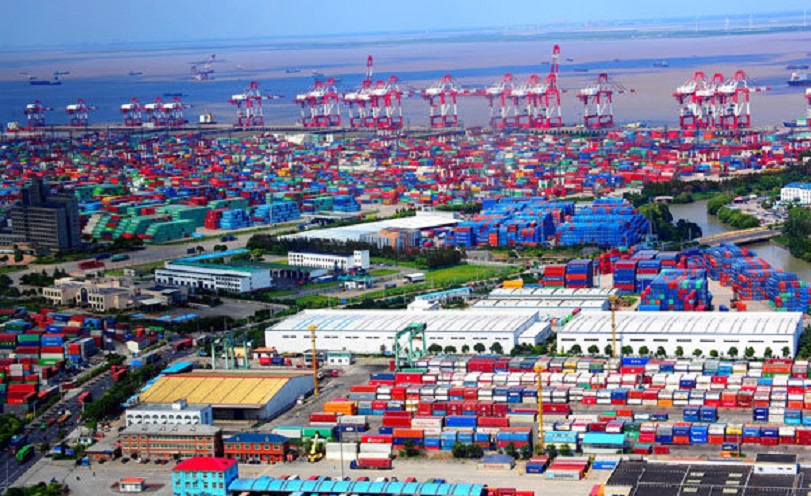
The Nigeria Customs Service (NCS), in partnership with the Presidential Enabling Business Environment Council (PEBEC), has launched a strategic reform agenda aimed at enhancing port efficiency and strengthening Nigeria’s trade competitiveness.
The initiative was unveiled on Tuesday, April 7, 2026, at the opening of a three-day operational workshop in Apapa, Lagos, themed Customs Leadership in Port Efficiency, Inspection Reform and Clearance Timeline.
Speaking at the event, the Comptroller-General of Customs, Mr Adewale Adeniyi, outlined a five-pillar strategy designed to transform port operations. The framework focuses on joint inspections, risk-based cargo clearance, optimisation of scanning infrastructure, enforcement of service timelines, and improved inter-agency collaboration.
Mr Adeniyi emphasised that the Service is shifting from policy formulation to effective implementation, stressing the need for consistent execution of established best practices.
He noted that the “workshop was aimed at bridging the gap between knowledge and action within the system.”
He further highlighted the transition to intelligence-led cargo processing, stating that ongoing investments in digital platforms and scanning systems must result in faster, more transparent clearance procedures for traders.
To ensure accountability, the Customs boss disclosed that the workshop would produce a reform execution matrix subject to close monitoring, adding that he would personally track progress reports.
He also urged officers to uphold professionalism, integrity, and commitment in the discharge of their duties.
In her remarks, the Director-General of PEBEC, Mrs Zahrah Mustapha-Audu, underscored the importance of adopting risk-based, data-driven inspection systems.
According to her, efficient and transparent border processes are essential to reducing the cost of doing business and improving Nigeria’s global trade standing.
Also speaking, the Deputy Comptroller-General in charge of Tariff and Trade, Mrs Caroline Niagwan, said the evolving mandate of the Service places it at the heart of trade facilitation and economic growth, adding that efficiency must be reflected across all commands.
As part of the engagement, the Customs and PEBEC delegation visited the National Single Window facility, where they held discussions with the Chairman of the Nigeria Revenue Service, Mr Zacch Adedeji, and other stakeholders to review progress and address operational challenges.
By Adedapo Adesanya
Madica, a structured investment programme for pre-seed African startups, has announced new investments totalling $600,000 in three tech-enabled startups, including Nigerian data startup, Biovana.
According to the initiative, these investments further reinforce Madica’s commitment to supporting founders and startups often excluded from traditional venture funding. The other startups include Tanzania’s Kilimo Fresh and Kenya’s Hakimu.
Each company has secured up to $200,000 in funding and will take part in Madica’s 18-month programme. This includes a tailored curriculum, hands-on mentorship, executive coaching, and two fully funded immersion trips to key technology ecosystems, both locally and internationally. The startups will also gain access to Madica’s global investor network, helping position them for growth and long-term success.
Madica’s programme seeks to counter the concentration of Africa’s tech funding in a few markets, verticals, and well-networked entrepreneurs and instead drive more equitable growth across the continent. This is done by backing a mix of underrepresented founders, startups from underserved regions, and innovators in overlooked sectors.
Launched in 2022, Madica is a sector-agnostic investment program designed to address structural gaps in Africa’s startup ecosystem. The program tackles key challenges startups face, such as limited access to capital, a scarcity of investors, and insufficient mentorship. It also provides the structured support necessary for startups to resolve critical issues and foster innovation, entrepreneurship, and wealth creation across the continent.
Kilimo Fresh (Tanzania), co-founded by Ms Baraka Chijenga and Mr Justice Mangu, connects smallholder farmers in Tanzania to reliable urban markets by aggregating, processing, and distributing fresh produce through a technology-enabled supply chain, aiming to reduce food waste.
Hakimu (Kenya), Hakimu, co-founded by Ms Rawan Dareer, Mr Ahmed Ahmed and Mr Ahmed Elbashir, is building a pan-African legal infrastructure leveraging the power of AI.
Biovana (Nigeria), co-founded by two female founders, Ms Estelle Dogbo and Dr Jumi Popoola, is a data harmonisation and certification platform focused on unlocking African health datasets for global pharmaceutical, AI, and clinical research applications.
Commenting on the new portfolio companies, Mr Emmanuel Adegboye, Head of Madica, said, “Each new investment brings us closer to the portfolio we set out to build, one that reflects the full breadth and diversity of African entrepreneurship. These three startups join a growing community of founders we’re backing with the resources, relationships, and runway they need to succeed at this early stage. The opportunity across the continent is enormous, and we’re committed to being a crucial and consistent partner in realising it.”
“Joining the Madica portfolio is a significant moment for Hakimu. We’re revolutionising access to justice across Africa, and having a partner that understands the specific challenges and opportunities of scaling in Africa makes a real difference,” said Ms Dareer, co-founder and CEO of Hakimu. “We’re grateful for the trust, looking forward to the hands-on support, and clear-eyed about the work ahead.”

By Adedapo Adesanya
President Bola Tinubu is expected to be among the leading public figures attending the next edition of the Africa CEO Forum, which will take place on May 14-15, 2026, in Kigali, Rwanda
A strong Nigerian private-sector delegation will also take part, including Mr Aliko Dangote, Mr Wale Tinubu, Mr Ofovwe Aig-Imoukhuede, Mrs Adesuwa Ladoja, Mrs Rachel More-Oshodi, Mrs Zouera Youssoufou, Mr Karim Noujaim, Mr Dany Abboud, Mr Ayo Otuyalo and Mr Chukwuerika Achum. Nigeria’s Coordinating Minister of Health and Social Welfare, Professor Muhammad Ali Pate, will also be present.
According to a statement on Tuesday, the 2026 edition will convene in Kigali to address a defining question for Africa’s future: how to achieve the scale necessary to compete, integrate and thrive in a fragmenting world.
It comes as global power dynamics continue to evolve, while the ability of Africa to rely on competitive, agile and internationally integrated corporate champions has become a defining corporate imperative. In this shifting global landscape, one lesson is clear: scale is no longer optional. It is the first line of defence.
Organised by Jeune Afrique Media Group and co-hosted by the International Finance Corporation (IFC), the Africa CEO Forum 2026 will convene Africa’s leading public and private decision-makers around a clear conviction: scale can only be achieved through shared African ownership.
The Forum will explore three strategic levers to build continental scale. First is shared equity, which will look to unlock cross-border equity investment to create multinational African champions. Mobilise African institutional capital across markets to strengthen resilience and enhance long-term returns.
Also, is shared infrastructure, which will take on designing complementary infrastructure to integrate African value chains. Champion transformative projects that serve regional, not merely national, needs and create truly connected markets.
Thirdly is shared frameworks, which is set to harmonise standards, rules and regulations to boost investor confidence and enable the free flow of capital, goods and services. Build future-proof digital rails for health, education, agriculture and cross-border payments.
Speaking on this, Mr Amir Ben Yahmed, President of the Africa CEO Forum, stated: “If Africa wants to compete in a world defined by scale, it must move beyond economic patriotism and embrace a new model: African capital investing together. Shared ownership, cross-border partnerships and continental ambition will define the economic future of Africa and the next generation of African champions.”
On his part, Mr Makhtar Diop, Managing Director at IFC, stated: “Africa has the capital and the opportunity to grow and create quality jobs. What matters now is putting that capital to work at scale. That means building trust, sharing risk, and investing across borders. The Africa CEO Forum brings leaders together to connect policy and private investment, and to help shape Africa’s next phase of growth.”
-
 Feature/OPED6 years ago
Davos was Different this year
-
Travel/Tourism10 years ago
Lagos Seals Western Lodge Hotel In Ikorodu
-

 Showbiz3 years ago
Estranged Lover Releases Videos of Empress Njamah Bathing
-
 Banking8 years ago
Sort Codes of GTBank Branches in Nigeria
-

 Economy3 years ago
Subsidy Removal: CNG at N130 Per Litre Cheaper Than Petrol—IPMAN
-

 Banking3 years ago
Sort Codes of UBA Branches in Nigeria
-

 Banking3 years ago
First Bank Announces Planned Downtime
-

 Sports3 years ago
Highest Paid Nigerian Footballer – How Much Do Nigerian Footballers Earn