
Media OutReach
Amari Vientiane: Experience the Charm of a Cultural Gem on the Mekong River in the Heart of Laos

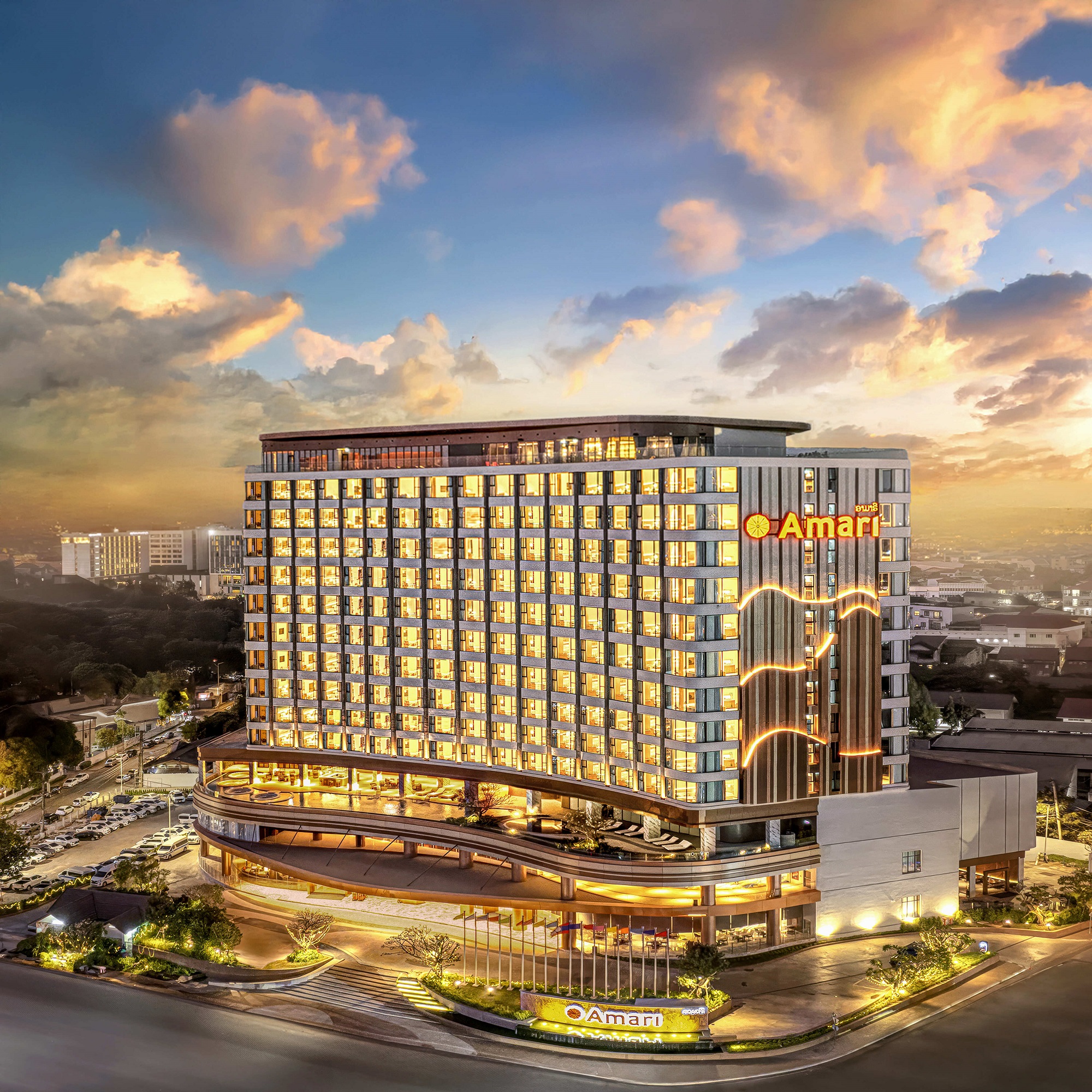
Amari Vientiane, the newest hotel in the heart of Laos’ capital, is perfect for travellers eager to explore art and culture. Its prime city-centre location offers easy access to popular tourist attractions and is just 4.8 kilometres from Wattay International Airport. In addition to the captivating scenery of the capital, Amari Vientiane offers a special rooftop area with a stunning, unmatched view of the Mekong River. In the morning, guests can participate in the traditional Lao practice of offering alms to monks, visit Wat Sisaket, stroll to the iconic Patuxai Monument—a favourite photo spot for visitors, or explore the morning market to savour authentic Lao cuisine that proudly preserves its local flavours. After a day of discovery, guests can return to the hotel to unwind and enjoy its extensive range of facilities.
Amari Vientiane is set to open on March 1, 2025, as an upper-upscale hotel that flawlessly blends contemporary elegance, warm Thai hospitality, and the charm of local culture. More than just a place to stay, the hotel promises a unique and enriching experience, creating special moments filled with unforgettable memories.
Amari Vientiane features 248 rooms, including Deluxe Rooms, Junior Suites, Executive Suites, and Presidential Suites, all equipped with world-class facilities and services to accommodate travellers from around the globe. The hotel also offers a unique dining experience in a private setting at the Executive Private Dining area, boasting a stunning view of the Mekong River. The rooftop bar provides a magical ambiance to enjoy breathtaking sunsets, complemented by delicious drinks that make guests feel truly special and relaxed.
The hotel also features Amaya Food Gallery, a restaurant led by an experienced chef, serving a diverse range of local Lao dishes alongside international cuisine. For health-conscious guests and families, Amari Vientiane offers a fitness centre, Breeze Spa, a large swimming pool, and a children’s pool, ensuring there’s something for everyone. Ample parking is also available for guests’ convenience. For those seeking a venue for international-standard banquets or meetings, Amari Vientiane offers a Grand Ballroom that can accommodate up to 540 participants, along with a selection of meeting rooms of various sizes. These versatile spaces are perfect for hosting a wide range of activities, seminars, and banquets, creating impressive experiences and lasting memories.
Denxay Saengarun, Director of Tang Chareon (TCR) Group, shared, “The Amari Vientiane is fully prepared in every aspect, from its venue design, which beautifully combines elegance, modernity, and local charm reflecting in every detail. The service also meets international standards, ensuring a unique experience that stays true to the Amari brand.”
Yuthachai Charanachitta, CEO of ONYX Hospitality Group, stated, “Amari Vientiane is the second Amari hotel in Laos, following the opening of Amari Vang Vieng in 2018. This marks a significant testament to the trust the Tang Chareon (TCR) Group has placed in ONYX Hospitality Group and the Amari brand. It also underscores ONYX Hospitality Group’s commitment to expanding its business in Laos and throughout Southeast Asia. In line with our vision of becoming ‘The Best Medium-Sized Hospitality Management Company in Southeast Asia,’ and as experts with a deep understanding of the region’s tourism industry, we are confident that Amari Vientiane will swiftly establish itself as a successful hotel, earning the trust of travellers both in Laos and internationally.”
In addition to the rich culture and charm of the Mekong River at Amari Vientiane, ONYX Hospitality Group has also opened its first property in Laos, Amari Vang Vieng. This hotel, nestled in the mountains and along the Song River, is located in a city often regarded as the second gem of Laos. It offers another perfect destination for a vacation surrounded by breathtaking nature. Vang Vieng is now easily accessible by high-speed train, just over an hour from Vientiane city centre, making it more convenient for travellers from around the world to experience this beautiful city.
“Amari Vang Vieng” was launched in 2018 on the banks of the Song River, the heart of Vang Vieng. Featuring over 160 rooms in various styles, including Superior Rooms and Executive One-Bedroom Suites, the hotel blends contemporary design with Lao craftsmanship, reflecting Amari’s signature style. The rooms are spacious and airy, with tall windows that allow guests to fully immerse themselves in the peaceful mountain views while staying connected to the world with high-speed Wi-Fi and a 40-inch interactive TV.
Importantly, Vang Vieng offers a wide range of exciting attractions and activities. Visitors can take a hot air balloon ride for a breathtaking view of the city, hike up to Pha Ngern to catch the stunning sunrise and sunset, swim in the crystal-clear emerald waters of the Blue Lagoon, or explore the natural Tham Pu Kham cave, famous for its stalactites and stalagmites. A special highlight is Pu Kham, a golden crab believed to bring good luck if seen. The Tham Jang cave is also a popular check-in spot for travellers. For adventure seekers, try tubing through Tham Nam or kayaking along the Song River, offering a unique view of the local way of life on both riverbanks. After a day full of adventure, guests can head back to the warmth and comfort of their hotel.
Embark on a journey to discover the beauty of two of Laos’ gems and experience the warm hospitality at Amari Vientiane and Amari Vang Vieng today, creating unforgettable memories. For more information about ONYX Hospitality Group, please visit www.onyx-hospitality.com.Hashtag: #ONYX
The issuer is solely responsible for the content of this announcement.



Media OutReach
PERSOL Unveils Unified Regional Outsourcing Brand to Drive Digital Transformation and Operational Excellence in Singapore
PERSOL Outsourcing will deliver tailored end-to-end solutions for today’s evolving business landscape
SINGAPORE – Media OutReach Newswire – 31 March 2026 – PERSOL, Asia Pacific’s leading HR solutions provider, today announced the official launch of PERSOL Outsourcing. This strategic rebranding brings together the collective strengths of P-Serv and EVO, creating a unified, future-ready outsourcing brand designed to help businesses navigate an increasingly complex and tech-driven market.
The rebranding of P-Serv and EVO as PERSOL Outsourcing marks a significant milestone in PERSOL APAC’s regional growth strategy. By combining three decades of operational stability with digital capabilities, PERSOL Outsourcing is positioned to deliver tailored end-to-end solutions that integrate People, Process, and Technology.
“The launch of PERSOL Outsourcing reflects our commitment to scaling smarter and innovating faster for our clients,” said Foo See Yang, Managing Director and Strategic Business Group Head, PERSOL APAC. “By unifying our business process design and technical expertise under one brand, we can deliver more comprehensive, scalable, and future-ready solutions to our clients in the region. The rebranding allows PERSOL APAC to better support clients’ evolving needs in areas such as digital transformation, workforce optimisation, and operational resilience.”
Tailored Solutions for an Increasingly Complex Landscape
PERSOL Outsourcing addresses the rising demand for agile delivery models in a regional Business Process Outsourcing (BPO) market that is expected to reach US$147.06 billion by 2032. As regional enterprises increasingly seek partners who can navigate this rapid growth through specialised domain expertise, PERSOL Outsourcing will focus on delivering solutions across three core pillars:
- Customer Experience: Supporting service delivery across all touchpoints, from customer service management to omnichannel contact centre operations and front-of-house operations.
- Corporate Services: Streamline complex shared service operations through a comprehensive suite of solutions including Human Resource Advisory, Finance, Marketing, and Compliance. Services include the management of intricate administrative, facility, and regulatory requirements based on organisational needs and growth trajectories.
- Technical: Driving digital transformation through engineering and IT infrastructure management. Capabilities span cloud operations, digital support, and platform management, leveraging AI implementation and automation to innovate and improve core business processes.
Effective immediately, P-Serv and EVO will operate under the PERSOL Outsourcing brand. The integration will allow clients to tap into an expanded suite of regional resources and digital innovations designed to drive greater operational efficiency.
For more information, please visit https://www.persoloutsourcing.com/.
Hashtag: #PERSOLOutsourcing
The issuer is solely responsible for the content of this announcement.
About PERSOL Outsourcing
PERSOL Outsourcing is a regional strategic partner delivering comprehensive outsourcing solutions that seamlessly integrates people, process, and technology. As a newly integrated brand following the rebranding of P-Serv and EVO, PERSOL Outsourcing unites three decades of operational excellence with deep domain expertise to drive agility and resilience for enterprises across Asia-Pacific.
About PERSOL APAC
PERSOL is Asia-Pacific’s leading Staffing and HR solutions partner, operating across 13 markets with deep local insight and regional scale. With more than 140 offices and decades of experience, we deliver integrated workforce solutions that are tailored, tech-enabled, and designed for the dynamic world of work.
We combine human expertise with smart technology to help organisations solve workforce challenges, unlock potential, and stay ahead of change. From recruitment and talent management to workforce strategy and advisory, our collaborative approach puts your goals at the centre.
In 2025, we came together under the PERSOL name – reflecting our bold vision for the future of work and our Group’s Vision: ‘Work and Smile’. Whether you’re building teams, growing careers, or transforming how work gets done, we’re here.
Media OutReach
PERSOL Introduces Unified Regional Outsourcing Brand to Boost Digital Transformation and Operational Excellence in Malaysia
PERSOL Outsourcing will deliver tailored end-to-end solutions for today’s evolving business landscape
KUALA LUMPUR, MALAYSIA – Media OutReach Newswire – 31 March 2026 – PERSOL, Asia Pacific’s leading HR solutions provider, today announced the official launch of PERSOL Outsourcing. This strategic rebranding brings together the collective strengths of P-Serv and EVO, creating a unified, future-ready outsourcing brand designed to help Malaysia businesses navigate an increasingly complex and tech-driven market.
The rebranding of P-Serv and EVO as PERSOL Outsourcing marks a significant milestone in PERSOL APAC’s regional growth strategy. By combining three decades of operational stability with digital capabilities, PERSOL Outsourcing is positioned to deliver tailored end-to-end solutions that integrate People, Process, and Technology.
“The transition to PERSOL Outsourcing is a natural evolution of our deep-rooted presence in Malaysia and the wider region,” said Brian Sim, Managing Director and Country Head of PERSOL Malaysia. “By unifying the specialised domain expertise of P-Serv and EVO, we are better positioned to help our clients navigate the evolving business and workforce landscape. Our clients will continue to work with the same expert teams they trust, but with the added benefit of unified regional scale and enhanced digital capabilities that drive long-term resilience and efficiency.”
Tailored Solutions for an Increasingly Complex Landscape
PERSOL Outsourcing addresses the rising demand for agile delivery models in a regional Business Process Outsourcing (BPO) market that is expected to reach US$147.06 billion by 2032. In Malaysia, Customer Experience BPO market generated US$1.43 billion in 2024 and is projected to grow at a CAGR of 12.5% by 2030. As local and regional enterprises increasingly seek partners who can navigate this rapid growth through specialised domain expertise, PERSOL Outsourcing will focus on delivering solutions across three core pillars:
- Customer Experience: Supporting service delivery across all touchpoints, from customer service management to omnichannel contact centre operations and front-of-house operations.
- Corporate Services: Streamline complex shared service operations through a comprehensive suite of solutions including Human Resource Advisory, Finance, Marketing, and Compliance. Services include the management of intricate administrative, facility, and regulatory requirements based on organisational needs and growth trajectories.
- Technical: Driving digital transformation through engineering and IT infrastructure management. Capabilities span cloud operations, digital support, and platform management, leveraging AI implementation and automation to innovate and improve core business processes.
Effective immediately, P-Serv and EVO will operate under the PERSOL Outsourcing brand. The integration will allow clients to tap into an expanded suite of regional resources and digital innovations designed to drive greater operational efficiency.
For more information, please visit https://www.persoloutsourcing.com/.
Hashtag: #PERSOLOutsourcing
The issuer is solely responsible for the content of this announcement.
About PERSOL Outsourcing
PERSOL Outsourcing is a regional strategic partner delivering comprehensive outsourcing solutions that seamlessly integrates people, process, and technology. As a newly integrated brand following the rebranding of P-Serv and EVO, PERSOL Outsourcing unites three decades of operational excellence with deep domain expertise to drive agility and resilience for enterprises across Asia-Pacific.
About PERSOL APAC
PERSOL is Asia-Pacific’s leading Staffing and HR solutions partner, operating across 13 markets with deep local insight and regional scale. With more than 140 offices and decades of experience, we deliver integrated workforce solutions that are tailored, tech-enabled, and designed for the dynamic world of work.
We combine human expertise with smart technology to help organisations solve workforce challenges, unlock potential, and stay ahead of change. From recruitment and talent management to workforce strategy and advisory, our collaborative approach puts your goals at the centre.
In 2025, we came together under the PERSOL name – reflecting our bold vision for the future of work and our Group’s Vision: ‘Work and Smile’. Whether you’re building teams, growing careers, or transforming how work gets done, we’re here.
Media OutReach
Maharlika Consortium Breaks Ground for PHP 2 Billlion Microgrid Investment Powering 12,000 Philippine Homes
Right Image:
Maharlika Consortium is a recognized leader in microgrid innovation, deploying best-in-class technology that includes advanced solar PV power, high-performance battery storage systems (BESS), intelligent hybrid generation, smart meters, and sophisticated distribution grids to deliver 24/7 clean, affordable, and reliable electricity to residential and commercial consumers.
Awarded following a competitive selection process by the Philippine government under the Qualified Third Party Programme (QTP) and the new Microgrid Service Provider (MGSP) Act, the approved microgrids will deploy a smart, clean, and modern utility-grade power infrastructure. The portfolio will initially deploy 7 MWp Solar PV, BESS totaling 8.0 MWh, efficient diesel capacity of 3.5 MW and a smart power distribution network of 225 km across the three provinces. This ambitious undertaking is expected to generate approximately 300 full-time jobs during the 10-12 month construction period, with 30 permanent positions for operations and maintenance (O&M) and additional part-time sub-contractors for ongoing maintenance works.
This significant milestone underscores the Philippine government’s intensified efforts to fast-track rural electrification projects. These initiatives are propelled through pathways such as the Certified Energy Project of National Significance (CEPNS) designation and inter-agency streamlining, consistent with the respective mandates and authorities of the concerned government agencies, a push acknowledged by President Ferdinand R. Marcos Jr., Energy Secretary Sharon S. Garin and ERC Chairperson Atty. Francis Saturnino C. Juan. Now facing a global oil crisis, more than ever, decentralized and hybrid power infrastructure is the country’s best strategy to increase its energy security. Such hybrid powered microgrids will reduce the burden on fuel subsidies by the government while ensuring business continuity in entire communities, because over 50-60 percent of the power is generated from locally available sunlight.
In Palawan, a province celebrated for its environmental efforts and home to the world-class pioneering Sabang microgrid, the news was warmly received by local leadership. “This program is about creating opportunities, improving lives, and building a brighter future for every San Vicentenian. As we lay the foundation today, we are not only building infrastructure—we are building hope.” said San Vicente Mayor Ramir R. Pablico.
Community leaders and indigenous representatives also expressed strong support for the project, highlighting its long-awaited impact on education, livelihoods, and cultural continuity. “We have been waiting a long time for this project because our community truly wants access to electricity. While I know some of our residents may face challenges in getting connected due to financial constraints, I am confident they will find ways, because they want their children to study well. Reliable lighting will help ensure better education for our community,” said Barangay Captain Alvin J. Marsi of Taburi. “We are grateful to our elders and the Indigenous Political Structure for their support through the entire approval process. Their consent reflects a shared aspiration to advance and develop their community,” said Dina C. Pascual, Municipal Indigenous Peoples Mandatory Representative (IPMR). “This project is very meaningful for us. I believe this is not only for our generation, but especially for the children. We hope that access to electricity will encourage our youth to stay, so they can continue to protect and uphold the rights of our indigenous community,” shared Ebredy Orok, an Indigenous community elder, who affirmed that the project has been granted a Free Prior Informed Consent (FPIC) through the National Commission on Indigenos Peoples (NCIP).
Her Excellency Ambassador Constance See of Singapore, who led key dignitaries during the ceremony, underscored the broader significance of the project, highlighting both its development impact and the strength of bilateral cooperation. “This is not just an energy project—it is a development project. Projects like this microgrid strengthen livelihoods, improve access to essential services, and demonstrate how Singapore and the Philippines can work together to deliver practical, lasting benefits for communities.”
Atem S. Ramsundersingh, CEO of WEnergy Global, the pioneering company in hybrid power systems and offgrid microgrids over past 14 years, highlighted the significant opportunity for financiers. “We invite financing institutions to join this movement as lenders, claim real, measurable SDG impact, and gain early access to an approximately US$7 billion off-grid infrastructure market in the Philippines. Our 24-site portfolio is diversified, de-risked, and shovel-ready, now also open for financing of 8 additional sites. We expect to apply for more offgrid microgrid sites in 2026 and beyond and invite national and international investors to join this mission.”
“These approvals and the subsequent groundbreaking validate our approach: building bankable, scaleable microgrids to empower the over 2 million Filipino households that remain unenergized,” added Quintin V. Pastrana, President of Maharlika Clean Power Holdings. “We are grateful to our partners who have sustained their patience and determination to secure the necessary approvals under this new regulatory framework and believe with this experience and more streamlined processes, we can bring in more private sector investment to support the government reach its 100% household energization target within the decade.”
With the groundbreaking successfully completed, construction is now officially underway. While development will proceed in phases, ensuring all DENR clearances, final local government unit permits, and compliance with remaining ERC requirements are meticulously secured, the Maharlika Consortium remains steadfast in its aim to have every community energized by Christmas 2026, bringing 24/7 power to households, schools, barangay health stations, and micro, small, and medium enterprises. These decentralized power infrastructure systems are also opening up opportunities for owners and operators of micro and containerized data centers to co-locate with this decentralized set up and the use of clean energy sources.
Backed by the ERC, DOE and DENR, and with vital support from governors, mayors and barangays clearing rights-of-way and permits, this program marks a decisive shift in how rural electrification gets done in the Philippines: faster, accountable and designed for impact. The Maharlika Consortium is matching that public resolve with WEnergy Global driving disciplined execution, engineering with suppliers and local contractors to deliver fit-for-island components and climate-resilient power networks that withstand typhoons, floods and earthquakes. The objective is specific and measurable: close the energy-poverty gap in our host communities, unlock local jobs and services, and deliver lifetime reliability and value for money.
Hashtag: #MaharlikaConsortium #WEnergy
The issuer is solely responsible for the content of this announcement.












-
 Feature/OPED6 years ago
Davos was Different this year
-
Travel/Tourism10 years ago
Lagos Seals Western Lodge Hotel In Ikorodu
-

 Showbiz3 years ago
Estranged Lover Releases Videos of Empress Njamah Bathing
-
 Banking8 years ago
Sort Codes of GTBank Branches in Nigeria
-

 Economy3 years ago
Subsidy Removal: CNG at N130 Per Litre Cheaper Than Petrol—IPMAN
-

 Banking3 years ago
Sort Codes of UBA Branches in Nigeria
-

 Banking3 years ago
First Bank Announces Planned Downtime
-

 Sports3 years ago
Highest Paid Nigerian Footballer – How Much Do Nigerian Footballers Earn