

Connect with us

Media OutReach

Asia trade set for continued growth despite challenging global business environment, reveals DHL Trade Atlas 2025

Published

on

  • India, Vietnam, Indonesia, and the Philippines are forecast to lead in both speed and scale of trade growth from 2024 to 2029
  • South Asia and Southeast Asia regions set to achieve fastest trade volume growth from 2024 to 2029
  • Asia remains central to global production networks, as the region benefits from supply chain diversification strategies
  • Global trade recovered in 2024 and is forecast to grow faster over the next five years than during the preceding

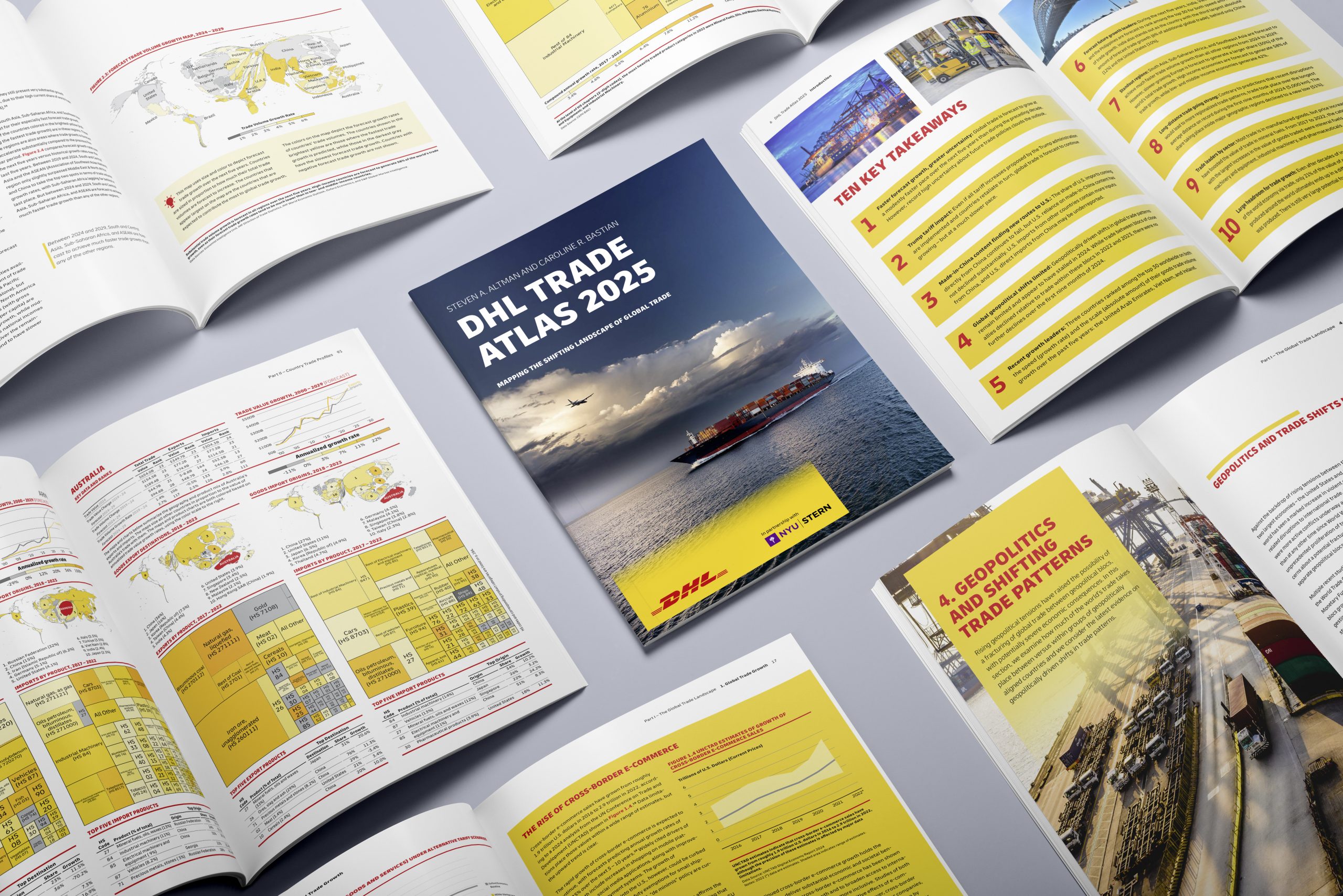
SINGAPORE – Media OutReach Newswire – 14 March 2025 – DHL and the New York University Stern School of Business have released the latest DHL Trade Atlas 2025, providing a comprehensive analysis of the most important trends in global trade. The report reveals that Asia’s trade outlook remains positive, mirroring global trade, which is forecast to grow faster over the next five years compared to the preceding decade. In fact, a few countries in Asia – India, Vietnam, Indonesia and the Philippines – are expected to see especially strong growth. The South Asia as well as Southeast Asia regions are also set to outperform other regions in terms of trade growth.

DHL Trade Atlas 2025 reveals Asia trade set for continued growth

“As we look towards the future of trade in Asia, it’s clear how trade growth has proven surprisingly resilient in the face of recent disruptions. With the ongoing diversification of supply chains that continues to reshape the commerce landscape, Asia has steadfastly emerged as a key player in the global market,” said Ken Lee, CEO – Asia Pacific, DHL Express. “However, we must approach this promising outlook with a measured perspective, recognizing the uncertainties and volatility that continue to characterize the global business environment. As businesses diversify supply chains, it is essential they stay innovative in their strategy and proactive in seeking out new routes to growth.”

New leaders in trade growth: India, Vietnam, Indonesia, and the Philippines

Between 2024 and 2029, four countries in Asia are forecast to rank among the top 30 for both speed (growth rate) and scale (absolute amount) of trade growth: India, Vietnam, Indonesia, and the Philippines.

In the next five years, India is anticipated to retain its third-place rank on the scale dimension as well as jump 15 spots to the 17th position on the speed dimension as its compound annual trade volume growth rate rises from 5.2% to 7.2%. Additionally, India may also deliver 6% of the world’s trade growth, behind China (12%) and the United States (10%).

The prospects of Vietnam, Indonesia and the Philippines are bright as they have displayed substantial potential to benefit from supply chain shifts and diversification strategies. Vietnam is expected to maintain a 6.5% compound annual trade volume growth rate over the 2024-2029 period and promote one position to rank fifth on the scale dimension. Indonesia is predicted to retain its 12th place on the scale rankings, while rising from 33rd to 25th in the speed rankings. More notably, the Philippines is set to leap 114 positions to rank 15th on the speed dimension, and rise from 68th to 30th on the scale dimension.

South Asia and ASEAN to produce faster growth rates than other regions

South Asia and the ASEAN regions are forecasted to deliver the fastest trade volume growth among major world regions from 2024 to 2029 with CAGR of 5.6% and 5.0%, respectively. In fact, trade growth is also expected to accelerate substantially compared to the previous five-year period in these regions. Other regions such as North America and Europe are forecast to grow at rates of 2.7%.

The DHL Trade Atlas also finds that the center of gravity of world trade has shifted. The shares of trade conducted by the world’s major geographic regions has changed since 2000, with the most dramatic change observed in Asian economies. Between 2000 and 2024, the share of world trade borne by South & Central Asia rose from 2% to 5%. However, a major region like Europe saw its share of world trade decrease from 41% to 36% for the same period.

New record in long-distance trade as Asia becomes central to global production networks

Despite widespread interest in nearshoring and producing goods closer to customers, the DHL Trade Atlas 2025 demonstrates that trade has not become more regionalized overall. Actual trade flows indicate the opposite trend. In the first nine months of 2024, the average distance traversed for all traded goods reached a record 5,000 kilometers, compared to just over 4,500 kilometers in 2000. This development can be attributed to the fact that Europe and North America have increasingly traded with Asia, as “Factory Asia” becomes central to global production networks.

Faster global trade growth compared to the previous decade

Recent forecasts predict goods trade will grow at a compound annual rate of 3.1% from 2024 to 2029. This roughly aligns with GDP growth and represents modestly faster trade growth compared to the previous decade. Even if the new U.S. administration implements all of its proposed tariff increases and other countries retaliate, global trade is still expected to grow over the next five years – but at a much slower pace.

“While threats to the global trading system must be taken seriously, global trade has shown great resilience because of the large benefits that it delivers for economies and societies,” said Steven A. Altman, Senior Research Scholar and Director of the DHL Initiative on Globalization at NYU Stern’s Center for the Future of Management. “While the U.S. could pull back from trade – at a significant cost – other countries are not likely to follow the U.S. down that path because smaller countries would suffer even more in a global retreat from trade.”

The DHL Trade Atlas 2025

The DHL Trade Atlas 2025 features a wealth of data-driven insights and analysis on global trade and its prospects. It is an up-to-date resource for business leaders, policymakers, educators, students, media, and the interested public. It includes concise one-page profiles summarizing the trade patterns of nearly 200 countries and territories that comprise over 99% of world trade, GDP, and population.

The free interactive content available at dhl.com/tradeatlas is a new feature of the report. The website enables users to customize analyses and explore trade trends by specific countries, regions, and categories of goods. Additionally, it offers convenient options for downloading data and images.

The report was commissioned by DHL and authored by Steven A. Altman and Caroline R. Bastian of New York University Stern School of Business. It was finalized in February 2025 using data and forecast updates through January 2025.
Hashtag: #DHLTradeAtlas #GlobalTrade #SupplyChainDiversification


The issuer is solely responsible for the content of this announcement.

DHL – The logistics company for the world

DHL is the leading global brand in the logistics industry. Our DHL divisions offer an unrivalled portfolio of logistics services ranging from national and international parcel delivery, e-commerce shipping and fulfillment solutions, international express, road, air and ocean transport to industrial supply chain management. With approximately 400,000 employees in more than 220 countries and territories worldwide, DHL connects people and businesses securely and reliably, enabling global sustainable trade flows. With specialized solutions for growth markets and industries including technology, life sciences and healthcare, engineering, manufacturing & energy, auto-mobility and retail, DHL is decisively positioned as “The logistics company for the world”.

DHL is part of DHL Group. The Group generated revenues of approximately 84.2 billion euros in 2024. With sustainable business practices and a commitment to society and the environment, the Group makes a positive contribution to the world. DHL Group aims to achieve net-zero emissions logistics by 2050.

Media OutReach

DFI Retail Group Holdings Limited 2026 Half-Year Results For The Six Months Ended 30 June 2026

Published

on

The following announcement was issued today to a Regulatory Information Service approved by the Financial Conduct Authority in the United Kingdom.

DFI RETAIL GROUP HOLDINGS LIMITED
HALF-YEAR RESULTS FOR THE SIX MONTHS ENDED 30 JUNE 2026

Highlights

  • Underlying profit from continuing businesses1 grew 44% to US$117 million
  • Reported profit was US$118 million, compared to a US$38 million loss in the prior year period
  • Like-for-like (LFL) subsidiary sales growth from continuing businesses2 improved to 3%
  • Health & Beauty sustained strong LFL sales; Convenience and Home Furnishings returned to growth
  • E-commerce and DFIQ Media contributed to approximately 35% of sales growth
  • Return on capital employed improved to 12%, up from 9% as of December 2025
  • Interim dividend of US¢6.20 per share, up 77% year-on-year. Maintain full-year dividend payout of 70%
  • Raised full-year organic revenue3 growth guidance to be between 3.0% and 4.0%, and underlying profit to be between US$285 million and US$305 million
  • Announced 100% interest acquisition of Cody Hong Kong (Cody HK), one of the leading outdoor advertising solution providers in Hong Kong
HONG KONG SAR – Media OutReach Newswire – 28 July 2026 – “Our first-half performance, with underlying profit1 growth of 44% and a consistently improving LFL subsidiary sales trend, reflects the strength of our strategy in action – a sharper value for customers, a strong focus on returns and execution with discipline. This was supported by sustained momentum in Health & Beauty, as well as strong recovery in Convenience and Home Furnishings segments. Our acquisition of Cody HK’s extensive outdoor media portfolio, together with its experienced leadership team, strengthens our capability to deliver full-funnel, omnichannel advertising solutions while accelerating the growth of DFIQ Media. As we continue to deepen customer engagement and build new profit pools through the DFI Omni Platform, we are well-positioned to deliver sustainable long-term value with greater earnings resilience.”
Scott Price
Group Chief Executive


DFI RETAIL GROUP HOLDINGS LIMITED
HALF-YEAR RESULTS FOR THE SIX MONTHS ENDED 30 JUNE 2026

OVERVIEW

The Group delivered strong performance in an evolving macroeconomic climate, underpinned by disciplined execution and a focus on driving higher returns. A portfolio built on everyday essentials, combined with a strong value proposition with convenience, continues to resonate with customers against the backdrop of oil price volatility. For the first half of 2026, subsidiary LFL sales growth from continuing businesses4 further improved to 3%. This was driven by sustained strong momentum in the Health & Beauty segment, as well as a return to growth in both the Convenience and Home Furnishings businesses. Price reinvestment, supported by a reset in sourcing strategy, drove Food volume growth with Wellcome’s basket price now trading at a discount relative to the Greater Bay Area5, compared to a premium in the prior year.

The Group’s commitment to retail excellence, a lean overhead structure and expanded omnichannel touchpoints enables us to serve our customers with better pricing and better experience. The DFI Omni Platform further strengthens this by seamlessly integrating our extensive store network with digital capabilities, delivering greater convenience and personalisation while unlocking new value pools through rich, cross-format data insights. Developing and scaling high-margin revenue streams, including retail media (DFIQ Media) and insights monetisation (DFIQ Insights), will diversify our profit base and support long-term value creation.

To enhance operational efficiency and improve productivity of team members, the Group introduced GenAI-powered tools in the first half of 2026, with plans to scale deployment across operating markets in the coming months. In parallel, AI capabilities are increasingly embedded across core retail functions, including assortment optimisation, promotion planning and demand forecasting, to drive better, more data-driven decisions.

The Group undertook a thorough review of the cost structure with the aim of driving sustainable savings and improving long-term cost efficiency. This has led to a reallocation of resources and costs toward format-level operations, driving greater agility and responsiveness to evolving market conditions, while continuing to reduce central selling, general and administrative (SG&A) costs through overhead optimisation. Combined with improving digital economics, underlying operating profit from continuing businesses6 grew 14% year-on-year in the first half of 2026. Improved operating performance and lower financing costs contributed to an 11% increase in underlying profit attributable to shareholders, or 44% from continuing businesses7 only.

The Group maintained a healthy balance sheet with a net debt position of US$22 million as of 30 June 2026. Return on capital employed further improved to 12%, up from 9% as of December 2025.

The Group declared an interim dividend of US¢6.20 per share, representing a significant increase of 77% compared to the same period last year. This enhanced interim dividend distribution underscored the Board’s confidence in the Group’s underlying business momentum and strong cash flow generation, while ensuring sufficient capital for future growth in line with our 70% payout policy.

OPERATING PERFORMANCE

Overall
For the first half of 2026, underlying subsidiary revenue from continuing businesses6 was US$4.1 billion, up 4% year-on-year and 3% on a LFL basis. The growth was driven by strong performance in the Health & Beauty division, as well as a return to growth in the Convenience and Home Furnishings segments. Total revenue, including Maxim’s, was US$5.6 billion. Excluding divestments7, total revenue increased by approximately 4%.

Overall underlying profit attributable to shareholders from continuing businesses7 grew 44% year-on-year to US$117 million, primarily driven by improved operating profit and lower financing costs.

Underlying subsidiary profit from continuing businesses6 was US$101 million, reflecting a 49% year-on-year increase, primarily driven by earnings recovery in the Home Furnishings and Food segment with lower SG&A expenses as a result of overhead reduction.

Underlying profit from associates was US$16 million, down from US$30 million in the prior comparable period, which included share of profits from Robinsons Retail ahead of its disposal. Excluding this, profit contribution from associates was up 22% year-on-year due to robust sales growth and effective cost optimisation at Maxim’s.

The Group reported operating cash flow after lease payments of US$178 million, 16% higher than the prior year period, driven by underlying operating profit growth. Free cash flow for the period was a net inflow of US$85 million, down 5% year-on-year, due to increased capex investment in priorities that will further strengthen the Group’s competitive position while driving long-term value for shareholders.

Digital
Capturing a significant share of daily essential customer missions in Hong Kong, the DFI Omni Platform – powered by yuu – enables deeper customer engagement across offline and online touchpoints, maximises data capture and unlocks incremental margin opportunities beyond core retail through DFIQ Media and DFIQ Insights. Overall digital turned profitable, with e-commerce and DFIQ Media contributing to approximately 35% of total revenue growth in the first half of 2026. This was supported by improved underlying e-commerce economics, a rising online sales penetration8 to 6.9% and 3 times in DFIQ Media revenue compared to first half of 2025. As of June 2026, more than 10,000 digital media-ready screens were available across DFI outlets.

Subsidiaries
Sales for the Health & Beauty division were US$1.4 billion, up 8% year-on-year from continuing businesses9, 7% in constant currency, or 6% on a LFL basis, with continued market share gains across key operating markets. Mannings and Guardian deepened their leadership as the trusted advisors for wellness through an enhanced, wellness-focused assortment and continued roll-out of skin and scalp assessment services across a wider store network. The recently announced exclusive distribution partnership with Holland & Barrett, a leading UK health and wellness retailer, will further expand customer access to trusted wellness solutions in Hong Kong and Singapore, followed by a broader rollout across selected Asia markets in the coming years. In Hong Kong and Macau, Mannings delivered 5% LFL sales growth, driven by increased basket size and robust tourist store sales amid higher visitor arrivals. In Southeast Asia, Guardian achieved strong LFL sales growth of 9%, supported by higher basket sizes and improved promotional efficiency, with Indonesia and Vietnam delivering close to 20% LFL growth. Excluding the impact of cost reallocation and closure of Mannings China offline stores, divisional profit increased moderately by 2% to US$109 million. Margin declined primarily due to increased strategic promotions to drive stronger sales and market share in Southeast Asia, particularly in Malaysia where health & beauty retailers did not benefit from the SARA Cash Aid Programme.

Total Convenience sales were US$1.2 billion, up 4% year-on-year or 2% on a LFL basis, as continued growth in higher-margin categories, including ready-to-eat (RTE) and exclusive collectibles, more than offset the decline in lower-margin cigarette volumes. Hong Kong LFL sales returned to growth in the second quarter following ten consecutive quarters of decline, supported by RTE and an expanded non-food assortment, including limited-edition collectibles and K-pop merchandise. Excluding cigarettes, LFL sales were up 3% for the period. In Singapore, effective promotional campaigns and collectible product launches drove strong LFL sales growth of 8%. In South China, continued store network expansion through a capex-light franchise model – including a net addition of 112 stores since June 2025 to nearly 1,980 locations – contributed to 12% sales growth year-on-year or 6% on constant currency basis. LFL sales were 1% higher compared to the prior year period, driven by the successful launch of Own Brand in key categories of frozen products and packaged drinks. The team remains focused on driving footfall and sales through further expansion of the RTE offering across both offline and online channels. This includes a broader rollout of the Food Bar to 453 stores as of June 2026, up from 325 at year-end 2025, and strong overall online sales growth of more than 35%. Excluding cost reallocation impact, profit for the division increased by 2% to reach US$37 million.

Reported sales for the Food division from continuing businesses10 were US$1.1 billion, up 1% year-on-year. LFL sales returned to positive growth of 0.5% in the second quarter of 2026. In Hong Kong, investment in reduced pricing on core basket items, a stronger fresh proposition, and Own Brand offering drove 2% increase in total volume and 0.5% LFL sales growth in the first half of 2026. As of June 2026, Wellcome’s “Everyday Value” range has expanded to nearly 500 items, offering savings of up to 40%, bringing its basket price down from a premium to a discount relative to the Greater Bay Area. The team also accelerated omnichannel growth with more than 35% growth in online order volume. In Cambodia, Lucky reported strong double-digit sales growth, with profit more than doubling year-on-year. The plan to open 50 new stores over the next few years remains on track. Macau Food sales remained challenging as a result of cross-border grocery shopping. Excluding the impact of cost reallocation and the divestment of Singapore Food, overall divisional profit increased by 27% year-on-year to US$17 million.

The Home Furnishings division delivered strong recovery in performance during the first half of 2026, with LFL sales growth of 4%, compared to a decline of 6% in the prior year period. Price reinvestment in core value SKUs, a stronger focus on locally relevant ranges and IKEA Food innovation drove increased footfall and items per baskets, resulting in a 3% LFL sales growth in Hong Kong and 5% in Taiwan. IKEA Food remains a critical traffic and revenue driver, accounting for 15% of total sales. In Indonesia, while offline sales momentum remained soft, LFL sales trend improved on a strengthening IKEA’s omnichannel proposition with online sales penetration reaching 24%. Sales recovery and effective cost optimisation measures contributed to 85% growth in overall divisional profit, excluding cost reallocation impact.

Associates
The Group’s share of Maxim’s underlying profits was US$16 million for the first half of 2026, up 15% year-on-year, underpinned by continued cost optimisation and operational efficiency measures. Sales for the period increased by 4%, driven by strong restaurant performance in Southeast Asia and a return to growth in the Chinese mainland, partially offset by weaker sales in Hong Kong.

RECENT BUSINESS DEVELOPMENTS

On 30 June 2026, the Group announced the acquisition of 100% interest in Cody Hong Kong (Cody HK), one of the leading outdoor advertising solution providers in Hong Kong, for a cash consideration of HK$30.2 million (approximately US$3.8 million) from ARN Media Network Limited (ASX: A1N), subject to customary adjustments.

The acquisition advances DFI’s strategy to build a full-funnel advertising solution in Hong Kong through DFIQ Media. By integrating Cody HK’s strategic assets – including multi-year exclusive advertising rights with Kowloon Motor Bus (KMB) and Hong Kong Tramways (HKT) – with DFI’s extensive store network, growing online user base, and closed-loop measurement capabilities, DFIQ Media strengthens its ability to deliver high-impact advertising solutions to a broader advertiser base across online, in-store, and outdoor channels.

Subject to satisfaction of third-party consents, the transaction is expected to complete in the second half of 2026.

PEOPLE

On 6 July 2026, the Group announced four senior leadership appointments effective from 1 August 2026. These moves reflect the Group’s continued focus on strengthening its leadership pipeline and driving the next phase of growth with experienced, proven leaders.

Andrew Wong will be appointed Chief Executive Officer, DFI IKEA. Formerly CEO of Health & Beauty, Andrew brings extensive experience in driving customer-led growth, operational discipline and in-store digitalisation across multiple markets. His earlier leadership of franchise operations at Jardine Restaurant Group positions him well to lead the IKEA business into its next phase of development.

Curtis Liu, having most recently served as Chief Executive Officer of Food, will be appointed Chief Executive Officer, Health & Beauty. His proven leadership in driving customer value repositioning in Hong Kong, combined with deep operational retail knowledge and digital experience at JD.com, positions him well to drive continued momentum and omnichannel growth in Health & Beauty.

Tom van der Lee will be appointed Chief Executive Officer, Food. Tom has played an instrumental role as Group Chief Financial Officer, driving financial discipline and supporting key strategic decisions across the Group. His prior experience at FrieslandCampina, a global food company, and his broad financial leadership across DFI banners in Southeast Asia supported his strong commercial grounding to lead the Food business.

Kaizhi Wu will succeed Tom as Group Chief Financial Officer. Kaizhi currently serves as Group Finance Director, Planning & Reporting, based in Hong Kong. Prior to joining DFI, he served as Executive Vice President and Chief Financial Officer of Yonghui Superstores Co., and earlier held senior roles at Jardine Matheson, Fosun Group and PwC in London. Kaizhi will join the Group’s Management Committee upon assuming his new role.

OUTLOOK

The Group remains confident in our ability to navigate the evolving trading environment, supported by sharpened business priorities, a strong balance sheet and low-cost operating model. Financial outlook outlined at the Investor Day in December 2025 remains intact as DFI continues to execute our multi-year strategic initiatives that are critical to driving sustainable revenue and earnings growth. These initiatives include strengthening our value proposition, strategically expanding store network, enhancing omnichannel capabilities and accelerating digital asset monetisation through data-driven insights. In particular, the growing DFI Omni Platform will deepen our customer engagement, further reinforce our core retail strength and enhance overall earnings resilience in the long term.

Despite an elevated oil price outlook for the remainder of the year, the Group expects to deliver stronger profitability supported by enhanced operational efficiency. As a result, the Group revises up its full-year organic revenue growth11 outlook to be between 3.0% and 4.0% (up from previously 2.0% to 3.0%), and underlying profit attributable to shareholders to be between US$285 million and US$305 million (up from previously US$270 million and US$300 million).

Scott Price
Group Chief Executive

—————–
1 Excluding impacts of divestment of Singapore Food business, closure of Mannings China and disposal of minority stake of Robinsons Retail
2 Excluding impacts of divestment of Singapore Food business and closure of Mannings China
3 Excluding Singapore Food and Mannings China
4 Excluding impacts of divestment of Singapore Food business and closure of Mannings China
5 Based on a third-party assured price comparison of a 200-item comparable basket between DFI and Shenzhen
6 Excluding impacts of divestment of Singapore Food business and closure of Mannings China
7 Excluding impacts of divestment of Singapore Food business, closure of Mannings China and disposal of minority stake of Robinsons Retail
8 Excluding cigarettes under Convenience and IKEA Food
9 Excluding Mannings China
10 Excluding Singapore Food business
11 Excluding Singapore Food and Mannings China
Hashtag: #DFIRetailGroup #Mannings #Guardian #7-Eleven #Wellcome #MarketPlace #IKEA #yuu #Maxim’s

The issuer is solely responsible for the content of this announcement.

DFI Retail Group

DFI Retail Group (the Group) is a leading Asian retailer, driven by its purpose to ‘Sustainably Serve Asia for Generations with Everyday Moments’.

At 30 June 2026, the Group and its associates operated 7,659 outlets across 12 markets, of which 5,593 stores were operated by subsidiaries. The Group, together with its associates, employed over 81,000 people, with more than 43,000 people employed by subsidiaries. The Group had reported revenue of US$8.9 billion in 2025.

The Group is committed to delivering quality, value and service to consumers across the region through trusted brands, strong local market positions, and a broad retail ecosystem supported by extensive store networks, digital capabilities and efficient supply chains.

The Group and its associates operate a portfolio of well-known brands across five key divisions. The principal brands are:

Health and Beauty

  • Mannings in Hong Kong and Macau S.A.R.; Guardian in Brunei, Indonesia, Malaysia, Singapore and Vietnam.

Convenience

  • 7-Eleven in Hong Kong and Macau S.A.R., Singapore and Southern China.

Food

  • Wellcome and Market Place in Hong Kong S.A.R.; San Miu in Macau S.A.R.; Lucky in Cambodia.

Home Furnishings

  • IKEA in Hong Kong and Macau S.A.R., Indonesia and Taiwan.

Restaurants

  • Hong Kong Maxim’s group on the Chinese mainland, Hong Kong and Macau S.A.R., Cambodia, Laos, Malaysia, Singapore, Thailand and Vietnam.

The Group’s parent company, DFI Retail Group Holdings Limited, is incorporated in Bermuda and has a primary listing in the equity shares (transition) category of the London Stock Exchange, with secondary listings in Bermuda and Singapore. The Group’s businesses are managed from Hong Kong. DFI Retail Group is a member of the Jardine Matheson group.

Continue Reading

Media OutReach

800,000 More Daily Journeys: Copenhagen’s Next Mobility Challenge

Published

on

COPENHAGEN, DENMARK – Media OutReach Newswire – 28 July 2026 – There is something remarkable about Copenhagen.Stand in the city centre during rush hour and you will still hear bicycle bells, conversations spilling out from cafés and children walking to school. It is not because the city has fewer people or less traffic. On the contrary, Copenhagen is one of Northern Europe’s most dynamic capitals. What makes it different is that its mobility system is organised so well that it almost disappears into everyday life.

That success has never been built around a single mode of transport. Copenhagen is not simply a cycling city, nor is it defined by its metro or buses. It is an integrated mobility ecosystem where every mode serves a distinct purpose. Bicycles are ideal for short trips. Public transport moves large numbers of people efficiently across the city. Walking remains part of daily life. Taxis fill the journeys that other options do not always serve well, whether it is an early morning airport transfer, an elderly passenger travelling home, a family carrying luggage or visitors arriving in the city for the first time. Rather than competing with one another, each mode strengthens the overall system.

Yet even one of the world’s most successful mobility systems now faces a new challenge.

According to a joint mobility analysis by the Capital Region of Denmark and the City of Copenhagen, the Greater Copenhagen area is expected to generate around 800,000 additional journeys every day by 2035. That growth will be shared across every mode of transport, including approximately 290,000 additional walking trips, 110,000 cycling trips, 80,000 public transport journeys and 310,000 car trips each day.

These figures reveal an important reality. Copenhagen is not expecting people to abandon bicycles for cars, nor is it attempting to replace one mode of transport with another. As the population grows, tourism expands and economic activity increases, demand will rise across the entire mobility system.

The real challenge is therefore not deciding which mode of transport should dominate. It is finding ways to accommodate hundreds of thousands of additional journeys while preserving the quiet streets, public spaces and quality of life that have made Copenhagen one of the world’s most liveable cities.

This philosophy is increasingly reflected in the city’s approach to mobility. Walking, cycling, public transport, cars and taxis are no longer viewed as competing alternatives, but as complementary parts of the same transport ecosystem, each serving different travel needs.

The challenge is not unique to Copenhagen.

According to the European Environment Agency (EEA), road traffic remains Europe’s largest source of environmental noise, affecting around 92 million people. The report concludes that electrification alone will not solve the problem. Cleaner vehicles are essential, but so are better urban planning and a more balanced transport system.

In other words, the future of urban mobility will not be determined by how many electric vehicles a city puts on its streets. It will depend on whether every journey is served by the right mode, at the right time and in the right place.

Even the best transport systems leave certain journeys uncovered.

Not everyone can cycle to the airport before sunrise. Elderly passengers may struggle with luggage on public transport. Visitors arriving in Copenhagen for the first time may not feel confident combining several transport options simply to reach their hotel. These journeys represent only a small proportion of daily travel, but they will always exist. This is where ride-hailing finds its place within the mobility ecosystem. It complements public transport and cycling rather than competing with them.

The quality of that service, however, depends on far more than the vehicle itself.

Ultimately, every journey is shaped by the person behind the wheel. A safe drive, professional conduct, punctuality, a warm greeting or a helping hand with a suitcase all contribute to the passenger’s experience. In a city like Copenhagen, these small moments help shape the city’s reputation just as much as its infrastructure.

This is the context in which Green SM enters Copenhagen.

Over the past three years, Green SM has accumulated experience from millions of journeys every day and billions of kilometres travelled in fully electric vehicles across Asia. Yet in Copenhagen, scale alone means very little. The more important question is whether a mobility service can integrate seamlessly into an already successful transport system and make it work even better.

For that reason, Green SM invests not only in an all-electric fleet, but also in rigorous driver recruitment and training covering safety, customer service, operational excellence and local cultural understanding. The objective is not simply to move passengers from one destination to another, but to deliver journeys that reflect the standards Copenhagen has spent decades building.

Perhaps that is why Copenhagen became Green SM’s first destination in Europe.

The ambition is not to introduce a new model of urban mobility. It is to become a trusted addition to one that already works exceptionally well.

Ultimately, success in Copenhagen will never be measured by the number of vehicles on the road. The city does not need more cars simply to fill its streets. It needs mobility services that are available when people need them, complement the existing transport network and quietly step back once their role is complete, leaving the city every bit as liveable as before.

If Green SM can help make thousands of daily journeys more convenient, safer and more reliable, while preserving the rhythm of life that makes Copenhagen unique, that may be success enough.

Hashtag: #GreenSM

The issuer is solely responsible for the content of this announcement.

Continue Reading

Media OutReach

Centriq PR Champions Purposeful Communication Through Social Impact Initiative

Published

on

We.R.Wira Season 4 Equips Youth with Industry Ready Skills Aligned with UN SDGs

SELANGOR, MALAYSIA – Media OutReach Newswire – 28 July 2026 – Centriq PR, independent Malaysian public relations consultancy, marked another milestone in its commitment to purposeful communication as Season 4 of its social impact initiative, We.R.Wira, culminated in the Golden Wira Awards Ceremony at Tan Yew Sing Auditorium, INTI International College Subang.

We.R.Wira Season 4 recorded its strongest participation to date, receiving 41 submissions from four institutions. (Below stage, from left): Director of Strategic Communications, Malaysia Digital Economy Corporation, Mr. Frank Chan, Managing Director, EVD Berhad, Mr. Norhizam Abdul Kadir, Head of Community Outreach & Collaborations, United Nations Association Malaysia, Ms. Loke Pak-Yen, Managing Director, Centriq PR, Ms. Jacqueline Arnold, Head of Programme, Mass Communications, Centre for University of Hertfordshire Programmes, INTI International College Subang, Mr. Roberto Calleja Fernandez, Dean, Centre of University of Hertfordshire Programmes, INTI International College Subang, Mr. Lai Mun Loon.

At its core, We.R.Wira reflects Centriq PR’s belief that heroism lives in ordinary individuals—the everyday heroes (“Wira” ) who choose to act with passion and purpose for causes they believe in. By empowering youth to uncover and tell these stories, Centriq PR aims to nurture purposeful storytellers and future changemakers.

Equipping Youth with Industry‑Ready Skills
As the communication industry evolves, Centriq PR recognises that practitioners need more than creativity. They must develop a deeper understanding of the United Nations’ 17 Sustainable Development Goals (UN SDGs), communicate their relevance to different audiences and connect with collaborators across sectors. We.R.Wira equips students with these industry‑relevant skills by combining real‑world storytelling, SDG alignment and academia‑industry partnerships.

In her opening remarks, Managing Director of Centriq PR, Jacqueline Arnold, shared, “At Centriq PR, we believe storytelling has the power to educate, inspire and bring people together. Storytelling is more than creative expression; it is practice for life. Beyond learning to craft authentic narratives, students gain the ability to identify stakeholders with shared values, build meaningful collaborations and amplify stories across multiple platforms to inspire real impact. This is what PR is all about. Through We.R.Wira, we encourage young communicators to listen with empathy and give voice to everyday heroes who create positive change in their communities.”

Season 4 recorded its strongest participation to date, receiving 41 submissions from four institutions: UOW Malaysia Glenmarie, UTAR Kampar, UiTM Shah Alam, and newcomer INTI International College Subang, which proudly hosted the ceremony. Collectively, participants explored 12 of the 17 UN SDGs, with SDG 11 (Sustainable Cities and Communities), SDG 15 (Life on Land), and SDG 10 (Reduced Inequalities) most represented.

Building Skills Through Workshops and Resources
Centriq PR also led a workshop at INTI International College Subang, supported by a video series and workshop deck, to introduce strategic communications, SDG alignment and ESG‑focused narratives. These resources gave students practical skills to connect their stories to sustainability goals and prepare to collaborate with stakeholders as future communicators.

Celebrating Storytelling as a Catalyst for Change
Entries were evaluated by a panel comprising Loke Pak‑Yen (United Nations Association Malaysia), Frank Chan (MDEC), Norhizam Abdul Kadir (EVD Berhad), and Arnold.

The event brought together students, educators and industry leaders to celebrate storytelling as a catalyst for positive change, demonstrating how strategic communications can help advance the UN SDGs.

Academic Dean of INTI International College Subang, Mr. Eric Lee, noted, “This semester, INTI International College Subang aligned its Mass Communication module assessments with the We.R.Wira campaign, encouraging students to submit their coursework to the national competition.”

Honouring Champions and Outstanding Stories
For its compelling storytelling and lasting community impact, the submission titled Anak Pulau: Below the Surface by UiTM Shah Alam emerged champion. Another submission by UiTM Shah Alam, Where Heart Meets: The Story of Tender Hearts Cafe secured the first runner‑up spot, while Beyond the Sirens by UOW Glenmarie took second runner‑up position.

For demonstrating exceptional merit and strong performance, four Honourable Mentions were presented to Colouring Lives (UOW Glenmarie) and Keep Wildlife Wild: Animal Neighbours Project, Sixteen Pillars, One Heritage, and Invisible Citizens: The Fight For A Name, all submitted by UiTM Shah Alam.

In the new Outstanding SDG Alignment category, the submissions titled Invisible Citizens: The Fight For a Name (SDG 10: Reduced Inequalities) and The Lost Food Project: More Than Leftovers (SDG 12: Responsible Consumption and Production; SDG 2: Zero Hunger), UiTM Shah Alam emerged as winners for their powerful alignment with selected SDGs and ability to inspire awareness and action.

Looking Ahead to Season 5
Through We.R.Wira, Centriq PR is cultivating the next generation of communicators by equipping students with practical experience in strategic storytelling, SDG alignment, stakeholder engagement, and industry collaboration—skills essential in today’s PR profession.

Season 4 leaves a resounding message: Change begins when those who care enough, dare to act. Looking ahead, We.R.Wira will return for Season 5, reaffirming Centriq PR’s long‑term commitment to nurturing future communicators through meaningful storytelling, collaboration and social impact initiatives.

Hashtag: #WeRWira #WeRWiraS4 #SocialImpact #SDG #BeTheChange #SustainableDevelopmentGoals


The issuer is solely responsible for the content of this announcement.

About Centriq PR

Centriq PR is a Malaysian independent public relations consultancy, recognised for its expertise in strategic content development, corporate communications, media relations, reputation management, ESG communications, and crisis response.

The consultancy focuses on human intelligence, ethical guidance, and trust-building to provide strategic communications counsel, partnering with organisations across industries to build trust, strengthen stakeholder relationships, and deliver measurable outcomes.

Beyond client work, Centriq PR champions communications as a force for social impact. Its flagship youth initiative, We.R.Wira, equips students with practical storytelling skills and amplifies inspiring stories aligned with the United Nations Sustainable Development Goals (UN SDGs), showing how communication can drive lasting positive change.

Continue Reading

