

Connect with us

Media OutReach

CPA Australia Survey: Hong Kong’s capital market key to sustaining international competitiveness amid conservative businesses outlook for 2026

Published

on

HONG KONG SAR – Media OutReach Newswire – 4 December 2025 – Despite persistent global headwinds and trade tensions, Hong Kong’s financial ecosystem remains a cornerstone of economic resilience, according to the findings of CPA Australia’s Hong Kong Business Sentiment Survey.

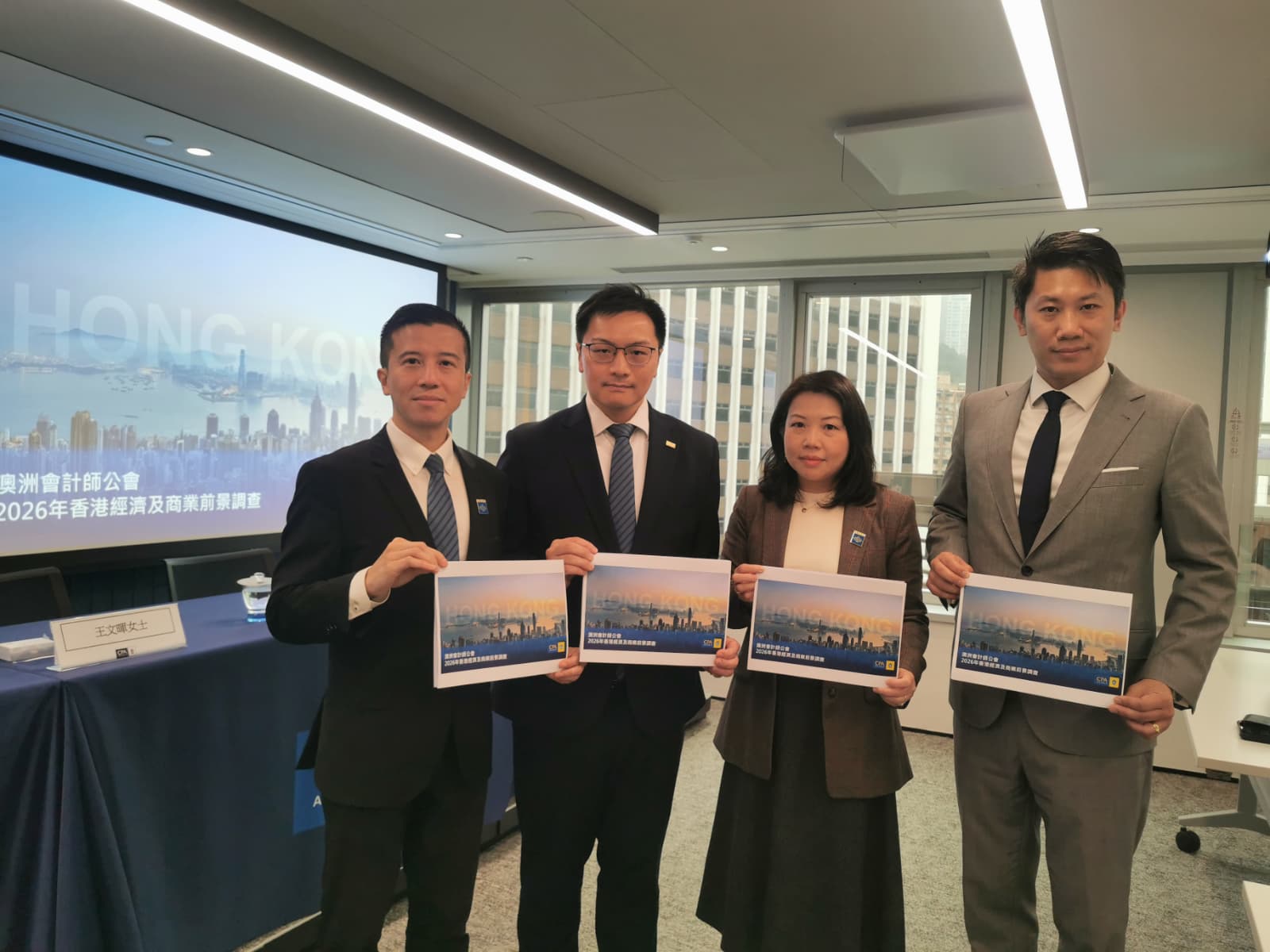
(from left to right) Mr Cliff Ip, Divisional Councillor of CPA Australia 2025 in Greater China; Mr Cyrus Cheung, Divisional Deputy President of CPA Australia 2025 in Greater China; Ms Karina Wong Divisional President of CPA Australia 2025 in Greater China; Mr Kelvin Leung, Divisional Deputy President of CPA Australia 2025 in Greater China

The survey of accounting and finance professionals underscores the critical role of capital market strength and financial connectivity in maintaining the city’s international competitiveness. Building on this year’s solid economic growth, 63 per cent of respondents anticipate the economy will continue to expand steadily in the coming year.

They are most likely to cite a competitive tax system (39 per cent), robust capital market (30 per cent) and the Chinese mainland’s economic performance (24 per cent) as the main drivers of growth.

However, respondents identified high living costs (28 per cent), a weakening global economy (27 per cent) and slowing mainland growth (26 per cent) as the biggest expected challenges for Hong Kong’s economy and businesses in 2026.

Further, property price forecasts for next year are subdued, with more than three-fifths expecting retail, industrial and office prices to decline, while residential outlook is somewhat better, but still mixed. Encouragingly, 42 per cent rate the city’s international competitiveness as extremely high or fairly high.

Hong Kong’s IPO market staged a remarkable rebound this year, reclaiming its position as the world’s top fundraising hub by the third quarter. Looking ahead, 66 per cent of respondents expect IPO activity to rise further in 2026. ‘Enhancing Hong Kong’s financial connectivity with other regions’ were cited by 22 per cent of respondents as the most beneficial government policy for their organisation next year, followed closely by China’s ‘Going Out’ strategy (21 per cent).

Infographic

Ms Karina Wong, CPA Australia’s Greater China Divisional President for 2025, said: “Hong Kong’s capital market is a vital engine for the city’s economic growth and a key differentiator in sustaining global competitiveness. Amid geopolitical tensions and external volatility, Hong Kong is considered as a safe haven for international investors and businesses to manage their assets and diversify risks.

“Our survey shows that enhancing financial connectivity with other regions is the policy most likely to have the greatest impact on business growth next year. To maintain this edge, the Hong Kong government and regulators should consider implementing an IPO Connect scheme to allow Mainland investors to participate in Hong Kong IPOs, attract more family offices to boost liquidity and retain wealth in the city, and streamline the listing process for Mainland companies. They should also keep building connections with overseas financial markets and attracting global investors to the city.”

Trade tensions continue to weigh heavily on business sentiment, with 51 per cent reporting it having negative impacts on their company’s performance in 2025. Further, the proportion citing it as a key business concern in the next year has more than doubled from 9 per cent last survey to 20 per cent for 2026.

Hong Kong companies have responded proactively to this challenge, with 24 per cent relocating or restructuring their operations, 20 per cent expanding into new markets and 19 per cent conducting risk assessments. Expansion strategies are increasingly focused on domestic (32 per cent) and Chinese mainland markets (46 per cent).

Revenue expectations are more conservative for next year, with 39 per cent of respondents forecasting their company’s revenue will grow in 2026, down from 51 per cent in 2025, while 37 per cent expect it to remain stable. Competitive pressures are intensifying, with 29 per cent citing it as their top challenge, up from 19 per cent. Cost management (43 per cent) remains the leading strategic priority for surveyed companies for the third consecutive year.

Ms Wong said: “Companies are adopting a more cautious approach for 2026 in response to heightened external volatility. While uncertainties persist, Hong Kong continues to offer many promising opportunities, such as a buoyant stock market, a revitalised tourism sector and many successful mega-events. Many organisations are prioritising local prospects as a prudent strategy.

“Strengthening the city’s position as the premier gateway for Chinese enterprises under the Mainland’s ‘Going Out’ strategy will reinforce its role as a unique connector to global markets. At the same time, supporting SMEs adopt AI-driven tools to improve productivity and cost management will ensure businesses remain agile and competitive.

“Companies should leverage opportunities from China’s ‘Going Out’ strategy, seek professional advice to manage financing and borrowing costs and innovate to generate new customer demand. Reducing operating costs through outsourcing non-core functions and tapping into government support schemes to diversify into new markets will be essential for navigating 2026.”

The survey was conducted from 22 October to 21 November 2025, capturing insights from 296 accounting and finance professionals across diverse industries. More than half of respondents are executives and managers, with representation from firms of all sizes.
Hashtag: #CPAAustralia

The issuer is solely responsible for the content of this announcement.

About CPA Australia

CPA Australia is one of the largest professional accounting bodies in the world, with nearly 175,000 members in over 100 countries and regions, including more than 22,500 members in Greater China. CPA Australia is celebrating its 70th anniversary in Hong Kong this year. Our core services include education, training, technical support and advocacy. CPA Australia provides thought leadership on issues affecting the accounting profession and the public interest. We engage with governments, regulators and industries to advocate policies that stimulate sustainable economic growth and have positive business and public outcomes. Find out more at

Media OutReach

SIM Global Education Students Connect with Industry Mentors Through Campus Life

Published

on

SINGAPORE- Media OutReach Newswire – 19 June 2026 – For many students considering higher education, choosing an institution is not only about selecting a programme or qualification. Students are also looking for a learning environment where they belong, receive support, build confidence and connect with people who can help with understanding future career pathways.

At SIM Global Education (SIM GE), campus life is designed to complement academic learning by helping students develop networks, soft skills, career awareness and a stronger sense of community. SIM GE’s holistic learning approach and culturally diverse environment aim to equip students with an all-rounded global education, while student life, career development and networking activities help students build competencies needed to thrive in the real world.

This is increasingly important in higher education. UNESCO’s International Institute for Higher Education notes that student wellbeing is critical to academic success and personal development, and that inadequate support can affect learning outcomes, career readiness and students’ ability to contribute meaningfully to society.

Addressing student concerns beyond the classroom
Students exploring higher education often face several practical concerns. They may wonder whether they will make friends, whether they will be supported if they struggle, whether they will have opportunities to develop leadership skills, and whether they can access career guidance before entering the workforce.

SIM GE addresses these concerns through a campus ecosystem that combines student clubs, leadership development, peer support, wellbeing programmes and career services. Through Project 1095, SIM GE highlights that education extends beyond books, exams and qualifications, encompassing knowledge, skills and activities both inside and outside the classroom. This approach supports students who want a fuller higher education experience to grow personally, socially and professionally.

Building networks through clubs and co-curricular activities
Student clubs and co-curricular activities are among the first ways SIM GE students build connections on campus. SIM offers nearly 80 student clubs across areas such as arts and culture, international student clubs, student councils, special interest groups, sports and fitness. These activities allow students to broaden their interests, discover new talents and interact with peers beyond their academic programmes.

For students, these communities can make networking feel more natural. Instead of viewing networking only as a formal career activity, students can begin by working with peers on events, competitions, club projects and leadership initiatives. These experiences help students develop communication, teamwork, confidence and relationship-building skills that are valuable in both campus life and the workplace.

Developing leadership and workplace-ready skills
Leadership opportunities are another important part of the SIM GE student experience. Project 1095 states that SIM aims to prepare every student to be a leader, with opportunities ranging from leadership positions in clubs, to workshops that help students take charge of their learning journey.

These experiences are relevant to students who want to strengthen their employability before graduation. By organising activities, leading teams, managing projects and engaging with different student groups, students can develop confidence and practical skills that support their future careers. Such skills are increasingly valued by employers. The World Economic Forum’s Future of Jobs 2025 report identifies skills such as analytical thinking, resilience, flexibility, agility, leadership and social influence as important for the future workforce.

Connecting students with career guidance and industry networks
For students seeking more direct career support, SIM Career Connect helps students develop a competitive edge, build industry networks and professional connections, and align their career aspirations with real-world opportunities. This is a key part of helping students transition from academic learning to career readiness. Through career guidance, networking opportunities and employer engagement, students can better understand industry expectations and explore potential career pathways.

SIM’s Employer Engagement team also works with industry partners to connect employers with SIM GE students, supporting employers in finding the right fit from its pool of talent, and provides. For students, this access to industry networks can help reduce uncertainty about life after graduation. It also gives them opportunities to gain exposure to professional environments, employer expectations and potential career directions while still studying.

The role of mentoring in student career development
Mentoring and professional guidance are important because students often need perspective as much as information. Research on employability-oriented higher education programmes has highlighted that higher education has increasingly focused on developing students’ employability competences through mentoring programmes.

Within SIM GE’s broader campus life and career ecosystem, students can connect with peers, student leaders, career advisors, employers and industry opportunities. These touchpoints help students build confidence, ask the right questions, learn from others’ experiences and make more informed decisions about their future.

Helping students make a more confident higher education choice
As students consider their higher education options, many are looking for more than a classroom experience. They want to know whether they will be supported, whether they can build friendships, whether they will have access to career resources, and whether they can connect with people who can help them understand the world of work. At SIM Global Education, student life plays an important role in addressing these concerns. Through clubs, co-curricular activities, student leadership, peer support, wellbeing services, career guidance and employer engagement, SIM GE provides students with opportunities to build meaningful connections and develop future-ready skills.

For students choosing their next step in higher education, these experiences can make a significant difference. They help you move from uncertainty to confidence, from participation to leadership, and from academic learning to stronger career readiness.

Reference

  1. SIM Global Education – https://www.sim.edu.sg/degrees-diplomas/sim-global-education/university-partners-sim-ge/sim-ge
  2. New insights on countries’ objectives to support student well-being in higher education – https://www.iesalc.unesco.org/en/articles/new-insights-countries-objectives-support-student-well-being-higher-education
  3. Project1095 – https://project1095.simge.edu.sg/
  4. Future of Job Report – https://www.weforum.org/publications/the-future-of-jobs-report-2025/
  5. SIM Career Service – https://www.sim.edu.sg/degrees-diplomas/life-at-sim/career-services
  6. Measuring mentoring in employability-oriented higher education programs: scale development and validation – https://pmc.ncbi.nlm.nih.gov/articles/PMC10170025/
  7. Wellness and Counselling – https://www.sim.edu.sg/degrees-diplomas/life-at-sim/student-care

Hashtag: #SIMGlobalEducation #SIMGE #GlobalEducation #InternationalDegree #CareerReady #FutureSkills

The issuer is solely responsible for the content of this announcement.

About SIM Global Education

SIM Global Education (SIM GE) is a leading private education institution in Singapore and the region. We offer more than 140 academic programmes ranging from diplomas and graduate diploma programmes to bachelor’s and master’s degree programmes with some of the world’s most reputable universities from Australia, Canada, Europe, United Kingdom, and the United States. SIM GE’s cohort is made up of 17,000 full- and part-time students and adult learners, of which approximately 41% are international students hailing from over 50 countries.

SIM GE’s holistic learning approach and culturally diverse learning environment aim to equip students with knowledge, industry skills and employability competencies, as well as a global perspective to succeed as future leaders in a fast-changing, technologically driven world.

For more information on SIM Global Education, visit

Continue Reading

Media OutReach

Thailand’s “trust capital” a potential strategic advantage amid global realignment: NUS Business School Dean

Published

on

BANGKOK, THAILAND – Media OutReach Newswire – 19 June 2026 – As geopolitical tensions reshape global trade, supply chains and investment flows, Thailand’s long-standing reputation as a trusted and neutral regional partner could become one of its strongest competitive advantages, according to Distinguished Professor Andrew K. Rose, Dean of NUS Business School.

NUS Business School Senior Lecturer Ms Usa Skulkerewatana (foreground, first from left) and Distinguished Professor Andrew K. Rose, Dean of NUS Business School with Thai media representatives.

Speaking to the media during a visit to Bangkok, Professor Rose said economies with deep international trust and stable regional relationships are increasingly well positioned as businesses rethink where they invest, manufacture and expand.

“In a world where global alignments are shifting and supply chains are being redrawn, trust becomes a strategic asset,” said Professor Rose. “Thailand has spent decades building strong relationships across Asia and beyond. That foundation becomes more valuable in periods of uncertainty.”

A pivotal moment for Thailand
Thailand’s current environment is demanding, and the International Monetary Fund’s World Economic Outlook (April 2026) projects growth of 1.5 per cent in 2026.

Professor Rose noted that rising energy costs, softer long-haul tourism demand and rapid AI adoption are creating near-term pressure across key sectors of the Thai economy. However, he said periods of disruption often create the conditions for long-term competitive repositioning.

“The economies that emerge stronger are usually the ones that adapt earliest,” as Professor Rose. “Leadership capability, agility and the ability to navigate change will determine who captures the next decade of growth.”

The comments come as businesses across Southeast Asia accelerate investment in AI, digital transformation and workforce reskilling amid growing global economic fragmentation.

A 2026 Milieu Insight study of 3,000 workers across six Southeast Asian markets including Thailand found that 53 per cent ranked over-dependence on AI as their top concern, ahead of privacy risks and job displacement. This suggests that organisations in Thailand and across the region must do more to guide, not just deploy, new technology.

Building regional leadership capability
Addressing these challenges requires more than a policy response alone. Professor Rose emphasised that both multinationals and SMEs must build their adaptation strategies around talent and leadership development to power Thailand’s growth engine.

Ms Usa Skulkerewathana, Senior Lecturer at NUS Business School, said Thai organisations should consider focusing on strengthening talent development and practical AI readiness rather than treating technology as a standalone solution.

“This is not a wait-and-see moment,” said Ms Skulkerewathana. “Thai businesses that invest early in leadership, digital capability and workforce resilience will be better positioned to compete regionally and internationally.”

Singapore’s role as Asia’s financial and educational hub offers Thai professionals and organisations a natural gateway to build regional leadership capability. Thai professionals and executives have, for decades, benefitted from NUS Business School’s MBA, MSc and executive education programmes, including the Stanford–NUS Executive Programme and other senior leadership initiatives developed with global academic and industry partners. Thai enrolment has remained steady over the past five years as professionals seek regional exposure and globally benchmarked leadership training.

Thailand’s “trust capital” is intact, and its position within a reorganising ASEAN is reinforced by the changes underway. The Thai institutions and business leaders that treat “trust capital” as a competitive asset, and build the leadership depth to deploy it, will define the country’s next chapter of growth.

Hashtag: #NUSBusinessSchool


The issuer is solely responsible for the content of this announcement.

About NUS Business School

With 50,000 alumni and 60 global chapters, the National University of Singapore (NUS) Business School is known for providing management thought leadership from an Asian perspective, enabling its students and corporate partners to leverage global knowledge and Asian insights.

The school has consistently ranked first in Asia by independent publications and agencies, such as The Financial Times and Quacquarelli Symonds, in recognition of the quality of its programmes, faculty research and graduates.

The school is accredited by AACSB International (Association to Advance Collegiate Schools of Business) and EQUIS (European Quality Improvement System), endorsements that the school has met the highest standards for business education.

For more information about NUS Business School, please visit .

To discover our MBA, MSc or Executive Education courses, visit , or

Continue Reading

Media OutReach

Dayos Releases Athena: Agentic Replacement for Oracle and Workday AMS Contracts, Now Generally Available

Published

on

Hero performs full end-to-end report development, Application configuration, and token management, closing tickets at no marginal cost on top of the platform fee while customers keep their existing systems, controls, and access model.

SINGAPORE –

The release addresses four structural problems with the AMS model that enterprises running Oracle and Workday have lived with for two decades.

Time to deploy. Traditional AMS engagements take months to scope, onboard, and ramp to full coverage. Athena Starter deploys in two weeks – from contract execution to production agents running inside the customer’s Oracle or Workday tenant.

Quality of work. Hero’s agents reason through tickets in the customer’s actual tenant – exploring, planning, and validating before posting. Report development tickets, historically the worst offenders on enterprise SLA reports, complete 70% faster on Hero. Plain English in, validated SQL out, executed inside the tenant.

Long-term support drag. Hero reduces Oracle ticket backlogs by 50% in the first 30 days for Starter customers, with a sustained 60% reduction in the active ticket queue by the end of year one for Pro customers. SLAs across customer engagements run 50% faster. Every ticket Hero closes is a ticket the customer’s AMS provider does not bill for.

Proof. Dayos used Hero internally to retire its own ServiceNow ITSM environment in 45 days, with 60% of Tier 1 tickets now resolved autonomously. The deployment is documented as a reference case in Section 2.1 of the IMDA Model AI Governance Framework for Agentic AI, published by Singapore’s Infocomm Media Development Authority at ATxSG in May 2026, alongside case studies from AWS, DBS, Google, Workday, OCBC, Tencent, PwC, and GovTech.

“AMS providers bill per ticket or per hour. Hero closes tickets at no marginal cost on top of the platform fee. Every ticket Hero closes is one your AMS provider doesn’t bill for,” said Brad McElhannon, Founder and CEO of Dayos.

AVAILABLE NOW AND AHEAD

Athena Starter is available at USD 60,000 per year, delivering 50% Oracle ticket backlog reduction in 30 days, 70% faster report development, and 50% faster SLAs. Athena Pro is available at USD 150,000 per year, adding custom agent development and a contractually committed 60% sustained reduction in the active ticket queue by the end of year one. Plan details and outcome breakdowns by tier are at dayos.com/plans (https://www.dayos.com/plans).

The Athena Hero release ships with full support for Oracle and Workday. SAP availability is targeted for January 2027.

Hero is built on Google’s Agent Development Kit (ADK) with Gemini as the lead reasoning model, and operates under ISO 42001-aligned governance with SOC 2 Type II controls. Athena enters general availability, with active enterprise deployments across the Asia-Pacific region.

Hashtag: #AgenticAI #Oracle #Workday #SAP #EnterpriseAI #AMS


The issuer is solely responsible for the content of this announcement.

About Dayos

Dayos is an AI-native platform company headquartered in Singapore. Its platform, Hero, automates the Oracle and Workday application-managed services work that enterprises have historically outsourced, including configuration, report development, reconciliations, transaction entry, monitoring, and incident resolution. Rather than replacing a customer’s systems, Hero works inside their existing Oracle and Workday environments and respects their established controls and role-based access model.

Dayos is ISO 42001 and SOC 2 Type 2 certified and was published as a reference deployment in the IMDA Model AI Governance Framework for Agentic AI. The company was founded by Brad McElhannon, who spent more than 20 years in enterprise Oracle implementation across 200+ clients and led Finance Engineering at Robinhood through its IPO. Learn more at www.dayos.com.

Continue Reading

Trending

