
Media OutReach
Dah Sing Bank Unveils 24-Hour US Stock Trading Service

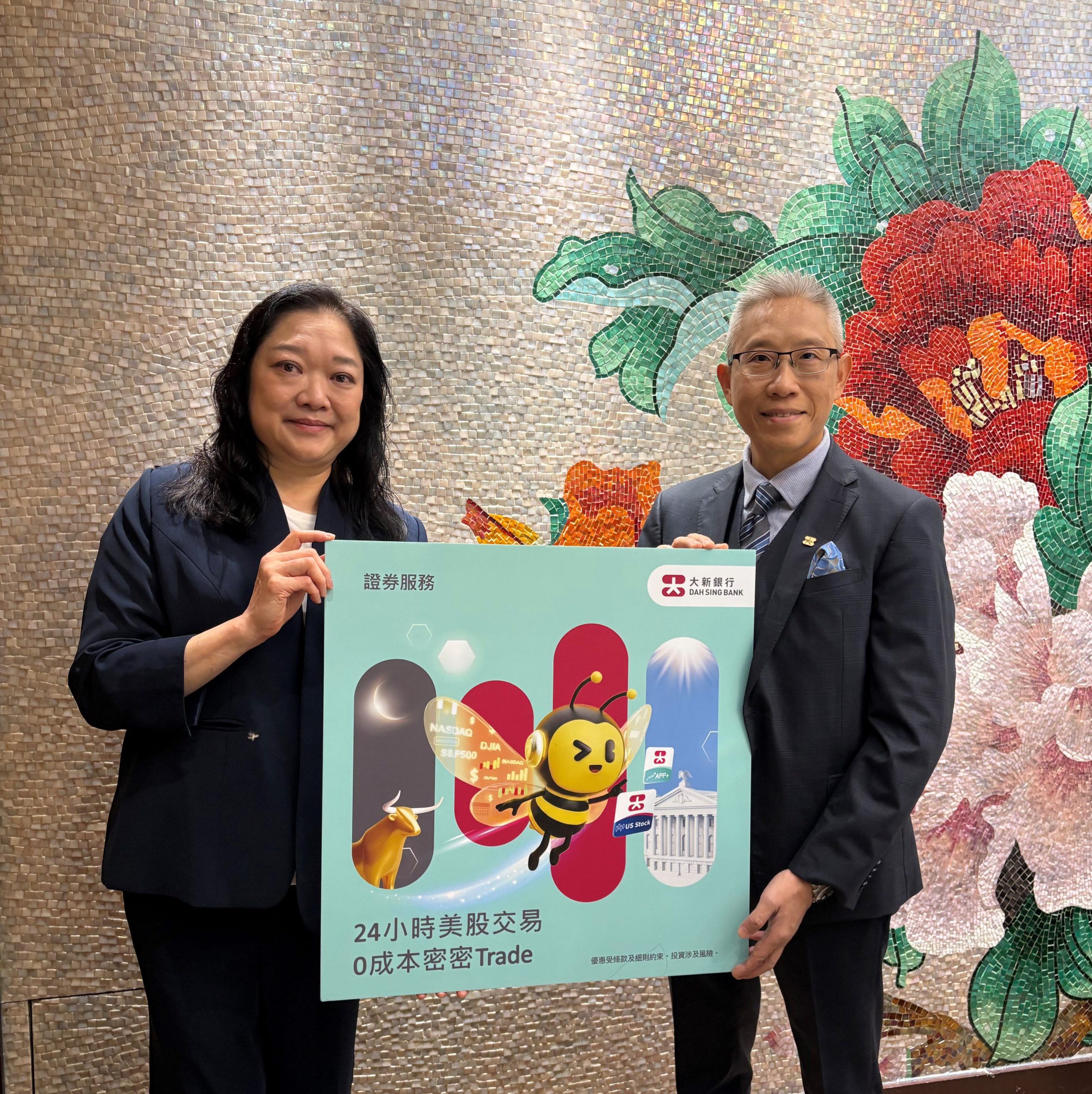
Seamless Access Across Time Zones with Preferential Brokerage Fee
HONG KONG SAR – Media OutReach Newswire – 4 December 2025 – Dah Sing Bank, Limited (“the Bank”) announced the extension of its US stock trading service to 24 hours*, offering investors round-the-clock trading experience. The US equity market remains the largest globally by market capitalisation and continues to be a key focus for investors. In recent years, demand for US stock trading among Asian investors has been growing significantly. Constrained by time zone differences, regular trading sessions alone may not be sufficient for local investors to respond promptly to market developments, particularly when events occur after market close.
Ms. Florence Cheung, General Manager and Deputy Head of Wealth Management Division of Dah Sing Bank expressed, “We have continuously invested in enhancing our trading platform to deliver an exceptional customer experience. To meet the growing demand for US stock trading, we have introduced a 24-hours US Stock Trading Service*, covering pre-market, post-market and overnight sessions apart from regular trading session. Customers can trade US stocks anytime, day or night, and stay on top of market movements across time zones, capturing investment opportunities around-the-clock. In addition, given that US stock are traded on a per-share basis, the Bank has modified the brokerage fee to a rate of USD 0.015 per share, with a minimum charge of USD 8 for VIP Banking clients and USD 10 for general banking clients, offering investors with greater transparency in managing their trading costs. In line with the launch of 24 hours US stock trading service*, we are pleased to offer an array of attractive offers for new US stock account opening, along with upcoming promotional campaigns. Please stay tuned for the Bank’s latest announcements.”
From now until 31 December 2025, new customers open new securities account and applying our US stock trading service can enjoy the following privileged offers#. In addition, the Bank will introduce more compelling promotional offers to mark the new launch of the 24 hours US Stock Trading Service* in Jan 2026. Stay tuned for details.
- Unlimited Securities Brokerage Fee Cashback for up to 1 year
- HKD 50 Coupon Reward for Subscribing to U.S. Stock Trading Service
- HKD 50 Login U.S Securities Trading App Reward
- HKD 200 U.S Stock e-Service Reward
# The above offers are subject to the terms and conditions. For securities promotion details, please click www.dahsing.com/stock/promotion/en. Commission is charged first and will be reimbursed afterwards.
Notes: Please refer to our U.S. Stock Trading Fee Schedule for details.
*Disclaimers for round-the-clock US Stock Trading
Despite the addition of U.S. stocks extended trading hours (i.e. the trading hours outside the regular trading hours), the Bank’s servicing channels for U.S. stock trading will not be available during the day end processing period starting daily from Hong Kong Time 8:00 am (during U.S. Summer Time) or 9:00 am (during U.S. Winter Time) until its completion, or during any scheduled system maintenance as notified by the Bank from time to time (“Day End Processing / System Maintenance Period”). Any new orders submitted by customers during the Day End Processing / System Maintenance Period will be rejected. The Bank reserves the right, while processing customers’ orders, to amend or suspend part or all trading during U.S. Stocks Extended Trading Hours at any time without notice. Please refer to “Personal Banking Services Agreement (US Stock Trading Services)” and U.S. Stock Trading Services Factsheet.
Securities Services Risk Disclosure:
Investment involves risks. The prices of securities fluctuate, sometimes dramatically. The price of securities may move up or down and may become valueless. Losses may be incurred as well as profits made as a result of buying and selling securities. Customers should carefully consider whether the investment products or services mentioned herein are appropriate for them in view of their investment experience, objectives and risk tolerance level, and read the terms and conditions of relevant Securities Services before making any investment decision.
Risks of client assets received or held outside Hong Kong:
Client assets received or held by Dah Sing Bank, Limited outside Hong Kong are subject to the applicable laws and regulations of the relevant overseas jurisdiction which may be different from the Securities and Futures Ordinance (Cap.571) and the rules made thereunder. Consequently, such client assets may not enjoy the same protection as that conferred on client assets received or held in Hong Kong. Customers should also seek relevant professional advice on any tax obligations that might arise from investing in overseas products.
Unless the context requires otherwise, this information does not constitute any offer, invitation or recommendation to any person to enter into any securities transaction nor does it constitute any prediction of likely future movements in prices of any securities.
This press release has not been reviewed by the Securities and Futures Commission or any regulatory authority in Hong Kong.
This service / product is not targeted at customers in the European Union.
Hashtag: #DahSingBank
The issuer is solely responsible for the content of this announcement.
About Dah Sing Bank
Dah Sing Bank, Limited (the “Bank”) is a wholly-owned subsidiary of Dah Sing Banking Group, Limited (HKG:2356). Founded in Hong Kong over 75 years ago, the Bank has been providing quality banking products and services to its customers with a vision to be “The Local Bank with a Personal Touch”. Over the years, the Bank has been rigorous in delivering on its brand tagline to grow with its customers in Hong Kong, the Greater Bay Area and beyond – “Together We Progress and Prosper”. Building on our experience and solid foundation in the industry, our scope of professional services now spans retail banking, private banking, business and commercial banking. Meanwhile, the Bank is also making significant investments in its digital banking capabilities to stay abreast with smart banking developments in Hong Kong and to support financial inclusion at large.
In addition to its Hong Kong banking operations, the Bank has wholly-owned subsidiaries including Dah Sing Bank (China) Limited, Banco Comercial de Macau, S.A., and OK Finance Limited. It is also a strategic shareholder of Bank of Chongqing with a shareholding of about 13%. Dah Sing Bank and its subsidiaries now have 63 operating locations in Hong Kong, Macau and Chinese Mainland.



Airalo and Compax have extended their partnership for another five years, ensuring Airalo continues to run on the powerful Compax backend platform. This technology allows Airalo to quickly launch and manage data plans across more than 200 destinations. By using the Compax real-time charging system, Airalo can accurately track data usage and set custom pricing independently, without having to rely on the technical systems of local phone carriers. This total control ensures that Airalo can offer its 20 million users the most flexible and competitive travel eSIM rates on the market.
Compax is proud to support Airalo as it continues to launch new products and services, ensuring its 20M+ customers can stay connected seamlessly across more than 200 destinations, regardless of their travel plans.
“At Airalo, our goal is to provide our customers with reliable connectivity and a seamless experience. Extending our partnership with Compax MVNE for another five years ensures we have the technical foundation to keep that promise,” explained Peter Nussbaumer, VP of Networks at Airalo. “Compax MVNE’s platform gives us the independence to launch new products and manage complex global data plans in real-time, allowing us to stay agile and focus on what matters most: keeping our 20 million users connected, no matter where their journey takes them.”
“The Airalo team set out to transform the way travelers enjoy connectivity abroad forever and they are not falling short on their goal. It’s an absolute pleasure for us to be a part of their journey and assist them on their mission. Connectivity is at the heart of everything we do in our modern ways of life and the Airalo offering is perfectly tuned to that beat.” said Werner Kohl, CEO of Compax.
Hashtag: #CompaxMVNE
The issuer is solely responsible for the content of this announcement.
About Compax
Compax is a leading BSS/OSS software provider for the telecommunications industry. Its business software suite covers the full spectrum required to cover areas such as DSL, FTTH, MVNO and related industries: Apps and portals for customer orders and selfcare, convergent product catalog, CPQ, order management, CRM, contact center, billing, accounting, payments, online charging, and retail management. Compax enables operators to bring new services, offers, and brands to market with a quick turnaround and covering B2B, B2C, and B2B2X scenarios. Relying on proven agile methodology, Compax successfully serves top brands around the globe.
About Airalo
Airalo, founded in 2019, is the world’s largest travel eSIM platform. Trusted by over 20 million travelers, Airalo offers eSIM packages in 200+ destinations, empowering users to connect to mobile networks worldwide instantly. With a remote team of over 300 people, spanning more than 50 countries, Airalo is committed to making mobile connectivity on the move easier, more affordable, and accessible to all.
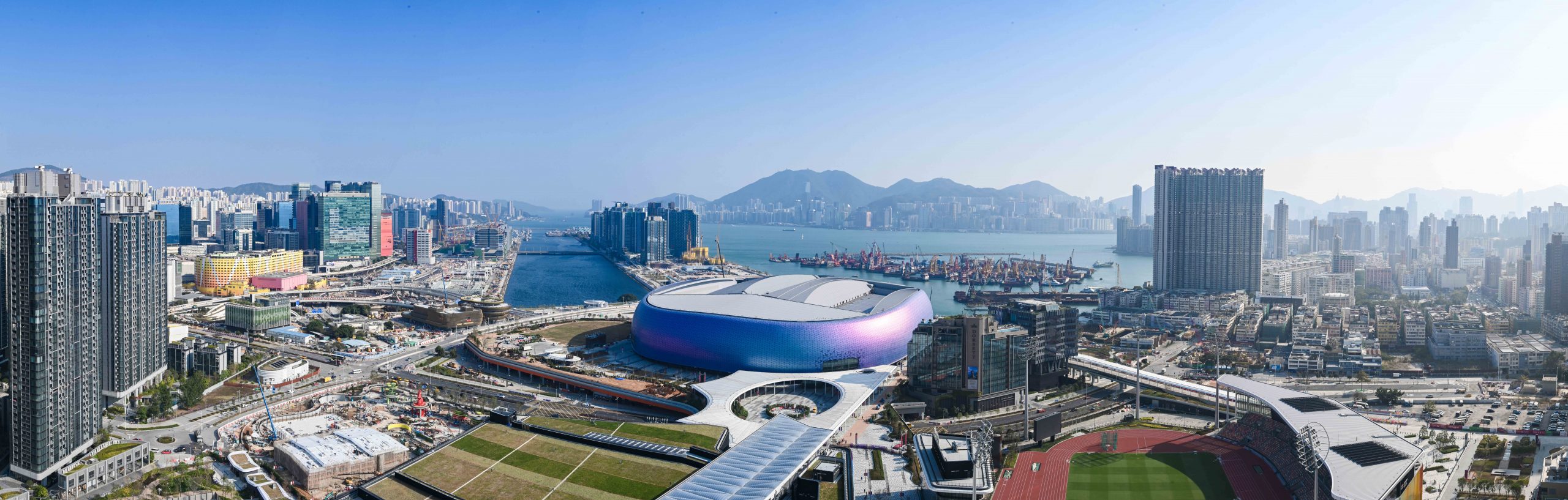
Over 120 event days in first year of operation
HONG KONG SAR – Media OutReach Newswire – 2 March 2026 – Hong Kong’s Kai Tak Sports Park (KTSP) celebrated its milestone first anniversary on Sunday (1 March), successfully hosting nearly 50 major events and delivering over 120 international and local sports and entertainment days since its grand opening.
KTSP has established a unique identity as the city’s new “Home Venue” for major sports and entertainment events. Highlights have included the Hong Kong Sevens (rugby), the Hong Kong Football Festival featuring top teams such as Liverpool, AC Milan, Arsenal and Tottenham Hotspur, as well as concerts by British rock band Coldplay, Mandopop rock band Mayday, singer Jay Chou and global pop icons BLACKPINK.
Sports activities at the Park have welcomed more than 840,000 participants so far. In terms of sports activities, the three major facilities—Kai Tak Stadium, Kai Tak Arena and Kai Tak Youth Sports Ground—together with the bowling centre, outdoor sports facilities and open spaces in the precinct, are expected to surpass 200 event days from the Park’s opening through to the end of March 2026.
In the past year, the utilisation rates of the Kai Tak Stadium and Kai Tak Arena have reached close to 90%. Kai Tak Stadium has already attracted over 1.8 million attendees, rapidly becoming a powerful new driving force in advancing Hong Kong’s sports industry, events economy, and tourism development.
“Our first anniversary is not only a major milestone for Kai Tak Sports Park, but also a moment of pride for Hong Kong. Over the past year, we witnessed athletes’ determination, outstanding performances from artists, and the unforgettable energy of cheering audiences. Each event has touched and inspired us.
“As Hong Kong’s largest integrated sports, leisure and entertainment landmark, we are committed to bringing the community together while strengthening Hong Kong’s connection with the Greater Bay Area and the international stage,” said a spokesperson for KTSP.
The centerpiece 50,000-seat Kai Tak Stadium was ranked third in the world and top in Asia for total ticket sales in 2025 just nine months after its debut, according to Pollstar’s 2025 year-end stadium charts (published mid-December 2025). Pollstar also ranked Kai Tak Stadium No.5 worldwide and No.1 in Asia for total gross revenue (1.25 million passes worth US$191.34 million). Meanwhile, the 10,000-seat Kai Tak Arena, was ranked Asia’s No. 8 in terms of total gross revenue.
“Seeing the Park evolve over the past year into a major sports destination for Hong Kong has been incredibly inspiring,” said Hong Kong, China karatedo team former representative, Lee Chun Ho. “Every time I walk in, I can feel the energy. The professional facilities not only support large-scale events but also make it easier for the public to access different sports, whether they’re beginners or experienced enthusiasts.”
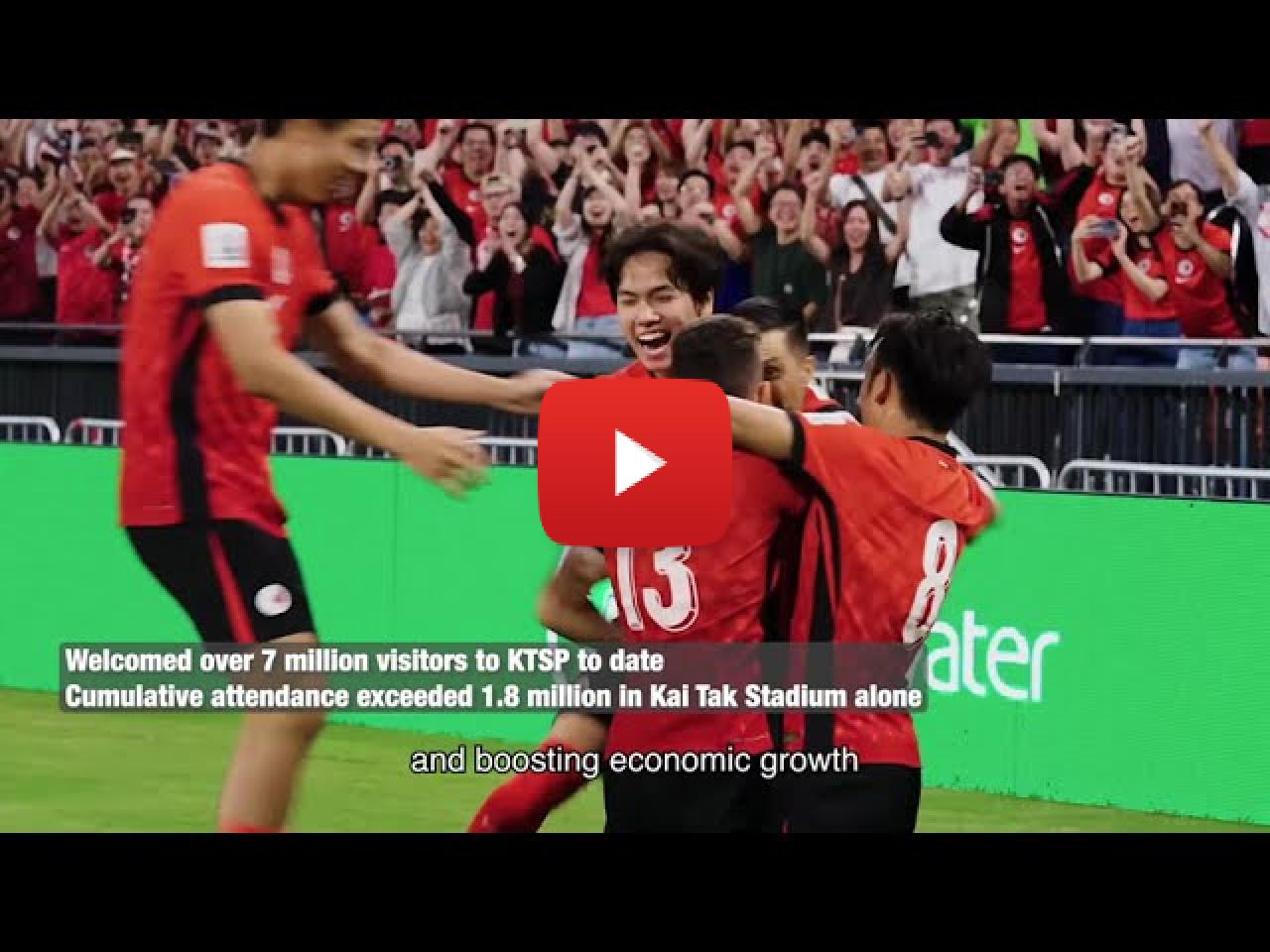
With an expanding line‑up of exciting events, enhanced visitor experiences and an increasingly compelling programme of global attractions, KTSP will further advance the integration of culture, sports and tourism, ushering in an even brighter and more vibrant chapter for Hong Kong.
Hashtag: #HongKong #BrandHongKong #KTSP #Sports #Entertainment #Landmark #MegaEvents
 https://www.brandhk.gov.hk/
 https://www.linkedin.com/company/brand-hong-kong/
 https://x.com/Brand_HK/
 https://www.facebook.com/brandhk.isd
 https://www.instagram.com/brandhongkong
The issuer is solely responsible for the content of this announcement.

Award recipients are evaluated entirely based on independent performance data, including key indicators such as downloads, monthly active users (MAU), growth rates, in-app purchase revenue, and user engagement. These metrics reflect sustained operational effectiveness and performance over time. Green SM’s recognition not only marks a breakthrough for the brand but also demonstrates consistent growth and sufficient operational stability to be recognized at a regional level.
According to the published results, Green SM achieved 114.4% year-on-year MAU growth in 2025 and ranked No. 1 in downloads among EV-focused carpooling platforms in the region. This performance reflects steady expansion across the company’s operating markets, including Vietnam, Laos, Indonesia, and the Philippines.
Behind these growth figures lies a systematically built operational foundation. Green SM maintains that growth is only sustainable when accompanied by the ability to deliver consistent service quality across all operating markets. Scaling its electric fleet while ensuring a uniform and reliable user experience has remained a central priority throughout the company’s development.
This operational stability benefits both sides of the platform. Passengers experience transparent, dependable services, while the Green Driver community operates within a clearly structured, long-term-oriented work environment. For Green SM, growth and quality control are pursued in parallel as two core pillars of sustainable development.
Mr. Nguyen Van Thanh – Global CEO of Green SM stated: “Recognition through an independent data evaluation system affirms that the fully electric mobility model we are pursuing is on the right track. More important than growth speed is the trust we earn from users in every market where we operate. That trust motivates us to continuously refine our fully electric mobility model, ensuring stable operations, structured technology deployment, and sustainable long-term development.”
In the context of an increasingly competitive mobile application landscape, recognition grounded in independent performance data demonstrates that Green SM’s growth is built on a structured, scalable operational platform. The ability of an electric mobility model to achieve strong regional growth while maintaining consistent service quality confirms that this is no longer an experimental alternative, but a practical direction for modern urban transportation.
Previously, Green SM was also honored at the VnExpress Tech Awards 2025 with the titles “Outstanding Ride-Hailing App” and “Vietnamese Tech Brand of the Year,” and received the “CXP Best Customer Experience Award,” which recognized its implementation capabilities and consistent operational standards across the system.
Hashtag: #GreenSM
The issuer is solely responsible for the content of this announcement.











-
 Feature/OPED6 years ago
Davos was Different this year
-
Travel/Tourism10 years ago
Lagos Seals Western Lodge Hotel In Ikorodu
-

 Showbiz3 years ago
Estranged Lover Releases Videos of Empress Njamah Bathing
-
 Banking8 years ago
Sort Codes of GTBank Branches in Nigeria
-

 Economy3 years ago
Subsidy Removal: CNG at N130 Per Litre Cheaper Than Petrol—IPMAN
-

 Banking3 years ago
Sort Codes of UBA Branches in Nigeria
-

 Banking3 years ago
First Bank Announces Planned Downtime
-

 Sports3 years ago
Highest Paid Nigerian Footballer – How Much Do Nigerian Footballers Earn