
Media OutReach
FHA-Food & Beverage 2025 Welcomes 65,000 Visitors to Celebrate Asia’s Premier International F&B Tradeshow

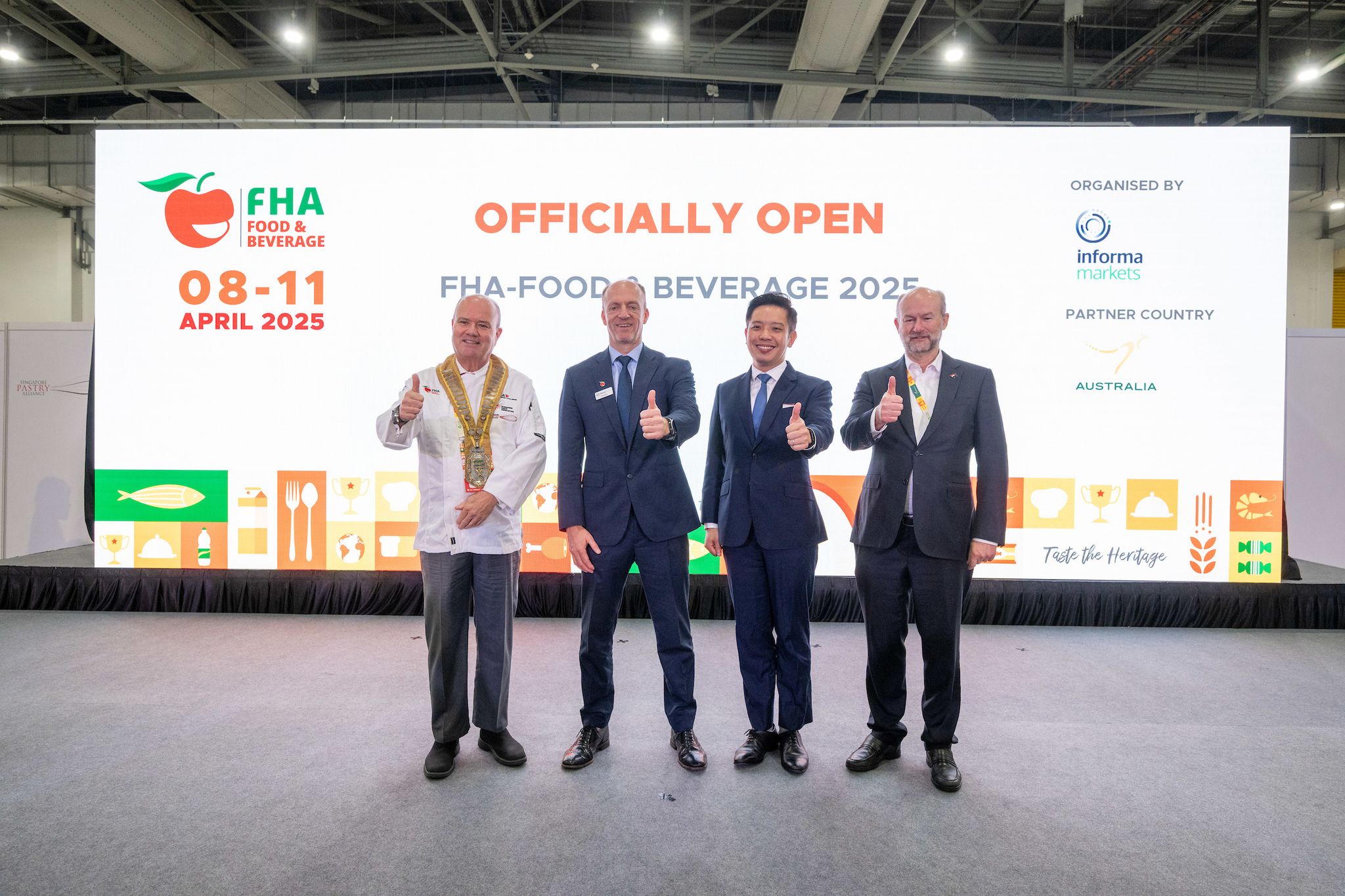
Held as a four-day event from 8-11 April 2025, the event was inaugurated with a distinguished guest lineup, including Mr. Alvin Tan, Minister of State, Ministry of Trade and Industry; H.E. Allaster Cox, Australian High Commissioner to Singapore; Chef Andy Cuthbert, President of WorldChefs; Ian Roberts, Vice President Asia, Informa Markets; and over 300 esteemed guests.
“I’m proud to share that over 70 Singapore companies are showcasing at the Singapore Pavilion at FHA F&B 2025. Our companies carry with them the strength of the Singapore brand— a mark of quality, innovation, and excellence. In a more uncertain, fragmented, turbulent world, our food manufacturing sector must continue to stay global, stay creative and stay green.” said Mr. Alvin Tan, Minister of State for Trade and Industry.
More than 1,600 exhibitors from 50 countries are showcasing their innovations and solutions, marking this as the largest gathering of its kind in the region. The event’s 12 dynamic segments offer attendees a rich and diverse experience, covering everything from cutting-edge gastronomy to sustainable industry practices. These segments are designed to meet the evolving needs of culinary professionals and food enthusiasts alike.
Australia as the Partner Country
In 2025, FHA-F&B proudly presents Australia as the Partner Country, in collaboration with The Australian Trade and Investment Commission (Austrade). “As Partner Country of Honour at FHA F&B 2025, Australia is proud to showcase the strength of our food and beverage industry on this global stage. Our longstanding partnership with Singapore — built on quality, sustainability, and shared ambition — continues to create new opportunities through strong trade ties and the Australia-Singapore Comprehensive Strategic Partnership,” said H.E. Allaster Cox, Australian High Commissioner to Singapore.
The Australia Pavilion, located in Hall 8, is home to over 120 exhibitors, showcasing the country’s rich culinary heritage, innovative food trends, and vibrant brewing culture. From premium meats and dairy to pioneering food technologies, attendees can explore a wide range of products and innovations. Highlights include live cooking demonstrations, a Meat & Livestock Showcase, cocktail-making sessions, and CSIRO’s Venture Exchange Program: Future Food 2.0, where Australian agri-food startups pitch their groundbreaking solutions.
SG60: Building a Stronger Singapore
The event shines a spotlight on over 80 local suppliers and farmers, underscoring Singapore’s commitment to fostering a resilient food ecosystem. Aligned with the national Green Plan 2030, the exhibition showcases the contributions of homegrown brands like Toh Thye San Farm, Chee Seng Oil Factory, Lim Joo Huat Enterprise, and more, as part of the nation’s drive for sustainable, local entrepreneurship.
Seminars and Thought Leadership
The seminar series kicked off with resounding success, featuring nearly 40 sessions hosted by over 65 thought leaders from prominent institutions including Bioprocessing Technology Institute, A*STAR, B Lab Singapore, Society for Cellular Agriculture, and top universities like Nanyang Technological University and the National University of Singapore. These sessions offer invaluable insights into the latest F&B trends, innovations, and sustainability efforts shaping the future of the industry.
Reshaping the Beverage Consumption
The Southeast Asian beverage market is undergoing a dramatic transformation, fueled by the rising popularity of the “sober curious” movement. As demand for low- and non-alcoholic options soars, FHA-F&B introduces the Zero-Alcohol Beverage Space at Hall 8, showcasing the latest innovations in this rapidly expanding sector. A standout highlight is the inaugural Zero Mixology Challenge, which invites mixologists to craft creative, non-alcoholic drinks. This competition serves as the Asia Selection round for the international finals in Shanghai.
In addition, FHA-F&B celebrates the art of mixology with its National Cocktail Challenge, further cementing Singapore’s reputation as Asia’s cocktail capital. Top bartenders will battle it out for the prestigious opportunity to represent Singapore at the renowned World Cocktail Championship in Colombia.
FHA Culinary Competitions
New additions to the FHA Culinary competitions include the rolling out of the first individual segments of the competitions, divided into Individual Challenge Culinary of Practical Hot Cooking with Poultry, Seafood, Vegetarian, etc, and Individual Challenge Patisserie with competition segments such as Restaurant Dessert Challenge, Practical Cake Decoration, Petits Fours, Pastry Showcase, Artistic Sculpture, and more.
“FHA F&B 2025 continues to be a vital stage for culinary excellence and global collaboration. It’s inspiring to see chefs, producers, and innovators coming together to shape the future of food,” said Chef Andy Cuthbert, President of Worldchefs.
The challenges will this year be judged by teams of esteemed panels led by Chief Judge Otto Weibel (SG). He will be supported by other chef judges like Rudolf Muller (SG/CH), Frank Wedmann (DE), Sven Erik Renaa (NO), Clinton Zhu (CN), Chern Chee Hoong (MY), and Anderson Ho (SG).
At the National Team Challenges, trade visitors get to tune in to a two-part competition in which top chefs from various countries will participate over two days. Participating countries are Australia, Azerbaijan, China, Indonesia, South Korea, Malaysia, Singapore, Taiwan, and Thailand.
Chefs are required to partake in:
- Restaurant of Nations Hot Kitchen Challenge, where each team is required to prepare 55 portions of a three-course menu,
- Chef’s Table Challenge, featuring teams dishing out a menu composition that best represents them, and
- Battle for the Lion is a live cooking challenge where the top three national teams battle it out with a 3-course meal with mystery ingredients.
FHA-F&B continues to be the definitive platform for the food and beverage industry in Asia. Whether it’s exploring the latest trends in food innovation, experiencing live culinary competitions, or engaging with global experts, attendees are guaranteed an enriching, inspiring experience.
“Looking ahead to 2026, we are excited to announce the co-location of our Food & Beverage and HoReCa events. This combined show will span all 10 halls, showcasing the future of food and hospitality and putting FHA at the heart of Asia’s F and B scene, creating relationships that last and delivering knowledge that’s valuable”, said Ian Roberts, Vice President Asia, Informa Markets.
FHA-Food & Beverage 2025 runs through 11 April 2025. Don’t miss the opportunity to be part of the largest gathering of F&B professionals in Asia. On-site ticket fee of SGD90 applies.
For images and more information, refer to the press kit link: https://bit.ly/FHAfnbOC.
Hashtag: #FHAFnB2025 #FHA2025
 https://fhafnb.com
 https://www.linkedin.com/company/fhafnb/
 https://www.facebook.com/fhafnb/
 https://www.instagram.com/fha.fnb/?hl=en
The issuer is solely responsible for the content of this announcement.
Hospitality, Food & Beverage at Informa Markets
Informa Markets’ Hospitality, Food & Beverage portfolio includes a series of global in-person trade events and an online content platform Saladplate – aimed at fostering business relationships, enabling learning, and enhancing trade opportunities for the industry.
With several established events within the portfolio such as Hotelex Shanghai, Food&HotelAsia, HOFEX, Fispal Food Service, and Abastur, the portfolio together offers an unparalleled audience reach across the world. Staging 35 live and digital events in major cities including Shanghai, Hong Kong, Singapore, Ho Chi Minh City, Seoul, Kuala Lumpur, Mumbai, Bangkok, Sao Paulo, and Mexico City.
Working alongside established industry partners, government bodies, and recognised professionals, the portfolio aims at bringing companies, individuals, and the industry to the forefront of global business innovation by offering solutions and opportunities that meet today’s business needs.
About Informa Markets
FHA-Food & Beverage is organised by Informa Markets, a division of Informa plc. Informa Markets creates platforms for industries and specialist markets to trade, innovate and grow. We provide marketplace participants around the globe with opportunities to engage, experience and do business through face-to-face exhibitions, targeted digital services, and actionable data solutions. We connect buyers and sellers across more than a dozen global verticals, including Pharmaceuticals, Food, Medical Technology, and Infrastructure. As the world’s leading market-making company, we bring a diverse range of specialist markets to life, unlocking opportunities and helping them to thrive 365 days a year.
For more information, please visit www.informamarkets.com.



Media OutReach
PERSOL Unveils Unified Regional Outsourcing Brand to Drive Digital Transformation and Operational Excellence in Singapore
PERSOL Outsourcing will deliver tailored end-to-end solutions for today’s evolving business landscape
SINGAPORE – Media OutReach Newswire – 31 March 2026 – PERSOL, Asia Pacific’s leading HR solutions provider, today announced the official launch of PERSOL Outsourcing. This strategic rebranding brings together the collective strengths of P-Serv and EVO, creating a unified, future-ready outsourcing brand designed to help businesses navigate an increasingly complex and tech-driven market.
The rebranding of P-Serv and EVO as PERSOL Outsourcing marks a significant milestone in PERSOL APAC’s regional growth strategy. By combining three decades of operational stability with digital capabilities, PERSOL Outsourcing is positioned to deliver tailored end-to-end solutions that integrate People, Process, and Technology.
“The launch of PERSOL Outsourcing reflects our commitment to scaling smarter and innovating faster for our clients,” said Foo See Yang, Managing Director and Strategic Business Group Head, PERSOL APAC. “By unifying our business process design and technical expertise under one brand, we can deliver more comprehensive, scalable, and future-ready solutions to our clients in the region. The rebranding allows PERSOL APAC to better support clients’ evolving needs in areas such as digital transformation, workforce optimisation, and operational resilience.”
Tailored Solutions for an Increasingly Complex Landscape
PERSOL Outsourcing addresses the rising demand for agile delivery models in a regional Business Process Outsourcing (BPO) market that is expected to reach US$147.06 billion by 2032. As regional enterprises increasingly seek partners who can navigate this rapid growth through specialised domain expertise, PERSOL Outsourcing will focus on delivering solutions across three core pillars:
- Customer Experience: Supporting service delivery across all touchpoints, from customer service management to omnichannel contact centre operations and front-of-house operations.
- Corporate Services: Streamline complex shared service operations through a comprehensive suite of solutions including Human Resource Advisory, Finance, Marketing, and Compliance. Services include the management of intricate administrative, facility, and regulatory requirements based on organisational needs and growth trajectories.
- Technical: Driving digital transformation through engineering and IT infrastructure management. Capabilities span cloud operations, digital support, and platform management, leveraging AI implementation and automation to innovate and improve core business processes.
Effective immediately, P-Serv and EVO will operate under the PERSOL Outsourcing brand. The integration will allow clients to tap into an expanded suite of regional resources and digital innovations designed to drive greater operational efficiency.
For more information, please visit https://www.persoloutsourcing.com/.
Hashtag: #PERSOLOutsourcing
The issuer is solely responsible for the content of this announcement.
About PERSOL Outsourcing
PERSOL Outsourcing is a regional strategic partner delivering comprehensive outsourcing solutions that seamlessly integrates people, process, and technology. As a newly integrated brand following the rebranding of P-Serv and EVO, PERSOL Outsourcing unites three decades of operational excellence with deep domain expertise to drive agility and resilience for enterprises across Asia-Pacific.
About PERSOL APAC
PERSOL is Asia-Pacific’s leading Staffing and HR solutions partner, operating across 13 markets with deep local insight and regional scale. With more than 140 offices and decades of experience, we deliver integrated workforce solutions that are tailored, tech-enabled, and designed for the dynamic world of work.
We combine human expertise with smart technology to help organisations solve workforce challenges, unlock potential, and stay ahead of change. From recruitment and talent management to workforce strategy and advisory, our collaborative approach puts your goals at the centre.
In 2025, we came together under the PERSOL name – reflecting our bold vision for the future of work and our Group’s Vision: ‘Work and Smile’. Whether you’re building teams, growing careers, or transforming how work gets done, we’re here.
Media OutReach
PERSOL Introduces Unified Regional Outsourcing Brand to Boost Digital Transformation and Operational Excellence in Malaysia
PERSOL Outsourcing will deliver tailored end-to-end solutions for today’s evolving business landscape
KUALA LUMPUR, MALAYSIA – Media OutReach Newswire – 31 March 2026 – PERSOL, Asia Pacific’s leading HR solutions provider, today announced the official launch of PERSOL Outsourcing. This strategic rebranding brings together the collective strengths of P-Serv and EVO, creating a unified, future-ready outsourcing brand designed to help Malaysia businesses navigate an increasingly complex and tech-driven market.
The rebranding of P-Serv and EVO as PERSOL Outsourcing marks a significant milestone in PERSOL APAC’s regional growth strategy. By combining three decades of operational stability with digital capabilities, PERSOL Outsourcing is positioned to deliver tailored end-to-end solutions that integrate People, Process, and Technology.
“The transition to PERSOL Outsourcing is a natural evolution of our deep-rooted presence in Malaysia and the wider region,” said Brian Sim, Managing Director and Country Head of PERSOL Malaysia. “By unifying the specialised domain expertise of P-Serv and EVO, we are better positioned to help our clients navigate the evolving business and workforce landscape. Our clients will continue to work with the same expert teams they trust, but with the added benefit of unified regional scale and enhanced digital capabilities that drive long-term resilience and efficiency.”
Tailored Solutions for an Increasingly Complex Landscape
PERSOL Outsourcing addresses the rising demand for agile delivery models in a regional Business Process Outsourcing (BPO) market that is expected to reach US$147.06 billion by 2032. In Malaysia, Customer Experience BPO market generated US$1.43 billion in 2024 and is projected to grow at a CAGR of 12.5% by 2030. As local and regional enterprises increasingly seek partners who can navigate this rapid growth through specialised domain expertise, PERSOL Outsourcing will focus on delivering solutions across three core pillars:
- Customer Experience: Supporting service delivery across all touchpoints, from customer service management to omnichannel contact centre operations and front-of-house operations.
- Corporate Services: Streamline complex shared service operations through a comprehensive suite of solutions including Human Resource Advisory, Finance, Marketing, and Compliance. Services include the management of intricate administrative, facility, and regulatory requirements based on organisational needs and growth trajectories.
- Technical: Driving digital transformation through engineering and IT infrastructure management. Capabilities span cloud operations, digital support, and platform management, leveraging AI implementation and automation to innovate and improve core business processes.
Effective immediately, P-Serv and EVO will operate under the PERSOL Outsourcing brand. The integration will allow clients to tap into an expanded suite of regional resources and digital innovations designed to drive greater operational efficiency.
For more information, please visit https://www.persoloutsourcing.com/.
Hashtag: #PERSOLOutsourcing
The issuer is solely responsible for the content of this announcement.
About PERSOL Outsourcing
PERSOL Outsourcing is a regional strategic partner delivering comprehensive outsourcing solutions that seamlessly integrates people, process, and technology. As a newly integrated brand following the rebranding of P-Serv and EVO, PERSOL Outsourcing unites three decades of operational excellence with deep domain expertise to drive agility and resilience for enterprises across Asia-Pacific.
About PERSOL APAC
PERSOL is Asia-Pacific’s leading Staffing and HR solutions partner, operating across 13 markets with deep local insight and regional scale. With more than 140 offices and decades of experience, we deliver integrated workforce solutions that are tailored, tech-enabled, and designed for the dynamic world of work.
We combine human expertise with smart technology to help organisations solve workforce challenges, unlock potential, and stay ahead of change. From recruitment and talent management to workforce strategy and advisory, our collaborative approach puts your goals at the centre.
In 2025, we came together under the PERSOL name – reflecting our bold vision for the future of work and our Group’s Vision: ‘Work and Smile’. Whether you’re building teams, growing careers, or transforming how work gets done, we’re here.
Media OutReach
Maharlika Consortium Breaks Ground for PHP 2 Billlion Microgrid Investment Powering 12,000 Philippine Homes
Right Image:
Maharlika Consortium is a recognized leader in microgrid innovation, deploying best-in-class technology that includes advanced solar PV power, high-performance battery storage systems (BESS), intelligent hybrid generation, smart meters, and sophisticated distribution grids to deliver 24/7 clean, affordable, and reliable electricity to residential and commercial consumers.
Awarded following a competitive selection process by the Philippine government under the Qualified Third Party Programme (QTP) and the new Microgrid Service Provider (MGSP) Act, the approved microgrids will deploy a smart, clean, and modern utility-grade power infrastructure. The portfolio will initially deploy 7 MWp Solar PV, BESS totaling 8.0 MWh, efficient diesel capacity of 3.5 MW and a smart power distribution network of 225 km across the three provinces. This ambitious undertaking is expected to generate approximately 300 full-time jobs during the 10-12 month construction period, with 30 permanent positions for operations and maintenance (O&M) and additional part-time sub-contractors for ongoing maintenance works.
This significant milestone underscores the Philippine government’s intensified efforts to fast-track rural electrification projects. These initiatives are propelled through pathways such as the Certified Energy Project of National Significance (CEPNS) designation and inter-agency streamlining, consistent with the respective mandates and authorities of the concerned government agencies, a push acknowledged by President Ferdinand R. Marcos Jr., Energy Secretary Sharon S. Garin and ERC Chairperson Atty. Francis Saturnino C. Juan. Now facing a global oil crisis, more than ever, decentralized and hybrid power infrastructure is the country’s best strategy to increase its energy security. Such hybrid powered microgrids will reduce the burden on fuel subsidies by the government while ensuring business continuity in entire communities, because over 50-60 percent of the power is generated from locally available sunlight.
In Palawan, a province celebrated for its environmental efforts and home to the world-class pioneering Sabang microgrid, the news was warmly received by local leadership. “This program is about creating opportunities, improving lives, and building a brighter future for every San Vicentenian. As we lay the foundation today, we are not only building infrastructure—we are building hope.” said San Vicente Mayor Ramir R. Pablico.
Community leaders and indigenous representatives also expressed strong support for the project, highlighting its long-awaited impact on education, livelihoods, and cultural continuity. “We have been waiting a long time for this project because our community truly wants access to electricity. While I know some of our residents may face challenges in getting connected due to financial constraints, I am confident they will find ways, because they want their children to study well. Reliable lighting will help ensure better education for our community,” said Barangay Captain Alvin J. Marsi of Taburi. “We are grateful to our elders and the Indigenous Political Structure for their support through the entire approval process. Their consent reflects a shared aspiration to advance and develop their community,” said Dina C. Pascual, Municipal Indigenous Peoples Mandatory Representative (IPMR). “This project is very meaningful for us. I believe this is not only for our generation, but especially for the children. We hope that access to electricity will encourage our youth to stay, so they can continue to protect and uphold the rights of our indigenous community,” shared Ebredy Orok, an Indigenous community elder, who affirmed that the project has been granted a Free Prior Informed Consent (FPIC) through the National Commission on Indigenos Peoples (NCIP).
Her Excellency Ambassador Constance See of Singapore, who led key dignitaries during the ceremony, underscored the broader significance of the project, highlighting both its development impact and the strength of bilateral cooperation. “This is not just an energy project—it is a development project. Projects like this microgrid strengthen livelihoods, improve access to essential services, and demonstrate how Singapore and the Philippines can work together to deliver practical, lasting benefits for communities.”
Atem S. Ramsundersingh, CEO of WEnergy Global, the pioneering company in hybrid power systems and offgrid microgrids over past 14 years, highlighted the significant opportunity for financiers. “We invite financing institutions to join this movement as lenders, claim real, measurable SDG impact, and gain early access to an approximately US$7 billion off-grid infrastructure market in the Philippines. Our 24-site portfolio is diversified, de-risked, and shovel-ready, now also open for financing of 8 additional sites. We expect to apply for more offgrid microgrid sites in 2026 and beyond and invite national and international investors to join this mission.”
“These approvals and the subsequent groundbreaking validate our approach: building bankable, scaleable microgrids to empower the over 2 million Filipino households that remain unenergized,” added Quintin V. Pastrana, President of Maharlika Clean Power Holdings. “We are grateful to our partners who have sustained their patience and determination to secure the necessary approvals under this new regulatory framework and believe with this experience and more streamlined processes, we can bring in more private sector investment to support the government reach its 100% household energization target within the decade.”
With the groundbreaking successfully completed, construction is now officially underway. While development will proceed in phases, ensuring all DENR clearances, final local government unit permits, and compliance with remaining ERC requirements are meticulously secured, the Maharlika Consortium remains steadfast in its aim to have every community energized by Christmas 2026, bringing 24/7 power to households, schools, barangay health stations, and micro, small, and medium enterprises. These decentralized power infrastructure systems are also opening up opportunities for owners and operators of micro and containerized data centers to co-locate with this decentralized set up and the use of clean energy sources.
Backed by the ERC, DOE and DENR, and with vital support from governors, mayors and barangays clearing rights-of-way and permits, this program marks a decisive shift in how rural electrification gets done in the Philippines: faster, accountable and designed for impact. The Maharlika Consortium is matching that public resolve with WEnergy Global driving disciplined execution, engineering with suppliers and local contractors to deliver fit-for-island components and climate-resilient power networks that withstand typhoons, floods and earthquakes. The objective is specific and measurable: close the energy-poverty gap in our host communities, unlock local jobs and services, and deliver lifetime reliability and value for money.
Hashtag: #MaharlikaConsortium #WEnergy
The issuer is solely responsible for the content of this announcement.










-
 Feature/OPED6 years ago
Davos was Different this year
-
Travel/Tourism10 years ago
Lagos Seals Western Lodge Hotel In Ikorodu
-

 Showbiz3 years ago
Estranged Lover Releases Videos of Empress Njamah Bathing
-
 Banking8 years ago
Sort Codes of GTBank Branches in Nigeria
-

 Economy3 years ago
Subsidy Removal: CNG at N130 Per Litre Cheaper Than Petrol—IPMAN
-

 Banking3 years ago
Sort Codes of UBA Branches in Nigeria
-

 Banking3 years ago
First Bank Announces Planned Downtime
-

 Sports3 years ago
Highest Paid Nigerian Footballer – How Much Do Nigerian Footballers Earn