
Media OutReach
Grab Acquires Chinese AI Robotics Firm Infermove to Strengthen Last-Mile Delivery Capabilities


Founded in early 2021 by Aaron Lu in a Santa Clara garage in California, Infermove later established offices in Beijing and Suzhou, China, focusing on research and development (R&D) as well as manufacturing. As a startup specializing in autonomous driving systems for unstructured environments and mobile manipulation robots, its product portfolio includes sidewalk delivery robots with upper-limb manipulation capabilities and personal mobility robots.
Leveraging driving data from non-motorized vehicles such as delivery riders’ electric scooters, Infermove is training mobile robots capable of adapting to complex real-world physical environments. Through imitation learning, reinforcement learning technologies, and self-developed end-to-end algorithms, the company enables robots to exhibit human-like operational capabilities in intricate last-mile delivery scenarios. Its proprietary “Rider Shadow System” allows crowdsourced collection of robot training data using last-mile mobility devices like electric wheelchairs and riders’ electric scooters, addressing the industry-wide challenges of slow, costly data acquisition and over-reliance on simulated or demonstration data in embodied intelligence.
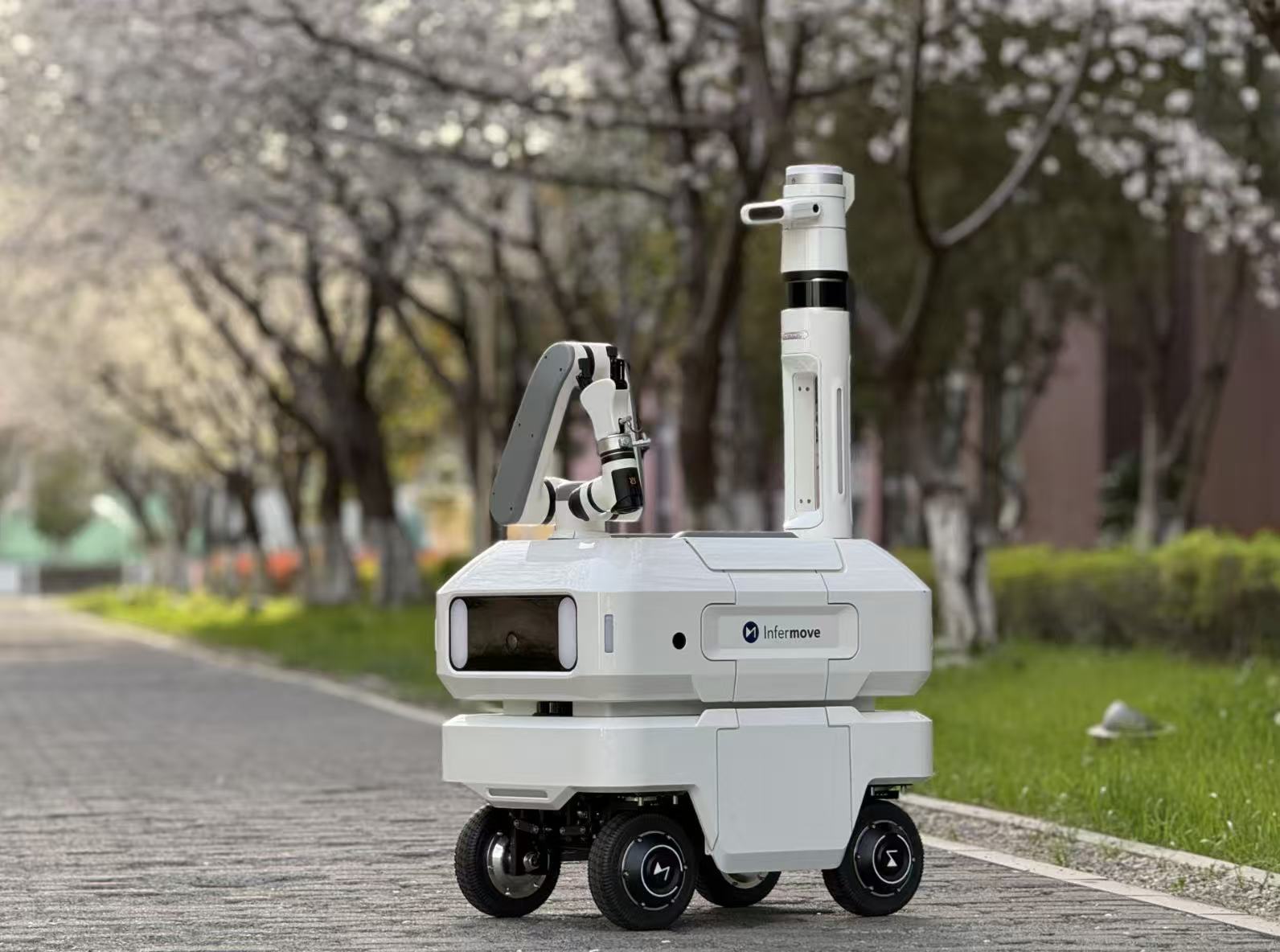
Founder Aaron Lu was recently named to the “2025 Forbes 100 Most Influential Chinese Elites” list, reflecting international recognition of his technological innovation and business leadership. Some earlier reports mentioned Lu holds multiple advanced degrees in biomedical engineering, economics, and computer science from Harvard and other top U.S. universities.
Prior to founding Infermove, Lu led the fully autonomous driving program at Silicon Valley-based AutoX (now renamed to Tesor Auto), overseeing the R&D, validation, and regulatory approval of the company’s first fully autonomous robotaxi product. In July 2020, he led the team to successfully develop the second ever L4-level autonomous taxi approved for fully driverless operation on public roads in California, U.S., second only to Alphabet’s Waymo.
Public records show that prior to the acquisition, Infermove had secured at least 3.3 million in funding from investors including Miracle Plus,the former China division of Y Combinator.
In 2024, the company signed an investment agreement with a subsidiary of listed firm Tieda Technology, valuing the company at approximately 33 million at the time. Multiple investors focusing on China’s embodied intelligence sector indicated that before the acquisition, Infermove was conducting a new round of financing with a valuation of no less than $50 million.
Despite its relatively short operational history, Infermove has achieved rapid progress in commercialization. Currently, its Carri series robots have partnered with major delivery platforms in China, including Meituan, Ele.me of Alibaba, Sam’s Club, and Dada of JD.com. Simultaneously, the company has established pilot projects with local corporate clients in overseas markets such as Singapore, Japan, and Australia. According to financial and outstanding order information disclosed by listed-Tieda Technology during its investment in Infermove, the company’s revenue surged from only RMB 100,000 in 2023 to RMB 10 million in 2025, achieving a 100-fold growth in three years. With over 1,000 outstanding orders pending delivery, Infermove expects its revenue to exceed RMB 200 million in 2026.
A source from Grab’s Beijing office revealed that Suthen Thomas, Grab’s CTO, announced the acquisition of Infermove to the entire company during the global All Hands meeting in December. During the meeting, Suthen showcased several of Infermove’s latest robot products, stating that the company’s technology and commercialization progress in embodied delivery robots were impressive. He added that following the completion of the acquisition, Infermove will continue to operate as an independent entity under its original team, with Lu, as the key founder, reporting directly to him.
This acquisition represents a crucial step in Grab’s efforts to advance automation within its expanding delivery and mobility network in Southeast Asia and beyond. Amid rising labor costs and sustained growth in on-demand delivery demand, robotics technology and artificial intelligence have become key drivers for enhancing service reliability and maintaining profit margins.
Industry analysts note that the global last-mile delivery robotics market is experiencing rapid growth, with an expected market size exceeding $20 billion by 2027. Faced with the dual pressures of cost reduction and service expansion, AI-driven automation technology has emerged as a critical competitive differentiator for delivery platforms— a key factor that led Grab to pursue Infermove.
As a leading mobility and delivery provider in Southeast Asia, Grab went public through a SPAC merger in December 2021 and is currently traded on the Nasdaq with a market capitalization of approximately $20 billion. The company has consistently invested in technological upgrades to optimize its food delivery, ride-hailing, and financial services. Previously, in response to inquiries from Bloomberg, Grab stated that Infermove’s solutions will effectively complement its delivery network capabilities, and the investment will further drive Infermove’s continued growth.
Hashtag: #Grab #Infermove
The issuer is solely responsible for the content of this announcement.



Media OutReach
ECOVACS DEEBOT T90 PRO OMNI with OZMO ROLLER 3.0 and PowerBoost Technology: Simple by Design, Powerful in Action
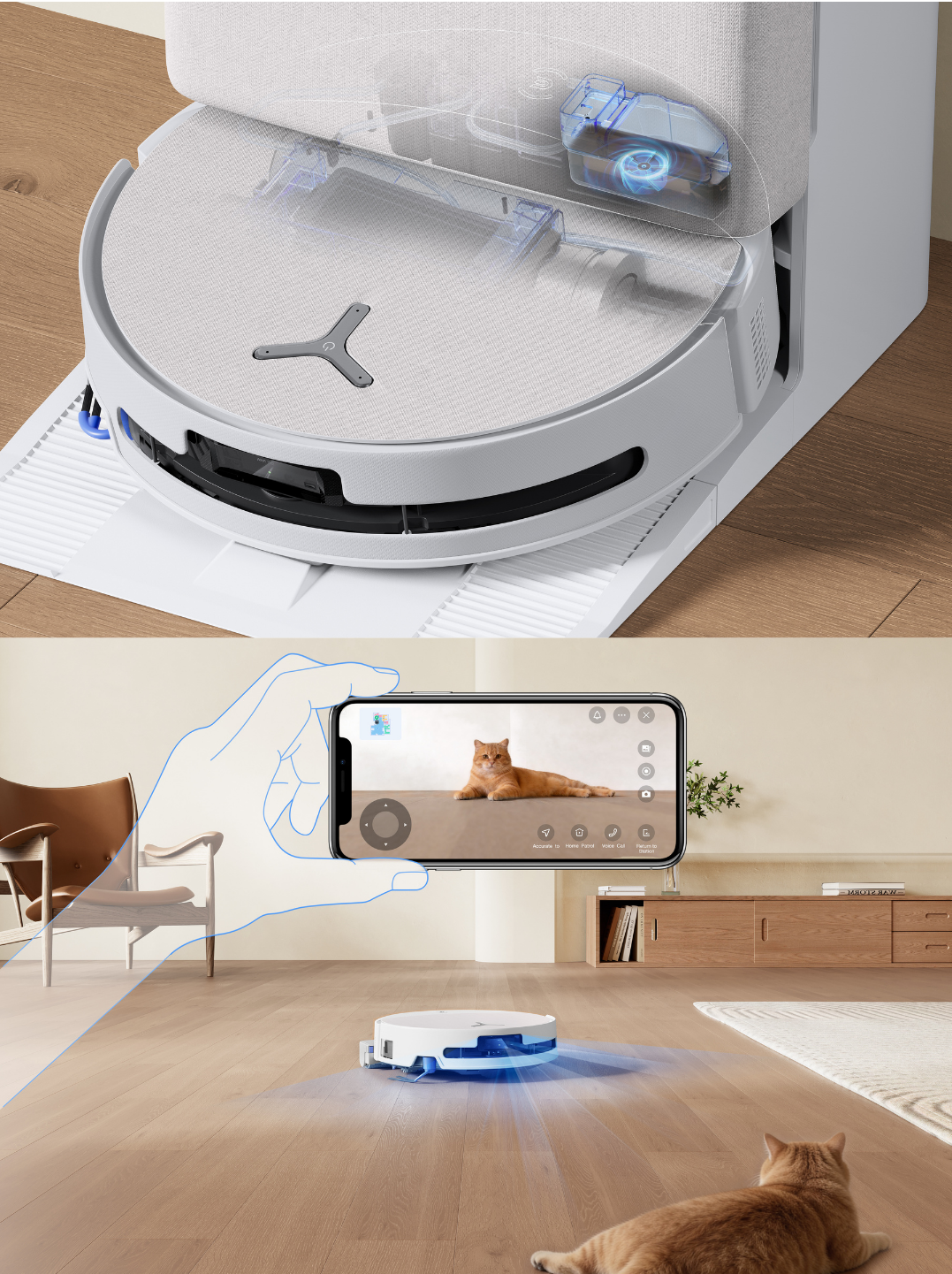
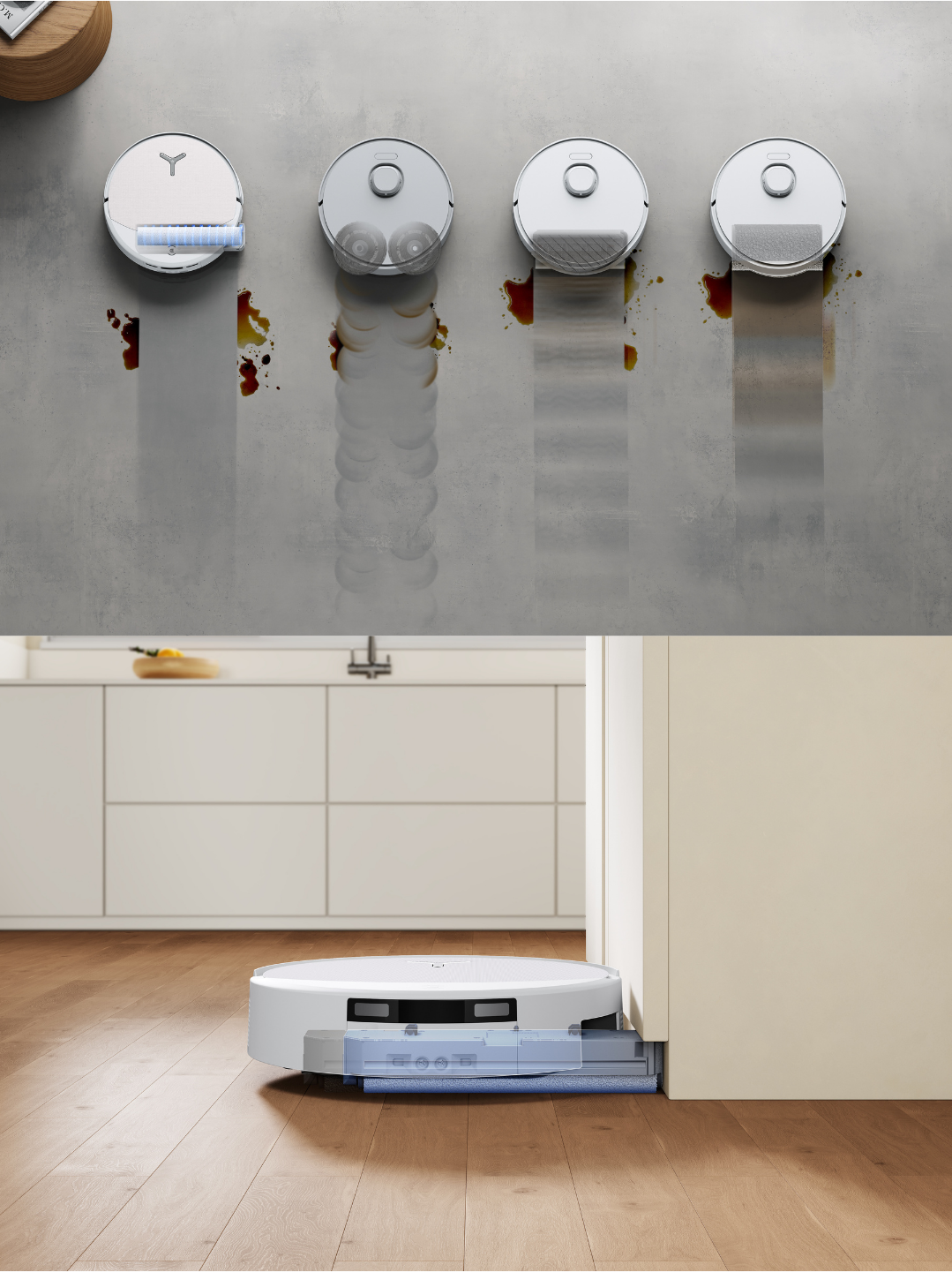
DEEBOT T90 PRO OMNI and DEEBOT mini 2 Debut at the Singapore IT Show 2026
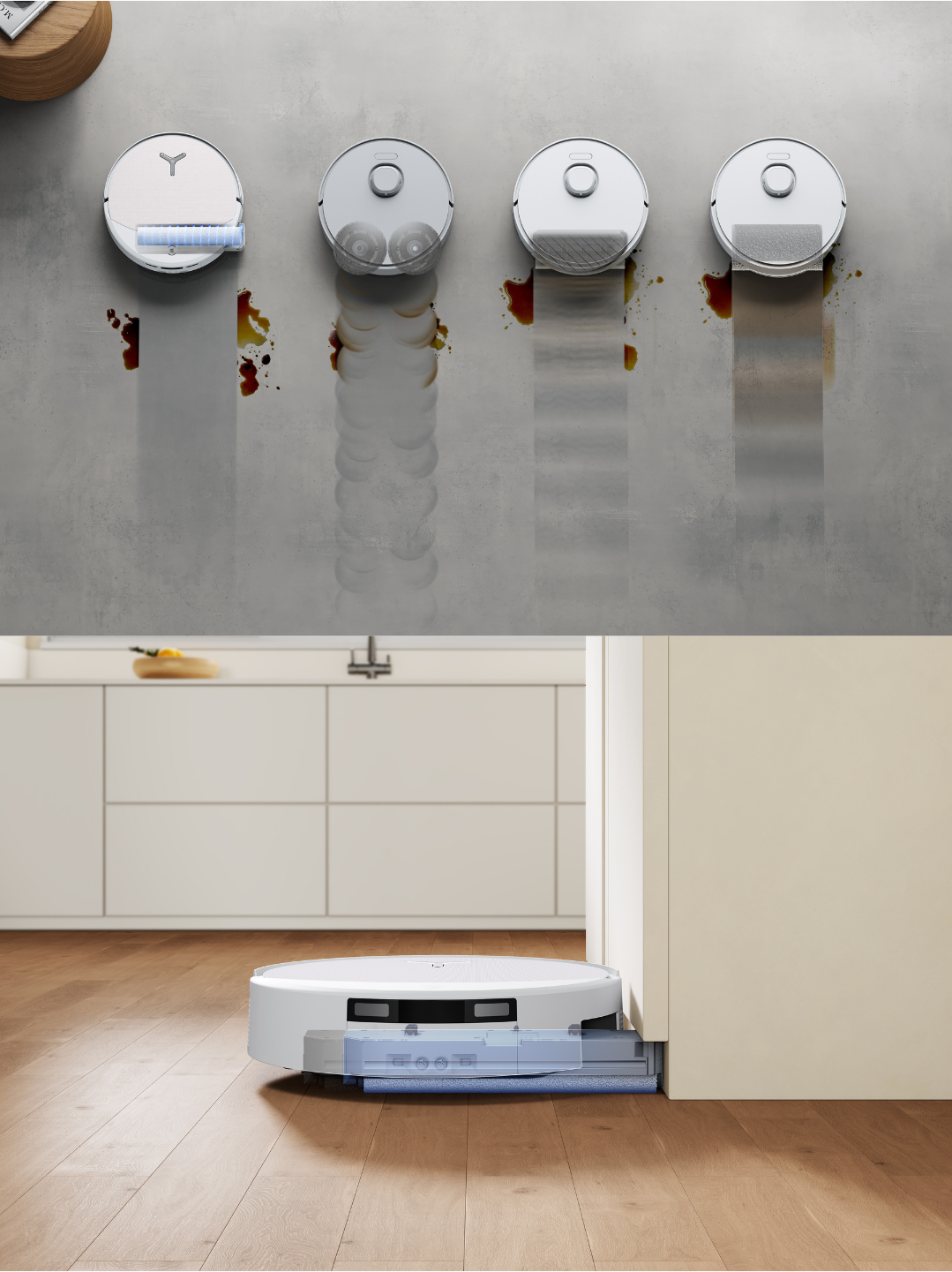
Marking their first public showcase in Singapore, the DEEBOT T90 PRO OMNI and the DEEBOT mini 2 will officially debut at the Singapore IT Show 2026, taking place from 12 to 15 March 2026. Visitors to the show will be among the first in Singapore to experience ECOVACS’ latest DEEBOT T90 PRO OMNI launch in person, with live demonstrations highlighting its upgraded OZMO ROLLER 3.0 Instant Self-Washing Mopping Technology and PowerBoost Technology with Perpetual Runtime, as well as the refined Nordic-inspired design.
Consumers will also be able to experience the new ultra-compact DEEBOT mini 2, for those seeking a powerful cleaning solution without compromising on space. With a diameter of just 28.6 cm – smaller than a sheet of A4 paper – the DEEBOT mini 2 is designed for small apartments, from compact studios to two-bedroom homes. Despite its size, the DEEBOT mini 2 is equipped with advanced technologies like TrueMapping 2.0 and TrueDetect 3D, to plan cleaning routes and detect different surfaces, providing up to 91% whole-home cleaning coverage. It effortlessly navigates tight corners and hard-to-reach areas, offering 100% edge and corner coverage. Whether it’s under coffee tables, between furniture legs, or in narrow hallways, the DEEBOT mini 2 ensures that no spot is left behind.
The showcase underscores ECOVACS’ commitment to bringing intelligent, hands-free home cleaning innovations closer to local consumers through immersive, hands-on experiences.
Pricing and Availability
The DEEBOT T90 PRO OMNI and DEEBOT mini 2 will be available in Singapore from 8PM on 2 March 2026 via the ECOVACS official webstore, NTUC FairPrice webstore, Shopee, Lazada, and TikTok Shop.
The DEEBOT T90 PRO OMNI will be offered at a pre-sale price of S$1,199 (U.P. $1,899). Purchases made on the official webstore, Fairprice Online, Shopee, Lazada, and Tiktok will include a Tineco iCarpet Spot Cleaner worth S$379, while stocks last.
The DEEBOT mini 2 will be offered at a pre-sale price of S$599 (U.P. $749). Purchases made on the official webstore, Fairprice Online, Shopee, Lazada, and Tiktok will include an accessories pack worth S$48.90, while stocks last.
Hashtag: #ECOVACS
The issuer is solely responsible for the content of this announcement.
About ECOVACS ROBOTICS:
Founded in 2006, ECOVACS ROBOTICS is a global leader in home service robotics with a diverse portfolio of products encompassing robotic vacuum cleaners and robotic window cleaners. With its expansion into robotic lawn mowers, commercial cleaning robots and robotic pool cleaners, ECOVACS solidified its position as a multi-category leader in home service robotics.
Guided by the mission “Robotics for All”, ECOVACS continues to advance technology and enhance the user experience to make life smarter and more stylish for consumers worldwide. With sales subsidiaries in Germany, the United States, Japan, and Singapore, ECOVACS products reach nearly 180 major markets and serve over 38 million households globally.
A testament to this market leadership, ECOVACS ROBOTICS has ranked first in China’s robotic vacuum cleaner market by share for ten consecutive years (2015-2024).

Media OutReach
ECOVACS DEEBOT T90 PRO OMNI with OZMO ROLLER 3.0 and PowerBoost Technology: Simple by Design, Powerful in Action
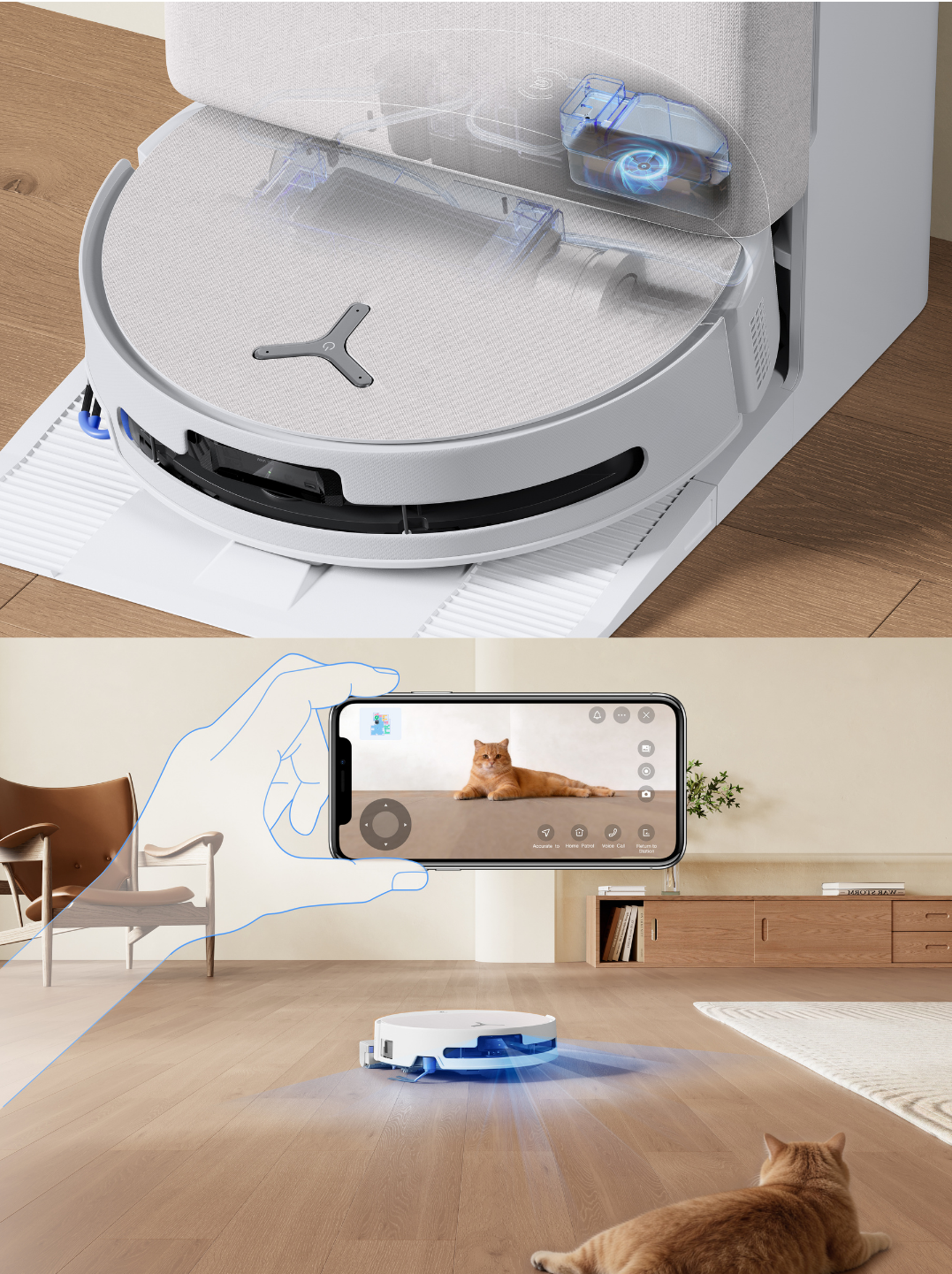
DEEBOT T90 PRO OMNI and DEEBOT mini 2 Debut at the Singapore IT Show 2026
Marking their first public showcase in Singapore, the DEEBOT T90 PRO OMNI and the DEEBOT mini 2 will officially debut at the Singapore IT Show 2026, taking place from 12 to 15 March 2026. Visitors to the show will be among the first in Singapore to experience ECOVACS’ latest DEEBOT T90 PRO OMNI launch in person, with live demonstrations highlighting its upgraded OZMO ROLLER 3.0 Instant Self-Washing Mopping Technology and PowerBoost Technology with Perpetual Runtime, as well as the refined Nordic-inspired design.
Consumers will also be able to experience the new ultra-compact DEEBOT mini 2, for those seeking a powerful cleaning solution without compromising on space. With a diameter of just 28.6 cm – smaller than a sheet of A4 paper – the DEEBOT mini 2 is designed for small apartments, from compact studios to two-bedroom homes. Despite its size, the DEEBOT mini 2 is equipped with advanced technologies like TrueMapping 2.0 and TrueDetect 3D, to plan cleaning routes and detect different surfaces, providing up to 91% whole-home cleaning coverage. It effortlessly navigates tight corners and hard-to-reach areas, offering 100% edge and corner coverage. Whether it’s under coffee tables, between furniture legs, or in narrow hallways, the DEEBOT mini 2 ensures that no spot is left behind.
The showcase underscores ECOVACS’ commitment to bringing intelligent, hands-free home cleaning innovations closer to local consumers through immersive, hands-on experiences.
Pricing and Availability
The DEEBOT T90 PRO OMNI and DEEBOT mini 2 will be available in Singapore from 8PM on 2 March 2026 via the ECOVACS official webstore, NTUC FairPrice webstore, Shopee, Lazada, and TikTok Shop.
The DEEBOT T90 PRO OMNI will be offered at a pre-sale price of S$1,199 (U.P. $1,899). Purchases made on the official webstore, Fairprice Online, Shopee, Lazada, and Tiktok will include a Tineco iCarpet Spot Cleaner worth S$379, while stocks last.
The DEEBOT mini 2 will be offered at a pre-sale price of S$599 (U.P. $749). Purchases made on the official webstore, Fairprice Online, Shopee, Lazada, and Tiktok will include an accessories pack worth S$48.90, while stocks last.
Hashtag: #ECOVACS
The issuer is solely responsible for the content of this announcement.
About ECOVACS ROBOTICS:
Founded in 2006, ECOVACS ROBOTICS is a global leader in home service robotics with a diverse portfolio of products encompassing robotic vacuum cleaners and robotic window cleaners. With its expansion into robotic lawn mowers, commercial cleaning robots and robotic pool cleaners, ECOVACS solidified its position as a multi-category leader in home service robotics.
Guided by the mission “Robotics for All”, ECOVACS continues to advance technology and enhance the user experience to make life smarter and more stylish for consumers worldwide. With sales subsidiaries in Germany, the United States, Japan, and Singapore, ECOVACS products reach nearly 180 major markets and serve over 38 million households globally.
A testament to this market leadership, ECOVACS ROBOTICS has ranked first in China’s robotic vacuum cleaner market by share for ten consecutive years (2015-2024).
Media OutReach
ECOVACS DEEBOT T90 PRO OMNI with OZMO ROLLER 3.0 and PowerBoost Technology: Simple by Design, Powerful in Action
DEEBOT T90 PRO OMNI and DEEBOT mini 2 Debut at the Singapore IT Show 2026
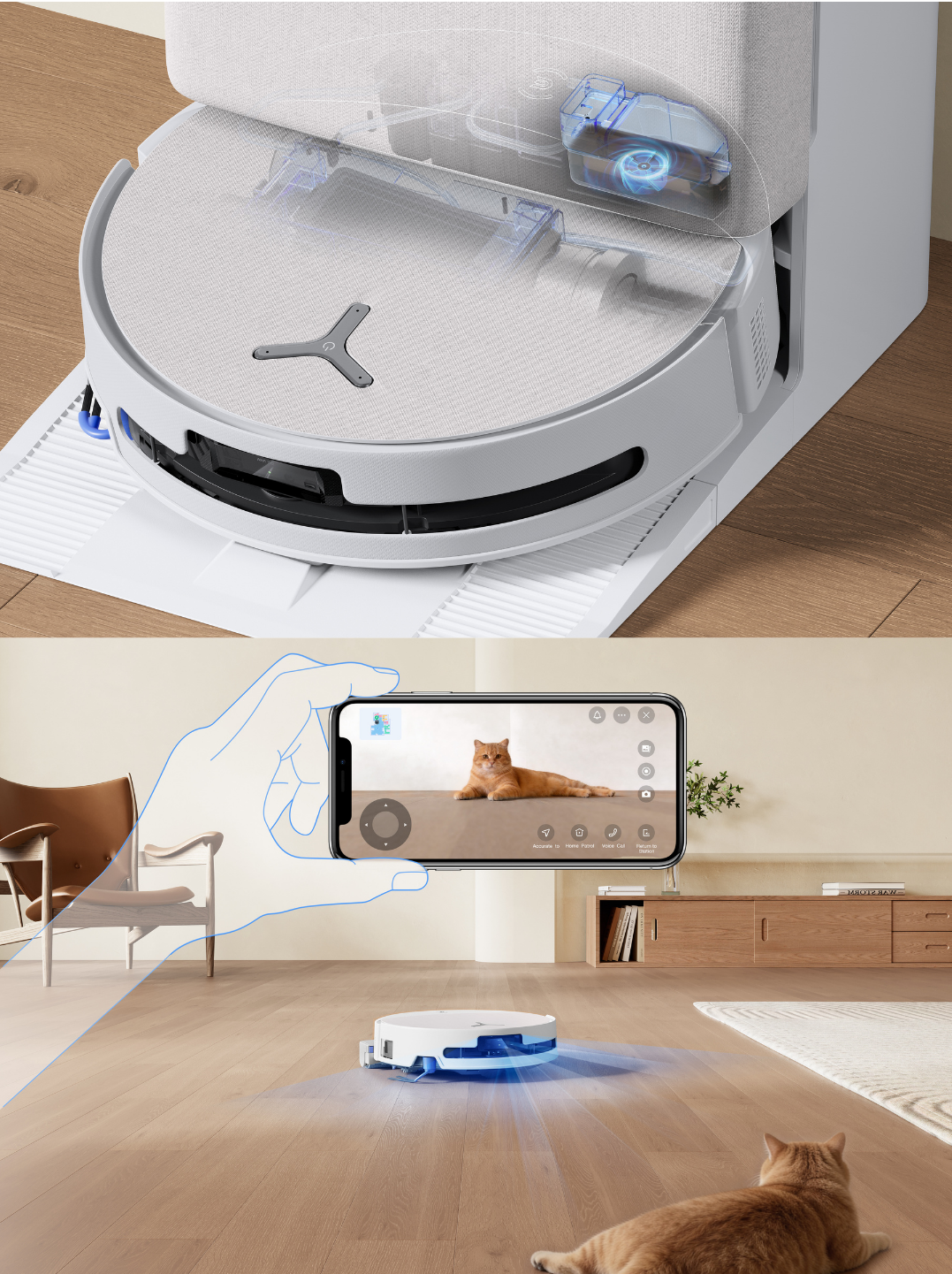
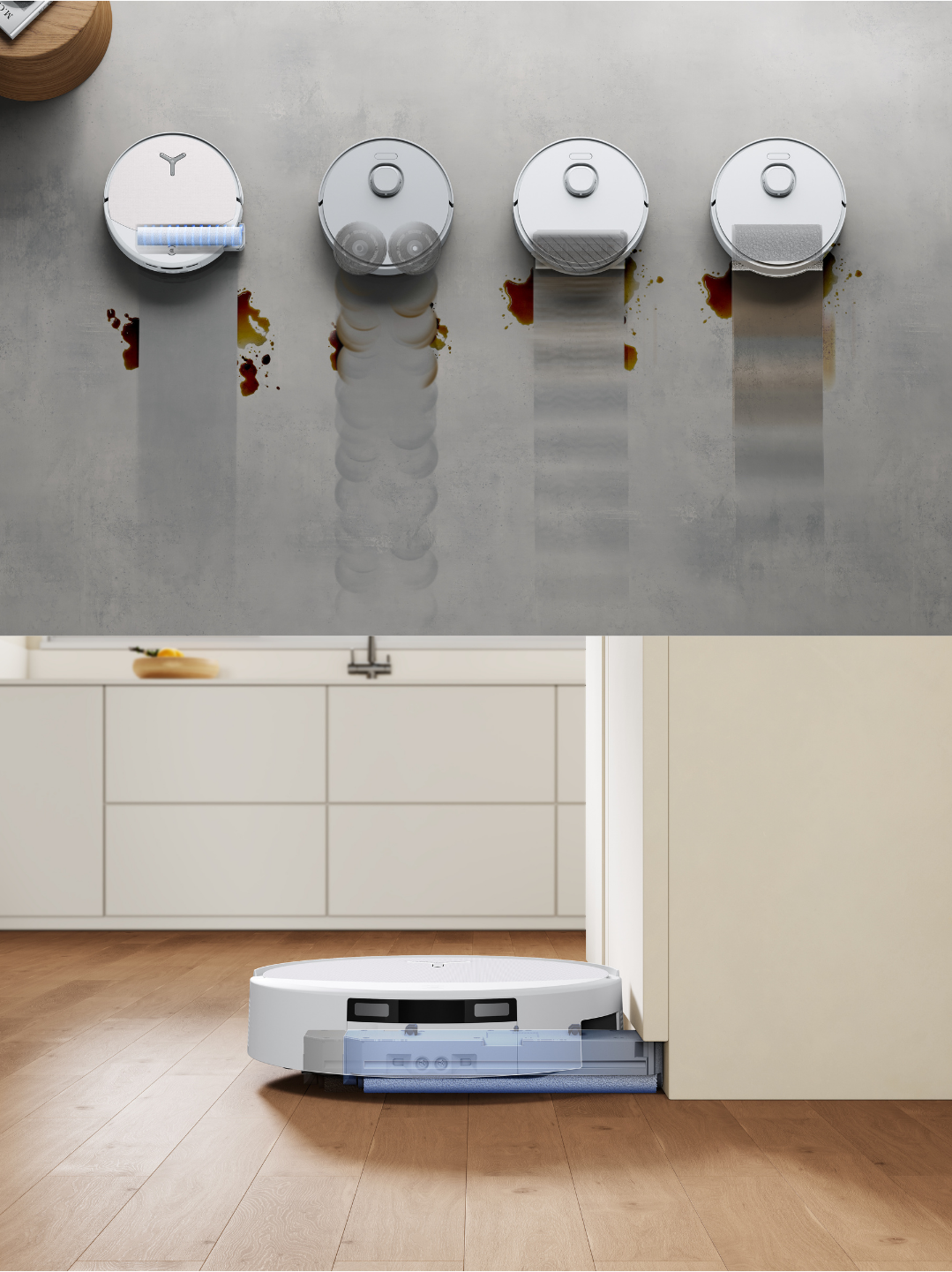
Marking their first public showcase in Singapore, the DEEBOT T90 PRO OMNI and the DEEBOT mini 2 will officially debut at the Singapore IT Show 2026, taking place from 12 to 15 March 2026. Visitors to the show will be among the first in Singapore to experience ECOVACS’ latest DEEBOT T90 PRO OMNI launch in person, with live demonstrations highlighting its upgraded OZMO ROLLER 3.0 Instant Self-Washing Mopping Technology and PowerBoost Technology with Perpetual Runtime, as well as the refined Nordic-inspired design.
Consumers will also be able to experience the new ultra-compact DEEBOT mini 2, for those seeking a powerful cleaning solution without compromising on space. With a diameter of just 28.6 cm – smaller than a sheet of A4 paper – the DEEBOT mini 2 is designed for small apartments, from compact studios to two-bedroom homes. Despite its size, the DEEBOT mini 2 is equipped with advanced technologies like TrueMapping 2.0 and TrueDetect 3D, to plan cleaning routes and detect different surfaces, providing up to 91% whole-home cleaning coverage. It effortlessly navigates tight corners and hard-to-reach areas, offering 100% edge and corner coverage. Whether it’s under coffee tables, between furniture legs, or in narrow hallways, the DEEBOT mini 2 ensures that no spot is left behind.
The showcase underscores ECOVACS’ commitment to bringing intelligent, hands-free home cleaning innovations closer to local consumers through immersive, hands-on experiences.
Pricing and Availability
The DEEBOT T90 PRO OMNI and DEEBOT mini 2 will be available in Singapore from 8PM on 2 March 2026 via the ECOVACS official webstore, NTUC FairPrice webstore, Shopee, Lazada, and TikTok Shop.
The DEEBOT T90 PRO OMNI will be offered at a pre-sale price of S$1,199 (U.P. $1,899). Purchases made on the official webstore, Fairprice Online, Shopee, Lazada, and Tiktok will include a Tineco iCarpet Spot Cleaner worth S$379, while stocks last.
The DEEBOT mini 2 will be offered at a pre-sale price of S$599 (U.P. $749). Purchases made on the official webstore, Fairprice Online, Shopee, Lazada, and Tiktok will include an accessories pack worth S$48.90, while stocks last.
Hashtag: #ECOVACS
The issuer is solely responsible for the content of this announcement.
About ECOVACS ROBOTICS:
Founded in 2006, ECOVACS ROBOTICS is a global leader in home service robotics with a diverse portfolio of products encompassing robotic vacuum cleaners and robotic window cleaners. With its expansion into robotic lawn mowers, commercial cleaning robots and robotic pool cleaners, ECOVACS solidified its position as a multi-category leader in home service robotics.
Guided by the mission “Robotics for All”, ECOVACS continues to advance technology and enhance the user experience to make life smarter and more stylish for consumers worldwide. With sales subsidiaries in Germany, the United States, Japan, and Singapore, ECOVACS products reach nearly 180 major markets and serve over 38 million households globally.
A testament to this market leadership, ECOVACS ROBOTICS has ranked first in China’s robotic vacuum cleaner market by share for ten consecutive years (2015-2024).












-
 Feature/OPED6 years ago
Davos was Different this year
-
Travel/Tourism10 years ago
Lagos Seals Western Lodge Hotel In Ikorodu
-

 Showbiz3 years ago
Estranged Lover Releases Videos of Empress Njamah Bathing
-
 Banking8 years ago
Sort Codes of GTBank Branches in Nigeria
-

 Economy3 years ago
Subsidy Removal: CNG at N130 Per Litre Cheaper Than Petrol—IPMAN
-

 Banking3 years ago
Sort Codes of UBA Branches in Nigeria
-

 Banking3 years ago
First Bank Announces Planned Downtime
-

 Sports3 years ago
Highest Paid Nigerian Footballer – How Much Do Nigerian Footballers Earn