
Media OutReach
HKQAA International Sustainability Forum • Hong Kong 2025: Support the Government’s Roadmap on Sustainability Disclosure, Foster cross-border Cooperation and Green Development

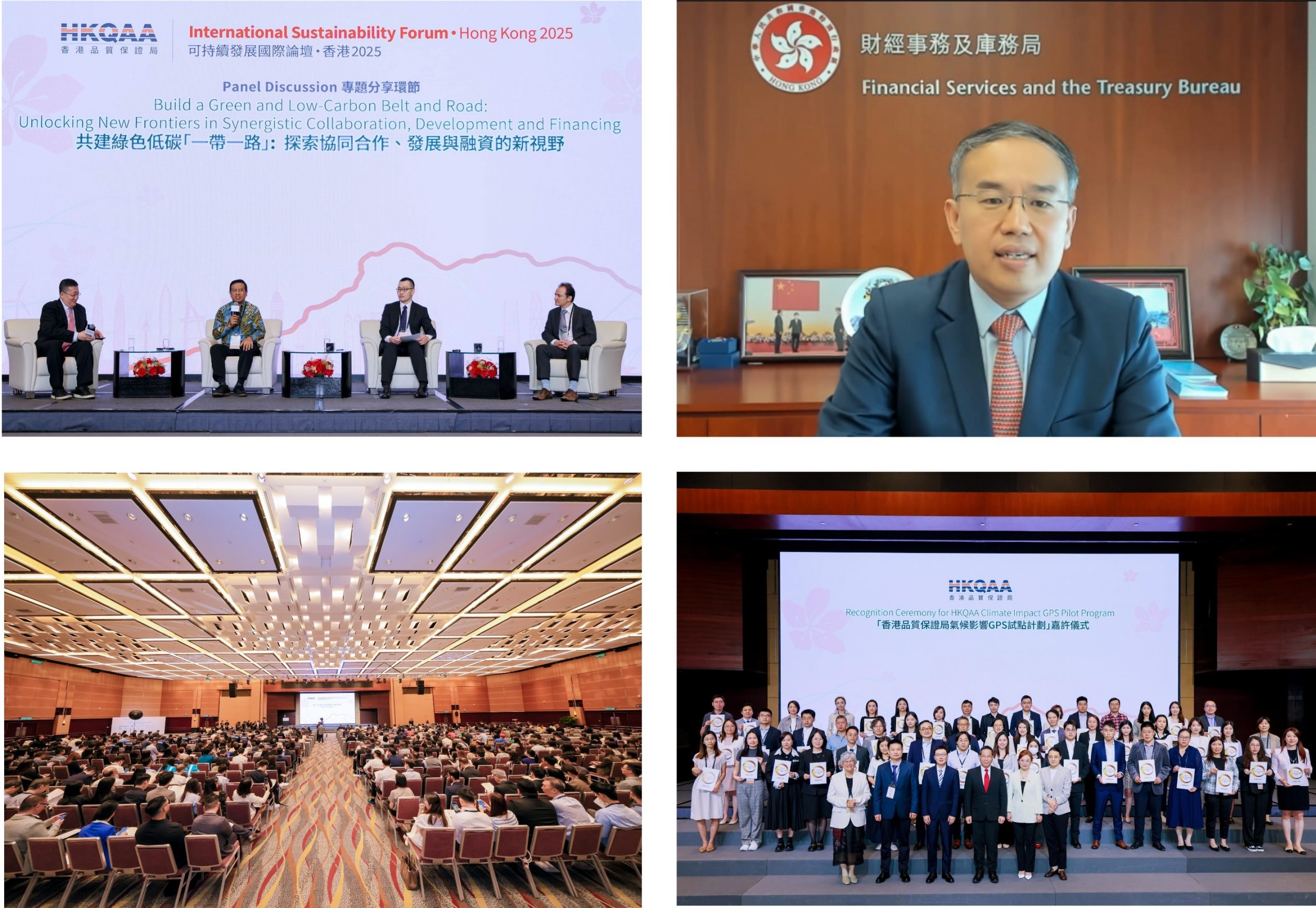
Linked policymakers and business leaders to explore green opportunities and low-carbon transition of the BRI
Sustainable development and low-carbon transition have become a global topic of concern, receiving significant attention from both the business and financial sectors. The Forum invited local and overseas political and business leaders, experts and academics to share their experiences and insights. In the Morning Forum – Seizing Green Finance Opportunities in the Low-Carbon Transition of the Belt and Road Initiative and the Greater Bay Area, the special guest speakers included Dr Zhang Jianyu, Chief Development Officer of BRI International Green Development Coalition; Mr Riyadi Suparno, Executive Director of Tenggara Strategics (speaker from Indonesia); Mr Ronnie Tham, Partner at Treo Capital (speaker from Malaysia); and Mr Leo Horn-Phathanothai, Founder and CEO, Just Transitions Incubator (JUTI) (speaker from Thailand).
“We took the lead in launching the Green Finance Certification Scheme in 2018 to help enable Hong Kong to leverage its strengths as a Belt and Road investment and financing platform to attract international capital and boost Belt and Road development. Moreover, we have forged a cooperative relationship with BRI International Green Development Coalition, which is jointly initiated by Ministry of Ecology and Environment of our country and international organisations. We aim to promote exchanges and mutual recognition of carbon standards with BRI countries, strengthen capacity-building training, and foster closer green cooperation,” said Ir C. S. Ho, Chairman of the HKQAA.
In the Afternoon Forum – Implementing Sustainable Development and Climate Financial Disclosure, the special guest speakers included Representative of Beijing Municipal Finance Bureau; Ms Janey Lai, Chief Executive Officer, The Accounting and Financial Reporting Council; Mr Leng Bing, Member of the International Sustainability Standards Board (ISSB); Prof Liu Yifang, Director, Sustainable Standards Research Center, Central University of Finance and Economics, Professor and PhD Supervisor of School of Economics.
Climate Impact GPS Campaign: supporting the Government’s roadmap on climate disclosure
HKQAA announced on the event that it took the lead in launching the HKQAA Climate Impact GPS Campaign earlier this year in support of the sustainability disclosure policies of our country and the HKSAR Government. This initiative aims to engage organisations, including the banking sector and the listed companies, in building capacity to address climate-related risks and opportunities so as to well prepare required climate-related financial disclosures by offering industry-based technical guidance, workshops and software tools, including the scope 3 greenhouse gas emissions calculation tool.
The Campaign is open to organisations at no cost, and nearly 90 participating organisations that joined the Pilot Program were recognised on a presentation ceremony in the Afternoon Session. Participating organisations of the Pilot Program gain prior access to preview relevant industry-based technical guidance, as well as participate in workshops and use the tools.
In terms of promoting professional talent development, HKQAA is honoured to be invited to cooperate with the Beijing Municipal Finance Bureau on a sustainability information disclosure pilot and training project, helping the country steadily advance the development of its sustainability disclosure standards system. Moreover, a memorandum of understanding was signed at the Forum by Mr P C Chan, Chief Executive Officer of HKQAA, and Prof Karen Cheung, Director of Hong Kong Institute of Education for Sustainable Development. This memorandum aims to jointly promote the establishment and optimisation of sustainable development talent standards in Hong Kong, enhance talent cultivation and the upgrading of sustainable development skills, effectively drive industry-wide sustainable development, and foster Hong Kong and the entire Greater Bay Area as an international centre for sustainable development talent.
”I would like to take this opportunity to thank the HKQAA for its contributions to the development of green finance in Hong Kong. The HKQAA has been participating in the development of international standards for sustainable finance and launched the Green and Sustainable Finance Certification Scheme (formerly called Green Finance Certification Scheme) in 2018. I am delighted to know that the HKQAA also supports the development of a roadmap for sustainability disclosure in our country by contributing to the Beijing Municipal Bureau of Finance and Economy’s pilot project for sustainability disclosure and talent development. At home, it has supported Hong Kong’s own disclosure roadmap by establishing industry-specific climate risk tools to help local businesses prepare for future reporting requirements,” said Mr Christopher Hui, GBS, JP, Secretary for Financial Services and the Treasury, in his remarks via video.
Introducing the Effectiveness and Potential Application of Structural Data Disclosure Model for Sustainability Disclosure
HKQAA introduced a brand-new structural data disclosure model in 2024, named the “Nexus Data Model”. With the meaning of nexus, the objective of the data model is to link material sustainability issues and to connect all stakeholders together. This model is already applied to HKQAA ESG Connect Program, Hong Kong Registration and will be used for other engagement, disclosure or assessment services in the future application.
As the evaluation project leader of this data disclosure model, Professor Zhang Lin, School of Energy and Environment of the City University of Hong Kong, shared on the Afternoon Forum the team’s finding based on data obtained from the HKQAA ESG Connect Program. The results confirmed that the data model effectively encourages businesses to adopt ESG initiatives and disclose progress on ESG, Carbon Action, Climate Response, and CBAM Ready, while strengthening stakeholder connections. Ultimately, it fosters a sustainable ESG Ecosystem, driving long-term ESG development.
Establishing strategic partnership to promote high-quality development in the GBA
On the Forum, under the witness of Mr P C Chan, Chief Executive Officer of HKQAA, and Mr Gao Guosheng, Member of the Party Leadership Group of the Guangdong Provincial Administration for Market Regulation, Secretary of the Party Committee and Secretary General of the Guangdong Intellectual Property Administration, a memorandum of understanding was signed by Mr K T Ting, HKQAA’s Chief Operating Officer, and Mr Lu Yongchi, Chief Operation Officer of The Guangdong-Hong Kong-Macao Greater Bay Area Certification Promotion Centre. This memorandum aims to deepen cooperation in the field of testing and certification, advance the development of the Guangdong-Hong Kong-Macao Greater Bay Area, promote the alignment of regulatory mechanisms between the mainland and the Hong Kong and Macao regions, and support the high-quality development of the Greater Bay Area.
Co-hosting green industry themed forum with the People’s Government of Nanping
Nanping is endeavouring to become the country’s model city of green development, flourishing through its green industries. Co-hosted by HKQAA and the People’s Government of Nanping, Fujian Province, Thematic Forum – Shaping a Sustainable and Livable City: Green Industry, Shared by the World focused on topics of carbon measurement, value of ecological products, and the bamboo industry. Mr Wei Dunsheng, Deputy Mayor of Nanping Municipal People’s Government, Fujian Province, was the officiating guest of the Thematic Forum.
Launched a silver-friendly registration scheme to support the Government’s silver economy policy
The presentation ceremony of the Hong Kong Green and Sustainability Contribution Awards 2025 was held on the event. The Awards aim to encourage companies to incorporate sustainable practices into their management decisions and daily operations, and recognise their efforts and contributions. Organisations and venues from Hong Kong, Mainland China and overseas were honoured.
This year, “Promote High-Quality Elderly Living”, “Promote Silver-friendly Community” and “Promote Halai-friendly Community” categories were newly added to the Awards. The awards of “Promote High-Quality Elderly Living” and “Promote Silver-friendly Community” were presented by Dr Bernard Chan, Acting Secretary for Commerce and Economic Development of the Government of the HKSAR, who also officiated the Thematic Forum – Pathways to the Sustainable Development of the Silver Economy.
HKQAA has been launching various certification and registration schemes in line with government policy directions to continuously enhance the professionalism and recognition of the industry. To support the Working Group on Promoting Silver Economy led by the Deputy Chief Secretary for Administration, HKQAA has introduced the HKQAA Hong Kong Registration – Silver-friendly Series. This series aims to guide enterprises in tapping into the silver market through three main aspects – venues, products and services, while also creating a better living environment for the elderly. HKQAA will continue to promote the registration scheme, encouraging more enterprises to participate and jointly respond to the government’s policy of promoting the silver economy.
“I would like to thank the Hong Kong Quality Assurance Agency for taking the lead in launching the ‘Hong Kong Registration – Silver-Friendly Series’ in support of the Government’s efforts to promote the silver economy. This registration scheme sets out a set of criteria from the perspective of silver consumers, guiding enterprises to enhance their venues, products, and services. I also call on more enterprises to actively take part in the scheme by integrating silver-friendly elements into their daily operations and creating a consumption environment that better caters to the needs and preferences of the silver generation, thereby boosting “silver consumption” and driving economic growth,” said Dr Bernard Chan, JP, Acting Secretary for Commerce and Economic Development, in his remarks.
Organisation’s Sharing on Sustainability Strategies
JEC has been a long-standing ally in Hong Kong’s sustainability efforts, aligning with the 2050 Net-Zero mission by providing innovative sustainability solutions to both public and private sectors for decades. JEC’s AI digital solution and environmental engineering projects deliver real ESG impact, transforming how businesses and cities thrive sustainably. Regarding JEC’s innovations are shaping a more sustainable Hong Kong, JEC’s vision is to pioneer even smarter and more sustainable engineering innovations, making them accessible across Hong Kong and Asia. JEC’s mission contributes to Hong Kong’s 2050 Net-Zero future. JEC looks forward to connecting with all sectors to shape a greener tomorrow.
First, JEDI, JEC’s AI digital solution, optimizes energy and detects faults in buildings. Its algorithms analyze weather forecasts, past energy consumption, equipment pattern and utility bills to build predictive models, ensuring precise energy management. In 2024, JEDI saved over 8 million kilowatt-hJEC’ss and cut over 4 million kilograms of CO2 across grade A commercial buildings, campuses, and transport hubs in APAC. By analysing real-time data, like chiller performance, it slashes energy costs by 8-26%. For instance, in a commercial tower, JEDI’s fault detection reduced downtime, boosting efficiency and meeting BEAM Plus standards.
Next, through working with the government, JEC’s environmental engineering projects strengthen Hong Kong’s sustainability. The Tseung Kwan O Desalination Plant, launched in 2023, uses reverse osmosis to supply ultimately increase to 135,000 million litres, equivalent to around 5% of Hong Kong’s potable water demand. Its solar panels generate renewable energy to account for 16% of total energy usage, reducing grid dependence by 30% and earning BEAM Plus Platinum certification. The Shek Wu Hui Sewage Treatment Works employs advanced treatment technology, enhancing water quality and earning a 2021 HKIBIM Bronze.
At O·PARK2, JEC’s waste-to-energy facility handles food waste daily through anaerobic digestion to create biogas for electricity production. This process contributes to exporting significant amounts of energy annually, powering local households, and effectively reducing greenhouse gas emissions. JEC’s Pilot Biochar Production Plant in EcoPark, Tuen Mun, processes tonnes of woody waste annually to produce tonnes of biochar, reducing emissions and serving as a soil conditioner and pollutant filter.
Hashtag: #HKQAA
The issuer is solely responsible for the content of this announcement.



Media OutReach
Robust Demand Ahead: 75% of Consumers Plan Jewellery Purchases, with Natural Diamonds Leading

Self-reward joins birthdays as a key driver of Hong Kong’s natural diamond market, new consumer survey reveals
HONG KONG SAR – Media OutReach Newswire – 8 April 2026 – Coinciding with World Diamond Day on April 8, NielsenIQ released its latest jewellery gifting study. The study offers a practical guide for those who are looking for meaningful gifts for significant gifting occasions such as the forthcoming Mother’s Day. The study reveals that despite an increasingly complex macroeconomic environment, Hong Kong’s natural diamond jewellery market continues to demonstrate remarkable resilience, consumer intent remains strong, with 75% of consumers planning to buy jewellery in the next 12 months and 76% of them specifically considering natural diamonds.
The study also highlights a growing cultural shift towards self‑purchase and the celebration of life’s most personal moments, reaffirming that the impulse to give—to oneself as well as to loved ones—continues to underpin demand.
At the same time, shoppers are placing greater emphasis on assurance and transparency, with traceability and value‑added services becoming increasingly influential in shaping both where—and what—they choose to buy. Together, these shifts highlight a market in which trust, service excellence and authenticity are emerging as powerful drivers of differentiation.
Key insights to understand consumer preferences and behaviour:
- The Rise of the “Self-Reward”: Rewarding oneself has emerged as a key driver of jewellery buying, with 57% of consumers planning to buy for themselves. The primary reason for these self-purchases is to reward oneself (55%), followed by celebrating special occasions (33%) and personal enjoyment or collection (32%). This trend sits alongside traditional romantic gifting for spouse/partner (42%), signaling a broader shift towards personal empowerment and self-celebration.
- Celebratory Moments Top the Gifting Calendar: The most frequent jewellery‑gifting occasions are the annual milestones of everyday life. Birthdays (51%) and anniversaries (42%) remain the primary drivers for both giving and receiving jewellery, while engagements and weddings (31%) as well as Valentine’s Day (31%), continue to hold significant importance.
- Marking Special Occasions Matters Most: When purchasing for others, marking a meaningful occasion is the primary gifting driver (50%), followed by expressing love or care (36%) and the desire to surprise or delight someone (33%).
- The Informed Consumer: Traceability and Added-value Services Take Centre Stage: Price remains a key consideration (55%) when selecting natural diamonds, but consumers weigh this against the 4Cs (38%), design (37%), and certification (36%). Traceability matters to 70% of natural diamond intenders, while 80% say value-added services significantly boost their purchasing confidence.
Intrinsic and Emotional Values
The research reveals that natural diamonds are increasingly woven into the fabric of daily life and personal achievement. Consumers strongly associate natural diamonds with intrinsic, lasting qualities: 75% believe they hold their value better due to their rarity and finite supply, and 73% view each stone as one of a kind. Beyond the investment, however, lies a deep emotional connection. Nearly three-quarters of respondents (72%) expressed that natural diamonds bring them joy to wear and can be worn every day to match their outfits.
These emotional and symbolic associations are reflected in consumers’ natural diamond jewellery purchasing habits: rings (55%), necklaces (49%), earrings (42%), and bracelets (41%) emerge as the most popular categories. Mid‑sized stones (68%), ranging from approximately 0.5 to 1.49 carats, are the preferred choice. Spending tends to concentrate in the mid‑range, particularly between HK$10,000 and HK$20,000 (31%), followed by the HK$20,000 to HK$30,000 range (22%). Most consumers (46%) prefer to choose jewellery based on design rather than a fixed style, with 18K white gold the primary material choice (34%), followed by 18K rose gold (18%).
Online Discovery Meets In-Store Trust
Despite the digital age, the desire for a tangible experience endures. A commanding 75% of consumers prefer to purchase in-store, with 35% insisting on completing their entire transaction offline. Transparency bridges the two worlds—70% of natural diamond intenders cite traceability as important, underscoring the growing expectation for credible and accessible product information that reinforces the confidence of physical retail.
Strong Receiving Intentions Signal Continued Momentum
Looking ahead, consumer expectations for receiving diamond jewellery remain exceptionally high. 74% of respondents anticipate receiving jewellery in the next 12 months, and among them, an overwhelming 85% hope to receive natural diamonds. Special occasions (47%) are the most anticipated reason for receiving, with birthdays (54%), anniversaries (44%), Valentine’s Day (40%) and engagements and weddings (35%) leading the calendar. These figures underscore a confident outlook for the natural diamonds industry.
The consumer survey, conducted by NIQ from 27 January to 11 February 2026, involved a total of 572 participants aged 18-54 through various online channels. Among the respondents, 24% were male and 76% were female, with the majority (77%) being married, engaged, or in a relationship. Commissioned by De Beers Group, NIQ managed the design and data analysis of the survey.
Notes to Editors
Hashtag: #DeBeersGroup #adiamondisforever #naturaldiamonds #diamonds #ConsumerSurvey
http://www.debeersgroup.com https://www.linkedin.com/company/debeersgroup/
 http://www.facebook.com/DeBeersGroupOfCompanies/
 http://www.instagram.com/debeersgroup
The issuer is solely responsible for the content of this announcement.
About De Beers Group
Established in 1888, De Beers Group is the world’s leading diamond company with expertise in the exploration, mining, marketing and retailing of diamonds. Together with its joint venture partners, De Beers Group employs more than 20,000 people across the diamond pipeline and is the world’s largest diamond producer by value, with diamond mining operations in Botswana, Canada, Namibia and South Africa. Innovation sits at the heart of De Beers Group’s strategy as it develops a portfolio of offers that span the diamond value chain, including its jewellery houses, De Beers Jewellers and Forevermark, and other pioneering solutions such as diamond sourcing and traceability initiatives Tracr and GemFair. De Beers Group also provides leading services and technology to the diamond industry in the form of education and laboratory services via De Beers Institute of Diamonds and a wide range of diamond sorting, detection and classification technology systems via De Beers Group Ignite. De Beers Group is committed to ‘Building Forever,’ a holistic and integrated approach for creating a better future – where safety, human rights and ethical integrity continue to be paramount; where communities thrive and the environment is protected; and where there are equal opportunities for all. De Beers Group is a member of the Anglo American PLC group. For further information, visit www.debeersgroup.com.

Media OutReach
Bhutan’s Young Culinary Talent Sharpens Skills in Hong Kong Culinary Exchange Sponsored by Lee Kum Kee


Dasho Tashi Wangyal, an Eminent Member of the National Council of Bhutan and a member of the DSP Steering Committee, said, “Our young chefs are receiving valuable exposure at the Chinese Culinary Institute through immersion in professional Asian cuisine, modern culinary techniques and global kitchen standards. I would like to extend our heartfelt appreciation to Lee Kum Kee for the vision, partnership and commitment to nurturing the next generation of culinary professionals.”
Hashtag: #LeeKumKee #LKK
The issuer is solely responsible for the content of this announcement.
About Lee Kum Kee
Lee Kum Kee is the global gateway to Asian culinary culture, dedicated to promoting Chinese culinary culture worldwide. Since 1888, it has brought people together over joyful reunions, shared traditions and memorable meals. Beloved by consumers and chefs alike, Lee Kum Kee’s range of more than 300 sauces and condiments sparks creativity in kitchens everywhere, inspiring professional and home chefs to experiment, create and delight. Headquartered in Hong Kong, China and serving over 100 countries and regions, Lee Kum Kee’s rich heritage, unwavering commitment to quality, sustainable practices and “Constant Entrepreneurship” combine to enable superior experiences through Asian cuisine for people worldwide. For more information, please visit www.LKK.com.
About De-suung Skilling Programme
The De-suung Skilling Programme (DSP) is a Royal Project initiated by His Majesty The King of Bhutan in 2021. As envisioned by His Majesty, DSP imparts a series of short-term high-quality trainings to unemployed Bhutanese youths who have mostly completed high school and are in their early or mid-20s. These youths have all undergone the De-suung training, which is a valued-based personal development programme intended to encourage active citizenry in the process of nation-building. DSP provides short-term training in various fields to Bhutanese youths entering the job market with varying degrees of educational qualification. For more information, please visit www.dsp.org.bt.
About Chinese Culinary Institute
The Chinese Culinary Institute (CCI) is one of the 14 member institutions of Vocational Training Council (VTC). It was established in 2000 as one of the Millennium Projects of the HKSAR Government. CCI endeavours to provide systematic training in Chinese cuisine for beginners and practicing chefs who wish to obtain or upgrade their professional qualifications. It also aims to elevate the professional standard and status of Chinese Chefs in order to strengthen Hong Kong’s reputation as the “Culinary Capital of Asia”. Furthermore, CCI strives to establish Hong Kong as a regional training and accreditation centre in Chinese cuisine by introducing “One Trade Test Two Certificates” system. To promote the deep-rooted heritage of the Chinese culinary art, CCI offers culinary interest courses for locals and tourists alike. For more information, please visit cci.edu.hk/en.


The ANDPAD service, which was launched in 2016, has grown into a platform for the construction Industry currently used by over 265,000 organizations and 690,000 individual users. In December 2025, ANDPAD initiated “ANDPAD Stellarc,” an AI project dedicated to construction businesses. With data and operational insight as the foundation, the company is also tackling AI development aimed at problem-solving in the construction industry.
Since opening in May 2025, the Hanoi Office at ANDPAD VIETNAM has promoted the enhancement of its development organization and DX in construction in Southeast Asia. This decision to relocate the office, which will be accompanied with an expansion, was made based on the rapid growth of the office’s organization and the expansion of demand for DX in construction in Southeast Asia.
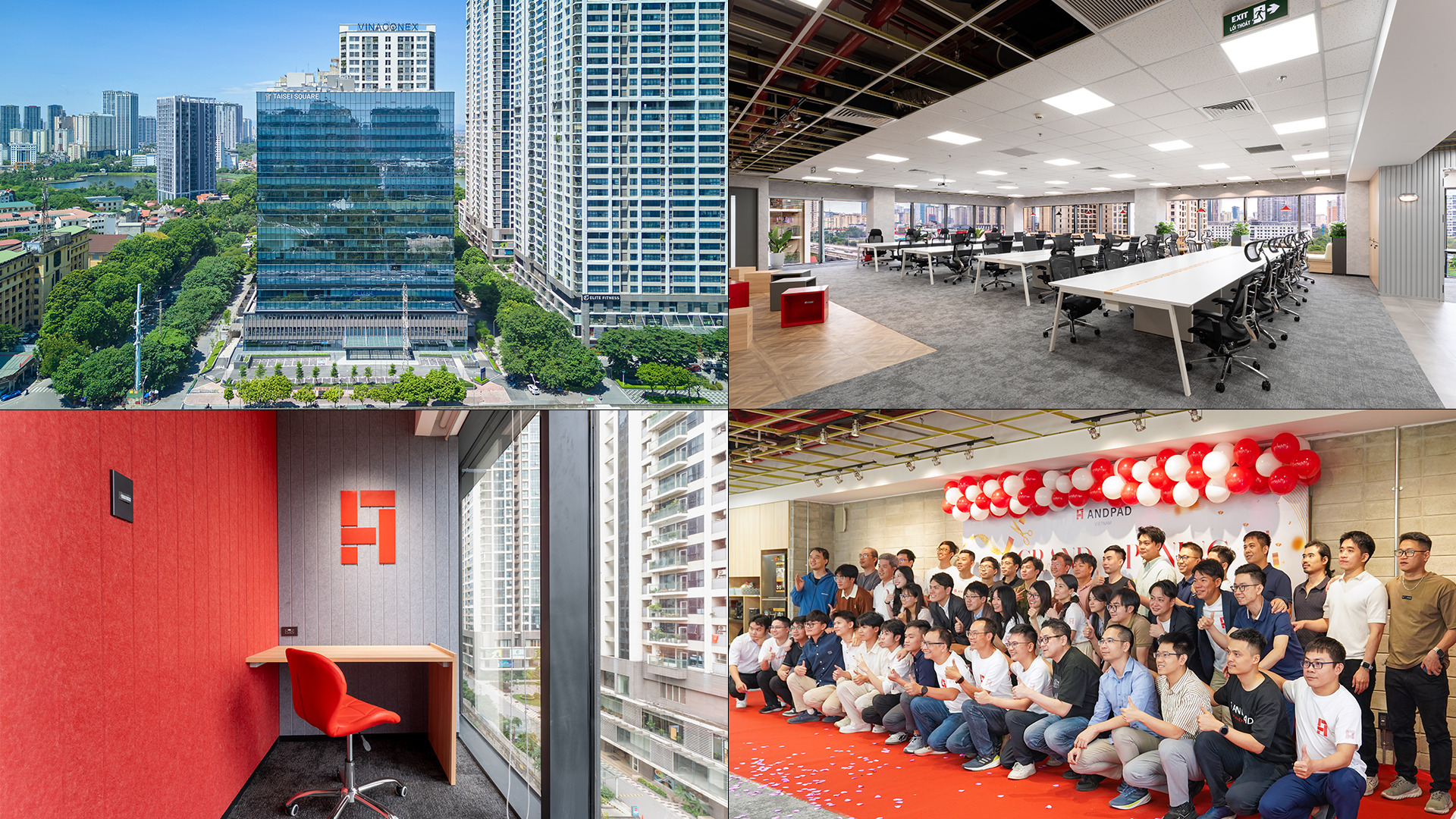
Hanoi Office: Overview
TAISEI SQUARE HANOI
TAISEI SQUARE HANOI is a large-scale office designed and constructed entirely by TAISEI CORPORATION. The first office independently developed in Hanoi by a Japanese company, TAISEI SQUARE HANOI is positioned as a flagship location under ANDPAD’s international operations.
<Address>
7F, Taisei Square Hanoi Building. No.289 Khuat Duy Tien Street, Dai Mo Ward, Ha Noi City
■ Recruitment
Andpad Vietnam is looking for new team members. Please see below for details.
Details:https://andpad.vn/#hotjobs
LinkedIn:https://vn.linkedin.com/company/andpad-vietnam
■ About the ANDPAD Service
The cloud-based construction project management service with the top share of the market in Japan*, ANDPAD makes the central management of everything from enhancing onsite efficiency to improving management possible. Since provision of the service started in 2016, through associated development efforts that emphasize intuitiveness and ease of use and thorough support for implementation and utilization, the service has reached over 265,000 corporate users and 690,000 individual users.
ANDPAD was selected as a “2024 Recommended Technology” under the NETIS (New Technology Information System) by the Ministry of Land, Infrastructure, Transport and Tourism.
Details (Japanese language only): https://andpad.jp/
*”Trends and Vendor Share in the Construction Business Management Cloud Service Market” (December 2024 MIC IT Report)” (According to research by the Deloitte Tohmatsu MIC Economic Research Institute)
Hashtag: #ANDPAD
The issuer is solely responsible for the content of this announcement.
ANDPAD VietNam Overview
Name :ANDPAD VietNam Co., Ltd
Location :3rd Floor, Dong Nhan Building, 90 Nguyen Dinh Chieu St, Tan Dinh Ward, HCMC
Representative :Yusuke Noda
Business Activities:Development of “ANDPAD” cloud-based construction project management service
URL : https://andpad.vn/
■Company Overview
Name : ANDPAD Inc.
Location : Sumitomo Fudosan Tokyo Mita Garden Tower 37F, 5-19 Mita 3 Chome, Minato-ku, Tokyo
Representative : Takeo Inada, CEO
Business Activities : Development, sales and operation of “ANDPAD” cloud-based construction project management service
Company Website (Japanese language only):https://andpad.co.jp/

-
 Feature/OPED6 years ago
Davos was Different this year
-
Travel/Tourism10 years ago
Lagos Seals Western Lodge Hotel In Ikorodu
-

 Showbiz3 years ago
Estranged Lover Releases Videos of Empress Njamah Bathing
-
 Banking8 years ago
Sort Codes of GTBank Branches in Nigeria
-

 Economy3 years ago
Subsidy Removal: CNG at N130 Per Litre Cheaper Than Petrol—IPMAN
-

 Banking3 years ago
Sort Codes of UBA Branches in Nigeria
-

 Banking3 years ago
First Bank Announces Planned Downtime
-

 Sports3 years ago
Highest Paid Nigerian Footballer – How Much Do Nigerian Footballers Earn