
Media OutReach
Hong Kong banks showed moderate balance sheet growth amid global uncertainty in 2024, KPMG report finds

Disciplined cost management, risk vigilance, and digital innovation underpin sector resilience
HONG KONG SAR – Media OutReach Newswire – 2 July 2025 – Hong Kong’s banking sector demonstrated steady growth and operational resilience in 2024, despite ongoing global economic headwinds. This is according to the newly launched KPMG Hong Kong Banking Report, which provides an in-depth analysis of the city’s banking performance in 2024 and explores the major trends shaping its future, ranging from geopolitical and credit risk to digital asset innovation and AI transformation.
The report reveals that the total assets of all surveyed licensed banks in Hong Kong rose by 4.5% to HK$24 trillion in 2024. Operating profit before impairment charges increased 7.8% to HK$318 billion, as banks continued to prioritise cost discipline and operational efficiency in the face of subdued loan demand and stable, but slightly compressed, net interest margins.
Paul McSheaffrey, Senior Banking Partner, Hong Kong SAR, KPMG China, commented: “Despite the challenging macroeconomic environment and the impact of US-China trade tensions, Hong Kong’s banks have remained resilient. The sector’s long-standing focus on prudent risk management, capital discipline, and ongoing investment in digital transformation has helped it adapt to volatility and maintain international competitiveness.”
While total loans and advances reduced by 2.3% in 2024, total customer deposits increased by 4.1%. Asset quality came under pressure, with the sector’s impaired loan ratio rising from 1.65% to 2.15%, reflecting the ongoing challenges in commercial real estate and the broader property sector. However, most banks have continued to exercise proactive risk management, including portfolio diversification and the adoption of digital tools to strengthen early risk detection.
In line with KPMG’s prediction in its 2024 Hong Kong Banking Report, the banking sector continued to navigate a challenging environment shaped by US monetary policy uncertainty, geopolitical tensions and economic strains in the Chinese Mainland.
Terence Fong, Head of Chinese Banks, Hong Kong SAR, KPMG China, says, “While Hong Kong’s economy showed resilience in 2024, recent developments highlight the importance of continued vigilance. The escalation of reciprocal tariffs between the US and China since April 2025 has heightened downside risks for Hong Kong’s trade-oriented economy and clouded the economic outlook. Continued vigilance will be crucial as banks navigate ongoing geopolitical uncertainty and macroeconomic challenges. Prudent capital management, agile pricing, and a renewed focus on emerging opportunities in Asia will be key to supporting sustainable growth.”
The report also highlights the sector’s progress in digital innovation. The Hong Kong Monetary Authority (HKMA) has been at the forefront of applications of blockchain technology for banks, with Project Ensemble serving as a landmark initiative exploring the use of wholesale CBDC (wCBDC) to facilitate the settlement of tokenised assets. On the retail side, the e-HKD initiative is progressing into its second phase, with the HKMA testing real-world applications of a retail CBDC. The HKMA has also finalised a regulatory framework for stablecoins which will provide better protection for the general public and investors.
Banks in Hong Kong are also accelerating the adoption of artificial intelligence, particularly agentic AI, to enhance efficiency, risk management, and compliance.
Angel Mok, Partner, Financial Services Technology Consulting, Hong Kong SAR, KPMG China, says, “Agentic AI solutions have evolved faster than expected. While banks in Hong Kong remain cautious about potential risks, they are generally enthusiastic about Agentic AI and are adopting it at an increasing pace. Banks that take a strategic, data-driven approach to implementation will be well-positioned to lead in an increasingly competitive landscape.”
Jia Ning Song, Head of Banking and Capital Markets, Hong Kong SAR, KPMG China, says, “AI is already delivering tangible value for Hong Kong banks with quantifiable benefits. However, it is imperative that banks adequately address concerns around governance, risk, and trust. Building trusted AI systems is now essential for maintaining public confidence and ensuring the long-term sustainability of Hong Kong’s banking system. Institutions further along in their digital journeys may be better positioned, while others may need to address foundational gaps first before scaling their AI initiatives.”
Hashtag: #KPMG
The issuer is solely responsible for the content of this announcement.
About KPMG
KPMG in China has offices located in 31 cities with over 14, 000 partners and staff, in Beijing, Changchun, Changsha, Chengdu, Chongqing, Dalian, Dongguan, Foshan, Fuzhou, Guangzhou, Haikou, Hangzhou, Hefei, Jinan, Nanjing, Nantong, Ningbo, Qingdao, Shanghai, Shenyang, Shenzhen, Suzhou, Taiyuan, Tianjin, Wuhan, Wuxi, Xiamen, Xi’an, Zhengzhou, Hong Kong SAR and Macau SAR. It started operations in Hong Kong in 1945. In 1992, KPMG became the first international accounting network to be granted a joint venture licence in the Chinese Mainland. In 2012, KPMG became the first among the “Big Four” in the Chinese Mainland to convert from a joint venture to a special general partnership.
KPMG is a global organisation of independent professional services firms providing Audit, Tax and Advisory services. KPMG is the brand under which the member firms of KPMG International Limited (“KPMG International”) operate and provide professional services. “KPMG” is used to refer to individual member firms within the KPMG organization or to one or more member firms collectively.
KPMG firms operate in 142 countries and territories with more than 275,000 partners and employees working in member firms around the world. Each KPMG firm is a legally distinct and separate entity and describes itself as such. Each KPMG member firm is responsible for its own obligations and liabilities.
Celebrating 80 years in Hong Kong
In 2025, KPMG marks “80 Years of Trust” in Hong Kong. Established in 1945, we were the first international accounting firm to set up operations in the city. Over the past eight decades, we’ve woven ourselves into the fabric of Hong Kong, working closely with the government, regulators, and the business community to help establish Hong Kong as one of the world’s leading business and financial centres. This close collaboration has enabled us to build lasting trust with our clients and the local community – a core value celebrated in our anniversary theme: “80 Years of Trust”.


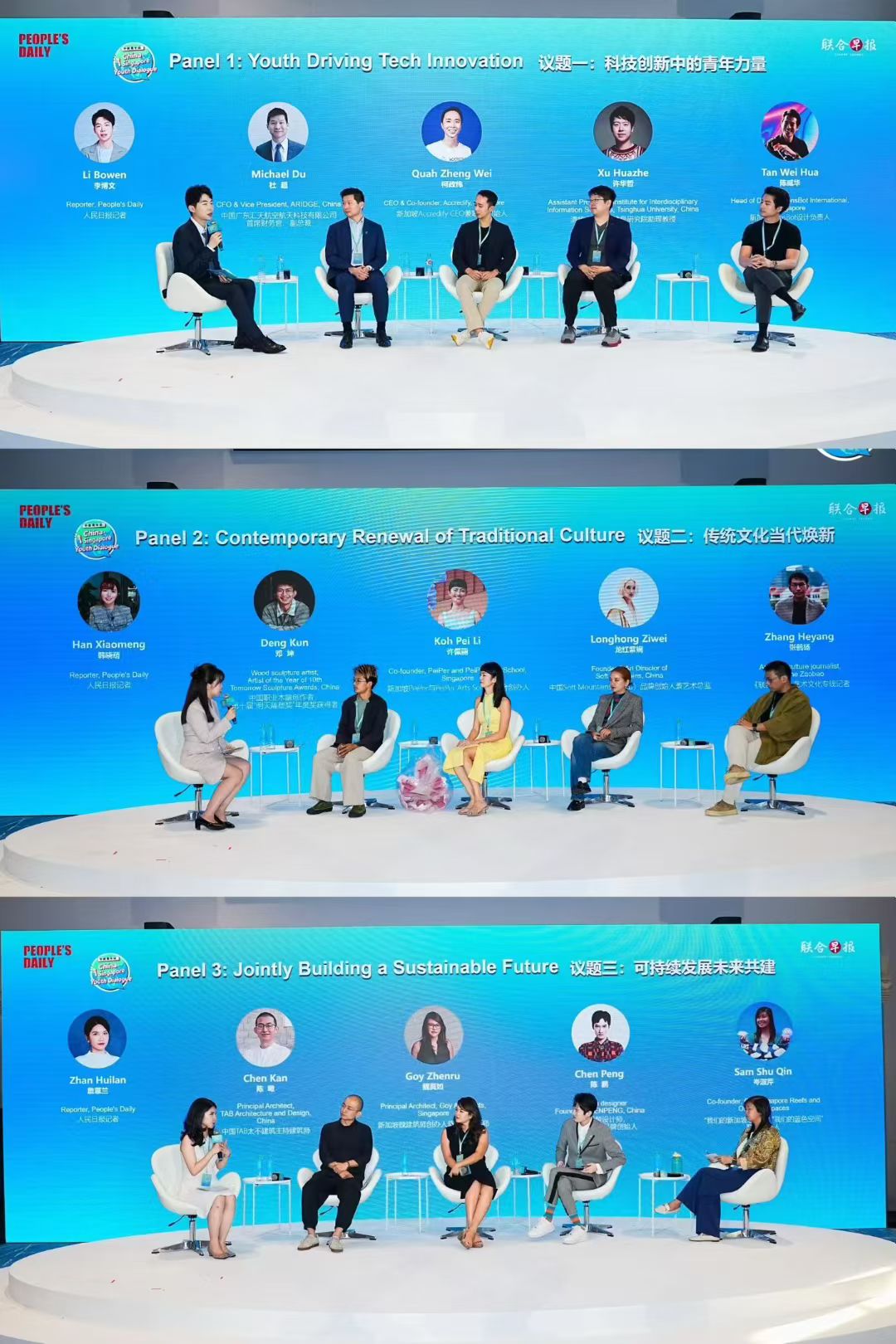
Co-organized by the People’s Daily and Lianhe Zaobao, the two-day event featured 12 young representatives who explored how their generation is shaping the future through innovation, cultural renewal and cross-border collaboration.
In the first panel, “Youth Driving Tech Innovation,” participants working in robotics, flying cars and data verification discussed both the opportunities and challenges of the AI era.
Tan Wei Hua, head of design at Singapore-based LionsBot International, addressed concerns over “AI anxiety” and its impact on jobs. “New jobs are going to be created. The next generation will be doing something entirely different,” he said, pointing to robotics as a growing field of opportunity.
Quah Zheng Wei, CEO and co-founder of Accredify, encouraged aspiring entrepreneurs to take the first step. With the tech industry evolving rapidly, he stressed that “nothing is holding you back.”
From an industry perspective, Michael Du, CFO and vice president of ARIDGE, said emerging technologies are expanding possibilities in everyday life. Meanwhile, Xu Huazhe, assistant professor at the Institute for Interdisciplinary Information Sciences at Tsinghua University, highlighted the strengths of younger generations: “With the correct taste, they will build the most meaningful things.”
The second panel, “Contemporary Renewal of Traditional Culture,” shifted focus from innovation to heritage. Artists and cultural practitioners in wood sculpture, paper art, jewelry design and journalism explored how tradition can be revitalized in modern contexts.

Wood sculpture artist Deng Kun emphasized the importance of cultivating an eye for beauty, while Lianhe Zaobao arts and culture journalist Zhang Heyang described traditional culture as “a place of spiritual haven for today’s youth.”
Designer Longhong Ziwei, founder and art director of the accessory brand Soft Mountains, said engaging with Yi heritage has inspired her work and resonated with international audiences.
Singaporean paper and mixed media artist Koh Pei Li, drawing inspiration from everyday urban life, highlighted the value of noticing overlooked details. Through her work, she hopes to reconnect people with the subtle beauty around them.
In the final panel, “Jointly Building a Sustainable Future,” speakers from architecture, fashion, and marine conservation offered interdisciplinary perspectives on sustainability.
Chen Kan, principal architect of TAB Architecture and Design, spoke about the philosophy of “being-with” as a guiding principle. “We need a deeper capacity to coexist with others,” he said.
Goy Zhenru, principal architect of Goy Architects in Singapore, emphasized designing in harmony with nature. She highlighted the importance of connecting living spaces with natural elements such as breeze and sunlight to create comfort and environmental awareness.
Sam Shu Qin, co-founder of Our Singapore Reefs and Our Blue Spaces, who describes herself as “a gardener underwater,” expressed hope that younger generations will recognize their ability to give back to the ocean.
For fashion designer Chen Peng, founder of brand CHENPENG, sustainability is both cultural and practical. “It should be culture-based and do no harm to the earth. It’s not a choice, but a natural extension of philosophy,” he said.
The dialogue marked a step forward in media cooperation and people-to-people exchanges between China and Singapore. By amplifying youth perspectives, it showcased the innovative energy and collaborative potential of both countries, while helping to build a long-term platform for bilateral engagement and shared progress.
The issuer is solely responsible for the content of this announcement.

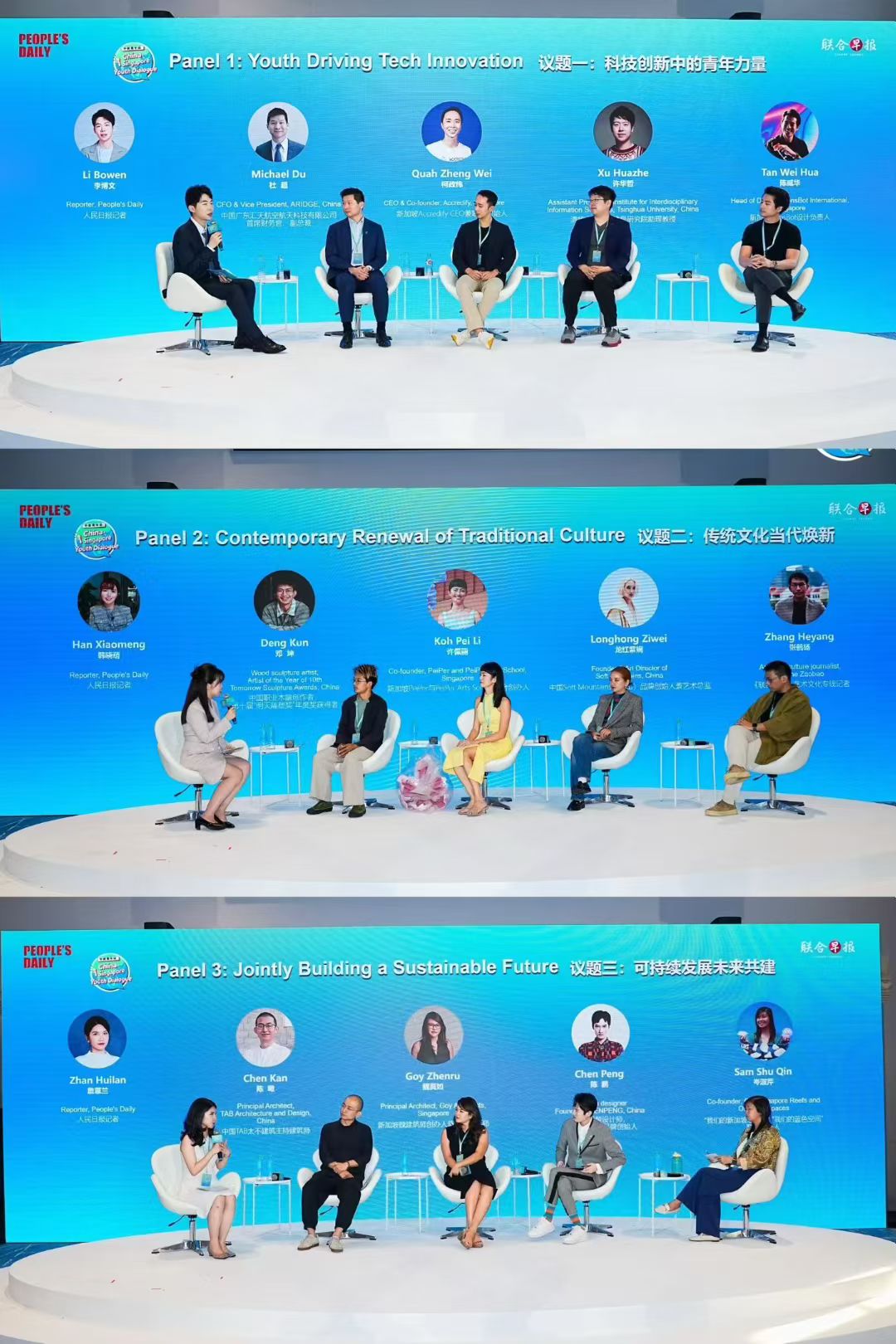
Co-organized by the People’s Daily and Lianhe Zaobao, the two-day event featured 12 young representatives who explored how their generation is shaping the future through innovation, cultural renewal and cross-border collaboration.
In the first panel, “Youth Driving Tech Innovation,” participants working in robotics, flying cars and data verification discussed both the opportunities and challenges of the AI era.
Tan Wei Hua, head of design at Singapore-based LionsBot International, addressed concerns over “AI anxiety” and its impact on jobs. “New jobs are going to be created. The next generation will be doing something entirely different,” he said, pointing to robotics as a growing field of opportunity.
Quah Zheng Wei, CEO and co-founder of Accredify, encouraged aspiring entrepreneurs to take the first step. With the tech industry evolving rapidly, he stressed that “nothing is holding you back.”
From an industry perspective, Michael Du, CFO and vice president of ARIDGE, said emerging technologies are expanding possibilities in everyday life. Meanwhile, Xu Huazhe, assistant professor at the Institute for Interdisciplinary Information Sciences at Tsinghua University, highlighted the strengths of younger generations: “With the correct taste, they will build the most meaningful things.”
The second panel, “Contemporary Renewal of Traditional Culture,” shifted focus from innovation to heritage. Artists and cultural practitioners in wood sculpture, paper art, jewelry design and journalism explored how tradition can be revitalized in modern contexts.

Wood sculpture artist Deng Kun emphasized the importance of cultivating an eye for beauty, while Lianhe Zaobao arts and culture journalist Zhang Heyang described traditional culture as “a place of spiritual haven for today’s youth.”
Designer Longhong Ziwei, founder and art director of the accessory brand Soft Mountains, said engaging with Yi heritage has inspired her work and resonated with international audiences.
Singaporean paper and mixed media artist Koh Pei Li, drawing inspiration from everyday urban life, highlighted the value of noticing overlooked details. Through her work, she hopes to reconnect people with the subtle beauty around them.
In the final panel, “Jointly Building a Sustainable Future,” speakers from architecture, fashion, and marine conservation offered interdisciplinary perspectives on sustainability.
Chen Kan, principal architect of TAB Architecture and Design, spoke about the philosophy of “being-with” as a guiding principle. “We need a deeper capacity to coexist with others,” he said.
Goy Zhenru, principal architect of Goy Architects in Singapore, emphasized designing in harmony with nature. She highlighted the importance of connecting living spaces with natural elements such as breeze and sunlight to create comfort and environmental awareness.
Sam Shu Qin, co-founder of Our Singapore Reefs and Our Blue Spaces, who describes herself as “a gardener underwater,” expressed hope that younger generations will recognize their ability to give back to the ocean.
For fashion designer Chen Peng, founder of brand CHENPENG, sustainability is both cultural and practical. “It should be culture-based and do no harm to the earth. It’s not a choice, but a natural extension of philosophy,” he said.
The dialogue marked a step forward in media cooperation and people-to-people exchanges between China and Singapore. By amplifying youth perspectives, it showcased the innovative energy and collaborative potential of both countries, while helping to build a long-term platform for bilateral engagement and shared progress.
The issuer is solely responsible for the content of this announcement.
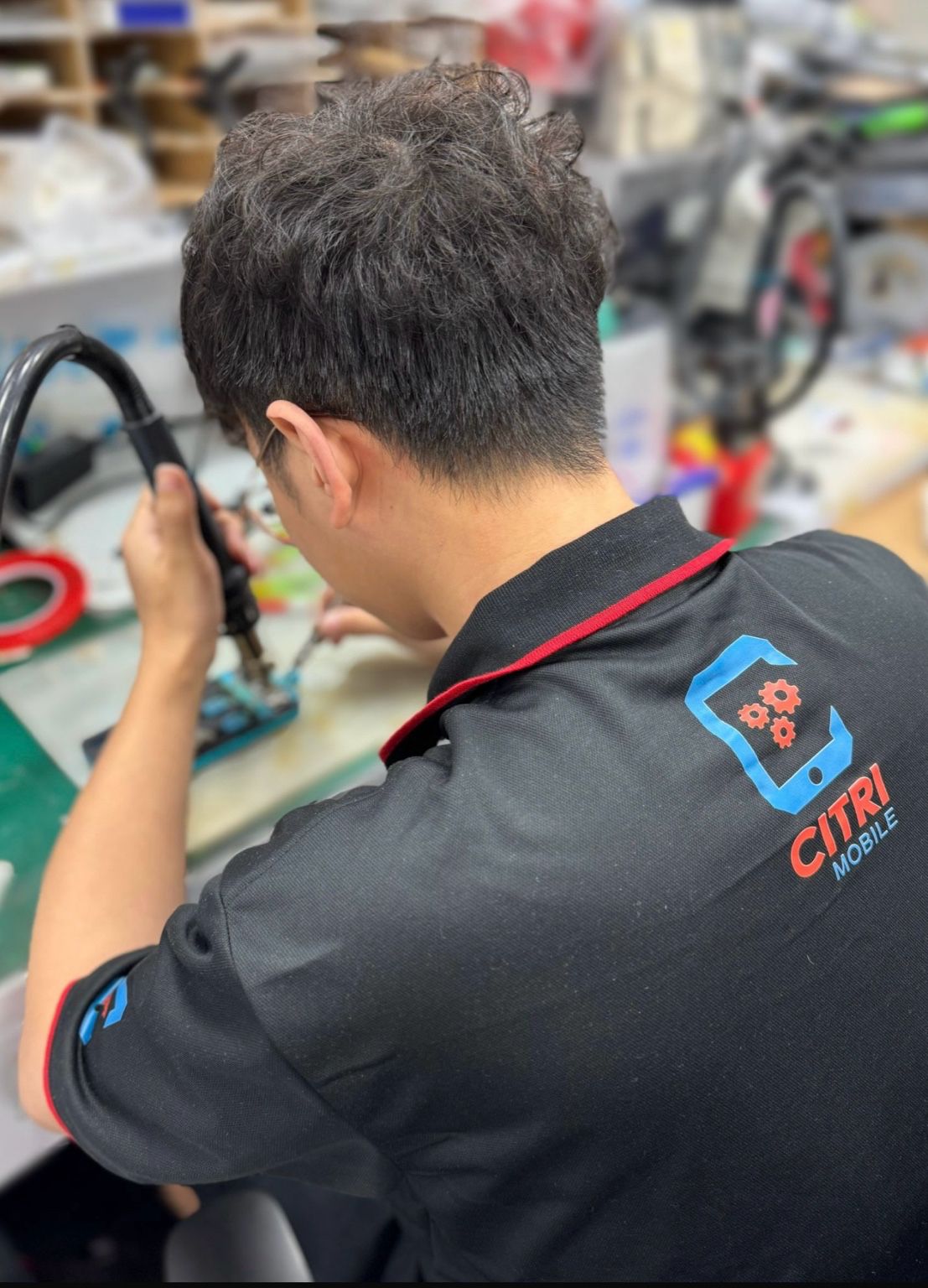
Expansion strengthens access to fast, reliable device repair services across Jurong, Yishun, Tampines and Chinatown as demand for urgent technical support rises
What often begins as a minor inconvenience can quickly escalate. A phone may take longer to charge, a screen may flicker briefly before stabilising, or a laptop may run hotter than usual during routine use. These early signs are often ignored until the device stops functioning at a critical moment.
Hashtag: #CitriMobile #SingaporeRepair #Jurong #Yishun
 https://citrimobile.com/
 https://x.com/CitriMobile
 https://www.facebook.com/CitriSG/
 https://www.instagram.com/citrimobilesghttps://www.carousell.sg/u/citrimobilesg/
The issuer is solely responsible for the content of this announcement.
C3 Smart Repair By Citri Mobile













-
 Feature/OPED6 years ago
Davos was Different this year
-
Travel/Tourism10 years ago
Lagos Seals Western Lodge Hotel In Ikorodu
-

 Showbiz3 years ago
Estranged Lover Releases Videos of Empress Njamah Bathing
-
 Banking8 years ago
Sort Codes of GTBank Branches in Nigeria
-

 Economy3 years ago
Subsidy Removal: CNG at N130 Per Litre Cheaper Than Petrol—IPMAN
-

 Banking3 years ago
Sort Codes of UBA Branches in Nigeria
-

 Banking3 years ago
First Bank Announces Planned Downtime
-

 Sports3 years ago
Highest Paid Nigerian Footballer – How Much Do Nigerian Footballers Earn