
Media OutReach
KPMG and SID unveil Budget 2026 strategies to bolster Singapore’s role as a hub for global flows

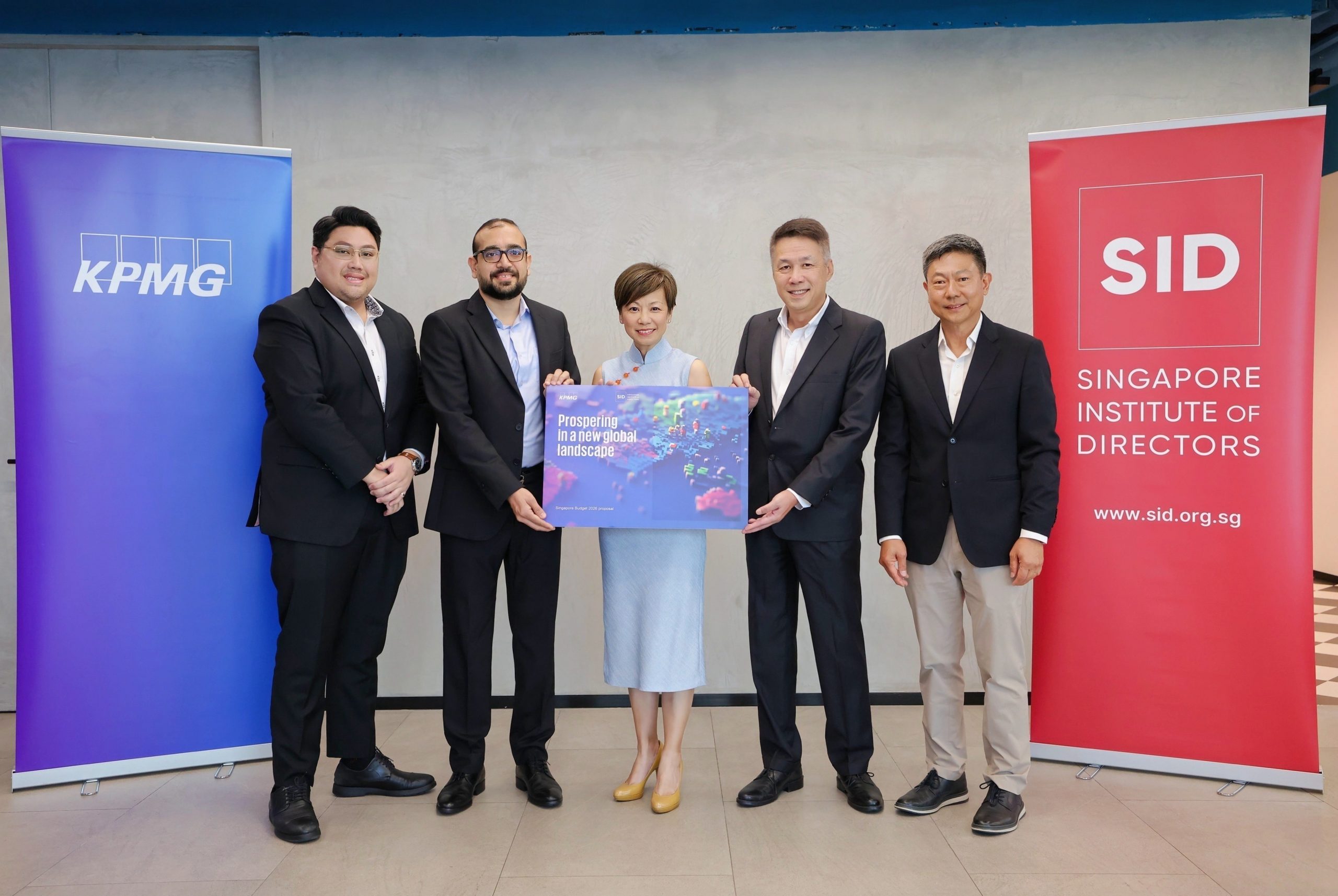
- Tackle rising business costs and trade barriers with a unified digital platform for Free Trade Agreements as well as build stronger economic partnerships.
- Bridge AI adoption gaps by co-funding shared data pools and introducing a regional “Trusted AI” mark to drive innovation and governance.
- Future-proof the workforce with targeted work visas for global experts, job transformation roadmaps, and advanced leadership programmes.
SINGAPORE – Media OutReach Newswire – 7 January 2026 – KPMG in Singapore and the Singapore Institute of Directors (SID) are pleased to announce the release of a joint Budget 2026 Proposal, titled “Prospering in a New Global Landscape”.
By fostering resilient economic linkages, embedding digital trust, and cultivating world-class talent and leadership with cross-domain expertise, Singapore can ensure its businesses and economy remain secure, innovative, and competitive in an uncertain global landscape.
This Proposal outlines strategies to position Singapore as a critical hub for global flows, covering three crucial areas:
- A new global order: Resilience as a pivotal growth strategy
- The Intelligent Age: Smart solutions for an innovative era
- Next-gen talent: Empowering tomorrow’s leaders today
The recommendations in the proposal are also supported by data-driven insights from a survey recently conducted by KPMG and SID. More than 1,000 professionals, managers, executives and technicians (PMETs) and business owners were surveyed on the challenges they face and the kinds of Budget 2026 support they hoped to see. [For more information, please refer to the deck with the full survey results: https://kpmg.com/sg/en/campaigns/kpmg-singapore-budget.html ]
Empowering businesses to leverage Singapore’s trusted role as a global connector
Global commerce is rapidly transforming amid rising protectionism, shifting trade rules, evolving tax regimes, and geopolitical tensions. Singapore’s long-term prosperity in the new global order depends on its ability to lead as a trusted connector and aggregator of the flows of goods, capital, data, and talent.
Singapore must strengthen its economic linkages, build secure and interoperable digital platforms, cultivate a workforce equipped with cross-domain expertise, and equip boards with essential skills to navigate emerging risks and opportunities. Trusted and resilient economic linkages will ensure the seamless movement of goods, services, and investments, while interoperable digital platforms will play a critical facilitation role in enabling cross-verification of information, streamlining compliance, and fostering trust across borders. These efforts are especially important in helping businesses cope with shifting regulations. KPMG and SID’s survey found that 51 percent of respondents identified increased business costs as the main challenge to cross-border expansion, followed by higher tariffs (26 percent) and supply chain difficulties (25 percent). To address these challenges, 43 percent of respondents want stronger economic and trade partnerships to overcome trade barriers.
KPMG and SID recommend:
a) Developing a unified digital platform for Free Trade Agreement (FTA) management (page 7) to help businesses navigate complex procedures and unlock the full benefits of FTAs. This would be seamlessly integrated with government systems, making it more seamless and cost-effective for businesses to comply with FTA requirements. This would enable firms to leverage Singapore’s extensive FTA network to gain footholds in new markets, further enhancing Singapore’s regional and global competitiveness.
b) Increasing access to working capital to accelerate local enterprises’ strategic transformation and implementing industry-specific governance frameworks (page 7). With geopolitical shifts driving a more complex regulatory landscape, increased and dedicated funding would enable businesses to transform for the future while responding effectively to evolving governance standards. Such funding should be complemented by industry-specific governance playbooks to equip boards with essential tools to strengthen agility and resilience.
c) Enhancing Singapore’s government-backed trade platform with blockchain and AI (page 6). The global economy has seen an increase in supply chain disruptions amid geopolitical and trade uncertainties. An enhanced Government-backed trade platform would enable Singapore to further facilitate the flow of trusted payments, making it even easier for businesses to validate transactions and act on smart recommendations to elevate supply chain efficiency. Amid a more fragmented world, the enhanced platform would also reinforce Singapore’s position as a reliable hub for global commerce, by promoting increased supply chain transparency for critical industries like semiconductors, pharmaceuticals, and advanced manufacturing.
d) Introducing progressive carbon taxes to reward decarbonisation and establish performance-based pathways for large emitters (page 9). Singapore’s carbon taxes must evolve to consider unique business needs and companies’ decarbonisation plans. Progressive carbon tax rates post-2030 – based on facility emissions volume, emissions per unit of output, and sectoral abatement potential – could be accompanied by permanent conditional tax rebates for energy-intensive, trade-exposed sectors. These rebates could be based on set criteria such as verified year-on-year reductions in carbon intensity and investments in low-carbon technology. To strengthen these efforts, Singapore could also establish an ASEAN Environmental Data Exchange to facilitate the sharing of standardised and interoperable environmental data between Singapore and its regional trade partners (page 8). The exchange would improve the flows of green trade and green capital, enabling Singapore to be a regional hub for environmental data harmonisation. Organisations like the Singapore Institute of Directors could play a catalytic role by building board-level capability, aligning disclosure expectations and promoting best practices through director education, guidance frameworks and peer learning on a regional scale, helping boards to lead initiatives like progressive carbon taxation.
Fostering an ecosystem of Trusted AI in the Agentic Era
The rise of artificial intelligence (AI) is reshaping global competitiveness, with agentic AI—capable of autonomous decision-making—introducing both transformative opportunities and significant challenges. While agentic AI can drive innovation, optimise operations, and unlock new efficiencies, it also raises critical concerns around accountability, ethical deployment, and governance.
A critical enabler of AI’s potential is data sharing, yet this often proves difficult due to competition, concerns over intellectual property, and a lack of trust between organisations. Businesses—particularly smaller enterprises—also face cost constraints in accessing high-quality data, and many also lack the strategic clarity and workforce competencies to identify where AI can augment their operations.
KPMG and SID’s poll found that 54 percent of respondents cited talent and skills gaps as the top challenge for adopting AI, followed by high costs of technology adoption (52 percent) and a lack of clear AI adoption strategies (48 percent). By addressing these concerns, Singapore will be able to fully leverage the vast potential of AI and data to reinforce its status as a hub across various sectors.
KPMG and SID recommend:
a) Co-funding sector-specific shared data pools in partnership with trade associations and industry stakeholders (page 15). These shared, anonymised data pools would enable businesses to access high-quality datasets without incurring prohibitive costs. Tailored to specific sectors such as logistics and retail, these pools would facilitate benchmarking, model training, and experimentation under a trusted framework that safeguards data privacy and protects intellectual property. Shared data initiatives should be paired with guided AI adoption support to help businesses understand how AI can enhance specific parts of their value chain. For example, targeted support could help logistics firms optimise supply chains or assist retailers in leveraging AI to personalise customer experiences. This dual approach would enable broader AI adoption and accelerate innovation across industries.
b) Enhancing the public-private partnership (PPP) framework to accelerate AI adoption (page 15). As firms navigate high costs and limited guidance around AI adoption, there is an opportunity for the Government to provide greater access to infrastructure to lower barriers for AI experimentation and deployment. The enhanced framework would create positive spillover effects from existing AI initiatives, as government agencies, academia and industry stakeholders collaborate to strategically integrate AI solutions into business strategies. The framework could also promote cross-sector collaboration in key industries, fostering a culture of open innovation in AI. To bolster digital trust, Singapore could also establish a regional “Trusted AI” mark to drive harmonisation and innovation (page 12). Although Singapore’s Model AI Governance Framework provides a strong foundation for responsible AI deployment, there is still a largely untapped opportunity for Singapore to champion an assurance label that shows firms have AI controls aligned with recognised AI governance standards. By pushing regional recognition of this mark, Singapore could accelerate cross-border innovation and trade. The mark would build on initiatives like AI Verify and Project Moonshot, which have helped to promote Trusted AI in Singapore.
c) Supporting hands-on AI governance training for board members and executives (page 13) through a dedicated fund. This would complement existing SkillsFuture programmes which focus primarily on AI awareness, by expanding the emphasis to address strategic and operational gaps at the leadership level – covering ethical deployment, change management and cross-domain applications.
Building globally relevant leaders with cross-domain skills
To fulfil its role as a hub for global flows, Singapore must enable its businesses to navigate a complex web of governance requirements, trade rules, tax policies, and tariffs. While compliance with governance standards will bring higher upfront costs, it also provides a foundation for businesses to lead in innovation and competitiveness. For instance, businesses that embrace sustainability compliance can innovate in areas like green finance, carbon accounting, and environmental data exchange.
Yet, none of this is possible without specialised talent and leadership. Singapore needs professionals and board leaders with expertise in areas such as supply chain management, AI governance, and sustainability strategy. These individuals must be able to connect the dots across domains, such as linking data governance with trade compliance or integrating sustainability goals into business operations. The need for enhanced talent development also emerged from KPMG and SID’s survey findings. Forty-nine percent of respondents want more skills development and upskilling courses. Meanwhile, 42 percent hope for more support for workforce transformation and job redesign, such as higher grants. In addition, 37 percent of respondents want more leadership and management development initiatives, especially in the areas of mentorship and coaching for emerging leaders and advanced leadership programmes.
KPMG and SID recommend:
a) Creating a dedicated work-pass category for “master trainers” and mentors (page 18). The work-pass would encourage international professionals to join local companies, public agencies and training institutions to lead structured upskilling or leadership development programmes. This would accelerate skills transfer, expose workers to global best practices, and build a robust pipeline of talent capable of driving strategic transformation and competitiveness in a rapidly evolving global landscape. Structured leadership development programmes could also include peer-sharing platforms (page 21) aimed at promoting transformation training among C-suite leaders. Backed by the public sector and industry stakeholders, such platforms could foster the exchange of best practices, promote collective learning on key sustainability capabilities and empower leaders to proactively redesign roles and workflows ahead of market shifts.
b) Setting up job transformation roadmaps with co-funded training and certification initiatives (page 19) tied closely to sector-specific needs. As rapid technological developments shape industry demand for skills, job transformation roadmaps would be beneficial in outlining sector-specific disruptions, challenges and opportunities. These roadmaps could be accompanied by industry-recognised certification, and programmes backed by both the public and private sectors. Tailored to sectoral needs, certifications could help to assess whether workers have acquired the necessary skills to perform in transformed roles, especially in fast-evolving sectors where traditional qualifications may no longer suffice.
c) Establishing a $100 million fund to advance social impact reporting (page 9). As Singapore pursues long-term resilience, it must also ensure that economic growth is sustainable and inclusive. The fund could be used to train professionals and board directors in the reporting of social metrics, support academic modules in social sustainability and certify social auditors and advisers. It could also be complemented by broader efforts to enhance environmental, social and governance (ESG) competencies among businesses’ top leadership. Singapore could establish a national registry of certified sustainability committee members (page 20) who can be matched to boards and committees across sectors. This would help to expand access to qualified board resources, especially for local enterprises.
Lee Sze Yeng, Managing Partner, KPMG in Singapore, said:
“Leadership today isn’t just about mastering AI or acquiring specialised skills—it’s about navigating the intersections of cross-border trade, technology, and sustainability. To remain competitive, leaders must move beyond the basics, using AI and data to drive real business outcomes while building governance frameworks that inspire trust. At the same time, they need the courage to take calculated risks and collaborate across ecosystems to unlock new opportunities. Initiatives like co-funding sector-specific shared data pools and guided AI adoption support are critical to overcoming barriers and equipping leaders with the tools to thrive. As disruptions grow increasingly cross-border and cross-domain, Singapore’s ability to cultivate leaders who can turn complexity into opportunity will define its success as a global flows hub.”
Ajay Kumar Sanganeria, Partner, Head of Tax, KPMG in Singapore, said:
“Singapore’s position as a global hub—connecting trade, data, and capital—offers businesses significant opportunities to grow and compete globally. Grants and platforms are vital enablers, but they must be part of a broader solution that simplifies complexities and empowers businesses to focus on innovation.
Future-ready approaches, such as managing governance and compliance in a more consolidated or ‘as-a-service’ mode, can reduce burdens on enterprises. A unified digital platform for Free Trade Agreement (FTA) management, enhanced with blockchain and AI, could streamline compliance and unlock the full benefits of Singapore’s FTA network. Co-funded training programmes and shared governance frameworks can further help businesses pool resources and build capabilities. By combining grants, platforms, and smarter ways of working, Singapore strengthens its role as a trusted global connector and equips businesses to lead with confidence in an evolving world.”
Yeoh Oon Jin, Chair, Singapore Institute of Directors, said:
“Singapore’s future as a global hub for connectivity and commerce will be shaped by how boards of directors evolve to lead with resilience and trust. Budget 2026 is an opportunity to strengthen governance frameworks that embed sustainability, cyber trust and accountability into every organisation’s agenda. By empowering directors to champion innovation, sustainability and digital assurance, organisations can grow with confidence while reinforcing Singapore’s position as a secure and trusted connector for goods, capital, data and talent in an increasingly complex global landscape.”
Hashtag: #KPMG #SID
The issuer is solely responsible for the content of this announcement.
About KPMG in Singapore
KPMG in Singapore is part of a global organization of independent professional services firms providing Audit, Tax and Advisory services. We operate in 142 countries and territories with more than 275,000 partners and employees working in member firms around the world. Each KPMG firm is a legally distinct and separate entity and describes itself as such. KPMG International Limited is a private English company limited by guarantee. KPMG International Limited and its related entities do not provide services to clients.
About SID
The Singapore Institute of Directors (SID) is Singapore’s national association for company directors. Established in 1998, our mission is to transform boards and empower board directors to be champions of good governance. SID works with regulators and partners to serve as the voice for directors and facilitates consultations and feedback sessions on regulatory matters. In advocating for good governance, SID advances thought leadership and benchmarking research and indices on corporate governance and directorship issues.
SID builds competencies and capabilities to enhance boardroom skills of directors for informed decision-making. An accreditation programme serves to set standards for and showcase best practices of good governance. The organisation supports members on their directorship journey with courses, workshops, advanced masterclasses, forum discussions and pit-stops. SID connects and strengthens the ecosystem with initiatives such as mentoring and networking. The Governance for Good Alliance is an initiative by SID to bring together key stakeholders who help advance our vision for every board director to be a champion of good governance.
For more information, visit sid.org.sg



Media OutReach
CUKTECH Officially Launches Its Online Store in Indonesia, Expanding Charging Technology Presence in Southeast Asia
CUKTECH focuses on the development of power and charging solutions, with a product portfolio that includes power banks, charging cables, wall chargers, and car chargers. Product development emphasizes charging efficiency, safety standards, and long-term reliability, addressing everyday usage scenarios involving smartphones, tablets, laptops, and other connected devices. The brand’s solutions are designed to support increasingly common multi-device lifestyles, including mobile work and frequent travel.
Prior to the launch of the official online store, CUKTECH operated in Indonesia mainly through third-party distribution channels, resulting in limited product availability. With the establishment of an official channel, the company is gradually introducing a more complete product lineup to the Indonesian market, aligning local availability with that of other Southeast Asian markets such as Vietnam, Malaysia, and the Philippines.
According to the company, the official online store serves as a centralized platform for presenting product specifications, technical features, and launch updates in a consistent manner. This approach is intended to improve transparency and accessibility for consumers while supporting a more structured, long-term market strategy in Indonesia.
Looking ahead, CUKTECH plans to continue expanding its product portfolio in Indonesia, introducing additional products to address evolving local usage needs. Future launches will focus on scenarios such as multi-device charging, mobile productivity, and daily commuting, reflecting changing consumer behavior.
This market-oriented approach aligns with CUKTECH’s brand philosophy, “In somewhere, For somewhere,” which emphasizes adapting products and solutions to the specific needs of each market rather than applying a uniform global model.
Updates on product launches, brand developments, and the official online store can be found through CUKTECH’s official social media channels on Instagram and TikTok:cuktech_id
https://www.tokopedia.com/cuktech-official-store
https://shopee.co.id/shop/1748675224
Hashtag: #CUKTECH
The issuer is solely responsible for the content of this announcement.
Under the partnership structure, Green SM provides the technology platform, all-electric vehicle fleet, operational standards, and driver development system, while Taksi Komotra contributes its established local expertise and network across Bali. The collaboration integrates electric mobility technology with on-the-ground operational capabilities to deliver a scalable, governance-driven transportation model.
Operations in Bali are implemented under Green SM’s “5 Green Promises” service commitment framework. Established as a foundational operating standard since the company’s inception, the framework ensures that each ride delivers an excellent customer experience, professional drivers, high-quality and safe vehicles, fair and transparent pricing, and a meaningful contribution to environmental sustainability.
The service operates an all-electric fleet that produces no exhaust emissions or fuel combustion. All vehicles are maintained under strict technical and safety protocols to ensure consistent service performance while contributing to cleaner air and quieter urban environments.
A central pillar of the launch is the Green SM Driver ecosystem. Drivers are positioned as professional green mobility ambassadors guided by five core values: Respect, Professionalism, Dedication, Discipline, and Competitive Income with Stable Career Pathways. Structured training, transparent earnings mechanisms, and disciplined service governance aim to elevate driving into a respected profession while maintaining safety and reliability as foundational standards. This framework aligns income stability with environmental responsibility, reinforcing the role of drivers in supporting Bali’s sustainable tourism trajectory.
The launch comes amid rising mobility demand driven by tourism growth and daily transportation needs across the island. The Indonesia Tourism Outlook 2025 report notes a sustained shift toward environmentally responsible travel, underscoring the relevance of electric mobility in long-term development planning. According to projections from Indonesia’s National Development Planning Agency (Bappenas), green employment nationwide is expected to reach 4.8-5.3 million by 2029, reflecting the broader economic potential of sustainable industries.

Mr. Deny Tjia, Managing Director of Green SM Indonesia, said: “The partnership with Taksi Komotra reflects our long-term commitment to building a high-quality, well-governed mobility ecosystem in Indonesia. By combining electric vehicles with professional driver development and clear operational standards, we aim to support Bali’s sustainable tourism ambitions while delivering safe, reliable, and comfortable rides for the community.”
H. Hasbi, Chairman of Koperasi Komotra, said: “We are proud to partner with Green SM to introduce electric taxis in Bali. Electric mobility will become part of the new standard for tourism and daily transportation on the island, and this collaboration helps us better serve local residents and visitors while preparing for the future of sustainable transport.”
The Bali launch marks another strategic milestone in Green SM’s expansion in Indonesia, following earlier operations in key markets including Jakarta, Makassar, Bekasi, and Surabaya. In these cities, the service has been positively received by local residents and international visitors alike, who value its clean electric fleet, professional drivers, and structured safety standards that enhance travel confidence.
With its growing presence across the country, Green SM continues to build a scalable electric mobility ecosystem that balances environmental responsibility, service excellence, and inclusive economic growth.
Hashtag: #GreenSM
The issuer is solely responsible for the content of this announcement.
About GSM and Green SM
GSM (Green Smart Mobility) is the world’s first company to operate a fully electric ride-hailing service across multiple platforms. As a pioneer in sustainable transportation, GSM has laid the foundation for a cleaner, smarter, and more responsible mobility model powered entirely by VinFast electric vehicles. Founded by Vingroup Chairman Pham Nhat Vuong, GSM is committed to building a future-ready mobility ecosystem while promoting more environmentally conscious lifestyles in markets that are rapidly embracing sustainability.
Green SM is GSM’s official global brand, representing the company’s vision and values in every market it serves. In Southeast Asia, the brand operates as Green SM in Indonesia, Xanh SM in Vietnam and Laos, and Green GSM in the Philippines. Across all markets, the service consistently delivers a modern travel experience through VinFast electric vehicles, professional drivers, and a service culture that prioritizes safety and passenger comfort.
Green SM symbolizes progress toward a future where technology, people, and the environment move forward in harmony. Beyond providing zero-emission transportation, the brand is also committed to fostering environmentally aware communities in every market where it operates.
About Taxi Komotra
Taksi Komotra Bali is part of the Koperasi Mobil Transport Bali, which was established in 1993 under its original name, KOMITRA Bali. In 1996, the cooperative officially changed its name to KOMOTRA Bali and has continued to grow as one of Bali’s local transportation operators.
Today, Taksi Komotra Bali manages two core transportation services: rural bus services and taxi operations. For more than three decades, Komotra Bali has remained committed to providing safe and reliable transportation while supporting local mobility and the tourism sector across the Island of the Gods.


Launched on February 14, the “Chinese Folk Music Odyssey” featured seven major concerts alongside a series of academic and grassroots cultural exchanges. The tour served as a high-level dialogue between the traditional heritage of China’s Jiangnan region and the classical musical heartlands of Europe.
The tour opened at the Centre for Fine Arts in Brussels, where a capacity crowd of 2,000 experienced the vibrant Spring Festival Overture. The ensemble presented a “Chinese Music Feast,” using traditional instruments to paint an auditory “Jiangnan Scroll” of southern Chinese life. In a poignant finale, Chinese fiddles joined forces with local keyed violins to perform the classic Horse Racing. The fusion of Eastern and Western strings brought tears to the eyes of the Chinese diaspora and earned standing ovations from local attendees.
“The melodies possess both natural charm and profound cultural heritage,” noted Belgian music critic Philippe, following six curtain calls. “It is a truly borderless musical exchange.”
Beyond the concert halls, the group engaged with European pop culture in the heart of Brussels’ Comic Strip district. A “flash mob” titled Tintin’s Encounter with Jiangnan Music saw musicians performing alongside iconic murals of Tintin, engaging local youth and residents through social media-friendly cultural interaction.

The journey continued through Germany’s elite venues, including Hamburg’s Elbphilharmonie and the Tonhalle Düsseldorf, showcasing the technical precision of Chinese folk orchestration. In the Austrian Tyrol, the tour took an improvisational turn as Wuxi musicians performed alongside local artists against the backdrop of the Alps, a live demonstration of the “beauty without borders”.
The tour concluded on February 26 in Vienna, where the ensemble hosted the “Dreamy Jiangnan” cultural salon at the Wiener Konzerthaus. The event paired musical performances with an interactive exhibition of Wuxi’s intangible cultural heritage, featuring traditional embroidery and clay figurines. The delegation also visited the University of Music and Performing Arts Vienna for the “Jiangnan Charm, Harmonious Resonance” China-Austria Music Exchange event. Through a series of academic dialogues with faculty and students, both sides engaged in a meaningful cultural encounter. These interactions went beyond simple performances, significantly deepening mutual understanding and strengthening the musical ties between East and West.
By integrating the “Voice of China” into the “World Symphony,” the Wuxi Cultural Exchange Group has opened a new chapter in Wuxi’s enduring musical engagement with the world.
Hashtag: #WuxiInformationOffice
The issuer is solely responsible for the content of this announcement.












-
 Feature/OPED6 years ago
Davos was Different this year
-
Travel/Tourism10 years ago
Lagos Seals Western Lodge Hotel In Ikorodu
-

 Showbiz3 years ago
Estranged Lover Releases Videos of Empress Njamah Bathing
-
 Banking8 years ago
Sort Codes of GTBank Branches in Nigeria
-

 Economy3 years ago
Subsidy Removal: CNG at N130 Per Litre Cheaper Than Petrol—IPMAN
-

 Banking3 years ago
Sort Codes of UBA Branches in Nigeria
-

 Banking3 years ago
First Bank Announces Planned Downtime
-

 Sports3 years ago
Highest Paid Nigerian Footballer – How Much Do Nigerian Footballers Earn