Media OutReach
Money20/20 Asia Elevates Its 2026 Agenda with the Launch of The Intersection Stage, Featuring the Industry’s Most Influential Voices
Industry Leaders, Regulators, and Innovators to Convene in Bangkok at the Intersection Where Digital Assets and Traditional Banking Enter a New Era of Collaboration
BANGKOK, THAILAND – Media OutReach Newswire – 3 April 2026 – the world’s leading fintech show and the place where money does business, today announced the introduction of The Intersection Stage at Money20/20 Asia happening on April 21-23 at the Queen Sirikit National Convention Center in Bangkok bringing together the region’s most powerful voices across banking, payments, digital assets, and financial innovation.
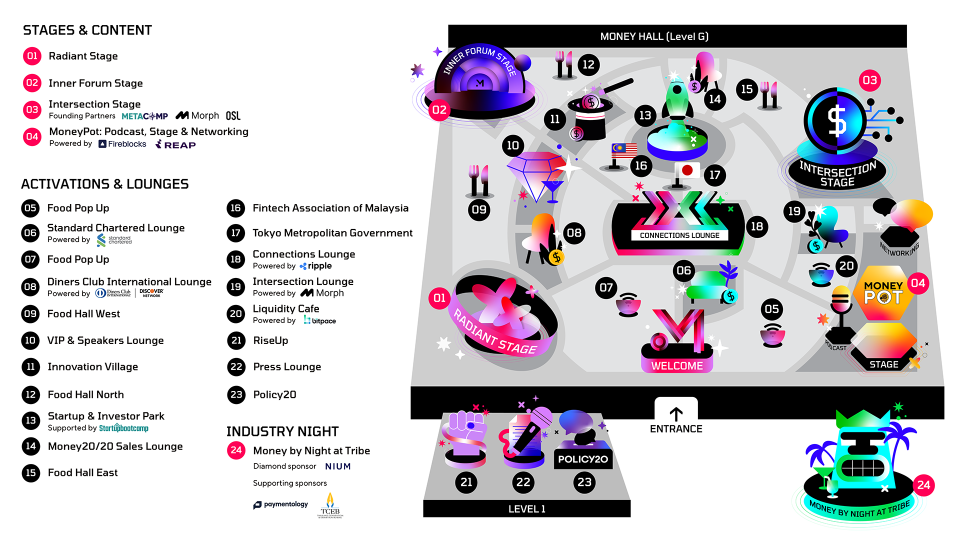
This year’s theme, “From Infrastructure to Impact – Where Technology Meets Humanity,” underscores how the Intersection Stage will explore the real-world outcomes of Traditional Finance and Decentralized Finance convergence across APAC, addressing how banks, fintechs, and emerging technologies are reshaping the global financial ecosystem. The stage brings together leaders from major financial institutions and well-known fintech companies to discuss how innovation, regulation, and new financial infrastructure are transforming areas such as digital assets, trust and cybersecurity, and cross-border payments. [1]
Siva Kumar, APAC Legal Director, Sumsub, said, “The convergence of TradFi and DeFi can only succeed if trust, identity, and compliance evolve alongside technology. Asia is leading this shift by adopting regulatory models that enable innovation without compromising security. At Sumsub, we’re witnessing institutions accelerate digital identity and verification standards at unprecedented speed. The Intersection Stage brings these critical stakeholders together to turn regulatory progress into real‑world impact.”
Speakers include Siddharth Gupta of Bank of America, Dhiraj Bajaj of Standard Chartered Bank, Fangfang Jiang of the International Finance Corporation, Ran Goldi, SVP Payments & Network, Fireblocks and Kaushik Sthankiya of Kraken, who will share insights on regulatory innovation, digital asset adoption, developments in stablecoin, tokenization, blockchain‑enabled settlement, and how new payment rails are enabling faster and more efficient cross-border transactions.
For decades, Traditional Finance aimed to protect the system while Decentralized Finance wanted to reinvent it. Today, these two worlds are converging where digital money moves faster than ever, said Danny Levy, EVP & Managing Director for APAC & the Middle East at Money20/20. The Intersection Stage brings together the regulators and innovators driving the frameworks that will guide the next decade of global finance.”
The broader 2026 program also features keynote speakers such as Joseph Chan, Under Secretary for Financial Services and the Treasury of the Government of Hong Kong SAR; Shahril Azuar Jimin, Group Chief Sustainability Officer at Maybank; and Sunita Kannan, Global Head of AI Product & Strategy at Microsoft, underscoring the calibre of leadership shaping the future of finance across the region.
From Asia’s pioneering regulatory sandboxes and CBDC initiatives to the Genius Act in the US to MiCA in Europe. Regulated institutions like AMINA Bank are at the forefront of this transformation, particularly in navigating the evolving regulatory landscape across key markets.
Cora Ang, Head of Legal & Compliance APAC, AMINA Bank said, “Asia is demonstrating what responsible innovation truly looks like. As digital assets, tokenization, and new payment rails gain momentum, strong legal and compliance frameworks are essential to scaling them safely. At AMINA Bank, we see the region embracing this balance with clarity and ambition. The Intersection Stage at Money20/20 Asia is the perfect forum to advance these conversations and align the industry on what the next generation of financial infrastructure should be.”
Key Sessions on The Intersection Stage
- Day 1: Tuesday 21 April, at 15:40 – Banking on Digital Transformation 101
By Barbaros Uygun, Chief Executive Officer, Mox Bank Limited, Jessica Lam, Group Chief Strategy Officer, WeLab, Vivien Tan, Senior Vice President, Alliance Bank Malaysia, Andy Wu, General Manager, Hong Kong, Yusys Technologies, Rupa Ramamurthy, Senior EVP, Banking Operations, TP
- Day 1: Tuesday, 21 April 2026 at 12:00 – Building the Golden Record for Tokenised Asset Markets
By Etelka Bogardi, Partner, Reed Smith Singapore, Aaron Gwak, CEO & Founder, Libeara, Alvin Chia, Head of Digital Assets Innovation APAC, Northern Trust, moderated by Tanzeel Akhtar, Journalist, Morley Sterling LLC
- Day 2: Wednesday, 22 April 2026 at 10:00 – The Rise of Blockchain and Stablecoin Payment Rails
By Tran Hung, CEO, Uquid, Paul Veradittakit, Managing Partner, Pantera Capital, Maggie Wu, Co-Founder & CEO, VelaFi, Facilitated by Amanda Pecanha, Chief Compliance Officer, Trace Finance
- Day 2: Wednesday 22 April, 15:45 – How Digital Asset Ecosystems Will Redefine Money
By Dhiraj Bajaj, Global Head of FI, Transaction Banking, Standard Chartered Bank, Julia Zhou, Chief Operating Officer, Caladan, Giorgia Pellizzari, Chief Product Officer & Head of Custody, Hex Trust, Dr. Karin Boonlertvanich, Executive Vice President, KASIKORNBANK & Chairperson of the Board, Orbix Group
- Day 3: Thursday, 23 April 2026 at 10:25 – Money’s Next Evolution, Stablecoins, CBDCs and the New Payment Stack
By Rahul Advani, Global Co-Head of Policy, Ripple, Lissele Pratt, Founder, Capitalixe, Bhau Kotecha, Co-Founder, Paxos Labs, Maria Oldham, COO, Yellow Card, moderated by David Birch, Global Ambassador, Consult Hyperion
Alongside the Intersection Stage, Money20/20 Asia will feature three additional stages: The Radiant Stage, uniting Asia’s most influential industry voices; The Inner Forum Stage for deep‑dive sessions and workshops; and The MoneyPot Stage that also includesfor live podcasting and networkingexperiences, creating a comprehensive ecosystem for learning, debate, and collaboration.
The show brings together leaders from more than 120 banks and the world’s largest payment providers, including Standard Chartered, Bank of America, Citi, Deutsche Bank, Maybank, and J.P. Morgan to name a few. Experts from leading payment providers including Visa, Nium, Thunes, Mastercard, Razorpay, PayPal, and Fiserv will discuss the evolution of payments across the region.
The show will also host the Startup & Investor Park, where 20 standout APAC startups will connect with global investors, enterprise partners, and decision‑makers, and compete for the Golden Ticket to the 2026 Startupbootcamp Sustainability Singapore Accelerator. [2]
Attending media can register for a press pass: HERE and the full agenda HERE.Hashtag: #Money20/20
The issuer is solely responsible for the content of this announcement.
Media OutReach
Global Wellness Forum 2026 Set for June 23 in Kuala Lumpur as Malaysia’s Nutraceutical Industry Embarks on Next-Gen Transformation
As a core component, James Pereira, general manager of MADSA, will share insights on Malaysian health industry regulations. Adrian Toh, CEO & Executive Director of R Pharmacy, will provide frontline retail channel observations regarding shifting consumer demands. Alex Liao, General Manager of Welbloom Bio-Tech, will represent Taiwan to share how format innovation effectively responds to brand differentiation, consumption experiences, and market compliance needs.
Faced with brands’ attention toward differentiated experiences, Welbloom Bio-Tech will showcase its proprietary, Halal-certified FRESH-Jelly® technology on-site, demonstrating the innovative application to make supplements more food-like. Through ingredient payload capacities, zero- or low-sugar designs, and customized flavor development, FRESH-Jelly® allows supplements to maintain functionality while becoming more enjoyable to consume regularly, providing Malaysian brands with a distinctive option beyond capsules and tablets.
With the rapid rise of Malaysia’s wellness consumer market, its mature distribution channels and exceptional potential for regional expansion are accelerating the country’s growth as a critical hub for the Southeast Asian health industry. Welbloom Bio-Tech states that this forum is a bridging platform connecting Taiwan’s manufacturing capabilities with Malaysian market insights, aiming to unlock commercially viable partnerships for both regions.
The event is organized by The PAGE, co-organized by Welbloom Bio-Tech and SEAbizs, and supported by NTBSA, MATRADE, R Pharmacy, and MADSA.
【Event Information】
Time: June 23, 2026, 09:30 – 14:00
Venue: The Zenith – Connexion Conference & Event Centre, Kuala Lumpur
Hashtag: #WelbloomBioTech
The issuer is solely responsible for the content of this announcement.
About Welbloom Bio-Tech
Welbloom Bio-Tech focuses on health supplement R&D, manufacturing, and dosage form innovation. Through forward-looking market foresight and robust R&D technologies, it provides one-stop services from formulation design and flavor development to manufacturing, assisting clients in Malaysia and Singapore to build highly competitive health supplements.
To learn more, please search “Welbloom” or click the link:
https://welbloom.com/malaysiaforum2026/
Media OutReach
Doing Good Index 2026: Asia’s US$753 Billion Philanthropic Potential Remains Unrealized
- Asia’s social sector is under strain: 78% of the 2,166 social delivery organizations (SDOs) surveyed report insufficient domestic funding.
- Asia is one of the fastest-growing regions for wealth creation, yet the policies and incentives needed to channel it toward social good are not keeping pace.
- Singapore has become the first economy to enter the “Doing Excellent” category, demonstrating what alignment across regulations, tax incentives, government partnerships and efforts to create a culture of giving can achieve.
- 84% of Asian SDOs surveyed apply the UN Sustainable Development Goals (SDGs) in their operations, pointing to their enduring value as a shared framework for coordination and collective action beyond 2030.
HONG KONG SAR – Media OutReach Newswire – 16 June 2026 – Asia’s social needs are intensifying, and official development assistance is declining. Yet, while the region’s wealth is growing dramatically, the policies, incentives and partnerships needed to channel private capital toward social good are not keeping pace. That is a key finding of the Doing Good Index 2026, the fifth edition of CAPS’s flagship policy report, which assesses the enabling environment for private social investment across 17 Asian economies.
The report finds that while the enabling environment for private social investment is in place across much of the region, its effectiveness remains uneven. Improvements in registration processes and accountability mechanisms have been accompanied by persistent barriers, including restrictions on foreign funding, regulatory complexity, and inconsistent government engagement. In many cases, policies exist on paper but are not fully implemented in practice, limiting their impact.
At the same time, although trust in SDOs remains high across the region, broader ecosystem conditions, such as media sentiment, talent pipelines, and institutional support, are showing signs of strain. 81% of SDOs struggle to secure unrestricted funds for their work, while 73% report difficulty recruiting staff, constraining the sector’s ability to turn trust into impact.
“Asia has the wealth, the will, and in many economies, the foundations of a strong enabling environment. What is needed now is concerted, aligned effort to bring them together. The potential is enormous,” said Ruth Shapiro, Co-Founder and CEO, Centre for Asian Philanthropy and Society.
Even as Asia’s wealth continues to grow, the region faces significant and intensifying challenges across climate, education and health. Official development assistance is declining, and there is increasing pressure on domestic resources at precisely the moment demand for social services is rising.
If Asian economies were to contribute just 2% of GDP to philanthropy, as the United States does, it could generate an estimated US$753 billion annually for social good. That represents 15 times the official development assistance flowing into the region, and almost half the financing needed to hit the UN’s SDGs in Asia. But realizing that potential depends on strengthening the policies, incentives and partnerships that enable private capital to flow toward social good. The Doing Good Index 2026 finds that across much of Asia, those conditions are not yet in place.
“The world has changed dramatically, and Asia can no longer rely on others to address its social challenges. The Doing Good Index 2026 shows the region has the potential to meet this moment, but only if governments and philanthropists act together to build the conditions that make it possible,” said Ronnie Chan, Chairman, Centre for Asian Philanthropy and Society.
Singapore Shows What Alignment Can Achieve
Singapore has, for the first time, entered the top “Doing Excellent” category in the Doing Good Index 2026, reflecting years of deliberate effort to build a strong culture of philanthropy and civic engagement. Clear regulations, generous tax incentives, openness to foreign funding, and close collaboration between government and the social sector have created a strong enabling environment.
Singapore’s achievement demonstrates that when regulations, fiscal policy, ecosystem conditions and procurement work in concert, the outcomes are stronger. While no two economies will follow the same path, Singapore’s experience highlights the conditions that matter, such as the active promotion and alignment of philanthropy and giving across the whole of society.
The SDGs: Falling Short but Still Relevant in Asia
In the run-up to 2030, global progress toward the SDGs has fallen short of ambition, and Asia is no exception. Yet the Doing Good Index 2026 finds that 84% of SDOs continue to apply the SDGs in their work. Further, the rise of Environmental, Social and Governance (ESG) reporting has not displaced them, because most SDOs see the two frameworks as complementary rather than competing.
As the deadline approaches, the Index points to their enduring value not as a target but as a shared framework for strategy, coordination and collective action in the years ahead.
Other Findings from the Report
- Talent shortages persist for Asia’s social sector: more than 70% of SDOs face difficulty recruiting and retaining staff across Asia.
- AI adoption is happening, but usage remains limited: only 13% of surveyed SDOs report using AI regularly.
- 39% of SDOs say claiming tax benefits is difficult, suggesting administrative barriers may be limiting the impact of existing incentives for giving.
Hashtag: #CAPS #DoingGood #PrivateCapital #PublicGood #Philanthropy #Impact
The issuer is solely responsible for the content of this announcement.

About the Doing Good Index
Released biennially and now in its fifth edition, the Doing Good Index is CAPS’s flagship policy research that assesses the enabling environment for doing good in Asia: the systems, policies and practices that facilitate or constrain philanthropic giving and the deployment of this capital.
CAPS’s research team surveyed 2,166 social delivery organizations (SDOs) and conducted 132 interviews with sector experts across 17 Asian economies to provide a comparative, evidence-based view of where environments are supportive, where gaps persist, and how systems can be strengthened to better mobilize private resources for public good.
The Index looks at indicators under four sub-indexes: regulations, tax and fiscal policy, ecosystem, and government procurement, which provide an understanding of the specific measures economies have taken to catalyze philanthropic giving and promote social sector development.
Since its inception, the Index has been an essential resource for policymakers, philanthropists, and nonprofit leaders seeking to understand and improve the conditions for giving across the region.
For more information,
download the report and visit
the Doing Good Index 2026 dedicated microsite.
About the Centre for Asian Philanthropy and Society (CAPS)
Established in 2013 and working across more than 17 economies in Asia, the Centre for Asian Philanthropy and Society (CAPS) is a nonprofit organization committed to improving the quantity and quality of philanthropic and private giving throughout Asia. Our mission is to maximize private capital for public good, conducting research, advisory, convening and capacity building to engage philanthropists, foundations, family offices, corporates, government bodies, social sector organizations and experts on best practices, models, policies and strategies to facilitate private giving and social investment in the region. For more information, visit
www.caps.org and
LinkedIn.
Media OutReach
Frost & Sullivan White Paper Names Phancy Rise vGPU a Tier 1 Leading Platform
Rise vGPU + ModelHub Power China’s AI into the Heterogeneous Orchestration Era
HONG KONG SAR – Media OutReach Newswire – 15 June 2026 – Frost & Sullivan, a globally renowned growth consulting firm, has released its “2026 AI Infrastructure Orchestration Platform White Paper”. The report recognizes Phancy Group’s Rise vGPU as a Tier 1 Leading Platform, the highest maturity tier in heterogeneous GPU orchestration. Phancy’s ModelHub also achieved the highest Overall Score in the enterprise-grade model management platform evaluation. This marks a significant endorsement of Phancy’s technological capability in heterogeneous AI infrastructure.
According to the white paper, as large model applications scale rapidly, China’s AI industry is facing structural challenges stemming from multi-chip coexistence. These include hardware heterogeneity, fragmented software stacks, persistently low GPU utilization (generally below 30%), and rising model adaptation complexity — all of which have become major bottlenecks for enterprise-scale AI deployment.
The report highlights a fundamental shift in AI infrastructure competitiveness – moving away from “single-chip performance” toward “cluster-scale system coordination.” At this critical juncture, Phancy has positioned itself as a leader in advanced orchestration through its full-stack AI infrastructure platform, offering a proven solution to heterogeneous compute challenges and helping drive China’s AI industry from “compute accumulation” into a new era of “compute orchestration.”
Phancy Rise vGPU: Tier 1 Leading Platform
In its assessment of mainstream AI infrastructure platforms, Frost & Sullivan defined Tier 1 criteria across three core dimensions: heterogeneous support, fine-grained control, and production-grade execution. Phancy Rise vGPU meets all three standards and has been recognized as a Tier 1 Leading Platform.
Rise vGPU transforms AI infrastructure from fragmented, low-efficiency device-level management to a unified software-defined control plane. Its key technology breakthroughs include:
- Comprehensive Heterogeneous Management: Unified onboarding and management across more than 10 mainstream GPU/NPU vendors, including NVIDIA, Ascend, Cambricon, Hygon, and others.
- Ultra-Fine Resource Partitioning: Industry-leading sub-GPU level compute and MB-level memory granularity slicing.
- Significant Utilization Improvement: Through safe oversubscription and time/space multiplexing, GPU utilization is increased from industry averages below 30% to 70%-90%.
- Intelligent Precision Scheduling: Multi-dimensional scheduling algorithms based on priority, topology, load, and resource awareness to achieve optimal compute allocation.
- Production-Grade SLA Assurance: The Deterministic Execution Layer delivers committed and auditable SLA guarantees for critical inference workloads.
- Full Lifecycle Operability: Comprehensive monitoring, metering, and cost allocation capabilities that turn GPU resources into truly operable digital assets.
Model Hub: Highest Overall Score in Model Management Platform Evaluation
Beyond compute orchestration, the report underscores the strategic importance of enterprise-grade model management platforms. As a powerful complement to Rise vGPU, Phancy ModelHub enables enterprises to build a complete full-stack AI infrastructure — from compute to models and from resource scheduling to business delivery.
The white paper notes that Phancy ModelHub delivers leading performance in key areas such as Model & Chip Compatibility, Execution Stability & Performance, and Model-GPU Coordination & Scheduling, achieving the highest Overall Score. Through its unified model management and execution platform, ModelHub creates a seamless closed-loop process covering model onboarding, deployment optimization, inference services, and version governance — significantly lowering the barrier to model deployment and accelerating AI innovation.
Dr. Dai Wenyuan, Founder & CEO of Phancy, said: “The Frost & Sullivan white paper accurately captures the inflection point in AI infrastructure development. The recognition of Rise vGPU as a Tier 1 Leading Platform and ModelHub’s top Overall Score provide important authoritative validation of Phancy’s technology strategy and product strength. As a full-stack AI cloud service platform, Phancy believes the next wave of competitiveness in the AI industry will come from systematic improvements in compute orchestration efficiency. We will continue to focus on heterogeneous compute unified scheduling and model ecosystem operations, working closely with customers and industry partners to advance China’s AI industry from ‘compute accumulation’ to a true ‘compute orchestration’ era.”
Hashtag: #PhancyGroup
The issuer is solely responsible for the content of this announcement.

About Phancy Group
Phancy Group (6682.HK) is a leading full-stack AI cloud services platform, providing comprehensive solutions for the AI 2.0 era. Our offerings include Rise vGPU, ModelHub and SageAIOS, delivering efficient and scalable AI infrastructure with end-to-end capabilities. We provide a complete solution from heterogeneous compute resource management and optimization to the deployment of intelligent agent models. These solutions empower digital transformation across a wide range of industries, supporting our vision of building a large-scale and efficient “Token Factory.”
Guided by the mission of “AI for Everyone” and positioned as the “Navigator of AI,” Phancy Group is committed to becoming a global leader in Artificial General Intelligence.
-
Feature/OPED6 years agoDavos was Different this year
-
Travel/Tourism10 years ago
Lagos Seals Western Lodge Hotel In Ikorodu
-
Showbiz3 years agoEstranged Lover Releases Videos of Empress Njamah Bathing
-
Banking8 years agoSort Codes of GTBank Branches in Nigeria
-
Economy3 years agoSubsidy Removal: CNG at N130 Per Litre Cheaper Than Petrol—IPMAN
-
Banking3 years agoSort Codes of UBA Branches in Nigeria
-
Banking3 years agoFirst Bank Announces Planned Downtime
-
Sports3 years agoHighest Paid Nigerian Footballer – How Much Do Nigerian Footballers Earn