Media OutReach
Octa broker’s take on CBDCs vs. crypto: key insights for traders in 2025
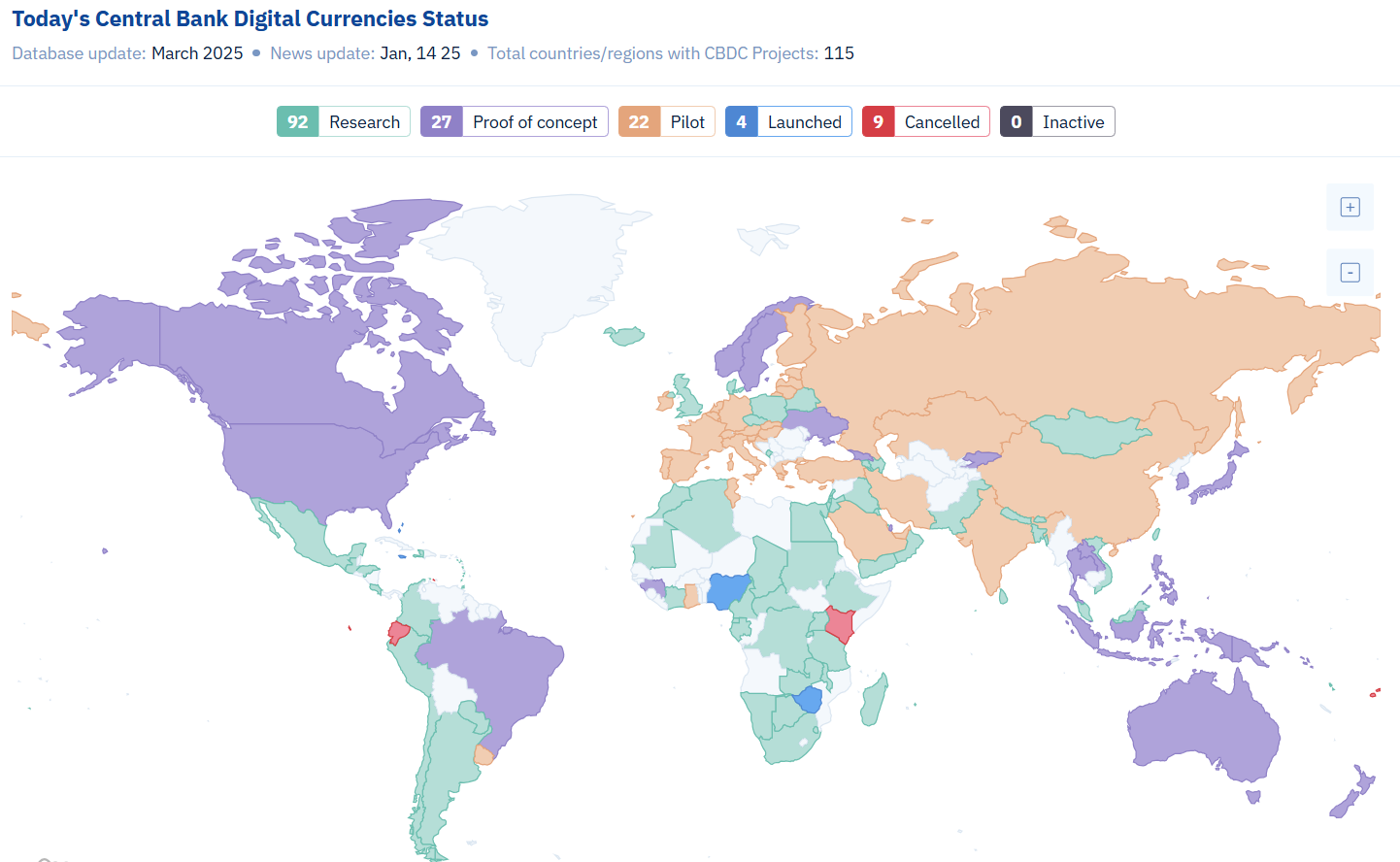
According to recent data, over 130 countries representing 98% of global GDP are now exploring CBDCs in some form, including pilots, development, or research (albeit few have fully adopted them). This rise reflects both technological momentum and regulatory intent to reclaim control over digital currency ecosystems, especially as private stablecoins and decentralised crypto assets have proliferated.
The main differences between CBDCs and cryptocurrencies
Stability and trust
While cryptocurrencies like Bitcoin or Ethereum operate in highly volatile and speculative environments, CBDCs are anchored to fiat currencies and issued by central banks. This offers higher value stability and institutional backing, reducing the risk profile for users.
Design and oversight
CBDCs are programmable but centrally managed. Governments can impose compliance measures and offer consumer protection in ways decentralised crypto systems cannot. Moreover, unlike crypto assets, CBDCs are not mined or privately issued, ensuring state control over monetary supply and transaction oversight.
Kar Yong Ang, financial market analyst at Octa, notes: ‘CBDCs offer a new model of digital liquidity—blending state trust and legal tender with tech efficiency. For traders, this opens doors to a more secure and transparent digital finance ecosystem.’
The global race to develop CBDCs and the drivers behind it
Here are three key reasons why central banks invest resources in CBDSs:
- The decline of cash and rise of digital payments. As societies increasingly favour digital over physical money, central banks face pressure to modernise public currency formats. In Sweden, for example, cash transactions make up less than 10% of payments. CBDCs are seen as a public alternative to private payment apps and platforms, ensuring monetary sovereignty in the digital realm.
- Controlling private stablecoin risks. Private stablecoins like USDT and USDC have raised concerns over systemic risk and shadow banking practices. A CBDC can serve as a stable counterbalance to these instruments, offering liquidity and legal clarity in fast-evolving financial markets.
- Financial inclusion and transparency. CBDCs can increase financial inclusion by offering digital wallets to unbanked populations, especially in developing economies. They also offer governments more visibility into money flows, enhancing tax collection and curbing illicit finance—though this has sparked debate around surveillance and privacy.
Pros and cons of CBDCs
CBDCs offer notable advantages: their value is typically pegged to fiat currencies, ensuring greater price stability than most cryptocurrencies. With full state backing, they function as legal tender and may include programmable features like conditional payments. For underbanked populations, they also present a path toward improved financial access.
However, concerns remain. Privacy is a major issue, as CBDCs could give governments visibility into personal transactions. They also pose cybersecurity risks, potentially becoming targets for large-scale attacks. Moreover, they could interfere with traditional monetary policy and financial market dynamics if not carefully designed. For instance, commercial banks could experience deposit runs if individuals perceive CBDCs as a safer alternative to traditional money for savings.
Real-world cases
Although the majority of countries still research CBDC and their application in the economy, some have already implemented them.
- Bahamas. The Sand Dollar became the first nationwide CBDC in 2020. It now serves all islands through a network of mobile-based wallets.
- Nigeria. The eNaira, launched in 2021, has seen a slow adoption of less than 0.5% as of 2025. The government continues to offer incentives to boost usage.
- China. The e-CNY has been piloted in over 25 cities and integrated into public transit and e-commerce platforms. Its scale makes it the most advanced major-economy CBDC.
Looking ahead: the road to adoption
While CBDCs promise greater efficiency and offer more tools for governments to implement social objectives, they also pose new governance challenges. To thrive, states will have to balance innovation with civil liberties, infrastructure resilience, and global interoperability. As the world of digital currencies continues to develop, CBDCs are increasingly important for progressive traders to grasp. Keeping up with developments can give a vital advantage in understanding the future of money.
___
Disclaimer: This content is for general informational purposes only and does not constitute investment advice, a recommendation, or an offer to engage in any investment activity. It does not take into account your investment objectives, financial situation, or individual needs. Any action you take based on this content is at your sole discretion and risk. Octa and its affiliates accept no liability for any losses or consequences resulting from reliance on this material.
Trading involves risks and may not be suitable for all investors. Use your expertise wisely and evaluate all associated risks before making an investment decision. Past performance is not a reliable indicator of future results.
Availability of products and services may vary by jurisdiction. Please ensure compliance with your local laws before accessing them.
Hashtag: #Octa
The issuer is solely responsible for the content of this announcement.
Octa
Octa is an international CFD broker that has been providing online trading services worldwide since 2011. It offers commission-free access to financial markets and various services used by clients from 180 countries who have opened more than 52 million trading accounts. To help its clients reach their investment goals, Octa offers free educational webinars, articles, and analytical tools.
The company is involved in a comprehensive network of charitable and humanitarian initiatives, including the improvement of educational infrastructure and short-notice relief projects supporting local communities.
In Southeast Asia, Octa received the ‘Best Trading Platform Malaysia 2024’ and the ‘Most Reliable Broker Asia 2023’ awards from Brands and Business Magazine and International Global Forex Awards, respectively.
Media OutReach
ZenaTech Expands AI Drone Commercialisation as DaaS Contributes 93% of Q1 Revenue
Through DaaS, enterprise customers can access drone equipment, trained personnel, mission execution, data collection and project deliverables without purchasing and maintaining a complete in-house drone system. The model extends ZenaTech’s business beyond equipment sales and enables the company to generate recurring service revenue from customers’ operational requirements.
ZenaTech reported revenue of CAD 8.4 million for the first quarter of 2026, an increase of 640% from CAD 1.13 million in the same period of 2025. DaaS contributed approximately CAD 7.8 million, accounting for around 93% of quarterly revenue.
In 2025, the company generated annual revenue of CAD 12.9 million, up 558% from approximately CAD 2 million in 2024. DaaS contributed approximately CAD 10.1 million during its first full year of operations, representing around 78% of total annual revenue.
Acquisitions Support Service Network Expansion
ZenaTech has expanded its DaaS operations through a combination of internal technology development and acquisitions. The acquired businesses bring existing customers, professional teams and local operating capabilities, while ZenaTech gradually introduces drones, automated data collection and AI-supported analytics into selected workflows.
In 2025, the company completed 20 acquisitions, including 19 businesses providing engineering data, facility inspection and related professional services, as well as one enterprise software company.
By June 2026, ZenaTech had completed its 24th DaaS-related acquisition and expanded its services into property cleaning, facility inspection and maintenance.
Through its ZenaDrone subsidiary, ZenaTech has also developed drone products for indoor and outdoor operations. The IQ Quad supports site data collection, engineering imagery and 3D modelling, while the IQ Nano uses barcode and RFID scanning to support inventory records, shelf inspections and indoor data collection.
The company’s reported revenue growth, acquisition activity and DaaS contribution provide investors following the AI and drone sectors with measurable indicators of how its technologies are being integrated into commercial operations and converted into service revenue.
Hashtag: #ZenaTech
The issuer is solely responsible for the content of this announcement.
About ZenaTech
ZenaTech (Nasdaq: ZENA) is a technology company specialising in AI-powered drones, Drone-as-a-Service (DaaS), enterprise SaaS solutions and related technologies. Through its ZenaDrone subsidiary, the company develops drone products and software for commercial applications including engineering data collection, agriculture, warehouse management, facility inspection and property maintenance. ZenaTech combines its technology capabilities with a growing professional service network to support the adoption of drone-based solutions across a range of operational environments.
Media OutReach
A Defining Milestone for Gene Solutions: SPOT-MAS Multi-Cancer Screening Test Receives U.S. FDA Breakthrough Device Designation
The proposed indications for use describe SPOT-MAS 10 as a qualitative in vitro diagnostic test performed on plasma derived from a single direct-draw venous whole blood specimen. The test analyzes circulating cell-free DNA methylation and fragmentomic signatures using a machine-learning-based algorithm to detect a cancer-associated signal. It is intended for use as an adjunctive screening test in asymptomatic adults aged 40 years and older to assist in detecting cancers within the scope of the assay. These include five common cancers — breast, lung, liver, colorectal and gastric cancers — and five aggressive, less common cancers that currently lack standard screening methods — ovarian, pancreatic, esophageal, endometrial and head & neck cancers.
SPOT-MAS has been developed through years of rigorous scientific research and clinical development. In March 2025, SPOT-MAS became the first multi-cancer screening blood test in Asia to complete a large prospective cohort validation, with the K-DETEK study evaluating more than 9,000 asymptomatic participants and demonstrating strong performance, including high specificity and the ability to identify cancer-associated signals across multiple cancer types.
Since then, SPOT-MAS has been used in more than 100,000 individuals in real-world practice, with consistent performance observed beyond controlled study settings. Real-world data were presented at ESMO Asia 2025 and were featured at ASCO Breakthrough 2026 in Singapore.
The platform is built on a multi-omic approach— integrating genetics, epigenetics, and fragmentomics — together with AI-driven analysis, large-scale prospective validation, growing real-world evidence and focus on cancer types with high clinical relevance in the regions where the test is deployed.
For the United States, Breakthrough Device Designation provides Gene Solutions with a prioritized channel of engagement with the FDA as the company advances its U.S. development and validation plans.
Looking ahead, Gene Solutions will continue to collaborate with academic, clinical, laboratory, commercial and strategic partners to support responsible adoption of SPOT-MAS in accordance with local regulations, clinical guidelines and best practices.
Important Regulatory Notice: SPOT-MAS 10 has received U.S. FDA Breakthrough Device Designation. Breakthrough Device Designation is not FDA approval, clearance or marketing authorization. The device remains subject to applicable FDA regulatory review requirements, and the designation does not guarantee future FDA approval, clearance or authorization.
For more information, visit https://spotmas.com.hk
Contact:
hk***@***********ns.com
Source: Gene Solutions Hong Kong Limited.
SPOTMAS_062026_04
Hashtag: #SPOTMAS
The issuer is solely responsible for the content of this announcement.
Media OutReach
St Francis Methodist School International Shares 2023–2024 WACE Outcomes and Student Journeys
Overview of the WACE Curriculum at SFMS
SFMS International is among a small number of institutions in Singapore offering the WACE curriculum and has delivered this programme for over 23 years. The WACE is a recognised senior secondary qualification awarded by the School Curriculum and Standards Authority (SCSA) on behalf of the Ministry of Education, Western Australia. It prepares students for university admission both locally and internationally.
SFMS is also currently the only school in Singapore offering a Senior High Preparatory Pathway (WACE) for students in Years 9–10. This introduces students to the structure and expectations of the curriculum earlier, building familiarity with subject content and assessment formats before progressing to the senior years. Additionally, subject selection in Years 11A and 12A is structured to meet university entry requirements and reflect students’ academic interests.
Academic Outcomes and University Placements
In 2023, 8 out of 12 WACE graduates from SFMS International achieved ATAR scores above 90, meeting the eligibility criteria for universities such as the National University of Singapore (NUS) and Nanyang Technological University (NTU). The cohort’s top scorer, Wang Dawei, recorded an ATAR of 96.15 and enrolled at NTU to study Business and International Trading. In addition to local placements, graduates were admitted to international universities such as the University of Melbourne and Fudan University in China.
In 2024, 2 out of 8 graduates also attained ATAR scores above 90. The highest scorer, Youn Chae-Won, achieved an ATAR of 95.3. Her university placement is currently pending.
Student Journeys and Holistic Development
Students in the WACE programme at SFMS International engage in both academic and co-curricular activities as part of their overall learning experience. Recent graduates have taken part in service learning, subject specialisation, and personal reflection throughout their time in the pre-university programme.
Youn Chae-Won, the 2024 valedictorian, joined SFMS International from Korea in 2021. Over time, she adjusted to a new academic environment and explored subjects such as accounting, which influenced her interest in finance-related pathways. She also took part in various aspects of school life, including a service learning trip to Bintan in 2023, where students supported local sanitation efforts. Her involvement in both academic and co-curricular settings marked a broad engagement with school life during her time at SFMS.
Andrew Zhuang, who enrolled in SFMS International in 2019, pursued subjects such as Business Management, Accounting, and English as an Additional Language (EALD). Beyond academics, he was involved in community fundraising and joined the same Bintan service trip. He also attended weekly chapel sessions and received support from peers and teachers during a period of health-related absence.
These outcomes reflect the ongoing role of the WACE programme at SFMS International in supporting students through both academic pathways and broader educational experiences. Under the leadership of Principal Mr Lee Hak Boon, the school continues to emphasise academic planning, subject selection, and student wellbeing as part of its overall approach to pre-university education.
Hashtag: #StFrancisMethodistSchoolInternational
https://www.sfms.edu.sg/
https://www.facebook.com/sfms.singapore
https://www.instagram.com/sfms_sg/
https://www.youtube.com/channel/UC_bb9hcNhAk7WgYBE_FI61A/featured
The issuer is solely responsible for the content of this announcement.
About St Francis Methodist School International
Established in 1960, St Francis Methodist School International (SFMS) is an educational institution in Singapore that offers primary, secondary, and pre-university programmes. The school provides several academic pathways, including the International Baccalaureate (IB), Cambridge IGCSE, and the Western Australian Certificate of Education (WACE), preparing students for further studies in local and overseas institutions.