Media OutReach
Save the Children Hong Kong’s Play to Thrive: Prioritising Personal Growth Over Competitive Success
World Cup Fever Returns: Learning Emotional Management on the Pitch
HONG KONG SAR – Media OutReach Newswire – 30 June 2026 – The four-yearly World Cup is in full swing, and the football fever once again sweeps the globe. The pitch has long been known as a “proving ground” for heroes; even for world-class players with years of experience, the joy of scoring a goal is often balanced by the sight of others in tears, frustrated by a defeat. The prowess of these players will be etched into the hearts of countless children, inspiring a lifelong love for the sport.
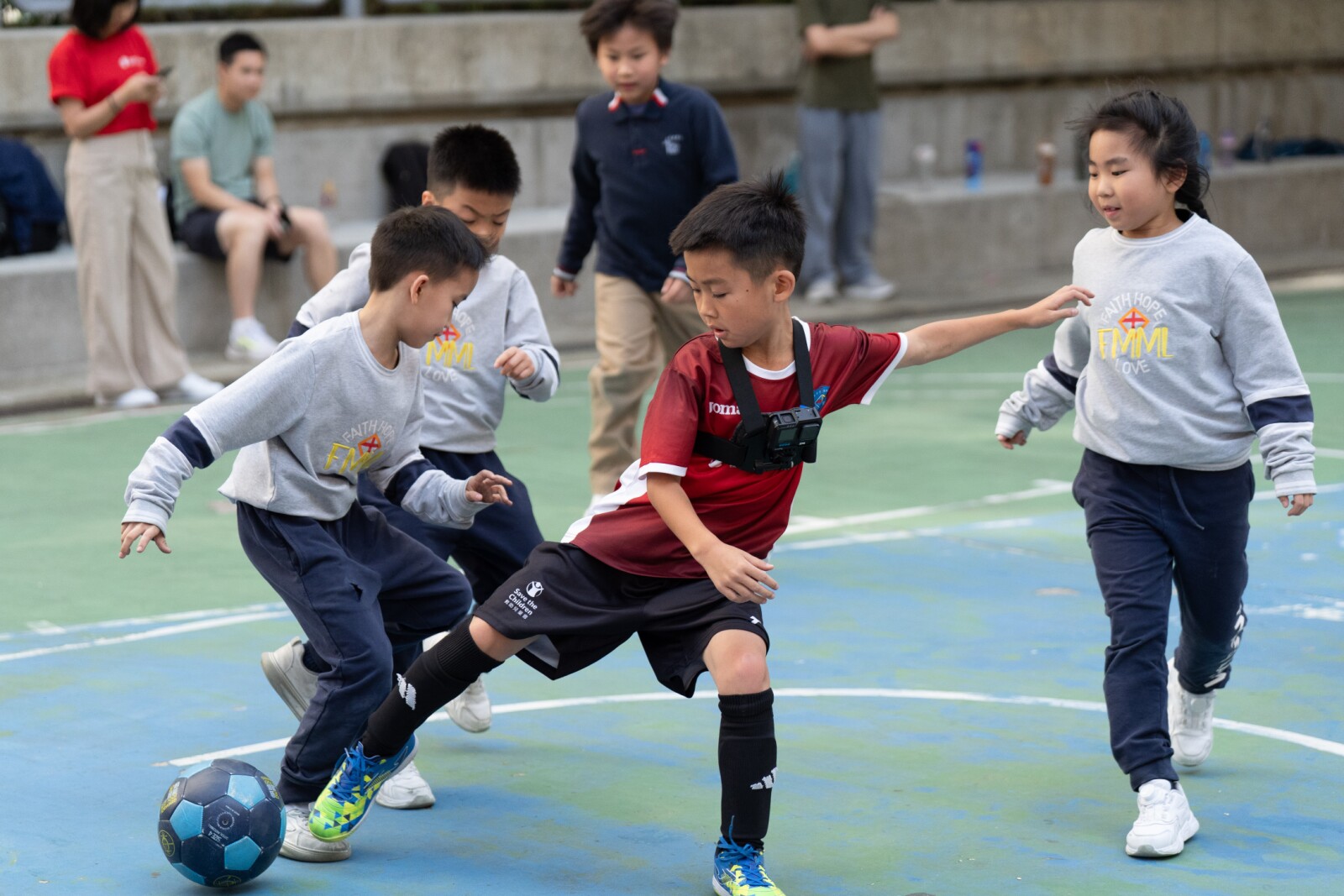
Save the Children Hong Kong firmly believes that the football pitch is more than just a venue for competition—it is an ideal classroom for Social-emotional Learning. For eight-year-old Kai-long, the setbacks and failures experienced on the pitch have proven far more vital to his personal growth than mastering technical skills or perfecting “step-overs”.
The Play to Thrive programme empowers children to master emotional management and communication skills while staying active in sports. Compared to a “Zidane turn”, these are the skills that will truly serve them for a lifetime.
On the training ground, eight-year-old Kai-long’s skills are clearly “a cut above the rest”. From the way he carries the ball to the power of his strikes, he already carries himself like a mini professional. During internal matches, he frequently finds the back of the net, scoring multiple goals for his side.
However, the moments that truly bring a smile of approval to the coaches and teachers are not Kai-long’s technical displays, but his small yet heart-warming gestures. For instance, he is seen helping teammates by steadying the inflatable goalposts during shooting drills. Even when knocked down during a match, if the coach does not blow for a foul, Kai-long doesn’t complain; he simply brushes it off with a smile and gets straight back to chasing the ball.
When Excellence Becomes a Burden: Children Trapped by the Need to Win
“He has a personality that tends to be quite fixated on winning and losing. Because of his own performance, or because his classmates’ performance didn’t meet his expectations, he would sometimes experience emotional ups and downs,” explains Mr. Lui, the PE teacher. He admits that while Kai-long’s football skills are outstanding, his stubborn nature previously caused friction with teammates and classmates. Mr. Lui noted that since Kai-long was already a member of the school’s reserve team, he recommended him for the Play to Thrive programme not to “learn football”, but in the hope that he would learn how to get along with others.
Consequently, what moved Mr. Lui the most was not Kai-long’s “goal-scoring show”, but his reaction during a match when other students deliberately moved the inflatable goalposts. Instead of complaining or losing his temper as he might have done in the past, Kai-long continued to play with a smile on his face. “Previously, he might have called it unfair or had an emotional outburst, but today he didn’t complain; he even found it quite funny. He is no longer fixated on winning or losing.”
In the eyes of his father, Chung, Kai-long has been a child with extremely high expectations of himself and a drive for perfection since he was young. “Whether it is schoolwork or his behaviour, he hopes to be a good role model and be very well-behaved.” However, Chung also mentioned that this perfectionist streak serves as a source of pressure for Kai-long.
Interpersonal Skills Are More Important Than Footballing Ability
Chung admits that Kai-long used to be very fixated on winning and losing: “In the past, if he lost a game of football against his elder brother, he would be resentful; when he was younger, he even tried to hit him.” While it is natural to crave goals and seek victory on the pitch, Chung also believes that how one treats others and interacts with peers is a vital part of growing up, which is why he enrolled Kai-long in Play to Thrive.
“Football is a natural educational tool,” says Ms. Wong Shek Hung, Director of Hong Kong Programmes at Save the Children Hong Kong. She explains that experiencing victory, defeat, and frustration is inevitable in sports, providing the perfect opportunity for children to learn emotional management. She adds that Play to Thrive originated from a community football programme developed by Save the Children UK for children in Jordan and Indonesia.
The core of the programme lies in integrating Social-emotional Learning into football training to help children build five core competencies: self-awareness, self-management, social awareness, relationship skills, and responsible decision-making. Furthermore, the programme is open to all children regardless of gender, ethnicity, or background, allowing them to master self-awareness, emotional regulation, and team communication skills within a diverse and inclusive environment.
No Ordinary Football Training
As this is unlike conventional football training, every coach is required to undergo professional training covering “Child Safeguarding” and emotional support knowledge. Ms. Wong Shek Hung notes that during the “debriefing” session at the end of each practice, coaches guide the children to reflect on their experiences on the pitch, attempting to translate these moments into emotional literacy. The ultimate goal is “to let children learn how to become ‘masters of their own emotions’.”
Demonstrating Personal Growth and Cultivating Leadership Skills
Mr. Lui noticed that after joining the programme, Kai-long not only showed progress in his personal emotional management but also learned how to consider things from others’ perspectives. During PE lessons, Kai-long has become more willing to take the initiative to help his classmates and has learned to accept teammates with different abilities, even proactively coaching others. “He gets along with his classmates much more harmoniously now; the barriers that existed before have disappeared,” Mr. Lui remarked. He further revealed that Kai-long’s form teacher, having observed this growth, officially appointed him as a class monitor for the second term.
His father, Chung, observed that since joining the programme, Kai-long has demonstrated a level of resilience rarely seen before. He recalled a match where Kai-long served as both captain and goalkeeper; even when facing conceded goals and falling behind, “his first instinct wasn’t to feel discouraged, but rather to keep encouraging his teammates from the back to keep running and keep attacking.”
Ms. Wong Shek Hung reaffirmed that this is precisely the philosophy of Play to Thrive: “We emphasise ‘Football Second, Growth First’, ensuring that even if children lose a match, they learn to handle their emotions, communicate, and cooperate throughout the process.”
Building Resilience: Transforming Lives Through Football
Ms. Kalina Tsang, CEO of Save the Children Hong Kong, stated that she has always believed football is a powerful tool for building resilience in children: “We have always been concerned about children’s physical and mental well-being. Football is more than just a sport; beyond honing technical skills, it can be used to build a child’s resilience. By combining football training with Social-emotional Learning, and under the guidance of professionally trained coaches, Play to Thrive ensures that the sweat shed by children on the pitch is transformed into self-awareness and emotional management skills.” Ms. Tsang also noted that Kai-long’s growth perfectly embodies the programme’s success. She said, “We are deeply gratified to see Kai-long progress from initial emotional fluctuations to confidently cooperating with teammates and facing victory or defeat positively—improving both on a personal level and in his interactions with peers.”
As for Kai-long himself, it is difficult for an eight-year-old to describe his transformation in detail. But when asked what was different about him, he said with an innocent smile, “I used to blame my teammates for not passing the ball, but now I’ve learned not to. I tell them: ‘It’s okay, pass it again next time. We’ll win the ball back together.'”
Launched in Hong Kong in 2023, the Play to Thrive programme is a service that integrates Social-emotional Learning with football training. It aims to create a safe and supportive space for schoolchildren, promoting their physical, social, and mental health through sport. The programme currently operates across various districts in Hong Kong, including community teams in areas such as Sham Shui Po and Tin Shui Wai. The school-based project collaborates with over 30 primary schools across the territory, integrating football training into school life to help students recognise and manage their emotions, build healthy interpersonal relationships, and enhance their confidence and resilience. In response to the current situation where up to 39% of primary and secondary students in Hong Kong face mental health challenges, the programme places special emphasis on SEL to help children master effective communication and emotional management both on and off the pitch.
In 2025 alone, the community and school projects of Play to Thrive held a total of 744 training sessions, with total service hours exceeding 1,000 hours. The programme reached 1,120 children and their families across Hong Kong, establishing close partnerships with 32 schools and 4 non-profit organisations. In terms of impact assessment, participant satisfaction was high, with satisfaction rates for the community and school projects reaching 80% and 75%, respectively.
Interview Video: https://savethechildren.click/PTT-KaiLong-Video-2026
Hashtag: #SavetheChildrenHongKong #香港救助兒童會 #mentalhealth #精神健康 #football #足球 #WorldCup #世界盃
https://savethechildren.org.hk/en/
https://www.linkedin.com/company/save-the-children-hong-kong
https://www.facebook.com/savethechildrenhk
https://www.instagram.com/savethechildrenhk/
YouTube:
https://www.youtube.com/user/savehk
The issuer is solely responsible for the content of this announcement.
Save the Children Hong Kong
Save the Children believes every child deserves a future. In Hong Kong and around the world, we do whatever it takes – every day and in times of crisis – so children can fulfil their rights to a healthy start in life, the opportunity to learn and protection from harm. With over 100 years of expertise, we are the world’s first and leading independent children’s organisation – transforming lives and future.
Established in 2009, Save the Children Hong Kong is part of the global movement which operates in around 100 countries. We work with children, families, schools, communities and our supporters to deliver lasting change for children in Hong Kong and around the world.
Media OutReach
Skyro Rolls Out Reusable Digital Credit Across the Philippines, Explores Opportunities in Southeast Asian Markets
SkyroCredit is a reusable, revolving digital credit line that provides access to a fixed credit limit without a plastic and without relying on the Visa or Mastercard networks. Once approved, a customer’s credit is available within the Skyro app and can be used instantly by scanning any QR Ph code, the Philippine QR payment standard accepted at more than 90% of merchant outlets nationwide. Leading merchants include SM, Mercury Drug, Watsons, Jollibee, McDonald’s, and DALI Supermarket. Customers can borrow, repay the amount they have used, and reuse the same credit limit without reapplying.
NasimAliev, Skyro co-founder, said:
“Our goal is to provide access to affordable credit for underserved communities across Southeast Asia at a time when everyday expenses continue to rise and consumers’ financial priorities are evolving.
“Today’s consumers need financial solutions built around real-life spending needs and changing financial priorities. With SkyroCredit, we bring flexible financial solutions to our customers’ fingertips. The credit line offers all the benefits of flexibility, including an interest-free grace period. This provides customers with maximum convenience for everyday use while even allowing them to save money through cashback.
“By expanding our portfolio of point-of-sale loans, cash loans, and Buy Now, Pay Later (BNPL) products to include flexible credit lines, we are building long-term customer relationships based on everyday use, responsible borrowing, and trust.”
Eligible customers receive initial credit limits of PHP 1,000 to PHP 10,000 (approximately USD 17 to USD 170), with the opportunity to increase their limit to as much as PHP 100,000 through regular, responsible use. Purchases carry 0% interest for up to 45 days. Every purchase also earns 1% cashback, which customers can redeem on future purchases through the app.
Skyro’s expansion into reusable digital credit addresses one of Southeast Asia’s largest financial inclusion opportunities by enabling sustained customer engagement. According to the Bangko Sentral ng Pilipinas, the central bank of the Philippines, only half of Filipino adults have a formal financial account. As QR-based payment networks continue to expand across the region, Skyro can leverage this infrastructure to deliver accessible digital credit products that meet growing consumer demand.
Hashtag: #Skyro #SkyroCredit #DigitalCredit
The issuer is solely responsible for the content of this announcement.
About Skyro
Skyro is a high-growth, digital-first fintech group delivering scalable, responsible access to financial services across high-potential emerging markets. Powered by proprietary data science, AI-driven credit decisioning and alternative data scoring, the company combines a mobile-native experience with modular fintech architecture to serve underserved customer segments at scale.
In just three years, Skyro has grown to serve over one million active customers in the Philippines, underpinned by a robust credit portfolio exceeding $200 million. The company’s strategic ambition is to establish itself as the preeminent full-spectrum financial services group across dozens of emerging markets worldwide.
Media OutReach
Peach Garden Celebrates Mid-Autumn Festival with Singapore Flyer-Inspired Mooncake Keepsake Gift Set
The Singapore Flyer design roots the collection in a recognisably local identity, with the launch timed to the National Day period as the city moves into the traditional Mid-Autumn Festival gifting and reunion season. Pre-orders open from 13 July to 10 August at $61 nett inclusive of GST (usual price: $91.11).
A Keepsake Built Around the Singapore Skyline
Designed around a circular silhouette that echoes the Singapore Flyer’s iconic form, the Graceful Showstopper is crafted to hold its place in a home well beyond the festival.
Rooted in a recognisably Singaporean aesthetic, it functions as a decorative display piece as much as a festive gift, whether set out for a family gathering, presented to a business client, or kept as a personal memento of the season. Logo customisations are available on corporate orders of 50 boxes or more.
Handmade Daily, in a Range Built for Modern Palates
Returning alongside the centrepiece is Peach Garden’s low-sugar mooncake range, available in baked and snowskin varieties. The Deluxe Combination of Four spans four flavours across eight miniature pieces:
- Mini Lemon Yuzu Snowskin
- Mini Pandan Lotus Snowskin with Melon Seed
- Mini Low Sugar White Lotus Snowskin with Macadamia
- Mini Lychee Snowskin with Lychee Martini Truffle
Every mooncake in the range is handmade fresh daily across Peach Garden’s six outlets, a practice the group has maintained amidst an industry where production has shifted increasingly toward automation.
The collection will be available at more than 20 festive kiosks across Singapore for the first time, including Takashimaya from 20 August and VivoCity from 25 August, both through 25 September. Collection is available from 11 August to 25 September at all six Peach Garden outlets, from 11am to 3pm and 6pm to 10pm.
Hashtag: #PeachGarden #GracefulShowstopper #MoonCakeFestival #MidAutumnFestival
https://www.peachgarden.com.sg/
https://www.linkedin.com/company/peach-garden/
https://www.facebook.com/peachgardensg
https://www.instagram.com/Peachgardensg
https://www.instagram.com/peachgardencelebrations/
The issuer is solely responsible for the content of this announcement.
About Peach Garden
Peach Garden is one of Singapore’s leading Chinese restaurant brands, renowned for its contemporary Chinese cuisine, exceptional hospitality, and award-winning festive creations. With six outlets across Singapore, the brand continues to bring families, friends, and businesses together through meaningful dining and gifting experiences.
Media OutReach
Rethinking Urban Development: Vietnamese Developers Shaping Future Cities
For much of the past century, urban development followed a relatively straightforward equation: build housing, expand infrastructure and accommodate population growth. This formula is now showing its limitations. As climate risk intensifies, biodiversity declines and cities compete not only for investment but also for talent, developers around the world are now forced to redefine the very nature and purpose of what they build.
From the Gulf to Singapore, and from Scandinavia to Southeast Asia, large-scale urban projects are evolving into integrated ecosystems where mobility, green infrastructure, education, healthcare, digital services and environmental restoration are planned together. The industry paradigm has shifted from constructing buildings to designing places capable of sustaining both economic growth and quality of life over generations.
Vinhomes has initiated a comprehensive repositioning to navigate this global transition.
Known as Vietnam’s largest residential developer, the company is increasingly recognized not merely as a builder of housing projects, but as a creator of large-scale lifestyle ecosystems, communities where urban planning, technology, ecology and public services are conceived as parts of the same system.
When Nature Becomes Urban Infrastructure
For decades, environmental considerations were often introduced after a city’s masterplan had already been completed.
The emerging model reverses that sequence. Across many of its recent developments, Vinhomes operates on the principle that natural systems should become the starting point of planning. Hydrology, coastal conditions, biodiversity and existing vegetation are treated as design inputs that shape the urban layout from the earliest stages.
This philosophy marks a notable departure from conventional large-scale development, particularly in rapidly urbanising markets where natural landscapes have frequently given way to intensive construction.
With more than 30 developments across Vietnam and a land bank equivalent to roughly two-thirds the size of Singapore, Vinhomes has the unusual opportunity to test this planning approach at a metropolitan scale.
Rather than replicating identical urban formulas, each project is designed around the ecological characteristics of its location.
The company maintains that the long-term success of a city should ultimately be measured not by how much has been built, but by whether natural ecosystems continue to thrive decades after residents have moved in. That perspective aligns with an increasingly influential school of urban planning in which green infrastructure is viewed as essential public infrastructure.
Factors Compelling Cities Toward Regeneration
Environmental, Social and Governance (ESG) frameworks have become standard across global investment. Urban planners, however, are beginning to question whether sustainability alone is sufficient.
Maintaining today’s environmental conditions may no longer be enough if tomorrow’s cities must also respond to rising temperatures, sea-level change and growing demographic pressures.
Vinhomes’ strategic response is crystallized in its ESG++, a framework that extends beyond conventional ESG principles by introducing two additional objectives: Regeneration and resilience.
The distinction is subtle but important.
Regeneration implies restoring ecological systems rather than simply reducing environmental impact. Resilience focuses on designing cities capable of adapting to changing climatic, technological and social conditions over many decades.
Projects such as Vinhomes Green Paradise Can Gio and Vinhomes Global Gates Ha Long are intended to demonstrate how these concepts can be incorporated into large-scale urban planning, combining renewable energy, smart infrastructure and ecological restoration within a single development model.
This shift highlights a growing global consensus: the success of next-generation cities will ultimately be measured by their ability to adapt to increasingly complex environmental challenges.
Vietnam’s Urban Story Is Becoming Part of a Global Conversation
For many international audiences, Vietnam remains associated primarily with its cultural heritage and natural landscapes. Urban development may become an equally important part of that story.
Rapid urbanisation, expanding infrastructure investment and a national commitment to achieve net-zero emissions by 2050 have created conditions in which entirely new urban models can be planned without many of the legacy constraints facing older cities.
This developmental opportunity is capturing increasing global interest.
Commenting on Vinhomes Green Paradise’s participation in the global 7 Wonders of Future Cities initiative, Jean-Paul de la Fuente, Director of the New7Wonders Organisation, described Vietnam as undergoing a “transformative step change” in its national identity and global positioning. He pointed to the country’s progress in reducing the carbon footprint of urban mobility as an example of coordinated action between government and the private sector that offers valuable insights extending beyond Southeast Asia.
For Vinhomes, participation in international platforms such as 7 Wonders of Future Cities is therefore less about showcasing a single project than about contributing to a broader discussion on how rapidly developing economies might approach urban growth differently. The company’s evolution mirrors a wider shift taking place across the global property sector.
Increasingly, the core value proposition for developers is no longer anchored in how many buildings they can deliver. Instead, it centers on whether they can create cities that remain economically competitive, environmentally resilient and socially relevant long after construction has ended.
Hashtag: #Vinhomes
The issuer is solely responsible for the content of this announcement.