Media OutReach
Small Chinese city reaps global success with sunflowers
The title reflects not only his passion for the crunchy snack but also his remarkable achievement in transforming locally grown sunflower kernels into a global commodity, with markets spanning the Republic of Korea, Egypt and Germany.
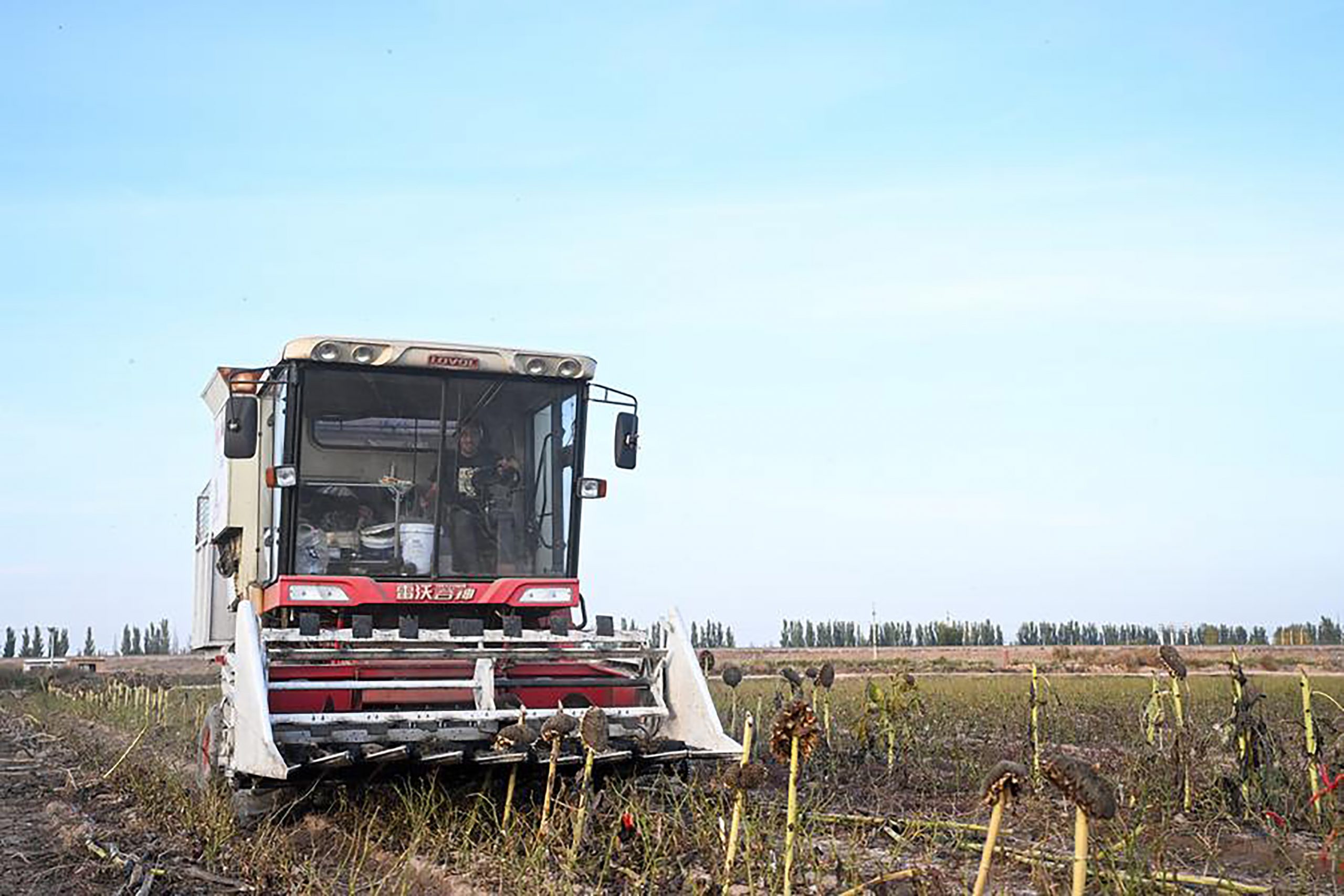
If you enjoy eating sunflower seeds, there’s a good chance they originated from the saline-alkali fields of Bayannur – China’s largest base for edible sunflower production. In 2024 alone, the region produced more than 940,000 tonnes of sunflowers, with exports spanning over 40 countries and regions.
Wang is one of the local farmers who have leveraged the booming sunflower industry to become a successful entrepreneur.
BOOMING INDUSTRY, CHALLENGING LAND
Located in the Inner Mongolia Autonomous Region, Bayannur was once burdened by nearly 4.8 million mu (320,000 hectares) of saline-alkali land, where traditional crops like wheat and corn struggled to grow.
The introduction of sunflowers in the 1970s marked a turning point for the city with a permanent population of 1.5 million.
With its distinct seasons, abundant sunshine, vast plains and ample water resources, Bayannur offered an environment strikingly similar to the sunflower’s native habitat in North America, making it an ideal setting for this resilient crop, according to Zhang Ruhong, vice mayor of Bayannur.
In the 1980s, Wang began cultivating sunflowers on his family’s saline-alkali land. “They are resistant to salt and alkali, drought-tolerant and easy to grow,” he said.
By 2024, Bayannur had expanded its sunflower planting area to 4.4 million mu, nearly half of the country’s total. The city’s sunflower industry has flourished into a comprehensive value chain, encompassing seed sales, cultivation, processing, exports, e-commerce logistics and even tourism.
Sunflowers are the world’s fourth-largest oilseed crop, following soybeans, rapeseed and peanuts, said Zhang Haiyang, an oilseed industry expert.
He noted that sunflowers have gained prominence as a key specialty oilseed crop in China, particularly in northern regions, thanks to their high nutritional and aesthetic value.
The sunflower seed market was valued at 32.3 billion U.S. dollars in 2023 and is projected to grow at a compound annual growth rate of around 9.4 percent between 2024 and 2032, according to Global Market Insights, a market research and management consulting firm.
To take Bayannur’s sunflower industry to new heights, local agricultural scientists have successfully introduced high-quality seed varieties, including SH361 and SH363, as well as a resistant strain specially designed to combat broomrape, a parasitic plant that has long plagued sunflower production globally.
TINY SEEDS, BIG JOURNEY
In the run-up to the Spring Festival, the factories of Bayannur buzzed with activity as machines roared and workers hustled to sort sunflower seeds for export.
“We were extremely busy before the holiday, as we wanted to complete and ship all orders abroad,” said Zhao Lei, general manager of Bayannur Rong Da Co., Ltd. “Our sunflower seeds have seen strong overseas demand last year, with exports reaching 35,000 tonnes.”
Across China, many regions have cultivated industries tailored to their unique local conditions. For instance, oranges from Ganzhou in Jiangxi Province and strawberries from Dandong in Liaoning Province have become key drivers of social and economic development.
Bayannur has also leveraged its local strengths, establishing 120 leading sunflower processing enterprises to seize market opportunities.
Wang Fei, who began trading sunflower seeds domestically in 1987, ventured into the international market in 2012. Last year, his company, Mintai Agricultural Trading Co., Ltd., recorded operating revenues exceeding 700 million yuan (about 97.63 million U.S. dollars), with exports making up the bulk.
“In China, people love eating sunflower seeds during festivals. Foreigners share this habit as well. Holidays like Christmas mark our peak export seasons,” Wang said, adding that the holiday economy strongly stimulates consumption.
Bayannur’s sunflower seeds and kernel products now reach over 40 countries and regions in the Middle East, Southeast Asia and Europe, generating an annual export value of 4.2 billion yuan — 64 percent of the city’s total agricultural exports.
These achievements are underpinned by strong policy support. Over the past two years, Bayannur has implemented innovative strategies to promote exports, such as fostering leading companies to establish overseas warehouses, advancing cross-border e-commerce, and streamlining customs clearance processes.
Challenges like rising shipping costs, exacerbated by the Red Sea crisis, have also driven adaptability. Last year, Wang began shifting some shipments from sea to land transport, exporting sunflower seeds to Europe via China-Europe freight trains, significantly reducing costs.
“My goal this year is to expand my sunflower seed exports into the Spanish market,” he said with a smile.
Hashtag: #Bayannur
The issuer is solely responsible for the content of this announcement.
Media OutReach
Midea Hiconics Teams Up with MIA Group to Bring New Solar Tech to Pakistan
Hardware Built for Local Conditions
The company isn’t just showing off standard gear; they’ve brought systems specifically designed to handle the challenges of the local energy landscape.
- PowerX1 Hybrid Inverters: Intelligent energy management, seamlessly switching between solar, battery, and grid for stable, uninterrupted power. Supports multi-source integration and rapid power transition.
- Powerinfi All-in-one ESS: ISO 13849 PL-d and IEC 62443 certified for functional safety and cybersecurity. Features a multi-layer battery safety system within a compact design.
- Advanced Solar & System Protection: Incorporates N-type HOT3.0 solar cell technology for enhanced low-light performance. The system boasts an IP66 rating for superior dust and water resistance.
A New Partnership with MIA Group
The big news from the show floor is the new Annual Channel Distribution Strategic Partnership with MIA Group. MIA Group is already a household name in Pakistan for HVAC and energy, and this deal means they’ll be the main bridge for Midea Hiconics’ tech to reach the local market.
“We’re excited to get to work with MIA Group,” a Midea Hiconics spokesperson said. “They have the reach and the local knowledge we need. By putting our hardware in their hands, we’re making it much easier for people here to switch to reliable, clean energy without the usual headaches.”
Media Contact:
Midea Hiconics Press Office
Website: https://www.hiconics-global.com/
Location: Solar Pakistan 2026, Booth A-3-8
Hashtag: #MideaHiconics
The issuer is solely responsible for the content of this announcement.
About Midea Hiconics
Midea Hiconics (SHE: 300048) has been around since 2003 and joined the Midea Group in 2020. They focus on green energy, home storage, and industrial tech, building smart tools that help people take control of their own power.
Check out https://www.hiconics-global.com/ for more info.
Media OutReach
Green SM And Umoney Partner To Build An Integrated Mobility And Digital Finance Ecosystem In Laos
Under the agreement, Umoney will be integrated as a direct payment method within the Green SM app. The two parties will also implement an embedded integration model enabling Umoney users to seamlessly access Green SM’s mobility services directly within the Umoney platform.
For the first time in Laos, customers will experience a fully seamless ride-hailing journey with fares processed instantly via the Umoney e-wallet upon trip completion, replacing the previously common manual bank transfer method. Users simply link their Umoney wallet to the Green SM app for fast, convenient, and fully cashless transactions. Additionally, customers using partner banking applications can pay drivers through Umoney’s QR system, delivering a flexible, fast, and secure payment experience that enhances user convenience and broadens customer reach across both platforms.
As part of the collaboration, Green SM Laos will provide comprehensive mobility solutions for Umoney’s enterprise partners and individual customers, including Green SM Car electric ride-hailing, Green SM Limo, Green SM Airport transfer services, as well as corporate travel packages and flexible, customized mobility plans. Umoney, in turn, will collaborate with Green SM to develop digital financial and payment solutions tailored for drivers within the Green SM ecosystem, encompassing e-wallet services, direct income disbursement, operational expense payments, and cash flow management tools. This synergy is designed to optimize operational efficiency while enhancing the experience for businesses, drivers, and end-users alike.
Beyond mobility and payment solutions, both parties plan to expand their shared digital services ecosystem by integrating Umoney and Unitel’s telecommunications and digital utilities into the Green SM platform, including SIM card registration, mobile top-ups, data package purchases, and other digital services, thereby enhancing the value proposition for users across both platforms.
The two companies will also jointly roll out customer benefit programs targeting Umoney users in Laos, with a particular focus on airports, transaction points, and key high-traffic locations. Through integrated service offerings and incentives promoting electric mobility, Green SM and Umoney aim to foster environmentally responsible travel habits while delivering greater value to customers within their shared ecosystem.
Mr. Ha Chien Thang, Director of Star Fintech Sole Co., Ltd, shared:”Our partnership with Green SM marks a significant milestone in Umoney’s strategy to develop a comprehensive digital finance ecosystem in Laos. The integration of payment capabilities and digital services not only enhances user convenience but also contributes to the advancement of cashless payments and the broader digital transformation of the economy.”
Ms. Tran Hanh An, Director of Mobility Services Sales at Green SM Vietnam & Laos, stated: “The partnership between Umoney and Green SM reflects a shared commitment to connecting the essential infrastructures of modern urban life, from digital finance and telecommunications to a green mobility ecosystem. Through this collaboration, we aim to expand benefits for our customers and driver community while driving meaningful green transformation that is firmly grounded in everyday mobility and consumption needs.”
Furthermore, Green SM and Umoney will collaborate on multi-channel communications initiatives to strengthen brand awareness and expand their combined customer base. Planned activities include co-branded campaigns, promotional programs for new users, digital platform communications, and on-ground experiential activations in key markets.
The partnership between Green SM and Umoney marks a significant convergence of two leading ecosystems in green mobility and digital finance in Laos, united in their pursuit of integrated service solutions that meet the increasingly diverse demands of modern urban life. This collaboration also represents a pivotal step toward fostering innovation, elevating the user experience, and contributing to the sustainable growth of the digital economy in Laos.
Hashtag: #GreenSM
The issuer is solely responsible for the content of this announcement.

Media OutReach
HKUST and Times Higher Education Co-Host Asia Universities Summit 2026
Global Leaders Converge to Shape the Future of Higher Education in Asia
HONG KONG SAR – Media OutReach Newswire – 24 April 2026 – The Hong Kong University of Science and Technology (HKUST) and Times Higher Education (THE) co-hosted the Asia Universities Summit 2026 from April 22 to 24. Under the theme “Igniting Global Transformation: Asia’s Leadership,” the three-day premier event explores Asia’s pivotal role in reshaping global innovation and addressing pressing societal challenges through higher education.
The Summit holds particular significance as it coincides with HKUST’s 35th anniversary and marks a decade of partnership between the University and THE since the inaugural summit. This year’s event has attracted over 600 university presidents, policymakers, and industry titans from 25 countries and regions, underscoring a collective commitment to advancing the academic landscape across the continent.
The Summit officially commenced on April 22 at HKUST’s Shaw Auditorium, with the opening ceremony officiated by Dr. SZE Chun-Fai, Jeff, Acting Secretary for Education of the Hong Kong Special Administrative Region (HKSAR) Government; Prof. Nancy IP, President of HKUST; Phil BATY, Chief Global Affairs Officer, and Mei Mei LIM, President, Asia Pacific, from THE.
In her opening remarks, President Ip underscored the need for cross-border collaboration and the evolving role of universities in a rapidly changing world. She said, “As HKUST celebrates its anniversary and a decade of partnership with Times Higher Education, we gather at a defining moment for our region. Asia is increasingly shaping the direction of global innovation, talent development, and societal transformation. In this era of rapid technological advancement and constant change—from artificial intelligence to climate resilience—the challenge of progress lies in anticipating needs and shaping solutions, which calls for a fundamental rethinking of how universities lead. At HKUST, we firmly believe that no single institution can address these global challenges alone; progress will come through openness, partnership, and shared responsibility.
Hong Kong is unique in being the only city in the world with five universities ranked among the global top 100, underscoring its role as a leading international hub for exchange and innovation. Building on this strength, HKUST has initiated dialogues with the world’s leading universities and invited them to Hong Kong to explore opportunities for a university town. This Summit reflects our long‑standing commitment to bringing institutions together to exchange ideas, build meaningful collaborations, and take collective action. By convening leaders from across Asia and beyond, we aim to turn thoughtful dialogue into real impact for our communities and for society at large.”
Dr. SZE Chun-Fai, Jeff, highlighted Hong Kong’s unique position as an international education hub, stating, “Universities today are not only centers of knowledge creation but also powerful drivers of innovation, resilience, and societal impact. In an era of rapid technological advancement, higher education must translate cutting-edge research into real-world solutions that address global challenges. HKUST exemplifies this excellence and achieves remarkable rankings, with its entrepreneurial story equally unmatched, demonstrating the worldwide impact of its research discoveries. Hong Kong has long served as the world’s super-connector and super-value adder, bridging East and West. Our highly internationalized and diversified post-secondary education system positions us ideally to facilitate this convergence between global academic networks and the opportunities of the Chinese Mainland and the wider region. Education, technology, and talent form a foundational triad for success. By fostering talent attraction, interdisciplinary education, industry-academic partnerships, and research collaborations with our counterparts elsewhere, we are building a vibrant ecosystem that strengthens Hong Kong’s innovation edge, contributing to Asia as well as national development.”
Phil Baty reaffirmed THE’s enduring partnership of trust with HKUST and celebrated Asia’s rising global influence, stating, “A decade ago, right here on this stunning campus, THE launched its first-ever Asia Universities Summit. Today, we are witnessing a tilt in the balance of power in global higher education and research from the West to the East. This extraordinary trajectory is driven by Asia’s booming research productivity and global ambitions. Hong Kong, with five universities now ranked among the world’s top 100, stands at the heart of this transformation—a city which we believe will remain the flagship atop the rising tide across Asia, cementing its position as a world-leading powerhouse. New knowledge creation is not a zero-sum game, as we all gain from the leapfrogging Asian university sector. This Summit is a celebration of your excellence and the glorious diversity of our academic community.”
Following the opening ceremony, President Ip joined Prof. Martin O. BERGÖ, Vice-President of Karolinska Institutet, in a keynote fireside chat on longevity science. The discussion explored how advances in biomedicine, neuroscience, and translational research can extend both lifespan and healthspan, while contributing to resilient and equitable societies. President Ip shared insights from her pioneering neuroscience research, including the University’s efforts to decode the biological basis of healthy aging. She said, “Healthy aging is not just about adding years to life, but adding life to our years. We need a paradigm shift from reactive to proactive care. At HKUST, we are focused on monitoring risks for any diseases early and implementing preventive measures. Longevity science is about extending the ‘healthspan’ and as a university, we have much to offer through our research and collaborations. We are uniquely positioned to contribute to this field.”
A spotlight on the first day was a fireside chat between Prof. Harry SHUM, Chairman of the HKUST Council, and Judson ALTHOFF, CEO of Microsoft’s Commercial Business. The dialogue delved into the transformative power of AI across both industry and academia, discussing how universities can collaborate with global technology leaders to prepare students for an AI‑pervasive world. Emphasis was placed not only on technological capability, but also on trust, critical thinking and mindset change within institutions.
Prof. Shum underscored the importance of embracing AI across disciplines, “For our university, at this time, the number one priority is really a mindset change—to focus on AI for science, engineering, business, humanities, and medicine. AI is already here. We do not have to be afraid of this technology. It is a powerful new tool for us and a wonderful thing that we must learn and master to drive growth and innovation.”
Throughout the Summit, President Ip participated in two leadership meetings with over 15 university presidents and senior leaders from institutions across Asia, engaging in candid, strategy‑focused exchanges on shared regional challenges. One session examined how Asia’s emerging innovation corridors—from the Greater Bay Area to other fast‑growing technology belts—can redefine global technology leadership, with discussions centered on governance models and cross‑border collaboration. Another session focused on shaping next‑generation cities, exploring how universities can align research, talent development and policy engagement to support sustainable urban transformation amid rapid technological and societal change. These high-level dialogues emphasized the need for strategic alignment between academic research and regional development, reinforcing the Summit’s mission to leverage Asian leadership for global transformation through collaborative institutional design and shared expertise.
Across a series of high‑level sessions, HKUST senior leadership played an active role in shaping discussions on inclusive leadership, trusted AI in higher education, research commercialization, climate resilience, and global research collaboration. The sessions examined how universities can strengthen governance frameworks to ensure the responsible and ethical use of AI, while cultivating innovation ecosystems that translate research outcomes into socio-economic impact.
The dialogue also addressed strategies for nurturing entrepreneurship, climate‑proofing rapidly growing cities through interdisciplinary engineering approaches, and sustaining borderless research collaboration amid rising geopolitical and regulatory pressures. Collectively, these contributions highlighted HKUST’s commitment to advancing responsible innovation, international partnership, and university leadership attuned to Asia’s evolving challenges and global responsibilities.
The three-day event concluded with a closing ceremony, cementing new strategic partnerships and a shared vision for the future of higher education in the region.
Download photos here: https://hkust.edu.hk/news/hkust-and-times-higher-education-co-host-asia-universities-summit-2026
Hashtag: #HKUST
The issuer is solely responsible for the content of this announcement.

-
Feature/OPED6 years agoDavos was Different this year
-
Travel/Tourism10 years ago
Lagos Seals Western Lodge Hotel In Ikorodu
-
Showbiz3 years agoEstranged Lover Releases Videos of Empress Njamah Bathing
-
Banking8 years agoSort Codes of GTBank Branches in Nigeria
-
Economy3 years agoSubsidy Removal: CNG at N130 Per Litre Cheaper Than Petrol—IPMAN
-
Banking3 years agoSort Codes of UBA Branches in Nigeria
-
Banking3 years agoFirst Bank Announces Planned Downtime
-
Sports3 years agoHighest Paid Nigerian Footballer – How Much Do Nigerian Footballers Earn