

Connect with us

Media OutReach

Tenchijin – Japan’s Leading Satellite Tech Company to Develop its own Satellite and Launch in 2027

Published

on

“Thermo Earth of Love Project” to Enhance Surface Temperature Observation and Advance its Solutions Further

TOKYO, JAPAN – Media OutReach Newswire – 20 February 2025 – On January 27, 2025, Tenchijin announced the launch of “Thermo Earth of Love Project,” a proprietary satellite program aimed at enhancing surface temperature monitoring capabilities. The company’s satellite is scheduled for launch in 2027.

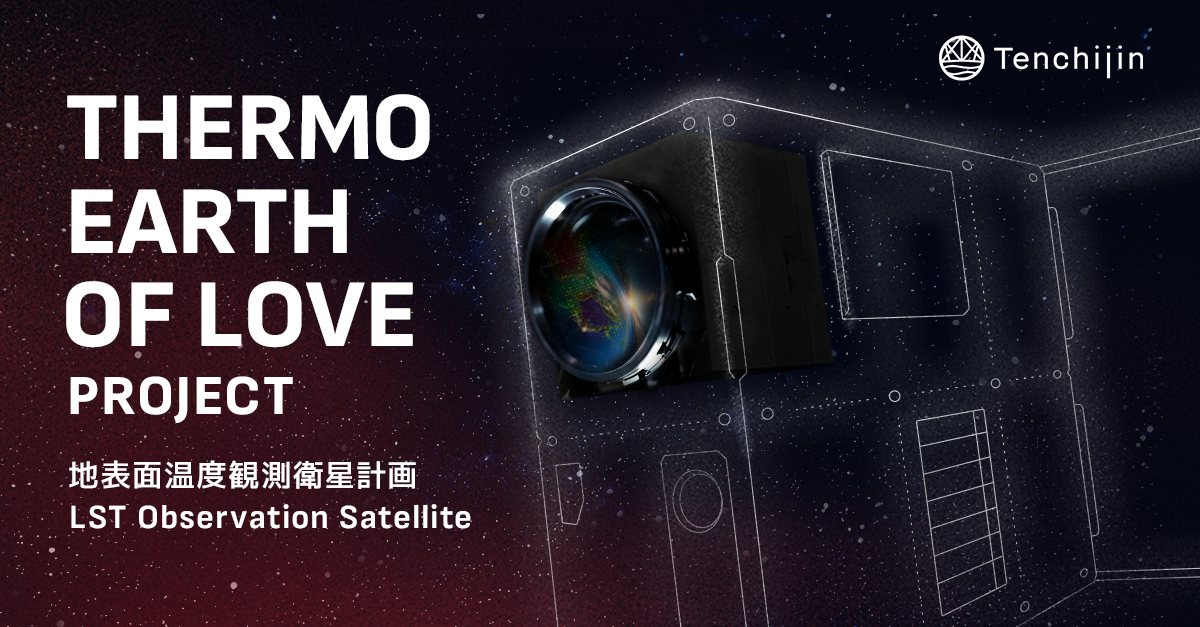
Thermo Earth of Love Project – LST Observation Satellite

has been utilizing satellite data to tackle various societal challenges, including climate change mitigation, aging infrastructure, and urban planning. Among the extensive range of satellite data, Tenchijin places particular importance on surface temperature data.

Surface temperature has been one of the key satellite data types Tenchijin has worked with since its founding. As Tenchijin has collaborated with stakeholders such as agricultural producers, local governments, and water utilities to address their challenges, it has recognized the growing importance of this data. In recent years, with increasingly severe summer heatwaves, knowing not only air temperature but also ground heat level has become even more critical. Tenchijin believes that surface temperature data is essential for understanding the impacts of climate change, assessing disaster risks, and developing effective countermeasures.

It is this belief in the potential of surface temperature data that led the company to take the significant step of developing its own satellite. The project name “Thermo Earth of Love Project” symbolizes both the warmth of Earth that surface temperature data reveals (Thermo Earth) and Tenchijin’s love and dedication to the planet (Love).

Continuous observation and analysis of surface temperature from space allow us to reexamine the relationship between Earth and humanity from the ground up. By making surface temperature data a standard part of society and transforming it into solutions that enhance people’s lives with greater safety and security, Tenchijin aims to contribute to a better future for the next generation.

The Value of Surface Temperature Data
Overlaying Multiple Datasets

Tenchijin does not view satellite data as a single-use resource but rather as part of a comprehensive big data approach. Tenchijin employs a unique method, uncommon in the space industry, by overlaying different satellite datasets and combining satellite data with ground-based data (such as sensor data, statistical data, and GIS data).

Key Satellite Data Handled by Tenchijin

Satellite Imagery
When people think of satellite data, satellite imagery (visible images) is often what comes to mind. Many private companies, both in Japan and abroad, provide satellite imagery. At Tenchijin, these images are used to monitor natural changes, detect urban development, and identify structures and other features.

SAR Imagery
Satellite imagery can also capture information that is invisible to the human eye. One example is Synthetic Aperture Radar (SAR) imagery, which has recently gained attention. While SAR satellites like Japan Aerospace Exploration Agency (JAXA)’s advanced radar satellite “Daichi-4” (ALOS-4) have traditionally been developed under government initiatives, private companies have also started entering the field. Tenchijin uses SAR data to analyze ground deformation and related phenomena.

Surface Temperature
Surface temperature refers to the temperature of the ground itself. Unlike air temperature, which measures the temperature of the atmosphere, surface temperature indicates how hot or cold the ground is.

Surface temperature is a specialized dataset collected by various national satellites, including those from the Japan Meteorological Agency, JAXA, and NASA. Traditionally, this data has primarily been used by scientists and researchers.

However, since its founding, Tenchijin has been applying surface temperature data to business use cases. The reason why this data had not been widely adopted in business before lies in its complexity and the rarity of overlaying multiple satellite datasets.

Why has Tenchijin been able to leverage this data?

The answer lies in the company’s name. The name “Tenchijin” embodies its core mission:

“Ten” (Sky): utilizing satellite data from space

“Chi” (Earth): integrating ground-based data

“Jin” (People): enhancing people’s lives and activities through data

Because Tenchijin was founded with a vision of integrating multiple data sources, the company was able to quickly realize the potential of surface temperature data.

Surface temperature plays a crucial role in Tenchijin’s existing services, such as evaluating the risk of infrastructure deterioration, selecting optimal locations for renewable energy, and assessing suitable areas for agriculture adapted to climate change.

Recognizing the value of surface temperature data early on, Tenchijin has been conducting research and development to create proprietary high-frequency, high-resolution surface temperature information. This involves integrating data from JAXA’s GCOM-C satellite, the Himawari weather satellite, and various international satellites.

We are currently utilizing this technology in the free-to-use WebGIS service called “Tenchijin COMPASS” and in the water utility DX service for local governments and water service providers, known as “Tenchijin COMPASS KnoWaterLeak.”

What is “Thermo Earth of Love Project”?

The “Thermo Earth of Love Project” is an initiative by Tenchijin, a company that has long believed in the potential of surface temperature data. Through the development of its own satellite, this project aims to enhance surface temperature observation, with a satellite launch planned for 2027.

Starting in 2027, expanded coverage and higher resolution surface temperature data will significantly advance our solutions. We envision specific applications in the following areas:

Enhancements in Water Infrastructure Management
High-resolution, high-frequency surface temperature data will enable more advanced maintenance and management of water infrastructure. This includes improving leak detection accuracy, providing near-real-time monitoring for rapid response, and enabling the prediction and preventive maintenance of water pipes. Additionally, this data will be utilized to assess damage from earthquakes and volcanic eruptions, contributing to urban planning and disaster management efforts.

Precision Agriculture
By leveraging more detailed surface temperature data, we can enable precise monitoring of crop growth conditions, early detection of pests and diseases, and optimal selection of crop varieties. Near-real-time analysis of climate change and soil temperature variations will enhance the accuracy of harvest planning, supporting the development of sustainable agricultural models.

“Thermo Earth of Love Project” represents a bold step for Tenchijin, a startup that has previously deployed satellite data-driven solutions, as it now ventures into the domain of space hardware development.

In the space hardware sector, business models have traditionally been hardware-driven, where companies develop their own satellites and sell the resulting observation data. However, Tenchijin’s solution-driven vertical integration approach is a rare and pioneering initiative, even on a global scale.

Tenchijin’s strength lies in knowing the data required through real-world business applications. By identifying data that can effectively address societal challenges, Tenchijin believes it can fully unlock its value.

Surface temperature data, in particular, is a specialized form of information monitored by government satellites, such as those from the Japan Meteorological Agency, JAXA, and NASA. This is precisely why it is significant for not only government agencies but also private companies to possess and utilize this data, broadening its potential applications.

Tenchijin is guided by its mission of “optimizing human civilization through space big data” and its core values of “thinking from a space perspective” and “engaging in activities beneficial to Earth.” “Thermo Earth of Love Project” is a major step toward achieving these high aspirations.

The satellite data capturing Earth’s state holds limitless possibilities. “Thermo Earth of Love Project” expresses both the warmth of surface temperature and a deep love for the planet.

Tenchijin firmly believes that surface temperature data is an invaluable resource for humanity. Tenchijin sincerely hopes you will follow and support the challenges it faces in “Thermo Earth of Love Project.”
Hashtag: #Tenchijin #Space #SatelliteTechnology #SurfaceTemperature


The issuer is solely responsible for the content of this announcement.

Tenchijin, Inc.

E-Mail: (person in charge of communication: Keisuke Sunagare)

Address: Room 3, Ground Floor, Block 2330, Century Square, Jalan Usahawan, Off, Persiaran Multimedia, 63000, Cyberjaya, Selangor, Malaysia
Representative: Yasuhito Sakuraba, CEO
Business content: land evaluation consulting using satellite data
Business activities: Land valuation consultancy, service development and operation using satellite data
Main clients
Water: Tokyo city, Aomori city, Fukushima city
Agriculture: Shinmei Corporation, Seiwa Corporation
Telecommunication: Nippon Telegraph and Telephone East Corporation
We welcome any inquiries from companies in the water-related business sector. (Contact email: [email protected], Person in charge: Keitaro Asaba)

Media OutReach

Tropicana Twister Builds Homes That Could Change Lives for Generations

Published

on

Gandakan Kebaikan transforms nationwide kindness into real homes, delivering meaningful and lasting impact.

KUALA LUMPUR, MALAYSIA – Media OutReach Newswire – 22 April 2026 – Tropicana Twister’s ‘Gandakan Kebaikan’ campaign has reached a defining milestone with the completion and handover of homes to families in need, marking a tangible outcome of a nationwide movement built on everyday acts of kindness.

Developed in partnership with EPIC Homes, the initiative contributes towards the building of up to 100 homes for underserved communities, including Orang Asli families across Malaysia. What began during Ramadan as a simple call to do good has since translated into safe, liveable spaces that provide families with protection, stability and a chance to move forward.

“Gandakan Kebaikan reflects our belief that meaningful change happens when communities come together with a shared purpose,” said Aditya Sheoran, PepsiCo Franchise Senior Director. “Through this initiative, we’re building homes and helping to create stronger foundations for families to thrive, today and for the future.”

Jennifer Lee, Head of Marketing, PepsiCo Malaysia Beverages, shared, “This is where intention becomes impact. Tropicana Twister’s Gandakan Kebaikan campaign started as individual acts of kindness, and now, the result is visible, that Malaysians are and will continue to show up for one another.”

“Families living in unsafe homes live in constant worry, especially during heavy rain. An EPIC Home gives them a place where they can feel secure. It goes beyond being just a shelter – a safe home gives peace of mind, stability, and the hope for a better future.” said Nadhira Halim, (Asst. Manager, Fundraising & Partnership, EPIC Homes).

More than just physical structures, these homes create a sense of security and dignity, while giving families a stable environment to rebuild their lives. Built with the support of volunteers and local communities, each home reflects a collective effort that goes far beyond a single campaign.

While ‘Gandakan Kebaikan’ was rooted in the spirit of Ramadan, its impact continues to extend far beyond the festive season. By focusing on long-term community needs, Tropicana Twister reinforces its commitment to creating meaningful and lasting change.

“As a brand, we believe in the power of collective goodness. This project is about turning that belief into action and bringing people together to create lasting impact,” added Jennifer. “Just like every beam and plank forms a home, each of you is a vital piece in building this journey.”

With the completion of these homes, ‘Gandakan Kebaikan’ continues to build on its mission of supporting underserved communities across Malaysia, proving that collective goodwill can create an impact that lasts beyond a moment.

For more information, visit Tropicana Twister’s Facebook page @MYTropicana and watch here on YouTube to see the impact unfold.

Hashtag: #TropicanaTwister

The issuer is solely responsible for the content of this announcement.

About PepsiCo

PepsiCo products are enjoyed by consumers more than one billion times a day in more than 200 countries and territories around the world. PepsiCo generated more than $86 billion in net revenue in 2022, driven by a complimentary beverage and convenient foods portfolio that includes Tropicana, Lay’s, Doritos, Cheetos, Gatorade, Pepsi-Cola, Mountain Dew, Quaker, and SodaStream. PepsiCo’s product portfolio includes a wide range of enjoyable foods and beverages, including many iconic brands that generate more than $1 billion each in estimated annual retail sales.

Guiding PepsiCo is our vision to be the Global Leader in Beverages and Convenient Foods by Winning with pep+ (PepsiCo Positive). pep+ is our strategic end-to-end transformation that puts sustainability and human capital at the centre of how we will create value and growth by operating within planetary boundaries and inspiring positive change cafor the planet and people. For more information, visit , and follow on Twitter, Instagram, Facebook, and LinkedIn @PepsiCo.

Continue Reading

Media OutReach

Student bonds are built at SIM from orientation to graduation

Published

on

SINGAPORE – Media OutReach Newswire – 22 April 2026 – As universities adapt to hybrid learning and evolving workforce expectations, student relationships are increasingly being treated not as incidental, but as a designed part of the education journey. Across higher education, there is growing recognition that peer interaction, collaboration, and shared experiences contribute to how students learn, work, and transition into employment. This shift is prompting institutions to rethink how engagement is built from the moment students enter campus through to graduation.

From Orientation to a Continuous Student Journey

Orientation programmes have traditionally focused on introducing students to campus life. Today, they are increasingly seen as the starting point of a longer engagement model. Institutions such as the Singapore Institute of Management (SIM), onboarding is complemented by a structured ecosystem of activities that extends throughout the academic lifecycle. These include Student‑led Student Club Recruitment drives,, leadership camps, and peer-led initiatives that encourage early interaction and sustained participation over time.

Building Bonds Through Shared Experiences

Rather than relying solely on informal social interaction, universities or institutions are creating structured environments where students collaborate regularly. SIM, for instance, offers more than 70 student clubs spanning arts, sports, and academic interests, alongside activities such as hackathons, overseas community projects, and student-led events. Such platforms allow students to work together on common goals, reflecting real-world team dynamics and reinforcing skills such as communication and collaboration.

Learning Beyond the Classroom

The concept of student life is also expanding beyond academic settings. Dedicated platforms such as SIM’s Student Life initiatives are designed to provide a more holistic campus experience, reinforcing the idea that learning extends beyond formal instruction. At the same time, academic support systems such as the Student Learning Centre provide structured assistance through workshops, consultations, and learning resources, supporting both individual and group learning processes.

A Diverse and Global Learning Environment

With partnerships across universities in the United Kingdom, Australia, Europe, and the United States, institutions like SIM bring together students from varied cultural and academic backgrounds. This diversity creates opportunities for cross-cultural collaboration, which is increasingly relevant in a globalised workforce.

Connecting Student Experience to Career Outcomes

The emphasis on collaboration and engagement is also closely linked to employability. SIM’s broader model integrates academic programmes with industry partnerships, internships, and career services aimed at preparing students for a rapidly changing work environment. This reflects a wider trend in higher education, where experience is being designed not only around academic achievement, but also around the development of professional networks and workplace skills.

Redefining the University Experience

As learning models continue to evolve, universities or institutions are placing greater emphasis on how student interactions are structured over time. From orientation activities to co-curricular engagement and career preparation, the journey from enrolment to graduation is increasingly being shaped as a continuous pathway for collaboration, experience-building, and network development.

Reference:

  1. Project 1095 – https://project1095.simge.edu.sg/
  2. Singapore Institute of Management – https://www.sim.edu.sg
  3. SIM Global Education Overview – https://www.sim.edu.sg/degrees-diplomas/overview

Hashtag: #SIMGlobalEducation #SIMGE #GlobalEducation #InternationalDegree #CareerReady #FutureSkills

The issuer is solely responsible for the content of this announcement.

About SIM Global Education

SIM Global Education (SIM GE) is a leading private education institution in Singapore and the region. We offer more than 140 academic programmes ranging from diplomas and graduate diploma programmes to bachelor’s and master’s degree programmes with some of the world’s most reputable universities from Australia, Canada, Europe, United Kingdom, and the United States. SIM GE’s cohort is made up of 17,000 full- and part-time students and adult learners, of which approximately 41% are international students hailing from over 50 countries.

SIM GE’s holistic learning approach and culturally diverse learning environment aim to equip students with knowledge, industry skills and employability competencies, as well as a global perspective to succeed as future leaders in a fast-changing, technologically driven world.

For more information on SIM Global Education, visit .

Continue Reading

Media OutReach

Where Ancient Ritual Meets Runway: Sanyuesan Festival Gets Modern Makeover in Wuzhishan

Published

on

WUZHISHAN, CHINA – Media OutReach Newswire – 21 April 2026 – From April 15 to 19, a series of events at the Wuzhishan sub-venue of Hainan’s Sanyuesan festival took place in full swing, spreading rich ethnic vibes to every corner of the city and drawing passersby — both local residents and tourists — to stop, watch, and take photos.

Sanyuesan Festival Gets Modern Makeover in Wuzhishan

Alex, a visitor ventured to China’s southernmost province primarily for its renowned black tea. What he did not anticipate was taking a front-row seat at a breathtaking fashion show staged on water.

“This unique stage has allowed me to capture some wonderful images,” said Alex, who happened to be in Wuzhishan during the Sanyuesan Festival. “I originally came here simply as a fan of Wuzhishan’s black tea, but now I find myself deeply fascinated by the culture of Wuzhishan as well.”

The “unique stage” he refers to is the immersive water-based performance space created for the 2026 Sanyuesan Festival, featuring the “Miss Li · Hainan Sanyuesan Water Village Show.” This innovative platform, with water as its runway and the rainforest as its backdrop, presents the Sanyuesan, a traditional celebration of the Li and Miao ethnic groups with thousands of years of history, through a contemporary lens, appealing to both local and international audiences.

This year’s activities in Wuzhishan embraced a dynamic model that intertwines rainforest ecology, intangible cultural heritage, fashion, technology, and tourism. Attendees were treated to a festival experience that was engaging, immersive, and visually stunning. Drones illuminated the night sky, tracing ancient Li totems, like the “Gan’gong Bird,” while diverse performances including intangible cultural heritage shows, original dance dramas, and live performances captivated the audience. A 600-seat long buffet table was set up along the water, where visitors savored authentic local flavors, such as sour fish soup and three-color sticky rice, amid the lively atmosphere.

The Sanyuesan Festival is memorable not only for its visual appeal but also for its interactive nature. In 2025, the event in Wuzhishan received 175,000 visitors and generated 110 million yuan (approximately 15.1 million US dollars) in consumption. This year, Wuzhishan introduced five premium tourist routes, converting ecological resources — including millennium-old tree fern groves, tropical rainforest tea gardens, and Yahu Terraces — into tourism products.

“Previously, folk culture felt distant,” said Shan Lijun, a tourist from northeast China’s Heilongjiang Province. “But now, in Wuzhishan, I can sip tea, watch a village show, and dance with the locals— it all feels very ‘cool.'”

Additionally, the festival is witnessing the evolution of local intangible cultural heritage industries. A Li brocade fashion and cultural creative design competition showcased innovative garments and creative works, merging traditional craftsmanship with contemporary fashion. This heritage item, once listed on UNESCO’s List of Intangible Cultural Heritage in Need of Urgent Safeguarding, has now, through the concerted efforts of many, been transferred to the Representative List of the Intangible Cultural Heritage of Humanity, and is reaching broader markets through collaborations with international designers.

Hashtag: #Sanyuesan

The issuer is solely responsible for the content of this announcement.

Continue Reading

Trending

