
Media OutReach
The Largest International Student Design Competition Goes Global With 21 Design Association on Board


Total Prize Money of US$120,000 and Free Entry for All
TAIPEI, TAIWAN – Media OutReach – 21 April 2023 – Established in 2008, the Taiwan International Student Design Competition (TISDC) has currently entered its 16th year, it continues to be acknowledged by the global design industry as a student exclusive competition that is not only world-renowned but also highly credible. The competition serves as a paradigm for design education sponsored and promoted by the Taiwan’s Department of Higher Education, Ministry of Education. The theme of this year, Compassion, is tightly connected to the SDGs: Sustainable Development Goals proposed by the UN. It is hoped that students worldwide can observe and tap into people and things in need in daily lives as well as apply design thinking that embodies empathy and compassion to make this world a better place.
Since 2015, iSee Taiwan Foundation and Sayling Wen Cultural & Educational Foundation have been sponsoring the TISDC and helping the competition set up special prize authorized by international design associations. The TISDC has forged a strong partnership with 21 international design associations, located in Europe, Americas, Asia, Africa, and Oceania, all of which are world renowned and have a large scale. The international design associations that endorsed the special prize are: Cumulus Association, International Council of Design, World Design Organization, Bureau of European Design Associations, Pan-Afrikan Design Institute, International Poster Biennial in Mexico, and so forth. The judging panel delegated by the international design associations will select works that meet the evaluation criteria of each association among the shortlisted entries in the Product Design, Visual Design, and Digital Animation categories. Through this collaboration mechanism, an international design platform is built to provide a stage for students around the world to showcase their design ideas.
Brand Specified Special Prize: This year the prize sponsored by the TPCA Environment Foundation will include Environmental Sustainability Award with 3 winners and Special Region Award with 6 winners. The Environmental Sustainability Award winners will be selected from the shortlisted entries in the Product Design, Visual Design, and Digital Animation that best reflect the concept of “Development of Circular Economy”. As for Special Region Award, judging panel will prioritize selecting entries from countries such as Thailand, Vietnam, Malaysia, and India. The final selection process will be adjusted according to the shortlisted entries received in the year.
Collaborators: This year the TISDC has also extended a special invitation to Chiayi City Government, Cultural Affairs Bureau of Chiayi City Government, Cultural Affairs Bureau of Kinmen County, and Foundation for European Cultural Exchange. Additionally, Chiayi City Government offers “Chiayi City Special Prize” with 1 winner. The jury panel will select winner out of entries in Visual Design category that can best meet the criteria of Chiayi City Government.
The competition has three categories: Product Design, Visual Design, and Digital Animation
Grand Prix (1 winner) will be selected from the finalists of the three categories: NT$400,000, a trophy, and a certificate.
Gold Prize (1 winner from each category): NT$250,000, a trophy, and a certificate
Silver Prize (1 winner from each category): NT$150,000, a trophy, and a certificate
Bronze Prize (3 winners from each category): NT$60,000, a trophy, and a certificate
Honorable Mention (several from each category): NT$10,000, and a certificate
International Design Association Special Prize (21 winners) (Sponsored by iSee Taiwan Foundation and Sayling Wen Cultural & Educational Foundation)
Each special prize from the 21 design associations comes with a prize of NT30,000, a trophy, and a certificate endorsed by the respective design association.
Brand Specified Special Prize (Sponsored by TCPA Environment Foundation):
Environment Special Prize (3 winners)
NT$100,000, a trophy, and a certificate.
Special Region Award (6 winners)
NT$30,000, and a certificate.
Chiayi City Special Prize (1 winner) (Offered by Cultural Affairs Bureau of Chiayi City Government):
NT100,000, a trophy, and a certificate.
The 2023 Taiwan International Student Design Competition is about to launch its call for entries. Online registration will soon be available on May 15th, 2023 (Monday) and the deadline for submission is July 15th, 2023 (Saturday) at 23:59 Taipei time (GMT +8:00).
For more details, please visit: https://www.tisdc.org/en
The issuer is solely responsible for the content of this announcement.



Media OutReach
Jardine Matheson Holdings publishes Sustainability Report 2025, supporting TSR through long-term resilience and sustainability improvements

Jardines embeds sustainability within its value creation strategy and applies a rigorous lens to investment and capital allocation decisions. There are clear sustainability expectations for our diverse portfolio of market‑leading businesses with the aim to build resilience and mitigate emerging risks.
Earlier, Jardines announced its strategic repositioning from owner-operator to an investment company with a focus on sustainable, top-quartile Total Shareholder Return. Jardines is also committed to active portfolio value creation, talent development, world-class governance and sustainability improvements across its portfolio.
In 2025, Jardine Matheson delivered strong progress on its ‘Building Towards 2030’ sustainability strategy:
- Climate action – Decarbonisation remains top priority. 8% decline in scope 1 and 2 emissions from companies on the Decarbonisation and Transition pathway
- Responsible consumption – Improvements in waste reduction, resource efficiency and circularity initiatives. 29% decrease in total waste generated and 95% total waste diverted from landfill
- Social inclusion – Ongoing investments in education, health and livelihoods. US$59m in community investments made
- Governance and transparency – Enhanced sustainability governance and disclosure as Jardines maintains portfolio oversight of sustainability across its portfolio. ESG ratings improvement reflect positive response on sustainability performance (S&P: 82nd percentile, ISS ESG: Prime)
Ben Keswick, Executive Chairman of Jardine Matheson said, “Sustainability is foundational to how we protect and enhance economic value and build long-term resilience across Jardine Matheson – it is an essential value that every business in our portfolio must commit to and that guides the investment decisions we make. We will continue to embed sustainability in our strategy and portfolio management decisions, with a clear focus on decarbonisation, by setting clear commitments, measuring progress against our roadmaps, and applying disciplined governance across our portfolio.”
Decarbonisation is top priority
Contributing to a sustainable, low-carbon future is a strategic priority for Jardines. In 2025, the Group delivered an 8% reduction in total scope 1 and 2 emissions, reflecting steady progress across its diversified portfolio. This was supported by a continued shift away from fossil-fuel energy, with renewable energy accounting for 45% of total energy consumption, alongside an overall reduction in energy use.
Jardines’ decarbonisation approach is structured around two pathways: a Decarbonisation Pathway, and a Transition Pathway for mining and energy businesses.
In 2025, Jardines’ portfolio companies began formal reporting on climate risks and opportunities to their audit committees, following the integration of climate risks into existing ERM processes the prior year. Alongside, Jardines is also integrating sustainability factors into investment due diligence and decision-making, ensuring material sustainability-related aspects of an investment are considered as Jardines continues to unlock value creation for its stakeholders.
Looking forward
Looking ahead, Jardines will continue to embed sustainability as a core value driver across its portfolio by setting clear commitments and prioritising decarbonisation. The Group will continue to strengthen governance and incentives to drive accountability and deliver on scope 1 and 2 emissions reduction pathways.
To access the Sustainability Report 2025, please visit sustainability.jardines.com/2025/ or click here to download the PDF.
Hashtag: #JardineMatheson
https://www.jardines.com
www.jardines.com

Media OutReach
WeryAI Launches an Integrated Multi-Model AI Content Creation Platform: A One-Stop Workflow for Image, Video, and Advertising Production
Following the official launch of the platform, WeryAI (https://www.weryai.com/) has grown to nearly 3 million users. Serving creators, designers, marketers, and cross-border business teams, it provides an end-to-end creative solution covering image generation, video production, post-production editing, music generation, and character creation. To address common pain points in AI content production—such as fragmented tools, disconnected workflows, and rising costs—the platform integrates multiple high-performance AI models and editing tools, moving visual content production away from the traditional patchwork of multiple tools toward a more efficient closed-loop workflow on a single platform.
At the core of the platform is its signature “multi-model mode,” which allows users to enter a single prompt and simultaneously generate outputs using multiple image-generation models, including Wery 2.0, Nano Banana Pro, Seedream, Dreamina, and Wan 2.6. This makes it easy to compare the style and quality of different engines and quickly identify the best option for a project. On the video side, the platform integrates industry-leading engines such as Google Veo 3.1 Fast, Kling, Runway, Hailuo, and Pika, supporting synchronized audio-video generation. In just seconds, users can turn static images into dynamic advertising clips with smooth camera movement and synced sound effects.
The platform also offers a range of built-in editing tools for tasks such as 4K upscaling, background replacement, object removal, lip-syncing, and subtitle translation. All editing can be done in one interface, without exporting files across platforms. Its “prompt reverse engineering” feature lets users upload a reference image and automatically generate accurate prompts based on elements such as lighting, composition, and mood, reducing the time spent refining prompts.
WeryAI supports a wide range of use cases, including content creation for video producers, end-to-end design workflows, asset production for e-commerce marketing teams, and multilingual content localization for multinational companies. New users receive a daily free quota, while flexible subscription plans are available for both individual creators and professional teams. Users can visit the official website to explore a one-stop workflow from concept to finished advertising content.
Hashtag: #WeryAI
The issuer is solely responsible for the content of this announcement.
Media OutReach
China Mobile Hosts the 2026 Cooperative Conference on Digital and Intelligent Empowerment for Chinese Enterprises Going Global
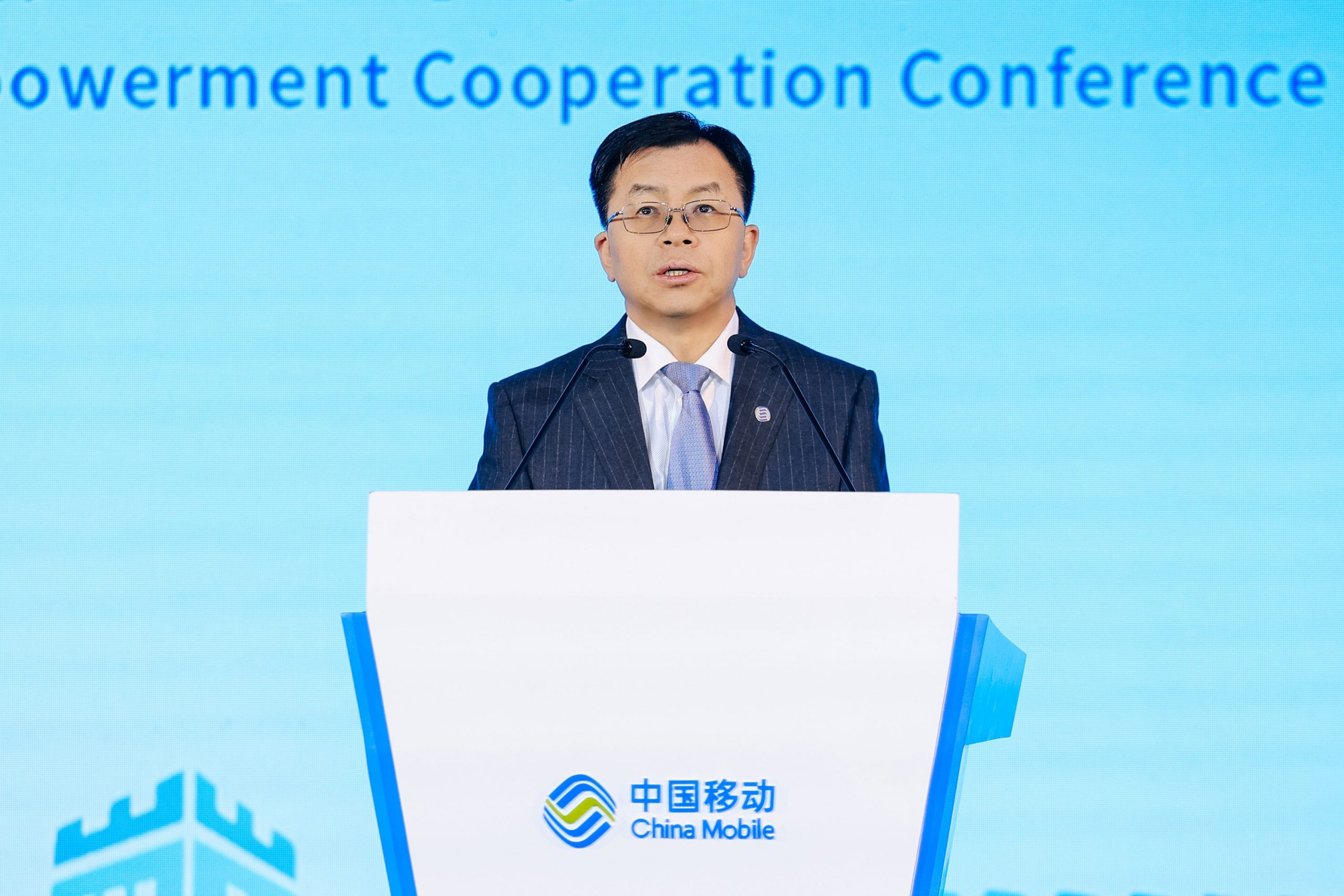
Li Huidi pointed out that artificial intelligence is currently reshaping the ways of production and life with unprecedented speed and breadth, deeply restructuring the competitive landscape of global industries. AI is already the core engine driving the leap in social productivity and leading the transformation of the global industrial system. The overseas development of Chinese enterprises is undergoing a comprehensive upgrade from the traditional export of products and production capacity to the synergistic development of digital capabilities and industrial chains driven by AI.
Li Huidi stated that, in the face of a new round of technological revolution and industrial transformation, China Mobile is accelerating the transition from a “telecommunications operator” to a “technology services enterprise.” With the vision of building a world-class technology services enterprise, it comprehensively promotes the integrated innovation of communication technologies, information technologies, and AI technologies, in order to strengthen, optimize, and expand the three major businesses of “communications services, computing services, and AI services.” China Mobile will deeply integrate its AI capabilities into the entire chain of its three core businesses, paving a digital and intelligent highway for globalization, featuring the integration of networks and intelligence, safety and reliability, and universal access across all domains for Chinese enterprises going global:
First, China Mobile will strengthen communications services and empower “AI connectivity”, weaving a dense network of global intelligent interconnection. The scale of China Mobile’s international information infrastructure continues to grow. China Mobile have expanded the capacity of submarine and terrestrial cables, bringing total international transmission bandwidth to 406T and Points of Presence (PoPs) to 446. Notably, the eastern section of 2Africa, the largest submarine cable system in the world circling Africa, has been activated. The sections are expected to be completed and put into operation in the first half of this year. Spanning a total length of approximately 45,000 kilometers, this submarine cable is laid along the coastline of the African continent. It connects 33 countries and regions across the Middle East, Asia, and Europe, providing high-quality, low-latency international communication services for a population of roughly 3 billion along its route. This major information artery, which connects six continents and four oceans, provides safe and reliable guarantees for end-to-end connections. It supports the scheduling of transnational AI applications and the integration of global business for enterprises going global. Global roaming is now available in 268 destinations, and the total number of users for the JegoTrip app has exceeded 90 million. China Mobile’s international ecological cooperation continues to expand, and the “Hand-in-Hand Program” covers over 3 billion users worldwide. China Mobile have consecutively hosted events such as the Southeast Asia Cooperation Conference and the China Mobile Digital Empowerment Cooperation Conferences for Chinese Enterprises Going Global. These events have been widely praised and have strengthened China Mobile’s influence within the global ecosystem. In recent years, China Mobile’s revenue from international business has consistently maintained a trend of high-speed, double-digit growth.
Second, China Mobile will optimize computing services and drive “AI Computing”, building a globally integrated computing network across the world.As a builder of computing infrastructure, China Mobile will comprehensively increase its investment in Artificial Intelligence Data Centers (AIDC), accelerate the supply of computing, and enhance its operational capabilities for Tokens. China Mobile’s 100-megawatt-level Global Intelligent Center (GIC) in Hong Kong has officially opened, and China Mobile will deploy more nodes for AI computing along the “Belt and Road” initiative in the future. China Mobile have already established a cluster for AI computing with a capacity of 92.5 EFLOPS in China. By linking this with over 1,300 resources from self-owned and cooperative data centers overseas, China Mobile are constructing a global network for computing. China Mobile will promote Mobile Cloud to integrate high-quality global models and streamline the service chain where “Agents use Tokens, Tokens drive Computing, and Computing consumes Electricity.” This will forge a solid foundation of computing for Chinese enterprises going global.
Third, China Mobile will expand AI services and reshape digital services, stimulating new momentum across all domains for enterprises going global.As a promoter of applications for artificial intelligence, China Mobile continuously iterates the capabilities of its “Jiutian” large model. China Mobile have accumulated industrial data exceeding 20 trillion Tokens and independently developed more than 50 industrial large models. This promotes the deep integration of AI agents into the entire process of production and operations for enterprises. Overseas, China Mobile translate its leading domestic AI capabilities into a “smart engine” for Chinese enterprises expanding abroad. Targeting the pain points of enterprises going global, China Mobile have tailored a “1+8” system of products and solutions for all scenarios, which has already served tens of thousands of Chinese enterprises in their global layout. By combining the advantages of Chinese manufacturing and 5G solutions, China Mobile achieve deep integration with local ecosystems overseas. In regions including Europe, Latin America, and the Asia-Pacific, and have successfully established over a thousand benchmark cases of “AI+” digital and intelligent transformation, such as smart factories, smart ports, and smart IoV. This makes the fruits of China’s innovation in AI benefit the global market.
Looking toward the vast blue ocean of the AI era, Li Huidi proposed four initiatives: First, China Mobile will jointly build AI infrastructure to forge a solid “new foundation” for AI+ global development. China Mobile will join hands with global industry partners to accelerate the construction of global communication networks, computing networks, and intelligent networks. China Mobile will jointly optimize the layout of global submarine and terrestrial cables as well as hubs for computing, achieving mutually beneficial cooperation along the “Belt and Road” initiative and around the world. By building more high-standard Artificial Intelligence Data Centers, China Mobile will provide low-latency, highly reliable, high-performance, and widely covered infrastructure of computing networks for Chinese enterprises marching into the world. Second, China Mobile will jointly establish AI standards to build a “new consensus” on intelligence within the industry. China Mobile will continue to promote China’s full-stack AI technologies and standards to the world, covering the entire chain of computing foundations, large models, and industrial applications. This will contribute Chinese wisdom, Chinese solutions, and Chinese standards to the construction of an open, inclusive, and interoperable system of global rules for AI technology. Third, China Mobile will jointly expand AI scenarios to release “new quality productive forces” across thousands of industries. China Mobile will continuously open up China Mobile’s technological foundation and experience in various scenarios, collaborating with enterprises going global to unearth high-value industrial scenarios. By providing exclusive resources for AI computing and support for Tokens, China Mobile will empower the accelerated release of new quality productive forces through AI innovation. In key regions along the “Belt and Road” initiative, China Mobile will create more replicable and promotable benchmark projects of “AI+” digital and intelligent transformation for overseas development. Fourth, China Mobile will jointly cultivate a win-win AI ecosystem to expand the “new circle of friends” for global cooperation. China Mobile will continuously upgrade the cooperative ecological system of the “iSTAR Program. Relying on the three core pillars of “AI+ applications, cloud and AI computing, and connectivity,” China Mobile will unite the strengths of global industries, academia, research, and application. This will help build a more open, inclusive, and mutually beneficial globalized digital and intelligent ecosystem. China Mobile will jointly incubate “AI+” solutions for overseas development across more than 150 scenarios, providing intelligent escorts across the entire chain and full life cycle for Chinese enterprises going global.
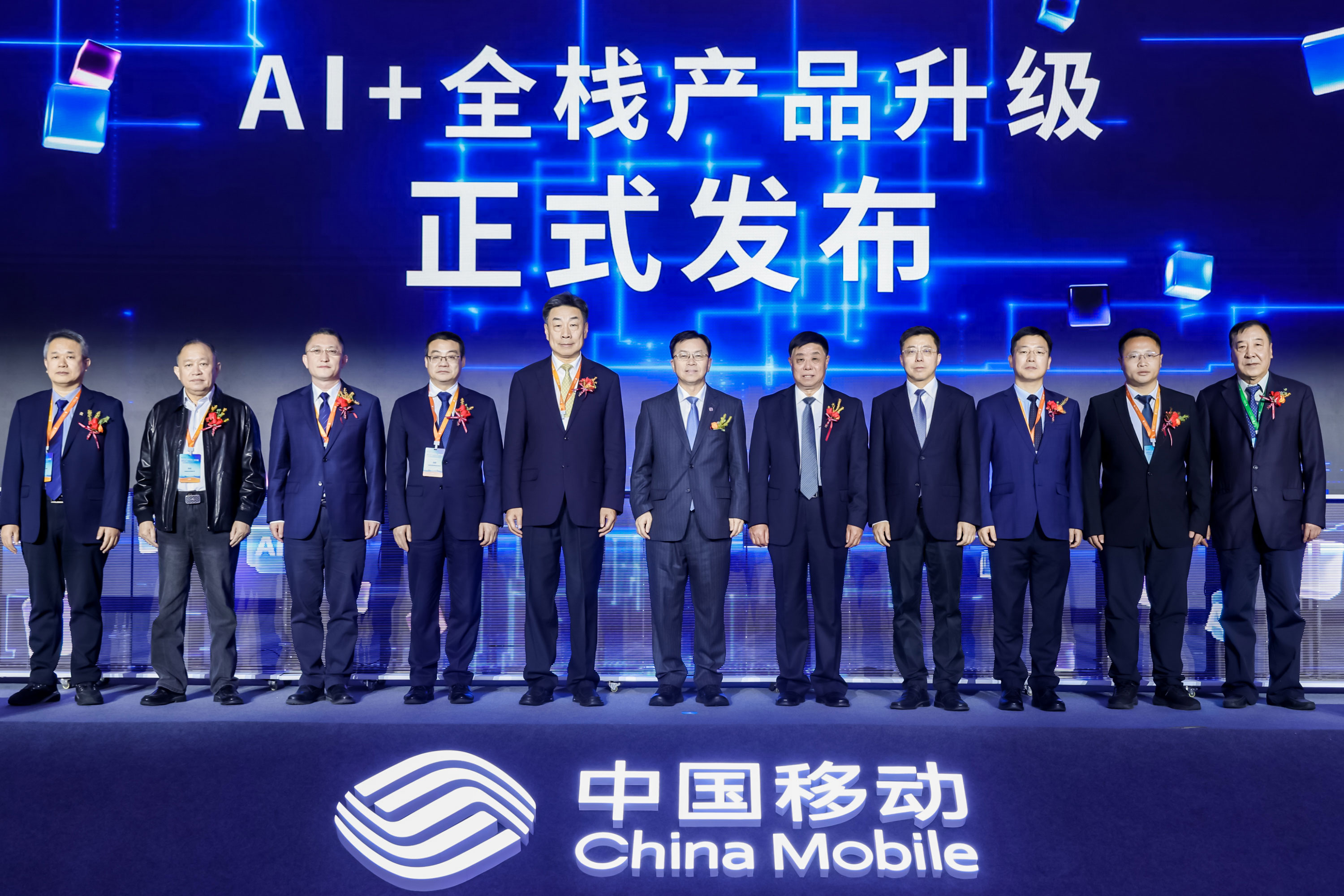
At the conference, using full-stack digital and intelligent capabilities to escort Chinese enterprises going global, China Mobile released a series of “AI+” full-stack digital and intelligent infrastructure, products, and services. Together with its ecological partners, China Mobile jointly released the “White Paper on the Digital and Intelligent Ecosystem of the China Mobile International ‘iSTAR Program’ for Chinese Enterprises Going-Global,” collaboratively building a new ecosystem for AI services.
Hashtag: #ChinaMobile
The issuer is solely responsible for the content of this announcement.

-
 Feature/OPED6 years ago
Davos was Different this year
-
Travel/Tourism10 years ago
Lagos Seals Western Lodge Hotel In Ikorodu
-

 Showbiz3 years ago
Estranged Lover Releases Videos of Empress Njamah Bathing
-
 Banking8 years ago
Sort Codes of GTBank Branches in Nigeria
-

 Economy3 years ago
Subsidy Removal: CNG at N130 Per Litre Cheaper Than Petrol—IPMAN
-

 Banking3 years ago
Sort Codes of UBA Branches in Nigeria
-

 Banking3 years ago
First Bank Announces Planned Downtime
-

 Sports3 years ago
Highest Paid Nigerian Footballer – How Much Do Nigerian Footballers Earn