
Media OutReach
“When We March Together”: Youth, Music, and the Future of China–US Relations

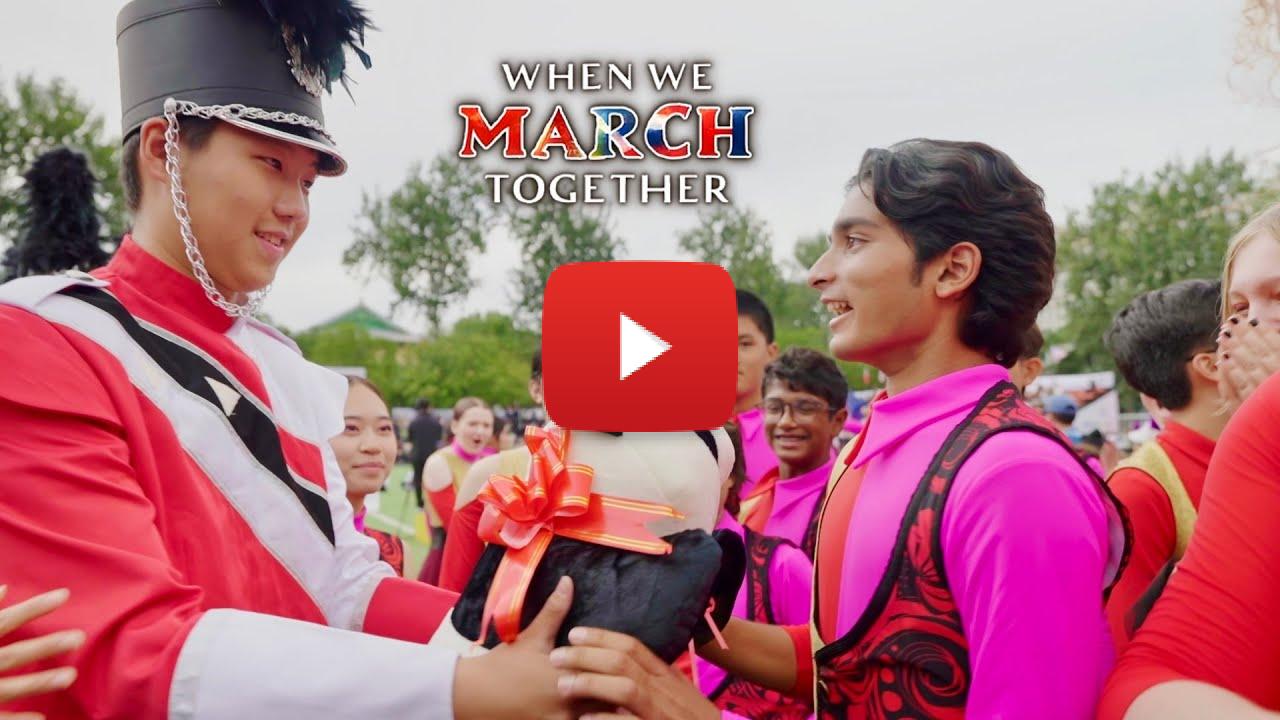
The documentary follows three American high school marching band students on an immersive journey across China. As they travel, rehearse, and perform with their Chinese counterparts, the young musicians forge connections that go beyond the stage. Their experience underscores the power of youth exchange and cultural collaboration in shaping the future of ties between the two countries.
Friendship That Breaks Down the Walls
At the core of the documentary is the story of American music director Jeff Wilson, who first traveled to China in 1987 as a student musician performing on the Great Wall—an event that became a pivotal moment in early cultural exchanges between the two nations.
“The beautiful thing we experienced in 1987 is that whenever we make music together, it immediately breaks down the walls,” Wilson says in the documentary. “It completely changed my perspective of the world. America and China—we’re all the same.”
Decades later, Wilson continues to bring American students to China, nurturing ties that span generations. His daughter Riley joined the latest group of visiting students, carrying forward this legacy.
In an age where information transcends distance, Wilson still emphasizes the importance of personal connections: “We need more face-to-face, eyeball-to-eyeball interaction, and less relying on the phone,” he says. “Screens don’t always show the truth—but meeting someone does.”

A Decade-Long Musical Reunion
A key moment in “When We March Together” is the reunion between Beijing 57 High School and Valley Christian High School from California. In 2013, the two schools made history at the Pasadena Rose Parade by forming the East Meets West Fusion Band—the first Chinese–American high school marching ensemble to perform jointly in the iconic New Year’s celebration.
Todd Ryan, the band’s US visual director, recalls the impact: “Each band wasn’t very large on its own, but when you combined them, the musicians were joyful to hear so much more volume. When you join together, it’s a powerful statement.”
The documentary revisits this shared history as the students reunite after more than a decade. Their performances—and the effortless camaraderie that quickly forms—bring the story “full circle,” highlighting the enduring power of collaboration.
Putting the Future in Young Hands
For the students, music serves a universal language. “Even if you don’t speak the same language, you’re playing the same one,” says drummer Thomas Trinh. “You can show off individually, but as a full group, you create something powerful. You learn to trust each other.” Daniel Hankins adds, “Collaboration is more fun than competitiveness.”
This spirit of unity resonates across both China and the US. “Marching means moving forward. When we march together, so does the friendship between our nations,” says Yang Guandao from Beijing 57 High School. “Finding what unites us, rather than divides us,” adds Aadit Saraogi from Clarksburg High School.
“Marching toward a wonderful future means putting the future in our children’s hands,” says Susan Eckerle, Director of Bands at Thomas S. Wootton High School. “They know how to treat people—and they do it well. Sometimes the adults just need to back off. Let the kids do it.”
Youth Exchange during Challenging times
Beyond its musical performances, “When We March Together” highlights the vital role youth exchanges can play in shaping China–US relations. The documentary shows how personal interactions can build lasting understanding and help bridge divides.
In 2023, Chinese President Xi Jinping announced a five-year initiative to invite 50,000 American students to China. The program gives young people from both nations the chance to meet, often for the first time, and form their own impressions, separate from political narratives.
As the documentary observes: “These students are quietly shaping a future where friendship and understanding might finally take center stage.”
When youth from both nations march together, they aren’t just creating music—they are composing the future.
Hashtag: #CGTN
The issuer is solely responsible for the content of this announcement.



Media OutReach
CUKTECH Officially Launches Its Online Store in Indonesia, Expanding Charging Technology Presence in Southeast Asia
CUKTECH focuses on the development of power and charging solutions, with a product portfolio that includes power banks, charging cables, wall chargers, and car chargers. Product development emphasizes charging efficiency, safety standards, and long-term reliability, addressing everyday usage scenarios involving smartphones, tablets, laptops, and other connected devices. The brand’s solutions are designed to support increasingly common multi-device lifestyles, including mobile work and frequent travel.
Prior to the launch of the official online store, CUKTECH operated in Indonesia mainly through third-party distribution channels, resulting in limited product availability. With the establishment of an official channel, the company is gradually introducing a more complete product lineup to the Indonesian market, aligning local availability with that of other Southeast Asian markets such as Vietnam, Malaysia, and the Philippines.
According to the company, the official online store serves as a centralized platform for presenting product specifications, technical features, and launch updates in a consistent manner. This approach is intended to improve transparency and accessibility for consumers while supporting a more structured, long-term market strategy in Indonesia.
Looking ahead, CUKTECH plans to continue expanding its product portfolio in Indonesia, introducing additional products to address evolving local usage needs. Future launches will focus on scenarios such as multi-device charging, mobile productivity, and daily commuting, reflecting changing consumer behavior.
This market-oriented approach aligns with CUKTECH’s brand philosophy, “In somewhere, For somewhere,” which emphasizes adapting products and solutions to the specific needs of each market rather than applying a uniform global model.
Updates on product launches, brand developments, and the official online store can be found through CUKTECH’s official social media channels on Instagram and TikTok:cuktech_id
https://www.tokopedia.com/cuktech-official-store
https://shopee.co.id/shop/1748675224
Hashtag: #CUKTECH
The issuer is solely responsible for the content of this announcement.
Under the partnership structure, Green SM provides the technology platform, all-electric vehicle fleet, operational standards, and driver development system, while Taksi Komotra contributes its established local expertise and network across Bali. The collaboration integrates electric mobility technology with on-the-ground operational capabilities to deliver a scalable, governance-driven transportation model.
Operations in Bali are implemented under Green SM’s “5 Green Promises” service commitment framework. Established as a foundational operating standard since the company’s inception, the framework ensures that each ride delivers an excellent customer experience, professional drivers, high-quality and safe vehicles, fair and transparent pricing, and a meaningful contribution to environmental sustainability.
The service operates an all-electric fleet that produces no exhaust emissions or fuel combustion. All vehicles are maintained under strict technical and safety protocols to ensure consistent service performance while contributing to cleaner air and quieter urban environments.
A central pillar of the launch is the Green SM Driver ecosystem. Drivers are positioned as professional green mobility ambassadors guided by five core values: Respect, Professionalism, Dedication, Discipline, and Competitive Income with Stable Career Pathways. Structured training, transparent earnings mechanisms, and disciplined service governance aim to elevate driving into a respected profession while maintaining safety and reliability as foundational standards. This framework aligns income stability with environmental responsibility, reinforcing the role of drivers in supporting Bali’s sustainable tourism trajectory.
The launch comes amid rising mobility demand driven by tourism growth and daily transportation needs across the island. The Indonesia Tourism Outlook 2025 report notes a sustained shift toward environmentally responsible travel, underscoring the relevance of electric mobility in long-term development planning. According to projections from Indonesia’s National Development Planning Agency (Bappenas), green employment nationwide is expected to reach 4.8-5.3 million by 2029, reflecting the broader economic potential of sustainable industries.

Mr. Deny Tjia, Managing Director of Green SM Indonesia, said: “The partnership with Taksi Komotra reflects our long-term commitment to building a high-quality, well-governed mobility ecosystem in Indonesia. By combining electric vehicles with professional driver development and clear operational standards, we aim to support Bali’s sustainable tourism ambitions while delivering safe, reliable, and comfortable rides for the community.”
H. Hasbi, Chairman of Koperasi Komotra, said: “We are proud to partner with Green SM to introduce electric taxis in Bali. Electric mobility will become part of the new standard for tourism and daily transportation on the island, and this collaboration helps us better serve local residents and visitors while preparing for the future of sustainable transport.”
The Bali launch marks another strategic milestone in Green SM’s expansion in Indonesia, following earlier operations in key markets including Jakarta, Makassar, Bekasi, and Surabaya. In these cities, the service has been positively received by local residents and international visitors alike, who value its clean electric fleet, professional drivers, and structured safety standards that enhance travel confidence.
With its growing presence across the country, Green SM continues to build a scalable electric mobility ecosystem that balances environmental responsibility, service excellence, and inclusive economic growth.
Hashtag: #GreenSM
The issuer is solely responsible for the content of this announcement.
About GSM and Green SM
GSM (Green Smart Mobility) is the world’s first company to operate a fully electric ride-hailing service across multiple platforms. As a pioneer in sustainable transportation, GSM has laid the foundation for a cleaner, smarter, and more responsible mobility model powered entirely by VinFast electric vehicles. Founded by Vingroup Chairman Pham Nhat Vuong, GSM is committed to building a future-ready mobility ecosystem while promoting more environmentally conscious lifestyles in markets that are rapidly embracing sustainability.
Green SM is GSM’s official global brand, representing the company’s vision and values in every market it serves. In Southeast Asia, the brand operates as Green SM in Indonesia, Xanh SM in Vietnam and Laos, and Green GSM in the Philippines. Across all markets, the service consistently delivers a modern travel experience through VinFast electric vehicles, professional drivers, and a service culture that prioritizes safety and passenger comfort.
Green SM symbolizes progress toward a future where technology, people, and the environment move forward in harmony. Beyond providing zero-emission transportation, the brand is also committed to fostering environmentally aware communities in every market where it operates.
About Taxi Komotra
Taksi Komotra Bali is part of the Koperasi Mobil Transport Bali, which was established in 1993 under its original name, KOMITRA Bali. In 1996, the cooperative officially changed its name to KOMOTRA Bali and has continued to grow as one of Bali’s local transportation operators.
Today, Taksi Komotra Bali manages two core transportation services: rural bus services and taxi operations. For more than three decades, Komotra Bali has remained committed to providing safe and reliable transportation while supporting local mobility and the tourism sector across the Island of the Gods.


Launched on February 14, the “Chinese Folk Music Odyssey” featured seven major concerts alongside a series of academic and grassroots cultural exchanges. The tour served as a high-level dialogue between the traditional heritage of China’s Jiangnan region and the classical musical heartlands of Europe.
The tour opened at the Centre for Fine Arts in Brussels, where a capacity crowd of 2,000 experienced the vibrant Spring Festival Overture. The ensemble presented a “Chinese Music Feast,” using traditional instruments to paint an auditory “Jiangnan Scroll” of southern Chinese life. In a poignant finale, Chinese fiddles joined forces with local keyed violins to perform the classic Horse Racing. The fusion of Eastern and Western strings brought tears to the eyes of the Chinese diaspora and earned standing ovations from local attendees.
“The melodies possess both natural charm and profound cultural heritage,” noted Belgian music critic Philippe, following six curtain calls. “It is a truly borderless musical exchange.”
Beyond the concert halls, the group engaged with European pop culture in the heart of Brussels’ Comic Strip district. A “flash mob” titled Tintin’s Encounter with Jiangnan Music saw musicians performing alongside iconic murals of Tintin, engaging local youth and residents through social media-friendly cultural interaction.
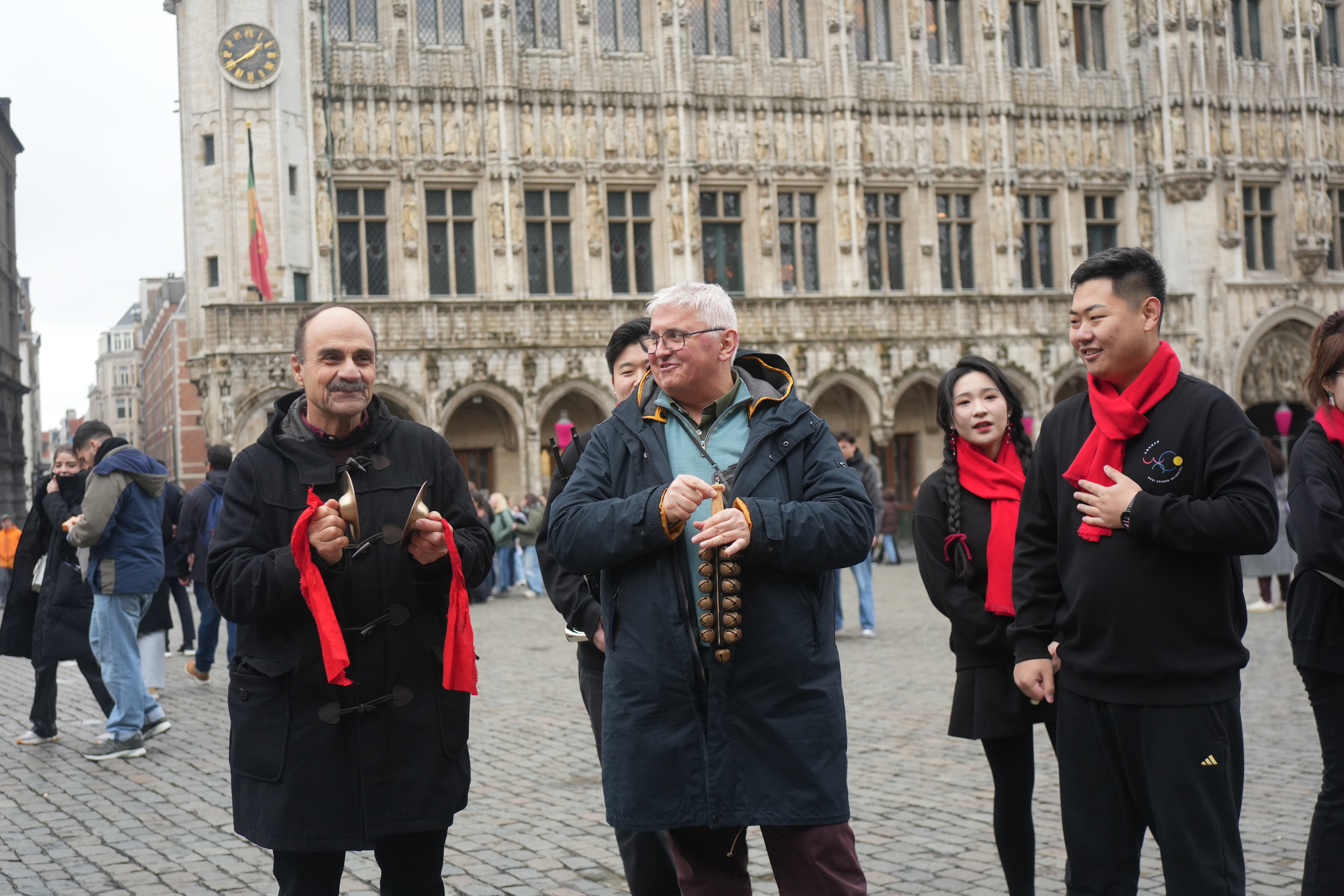
The journey continued through Germany’s elite venues, including Hamburg’s Elbphilharmonie and the Tonhalle Düsseldorf, showcasing the technical precision of Chinese folk orchestration. In the Austrian Tyrol, the tour took an improvisational turn as Wuxi musicians performed alongside local artists against the backdrop of the Alps, a live demonstration of the “beauty without borders”.
The tour concluded on February 26 in Vienna, where the ensemble hosted the “Dreamy Jiangnan” cultural salon at the Wiener Konzerthaus. The event paired musical performances with an interactive exhibition of Wuxi’s intangible cultural heritage, featuring traditional embroidery and clay figurines. The delegation also visited the University of Music and Performing Arts Vienna for the “Jiangnan Charm, Harmonious Resonance” China-Austria Music Exchange event. Through a series of academic dialogues with faculty and students, both sides engaged in a meaningful cultural encounter. These interactions went beyond simple performances, significantly deepening mutual understanding and strengthening the musical ties between East and West.
By integrating the “Voice of China” into the “World Symphony,” the Wuxi Cultural Exchange Group has opened a new chapter in Wuxi’s enduring musical engagement with the world.
Hashtag: #WuxiInformationOffice
The issuer is solely responsible for the content of this announcement.












-
 Feature/OPED6 years ago
Davos was Different this year
-
Travel/Tourism10 years ago
Lagos Seals Western Lodge Hotel In Ikorodu
-

 Showbiz3 years ago
Estranged Lover Releases Videos of Empress Njamah Bathing
-
 Banking8 years ago
Sort Codes of GTBank Branches in Nigeria
-

 Economy3 years ago
Subsidy Removal: CNG at N130 Per Litre Cheaper Than Petrol—IPMAN
-

 Banking3 years ago
Sort Codes of UBA Branches in Nigeria
-

 Banking3 years ago
First Bank Announces Planned Downtime
-

 Sports3 years ago
Highest Paid Nigerian Footballer – How Much Do Nigerian Footballers Earn