
Technology
9mobile Introduces e-SIM for Flexible Connectivity


By Modupe Gbadeyanka
In order to improve flexible connectivity and make its customers enjoy the most excellent experience that advanced technology provides, 9mobile has introduced an embedded subscriber identity module (eSIM) on its network.
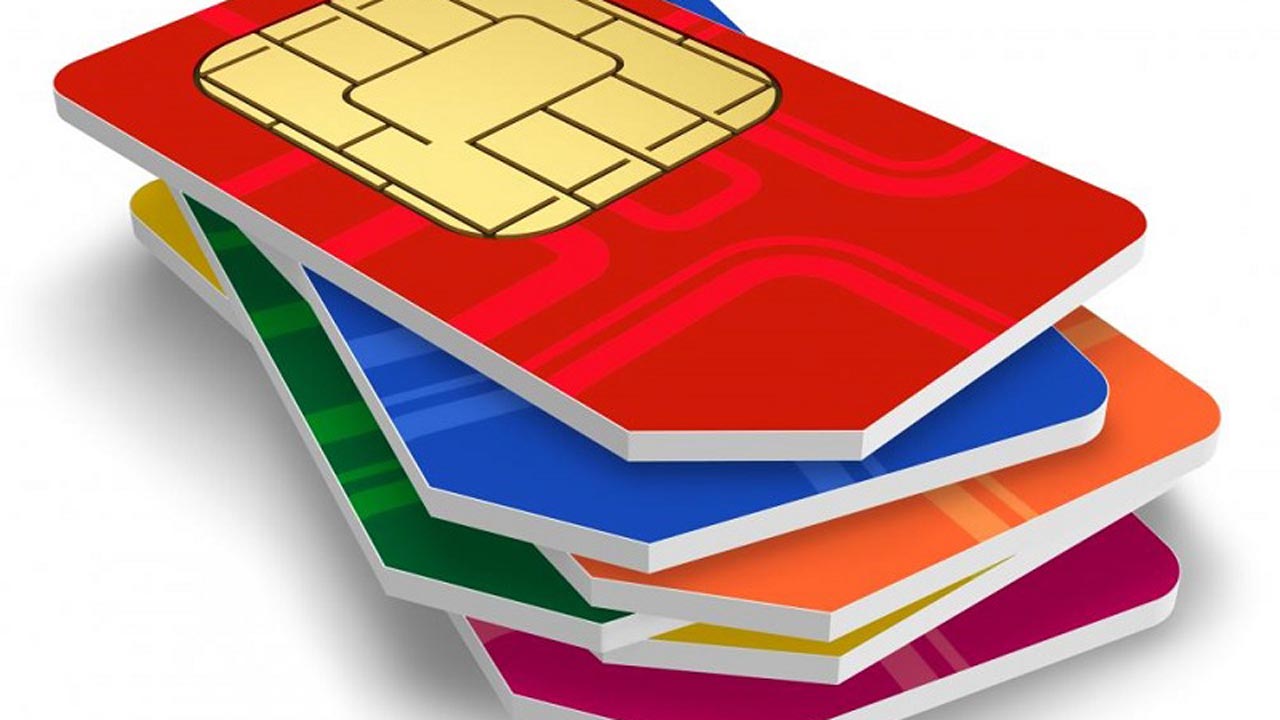
eSIM is a software-based digital chip that comes along with a device directly embedded by the manufacturer. It replaces the traditional physical plastic SIM card for compatible devices and brings a whole new spectrum of benefits and possibilities.
In a statement by the leading innovative telecoms company in Nigeria, its acting Director of Marketing, Mr Layi Onafowokan, explained that eSIM enables multiple usage and adaptation of one subscriber profile across a broad range of mobile communication devices, internet of things (IoT) and artificial intelligence (AI) applications including smart commuting, metering, tracking, and surveillance, rather than the restricted single-device use of the conventional SIM card.
On how customers can acquire the eSIM, he said, “Customers can walk into any of our select 9mobile Experience Centres to request an eSIM activation.
“A QR code will be provided to scan and download an eSIM profile and perform the usual SIM registration.”
It was noted that customers that activate 9mobile’s eSIM service will enjoy up to 7GB data-free while those who want to change to an eSIM will only do a SIM swap at the select Experience Centre.
Those who purchase a new phone and want to swap back to regular SIM have no problems as they will get a physical SIM card at the 9mobile Experience Centre.
All compatible mobile devices including but not limited to iPhone 11, 11 Pro, 11 Pro Max, iPhone XS, XS Max, iPhone XR; Samsung S20 Series, Google Pixel 3, 3XL, Pixel 4, 4XL can immediately activate this exciting e-SIM on the 9mobile network.
Since entering the Nigerian market more than a decade ago, 9mobile continues to transform lives with its consistent roll-out of ground-breaking solutions.



By Adedapo Adesanya
Telecommunications operators in Nigeria will now be required to give subscribers a minimum of 14 days’ notice before deactivating their SIM cards over inactivity or post-paid churn, following a fresh proposal by the Nigerian Communications Commission (NCC).
The proposal is contained in a consultation paper, signed by the Executive Vice Chairman and Chief Executive Officer of the NCC, Mr Aminu Maida, and titled Stakeholders Consultation Process for the Telecoms Identity Risks Management Platform, dated February 26, 2026, and published on the Commission’s website.
Under the proposed amendments to the Quality-of-Service (QoS) Business Rules, the Commission said operators must notify affected subscribers ahead of any planned churn.
“Prior to churning of a post-paid line, the Operator shall send a notification to the affected subscriber through an alternative line or an email on the pending churning of his line,” the document stated.
It added that “this notification shall be sent at least 14 days before the final date for the churn of the number.”
A similar provision was proposed for prepaid subscribers. According to the Commission, operators must equally notify prepaid customers via an alternative line or email at least 14 days before the final churn date.
Currently, under Section 2.3.1 of the QoS Business Rules, a subscriber’s line may be deactivated if it has not been used for six months for a revenue-generating event. If the inactivity persists for another six months, the subscriber risks losing the number entirely, except in cases of proven network-related faults.
The new proposal is part of a broader regulatory review tied to the rollout of the Telecoms Identity Risk Management System (TIRMS), a cross-sector platform designed to curb fraud linked to recycled, swapped and barred mobile numbers.
The NCC explained in the background section of the paper that TIRMS is a secure, regulatory-backed platform that helps prevent fraud stemming from churned, swapped, barred Mobile Station International Subscriber Directory Numbers in Nigeria.
It said this platform will provide a uniform approach for all sectors in relation to the integrity and utilisation of registered MSISDNs on the Nigerian Communications network.
In addition to the 14-day notice requirement, the Commission also proposed that operators must submit details of all churned numbers to TIRMS within seven days of completing the churn process, strengthening oversight and accountability in the system.
The consultation process, which the Commission said is in line with Section 58 of the Nigerian Communications Act 2003, will remain open for 21 days from the date of publication. Stakeholders are expected to submit their comments on or before March 20, 2026.

By Modupe Gbadeyanka
The founder of Interswitch, Mr Mitchell Elegbe, has been honoured for pioneering Nigeria’s digital payments revolution.
At a ceremony in Lagos on Sunday, March 1, 2026, he was bestowed with the 2025 Silverbird Special Achievement Award for shaping Africa’s financial ecosystem.
The Silverbird Special Achievement Award recognises individuals whose innovation, vision, and sustained impact have left an indelible mark on society.
Mr Elegbe described the award as both humbling and symbolic of a broader journey, saying, “This honour represents far more than a personal milestone. It reflects the courage of a team that believed, long before it was fashionable, that Nigeria and Africa could build world-class financial infrastructure.”
“When we started Interswitch, we were driven by a simple but powerful idea that technology could democratise access, unlock opportunity, and enable commerce at scale.
“This recognition by Silverbird strengthens our resolve to continue building systems that empower businesses, support governments, and expand inclusion across the continent,” he said when he received the accolade at the Silverbird Man of the Year Awards ceremony attended by several other dignitaries, whose leadership and contributions continue to shape national development and industry transformation.
In 2002, Mr Elegbe established Interswitch after he was inspired by a bold conviction that technology could fundamentally redefine how value moves within and across economies.
Under his leadership, the company has evolved into one of Africa’s foremost integrated payments and digital commerce companies, powering financial transactions for governments, banks, businesses, and millions of consumers.
Today, much of Nigeria’s electronic payments ecosystem traces its foundational architecture to the systems and rails established under his leadership.
“Mitchell’s journey is inseparable from Nigeria’s digital payments evolution. His foresight and resilience helped establish foundational infrastructure at a time when the ecosystem was still nascent.
“This recognition affirms not only his personal legacy, but the broader impact of Interswitch in enabling commerce and strengthening financial systems across Africa,” the Executive Vice President and Group Marketing and Communications for Interswitch, Ms Cherry Eromosele, commented.
By Adedapo Adesanya
The Socio-Economic Rights and Accountability Project (SERAP) has called on the Federal Competition and Consumer Protection Commission (FCCPC) to urgently investigate major global technology companies over alleged abuses affecting Nigeria’s digital economy, media freedom, privacy rights and democratic integrity.
In a complaint addressed to the chief executive of FCCPC, Mr Tunji Bello, the group accused Google, Meta (Facebook), Apple, Microsoft (Bing), X, TikTok, Amazon and YouTube of deploying opaque algorithms and leveraging market dominance in ways that allegedly undermine Nigerian media organisations, businesses, and citizens’ rights.
The complaint, signed by SERAP Deputy Director, Mr Kolawole Oluwadare, urged the commission to take measures necessary to urgently prevent further unfair market practices, algorithmic influence, consumer harm and abuses of media freedom, freedom of expression, privacy, and access to information.”
SERAP also asked the FCCPC to convene a public hearing to investigate allegations of algorithmic discrimination, data exploitation, revenue diversion, and anti-competitive conduct involving the tech giants.
According to the organisation, dominant digital platforms now act as private gatekeepers of Nigeria’s information and business ecosystem, wielding enormous influence over public discourse and market competition without sufficient transparency or regulatory oversight.
“Millions of Nigerians rely on these platforms for news, information and business opportunities,” SERAP stated, warning that opaque algorithms and offshore revenue extraction models pose both economic and human rights concerns.
The group argued that the alleged practices threaten media plurality, consumer protection, privacy rights, and the integrity of Nigeria’s forthcoming elections.
SERAP pointed to actions taken by the South African Competition Commission, which investigated Google over alleged bias against local media content, adding that the South African probe reportedly resulted in measures including algorithmic transparency requirements, compliance monitoring and financial remedies.
SERAP urged the FCCPC to take similar steps to safeguard Nigerian media and businesses.
The organisation maintained that if established, the allegations could amount to violations of Sections 17 and 18 of the Federal Competition and Consumer Protection Act (FCCPA), which prohibit abuse of market dominance and anti-competitive conduct.
SERAP stressed that the FCCPC has statutory authority to investigate and sanction conduct that substantially prevents, restricts or distorts competition in Nigeria.
It also warned that failure by the Commission to act promptly could prompt the organisation to pursue legal action to compel regulatory intervention.
Citing concerns reportedly raised by the Nigerian Press Organisation (NPO), SERAP said big tech companies have fundamentally altered Nigeria’s information environment, creating what it described as a structural imbalance of power that threatens the sustainability of professional journalism.
Among the allegations listed are: Algorithms controlled outside Nigeria determining content visibility, monetisation of Nigerian news content without proportionate reinvestment, offshore extraction of advertising revenues, limited discoverability of Nigerian websites and platforms, and lack of transparency in ranking and recommendation systems.
SERAP argued that declining revenues in the Nigerian media industry have led to shrinking newsrooms, closure of bureaus, and the emergence of news deserts, weakening journalism’s constitutional role in democratic accountability.
The organisation further warned that algorithmic opacity and data-driven micro-targeting could influence voter exposure to information ahead of Nigeria’s forthcoming elections, raising concerns about electoral fairness and transparency.










-
 Feature/OPED6 years ago
Davos was Different this year
-
Travel/Tourism10 years ago
Lagos Seals Western Lodge Hotel In Ikorodu
-

 Showbiz3 years ago
Estranged Lover Releases Videos of Empress Njamah Bathing
-
 Banking8 years ago
Sort Codes of GTBank Branches in Nigeria
-

 Economy3 years ago
Subsidy Removal: CNG at N130 Per Litre Cheaper Than Petrol—IPMAN
-

 Banking3 years ago
Sort Codes of UBA Branches in Nigeria
-

 Banking3 years ago
First Bank Announces Planned Downtime
-

 Sports3 years ago
Highest Paid Nigerian Footballer – How Much Do Nigerian Footballers Earn