
Travel/Tourism
ForsaTEK 2025 Offers Platform for High-Impact, Scalable Innovation

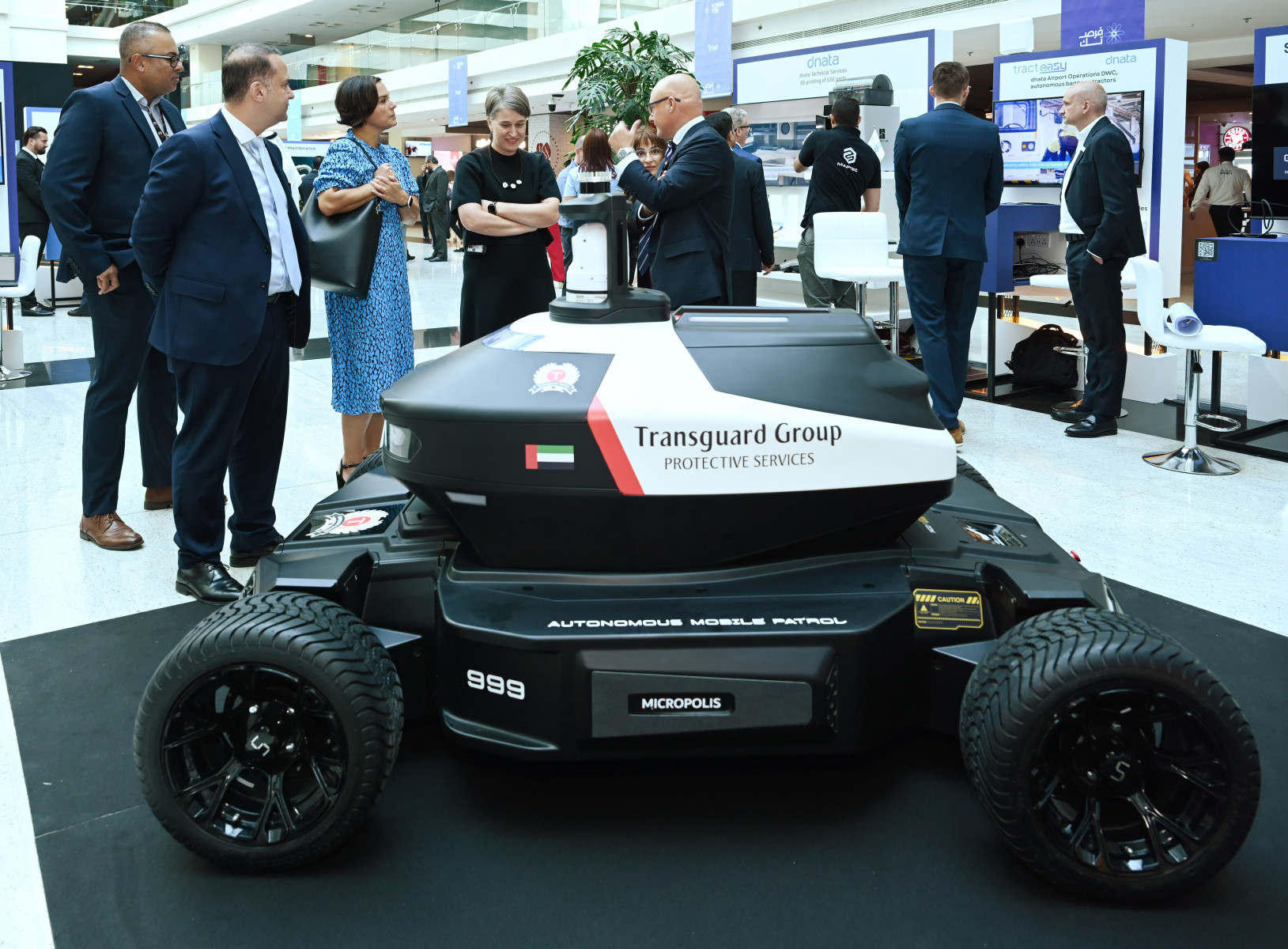
The Emirates Group’s annual flagship innovation and technology forum, ForsaTEK, is once again bringing cutting-edge technology partnerships, dynamic start-ups, thought-provoking discussions, and emerging talent developing game-changing concepts to the fore.
ForsaTEK has expanded its reach this year to drive greater innovation engagement across the Group’s different departments and businesses, focusing on scaling successful trials to extract the full value of promising innovation and solutions. This year, the annual forum’s themes highlight how AI, robotics and Internet of Things (IoT) will reshape aviation, in addition to the role human factors play in successful adoption of technology.
ForsaTEK was officially opened by His Highness Sheikh Ahmed bin Saeed Al Maktoum, Chairman and Chief Executive Emirates Airline and Group, who was accompanied by Her Excellency Sarah Al Amiri, Minister of Education for the UAE, amongst senior Emirates Group executives for an official tour of innovation showcases.
His Highness said: “Building on the success of the first two editions, ForsaTEK 2025 underpins the Emirates Group’s continued commitment to anchoring the next wave of innovations within our business, scaling up existing innovations, supporting startups, and creating a powerful testbed of partnerships that introduce fresh solutions and propel our digital future forward.
The high impact showcases at every part of the innovation pipeline at ForsaTEK 2025 demonstrate how the Emirates Group is building an ecosystem to push new boundaries in AI, technology, research, and digital adoption. We hope all our teams and partners leave the event feeling inspired by tomorrow’s possibilities and determined to weave innovation, both big and small, into their everyday work lives.”
Technology showcases and driving start-up growth
This year, ForsaTEK featured over 40 in-house and partner showcases, strategically organised across the innovation pipeline spectrum, from early-stage research and prototyping, to proof-of-concept trials, and fully launched initiatives being scaled up.
Fully launched initiatives included Transguard and Emirates Group Security’s advanced autonomous robotics to enhance urban safety and security; dnata Cargo’s autonomous drone system for inventory validation; dnata’s 3D prototyping and custom manufacturing of spare parts; Emirates Airport Services’ AI-enabled aircraft turnaround analysis and resource optimisation system, amongst other aviation and customer-centric innovations.
The Trial Zone included several accessibility initiatives including Glidance’s groundbreaking self-guided mobility aid enabling safe, independent navigation for the visually impaired; the JeffCAN immersive media chair, blending sensory design and technology to support and engage neurodiverse passengers; the Airbus Accessible and Inclusive cabin featuring a Persons with Reduced Mobility (PRM) lavatory and personal wheelchair onboard. Maintenance and engineering trials featured an AI and computer vision platform for fast, accurate engine part detection and identification; Apple Vision Pro-based augmented reality maintenance for enhanced visualisation of brake, wheel, and APU assemblies, and drone-based aircraft inspections, for fast, safe, and accurate aircraft exterior inspections.
A pitch zone also featured 13 start-ups showcasing their ideas to a panel of VIPs, investors, and tech industry representatives. People and youth engagement areas within the Experience Zone were also activated to showcase innovation journeys and enhance visitor engagement.
Influential keynotes
Her Excellency Sarah Al Amiri, UAE Minister of Education delivered ForsaTEK 2025’s opening keynote, focused around the ‘disruption of technology on public education’. The UAE recently announced the integration of AI into all levels of school curricula to prepare the nation’s youth for a world increasingly shaped by a rapidly evolving tech landscape, as well as positioning the UAE as a major global player in artificial intelligence.
The event’s exciting programme also included world-renowned tech experts and academics like Dr. Mark Esposito, Geostrategist and Advisor at the World Economic Forum and Harvard University Innovation Researcher delving into topics like reinventing and remobilisation of technology strategies; ‘Imagineering with Disney’; Younes Bensouda Mourri, Professor of AI at Stanford University who discussed rethinking human intelligence in an AI powered world; humanoid robots; and the future impact of AI on society and human advancement with Shekhar Kapur, Oscar-nominated filmmaker and AI philosopher.
At ForsaTEK 2025, the Emirates Group’s Afkar app was also launched. Afkar, which means ‘ideas’ in Arabic, is a company-wide digital platform that allows employees – wherever they work and whatever they do – to play their part in generating new ideas for implementation. The winning concept unveiled at this year’s event was the automation of visa validation for customers, removing yet another source of friction for passengers during their travel journeys.






The manner in which international travel and digital entertainment intersect has experienced a massive transformation in the current year. As the volume of international travel continues to rise to unprecedented levels, the technological potential to access a 1xbet giriş from any point in the world has become the benchmark by which the efficacy of a given system or network should be judged. In 2026, more than 65% of international travel hubs have completely integrated standalone 5G connectivity, providing the environment that is required to enable high-stakes sports viewing. This means that regardless of the position that the sports aficionado finds themselves in, at the top of a mountain or at the coast, the nature of the information that flows will remain the same. The modern-day traveler expects nothing but the best, and that includes the manner in which they will be able to engage with the digital hobbies that they have been able to cultivate during the course of the year.
The way in which the experience is felt has also been improved through the efficiency of the software that is used to power the mobile experience. If the user has opted to install the 1xbet apk file on the 2026 flagship device, the user is able to experience the new “Travel-Adaptive” coding that reduces the background data usage by 30% when traveling internationally. This is an important aspect of the experience because the user may find themselves in transit for an extended period of time without the ability to plug in and charge the device. As the statistics show for the first half of the year, the user of the mobile The application is able to experience a 25% reduction in data usage when traveling compared to the user who makes use of the mobile web browser in order to experience the sports entertainment the user has grown accustomed to. It is a more relaxed experience where the main aspect is the thrill of the game.
The Role of Mobile Betting in Modern Tourism
It should be noted that the modern betting process concerning sports is considered to be one of the most effective ways to get entertained during a long flight or when staying at the airport. Mobile betting is considered to be a unique opportunity for a tourist not just to view a sporting event, but also to become an active participant of that sporting event that is taking place on the other side of the world. Thanks to the speed of modern applications, it is possible for a tourist to react immediately to the changes in the score and adjust the predictions accordingly during an excursion or when staying by the pool. Such an event is considered to be an adventure in bright colors.
Apart from the entertainment that such modern platforms offer, they also present a great number of analytical data that allows the tourist to get engaged in the process. One of the main purposes of such tourism is to get satisfaction from the accuracy of one’s prediction, as well as competition. Such platforms pay great attention to the safety issues, reminding the tourist that “betting should be an additional positive experience of your trip.”
Network Benchmarks for the Connected Traveler
The sports enthusiast who is always on the go would find that the line which separates an enjoyable experience from an unenjoyable experience of sports betting is measured in mere milliseconds. In fact, the world average of mobile latency for tourist destinations has been reduced to mere 16ms in 2026, which is an important consideration for sports enthusiasts who enjoy sports betting for games such as tennis and basketball.
The table below shows the current standards for mobile network performance for the most prominent tourist destinations around the world:
| Network Metric | Global Average 2026 | Satisfaction Rate | Primary Use Case |
| Download Speed | 195.6 Mbps | 88 percent | High-definition streaming |
| Signal Latency (5G) | 16 ms | 92 percent | Real-time Live updates |
| Roaming Cost | 1.15 USD / GB | 74 percent | Continuous background sync |
| App Load Time | 1.8 seconds | 85 percent | Rapid market entry |
| Connection Stability | 99.8 percent | 91 percent | Uninterrupted viewing |
As per the latest research findings on the subject by the research company named Statista, it has been identified that the need for high-speed mobile data for the tourists is rising by an increase of 40%. This is mainly because the tourist would like to experience a form of ‘multi-layered’ entertainment. The definition of ‘multi-layered’ implies that the sports enthusiast would like to view a live streaming event, access his or her social media account, and place a friendly bet on the event simultaneously. Therefore, as long as this infrastructure is in place, this would thrive.
The Evolution of Mobile Betting as Travel Leisure
In the year 2026, mobile betting for sports would be considered a fun way of spicing up the entire travel experience. This is because it would be able to provide a new dimension to a sporting event that an individual is witnessing while traveling in a pub or a train. It would be able to provide individuals with a way of having a personal stake in a world event. Thus, the hours that an individual spends in a train or an airport would be able to pass quickly with a fun way of gamification of sports viewing.
In the year 2026, modern mobile betting has turned out to be a full-fledged way of socializing for travelers. This is because many individuals use the co-watching features of the application and group betting features of the application in order to compete with their friends back home or connect with other sports fans of the sport that they are watching while visiting pubs around the world. It is because it would be able to provide individuals with a new dimension of traveling. It is no longer just about traveling to a new destination; it is about becoming part of a new world community where talking about the probabilities of winning or forward performance of a team is considered to be the universal language of communication. It is no longer just about betting; it is about getting the rhythm of the world of sports wherever an individual is located—from the cozy European roads to the futuristic cities of Asia.
Popular Mobile Sports Activities for People on the Move
Individuals who travel in 2026 have managed to come up with their own ways of having fun through sports without missing out on their sightseeing targets. There has been a new trend of “micro-betting,” which refers to betting on a game that will happen in the near future.
The following is a list that points out the best mobile sports-related activities for traveling individuals for the current year:
- Predicting the total points scored in one quarter of the basketball game while in short transit stops.
- Tracking the sports player that is most likely to score the next goal in the football game while in a cafe.
- Determining the total number of games in one set in the tennis game while in downtime at a resort.
- Viewing the percentage of ball possession for a particular team through the use of graphical overlays.
- Predicting the exact number of free throws scored in a game while in downtime at a hotel.
The activities will be perfect for the downtime in the traveling schedule as they will provide the individual with a dose of excitement without making the individual glued to his/her screens for hours. This way, the individual will be able to appreciate the digital world as well as the beauty of the world he/she is in.
Security and Responsible Habits Abroad
However, with the introduction of mobile transactions during travel, the factor of security has been regarded as a major factor. In fact, in the current scenario, 94% of the total mobile sports platforms provide multi-factor biometric authentication. This means that the security of your account is ensured even when you are accessing the internet through a public source of internet connectivity, such as Wi-Fi. Moreover, the majority of the platforms provide “Smart Limits” that are location and time zone-based. In this way, an individual can develop a habit when they are traveling. All of this has been done in a way that the overall experience remains a positive one. This is because betting is something that an individual chooses for his or her entertainment.
The innovations in the field of technology, such as the introduction of technology through eSIM, allow an individual to remain connected. This means that an individual does not face “bill shock” when they are using roaming.

By Aduragbemi Omiyale
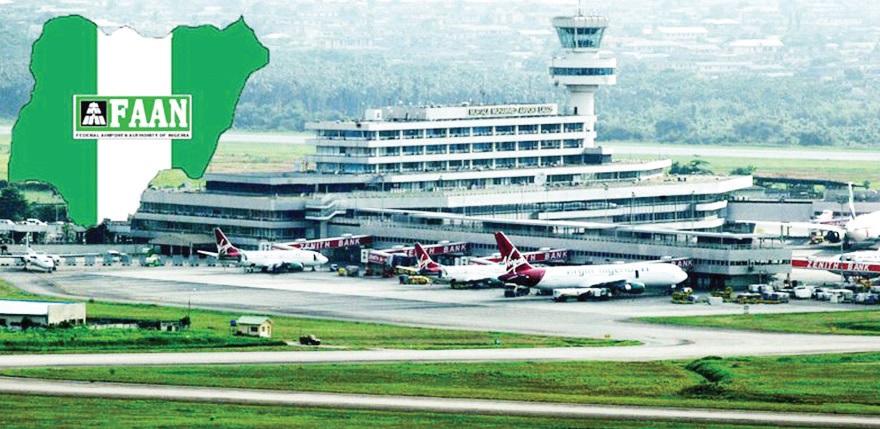
The federal government has directed the Federal Airports Authority of Nigeria (FAAN) to adopt a hybrid payment system that accommodates both cash and card payments at all airport access gates with effect from Friday, March 13, 2026.
This system is to be used until the introduction of a fully automated or electronic system at all access gates at the airports in order to fully and eventually eliminate cash payments.
In a statement on Tuesday, the Minister of Aviation and Aerospace Development, Mr Festus Keyamo, disclosed that these decisions were reached after reviewing the initial implementation and the operational challenges observed.
FAAN had earlier commenced an electronic payment system last week, but it was suspended by President Bola Tinubu due to the traffic gridlock it created.
Yesterday, the Aviation Minister met with officials of FAAN and senior officials of the Ministry, and it was agreed to engage concessionaires for the introduction of a fully automated or electronic system.
Mr Keyamo, in the statement signed by his Special Adviser on Media and Communications, Mr Tunde Moshood, said motorists who already possess FAAN Go Cashless Cards may continue to use them until further notice.
It was also resolved that other electronic payment options, including POS terminals and other approved digital channels, will also remain available, while members of the public and road users were encouraged to obtain and use the FAAN Go Cashless Card as the organisation continues to enhance and fully optimise the cashless payment system.
By Aduragbemi Omiyale
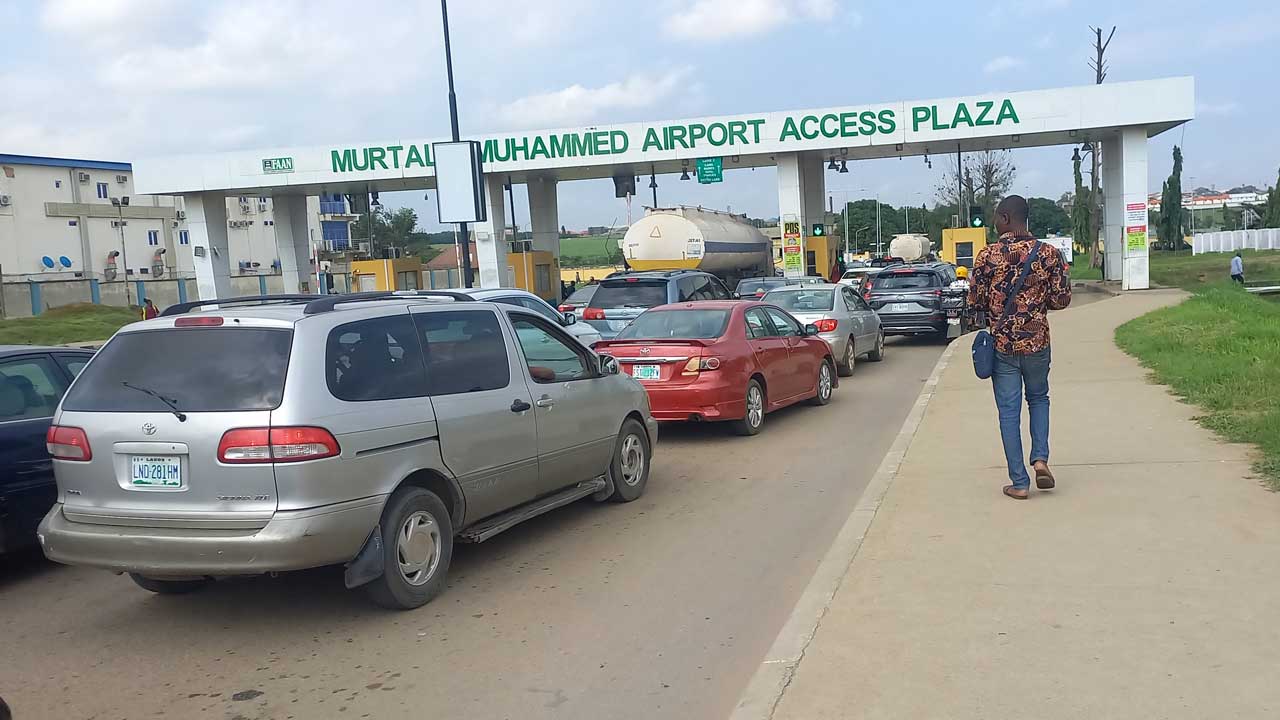
The cashless airport toll gate payment system introduced by the Federal Airports Authority of Nigeria (FAAN) has been suspended by President Bola Tinubu.
At the Federal Executive Council (FEC) meeting held on Wednesday in Abuja, Mr Tinubu directed the agency to immediately return to the status quo, pending the development of a more efficient system.
The Minister of Aviation and Aerospace Development, Mr Festus Keyamo, who announced the suspension after the FEC meeting today, said the action followed gridlock that trailed the new system, which caused passengers to miss their flights.
FAAN had commenced the cashless payment system for airport toll gates across the country in a bid to block revenue leakages and adopt an electronic payment system instead of cash.
But this policy caused traffic gridlock at several airports, especially those in Lagos and Abuja.
“Mr President was very concerned about the welfare of Nigerians and the fact that most Nigerians were losing their flights, missing their flights.
“So, Mr President, out of empathy, directed today that we should suspend the present system because it creates a lot of gridlock, and Nigerians are suffering as a result of it,” Mr Keyamo informed newsmen.
“The major reason why Mr President took this decision is to eliminate the present gridlock that we are experiencing, especially at both the Lagos and Abuja toll gates leading to the airport.
“That’s the major reason, not that the President is happy with the cash system,” he added.
The Minister further said the President directed stakeholders to “go back and, if possible, even engage the private sector to ensure that we establish an electronic system by which we can collect these revenues for the federal government at the gates, to the extent that it will not create the gridlock that we are having right now.”
“We are going to do a hybrid system whereby we can collect cash temporarily and, of course, use the cards that they have collected temporarily for now,” Mr Keyamo added.
-
 Feature/OPED6 years ago
Davos was Different this year
-
Travel/Tourism10 years ago
Lagos Seals Western Lodge Hotel In Ikorodu
-

 Showbiz3 years ago
Estranged Lover Releases Videos of Empress Njamah Bathing
-
 Banking8 years ago
Sort Codes of GTBank Branches in Nigeria
-

 Economy3 years ago
Subsidy Removal: CNG at N130 Per Litre Cheaper Than Petrol—IPMAN
-

 Banking3 years ago
Sort Codes of UBA Branches in Nigeria
-

 Banking3 years ago
First Bank Announces Planned Downtime
-

 Sports3 years ago
Highest Paid Nigerian Footballer – How Much Do Nigerian Footballers Earn