
Travel/Tourism
Mobil Acquires Lagos Continental Hotel from AMCON

By Modupe Gbadeyanka
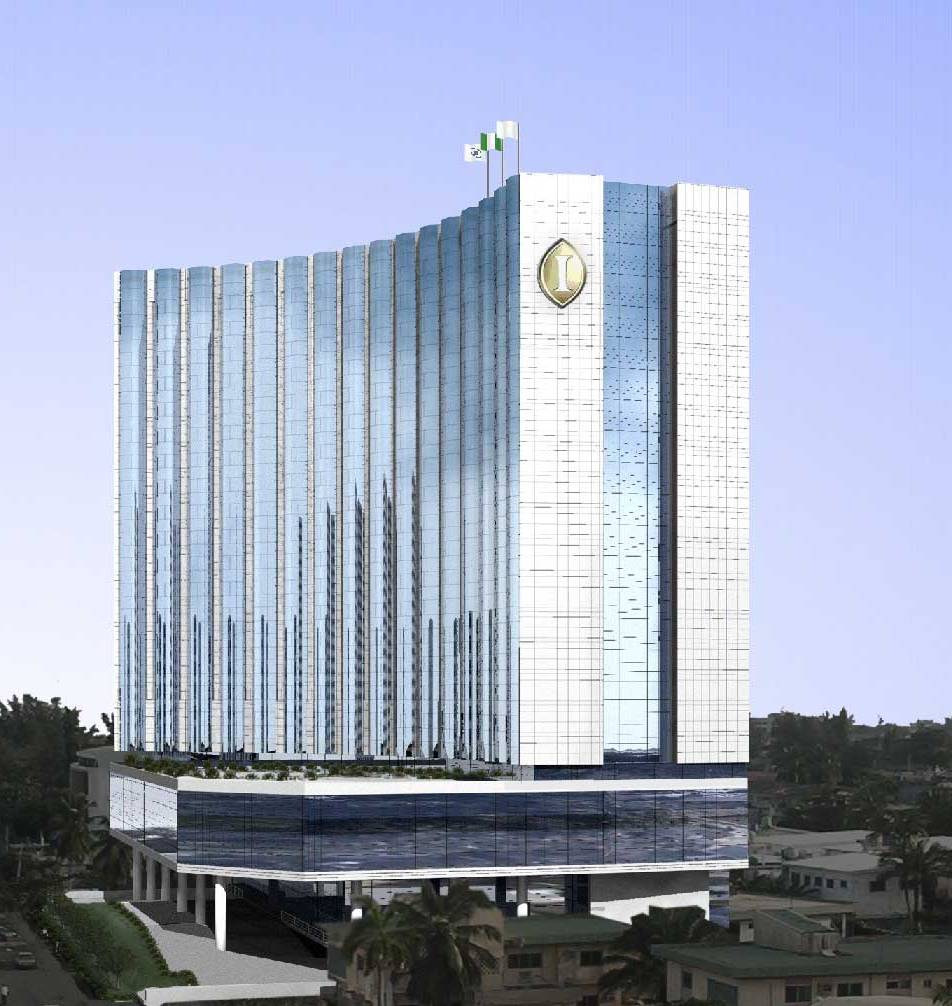
The popular Lagos Continental Hotel has been acquired by an oil company, 11 Plc, formerly known as Mobil Oil Nigeria Plc, the energy firm has confirmed.
The hospitality company was acquired from the Asset Management Company of Nigeria (AMCON) after top executives of the two organisations held several intense talks.
Mobil, in a notice to the Nigerian Stock Exchange (NSE), said it plans to partner with a major international brand to provide world class service synonymous with all its operations.
According to the disclosure, the new asset will require significant investment to raise standard from the current state to the levels consistent with similar facilities in major cities around the world.
Mobil said it currently owns several prime properties in its real estate portfolio fully rented to blue chip tenants, saying the acquisition of Lagos Continental Hotel was consistent with its desire to delivery “our interests given the current challenging environment in the downstream sector of the petroleum industry.”
It stated that, “Fuel margins in the industry have remained stagnant for several years in the highly competitive and regulated industry. We anticipate that this asset will contribute positively to earnings and underlines the faith of its stakeholders in the future of the Nigerian economy.”
Concluding, the energy company assured its “numerous stakeholders that we remain committed to delivering outstanding value and robust returns in the years ahead.
“However, in the short term, cashflow and EBITDA could be under strain as a result of funds needs to renovate and upgrade the hotel to attract a 5-star branding. We also like to assure the employees of the hotel that they will be treated with the utmost dignity and respect during the transition and seek their cooperation to make the take over a smooth one.”
Business Post reports that shares of Mobil closed flat today at the exchange at N147.90 per unit.



By Adedapo Adesanya
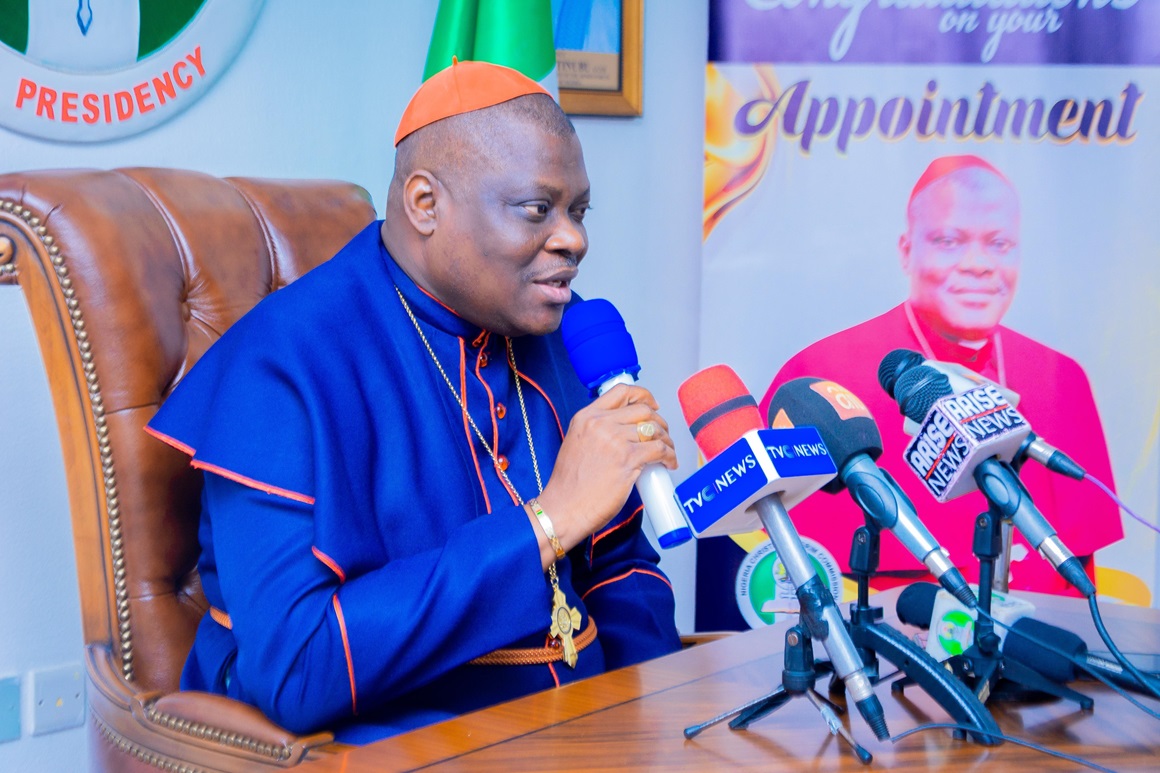
The Nigeria Christian Pilgrim Commission (NCPC) has suspended pilgrimages to Israel and all other Middle East nations owing to the escalation of tensions in the Gulf region.
The Executive Secretary of NCPC, Bishop Stephen Adegbite, said during a press briefing in Lagos on Tuesday that every pilgrimage of the commission, as well as of the private pilgrimage operators, has been suspended until security in Israel and all the Middle East returns to normalcy.
Bishop Adegbite also assured that the over 500 pilgrims that made up the last batch of the 2025 pilgrimage have safely landed in Nigeria on Tuesday.
Recall that the United States and Israel have carried out waves of airstrikes across Iran, and Iran has retaliated with drone and missile attacks against US-aligned countries across the Middle East.
The campaign has killed several of Iran’s top military and political leaders, including the supreme leader, Ayatollah Ali Khamenei.
Iran retaliated the death of its supreme leader by targeting US military assets in several Gulf countries, with missiles reportedly striking sites in Bahrain, Qatar, Kuwait, and the United Arab Emirates (UAE).
The US military has acknowledged the deaths of six service members, while the Iranian Red Crescent Society said more than 500 people have been killed in the country.
This development has made the region unstable and puts Nigerians making pilgrimage to the Middle East at risk.

By Adedapo Adesanya
The Federal Competition and Consumer Protection Commission (FCCPC) says its investigation uncovered how airlines manipulated flight fares and fixed prices arbitrarily during the last Christmas and New Year’s holidays.
The findings, contained in an interim report released on Thursday by the commission’s department of surveillance and investigations, compared domestic airline pricing from the December 2025 festive period with post-peak January 2026 fare levels.
The FCCPC, in a statement signed by its director of corporate affairs, Mr Ondaje Ijagwu, said it established cases of price fixing by local airlines, documented abuse during the festive season, and would soon begin a probe of foreign airlines, following its ongoing country-wide investigation, which was announced earlier in January.
“A review undertaken by the Federal Competition and Consumer Protection Commission (FCCPC) has uncovered patterns of price manipulation perpetrated by some local airlines during the last festive season. The forensic exercise benefitted from data collated by the commission from airlines operating local routes in the country,” the report said.
The report compares domestic airline pricing from the December 2025 festive period with post-peak January 2026 fare levels.
The FCCPC’s preliminary analysis indicated that fares recorded during the December peak period were materially higher than those observed in the post-peak period across several routes despite relative stability in critical operating variables such as fuel price, government taxes and foreign exchange.
“The differences observed in fares therefore appear to reflect airlines’ arbitrary pricing decisions, including yield management and capacity allocation, rather than any variation in regulatory fees,” the report said.
It also noted that route-level analysis showed that higher fares coincided with periods of reduced seat availability during predictable seasonal demand peaks. On some high-density routes, peak fares were clustered within relatively narrow ranges across several operators.
It noted that on certain corridors, such as Abuja-Port Harcourt, peak fares were several times higher than corresponding post-peak levels. “On selected routes, the difference in the price of a single ticket reached approximately N405,000. Median fares across the sampled routes also rose markedly during the festive window when compared with post-peak benchmarks,” it said.
The report identified the relevance of Sections 59, 72, 107, 108, 124 and 127 of the Federal Competition and Consumer Protection Act 2018, which address the prohibition of agreements in restraint of competition, the prohibition of abuse of a dominant position, the offence of price-fixing, conspiracy to commit offences under the Act, the right to fair dealings, and the prohibition of unfair, unreasonable or unjust contract terms.
The FCCPC, however, recognised that seasonal demand pressures, scheduling constraints and fleet utilisation might also affect pricing during the peak travel period. It added that these actors remain under consideration as part of the commission’s ongoing review.
Commenting on the release of the interim report, the executive vice chairman and chief executive officer of the FCCPC, Tunji Bello, said the review was part of the commission’s statutory responsibility to promote competitive markets and safeguard consumers.
“This assessment is intended to provide clarity on pricing behaviour during predictable peak travel periods. The Commission’s role is not to disrupt legitimate commercial activity, but to ensure that market outcomes remain consistent with competition and consumer protection principles under the law,” Mr Bello said.
He noted that the commission was conducting further structural and route-level analysis before reaching any conclusions.
“It is important to emphasise that this is an interim report. Our next action will be dictated by the full facts established at the end of the review exercise. Then, the Commission will decide whether any regulatory guidance, engagement or enforcement steps are necessary, strictly in accordance with the law,” he said.
Bello further announced that foreign airlines would come under investigation by the FCCPC once the ongoing review of local airlines was concluded.
He noted that the probe of the foreign airlines would be in view of widespread complaints of exploitative fares they allegedly charge Nigerians on certain routes compared to fares in neighbouring countries of equal distance.
By Modupe Gbadeyanka
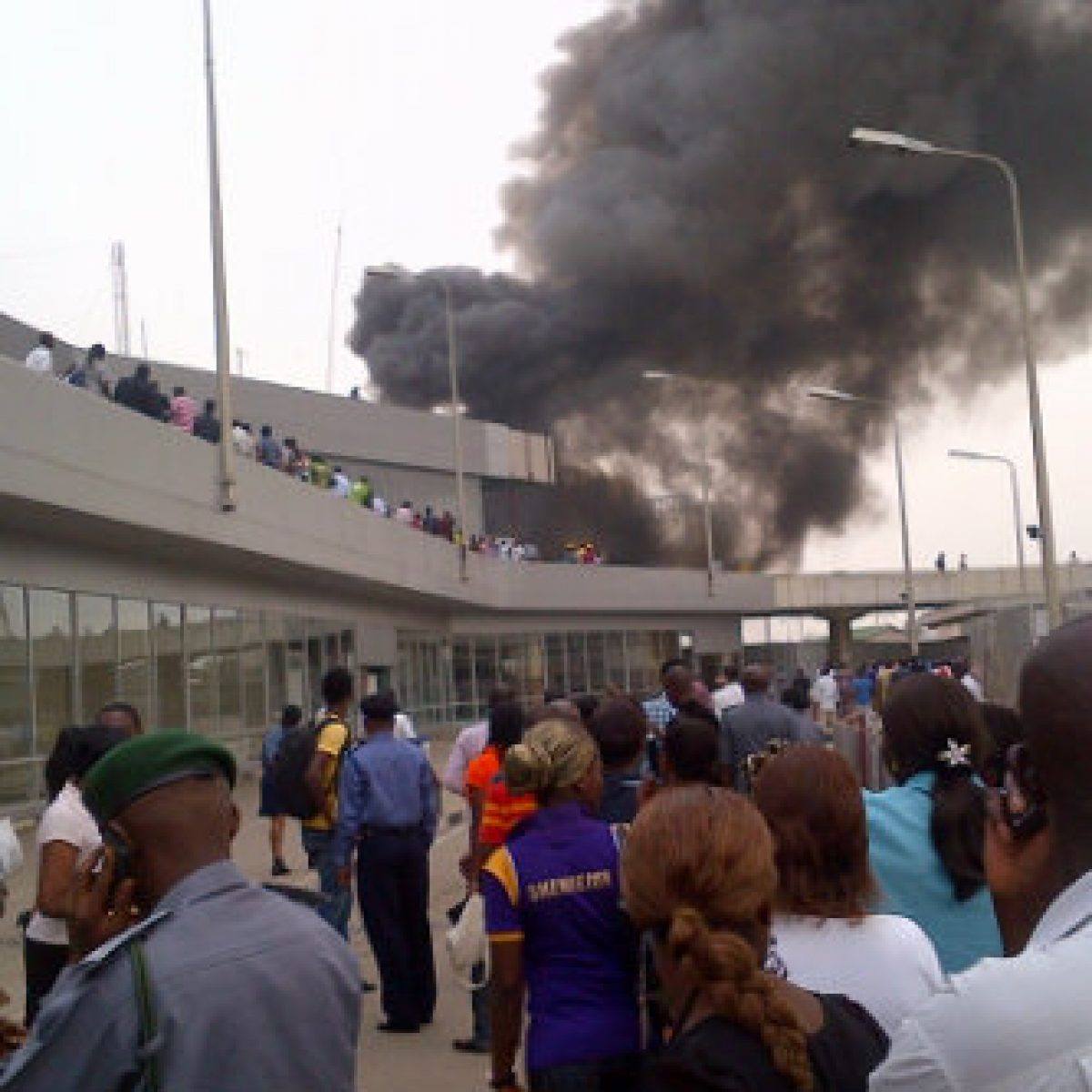
The Federal Airports Authority of Nigeria (FAAN) has disclosed that the fire incident at Terminal 1 of the Murtala Muhammed International Airport (MMIA), Lagos, on Monday originated from the server room on the first floor of Terminal 1.
In a statement in the wee hours of Tuesday, the agency confirmed that six casualties were recorded, involving three males and three females.
“A total of six casualties, comprising three males and three females, were recorded, all of whom are in stable condition. One affected individual has been transferred to the FAAN Headquarters Hospital for further medical evaluation and remains stable,” a part of the statement said.
FAAN noted that emergency response operations remain active, with coordinated firefighting, rescue, and safety teams continuing containment and recovery efforts.
A crane was successfully deployed to support rescue operations at the Control Tower, and all 14 persons initially trapped have been safely rescued and fully evacuated from the facility, it added.
The organisation disclosed that as an additional safety precaution, the sixth floor of the affected facility has been completely evacuated to support ongoing emergency operations and risk mitigation, adding that the fire within the departure hall is now largely under control, while responders continue close monitoring to prevent any spread to adjoining sections of the terminal.
“In line with established safety protocols, the airspace remains temporarily closed,” it stated, confirming that all emergency procedures were promptly activated and continue to collaborate with relevant emergency and support agencies to safeguard lives, infrastructure, and operational integrity.
Also, the statement revealed that the Nigerian Airspace Management Agency (NAMA) is actively working to establish a temporary Control Tower to enable the safe and timely restoration of airport operations as soon as practicable.










-
 Feature/OPED6 years ago
Davos was Different this year
-
Travel/Tourism10 years ago
Lagos Seals Western Lodge Hotel In Ikorodu
-

 Showbiz3 years ago
Estranged Lover Releases Videos of Empress Njamah Bathing
-
 Banking8 years ago
Sort Codes of GTBank Branches in Nigeria
-

 Economy3 years ago
Subsidy Removal: CNG at N130 Per Litre Cheaper Than Petrol—IPMAN
-

 Banking3 years ago
Sort Codes of UBA Branches in Nigeria
-

 Banking3 years ago
First Bank Announces Planned Downtime
-

 Sports3 years ago
Highest Paid Nigerian Footballer – How Much Do Nigerian Footballers Earn