
Travel/Tourism
Russia Facilitates Travel, Tourism for Africans

By Kestér Kenn Klomegâh
Russian Foreign Minister, Sergey Lavrov, has reiterated the official statement on expanding visa-free travel between Russia and Africa, signaling Kremlin’s earlier position on facilitating people-to-people movement and raising cultural interaction. The question of ‘visa-free’ travel and tourism dominated discussions during the first and second Russia-Africa summits, as a step to embrace new bilateral relations and soft-power diplomacy with Africa.
While ‘visa-free’ travel could be interpreted as a potential driver for boosting tourism business, Sergey Lavrov’s definition limited this policy only to ‘Africans holding diplomatic passports’ and largely excludes political elites and business executives looking to develop entrepreneurial connectivity to Russia. The broader ambition is to focus on Africa’s middle class, estimated at 380 million envision as the constituting a huge tourism market, which is twice Russia’s population.
The Russian Ministry of Foreign Affairs has further underlined the fact that the implementation of a ‘visa-free regime’ with all African countries aims at strengthening cultural relations with the continent. That announcement filled the local Russian media from Moscow to Vladivostok. Later, the Ministry clarified that the ‘visa-free regime’ for African countries was still under serious review. Diplomatic talks with various countries on the drafts of visa-free travel agreements were underway at different stages, as each had its specific requirements. There was a need to categorise African countries into groups.
This initiative is within the framework of the Joint Action Plan (2023-2026) adopted at the second summit in St. Petersburg. From investigations, Russia has ‘visa-free agreements’ with only six African countries. The visa-free regime only applied to African countries that signed agreements with the Foreign Ministry. Within the agreements, only holders of diplomatic passports are permitted under this consular agreement. According to sources monitored, agreements would be signed after successful negotiations with Russian authorities.
The Head of the Russian Foreign Ministry’s Consular Department, Alexey Klimov, explained in an interview with local Russian media: “Russia is currently working out travel agreements on abolishing visa requirements and providing visa-free entry for short-term trips, usually up to 90 days, with several friendly states, nine of them being the countries of Africa and the Middle East.”
“As always, we will immediately inform the public about the concrete results achieved and embodied in documented bilateral agreements,” Klimov concluded, the full transcript posted on the official ministry’s website.
With the changing times, Russia has been pursuing an integrative, multipolar approach in its relations with friendly countries around the world, including those in Africa. During these past few years, Asian countries, such as China and India, have been granted such short-term visa-free privileges. In practical terms, this policy boosts tourism. It is noticeable that Russia remains a holiday destination for Africa’s political elite, corporate business leaders, and the middle class. But undoubtedly, African politicians and corporate business leaders highly prefer to spend their vacation in the United States and Europe. Some Asian destinations are becoming increasingly popular as a preferred choice for recreation. That trend is unlikely to change; it will remain as such for the next few decades.
Tourism topic at Russia-Africa summits
Following the Russia-Africa summits, both Russia and Africa adopted joint declarations—in fact, comprehensive documents that outline various parameters for elevating cooperation to a new qualitative stage.
Tourism is one of the most highly praised spheres during discussions. Brilliant speeches called for the frequent exchange of cultural groups and the taking of comprehensive measures to promote a broad scope of cultural and tourism collaboration between Russia and Africa.
Ultimately, to boost compelling economic interests and foster cooperation, frequent interactions are necessary. The frequency of interaction should not be limited to summits and conferences alone. Some basic strategic steps and measures are also required to encourage simple holiday travels to both regions.
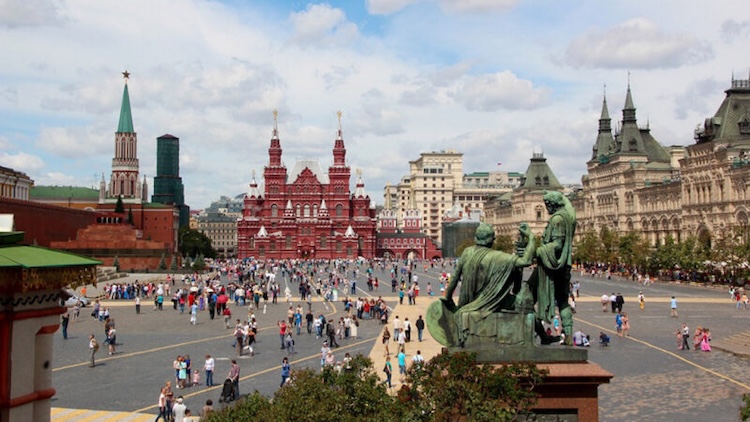
These are significantly missing in the current relations between Russia and Africa. Critics often argue that Russia is contributing considerably to its so-called isolation by closing its doors, especially when there are considerable opportunities to develop high-quality tourism. The African elite could visit Moscow, St. Petersburg, and coastal cities, including Sochi, as well as along the Volga River.
Indeed, playing with flexible visa regimes will not only promote tourism and strengthen cultural ties, but also, in practical terms, will build positive perceptions and further help to neutralise a high level of Western media disinformation across the continent. There is a need to adopt a pragmatic approach to these crucial questions and carefully examine social aspects to enhance people-to-people interactions.
Notably, Russian officials consider visits by heads of African states and ministers to be an essential pillar of their version of building relations in the anticipated multipolar world.
With the current geopolitical situation, Africa’s middle class, estimated at 380 million (twice the population of Russia), has suitable alternative holiday destinations. For now, Moscow and St. Petersburg are not their desired priority for spending vacations. Russian tour operators acknowledge, in a media query with this article’s author, that there is no bilateral entrepreneurial activity between Russia and the African tourism sector. However, on the other hand, African destinations such as Egypt, Morocco, the Maldives, Seychelles, South Africa, and Zanzibar are popular among Russian vacationers.
Most often, Russian and African experts have been discussing how best to promote exchanges of delegations, explore untapped resources, and explore the possibilities of boosting cooperation in the field of tourism, as well as the dissemination of information on tourism opportunities in the Russian Federation and African States.
Over the past few years, the summit declarations have remained tacitly as declarations. In practical terms, the visa-free regime for African countries has mainly remained as official declarations. The fundamental question often asked is for what purposes the summit declarations are made.
Current Tourism Challenges
Russian experts say Chinese, Indians and many Asians are the real potentials, taking advantage of the emerging opportunity to travel to Russia, more than Africa’s middle class and entrepreneurs. In addition, Africa is currently assessed as “reawakening to geopolitical changes” and less capable of taking their own development initiatives based on the huge resources on the continent.
The continent’s challenges still existed. Notwithstanding that, Africa is seemingly moving from the periphery toward the negotiating table. With tourism, engagement remains weak and fragmented. In comparison, in African and Asian tourism, that distinction matters. Africa has a demographic advantage, but the dynamics of tourism perceptions are low.
In the sense of uplifting bilateral partnerships, especially during this time at the heightening of geopolitics, Africa is not simply a reliable partner but has to be treated as such for operating at the tourism development scale. The future of the relationship can be an extremely positive lever, and to take important steps for mapping out diverse ways for its sustainability and expansion. Less arguably, Africa’s political leadership and business executives have explicitly understood the criticality of Russia’s ‘visa-free’ regime, as one of the most geopolitical rhetoric in the contemporary era.
Multifaceted relations with Russia
Russia is ready to build multifaceted relations with Africa. “If Russia Wins, Africa Wins!” remarked Azali Assoumani, President of Comoros, during the late July St. Petersburg summit plenary session in 2023.
With hopes for an enduring collaboration on long-term programs, the Secretariat of the Russia-Africa Partnership Forum was created. And it has since been networking, intending to promote Russia’s economic interests in Africa and to foster mutually beneficial cooperation with African countries.
The Director of the Department of Partnership with Africa of the Russian Foreign Ministry, Tatiana Dovgalenko, in an interview with the TV BRICS channel on July 9, 2025, emphasised that the importance of her new department is its functionality—focus on the comprehensive, integrated development of relations between Russia and the entire African continent, which are experiencing a genuine revival today. It implies that the main task is to implement the decisions which cover a wide range of cooperation areas, including culture and tourism.
While Russian officials focus on their work aimed at increasing Russian presence in Africa, the role of Africa in the Russian Federation is vastly underestimated. At these changing times, officials have to necessarily note with mutual interest the economic presence of Africa, beyond just training students, in the Russian Federation. And, of course, promoting African tourism is not only a promising niche but also a unique pathway for sustaining bilateral cooperation.
Still on the topic of bilateral tourism, Tatiana Dovgalenko rightly pointed out that more active participation by representatives of the African tourism industry in various events in Russia, along with the introduction of visa-free travel to African countries, would help increase the tourist appeal of Africa. Within the Action Plan of the Russia-Africa Partnership Forum for the period 2023-2026, it is anticipated that both Russia and Africa will hold constructive positions on mutual bilateral ties in this emerging multipolar world.




The manner in which international travel and digital entertainment intersect has experienced a massive transformation in the current year. As the volume of international travel continues to rise to unprecedented levels, the technological potential to access a 1xbet giriş from any point in the world has become the benchmark by which the efficacy of a given system or network should be judged. In 2026, more than 65% of international travel hubs have completely integrated standalone 5G connectivity, providing the environment that is required to enable high-stakes sports viewing. This means that regardless of the position that the sports aficionado finds themselves in, at the top of a mountain or at the coast, the nature of the information that flows will remain the same. The modern-day traveler expects nothing but the best, and that includes the manner in which they will be able to engage with the digital hobbies that they have been able to cultivate during the course of the year.
The way in which the experience is felt has also been improved through the efficiency of the software that is used to power the mobile experience. If the user has opted to install the 1xbet apk file on the 2026 flagship device, the user is able to experience the new “Travel-Adaptive” coding that reduces the background data usage by 30% when traveling internationally. This is an important aspect of the experience because the user may find themselves in transit for an extended period of time without the ability to plug in and charge the device. As the statistics show for the first half of the year, the user of the mobile The application is able to experience a 25% reduction in data usage when traveling compared to the user who makes use of the mobile web browser in order to experience the sports entertainment the user has grown accustomed to. It is a more relaxed experience where the main aspect is the thrill of the game.
The Role of Mobile Betting in Modern Tourism
It should be noted that the modern betting process concerning sports is considered to be one of the most effective ways to get entertained during a long flight or when staying at the airport. Mobile betting is considered to be a unique opportunity for a tourist not just to view a sporting event, but also to become an active participant of that sporting event that is taking place on the other side of the world. Thanks to the speed of modern applications, it is possible for a tourist to react immediately to the changes in the score and adjust the predictions accordingly during an excursion or when staying by the pool. Such an event is considered to be an adventure in bright colors.
Apart from the entertainment that such modern platforms offer, they also present a great number of analytical data that allows the tourist to get engaged in the process. One of the main purposes of such tourism is to get satisfaction from the accuracy of one’s prediction, as well as competition. Such platforms pay great attention to the safety issues, reminding the tourist that “betting should be an additional positive experience of your trip.”
Network Benchmarks for the Connected Traveler
The sports enthusiast who is always on the go would find that the line which separates an enjoyable experience from an unenjoyable experience of sports betting is measured in mere milliseconds. In fact, the world average of mobile latency for tourist destinations has been reduced to mere 16ms in 2026, which is an important consideration for sports enthusiasts who enjoy sports betting for games such as tennis and basketball.
The table below shows the current standards for mobile network performance for the most prominent tourist destinations around the world:
| Network Metric | Global Average 2026 | Satisfaction Rate | Primary Use Case |
| Download Speed | 195.6 Mbps | 88 percent | High-definition streaming |
| Signal Latency (5G) | 16 ms | 92 percent | Real-time Live updates |
| Roaming Cost | 1.15 USD / GB | 74 percent | Continuous background sync |
| App Load Time | 1.8 seconds | 85 percent | Rapid market entry |
| Connection Stability | 99.8 percent | 91 percent | Uninterrupted viewing |
As per the latest research findings on the subject by the research company named Statista, it has been identified that the need for high-speed mobile data for the tourists is rising by an increase of 40%. This is mainly because the tourist would like to experience a form of ‘multi-layered’ entertainment. The definition of ‘multi-layered’ implies that the sports enthusiast would like to view a live streaming event, access his or her social media account, and place a friendly bet on the event simultaneously. Therefore, as long as this infrastructure is in place, this would thrive.
The Evolution of Mobile Betting as Travel Leisure
In the year 2026, mobile betting for sports would be considered a fun way of spicing up the entire travel experience. This is because it would be able to provide a new dimension to a sporting event that an individual is witnessing while traveling in a pub or a train. It would be able to provide individuals with a way of having a personal stake in a world event. Thus, the hours that an individual spends in a train or an airport would be able to pass quickly with a fun way of gamification of sports viewing.
In the year 2026, modern mobile betting has turned out to be a full-fledged way of socializing for travelers. This is because many individuals use the co-watching features of the application and group betting features of the application in order to compete with their friends back home or connect with other sports fans of the sport that they are watching while visiting pubs around the world. It is because it would be able to provide individuals with a new dimension of traveling. It is no longer just about traveling to a new destination; it is about becoming part of a new world community where talking about the probabilities of winning or forward performance of a team is considered to be the universal language of communication. It is no longer just about betting; it is about getting the rhythm of the world of sports wherever an individual is located—from the cozy European roads to the futuristic cities of Asia.
Popular Mobile Sports Activities for People on the Move
Individuals who travel in 2026 have managed to come up with their own ways of having fun through sports without missing out on their sightseeing targets. There has been a new trend of “micro-betting,” which refers to betting on a game that will happen in the near future.
The following is a list that points out the best mobile sports-related activities for traveling individuals for the current year:
- Predicting the total points scored in one quarter of the basketball game while in short transit stops.
- Tracking the sports player that is most likely to score the next goal in the football game while in a cafe.
- Determining the total number of games in one set in the tennis game while in downtime at a resort.
- Viewing the percentage of ball possession for a particular team through the use of graphical overlays.
- Predicting the exact number of free throws scored in a game while in downtime at a hotel.
The activities will be perfect for the downtime in the traveling schedule as they will provide the individual with a dose of excitement without making the individual glued to his/her screens for hours. This way, the individual will be able to appreciate the digital world as well as the beauty of the world he/she is in.
Security and Responsible Habits Abroad
However, with the introduction of mobile transactions during travel, the factor of security has been regarded as a major factor. In fact, in the current scenario, 94% of the total mobile sports platforms provide multi-factor biometric authentication. This means that the security of your account is ensured even when you are accessing the internet through a public source of internet connectivity, such as Wi-Fi. Moreover, the majority of the platforms provide “Smart Limits” that are location and time zone-based. In this way, an individual can develop a habit when they are traveling. All of this has been done in a way that the overall experience remains a positive one. This is because betting is something that an individual chooses for his or her entertainment.
The innovations in the field of technology, such as the introduction of technology through eSIM, allow an individual to remain connected. This means that an individual does not face “bill shock” when they are using roaming.

By Aduragbemi Omiyale
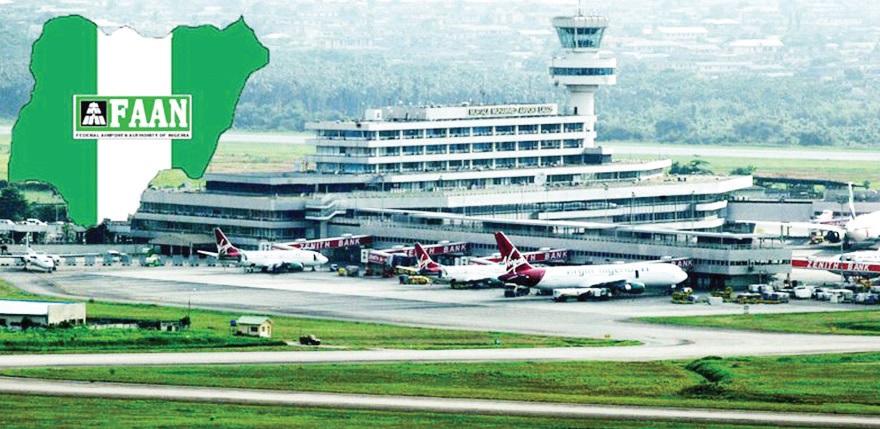
The federal government has directed the Federal Airports Authority of Nigeria (FAAN) to adopt a hybrid payment system that accommodates both cash and card payments at all airport access gates with effect from Friday, March 13, 2026.
This system is to be used until the introduction of a fully automated or electronic system at all access gates at the airports in order to fully and eventually eliminate cash payments.
In a statement on Tuesday, the Minister of Aviation and Aerospace Development, Mr Festus Keyamo, disclosed that these decisions were reached after reviewing the initial implementation and the operational challenges observed.
FAAN had earlier commenced an electronic payment system last week, but it was suspended by President Bola Tinubu due to the traffic gridlock it created.
Yesterday, the Aviation Minister met with officials of FAAN and senior officials of the Ministry, and it was agreed to engage concessionaires for the introduction of a fully automated or electronic system.
Mr Keyamo, in the statement signed by his Special Adviser on Media and Communications, Mr Tunde Moshood, said motorists who already possess FAAN Go Cashless Cards may continue to use them until further notice.
It was also resolved that other electronic payment options, including POS terminals and other approved digital channels, will also remain available, while members of the public and road users were encouraged to obtain and use the FAAN Go Cashless Card as the organisation continues to enhance and fully optimise the cashless payment system.
By Aduragbemi Omiyale
The cashless airport toll gate payment system introduced by the Federal Airports Authority of Nigeria (FAAN) has been suspended by President Bola Tinubu.
At the Federal Executive Council (FEC) meeting held on Wednesday in Abuja, Mr Tinubu directed the agency to immediately return to the status quo, pending the development of a more efficient system.
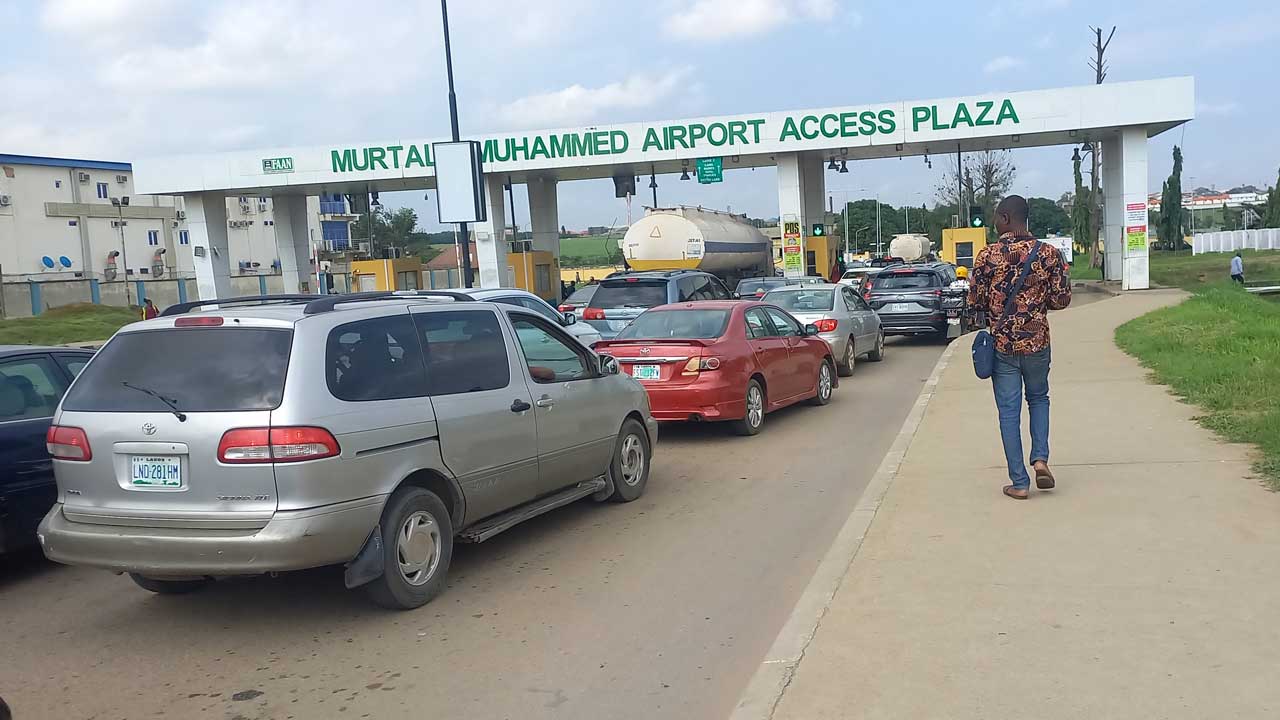
The Minister of Aviation and Aerospace Development, Mr Festus Keyamo, who announced the suspension after the FEC meeting today, said the action followed gridlock that trailed the new system, which caused passengers to miss their flights.
FAAN had commenced the cashless payment system for airport toll gates across the country in a bid to block revenue leakages and adopt an electronic payment system instead of cash.
But this policy caused traffic gridlock at several airports, especially those in Lagos and Abuja.
“Mr President was very concerned about the welfare of Nigerians and the fact that most Nigerians were losing their flights, missing their flights.
“So, Mr President, out of empathy, directed today that we should suspend the present system because it creates a lot of gridlock, and Nigerians are suffering as a result of it,” Mr Keyamo informed newsmen.
“The major reason why Mr President took this decision is to eliminate the present gridlock that we are experiencing, especially at both the Lagos and Abuja toll gates leading to the airport.
“That’s the major reason, not that the President is happy with the cash system,” he added.
The Minister further said the President directed stakeholders to “go back and, if possible, even engage the private sector to ensure that we establish an electronic system by which we can collect these revenues for the federal government at the gates, to the extent that it will not create the gridlock that we are having right now.”
“We are going to do a hybrid system whereby we can collect cash temporarily and, of course, use the cards that they have collected temporarily for now,” Mr Keyamo added.
-
 Feature/OPED6 years ago
Davos was Different this year
-
Travel/Tourism10 years ago
Lagos Seals Western Lodge Hotel In Ikorodu
-

 Showbiz3 years ago
Estranged Lover Releases Videos of Empress Njamah Bathing
-
 Banking8 years ago
Sort Codes of GTBank Branches in Nigeria
-

 Economy3 years ago
Subsidy Removal: CNG at N130 Per Litre Cheaper Than Petrol—IPMAN
-

 Banking3 years ago
Sort Codes of UBA Branches in Nigeria
-

 Banking3 years ago
First Bank Announces Planned Downtime
-

 Sports3 years ago
Highest Paid Nigerian Footballer – How Much Do Nigerian Footballers Earn