
Travel/Tourism
Sujimoto, Minister Discuss Development of Luxury Properties in Abuja


By Dipo Olowookere
There are plans to create a new city within Abuja that will become the industrial hub where forward-thinking entrepreneurs will make their first choice.
The main driver of this vision is the Lagos-based luxury real estate company known as Sujimoto Construction, which has made its mark in the commercial capital of Nigeria.
Recently, its Managing Director/CEO, Mr Sijibomi Ogundele, held a crucial meeting with the Minister of State of the Federal Capital Territory (FCT), Mrs Ramatu Tijjani Aliyu.
At the meeting, which was supposed to last for only 15 minutes but ended after three hours, Mr Ogundele and the Minister agreed on the need to “turn Abuja into a small Dubai.”
“The vision is one for a new city within a city that will become the industrial hub where from automobile to information technology, every forward-thinking entrepreneur will make this new city their first choice. I still remember her (the Minister) exact words, Suji if this must be done, it must be done NOW!” Mr Ogundele said.
He noted that, “A meeting of 15 minutes lasted 3 hours because of the synergy in our thinking and vision. Hajiya is a no respecter of mediocrity, you can glimpse this in her personality and in the incredible projects she has embarked upon; from the floating luxury tourist attraction water park of Jabi to the Abuja Diamond City, a vision that’s meant to merge luxury and class into one space.”
The real estate expert described the Minister as a passionate administrator and an example of quality leadership.
“It is true what they say that there is no force equal to a woman determined to make an impact in the lives of her people! I have heard about her strength of character. I finally got to meet this great patriot, a true leader of the people, and I am happy to share in her vision and ready to partner with her ministry for a renewed FCT Abuja,” he said of her.
Continuing, he said “Meeting with dedicated and hardworking professionals like Dr Ramatu only incentivizes the resolve of a wholly Nigerian luxury real estate and infrastructure investor like ours. She epitomizes grace, vision and a ‘can-do’ commitment that the country needs at about now.
“We spoke about numerous projects and subjects, from real-estate to the realities and difficulties facing our great nation; her passion for gender equality, empowerment, and her vision to turn Abuja into a small Dubai. Certainly, we will not be known as the capital of mass housing, when we can transform Abuja into the luxury capital of Africa.”
“The Sujimoto brand is well acquainted with luxury and would be glad to take on the challenge of working with the brilliant team at the Federal Capital Territory to promote the beauty of Nigeria’s administrative host,” he said.
“The Leonardo that we are presently developing at the Banana Island in Lagos has redefined luxury already and as it is our custom, we intend to take the challenge of pushing our standards further.
“In our proposed incursion into the FCT, with the level of support already thrown at us, I believe a new episode of luxury is about to grace the cityscape,” Mr Ogundele said.
Sujimoto is known for high in class luxury real estate assets boasting of some of the best in class accommodation for the very few who seek exclusive and well-designed residential properties.
Some of the well-known brands are LucreziaBySujimoto, LorenzoBySujimoto, GiulianoBySujimoto, and currently under development the LeonardoBySujimoto, amongst several others.




By Adedapo Adesanya
The Federal Competition and Consumer Protection Commission (FCCPC) says its investigation uncovered how airlines manipulated flight fares and fixed prices arbitrarily during the last Christmas and New Year’s holidays.
The findings, contained in an interim report released on Thursday by the commission’s department of surveillance and investigations, compared domestic airline pricing from the December 2025 festive period with post-peak January 2026 fare levels.
The FCCPC, in a statement signed by its director of corporate affairs, Mr Ondaje Ijagwu, said it established cases of price fixing by local airlines, documented abuse during the festive season, and would soon begin a probe of foreign airlines, following its ongoing country-wide investigation, which was announced earlier in January.
“A review undertaken by the Federal Competition and Consumer Protection Commission (FCCPC) has uncovered patterns of price manipulation perpetrated by some local airlines during the last festive season. The forensic exercise benefitted from data collated by the commission from airlines operating local routes in the country,” the report said.
The report compares domestic airline pricing from the December 2025 festive period with post-peak January 2026 fare levels.
The FCCPC’s preliminary analysis indicated that fares recorded during the December peak period were materially higher than those observed in the post-peak period across several routes despite relative stability in critical operating variables such as fuel price, government taxes and foreign exchange.
“The differences observed in fares therefore appear to reflect airlines’ arbitrary pricing decisions, including yield management and capacity allocation, rather than any variation in regulatory fees,” the report said.
It also noted that route-level analysis showed that higher fares coincided with periods of reduced seat availability during predictable seasonal demand peaks. On some high-density routes, peak fares were clustered within relatively narrow ranges across several operators.
It noted that on certain corridors, such as Abuja-Port Harcourt, peak fares were several times higher than corresponding post-peak levels. “On selected routes, the difference in the price of a single ticket reached approximately N405,000. Median fares across the sampled routes also rose markedly during the festive window when compared with post-peak benchmarks,” it said.
The report identified the relevance of Sections 59, 72, 107, 108, 124 and 127 of the Federal Competition and Consumer Protection Act 2018, which address the prohibition of agreements in restraint of competition, the prohibition of abuse of a dominant position, the offence of price-fixing, conspiracy to commit offences under the Act, the right to fair dealings, and the prohibition of unfair, unreasonable or unjust contract terms.
The FCCPC, however, recognised that seasonal demand pressures, scheduling constraints and fleet utilisation might also affect pricing during the peak travel period. It added that these actors remain under consideration as part of the commission’s ongoing review.
Commenting on the release of the interim report, the executive vice chairman and chief executive officer of the FCCPC, Tunji Bello, said the review was part of the commission’s statutory responsibility to promote competitive markets and safeguard consumers.
“This assessment is intended to provide clarity on pricing behaviour during predictable peak travel periods. The Commission’s role is not to disrupt legitimate commercial activity, but to ensure that market outcomes remain consistent with competition and consumer protection principles under the law,” Mr Bello said.
He noted that the commission was conducting further structural and route-level analysis before reaching any conclusions.
“It is important to emphasise that this is an interim report. Our next action will be dictated by the full facts established at the end of the review exercise. Then, the Commission will decide whether any regulatory guidance, engagement or enforcement steps are necessary, strictly in accordance with the law,” he said.
Bello further announced that foreign airlines would come under investigation by the FCCPC once the ongoing review of local airlines was concluded.
He noted that the probe of the foreign airlines would be in view of widespread complaints of exploitative fares they allegedly charge Nigerians on certain routes compared to fares in neighbouring countries of equal distance.

By Modupe Gbadeyanka
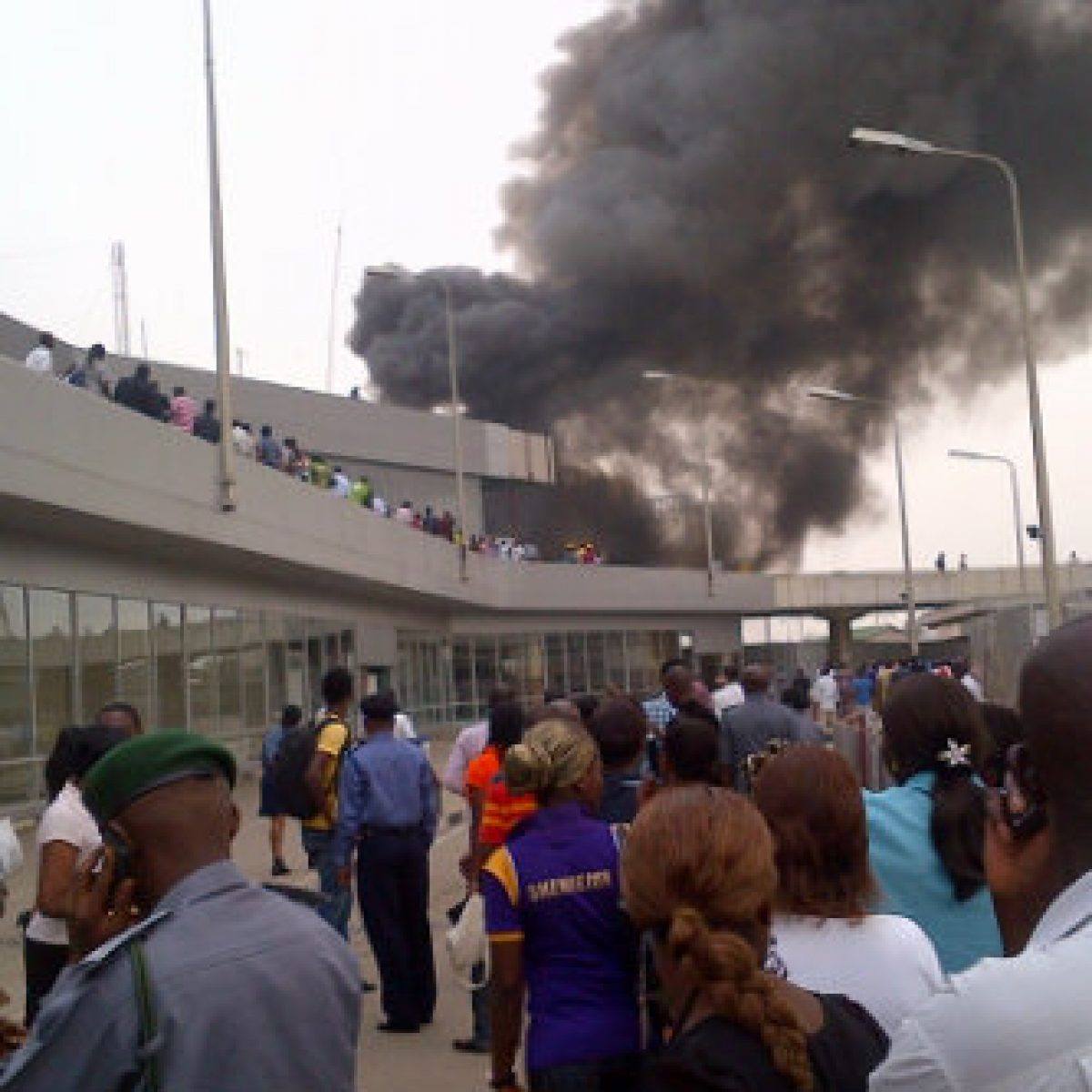
The Federal Airports Authority of Nigeria (FAAN) has disclosed that the fire incident at Terminal 1 of the Murtala Muhammed International Airport (MMIA), Lagos, on Monday originated from the server room on the first floor of Terminal 1.
In a statement in the wee hours of Tuesday, the agency confirmed that six casualties were recorded, involving three males and three females.
“A total of six casualties, comprising three males and three females, were recorded, all of whom are in stable condition. One affected individual has been transferred to the FAAN Headquarters Hospital for further medical evaluation and remains stable,” a part of the statement said.
FAAN noted that emergency response operations remain active, with coordinated firefighting, rescue, and safety teams continuing containment and recovery efforts.
A crane was successfully deployed to support rescue operations at the Control Tower, and all 14 persons initially trapped have been safely rescued and fully evacuated from the facility, it added.
The organisation disclosed that as an additional safety precaution, the sixth floor of the affected facility has been completely evacuated to support ongoing emergency operations and risk mitigation, adding that the fire within the departure hall is now largely under control, while responders continue close monitoring to prevent any spread to adjoining sections of the terminal.
“In line with established safety protocols, the airspace remains temporarily closed,” it stated, confirming that all emergency procedures were promptly activated and continue to collaborate with relevant emergency and support agencies to safeguard lives, infrastructure, and operational integrity.
Also, the statement revealed that the Nigerian Airspace Management Agency (NAMA) is actively working to establish a temporary Control Tower to enable the safe and timely restoration of airport operations as soon as practicable.
By Adedapo Adesanya
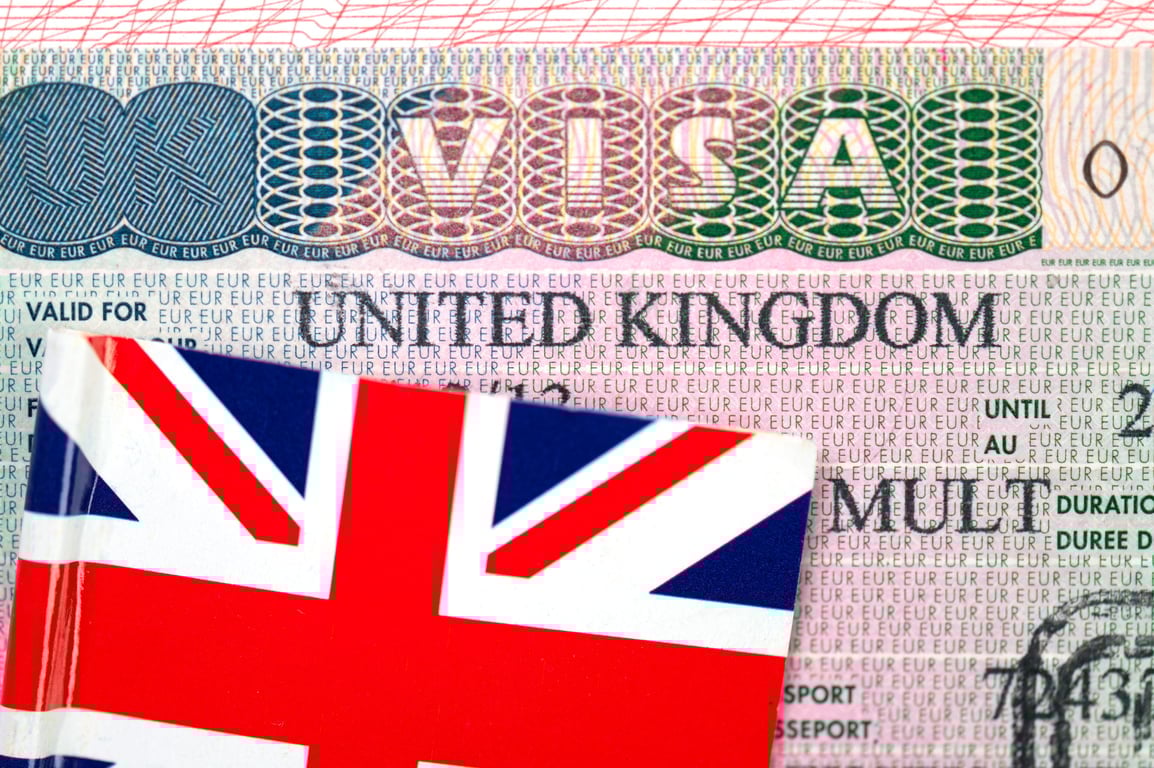
The United Kingdom says all Nigerian visitors to the country, who need a visa, will only get a digital visa from February 25, 2026.
In a statement, the UK Visas & Immigration said that from the scheduled date, all Nigerian nationals applying for a UK Visit visa will receive an eVisa, rather than a vignette (sticker) in their passport.
The shift also indicates that travellers will access their visa electronically through their UK Visas and Immigration (UKVI) account, marking a significant step in modernising the UK’s visa process.
For Nigerian applicants, the visa application requirements remain unchanged. Travellers will still apply as usual, attend a Visa Application Centre to provide biometric information, and meet all existing eligibility criteria. The only difference is how the visa is issued: instead of a physical sticker, applicants will receive a secure digital record of their immigration status.
According to a statement, the British government clarified that Nigerians currently holding a valid vignette sticker do not need to take any action. Their physical visa remains valid until it expires or requires replacement.
It added that the move to eVisas brings a number of benefits for Nigerian travellers, including passports being returned more quickly and travellers being able to manage their immigration status online at any time, from any location. The digital format offers stronger security as eVisas cannot be lost, stolen, or tampered with.
Welcoming the transition, British Deputy High Commissioner in Abuja, Mrs Gill Lever, said, “We are committed to making it easier for Nigerians to travel to the UK. This move to digital visas will streamline a key part of the visa process, making it more secure while reducing dependence on paper documents. We look forward to continuing to welcome Nigerian visitors, students, and workers to the UK.”
Once a visa is approved, applicants will need to create a free UKVI account to access the eVisa.









-
 Feature/OPED6 years ago
Davos was Different this year
-
Travel/Tourism10 years ago
Lagos Seals Western Lodge Hotel In Ikorodu
-

 Showbiz3 years ago
Estranged Lover Releases Videos of Empress Njamah Bathing
-
 Banking8 years ago
Sort Codes of GTBank Branches in Nigeria
-

 Economy3 years ago
Subsidy Removal: CNG at N130 Per Litre Cheaper Than Petrol—IPMAN
-

 Banking3 years ago
Sort Codes of UBA Branches in Nigeria
-

 Banking3 years ago
First Bank Announces Planned Downtime
-

 Sports3 years ago
Highest Paid Nigerian Footballer – How Much Do Nigerian Footballers Earn