
Travel/Tourism
Top 5 Annual Festivals in Nigeria


By Nkem Ndem
Italy and Brazil may be known as the flagship countries that popularized festivals all over the world, but with time, other countries and societies, including Nigeria are now rising up and boosting their local festivals so much that they now even stand a chance at competing with the later festival giants. While Festivals are not new to Nigeria, in recent time, some major festivals are now popularized so much that tourists from around the world visit the country annually for the events.
From the Eyo Festival to the different city carnivals, there is a variety of events and festivals that celebrate either religious history, music, art indigenous folklore or Nigeria’s cultural heritage, most of them featuring local music, costumes, parades, dancing, alcohol, and food. Jumia Travel presents the top 5 of these festivals that are held annually across the nation.
Durbar Festival
The most ancient and prominent festival in the northern regions of Nigeria, the Durbar festival is popular in Maiduguri, Kano, Katsina and Zaria. Originally intended to mark the advent of a war between ancient kingdoms or regarded as a form of military parade to the emirs and their councils to showcase the fighters who defended the territories, the festival is now performed and considered a ceremonial parade. The parades are filed with aesthetics, colors and it serves to reveal the loyalty of the paraders to the emir as well as reveals their strength and readiness for war. The ceremony is major part of the Id el Kabir celebrations as well as the Id el Fitri marking the end of the holy month of Ramadan and it attracts visitors and tourists year after year.
Eyo Festival
A regional festival that is unique to the city of Lagos, Eyo festival stems from ancient Yoruba history and is speculated to be the inspiration for the modern day Rio de Janeiro carnival in Brazil. The festival features a major parade with participants dressed in while flowing robes that cover their entire body, top hats and sticks; and masquerades referred to as “Eyo” as well as costumed dancers. One of the major objectives of the festival is to pay homage to the Oba of Lagos as well as. The 24-day event sweeps through the entire city with focus on the Lagos Island and attracts a large number of tourists from around the world.
Osun-Oshogbo Festival
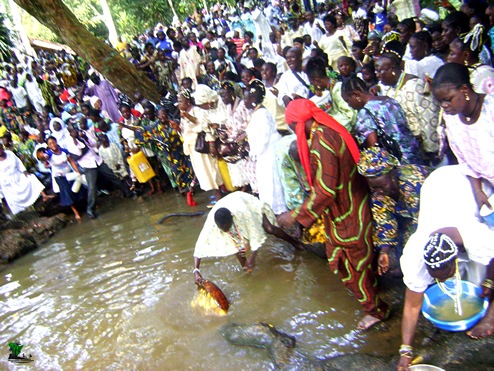
A highly cultural and spiritual festival held annually in Osun State, the Osun-Oshogbo festival is held between the months of July and August and sees thousands of Osun worshippers, observers as well as tourists from all over the world who come to join in on the festivities. Celebrated at the Sacred Osun grove in honour of the river goddess, Oshun of Osun State, the event spans for two weeks. The first stage features the ‘Iwopopo’ – a traditional cleansing of the land- at the initial stage, ‘Ina Olojumerindinlogun’ – the lighting of the 500-year-old sixteen-point lamp- three days later and finally the ‘Ibroriade’, an assemblage of the crowns of past rulers, and a committee of priestesses. While the colorful parades and parties across the city suggest light-hearted merriment, the Festival is a strong aspect of the Oshogbo culture.
Argungu Fishing Festival
With an origin traced to the visit of the late Sultan Dan Mu’azu in 1934 who was honored with an akin festival, the Argungu fishing festival has been around for quite some time. The festival, widely popular in Kebbi and Sokoto state areas, is a competitive feast that aims to weigh the fishing skills of the locals. It is usually celebrated between the months of February and March and also marks the end of a farming season. As music, drums and dance envelops the air, anxious participants try to outdo each other in a bid to gain the biggest catch. Other activities, including swimming competitions, bare-hand fishing, canoe racing and wild duck hunting serve as side attractions. At the end of the festival, the winner is hugely celebrated, there is merriment across the towns and the river is sheltered to ensure it yields fishes for the next festival.
New Yam Festival
An extremely popular festival that everyone indigenous to the south-eastern regions of Nigeria look forward to very year, The New Yam Festival is locally referred to as Iriji-Mmanwu, Iwa ji, Iri ji or Ike ji, by the Igbo speaking areas in the region. Ripe with masquerades, colorful costumes, cultural dances and displays, the event symbolizes the end of a harvest and the commencement of the next work cycle. The celebration is a highly cultural occasion and unifies the different Igbo communities together as they are essentially agrarian and dependent on yam.
Nkem Ndem is a PR Associate at Jumia Travel.




By Modupe Gbadeyanka
There are plans by Air Peace to commence flight operations to London from the newly commissioned Gateway International Airport in Ogun State.
The chief executive of the airline operator, Mr Allen Onyema, disclosed this after an inspection of the airport alongside Ogun State Governor, Mr Dapo Abiodun.
He described the facility as world-class, promising that Air Peace will fly passengers from the airport to Gatwick and Heathrow airports in London, the United Kingdom, this summer with its Boeing 777 fleet.
President Bola Tinubu over the weekend commissioned the airport, which is expected to boost the state’s economy.
The facility was built to turn the Gateway State into a key aviation hub in Nigeria, complementing existing airports in Lagos and Abuja.
The airport has already commenced cargo operations, with expectations of increased activity, including international cargo services and additional airline operations in the near future.
Mr Onyema, who was impressed by what he saw, said the Gateway International Airport meets global standards, stressing that its 4-kilometre runway can accommodate large aircraft such as the Boeing 777 and Airbus A380.
He disclosed that the airline has received approval from the Minister of Aviation and Aerospace Development, Mr Festus Keyamo, to proceed with the operations, describing the airport as a national asset rather than a state project.

The manner in which international travel and digital entertainment intersect has experienced a massive transformation in the current year. As the volume of international travel continues to rise to unprecedented levels, the technological potential to access a 1xbet giriş from any point in the world has become the benchmark by which the efficacy of a given system or network should be judged. In 2026, more than 65% of international travel hubs have completely integrated standalone 5G connectivity, providing the environment that is required to enable high-stakes sports viewing. This means that regardless of the position that the sports aficionado finds themselves in, at the top of a mountain or at the coast, the nature of the information that flows will remain the same. The modern-day traveler expects nothing but the best, and that includes the manner in which they will be able to engage with the digital hobbies that they have been able to cultivate during the course of the year.
The way in which the experience is felt has also been improved through the efficiency of the software that is used to power the mobile experience. If the user has opted to install the 1xbet apk file on the 2026 flagship device, the user is able to experience the new “Travel-Adaptive” coding that reduces the background data usage by 30% when traveling internationally. This is an important aspect of the experience because the user may find themselves in transit for an extended period of time without the ability to plug in and charge the device. As the statistics show for the first half of the year, the user of the mobile The application is able to experience a 25% reduction in data usage when traveling compared to the user who makes use of the mobile web browser in order to experience the sports entertainment the user has grown accustomed to. It is a more relaxed experience where the main aspect is the thrill of the game.
The Role of Mobile Betting in Modern Tourism
It should be noted that the modern betting process concerning sports is considered to be one of the most effective ways to get entertained during a long flight or when staying at the airport. Mobile betting is considered to be a unique opportunity for a tourist not just to view a sporting event, but also to become an active participant of that sporting event that is taking place on the other side of the world. Thanks to the speed of modern applications, it is possible for a tourist to react immediately to the changes in the score and adjust the predictions accordingly during an excursion or when staying by the pool. Such an event is considered to be an adventure in bright colors.
Apart from the entertainment that such modern platforms offer, they also present a great number of analytical data that allows the tourist to get engaged in the process. One of the main purposes of such tourism is to get satisfaction from the accuracy of one’s prediction, as well as competition. Such platforms pay great attention to the safety issues, reminding the tourist that “betting should be an additional positive experience of your trip.”
Network Benchmarks for the Connected Traveler
The sports enthusiast who is always on the go would find that the line which separates an enjoyable experience from an unenjoyable experience of sports betting is measured in mere milliseconds. In fact, the world average of mobile latency for tourist destinations has been reduced to mere 16ms in 2026, which is an important consideration for sports enthusiasts who enjoy sports betting for games such as tennis and basketball.
The table below shows the current standards for mobile network performance for the most prominent tourist destinations around the world:
| Network Metric | Global Average 2026 | Satisfaction Rate | Primary Use Case |
| Download Speed | 195.6 Mbps | 88 percent | High-definition streaming |
| Signal Latency (5G) | 16 ms | 92 percent | Real-time Live updates |
| Roaming Cost | 1.15 USD / GB | 74 percent | Continuous background sync |
| App Load Time | 1.8 seconds | 85 percent | Rapid market entry |
| Connection Stability | 99.8 percent | 91 percent | Uninterrupted viewing |
As per the latest research findings on the subject by the research company named Statista, it has been identified that the need for high-speed mobile data for the tourists is rising by an increase of 40%. This is mainly because the tourist would like to experience a form of ‘multi-layered’ entertainment. The definition of ‘multi-layered’ implies that the sports enthusiast would like to view a live streaming event, access his or her social media account, and place a friendly bet on the event simultaneously. Therefore, as long as this infrastructure is in place, this would thrive.
The Evolution of Mobile Betting as Travel Leisure
In the year 2026, mobile betting for sports would be considered a fun way of spicing up the entire travel experience. This is because it would be able to provide a new dimension to a sporting event that an individual is witnessing while traveling in a pub or a train. It would be able to provide individuals with a way of having a personal stake in a world event. Thus, the hours that an individual spends in a train or an airport would be able to pass quickly with a fun way of gamification of sports viewing.
In the year 2026, modern mobile betting has turned out to be a full-fledged way of socializing for travelers. This is because many individuals use the co-watching features of the application and group betting features of the application in order to compete with their friends back home or connect with other sports fans of the sport that they are watching while visiting pubs around the world. It is because it would be able to provide individuals with a new dimension of traveling. It is no longer just about traveling to a new destination; it is about becoming part of a new world community where talking about the probabilities of winning or forward performance of a team is considered to be the universal language of communication. It is no longer just about betting; it is about getting the rhythm of the world of sports wherever an individual is located—from the cozy European roads to the futuristic cities of Asia.
Popular Mobile Sports Activities for People on the Move
Individuals who travel in 2026 have managed to come up with their own ways of having fun through sports without missing out on their sightseeing targets. There has been a new trend of “micro-betting,” which refers to betting on a game that will happen in the near future.
The following is a list that points out the best mobile sports-related activities for traveling individuals for the current year:
- Predicting the total points scored in one quarter of the basketball game while in short transit stops.
- Tracking the sports player that is most likely to score the next goal in the football game while in a cafe.
- Determining the total number of games in one set in the tennis game while in downtime at a resort.
- Viewing the percentage of ball possession for a particular team through the use of graphical overlays.
- Predicting the exact number of free throws scored in a game while in downtime at a hotel.
The activities will be perfect for the downtime in the traveling schedule as they will provide the individual with a dose of excitement without making the individual glued to his/her screens for hours. This way, the individual will be able to appreciate the digital world as well as the beauty of the world he/she is in.
Security and Responsible Habits Abroad
However, with the introduction of mobile transactions during travel, the factor of security has been regarded as a major factor. In fact, in the current scenario, 94% of the total mobile sports platforms provide multi-factor biometric authentication. This means that the security of your account is ensured even when you are accessing the internet through a public source of internet connectivity, such as Wi-Fi. Moreover, the majority of the platforms provide “Smart Limits” that are location and time zone-based. In this way, an individual can develop a habit when they are traveling. All of this has been done in a way that the overall experience remains a positive one. This is because betting is something that an individual chooses for his or her entertainment.
The innovations in the field of technology, such as the introduction of technology through eSIM, allow an individual to remain connected. This means that an individual does not face “bill shock” when they are using roaming.

By Aduragbemi Omiyale
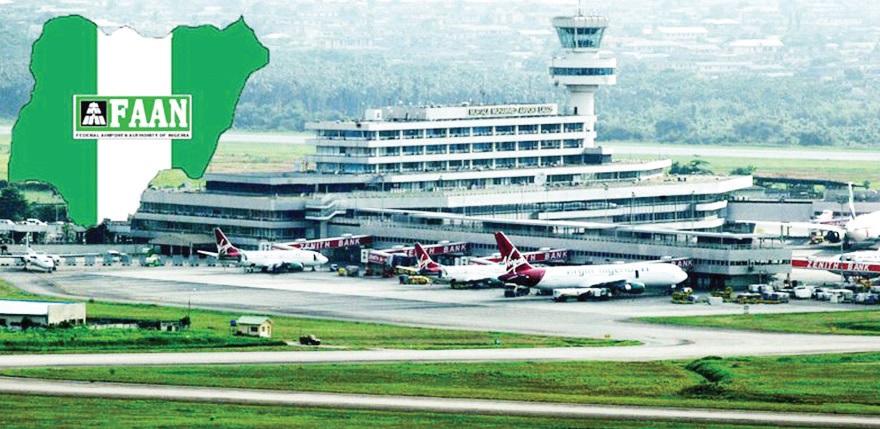
The federal government has directed the Federal Airports Authority of Nigeria (FAAN) to adopt a hybrid payment system that accommodates both cash and card payments at all airport access gates with effect from Friday, March 13, 2026.
This system is to be used until the introduction of a fully automated or electronic system at all access gates at the airports in order to fully and eventually eliminate cash payments.
In a statement on Tuesday, the Minister of Aviation and Aerospace Development, Mr Festus Keyamo, disclosed that these decisions were reached after reviewing the initial implementation and the operational challenges observed.
FAAN had earlier commenced an electronic payment system last week, but it was suspended by President Bola Tinubu due to the traffic gridlock it created.
Yesterday, the Aviation Minister met with officials of FAAN and senior officials of the Ministry, and it was agreed to engage concessionaires for the introduction of a fully automated or electronic system.
Mr Keyamo, in the statement signed by his Special Adviser on Media and Communications, Mr Tunde Moshood, said motorists who already possess FAAN Go Cashless Cards may continue to use them until further notice.
It was also resolved that other electronic payment options, including POS terminals and other approved digital channels, will also remain available, while members of the public and road users were encouraged to obtain and use the FAAN Go Cashless Card as the organisation continues to enhance and fully optimise the cashless payment system.
-
 Feature/OPED6 years ago
Davos was Different this year
-
Travel/Tourism10 years ago
Lagos Seals Western Lodge Hotel In Ikorodu
-

 Showbiz3 years ago
Estranged Lover Releases Videos of Empress Njamah Bathing
-
 Banking8 years ago
Sort Codes of GTBank Branches in Nigeria
-

 Economy3 years ago
Subsidy Removal: CNG at N130 Per Litre Cheaper Than Petrol—IPMAN
-

 Banking3 years ago
Sort Codes of UBA Branches in Nigeria
-

 Banking3 years ago
First Bank Announces Planned Downtime
-

 Sports3 years ago
Highest Paid Nigerian Footballer – How Much Do Nigerian Footballers Earn