

Economy
Nigeria’s 2018 Economic Outlook Remains Challenging—IMF

By Modupe Gbadeyanka
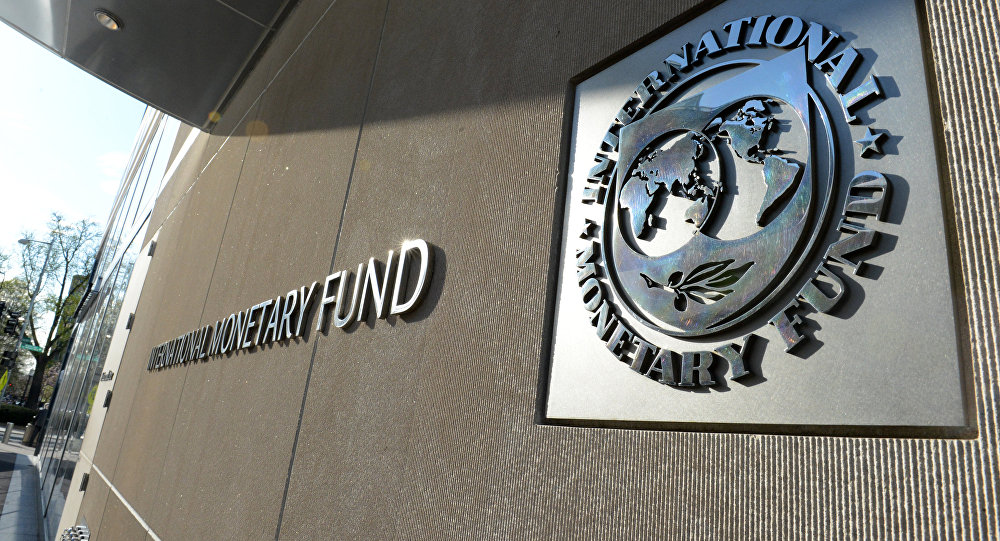
The International Monetary Fund (IMF) has warned that Nigeria’s economic outlook for 2018 still remains challenging.
The global lender made this observation at the end of its visit to the country this week.
From June 27 to July 9, 2018, an IMF staff team led by the Senior Resident Representative and Mission Chief for Nigeria, Mr Amine Mati, visited Nigeria, where they held “productive discussions with senior government and central bank officials.”
The team also met with representatives of the banking system, the private sector, civil society, and international development partners.
In a statement issued at the end of the visit, which was obtained by Business Post, the IMF said, “Higher oil prices and short-term portfolio inflows have provided relief from external and fiscal pressures but the recovery remains challenging.”
The global financial institution said Nigeria’s external reserves have remained stable at about $47 billion, supported by some convergence in existing foreign exchange windows, and despite some reversal of foreign inflows since April.
It noted that inflation declined to its lowest level in more than two years with real GDP expanding by 2 percent in the first quarter of 2018 compared with the first quarter of last year.
“However, activity in the non-oil non-agricultural sector remains weak as lower purchasing power weighs on consumer demand and as credit risk continues to limit bank lending,” the bank stressed.
It pointed out that, “Corporate tax collection efforts improved but revenue shortfalls and the late adoption of the 2018 budget impede its implementation.
“Revenue from higher oil prices is limited by net losses from retail fuel sales while non-oil revenue remains below expectations, with yields from tax administration measures—including the Voluntary Asset Income Declaration Scheme (VAID) and increased tax audits—yet to fully materialize.
“Current spending remains in line with expectations. Carryover from 2017 to 2018 helped increase capital spending in the first four months of 2018, despite delayed approval of the 2018 budget.
“Lower yields have kept interest payments within the budgeted envelope, but the Federal Government’s interest-to-revenue ratio is expected to absorb more than half of revenues this year.”
“Reforms to improve the business environment are progressing, including through identification of priority investment projects and the adoption of the Company and Allied Matters Act (CAMA)—a legislative landmark for private sector development.
“The implementation of the Power Sector Recovery Plan is advancing through a mini-grid policy, and regulations on eligible customers and meter asset providers,” the IMF said in the statement.
It emphasised that, “Under current policies, the outlook remains challenging. Growth would pick up to about 2 percent in 2018, weighed down by lower than expected oil production and relatively weak agriculture growth. The fiscal deficit would narrow slightly, with higher oil revenues offsetting increased spending, including those planned in a supplementary budget.
“Inflation would pick up in the second half of 2018 as base effects dissipate and higher spending and supply constraints in agriculture put pressure on prices.
“Increased oil exports would keep the current account in surplus, helping stabilize gross international reserves even if the current pace of foreign portfolio outflows continues.”
Furthermore, the IMF said, “A coherent set of policies to reduce vulnerabilities and increase growth remains urgent.
“This includes specific and sustainable measures to increase the currently low tax revenue—including through avoiding new tax exemptions — and ensuring budget targets are adhered to even in an election year.
“This process should be supported by keeping monetary policy tight through appropriate monetary policy tools that will help contain inflationary pressures and support a move towards a uniform market-determined exchange rate.
“Moving ahead with structural reforms is needed to invigorate inclusive growth, particularly in the power sector where faster progress would be needed to ensure financing shortfalls in the sector are met in a sustainable manner.”


By Modupe Gbadeyanka
The federal government has been asked by the Nigerian Bar Association (NBA) to suspend the implementation of the controversial tax laws.
In a reaction to the tax reform acts, the president of the group, Mr Afam Osigwe (SAN), the suspension of the laws would allow for a proper investigation into allegations of alterations in the gazetted and harmonised copies.
A member of the House of Representatives, Mr Abdussamad Dasuki, alleged that some parts of the laws passed by the parliament were different from the gazetted copy.
To address the issues raised, the NBA said it is “imperative that a comprehensive, open, and transparent investigation be conducted to clarify the circumstances surrounding the enactment of the laws and to restore public confidence in the legislative process.”
“Until these issues are fully examined and resolved, all plans for the implementation of the Tax Reform Acts should be immediately suspended,” the association declared.
It noted that the controversies “raise grave concerns about the integrity, transparency, and credibility of Nigeria’s legislative process.”
“These developments strike at the very heart of constitutional governance and call into question the procedural sanctity that must attend lawmaking in a democratic society,” it noted.
“Legal and policy uncertainty of this magnitude has far-reaching consequences. It unsettles the business environment, erodes investor confidence, and creates unpredictability for individuals, businesses, and institutions required to comply with the law. Such uncertainty is inimical to economic stability and should have no place in a system governed by the rule of law.
“Nigeria’s constitutional democracy demands that laws, especially those with profound economic and social implications, emerge from processes that are transparent, accountable, and beyond reproach. Anything short of this undermines public trust and weakens the foundation upon which lawful governance rests.
“We therefore call on all relevant authorities to act swiftly and responsibly in addressing this controversy, in the overriding interest of constitutional order, economic stability, and the preservation of the rule of law,” the organisation stated.


By Adedapo Adesanya
Demand for hot stocks, including MRS Oil Plc, buoyed the NASD Over-the-Counter (OTC) Securities Exchange by 0.52 per cent on Tuesday, December 23.
The energy company was one of the three price gainers for the session as it chalked up N19.69 to sell at N216.59 per share versus the previous day’s value of N196.90 per share.
Further, FrieslandCampina Wamco Nigeria Plc gained N2.95 to close at N56.75 per unit versus N53.80 per unit and Golden Capital Plc appreciated by 84 Kobo to N9.29 per share from Monday’s N8.45 per share.
Consequently, the market capitalisation went up by N10.95 billion to N2.125 trillion from N2.125 trillion and the NASD Unlisted Security Index (NSI) rose by 18.31 points to 3,570.37 points from 3,552.06 points.
Yesterday, the NASD bourse recorded a price loser, the Central Securities Clearing System Plc (CSCS), which gave up 17 Kobo to close at N33.70 per unit against the previous trading value of N33.87 per unit.
The volume of securities traded at the session went down by 97.6 per cent to 297,902 units from the previous day’s 12.6 million units, the value of securities decreased by 98.5 per cent to N10.5 million from N713.6 million, and the number of deals remained flat at 32 deals.
By value, Infrastructure Credit Guarantee Company (InfraCredit) Plc ended as the most actively traded stock on a year-to-date basis with 5.8 billion units exchanged for N16.4 billion. This was followed by Okitipupa Plc, which traded 178.9 million units valued at N9.5 billion, and MRS Oil Plc with 36.1 million units worth N4.9 billion.
In terms of volume, also on a year-to-date basis, InfraCredit Plc led the chart with a turnover of 5.8 billion units traded for N16.4 billion. Industrial and General Insurance (IGI) Plc ranked second with 1.2 billion units sold for N420.7 million, while Impresit Bakolori Plc followed with the sale of 536.9 million units valued at N524.9 million.


By Dipo Olowookere
It was another bullish trading session for the Nigerian Exchange (NGX) Limited as it closed higher by 0.59 per cent on Tuesday.
The market further rallied due to continued interest in large and mid-cap stocks on the exchange by investors rebalancing their portfolios for the year-end.
Yesterday, Aluminium Extrusion sustained its upward trajectory after it further appreciated by 9.96 per cent to N14.90, as Austin Laz gained 9.81 per cent to close at N2.91, Custodian Investment improved by 9.69 per cent to N38.50, and First Holdco soared by 9.35 per cent to N50.30.
Conversely, Royal Exchange declined by 7.22 per cent to N1.80, Champion Breweries shrank by 6.57 per cent to N15.65, NASCON lost 5.36 per cent to trade at N105.05, Sovereign Trust Insurance depreciated by 5.28 per cent to N3.77, and Japaul went down by 4.51 per cent to N2.33.
At the close of business, 29 shares ended on the gainers’ table and 27 shares finished on the losers’ log, representing a positive market breadth index and bullish investor sentiment.
This raised the All-Share Index (ASI) by 895.06 points to 153,354.13 points from 152,459.07 points and lifted the market capitalisation by N579 billion to N97.772 trillion from the previous day’s N97.193 trillion.
VFD Group finished the day as the busiest stock after it recorded a turnover of 192.0 million units worth N2.1 billion, GTCO exchanged 63.5 million units valued at N5.6 billion, Access Holdings traded 49.8 million units for N1.0 billion, First Holdco sold 45.8 million units valued at N2.3 billion, and Secure Electronic Technology transacted 38.3 million units worth N28.4 million.
In all, market participants bought and sold 677.4 million units valued at N20.8 billion in 27,589 deals compared with the 451.5 million units worth N13.0 billion traded in 33,327 deals on Monday, showing an improvement in the trading volume and value by 50.03 per cent and 60.00 per cent apiece, and a shortfall in the number of deals by 17.22 per cent.








-
 Feature/OPED6 years ago
Davos was Different this year
-
Travel/Tourism9 years ago
Lagos Seals Western Lodge Hotel In Ikorodu
-

 Showbiz3 years ago
Estranged Lover Releases Videos of Empress Njamah Bathing
-
 Banking8 years ago
Sort Codes of GTBank Branches in Nigeria
-

 Economy3 years ago
Subsidy Removal: CNG at N130 Per Litre Cheaper Than Petrol—IPMAN
-

 Banking3 years ago
First Bank Announces Planned Downtime
-

 Banking3 years ago
Sort Codes of UBA Branches in Nigeria
-

 Sports3 years ago
Highest Paid Nigerian Footballer – How Much Do Nigerian Footballers Earn