Feature/OPED
After the Capital Rush: Who Really Wins Nigeria’s Bank Recapitalisation?
By Blaise Udunze
By any standard, Nigeria’s ongoing bank recapitalisation exercise is one of the most consequential financial sector reforms since the 2004-2005 consolidation that shrank the number of banks from 89 to 25. Then, as now, the stated objective was stability to have stronger balance sheets, better shock absorption, and banks capable of financing long-term economic growth.
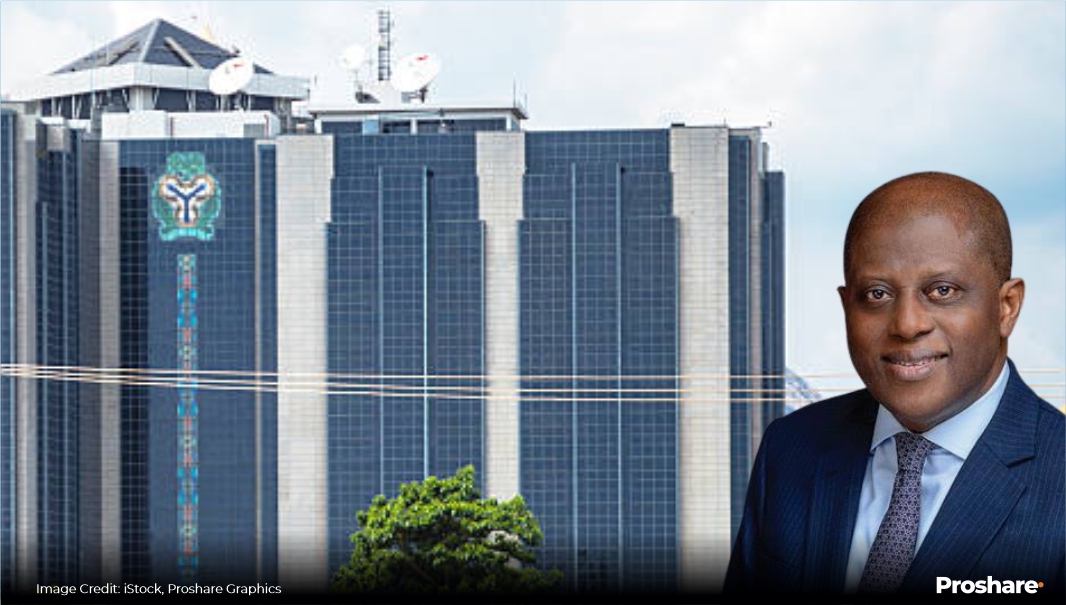
The Central Bank of Nigeria (CBN), in 2024, mandated a sweeping recapitalisation exercise compelling banks to raise substantially higher capital bases depending on their license categories. The categorisation mandated that every Tier-1 deposit money bank with international authorization is to warehouse N500 billion minimum capital base, and a national bank must have N200 billion, while a regional bank must have N50 billion by the deadline of 31st March 2026. According to the apex bank, the objectives were to strengthen resilience, create a more robust buffer against shocks, and position Nigerian banks as global competitors capable of funding a $1 trillion economy.
But in the thick of the race to comply and as the dust gradually settles, a far bigger conversation has emerged, one that cuts to the heart of how our banking system works. What will the aftermath of recapitalisation mean for Nigeria’s banking landscape, financial inclusion agenda, and real-sector development?
Beyond the headlines of rights issues, private placements, and billionaire founders boosting stakes, every Nigerians deserve a sober assessment of what has changed, and what still must change, if recapitalisation is to translate into a genuinely improved banking system.
The points are who benefits most from its evolution, and whether ordinary Nigerians will feel the promised transformation in their everyday financial lives, because history has taught us that recapitalisation is never a neutral policy. The fact remains that recapitalization creates winners and losers, restructures incentives, and often leads to unintended outcomes that outlive the reform itself.
Concentration Risk: When the Big Get Bigger
Recapitalisation is meant to make banks stronger, and at the same time, it risks making them fewer and bigger, concentrating power and risks in an ever-narrowing circle. Nigeria’s Tier-1 banks, those already controlling roughly 70 percent of banking assets, are poised to expand further in both balance sheet size and market influence. This deepens the divide between the “haves” and “have-nots” within the sector.
A critical fallout of this exercise has been the acceleration of consolidation. Stronger banks with ready access to capital markets, like Access Holdings and Zenith Bank, have managed to meet or exceed the new thresholds early by raising funds through rights issues and public offerings. Access Bank boosted its capital to nearly N595 billion, and Zenith Bank to about N615 billion.
In contrast, banks that lack deep pockets or the ability to quickly mobilise investors are lagging. The results always show that the biggest banks raise capital faster and cheaper, while smaller banks struggle to keep pace.
As of mid-2025, fewer than 14 of Nigeria’s 24 commercial banks met the required capital base, meaning a significant number were still scrambling, turning to rights issues, private placements, mergers, and even licensing downgrades to survive.
The danger here is not merely numerical. It is systemic: as capital becomes more concentrated, the banking system could inadvertently mimic oligopolistic tendencies, reducing competition, narrowing choices for customers, and potentially heightening systemic risk should one of these “too-big-to-fail” institutions falter.
Capital Flight or Strategic Expansion? The Foreign Subsidiary Question
One of the most contentious aspects of the recapitalisation aftermath has been the deployment of newly raised capital, especially its use outside Nigeria. Several banks, flush with liquidity from rights issues and injections, have signalled or executed investments in foreign subsidiaries and expansions abroad, like what we are experiencing with Nigerian banks spreading their tentacles to the Ivory Coast, Ghana, Kenya, and beyond. Zenith Bank’s planned expansion into the Ivory Coast exemplifies this outward push.
While international diversification can be a sound strategic move for multinational banks, there is an uncomfortable optics and developmental question here: why is Nigerian money being deployed abroad when millions of Nigerians remain unbanked or underbanked at home?
According to the World Bank, a large number of Nigeria’s adult population still lack access to formal financial services, while millions of SMEs, micro-entrepreneurs, and rural households remain on the edge, underserved by traditional banks that now chase profitability and scale.
Of a truth, redirecting Nigerian capital to foreign markets may deliver shareholder returns, but it does little in the short term to advance domestic financial inclusion, poverty reduction, or grassroots economic participation. The optics of capital flight, even when legal and strategic, demand scrutiny, especially in a nation still struggling with deep regional and demographic disparities.
Impact on Credit and the Real Economy
For the ordinary Nigerian, the most important question is simple: will recapitalisation make credit cheaper and more accessible?
History suggests the answer is not automatic. The tradition in Nigeria’s bank system is mainly to protect returns, and for this reason, many banks respond to higher capital requirements by tightening lending standards, raising interest rates, or focusing on low-risk government securities rather than private-sector loans, because raising capital is expensive, and banks are profit-driven institutions. Small and medium-sized enterprises (SMEs), often described as the engine of growth, are usually the first casualties of such risk aversion.
If recapitalisation results in stronger balance sheets but weaker lending to the real economy, then its benefits remain largely cosmetic. The economy does not grow on capital adequacy ratios alone; it grows when banks take measured risks to finance production, innovation, and consumption.
Retail Banking Retreat: Handing the Mass Market to Fintechs?
In recent years, we have witnessed one of the most striking shifts, or a gradual retreat of traditional banks from mass retail banking, particularly low-income and informal customers.
The question running through the hearts of many is whether Nigerian banks are retreating from retail banking, leaving space for fintech disruptors to fill the void.
In recent years, players like OPAY, Moniepoint, Palmpay, and a host of digital financial services arms have become de facto retail banking platforms for millions of Nigerians. They provide everyday payment services, wallet functionalities, micro-loans, and QR-enabled commerce, areas traditional banks once dominated. This trend has accelerated as banks chase corporate clients where margins are higher and risk profiles perceived as more manageable. The true picture of the financial landscape today is that the fintechs own the retail space, and banks dominate corporate and institutional finance. But it is unclear or uncertain if this model can continue to work effectively in the long term.
Despite the areas in which the Fintechs excel, whether in agility, product innovation, and customer experience, they still rely heavily on underlying banking infrastructure for liquidity, settlement, and regulatory compliance. Should the retail banking ecosystem become split between digital wallets and corporate corridors, rather than being vertically integrated within banks, systemic liquidity dynamics and financial stability could be affected.
Nigerians deserve a banking system where the comforts and conveniences of digital finance are backed by the stability, regulatory oversight, and capital strength of licensed banks, not a system where traditional banks withdraw from retail, leaving unregulated or lightly regulated players to carry that mantle.
Corporate Governance: When Founders Tighten Their Grip
The recapitalisation exercise has not been merely a technical capital-raising exercise; it has become a theatre of power plays at the top. In several banks, founders and major investors have used the exercise to increase their stakes, concentrating ownership even as they extol the virtues of financial resilience.
Prominent founders, from Tony Elumelu at UBA to Femi Otedola at First Holdco and Jim Ovia at Zenith Bank, have all been actively increasing their shareholdings. These moves raise legitimate questions about corporate governance when founders increase control during a regulatory exercise. Are they driven by confidence in their institutions, or are they fortifying personal and strategic influence amid industry restructuring?
Though there might be nothing inherently wrong with founders or shareholders demonstrating faith in their institutions, one fact remains that the governance challenge lies not simply in who holds the shares, but how decisions are made and whose interests are prioritised. Will banks maintain robust internal checks and balances, ensuring that capital deployment aligns with national development goals? The question is whether the CBN is equipped with adequate supervisory bandwidth and tools to check potential excesses if emerging shareholder concentrations translate into undue influence or risks to financial stability. These are questions that transcend annual reports; they strike at the heart of trust in the system.
Regional Disparity in Lending: Lagos Is Not Nigeria
One of the persistent criticisms of Nigerian banking is regional lending inequality. It has been said that most bank loans are still overwhelmingly concentrated in Lagos and the Southwest, despite decades of financial deepening in this region; large swathes of the North, Southeast, and other underserved regions receive disproportionately smaller shares of credit. This imbalance not only undermines inclusive growth but also fuels perceptions of economic exclusion.
Recapitalisation, in theory, should have enhanced banks’ capacity to support broader economic activity. Yet, the reality remains that loans and advances are overwhelmingly concentrated in economic hubs like Lagos.
The CBN must deploy clear incentives and penalties to encourage geographic diversification of lending. This could include differentiated capital requirements, credit guarantees, or tax incentives tied to regional loan portfolios. A recapitalised banking system that does not finance national development is a missed opportunity.
Cybersecurity, Staff Welfare, and the Technology Deficit
Beyond balance sheets and brand expansion, there is a human and technological dimension to the banking sector’s challenge. Fraud remains rampant, and one of the leading frustrations voiced by Nigerians involves failed transactions, delayed reversals, and poor digital experience. Banks can raise capital, but if they fail to invest heavily in cybersecurity, fraud detection, staff training, and welfare, the everyday customer will continue to view the banking system as unreliable.
Nigeria’s fintech revolution has thrived precisely because it has pushed incumbents to become more customer-centric, agile, and tech-savvy. If banks now flush with capital don’t channel a portion of those funds into robust IT systems, workforce development, fraud mitigation, and seamless customer service, then the recapitalisation will have achieved little beyond stronger balance sheets. In short, Nigerians should feel the difference, not merely in stock prices and market capitalisation, but in smooth banking apps, instant reversals, responsive customer care, and secure platforms.
The Banks Left Behind: Mergers, Failures, or Forced Restructuring?
With fewer than half the banks having fully complied with the recapitalisation requirements deep into 2025, a pressing question is: what awaits those that lag? Many banks are still closing capital gaps that run into hundreds of billions of naira. According to industry estimates, the total recapitalisation gap across the sector could reach as much as N4.7 trillion if all requirements are strictly enforced.
Banks that fail to meet the March 2026 deadline face a few options:
– Forced M&A. Regulators could effectively compel weaker banks to merge with stronger ones, echoing the consolidation wave of 2005 that reduced the sector from 89 to 25 banks.
– License downgrades or conversions. Some banks may choose to operate at a lower license category that demands a smaller capital base.
– Exits or closures. In extreme cases, banks that can neither raise capital nor find a merger partner might be forced out of the market.
This regulatory pressure should not be construed merely as punitive. It is part of the CBN’s broader architecture of ensuring that only solvent, well-capitalised, and risk-prepared institutions operate. However, the transition must be managed carefully to prevent contagion, protect depositors, and preserve confidence.
Why Are Tier-1 Banks Still Chasing Capital?
Perhaps the most intriguing puzzle is why some Tier-1 banks, long regarded as strong and profitable, are aggressively raising capital. Even banks thought to be among the strongest, such as UBA, First Holdco, Fidelity, GTCO, and FCMB, have struggled to close their capital gaps. UBA, for instance, succeeded in raising around N355 billion toward its N500 billion target at one point and planned additional rights issues to bridge the remainder.
This reveals another reality that capital is not just numbers on paper; it is investor confidence, market appetite, and macroeconomic stability.
One can also say that the answer lies partly in ambition to expand into new markets, infrastructure financing, and compliance with stricter global standards.
However, it also reflects deeper structural pressures, including currency depreciation eroding capital, rising non-performing loans, and the substantial funding required to support Nigeria’s development needs. Even giants are discovering that yesterday’s capital is no longer sufficient for tomorrow’s challenges.
Reform Without Deception
As the Nigerian banking sector recapitalization exercise comes to a close by March 31, 2026, the ultimate test will be whether the reforms deliver on their transformational promise.
Some of the concerns in the minds of Nigerians today will be to see a system that supports inclusive growth, equitable credit distribution, world-class customer service, and resilient financial intermediation. Or will we see a sector that, despite larger capital bases, still reflects old hierarchies, geographic biases, and operational friction? The cynic might say that recapitalisation simply made big banks bigger and empowered dominant shareholders.
But a more hopeful perspective invites stakeholders, including regulators, customers, civil society, and bankers themselves, to co-design the next chapter of Nigerian banking; one that balances scale with inclusion, profitability with impact, and stability with innovation. The difference will be made not by press releases or shareholder announcements, but by deliberate regulatory action and measurable improvements in how banks serve the economy.
For now, the capital has been raised, but the true capital that counts is the confidence Nigerians place in their banks every time they log into an app, make a transfer, or deposit their life’s savings. Only when that trust is visible in everyday experience can we say that recapitalisation has truly succeeded.
Blaise, a journalist and PR professional, writes from Lagos and can be reached via: [email protected]
Feature/OPED
Billions in Nigeria’s Reserves, But Where is the Growth?
By Blaise Udunze
The moment the Governor of the Central Bank of Nigeria (CBN), Olayemi Cardoso, recently announced that Nigeria’s foreign reserves had inched to $49 billion as of February 5, 2026, the news was received with understandable enthusiasm.
He described the development as “a very important statistic” when speaking at the 2nd National Economic Council (NEC) Conference in Abuja, while noting a 4.93 per cent increase and emphasising that Nigeria had moved from being a net seller to a net buyer of foreign exchange. He cited improved remittance inflows, a narrowing gap between official and parallel market exchange rates, and greater confidence in the naira as evidence that reforms were working.
On the surface, the numbers are reassuring. The premium between official and parallel market rates has reportedly fallen to under 2 per cent. Remittances have improved following deliberate engagement with the diaspora. Nigerians can increasingly rely on naira cards for international transactions. It can be said that investors are earning positive real returns, banks are recapitalising, equity markets are recovering, and macroeconomic indicators such as GDP growth of 3.98 per cent, a current account surplus of $3.42 billion in the third quarter of 2025, and a reported moderation in inflation to 15.15 per cent are presented as signs of stabilisation.
So far, beyond the celebratory headlines lies a deeper and more consequential question, in the form of, what does the fixation on foreign reserves really tell us about the underlying strength of the Nigerian economy?
History and economic logic suggest that when a central bank repeatedly elevates foreign reserves as a central achievement, it often signals that the true engines of growth are either weak or underdeveloped. Strong reserves are not built through declarations, press conferences, or defensive monetary manoeuvres. They are built through systems that generate value, exports, productivity, and trust. Countries with durable reserve positions did not chase reserves; they built economies that produced them naturally.
This distinction matters greatly for Nigeria.
Foreign reserves are important, but they are not a development strategy. They are a buffer, not a foundation. They are an outcome of economic vitality, not a substitute for it. When reserves become the centrepiece of economic storytelling, there is a risk that policymakers mistake statistical comfort for structural strength.
Even Nigeria’s celebrated $49 billion reserve figure requires closer scrutiny, which appears to be more of sexing up the figures. Gross reserves make headlines, but net usable reserves are what protect a currency in moments of stress. A significant portion of reported reserves is often tied up in swaps, forward commitments, and external obligations. When these are stripped out, the net buffer available to defend the naira is far smaller than the headline figure suggests. The gap between gross and net reserves is too large to justify unqualified confidence about currency stability, especially in an economy that remains import-dependent and structurally fragile.
The danger of over-fixating on reserves is not unique to Nigeria, but it is particularly acute here because of the economy’s narrow production base, which subliminally calls for sexing up the figures. Despite decision-makers prematurely applauding the reserves’ growth, the apex bank must rethink its approach. The reserves are not generated through production-based or stronger export means but rather largely from borrowing (sales of Eurobonds) or through government loans, which come in as dollars to the CBN that temporarily boost dollar inflows. This points to the fact that Nigeria still exports little beyond crude oil, imports most manufactured goods, and relies heavily on volatile capital inflows. In such a context, reserves require constant defence rather than organic replenishment. Tight monetary policy, FX restrictions, and moral persuasion may buy time, but they do not solve the underlying problem of insufficient foreign exchange generation.
By contrast, countries with strong reserve positions followed a very different path. Unlike Nigeria, countries like Saudi Arabia, with foreign reserves of about $410 billion, paired subsidy reforms with visible reinvestment in infrastructure, social welfare, and alternative energy systems. Indonesia, with reserves of roughly $153 billion, combined fiscal reforms with expanded social assistance and a shift toward targeted household support, ensuring that reform pain was offset by tangible benefits. Reserves are mainly meant to grow from productive economic activities like Singapore, whose reserves stood at approximately $397 billion at the end of 2025, as it built its position through decades of disciplined industrial policy, export competitiveness, domestic savings, and institutional credibility. In all these cases, reserves were not the objective; they were the by-product of deliberate economic architecture.
In most successful developmental states, public expenditure plays a catalytic role in growth. Unlike Nigeria’s, most countries’ expenditures It crowds in private investment, expand infrastructure, lower transaction costs, and build productive capacity. Over time, this deepens domestic capital formation, drives industrial productivity, supports export diversification, and strengthens external balances. Nigeria’s recent experience, however, appears to diverge from this model.
Rather than deploying fiscal policy aggressively to stimulate productive capacity, government financing has increasingly leaned on the domestic capital market. While this approach has attracted foreign capital inflows, much of this capital has been short-term portfolio investment into treasury bills, government bonds, and money market instruments. A fact that is well established is that these inflows can temporarily stabilise liquidity and support the exchange rate, but their multiplier effects on the real economy are minimal. In the absence of strong productive investment for a country like Nigeria, the giant of Africa, this pattern resembles constructing a skyscraper on weak foundations, which is impressive in appearance, but structurally fragile.
This fragility is evident in the broader economy. Especially this kind of growth is associated with Nigeria in 2025, which portrays a country that is increasingly survival-led rather than productivity-driven. The underlying challenge today is that households, small businesses and even industrial firms are left with no option but to adapt to rising costs and shrinking real incomes by expanding low-productivity activities. Industrial depth remains shallow. Domestic capital accumulation is weak. Export capability outside oil is limited. Labour productivity continues to lag. These are not the conditions under which reserves become self-sustaining.
This is why the central bank’s strategic focus must extend far beyond reserve accumulation. If the CBN genuinely seeks to grow the economy and build reserves sustainably, it must prioritise the mechanisms that generate foreign exchange organically. The most important of these is productive credit expansion. Central banks around the world are expected to shape economies not only through interest rates but through the direction of credit. Prolonged monetary tightness may suppress inflation at the margins, but it also suppresses investment, output, and employment, as is the case in Nigeria. Contrary to Nigeria’s lived experience, countries that successfully built reserves deliberately channelled affordable, long-term credit to manufacturing, agro-processing, and export-oriented sectors, but the same cannot be said of Nigeria. Nigeria cannot tighten its way into prosperity.
Closely linked to this is the need for a serious export-led industrial strategy. Nigeria’s trade challenge is often framed as an import problem, but it is fundamentally an export deficiency. Banning imports or rationing foreign exchange does not create competitiveness. Export growth does. Sustainable reserves come from selling more to the world than one buys, particularly in manufactured goods and tradable services. Oil exports may still matter, but they are volatile and finite. Value-added exports are repeatable, scalable, and employment-intensive.
Exchange rate stability, too, must be approached through supply rather than fear. Currency pressure reflects insufficient FX supply more than excessive demand. Strengthening real economic fundamentals, which calls for expanding non-oil exports, formalising remittance channels, and attracting long-term productive capital, will do more to stabilise the naira than administrative controls mixed with sexing up figures. Predictability matters, and for this reason, investors may tolerate risk, but they may be forced to withdraw when policies are inconsistent.
Infrastructure financing is another critical missing link. No economy exports competitively without reliable power, efficient transport, and functional logistics. While infrastructure is often treated as a purely fiscal responsibility, central banks in many emerging economies have played catalytic roles in financing industrial infrastructure. Supporting industrial parks, logistics hubs, processing zones, and energy projects would address one of the root causes of Nigeria’s weak export performance and fragile reserves.
Equally important is the mobilisation of domestic savings. Strong reserves are easier to build when a country funds its development internally. One of its domestic savings that has been lying fallow is that Nigeria’s pension and insurance funds remain under-deployed in productive sectors. For a country that is truly angling for growth and with the right regulatory frameworks, these long-term pools of capital can support infrastructure, manufacturing, and export industries, reducing dependence on volatile foreign inflows.
Inflation control must also be re-examined. This is one grey area with Nigeria’s system as its inflation is largely cost-driven, fueled by energy costs, logistics bottlenecks, FX shortages and insecurity. It must be understood that addressing it solely through interest rate hikes risks shrinking output in terms of economic production and growth while prices remain elevated, as is the case today. The policy-makers in Nigeria must understand that supply-side interventions that reduce production costs and stabilise input availability are more likely to deliver durable price stability and stronger reserves than monetary tightening, especially in the case of raising interest rates alone.
The CBN has projected that GDP growth could reach 4.49 per cent, inflation could moderate to 12.9 per cent, and reserves could exceed $50 billion. These projections are presented as evidence of consolidation. Yet many economists caution that macroeconomic stability, while necessary, is not synonymous with sustainable growth. Even if the provided official statistics may suggest that the economy is improving, the reality is that the majority of the populace are not experiencing the benefits, as is the case in Nigeria, where the unemployment rate is high, wages aren’t keeping up with costs, and many households are barely making ends meet.
To further drive the point, Gbenga Olawepo-Hashim has argued that the true measure of economic performance is not headline figures but the living conditions of citizens. This is to say that economic growth is meaningless if it doesn’t create jobs, purchasing power, and opportunity, cannot sustain political or social stability, nor can foreign reserves grow sustainably.
Going forward, it is advisable that the foreign reserves, therefore, should be read for what they are, as a reflection of deeper economic health. When production expands, exports diversify, infrastructure improves, capital deepens, and trust is restored, reserves grow quietly and sustainably. When these foundations are weak, reserves require constant defence and loud celebration.
Today, Nigeria is at a critical point where it must make a major decision, either the choice is between managing reserves endlessly or building an economy that earns them effortlessly. The former offers headlines and is unsustainable. The latter offers prosperity, and it is sustainable in the long term.
Blaise, a journalist and PR professional, writes from Lagos and can be reached via: [email protected]

Feature/OPED
Inside Nigeria’s Telecom Exploitation Crisis Draining Household Budgets
By Blaise Udunze
For about a year now, millions of Nigerians relying on the internet to make a living have been groaning over the manipulation of airtime and data consumption that has turned into a relentless drain on household budgets. Painfully, individuals and businesses buying airtime or data increasingly feel less like paying for a service and more like entering a wager whose odds are permanently stacked against the consumer. Around the nooks and crannies of the country, across cities and rural communities alike, subscribers tell the same weary story of data that evaporates mysteriously, airtime consumed faster than reason allows, and customer care responses that sound rehearsed rather than responsive. The majority will agree that this collective frustration is not a coincidence, nor is it merely the product of careless smartphone use, because others might argue that there are several technical factors inducing rapid mobile data usage. Leave it or take it, it is the outcome of a broken ecosystem where multinational telecom companies wield immense power in an environment marked by weak institutional checks, limited transparency, and a population stretched thin by economic hardship.
The recent 50 per cent upward adjustment of telecom tariffs, later revised in policy conversations to 35 per cent, has intensified this tension, though it is not justifiable as exploitation. For millions of Nigerians already battling inflation, currency volatility, and shrinking purchasing power, the hike landed not as an economic necessity but as an additional burden. When communication costs begin to claim up to 15 per cent or, in some cases, nearly 30 per cent of the national minimum wage, something fundamental has gone wrong. Access to communication is no longer a luxury; it is the infrastructure of modern survival. Yet the price Nigerians are now paying for this access is becoming socially and economically unsustainable.
A published report showed that as of January 2025, statistics from the Nigerian Communications Commission (NCC) disclosed that there were 141 million Internet users via the narrowband (GSM), while broadband penetration stood at 45 per cent. Data consumption has increased to 1,000,930.6 terabytes.
A review of the multinational telecom companies indicated that the new tariff for MTN’s revised data prices showed the 1.8GB monthly plan now goes for N1,500, against the previous 1.5GB plan priced at N1,000. The 20GB plan has been adjusted to N7,500, up from N5,500, while the 15GB plan now costs N6,500, rising from N4,500.
Under this new pricing regime, the same would be said of Airtel as it has replaced its cheapest monthly data plan of 1.2GB plan for N1,000 with 2GB plan for N1,500. For 3GB for N2, 000 (from 1.5GB at N1, 200), 4GB for N2, 500, formerly 3GB at N1, 500, and 8GB for N3, 000 (formerly 4.5GB at N2, 000). Other adjustments include 10GB for N4, 000 (formerly 6GB at N2, 500), 13GB for N5, 000 (from 10GB at N3, 000), 18GB for N6, 000 (formerly 15GB at N4, 000) and 25GB for N8, 000 as this replaces 18GB at N5, 000.
Further, the 75GB monthly bundle, which costs N16, 000 has been renamed as plan, costing N20, 000; 100GB for two months, costing N20, 000 have been upgraded to 150GB to cost N40, 000, while 400GB for three months, which cost N50,000 is now upgraded to 480GB to cost N120,000.
The bubble burst was further complicated by a tariff increase, which is the resurgence of widespread complaints about rapid data depletion. The issue is that businesses, students, families, and professionals are now raising alarms that data bundles, which previously lasted weeks, now disappear in days or even hours, which is questionable. Another critical area affected is small and medium-sized enterprises that rely on cloud services, digital marketing, logistics platforms, and online payments, which are finding their operating costs spiralling without any justification. For many, the crux of the matter is that profitability is being quietly eroded, not by poor business decisions, but by the rising cost and unpredictability of connectivity.
The telecom operators, backed by the regulator, have responded with familiar explanations that have always favoured their unscrupulous and illicit activities, with the explanation that data, they say, depletes faster because of background applications, automatic updates, high-definition streaming, malware, faster networks, and users’ failure to manage device settings. Technically, these explanations are not false because modern smartphones are indeed data-hungry, and digital behaviour has evolved. But this defence, repeated endlessly, misses the deeper issue, as the fact is that the problem Nigerians are confronting is not simply that data is consumed; it is that the system governing how data is measured, billed, and explained is not transparent, hard to understand, unaccountable, and tilted entirely in favour of the service providers.
In Nigeria’s telecom market, operators are both the umpires and the players. They measure usage, bill customers, interpret anomalies, and adjudicate complaints, which does not create ground for fair play. Subscribers, on the other hand, are expected to accept consumption figures hook, line, and sinker, which they cannot independently verify. An unacceptable fact is that there are no universally accessible, third-party audited data meters that allow users to confirm what they have truly consumed in real time. Customers and service providers do not have equal access to information; this asymmetry creates fertile ground for silent overbilling, whether intentional or structural, and it erodes trust in a sector that should be built on transparency, not obscurity.
One critical aspect that must be addressed squarely is that the regulatory weakness compounds the problem. While the Nigerian Communications Commission possesses statutory authority, enforcement has often appeared slow, reactive, and insufficiently punitive. Penalties imposed on multinational firms with billion-dollar balance sheets rarely feel consequential. Investigations drag on, public disclosures are limited, and even when infractions are established, consumers seldom receive refunds. In such an environment, corporate restraint becomes optional. Where regulators lack teeth, corporations inevitably test boundaries.
The market structure itself offers little relief, as the market setup does not protect consumers. Nigeria’s telecom sector is effectively oligopolistic, dominated by a few large, powerful players with similar pricing models and limited incentive to compete on fairness. Tariff structures are deliberately complicated and complex, with multiple conditions and layered with bonuses, rollover conditions, expiry clauses, and promotional data that behaves differently from paid data. For the average subscriber, understanding these distinctions is exhausting. Complexity becomes a strategy, not an accident, reducing accountability while increasing revenue certainty for operators.
Though economic pressure on the telecom companies is real, and it must be acknowledged, knowing fully well that exchange rate volatility, energy costs, vandalism, and inflation have hurt profitability. Airtel’s revenue decline and MTN’s reported losses underscore the financial strain facing operators in Nigeria’s macroeconomic climate. It must be understood that corporate hardship does not justify consumer exploitation. The risk arises because multinational firms are subjected to pressure to meet global revenue targets and repatriate profits, adopt aggressive monetisation strategies in markets where regulation is weak, and consumer resistance is fragmented.
From experiences thus far, the human cost of this imbalance is becoming impossible to ignore. From students like Abiodun Yusuf, who spends most of his allowance on data that barely supports his academic needs, and also to small business owners like Cynthia Jude, whose online shop struggles to stay viable, the stories repeat themselves with unsettling consistency and outcomes. Families ration children’s screen time not out of discipline, but out of financial desperation. The adverse part that has continued is the widening of an already dangerous digital divide, as rural communities withdraw from digital platforms altogether because of exploitation.
Perhaps most telling is how quickly exploitation has been normalised in Nigeria. Many Nigerians now shrug and say, “That’s how it is.” This resignation is the greatest victory for an unfair system, and when people stop believing that fairness is possible, for this reason, exploitation becomes invisible, and abuse thrives without resistance.
Consumer advocacy groups like NATCOMS have begun to signal a shift in posture, including the possibility of court action. Labour unions have threatened boycotts. Civil society organisations warn of social and economic repercussions. These responses indicate that public patience is wearing thin. If left unaddressed, subscription apathy, however gradual, could ultimately undermine the very growth the telecom sector seeks to protect.
For a better understanding of what Nigeria faces is not merely a dispute over megabytes and tariffs, for clarity, it is a governance challenge that cuts across corporate ethics, regulatory independence, consumer empowerment and economic justice. A digital economy cannot thrive on distrust. Transparency and easily understandable data billing must become mandatory, not an aspirational goodwill promise. Independent audits should be public, regular, and credible. Complaint resolution mechanisms must be simplified, fast, and binding. Regulators must act not as mediators between equals, but as defenders of the public interest in an asymmetrical power relationship.
Equally important is consumer education, but awareness campaigns alone cannot substitute for structural reform. Digital literacy must go hand in hand with corporate accountability because the better it is understood that teaching users how to conserve data does not absolve operators from the responsibility to bill fairly and transparently.
At its core, the telecom debate reflects a large Nigerian dilemma, if not a broader problem in Nigeria, as corporate power has grown faster than institutional strength. Until regulators are truly independent and totally free from corporate and political influence, transparency is enforced by law, and consumers are recognised and treated not as passive revenue streams but as stakeholders with rights, exploitation will remain systemic rather than accidental or a series of isolated mistakes.
Communication is the bloodstream of modern society. When access to it becomes exploitative, the cost is paid not only in naira but in opportunity, dignity, and trust. Nigeria must decide whether its digital future will be built on fairness that respects consumers or allow it to rest on fatigue, frustration, and exploitation of users. The choice Nigeria makes will make more impact, and the answer will shape not just the telecom sector but the credibility of governance in an increasingly connected nation.
Blaise, a journalist and PR professional, writes from Lagos and can be reached via: [email protected]

Feature/OPED
Making Big Shifts: Why Africa’s Boldest Leaders Are Heading to Lagos
History has a way of rewarding leaders who recognise the moment they are in. There are seasons when refinement is enough, and there are moments when only reinvention will do. Africa’s business and leadership landscape is firmly in the latter. Economic pressures are redefining markets, technology is rewriting industries, and organisations are being forced to confront uncomfortable truths about relevance, resilience, and growth. It is within this context that the SHIFT Conference 2026 returns to Lagos, offering not just conversation, but direction.
Built around the theme Making Big Shifts, the conference speaks directly to leaders who understand that incremental progress is no longer sufficient. Across boardrooms and startups alike, leaders are being challenged to rethink how value is created, how people are led, and how institutions remain competitive in an increasingly complex global environment. SHIFT positions itself as a space for honest reflection and bold reimagination.
Curated by The Global Leadership Consultancy and founded by respected leadership thinker, Dr Sam Adeyemi, the SHIFT Conference has evolved into one of Africa’s most influential platforms for leadership and strategic thinking. Its focus is clear: to help leaders move beyond outdated assumptions and equip them with the mindset and tools required to thrive amid constant change. Dr Adeyemi has long maintained that leadership breakdown often begins not with execution, but with thinking. As he has noted, leaders cannot solve today’s problems with yesterday’s mindset, and meaningful transformation only begins when thinking shifts first.
Lagos, as Africa’s commercial heartbeat, provides a fitting backdrop for this conversation. The city’s pace, energy, and entrepreneurial drive reflect the realities leaders face daily. Following a landmark 2025 edition that attracted thousands and sparked wide-ranging conversations, the 2026 conference is expected to draw more than 4,000 participants from across Africa and the diaspora, spanning business, government, technology, finance, and the creative economy.
The speaker lineup underscores the depth of the gathering. The Chief Executive Officer, Global Leadership Consultancy, Dr Sam Adeyemi; Founder and CEO, Axxess, John Olajide and Founder and President of the Women of Destiny, Dr Nike Adeyemi, will anchor discussions that cut across leadership, enterprise, governance, and personal development. Through keynote addresses and interactive conversations, participants will be challenged to confront critical questions around scale, innovation, sustainability, and influence in a fast-evolving world.
Beyond the ideas shared on stage, the SHIFT Conference is intentionally designed as an immersive and practical experience. Attendees will engage in strategy-driven workshops, panel discussions featuring founders and technologists advancing sustainable innovation, and purposeful networking sessions that prioritise meaningful connections. Special experiences tailored for founders, CEOs, and senior executives further reinforce the conference’s focus on high-level decision-making and real-world application.
The credibility and growing influence of the SHIFT Conference are reinforced by the support of leading corporate and media partners, including Alpha Morgan Bank, BusinessDay, Patton Morgan, Jospong, and other institutional sponsors. Their involvement reflects strong confidence in the conference’s vision and its relevance to Africa’s leadership and business ecosystem.
At its core, SHIFT Conference 2026 responds to a defining question facing leaders today: how do you remain relevant in a world that refuses to stand still? The conference’s answer is clear: leaders must be willing to rethink assumptions, make bold strategic choices, and act with clarity and conviction.
For entrepreneurs seeking scale, executives reimagining strategy, public-sector leaders navigating reform, and professionals searching for direction, SHIFT offers more than inspiration. It offers perspective, practical insight, and a community of peers confronting similar challenges and choosing to lead differently.
As leadership continues to evolve, the decision facing many leaders is no longer whether change is coming, but how they will respond to it. That choice will take centre stage at the SHIFT Conference 2026 on Saturday, February 21, 2026, at Eko Hotels & Suites, Victoria Island, Lagos, where Africa’s next chapter in leadership thinking will be shaped.
-
Feature/OPED6 years agoDavos was Different this year
-
Travel/Tourism10 years ago
Lagos Seals Western Lodge Hotel In Ikorodu
-
Showbiz3 years agoEstranged Lover Releases Videos of Empress Njamah Bathing
-
Banking8 years agoSort Codes of GTBank Branches in Nigeria
-
Economy3 years agoSubsidy Removal: CNG at N130 Per Litre Cheaper Than Petrol—IPMAN
-
Banking3 years agoSort Codes of UBA Branches in Nigeria
-
Banking3 years agoFirst Bank Announces Planned Downtime
-
Sports3 years agoHighest Paid Nigerian Footballer – How Much Do Nigerian Footballers Earn