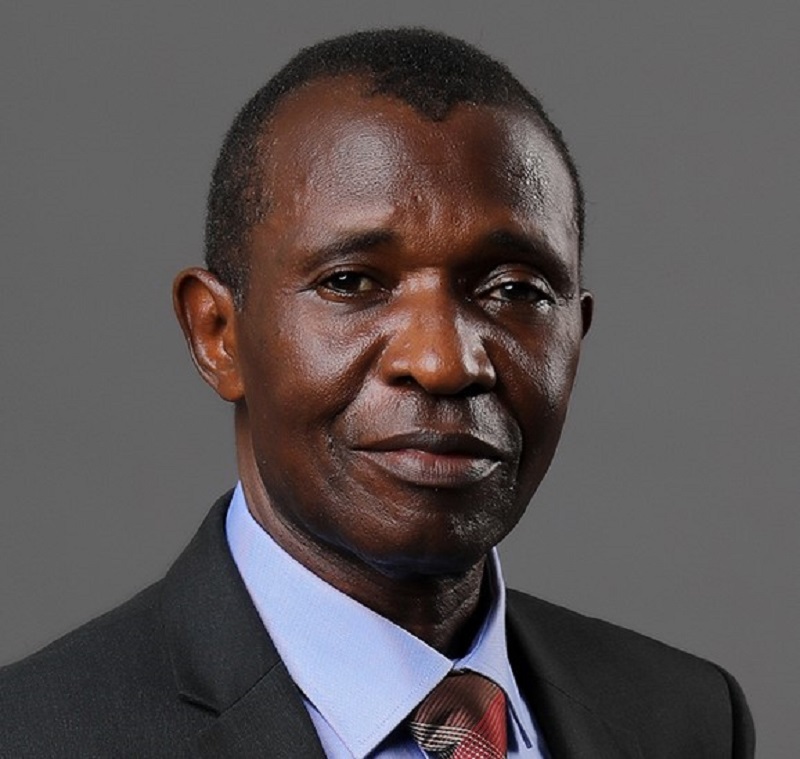
Feature/OPED
Avoiding the Coming Deaths in 2027 Elections
By Michael Owhoko, PhD
Inevitable deaths are in the offing in 2027. Those familiar with Nigeria’s electoral mythology, history and patterns know that the 2027 general elections will be a harbinger of death, powered by electoral violence. It will take a miracle to escape what will play out. People will die. Nigerians will perish. Hospitals will be overwhelmed. Nigerians must therefore brace up for the coming calamity, as the intensity and scale will make it a memorable year of regrettable carnage. All six geopolitical areas of the country will be affected.
The event will further rub off on the country’s troubling global perception, and worsen its negative profile as the 5th most violent country in the world, and 4th in the Global Terrorism Index 2026, ranking as the 6th deadliest and 7th most dangerous country for civilians in the world. Besides, the elections will threaten democratic norms, political stability, and erode faith in public institutions due to brazen manipulation of the electoral process.
The coming calamity will largely be fueled by electoral insecurity engendered by the desperation of political parties to outwit one another, particularly the ruling party, the All Progressives Congress (APC) and the main opposition parties, including the African Democratic Congress (ADC) and the Nigeria Democratic Congress (NDC). While the APC will go all out and spare nothing to retain the incumbent government of President Bola Ahmed Tinubu for a second term in office, the ADC and the NDC will deploy every resource at their disposal to dislodge and replace the current APC Government, causing public uproar.
Though other political parties will also show strength and slug it out, the election will be fiercely contested by the APC, NDC and ADC. The stakes are high, and driven by illogical greed and lust for power to control political authority and economic resources, even though the resources are poorly appropriated, and most times, thoughtlessly deployed to protect pride, fund vanity, and maintain empires, as against judicious application for improved living conditions for citizens.
The political parties are likely to deploy political thugs masked as party officials to the field to reinforce their internal strategic plans to achieve programmed goals. By their planned political conduct and indifference, the political parties will, unwittingly, diminish the value of human lives during the general elections. This is the picture of what the country will experience in next year’s general elections.
Before you ask me for proof, go and verify the antecedents of political parties and how their leaders ignited the political atmosphere to set the tone for violence and rigging through their utterances and body language, influenced by irrational desires to achieve electoral victory at all costs. Except for former President Goodluck Jonathan, all presidential candidates since 1999 to date are guilty of stoking the polity through their predilection and declarations.
For example, prelude to the April 2007 Presidential election, the then President Olusegun Obasanjo had alluded that the election would be a “do-or-die affair”. As simple as the statement was, it encouraged supporters of the Peoples’ Democratic Party (PDP) to go the extra mile to push for victory at all costs without thought of probable consequences. Evidently, this resulted in violence and fatalities across the country.
Also, during the 2011 elections, when former and late President Muhammadu Buhari, then candidate of Congress for Progressive Change (CPC), lost to Goodluck Jonathan, his demeanour and post-election utterances, undeniably, provoked and encouraged election violence in parts of the country, particularly in the north-west.
According to Human Rights Watch, over 800 people were killed, and more than 65,000 persons were displaced in the 2011 general elections following widespread protests and riots by Buhari’s supporters in the northern states. The killings, which were worsened by sectarian colouration, occurred in Adamawa, Bauchi, Borno, Gombe, Jigawa, Kaduna, Kano, Katsina, Niger, Sokoto, Yobe, and Zamfara.
Without showing empathy for the high number of Nigerians killed, including innocent National Youth Service Corps (NYSC) members, Buhari further threatened that if the next elections scheduled for 2015 were rigged like the 2011 elections, “the dog and the baboon would all be soaked in blood”, implying that violence and death would be inevitable in the 2015 elections. Clearly, Buhari’s comment was an indication of political desperation, intended to use the threat of force and violence to effect the outcome of the political contest, as against allowing the impartial verdict of the Independent National Electoral Commission (INEC).
Luckily for Nigeria, former President Jonathan conceded defeat, preventing Buhari’s threat from coming to pass in 2015. Jonathan’s action not only doused tension, but it also averted widespread killings and bloodshed that would have accompanied the announcement of the result in his favour, particularly in the northern part of the country. Jonathan’s position was obviously dictated by his philosophy that his ambition and that of anybody was not worth the blood of any Nigerian, which he held as an article of faith throughout the period of the 2015 general elections, preferring a credible and peaceful election.
Also, the incumbent President, Bola Ahmed Tinubu, is not immune from utterances that have encouraged violence. While addressing party members in London in 2023, Tinubu said political power was not served a la carte, but must be secured through intense efforts by “fighting for it, grabbing it, snatching it and running with it”. Whatever that means, this remark was not only unhelpful, it encouraged rigging and violence, as well as opened a new vista of political desperation and redefinition of new premises for an unhealthy autochthonous political process.
A parallel can be drawn between Tinubu’s statement and an incident that occurred at a polling unit in the Lekki axis of Lagos during the 2023 general elections. After queuing for hours in the sun to cast votes, just when ballot papers were to be counted at the end of voting, some thugs emerged from nowhere, scared away voters, seized the ballot box and left with it, perhaps, to thumbprint fresh ballot papers. Surely, there is a correlation between their actions and the political philosophy of “fighting for it, grab it, snatch it and run with it”.
In a similar vein, the Secretary of the Board of Trustees of the New Nigeria People’s Party (NNPP), Alhaji Buba Galadima, recently advised Nigerians to defend their votes in the coming 2027 elections with “bottles and jerry cans of kerosene”. This is an obvious reference to violence and an invitation to anarchy. Indeed, it is a precursor, as a worst-case scenario marked by an unhealthy electoral struggle will be thrown up in the 2027 general elections, where the value of human lives will be degraded.
The culture of killings in every election circle in Nigeria has become legendary. Among all African countries, and indeed, the world over where elections are conducted, Nigeria is reputed for election manipulation and violence, attracting undue global spotlight. As elections draw closer, skepticism, uncertainty, fear, and apprehension permeate the atmosphere due to expected violence.
Though it is the responsibility of the government to protect and guarantee the safety of lives during elections, past assurances by the government to protect the lives of citizens did not translate to safety. When a few successes are discounted, you find that security agencies have proved to be incapable of handling high-level violence, like what happened in the 2011 elections, where over 800 people lost their lives.
From antecedents, politicians are careless about deaths and can sacrifice the blood of innocent Nigerians on the altar of electoral victory. Their interests and activities are driven more by the value of votes, as evident during post-election litigations where they seek legal redress for electoral malpractice rather than justice for the dead.
Sadly, the coming deaths will dwarf all previous politically related killings in the country, necessitating the need to prioritise personal safety. It is imperative to identify and avoid electoral black spots that are notorious for violence. Political thugs are likely to trigger violence by creating an atmosphere of fear and intimidation at polling units aimed at electoral manipulations.
Citizens are therefore advised to devise safety nets that will shield and guarantee personal safety in the event of an obvious threat to life, even if it means avoiding polling booths. Recalled that Nigerians who died during previous election cycles had since been forgotten, and the country moved on without them. Therefore, citizens need to protect themselves to avoid being counted among the dead in the pending catastrophe in 2027.
Dr Mike Owhoko, Lagos-based public policy analyst, author, and journalist, can be reached at www.mikeowhoko.com and followed on X (formerly Twitter) @michaelowhoko.
Feature/OPED
Facing the Reality of Inflation in Everyday Life
By Timi Olubiyi, PhD
Currently, many are passing through one of the most difficult times due to inflationary pressures. From transportation to food, electricity, healthcare, school fees, rent, and communication, the rising cost of living has altered the daily experience of millions of households. What used to be considered necessities have now become luxuries for many families. Across the country, the average citizen is under enormous pressure to survive amid worsening inflation, shrinking purchasing power, and economic uncertainty.
While inflation is a global phenomenon, the Nigerian experience has become particularly severe because of the combined effects of fuel subsidy removal, exchange rate volatility, high transportation costs, insecurity in food-producing regions, and weak wage growth. The reality of petrol selling at nearly N1,400 per litre in some parts of the country has significantly changed household economics and business sustainability. The consequences are visible everywhere in markets, offices, homes, schools, hospitals, and on the streets.
In practical terms, transportation fares have more than tripled in many cities within a short period. Food inflation has equally become alarming. Bread, eggs, cooking gas, yams, tomatoes, beans, and other staple foods continue to rise beyond the reach of average Nigerians. Electricity tariffs and telecommunications costs have also increased, while rent in urban centres keeps climbing. Unfortunately, salaries and wages have not kept pace with these realities. This is perhaps the greatest crisis confronting workers and small business owners today. Many employees still earn wages negotiated several years ago under entirely different economic conditions. Yet the value of those salaries has been severely eroded by inflation. In real terms, many workers are poorer today despite remaining employed.
The truth is that the salary structure available now can no longer effectively support decent living standards for many households. Even professionals with stable employment now struggle to meet basic obligations. Civil servants, teachers, artisans, small traders, entrepreneurs, and even middle-income earners are feeling the weight of the economic squeeze.
For many families, survival now depends on borrowing, reducing consumption, postponing healthcare, or sacrificing savings and investments. More troubling is the psychological effect of this prolonged hardship. Economic pressure is increasingly and significantly affecting mental health, marriages, productivity, and social stability.
Anxiety, frustration, depression, anger, and emotional exhaustion are becoming common experiences among citizens trying to survive difficult conditions. Difficult times and hardship often fuel marital conflicts, domestic tension, and reduced emotional well-being. In workplaces, economic uncertainty lowers morale, concentration, and productivity as employees struggle to cope with transportation costs, food, and other basic needs.
In fact, many people now live permanently in survival mode, uncertain about what tomorrow may bring. Businesses are equally under pressure. Rising operational costs continue to threaten sustainability, especially for small and medium-scale enterprises. Diesel prices, transportation costs, imported raw materials, electricity bills, taxation, and weak consumer spending have reduced profitability across many sectors. Several businesses have downsized operations, reduced staff strength, or shut down completely. Others remain in operation but merely struggle to survive.
Consequently, the era when a single salary could comfortably sustain a family is gradually disappearing in Nigeria. One of the clearest lessons from the current economic climate is that relying solely on one source of income has become increasingly risky. Economic realities now require individuals and households to think beyond traditional salary structures and embrace income diversification. In fact, multiple streams of income are no longer optional; they are becoming a necessity for financial survival and resilience. Families that depend entirely on one monthly salary are highly exposed to economic shocks, inflation, job loss, or business disruptions. The harsh reality is that even regular employment no longer guarantees financial security.
Therefore, Nigerians must begin to intentionally explore additional income opportunities that can complement existing earnings. This does not necessarily mean abandoning primary jobs or businesses, but rather creating alternative sources of income that can provide support during difficult times. Technology and digital platforms have made this more possible than ever before. Social media, e-commerce, freelancing, online consulting, digital content creation, virtual training, and remote services now offer opportunities for additional income generation.
Many professionals can monetise their knowledge, experience, or talents through side engagements without compromising their primary employment. In a way, passive income opportunities such as agriculture, cooperative investments, real estate, dividend-paying stocks, mutual funds, and small-scale trading can help cushion economic shocks over time. Land acquisition, for instance, remains one of the most reliable long-term stores of value in Nigeria despite current economic challenges. Assets that appreciate over time can provide financial protection against inflation. More so, living below one’s means may no longer be a matter of choice but a practical necessity under present realities. The culture of excessive social competition and pressure to maintain appearances despite declining income can worsen financial stress. Economic survival today requires financial honesty, discipline, and strategic planning.
In conclusion, the current economic realities in Nigeria demand a shift in mindset, financial behaviour, and survival strategies. Fuel at N1,400 per litre is not merely an energy issue; it affects transportation, food prices, school fees, healthcare costs, business operations, and overall quality of life.
Inflation has redefined daily living for millions of Nigerians. Therefore, building multiple streams of income, improving financial literacy, embracing prudent spending, and investing for the future are no longer luxury ideas but necessary responses to economic realities.
The truth is simple: depending solely on salary income in today’s Nigeria may no longer be sufficient for financial stability. The earlier households adapt to this reality, the better positioned they may be to survive and thrive despite the challenges ahead. Good luck!
How may you obtain advice or further information on the article?
Dr Timi Olubiyi is an expert in Entrepreneurship and Business Management, holding a PhD in Business Administration from Babcock University in Nigeria. He is a prolific investment coach, author, columnist, and seasoned scholar. Additionally, he is a Chartered Member of the Chartered Institute for Securities and Investment (CISI) and a registered capital market operator with the Securities and Exchange Commission (SEC). He can be reached through his Twitter handle @drtimiolubiyi and via email at dr***********@***il.com for any questions, feedback, or comments. The opinions expressed in this article are solely those of the author, Dr Timi Olubiyi, and do not necessarily reflect the views of others.
Feature/OPED
Nigeria’s Booming Banks And A Collapsing Economy
By Blaise Udunze
Nigeria’s banking industry appears to be booming, largely driven by the policies of the Central Bank of Nigeria (CBN), under Governor Olayemi Cardoso, while the real economy continues to suffocate.
At a time when millions of Nigerians are sinking deeper into poverty, when inflation continues to erode household incomes, when businesses are collapsing under unbearable operating costs, and when migration has become a survival strategy for many young professionals, Nigerian banks are announcing staggering profits, stronger capital positions and unprecedented liquidity growth.
According to the bank’s financial statements, the financial system appears healthy. In reality, the economy where citizens work, trade and survive is gasping for breath.
This growing disconnect between financial sector prosperity and economic suffering now represents one of the gravest threats to Nigeria’s long-term economic stability and its ambition of building a $1 trillion economy.
The numbers are indeed impressive. Nigerian banks’ shareholders’ funds reportedly surged to about N27 trillion following the recapitalisation exercise. The top five banks now command balance sheets estimated at over N164 trillion. Tier-1 banks collectively generated trillions in profits within the first quarter of 2026 alone, while the sector-wide recapitalisation exercise raised over N4.56 trillion.
Ordinarily, such figures should inspire confidence about the future of the economy. Stronger banks are expected to translate into stronger businesses, more jobs, industrial expansion and wider economic opportunities. But Nigeria’s experience is proving otherwise.
Instead of serving as engines of productive growth, banks are increasingly becoming custodians of liquidity trapped within the financial system itself. That is the real danger.
Even as banking liquidity expands sharply, lending to the productive economy remains weak and constrained. Reports indicate that banks parked a record N24.13 trillion with the CBN, while simultaneously increasing investments in government securities and treasury bills because these avenues are safer, more profitable and less risky than lending to businesses operating within Nigeria’s harsh economic climate. This reality exposes a dangerous contradiction.
A developing economy desperately in need of industrialisation, manufacturing growth, infrastructure expansion and job creation cannot afford a banking system that prefers financial safety over productive economic risk.
A sustainable economy cannot thrive where the real sector is starved of funds. Yet this is exactly where Nigeria now stands.
Despite the massive liquidity in the banking system, growth in lending to the private sector continues to lag behind the pace of liquidity expansion. The implication is clear. Financial sector strength is no longer translating into real economic development. This is not how healthy economies function.
Ordinarily, banks in developing economies are expected to operate as catalysts for economic transformation. Across successful economies, commercial banks finance manufacturing, agriculture, innovation, infrastructure and entrepreneurship because those sectors generate jobs, productivity and national wealth.
Small and Medium Enterprises (SMEs), especially, are globally recognised as the backbone of grassroots economic development. Nigeria is no exception.
SMEs account for over 70 per cent of registered businesses, contribute nearly half of Nigeria’s GDP and generate between 84 and 90 per cent of employment opportunities. Yet despite their overwhelming importance, SMEs reportedly receive barely between 0.5 per cent and one per cent of total commercial bank lending. That is not merely a policy failure. It is an economic tragedy.
Every denied SME loan is a denied employment opportunity. Every failed business represents another frustrated entrepreneur. Every frustrated entrepreneur becomes another Nigerian contemplating migration.
This is how economic dysfunction transforms into human displacement. The so-called “Japa” phenomenon did not emerge in isolation. It is deeply connected to economic hopelessness. When productive citizens lose faith in their country’s economic future, migration stops being a lifestyle choice and becomes a survival mechanism.
Unbeknownst to the policymakers is that Nigeria cannot realistically build a $1 trillion economy while productive sectors remain financially suffocated.
A closer glance at the trend of events helps to reveal that the danger becomes even more severe when viewed against the backdrop of the recent outcome of the 305th Monetary Policy Committee (MPC) meeting, where the CBN retained the Monetary Policy Rate (MPR) at 26.5 per cent in its bid to sustain disinflation and macroeconomic stability.
It is understandable and certain that inflation control is important, but the fact is that at 15.69 per cent, inflation remains painfully high and continues to weaken purchasing power. Food prices remain elevated. Transportation costs remain unbearable. Consumer demand is weakening. The middle class is shrinking rapidly.
But maintaining elevated interest rates also comes with painful consequences. Simple arithmetic tells us that higher interest rates mean higher lending costs. Higher lending costs mean higher production costs. Higher production costs worsen inflationary pressures and weaken business survival rates.
Invariably, this also tells us that for Nigerian manufacturers and corporates already battling a weak naira, volatile exchange rates, expensive diesel, energy insecurity and declining consumer demand, access to affordable credit is becoming almost impossible.
Many businesses are no longer borrowing to expand production or employ workers. They are borrowing merely to survive. This is economic suffocation.
Meanwhile, banks continue to profit massively from high-yield government securities and treasury investments. Reports indicate that major Nigerian banks generated over N6.68 trillion from investment securities and treasury bills instead of financing productive enterprises capable of stimulating growth and employment.
The government’s appetite for borrowing itself shows no sign of slowing down. Public borrowing reportedly climbed above N39 trillion. Historically, excessive government borrowing crowds out private sector investment because banks naturally prefer lending to the government rather than exposing themselves to risks associated with businesses operating in unstable economic conditions.
The result is predictable. The real sector weakens while speculative and non-productive financial activities flourish. This explains why Nigeria increasingly resembles a financial system disconnected from the realities of ordinary citizens.
While banks celebrate rising profits, poverty and hunger worsen visibly across the country. Unemployment continues to rise. Small businesses are dying quietly. Household purchasing power is collapsing under inflationary pressure.
Yet the financial system appears more liquid than ever. That contradiction should alarm policymakers. The recapitalisation exercise itself now raises difficult questions.
What exactly is the purpose of stronger banks if stronger banks do not strengthen national productivity?
If recapitalisation merely empowers banks to deepen investments in government debt instruments while manufacturers, farmers, exporters and SMEs remain starved of affordable credit, then the exercise risks becoming financially impressive but economically hollow.
Indeed, the current monetary environment appears to reward financial conservatism over productive risk-taking.
The stringent Cash Reserve Requirement (CRR), elevated interest rates and broader macroeconomic uncertainty continue to discourage aggressive lending to the private sector. Banks understandably seek safety. But nations do not industrialise through excessive financial caution.
No economy develops when capital circulates primarily within treasury bills and government securities instead of flowing into factories, farms, logistics, housing, innovation and production.
This is the larger danger confronting Nigeria today. Economic crises rarely begin with recession statistics alone. Sometimes, they begin when financial institutions become detached from the suffering realities of the wider economy. They begin when growth exists only within banking balance sheets but disappears from households, factories and streets.
Without productive credit expansion, economic growth becomes artificial and exclusionary. Without affordable financing, businesses cannot scale. Without business expansion, jobs cannot emerge. Also, it must be noted that without jobs, insecurity, poverty and migration inevitably worsen. The implications for social stability are enormous.
One painful fact is that citizens already burdened by inflation, debt pressures and widespread distrust now face a system where economic opportunities continue shrinking despite apparent financial sector prosperity. One of the lurking dangers is that this deepens resentment, weakens confidence in institutions and threatens long-term economic cohesion.
The CBN’s inflation fight may be necessary, but monetary stability alone cannot substitute for productive economic expansion. Financial stability without inclusive growth eventually becomes unsustainable.
The real economy matters more than banking optics. Nigeria urgently needs policies that incentivise real sector lending, reduce structural risks facing manufacturers and SMEs, strengthen credit infrastructure, lower production bottlenecks and redirect liquidity toward productive economic activity.
As a matter of fact, it is high time for Nigeria to start rethinking the growing dependence on debt-driven fiscal management that continues to crowd out private investment. Development cannot occur when government borrowing consumes the financial oxygen needed by businesses.
Ultimately, banking profitability should not become an isolated island of prosperity surrounded by a collapsing productive economy.
A nation cannot celebrate trillion-naira banking profits while millions of citizens sink deeper into economic despair. No society sustains such a contradiction indefinitely.
If Nigeria truly hopes to build a resilient and inclusive economy, then the banking sector must once again become a vehicle for national development rather than merely a beneficiary of government debt and monetary tightening.
Otherwise, the country risks creating a contradictory economy where banks grow richer while citizens grow poorer and where financial prosperity exists only on paper while economic hardship defines everyday life.
Blaise, a journalist and PR professional, writes from Lagos and can be reached via: bl***********@***il.com
Feature/OPED
Beyond the vibe: Bridging Africa’s Build Divide with Intelligent Infrastructure
By Kehinde Ogundare
Africa has always found its own way around barriers. When fixed-line banking proved too slow and too exclusionary, Kenya did not wait for the infrastructure to catch up. It built M-Pesa instead, a mobile payments platform that by 2022 had 50 million customers across seven African countries and processed nearly 20 billion individual transactions annually.
That story is now so well-worn that it risks becoming a cliché. But it contains a genuinely instructive logic: constrained circumstances, properly understood, can become a design brief.
Today, Africa faces a new set of constraints, around software development capacity, technical talent, and the cost of building digital tools, which demands exactly the same creative leap. Meeting these challenges will require the same kind of practical innovation that previously reshaped financial inclusion across the continent.
The numbers make the challenge plain. Africa’s internet economy was projected to contribute $180 billion, or 5.2% of aggregate GDP, by 2025. Meanwhile, cloud adoption is expanding at 25 to 30% annually, outpacing Europe and North America, while thousands of African companies are already experimenting with AI-enabled operations. Yet, the human infrastructure required to sustain this momentum is not keeping pace.
Unless the continent finds smarter and more scalable ways to build digital systems, Africa risks becoming the world’s largest consumer of a digital future it did not help design.
The build gap is structural, not incidental
Africa’s AI challenge is not a lack of ambition or demand, but the widening gap between the pace of technological change and the availability of skills needed to support it. Across the continent, organisations are under growing pressure to build AI capability quickly, as shortages in specialised talent increasingly affect innovation, competitiveness, and the ability to fully participate in the global digital economy.
A 2024 ICT Skills Survey found that more than 28,000 high-end developer and cybersecurity roles in South Africa had to be outsourced because local talent was simply unavailable, with enterprises poaching the same scarce professionals from one another in a cycle that drives up costs and squeezes out the SMEs that form the backbone of most African economies. Nigeria and Kenya, despite recording developer population growth of 28% and 33% respectively between 2023 and 2024, still represent only a fraction of the global developer community.
The challenge is further intensified by the continued loss of skilled talent to more developed markets, limiting the continent’s ability to build and retain the expertise needed for long-term digital growth. However, this is not simply a pipeline issue that can be solved through education alone. It reflects deeper structural constraints, from uneven investment in technical infrastructure and digital training to the high cost of reliable connectivity and power instability. Across African markets, many businesses and communities are still forced to operate within systems that make full participation in the digital economy significantly harder. These are not isolated operational challenges. They are systemic barriers that risk slowing Africa’s ability to fully realise the opportunities of the AI era.
Intelligent tools as strategic infrastructure
This is precisely why the emergence of AI-assisted low-code and vibe coding approaches represents something more than a developer trend. It represents a potential structural response to a structural challenge.
Vibe coding, a term popularised by AI researcher Andrej Karpathy in 2025, refers to building functional applications through natural language descriptions rather than conventional code. You describe what you want; the system generates the structure, logic, and connections required to make it work.
For the continent’s millions of entrepreneurs operating without a developer on staff, this creates a genuine shortcut to working software, whether it is a South African small business looking to digitise operations, a Kenyan agritech startup building supply chain tools, or a Nigerian SME trying to automate customer approvals and customer service workflows.
Consider a small logistics company trying to manage deliveries across multiple regions without the resources to hire a full development team. AI-assisted low-code tools can help build routing dashboards, automate customer notifications, and digitise inventory tracking in days rather than months.
AI-assisted low-code development goes further still, bringing machine learning, predictive analytics, and self-learning algorithms into the development process, making it suitable not merely for quick prototypes but for the scalable, data-intensive applications that banking, healthcare, and logistics at a continental scale genuinely require.
Recent research found that Kenya’s approach to digital adoption, characterised by grassroots digital literacy programmes and simplified onboarding, demonstrates that informality need not be a barrier to digital innovation. That finding points toward something important: the tools that matter most in Africa are not necessarily the most sophisticated ones. They are the ones who meet builders where they actually are. A fast-moving startup operating out of a co-working space in Lagos’s Yabacon Valley has different needs from an established financial services firm in Cape Town navigating compliance requirements, and both have different needs from the first-time builder in a smaller city with no developer network at all.
What connects all three contexts is the principle that lowering the cost and complexity of building software expands who gets to shape Africa’s digital future. Africa requires massive scaling of its digital workforce, with reports indicating that 650 million training opportunities will be needed to meet the demand for digital skills across the continent by 2030. Traditional pipelines cannot close that gap at the required speed. Tools that extend the productive capacity of existing builders and draw non-technical entrepreneurs into the act of building are critical.
Leapfrogging requires foundations, not just shortcuts
The risk, and it is a real one, is mistaking these tools for a substitute for the deeper investments Africa still needs to make. As analysts have argued, mobile money dramatically increased financial inclusion but did not replace the need for a stable, well-regulated banking sector, a tension that Nigeria’s rapidly maturing fintech ecosystem is navigating in real time as it moves beyond its breakout years.
The same logic applies here. Vibe coding and AI-assisted development cannot paper over the infrastructure deficits that still constrain the continent. Across many parts of Africa, inconsistent access to reliable electricity and high-quality connectivity continues to shape who can fully participate in the digital economy. While AI-powered tools may lower technical barriers to innovation, their impact will ultimately depend on broader progress in digital infrastructure, energy reliability, and equitable access to technology and stronger governance frameworks around cybersecurity and data sovereignty.
McKinsey has observed that Africa has a proven track record of leapfrogging traditional development pathways, from mobile payments to cloud adoption, often outpacing what established markets achieved through slower, incremental routes.
What Africa needs, then, is not a choice between vibe coding and AI-assisted development, nor between either of those and conventional software engineering. It needs an intelligent layering of all three: accessible, prompt-driven tools for the entrepreneurs and administrators who need working solutions now; robust AI-assisted platforms for the developers and institutions building systems that must scale across borders and regulatory environments; and sustained investment in producing and retaining the senior technical talent that no tool, however intelligent, can fully substitute.
Africa’s AI market will be worth $16.5 billion by 2030. Whether African organisations are building that future or merely consuming it will depend on whether the means to build it are genuinely within reach, across the continent’s established tech hubs and deep into the cities and towns that sit beyond them.
Kehinde Ogundare is the Country Head of Zoho Nigeria
-
Feature/OPED6 years agoDavos was Different this year
-
Travel/Tourism10 years ago
Lagos Seals Western Lodge Hotel In Ikorodu
-
Showbiz3 years agoEstranged Lover Releases Videos of Empress Njamah Bathing
-
Banking8 years agoSort Codes of GTBank Branches in Nigeria
-
Economy3 years agoSubsidy Removal: CNG at N130 Per Litre Cheaper Than Petrol—IPMAN
-
Banking3 years agoSort Codes of UBA Branches in Nigeria
-
Banking3 years agoFirst Bank Announces Planned Downtime
-
Sports3 years agoHighest Paid Nigerian Footballer – How Much Do Nigerian Footballers Earn