Jobs/Appointments
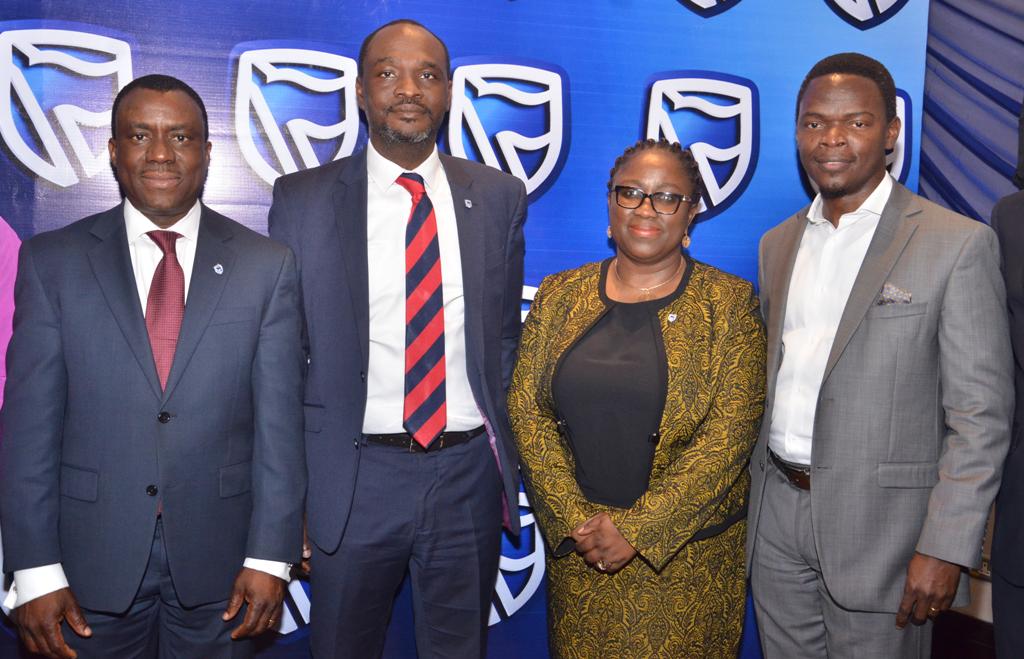
Experts Brainstorm on Future Work Template at Stanbic IBTC Bank Forum
By Olubori Oduntan
In a rapidly changing world, more so in the digital space, finding the right models to anchor human capital development will remain a paramount determinant of corporate success. This thinking underscores the Workplace Banking Seminar’ organized by Stanbic IBTC Bank PLC, a member of Stanbic IBTC Holdings PLC, in Lagos, recently.
The seminar, with the theme, ‘The Future of Work and the Role of Human Capital’, attracted participants from both the public and private sectors, including Human Resources Managers , Financial Service Institutions, Insurers, Fintechs, Government Agencies, Regulators, Private Equity and Venture Capital firms, amongst other players from diverse fields.
In his opening comments, Chief Executive, Stanbic IBTC Bank PLC, Dr. Demola Sogunle, said by settling for a theme that seeks to unravel the future of work, the organization aims to prepare and equip its clientele for future success. Employee experience, just like customer experience, is imperative to drive corporate success. Therefore, workers must be sufficiently motivated, engaged and empowered, he stated.
This objective underlines the numerous stakeholder engagements organized by the Stanbic IBTC Group to provide a platform to connect with clients and avail them with information to make informed decisions. As an institution designed to meet the financial needs of customers at every phase in life, Dr. Sogunle said the group would continuously offer value propositions to move people and businesses forward.
Guest speaker, Mr Boye Ademola, noted that the whole essence of digital application is to create intrinsic value. Any technology that does not generate value is worthless. Besides, value cannot be created without commensurate talent.
Mr Ademola, who is Partner & Lead for Digital Transformation Technology at KPMG, stated that the future of work has three crucial dimensions: workforce, workspace and work culture. These three elements are critical to attract the millennials, who would constitute the bulk of the future workforce. Nigeria for instance, has over 90 million of its population under 30 years of age and as the population increases, they would naturally trigger change. Already, the average age of millennial CEOs is in the 30s. In meeting the demands of the future, there is the need for a paradigm shift from today’s work structure. Critical factors to drive this change include focus on value creation, agility, co-creation, co-option of millennials and appropriate operating models.
The session also had a panel discussion that featured Usen Udoh, Group Chief, Human Resources, Dangote Group; Alero Onosode, General Manager, Human Resources, Seplat Petroleum Plc; Abudullahi Jubril Saba, Human Resources Director, IHS Towers; Country Head, Human Capital, Stanbic IBTC, Olufunke Amobi; and Boye Ademola. They highlighted other factors pivotal to the future of work as education, mining ecosystems, life-long learning, breaking of hierarchies and silos, challenging leadership and unrelenting value creation.
Another highlight of the event was the question and answer session which was very interactive and engaging. Major talking points included creating an engaged workforce by fusing learning and talent management, using technology to leapfrog, ensuring inclusion, participation in activities and initiatives as well as using meritocracy as a yardstick for appraisal.
The ‘Workplace Banking Seminar’, now in its fourth edition, comes on the heels of the Bank’s hugely successful financial planning sessions for Enterprises. The seminar hosts HR Heads drawn from various sectors and focuses on topical HR issues with a view to equipping the audience with vital skills and knowledge aimed at impacting Employee/Business efficiency, productivity, profitability, continuity, growth and sustainability.
Head, Personal Banking, Stanbic IBTC Bank PLC, Nkolika Okoli, said the Bank is constantly trying to add value, which goes beyond providing banking services to its customers. By looking at the whole spectrum of financial literacy drawn from the Stanbic IBTC Group expertise, Ms. Okoli stated that Stanbic IBTC Personal Banking business aims to equip Individuals with the knowledge required to attain financial freedom before retirement.
Executive Director, Personal & Business Banking, Stanbic IBTC Bank PLC, Mr. Babatunde Macaulay, who gave the vote of thanks, said as a member of the Standard Bank Group, Africa’s largest bank by assets and earnings, Stanbic IBTC will continue to leverage on the 155-year experience, expertise and strong financial clout of the mother brand to deliver superior sustainable shareholder value by meeting the needs of its clientele. “Our main goal is to continue to render best-in-class service to our customers who cut right across Nigeria’s socio-economic spectrum and play a leading role in supporting individuals, businesses and the Nigerian economy,”
Stanbic IBTC Holdings PLC, a member of Standard Bank Group, is a full service financial services group with a clear focus on three main business pillars – Corporate and Investment Banking, Personal and Business Banking and Wealth Management. Standard Bank Group is the largest African bank by assets and market capitalization. It is rooted in Africa with strategic representation in 20 countries on the African continent. Standard Bank has been in operation for over 155 years and is focused on building first-class, on-the-ground financial services institutions in chosen countries in Africa; and connecting selected emerging markets to Africa by applying sector expertise, particularly in natural resources, power and infrastructure.
Jobs/Appointments
Oyo Nigeria Union of Teachers Elects Hassan Ajibola Fatai as Chairman
By Aduragbemi Omiyale
The Oyo State chapter of the Nigeria Union of Teachers (NUT) has elected Mr Hassan Ajibola Fatai as its new chairman, replacing the outgoing Mr Raji Oladimeji Ismael.
He was chosen to lead affairs of the association in the next four years at the NUT Oyo State wing’s 8th quadrennial Delegates Conference in Ibadan, the state capital, on Wednesday.
Mr Fatai, a teacher at Migrant Farmers Primary School, Igbo-Iroko Kishi, vowed to safeguard the integrity, dignity, and professionalism of the teaching profession in the state, also promising to work with all members and stakeholders to reposition the union to better serve the welfare of its members.
Other newly elected executive members included Adeleke Adesina as deputy chairman, Alonge Oluyemisi as 1st vice chairman, Morakinyo Oyebola as 2nd vice chairman, Badmus Abiona as 3rd vice chairman, Bello Folasade as 4th vice chairman, Titilolu Ibukunolu as treasurer, Dada Kabirat as 1st internal auditor, Akinjide Yusuf as 2nd auditor and Ajala Niyi as publicity secretary.
Also, Alao Femi was elected as social secretary, Areo Felicia as assistant social secretary, Mobolaji Ademola as state national representative and James Ruth as Editor.
Speaking at the conference, the National President of NUT, Mr Titus Audu Amba, who was represented by the National Social Secretary, Ms Titi Ade Adebanjo, stated that the union was founded on democratic principles and the philosophy of labour unions.
According to him, in line with this, the union at the national, state and local levels conducts elections to usher in new executives at the end of every stipulated tenure.
He reiterated the group’s commitment to continue pursuing better welfare and improved conditions for teaching and learning in Nigeria.
On his part, Mr Ismael outlined major achievements recorded between 2022 and 2026, highlighting significant improvements in teachers’ welfare, professional development, and infrastructural expansion.
According to him, the union secured prompt salary payments, promotion arrears, annual increments, and interventions on pension-related matters, while also resolving cases of victimisation, wrongful postings, salary stoppage, and other disputes through its Legal and Welfare Committees.
“Persistent advocacy led to the recruitment of additional teachers and non-teaching staff, which eased workloads, improved teacher–pupil ratios, and enhanced learning outcomes across schools. It also facilitated long-delayed promotions, conducted trainings for SWEC members, and organised capacity-building programmes and mentorship sessions for young teachers,” he added.
Jobs/Appointments
Tinubu Picks Joseph Tegbe to Replace Adelabu as Power Minister
By Modupe Gbadeyanka
Following the resignation of Mr Adebayo Adelabu as the Minister of Power a few days ago, President Bola Tinubu has nominated Mr Joseph Tegbe as his replacement.
A statement by the Special Adviser to the President on Information and Strategy, Mr Bayo Onanuga, disclosed on Thursday that Mr Tegbe’s name has been forwarded to the Senate for confirmation.
His nomination is expected to strengthen further ongoing efforts to reform the power sector, enhance grid stability, and attract sustainable investment in line with the Renewed Hope Agenda.
Upon confirmation, he is expected to bring his extensive expertise to bear to advance critical reforms and deliver improved outcomes for Nigerians in the power sector.
Mr Adelabu, a former Deputy Governor of the Central Bank of Nigeria (CBN), resigned last week to pursue his dream of becoming the Governor of Oyo State.
His replacement is also from Oyo State. He is a fiscal and economic reform expert with over 35 years of experience spanning the public and private sectors, according to the statement today.
He is a former Senior Partner and Head of Advisory Services at KPMG Africa, where he led wide-ranging initiatives in fiscal policy reform, institutional transformation, and governance. He has also advised key government institutions and private sector organisations on strategic reforms, regulatory frameworks, and investment structuring.
He is at present the Director General and Global Liaison for the Nigeria-China Strategic Partnership (NCSP), where he is responsible for strengthening bilateral development cooperation between Nigeria and the People’s Republic of China.
The NCSP also coordinates engagements with public sector stakeholders to advance economic and social development in line with FOCAC objectives.
Mr Tegbe’s experience includes significant engagements within the power sector, particularly in regulatory and institutional reform involving agencies such as the Nigerian Electricity Regulatory Commission (NERC) and the Nigerian Bulk Electricity Trading Company (NBET).
Jobs/Appointments
Tinubu Elevates Bianca Ojukwu to Foreign Affairs Minister
By Adedapo Adesanya
President Bola Tinubu has named Mrs Bianca Odumegwu-Ojukwu as Nigeria’s new Minister of Foreign Affairs, the latest in the cabinet reshufflement.
Mrs Odumegwu-Ojukwu replaces Mr Yusuf Tuggar, who recently resigned to pursue the Bauchi governorship election ambition in 2027 under the All Progressives Congress (APC).
Mr Sola Enikanolaiye has been appointed as the new Minister of State for Foreign Affairs, the position previously occupied by Mrs Odumegwu-Ojukwu.
In a statement on Wednesday night, the Special Adviser to the President on Information and Strategy, Mr Bayo Onanuga, disclosed that until his nomination, Mr Enikanolaiye, from Kogi State, served as senior Special Assistant to the President on Foreign Affairs and International Relations.
He is a career diplomat with over three decades of service in Nigeria’s foreign service.
He has previously served as permanent secretary in the Ministry of Foreign Affairs and held diplomatic postings in Addis Ababa, Ethiopia, Belgrade, Ottawa, London and New Delhi.
President Tinubu said the appointments are part of efforts to strengthen Nigeria’s foreign policy architecture, improve efficiency and deepen global engagement.
He urged the appointees to promote Nigeria’s national interest, advance economic diplomacy, strengthen regional stability and ensure the welfare of Nigerians abroad.
“The President noted that these appointments are part of ongoing efforts to reposition Nigeria’s foreign policy architecture for greater efficiency, strategic engagement, and stronger global partnerships,” the statement read.
Recent ministerial changes under President Tinubu reflect a cautious but deliberate attempt to recalibrate governance and strengthen economic management. In a minor cabinet reshuffle approved in April 2026, key portfolios were affected, most notably the removal of Finance Minister, Mr Wale Edun; and the Housing Minister, Mr Ahmed Musa Dangiwa.
Their exits paved the way for new appointments, including the elevation of Mr Taiwo Oyedele to oversee the critical finance ministry, a move widely interpreted as an effort to inject fresh direction into the country’s economic policy framework.
Beyond the cabinet reshuffle, the administration has also undertaken broader leadership adjustments across strategic sectors, particularly in energy and regulation, signalling a pattern of continuous review within government ranks, including the replacement of Mr Saidu Mohammed with Mr Rabiu Umar as the chief executive of the Nigerian Midstream and Downstream Petroleum Regulatory Authority (NMDPRA).
-
Feature/OPED6 years agoDavos was Different this year
-
Travel/Tourism10 years ago
Lagos Seals Western Lodge Hotel In Ikorodu
-
Showbiz3 years agoEstranged Lover Releases Videos of Empress Njamah Bathing
-
Banking8 years agoSort Codes of GTBank Branches in Nigeria
-
Economy3 years agoSubsidy Removal: CNG at N130 Per Litre Cheaper Than Petrol—IPMAN
-
Banking3 years agoSort Codes of UBA Branches in Nigeria
-
Banking3 years agoFirst Bank Announces Planned Downtime
-
Sports3 years agoHighest Paid Nigerian Footballer – How Much Do Nigerian Footballers Earn