

Banking
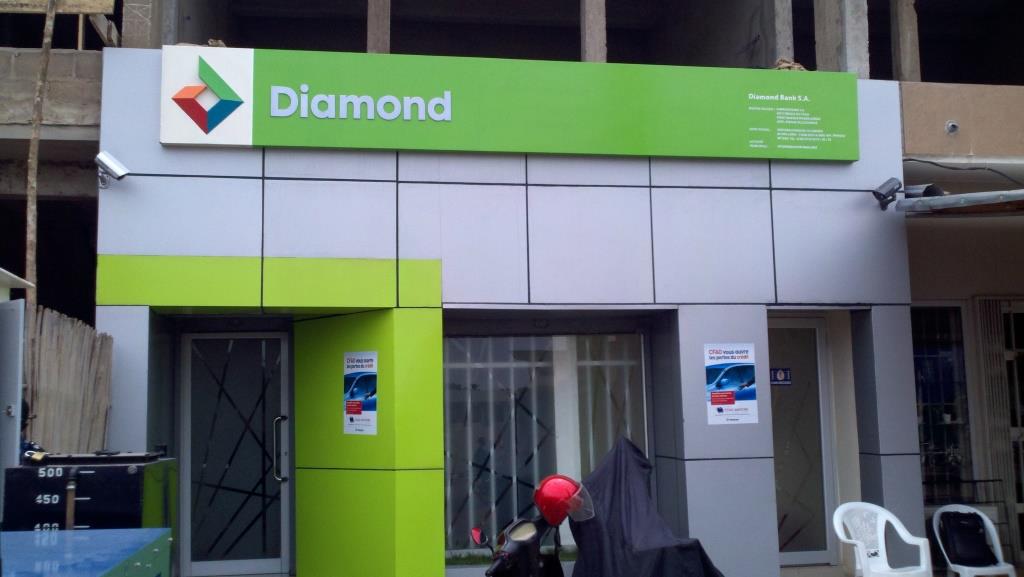
Fitch Downgrades Diamond Bank over Solvency, Liquidity Risks

By Dipo Olowookere
Fitch Ratings has announced downgrading the Long-Term Issuer Default Rating (IDR) of Nigeria’s Diamond Bank Plc to ‘CCC’ from ‘B-‘.
In a statement on Friday, Fitch said it has also lowered the bank’s Short-Term IDR to ‘C’ from ‘B’ as well as the National Long-Term Rating, which was dropped to ‘B(nga)’ from ‘BB+(nga)’.
The rating agency said the two-notch downgrade of Diamond Bank’s Long-Term IDR reflects uncertainty over its solvency and liquidity in view of very weak asset quality, highly vulnerable capital position as well as tight foreign currency (FC) liquidity ahead of an upcoming maturing $200 million Eurobond in May 2019.
The bank has some contingency plans, such as the sale of its UK subsidiary, but execution may be challenging, especially considering the recent resignation of four board members, it said.
In a statement, Fitch said Diamond Bank’s IDRs are driven by its standalone credit profile, as defined by its Viability Rating (VR).
It noted that the lender’s VR is highly influenced by very weak asset quality, which renders its capital position highly vulnerable to any further deterioration, with the VR also reflecting limited FC liquidity.
In the statement, Fitch said Stage 3 loans under IFRS 9, including past due not impaired, which better captures asset quality in our view, accounted for a very large of 37 percent of gross loans at end-1H18, compared with a reported impaired loans ratio (under IAS39) of 13 percent for the same period.
Diamond Bank’s stage 2 loans were a further 23 percent of gross loans, mostly comprising restructured loans. Diamond Bank has the highest share of problem loans (total stage 2 and stage 3 loans as a proportion of gross loans) among Nigerian rated banks, it said, adding that loan loss allowance cover is very low at 19 percent of stage 3 loans.
“We view Diamond Bank’s capital buffers as limited, given very weak asset quality, despite a relatively high Fitch Core Capital (FCC) ratio of 17.5 percent at end-1H18.
“In our view capital remains highly vulnerable given the bank’s low loan loss allowances. Higher reserve coverage would erode considerably the bank’s capital base. Unreserved stage 3 loans were 110 percent of FCC at end-1H18,” the statement said.
Diamond Bank has a small buffer over its 15 percent regulatory total capital adequacy ratio requirement (Total CAR at 16.3 percent at end-9M18).
Fitch said it understands that Diamond Bank has received the approval from the Central Bank of Nigeria (CBN) to obtain a national banking licence, and therefore lower its minimum total capital requirements to 10 percent. However, it stressed that this is subject to the completion of the sale of the UK subsidiary.
Diamond Bank’s FC liquidity improved in 2017, in line with easing FC liquidity conditions in Nigeria. However, FC liquidity remains tight, as Diamond Bank’s FC loans/customer deposits ratio reached 180 percent at end-1H18.
The bank has a number of large bullet repayments due in the short term, including its $200 million Eurobond maturing in May 2019, $100 million from Afrexim due in March 2019, and $70 million from the International Finance Corporation due in July 2019. The bank had about $300 million of liquid assets held as unrestricted cash and cash equivalents and loans to foreign banks at end-1H18.
“We understand that the bank aims to negotiate the refinancing of international financial institution funding, while the improved cash flows from the oil loan book and the disposal of its subsidiary in the UK will be the main contributors to redeeming the Eurobond.
“However, the refinancing has not yet been agreed, while subsidiary disposal has yet to be approved by the Prudential Regulation Authority in the UK and cash flows from the troubled oil sector are uncertain.
“Therefore we see significant execution risk with this plan. Although FC supply has improved, we do not expect Diamond Bank to be able to swap significant volumes of local currency to repay foreign currency obligations,” Fitch said.
Fitch also noted that Diamond Bank’s Long-Term IDR also considers governance shortfalls following the resignation of four members of the board in October 2018, including the chairman (only appointed in 2018) and three non-executive directors, raising questions around effective oversight and ongoing operational capability of the bank. It may also create difficulties in refinancing its obligations with existing lenders.
It said Diamond Bank’s National Ratings reflect its creditworthiness relative to the country’s best credit and relative to peers operating in Nigeria. The Long-term National Rating has been downgraded by several notches due to its weaker credit profile.
“Diamond Bank’s senior unsecured debt has been downgraded to ‘CCC’/’RR4’, reflecting our assessment that average recoveries are a plausible outcome for senior bondholders in the event of a default, albeit this is sensitive to changes in assumptions,” the statement said.
Furthermore, it said Diamond Bank’s Support Rating (SR) and Support Rating Floor (SRF) reflect uncertainty over the ability of the authorities to support banks, particularly in FC.
In addition, there are no clear messages from the authorities regarding their willingness to support the banking system.
“Our view is that senior creditors cannot rely on receiving full and timely extraordinary support from the authorities should a bank become non-viable. Therefore, the SRF of all Nigerian banks is ‘No Floor’ and all Support Ratings are ‘5’,” the statement added.
Diamond Bank’s IDRs are sensitive to any change in its VR. The VR is sensitive to further weakening of precarious asset quality, including a migration of Stage 2 loans to Stage 3 and from further reserving shortfalls of Stage 3 loans, eroding capital.
The VR is also sensitive to any increase in the probability for being able to meet FC obligations. The VR is also sensitive to continuing governance weaknesses stemming from the resignation of four directors, it stated. Fitch said rating upside is unlikely in the short term given the bank’s very fragile financial position. An upgrade of the bank’s VR may result from reduced execution risk in meeting FC obligations or a structural shift in capitalisation, increasing Diamond’s ability to build loan loss allowances, adding that the bank’s National Ratings are sensitive to a change in its creditworthiness relative to other Nigerian issuers.




By Aduragbemi Omiyale
A collaboration to enable fast money transfers into Nigeria has been entered into between Flutterwave and Xoom, PayPal’s international digital money transfer service.
The partnership allows Xoom transfers to be converted by Flutterwave and settled locally in Naira, enabling quick transfers directly into recipients’ bank accounts at Access Bank, UBA, Zenith Bank, First Bank, GTBank, and additional participating banks across Nigeria.
The deal also enables Xoom’s global network with Flutterwave’s local payout infrastructure, allowing users globally to send funds directly into Nigerian bank accounts with improved speed and efficiency.
Nigeria is the leading remittance recipient in Sub-Saharan Africa, receiving over $20 billion in personal remittances in 2024. Despite this volume, receiving international payments has historically remained complex due to FX constraints and settlement delays. This collaboration helps address those challenges in a market of more than 232 million people, where the ICT sector is projected to contribute 21 per cent of GDP by 2027.
By combining Xoom’s expansive reach with Flutterwave’s local compliance and banking partnerships, the two companies are providing a more accessible financial corridor for the continent.
Xoom, a PayPal service, is a fast and secure international digital money transfer service that enables consumers to send money, pay bills, and reload phones for friends and family in approximately 160 markets globally.
As part of PayPal’s global payments ecosystem, Xoom leverages advanced fraud protection, compliance capabilities, and a trusted global network to help millions of customers move money quickly and securely across borders.
“We’re excited to have been chosen by Xoom for their Nigeria expansion. Millions of Nigerians rely on money from abroad to support everyday needs, whether it’s families receiving help from loved ones, freelancers getting paid for their work, or individuals earning income from the global economy. This helps make it easy and more reliable for people in Nigeria to receive funds and stay connected to opportunities beyond borders,” the chief executive of Flutterwave, Mr Olugbenga GB Agboola, stated.
By Aduragbemi Omiyale
An initiative known as Nigeria Lightning Rounds, designed to expand funding opportunities for Nigerian startups and small businesses by connecting founders with local and international investors, has been launched by ProvidusUnity Bank, in partnership with US-based global venture firm and accelerator, gener8tor.
Scheduled to be held on July 15, 2026, Nigeria Lightning Rounds will feature carefully selected startups engaging with targeted investors who have expressed interest in supporting Nigerian innovation.
Participating founders will have the opportunity to pitch their businesses through focused 15-minute virtual sessions facilitated by gener8tor and ProvidusUnity Bank’s networks.
The program will focus on high-growth sectors including fintech, healthtech, manufacturing, sustainability, and AI, but welcomes SMEs from all industries, with intending participants urged to apply via https://www.gener8tor.com/lightning-rounds/nigeria.
“We recognise that access to capital remains one of the biggest challenges facing entrepreneurs in Nigeria. Through our partnership with gener8tor, we are creating a platform that connects promising Nigerian founders with investors who can provide the support required to scale their businesses,” the Head of Business Development at ProvidusUnity Bank, Mr Ernest Elue, stated.
“The partnership reinforces ProvidusUnity Bank’s commitment to strengthening Nigeria’s entrepreneurial ecosystem by supporting innovation, enabling access to opportunities, and creating pathways for businesses with high-growth potential,” he added.
Also commenting, the Director of Lightning Rounds at gener8tor, Ms Elizabeth Larios, said, “gener8tor is thrilled to partner with ProvidusUnity Bank to extend the Lightning Rounds model into Nigeria.
“This collaboration reflects our commitment to building equitable ecosystems and driving capital to the most promising and underrepresented entrepreneurs.”
Lightning Rounds are a signature initiative of gener8tor’s investment platform, which has facilitated thousands of investor-startup meetings globally. The format is optimised to eliminate friction, reduce bias in early-stage fundraising, and help founders secure capital from investors aligned with their mission and stage. gener8tor’s previous Lightning Rounds for Nigerian Founders in 2025 featured 18 participating Investors and led to 50 investment meetings facilitated.

By Modupe Gbadeyanka
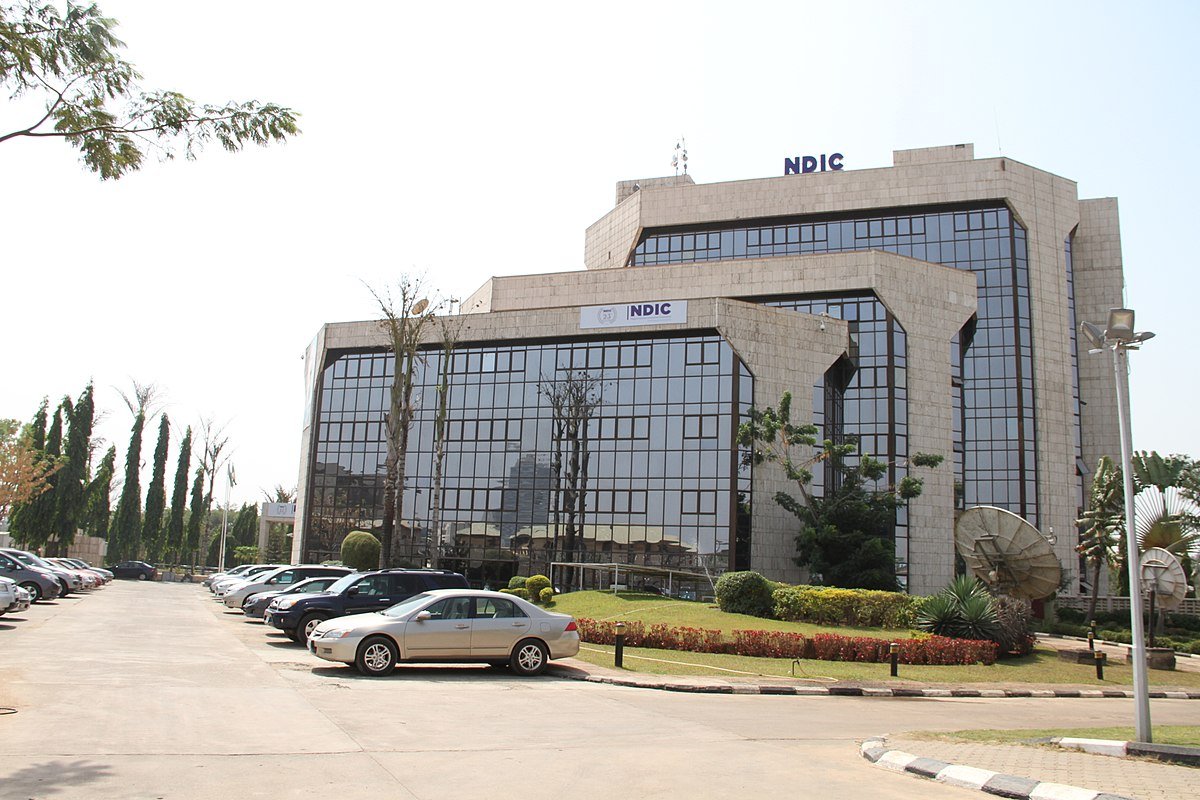
The verification of the depositors of the 46 microfinance banks, whose operating licenses were revoked by the Central Bank of Nigeria (CBN) over a week ago, has commenced.
The exercise, aimed at refunding those whose funds were trapped in the small lenders, is being conducted by the Nigeria Deposit Insurance Corporation (NDIC).
In a statement on Thursday, the agency said its staff members have been positioned at the offices of the affected banks across the country to attend to depositors.
It was disclosed that depositors of the defunct banks, who had their Bank Verification Numbers (BVNs) linked to their accounts in the failed banks, will be paid through their alternative accounts in existing banks.
However, depositors whose BVNs were not linked to their accounts in the failed banks have been encouraged to visit the affected banks’ offices with proof of account ownership, a passport photograph, verifiable means of identification (Driver’s Licence, Permanent Voter’s Card, International Passport or National ID Card) and BVN.
NDIC also stated that depositors can alternatively file their claims online through its website: www.ndic.gov.ng, to complete the Pre-Verification Claims Form by clicking on the Search Bar, and typing Pre-Verification Claims Form; opening the Form and filling in their details. They can also do so by clicking the link: https://ndic.gov.ng/ndic-pre-verification-claims-form/ or by visiting any of the NDIC offices closest to them to file their claims.
For further enquiries, the corporation can be reached on any of the following lines: 09037273810, 09038197064, 08104220807, 09064657140.
