

Banking
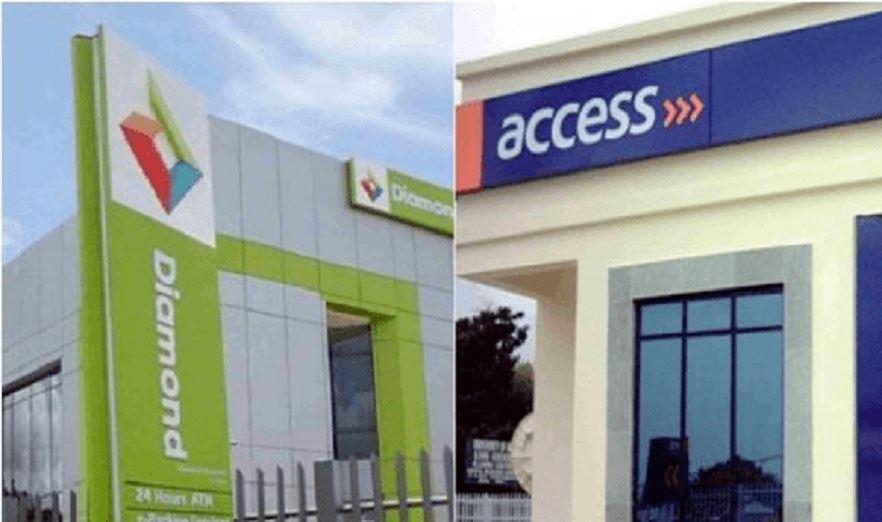
Merger: Fitch Places Diamond Bank, Access Bank on Rating Watch

By Dipo Olowookere
Following the announcement of a proposed merger between Diamond Bank and Access Bank, renowned rating agency, Fitch Ratings, has placed both Nigerian lenders on its rating watch.
In a statement issued by Fitch, it said Diamond Bank’s Long-Term Issuer Default Rating (IDR) has now been downgraded to ‘CC’ from ‘CCC’ and Viability Rating (VR) to ‘cc’ from ‘ccc’ and placed its IDRs and VR on Rating Watch Evolving (RWE).
The agency also simultaneously placed Access Bank Plc on Rating Watch Negative (RWN).
It explained that the downgrade of Diamond Bank’s ratings reflects the deterioration in the bank’s foreign-currency (FC) liquidity position since the last review and an expected deterioration in the bank’s capital position following additional loan impairment charges (LICs) on the announced write-offs of stage 3 loans under IFRS 9, to take place by year-end.
Fitch noted that the Rating Watches (RW) follows a memorandum of agreement between the banks to merge. The merger is expected to be completed by end-June 2019. Although the agreement is subject to regulatory and shareholder approval, Fitch said it believes that the probability of the completion of the merger is sufficiently high to take rating action.
The RWE on Diamond Bank reflects Fitch’s view that its standalone creditworthiness could improve or deteriorate beyond the current ratings, depending on the realisation of the merger and the bank’s ability to meet its upcoming FC obligations prior to it.
The upside aspect of the RWE reflects the view that should Diamond Bank meet its near-term obligations and the merger be completed, it is likely to be positive for the bank’s creditors due to the stronger franchise and financial metrics of the combined entity.
Following completion of the merger, Diamond Bank will cease to exist as a separate legal entity, and Fitch will then withdraw its ratings.
However, the downside aspect of the RWE reflects significant risk with regards to the bank’s near-term FC liquidity position given its large short-term bullet repayments, including a $200 million Eurobond maturing in May 2019, $100 million from Afrexim due in March 2019, and $70 million from the International Finance Corporation due in July 2019.
Fitch said it also understands that some large long-term obligations have recently become current suggesting intensified liquidity pressure.
According to Diamond Bank’s FC liquidity plan, the bank should be able to meet its obligations using existing US dollar liquidity, proceeds from the sale of its UK subsidiary, cash flows from maturing US dollar loans (mainly from oil and gas loans), and by exchanging naira into US dollars through the interbank market.
However, the plan is based on a number of assumptions, including the completion of the sale of the UK subsidiary, which has not yet been approved by the Prudential Regulation Authority in the UK, and therefore liquidity remains tight and highly vulnerable.
Fitch said it also understands that Access Bank may provide some liquidity support to Diamond Bank, although it will not assume a direct liability for Diamond Bank’s debt payments pre-merger.
Fitch point out that Access Bank withdrawing from the deal would most likely be negative for Diamond Bank.
It said the RWN on Access Bank’s Long-Term IDR of ‘B’ and VR reflects the potentially negative impact on its financial metrics from the absorption of a weaker bank and execution risks post-merger.
Upon completion of the merger Fitch will assess the bank’s credit profile. A potential downgrade is likely to be limited to one notch. However, it is also possible that Access Bank’s ratings could be affirmed with a Stable Outlook if the impact from merger appears to be more moderate, given the bank’s currently sound financial metrics and the planned capital raising, and provided there are no additional unforeseen risks emerging from Diamond.
Diamond Bank’s stage 3 loans stood at 37 percent of gross loans at end-1H18. Additionally, the bank’s stage 2 loans stood at 23 percent of gross loans at end-1H18, indicating the extent of its weak asset quality.
Access Bank has better asset quality with stage 3 loans and stage 2 loans accounting for 5 percent and 14 percent of gross loans, respectively, at end-1H18.
Diamond Bank plans to take LICs of between N150 billion-N180 billion before writing off bad loans by end-2018. Diamond Bank’s total equity was N222 billion at end-9M18, meaning that its capital position at end-December 2018 following the write-offs will be materially weaker.
For regulatory capital calculations, Fitch said it understands that as per the central bank’s IFRS 9 transition guidelines, Diamond Bank will be able to phase-in the impact of additional LICs on its total capital adequacy ratio (CAR) over a four-year period, allowing it to remain above its 10 percent minimum regulatory requirement.
Access Bank estimates that its CAR should stand at around 20 percent (above its minimum regulatory capital requirement of 15 percent) post-merger, which will be helped by the expected $250 million Tier 2 capital issuance in January 2019 and strong retained earnings.
Fitch explained that the banks’ National Ratings reflect their creditworthiness relative to Nigeria’s best credit and relative to peers operating in the country. Diamond Bank’s National Long- and Short-Term Ratings have been downgraded to ‘CCC’ and ‘C’, respectively, from ‘B’ and ‘B’, reflecting its weaker credit profile relative to peers, it said.
It noted that Diamond Bank’s National Ratings have also been placed on RWE based on expectation that its assets and liabilities will be transferred to Access Bank’s balance sheet, but also that its credit profile may deteriorate further relative to peers’ in the interim, adding that the RWN on Access Bank’s National Ratings indicates potential downside risks of the merger.
Fitch said Diamond Bank’s senior unsecured debt rating has been downgraded to ‘CC’/’RR4’ from ‘CCC’/’RR4’, with the lender’s senior unsecured debt rating also placed on RWE, reflecting that on its Long-Term IDR. It stated that the Long-Term Ratings on Access Bank’s senior unsecured and subordinated debt have been placed on RWN, reflecting that on its Long-Term IDR.



By Adedapo Adesanya
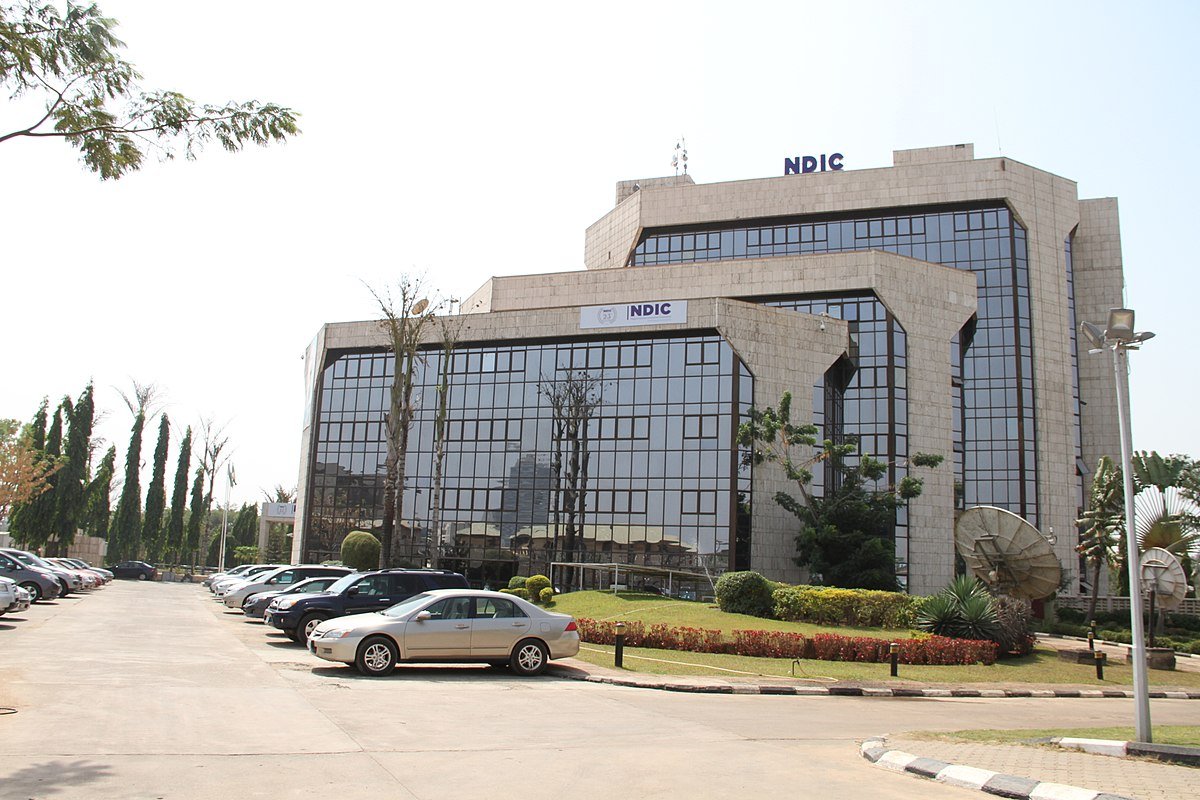
The Nigeria Deposit Insurance Corporation (NDIC) has commenced the process of paying insured deposits to customers of the 46 microfinance banks whose operating licences were revoked by the Central Bank of Nigeria (CBN).
In a statement issued on Wednesday by the Head of Communication and Public Affairs Department, Mrs Hawwau Gambo, the corporation said it had been appointed the official liquidator of the failed banks following the CBN’s revocation of their licences, which took effect on July 1, 2026.
The NDIC said its appointment was in line with the provisions of the Banks and Other Financial Institutions Act (BOFIA) 2020 and the NDIC Act 2023.
The organisation said the affected banks have ceased to operate as licensed financial institutions and are no longer authorised to carry out banking business in Nigeria.
“The NDIC has commenced the process of the orderly closure of the failed banks with their immediate takeover, verification and payment of insured sums to eligible depositors,” the statement said.
It added that depositors and the general public would be informed of subsequent steps in the liquidation process, warning members of the public against conducting transactions with any of the affected banks following the revocation of their licences.
It also cautioned individuals against removing, concealing or tampering with the assets, records or properties of the failed institutions, noting that such actions could amount to a breach of the law and attract sanctions.
Business Post earlier reported that the CBN revoked the operating licences of the 46 microfinance banks after determining that they no longer met the regulatory conditions required to continue operations.
According to the apex bank, the affected institutions were sanctioned for various regulatory breaches, including insufficient assets to meet liabilities, operating without approval, prolonged inactivity, failure to commence business within the stipulated period and failure to maintain the minimum capital required by law.
The apex bank said the action forms part of its efforts to strengthen financial sector stability, protect depositors and ensure compliance with banking regulations.
The affected institutions are spread across several states, including Lagos, Kano, Abia, Kaduna, Kebbi, Ogun, Niger, Plateau, Rivers, Delta, Benue, Cross River, Ondo, Osun, Anambra, Oyo, Bayelsa, Abuja and Akwa Ibom.


By Modupe Gbadeyanka
Entries for the 2026 edition of the flagship innovation initiative of Wema Bank Plc, Hackaholics, themed Powering Possibilities, opened on Wednesday, July 1.
At a press conference yesterday at its head office in Lagos, Wema Bank said all young Africans with creative tech-driven solutions across Financial Inclusion, Healthcare, Digital Transformation, Education, Sustainability, Social Impact and Future of Work can apply for the programme.
It was stressed that each application is to be made via the portal at hackaholics.wemabank.com, under one of three tracks: The Startup Pitch Competition, Hackathon and the newly introduced Social Impact track.
After the closure of the application window, Hackaholics 7.0 will then proceed on a national tour, which will touch 10 pitch centres across the six geopolitical zones of Nigeria. Each pitch centre will serve as a hub for innovators within the region to pitch their creative solutions and get the opportunity to secure the top spot in their pitch centre, and ultimately, proceed to the grand finale where the winners will be announced.
“As we launch Hackaholics 7.0 today, we are opening up a new phase of opportunities for more Nigerian youth to challenge themselves, explore their creativity and become startup founders.
“I encourage every young Nigerian with a passion for innovation to leverage the opportunity that we have carefully curated through Hackaholics and get ahead of the curve in today’s dynamic work landscape.
“Together, we can continue to build an ecosystem where innovation flourishes, opportunities expand, and young people are empowered to create solutions that shape the future,” Wema Bank’s Divisional Executive for Business Support, Mr Tajudeen Bakare, stated.
Also speaking, the chief executive of Wema Bank, Mr Moruf Oseni, said, “At Wema Bank, we believe that institutions have a responsibility that extends beyond providing commercial services.
“We have a responsibility to create meaningful opportunities, provide the right resources, enable innovation to thrive, and support the ecosystems that will shape today’s youth as well as tomorrow’s economy. This sense of responsibility is what has driven the evolution of Hackaholics from inception to date.
“With Hackaholics, we have, and we are investing in the next generation of innovators, inspiring innovation that will impact lives, strengthening Nigeria’s innovation ecosystem and giving youth a platform to make meaningful use of their creativity; and the numbers continue to speak volumes.”
Launched in 2019, Hackaholics is Wema Bank’s youth- and tech-focused initiative designed to serve as a platform for young Africans with creative, game-changing, tech-driven ideas and products to bring their ideas to life.
Since its launch, Hackaholics has discovered thousands of groundbreaking solutions, supported over 10,000 startups, engaged 50,000 participants, developed over 100 solutions from scratch and disbursed $500.0 million in grant prizes to dozens of winners whose remarkable solutions have earned a top spot in the past 6 editions.

By Aduragbemi Omiyale
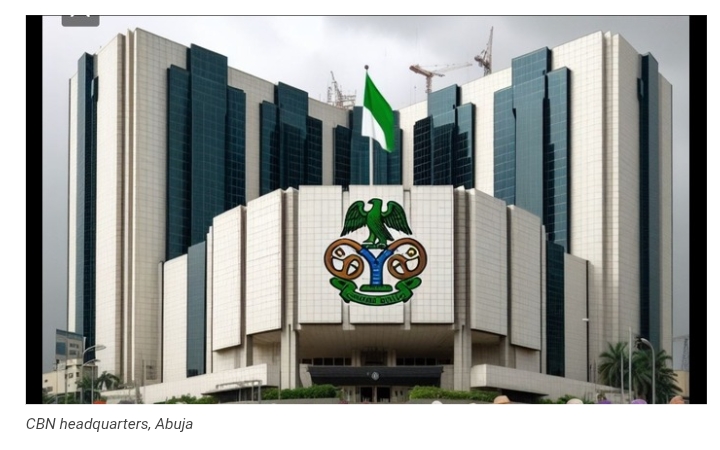
The operating licenses of 46 microfinance banks in the country have been revoked by the Central Bank of Nigeria (CBN).
A statement on Wednesday from the banking sector regulator disclosed that the action followed failure by the affected small lenders to comply with regulatory requirements.
The central bank said it had to enforce its powers under Sections 12 and 13 of the Banks and Other Financial Institutions Act (BOFIA), 2020, to withdraw the licenses of the banks.
“The revocation of the licenses is part of the Bank’s ongoing efforts to safeguard the stability of the financial sector, protect depositors, and ensure that licensed institutions comply with current laws and regulatory requirements,” a part of the circular dated Wednesday, July 1, 2026, and signed by the acting Director of the Corporate Communications Department of the CBN, Mrs Hakama Sidi-Ali, stated.
The apex bank listed five violations by the 46 microfinance banks, including insufficient assets to meet liabilities, closure of operations without the CBN’s approval, inactivity and cessation of financial intermediation, failure to commence operations within 12 months of licence approval, and failure to maintain minimum capital funds unimpaired by losses.
Another part of the notice disclosed that, “The revocation was approved by the Governor of the Central Bank of Nigeria, Mr Olayemi Cardoso, following the banks’ failure to meet the regulatory requirements for continued operation as licensed financial institutions.”
The affected financial institutions are;
| S/NO | MFB | CATEGORY | STATE |
| 1 | Minji-Se Churchill MFB | Tier 1 | Rivers |
| 2 | Merchant MFB | Tier 2 | Abia |
| 3 | Janmaa MFB | Tier 1 | Kwara |
| 4 | Busu MFB | Tier 2 | Niger |
| 5 | Gold MFB | Tier 1 | Lagos |
| 6 | Zain MFB (foremerly Dawakin Tofa MFB) | Tier 2 | Kano |
| 7 | Bompai MFB | Tier 1 | Kano |
| 8 | Ajwa MFB (Formerly Gezawa) | Tier 2 | Kano |
| 9 | NOW NOW DIGITAL MFB | Tier 2 | Kano |
| 10 | Crystabel Microfinance Bank | Tier 1 | Bayelsa |
| 11 | Chanelle MFB | State | Lagos |
| 12 | Abia SME MFB | Tier 1 | Abia |
| 13 | Kamba MFB | Tier 2 | Kebbi |
| 14 | Iwade MFB | Tier 2 | Ogun |
| 15 | Winview MFB | Tier 1 | Abuja |
| 16 | Zuru MFB | Tier 2 | Kebbi |
| 17 | Minjibir MFB | Tier 1 | Kano |
| 18 | Shanono MFB | Tier 2 | Kano |
| 19 | Sumaila MFB | Tier 2 | Kano |
| 20 | Rimin Gado MFB | Tier 2 | Kano |
| 21 | Mwaghavul MFB | State | Plateau |
| 22 | Sycamore MFB | Tier 2 | Kano |
| 23 | TOFA MFB | Tier 2 | Kano |
| 24 | Safegate MFB | Tier 1 | Lagos |
| 25 | Creekline MFB | Delta | Tier 2 |
| 26 | Bestar MFB | Tier 1 | Oyo |
| 27 | Livingspring MFB | Tier 1 | Cross River |
| 28 | Apple MFB | Tier 2 | Ogun |
| 29 | Stanford MFB | State | Uyo |
| 30 | Frontline MFB | Tier 2 | Anambra |
| 31 | Zafec MFB | Tier 2 | Kaduna |
| 32 | Supreme MFB | Tier 1 | Lagos |
| 33 | Bejin-Doko MFB | Tier 2 | Niger |
| 34 | Kanopoly MFB | Tier 1 | Kano |
| 35 | Bellbank MFB formerly Tsanyawa | Tier 2 | Kano |
| 36 | Yeneng MFB | Tier 2 | Plateau |
| 37 | Creditville MFB | Tier 1 | Lagos |
| 38 | MBAG MFB | Tier 1 | Lagos |
| 39 | STRAIGHT SAHARA MFB | Tier 1 | Benue |
| 40 | OURPASS MFB | Tier 2 | Ondo |
| 41 | VERDANT MFB | Tier 1 | Lagos |
| 42 | BASAWA MFB | Tier 2 | Kaduna |
| 43 | CASHA MFB | Tier 2 | Abuja |
| 44 | ESTEEM MFB | Tier 2 | Kano |
| 45 | ENTERPRENEUR MFB | Tier 1 | Lagos |
| 46 | AVANTUS MFB | Tier 2 | Osun |

-
 Feature/OPED6 years ago
Davos was Different this year
-
Travel/Tourism10 years ago
Lagos Seals Western Lodge Hotel In Ikorodu
-

 Showbiz4 years ago
Estranged Lover Releases Videos of Empress Njamah Bathing
-
 Banking8 years ago
Sort Codes of GTBank Branches in Nigeria
-

 Economy3 years ago
Subsidy Removal: CNG at N130 Per Litre Cheaper Than Petrol—IPMAN
-

 Banking3 years ago
Sort Codes of UBA Branches in Nigeria
-

 Banking3 years ago
First Bank Announces Planned Downtime
-

 Sports3 years ago
Highest Paid Nigerian Footballer – How Much Do Nigerian Footballers Earn