

Feature/OPED
2019 Presidential Election: Foretelling the Outcome

By Omoshola Deji
Election is the recruitment of persons with the largest percentage electorates feel are capable of actualizing their imaginings of an ideal nation.
Nigerians elect their leaders every four years and the time is here. Parties have campaigned; candidates have promised; sociocultural groups have endorsed; observers have arrived; and Nigerians are preparing to elect their President and federal lawmakers on February 16. This piece appraises the election winning determinants to foretell the outcome of the presidential poll.
A brief introduction and clarification is essential at this point. The writer, subsequently titled Pundit, is Nigeria’s election result Nostradamus. Foretelling election’s outcome is a reflection of his political analysis prowess, not an endorsement of any party or candidate. The accuracy of his past forecasts has attracted the media and many Nigerians, home and abroad, to look out for his prediction during elections.
Foretelling an election outcome doesn’t mean the pundit has access to one sacred information or the election winning strategy of any candidate. Assessing candidates’ fortes and flaws to foretell the winner is a common practice in developed nations. This doesn’t mean the pundits are demeaning the electoral process or influencing the election results. Nigerians have already decided who they’ll cast their votes for and nothing – not this prediction – can easily change their minds.
The Candidates
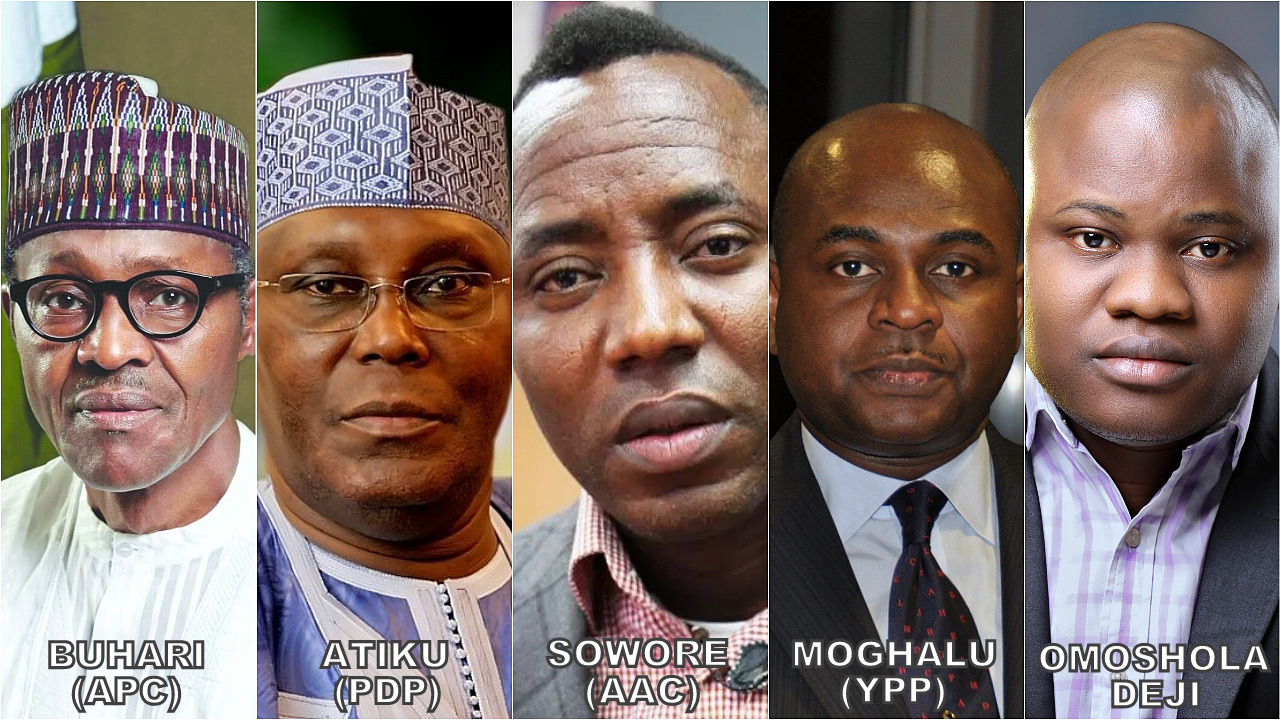
The 2019 presidential election is going to be the most keenly contested in the history of Nigeria, not because there are many contestants, but due to the rise in power struggle and the personality of the top candidates. 73 persons are running, but the election is a two horse race between incumbent President Muhammadu Buhari of the All Progressives Congress (APC) and former Vice-President Atiku Abubakar of the People’s Democratic Party (PDP).
Other leading contestants are Omoyele Sowore of the African Action Congress (AAC); Fela Durotoye of the Alliance for New Nigeria (ANN) and Kinsley Moghalu of the Young Progressive Party (YPP).
Sowore, Durotoye and Moghalu are ‘young’ vibrant newcomers, but their political structures are too weak to win a presidential election in a plural nation like Nigeria. Power and greed made coalition efforts that would have made them a formidable third force fail. Teaming up to support a fellow candidate shouldn’t cause disaffection, if their main desire is to rescue Nigeria from the old order.
The similarity in the background of the two main candidates, Atiku and Buhari, renders ethno-religious based predictions impotent. Unlike in 2015, when a Christian southerner contested against a Muslim northerner, the two leading presidential candidates in 2019 are both Northerners, Fulanis, Muslims and septuagenarians. Both candidates are veteran contestants and have crisscrossed parties. This election is Atiku’s fourth attempt. Buhari won on his fourth attempt in 2015 and wants another term.
Buhari’s Performance and Obstacle
Buhari, like every other incumbent, is contesting against two things: his performance and his opponents. His main opponent, Atiku, has far-reaching networks and has been campaigning vigorously. Unlike candidates who are running for the fame, Atiku’s rigorous campaign is a testimonial that he is running to win. He is leaving no stone unturned, knowing this opportunity may not present itself again as he is aging and power is expected to return to the south, if Buhari wins. Atiku has been working on the electorates’ psyche, reconciling with foes, getting endorsements, and turning his major liabilities into assets. His recent visit to the Unites States (US) was a political masterstroke that revived his diminishing electoral value tainted by corruption.
Nigerians are sharply divided on Buhari’s performance. In all sincerity, both the praise singers and condemners of Buhari’s performance are right. The praise singers are rating Buhari based on the achievements of his predecessors, many of whom score low on the provision of basic amenities, security and socioeconomic development. Buhari has performed satisfactorily when compared with his predecessors. He is reviving the railway, constructing the Second Niger Bridge, building a number of roads, and combating Boko Haram. Buhari has also paid the defunct Nigerian Airways’ pensioners and introduced social incentives such as school feeding, N-Power and Tradermoni, which the opposition has criticized as vote-buying.
The presidential election is partly a referendum on Buhari’s performance. He would earn the votes of people who think he has performed, while those who think otherwise and mindful that the second term of governments are often not better than their first would vote other candidates.
The condemners of Buhari’s performance are rating him based on his inability to fulfil some of his 2015 campaign promises. They are berating him for performing below expectations after raising hopes of Nigerians. Buhari promised restructuring, but backtracked. His appointments were lopsided northwards. Insecurity is rife as bandits, insurgents and herdsmen are carrying out genocidal bloodletting at will. The fight against corruption has been incredibly selective, making Transparency International rank Nigeria the 144 least corrupt nation out of 175. Buhari has serially flouted court orders; persecuted activists and journalists; tolerated the massacre of unarmed IPOB and Shiite members; harassed the legislature and judiciary; ruled in a dictatorial manner; and hounded critics. Basic amenities are either dysfunctional or unavailable, the exchange rate is high, consumables are costly and unemployment is at an alarming rate. Buhari’s performance is unsatisfactory if he’s assessed by the oversweet promises he doled out in 2015. His misrule and incompetence is winning hearts for Atiku.
Atiku’s Challenge
Buhari has reiterated his resolve to further tackle corruption, insecurity and revive the economy, while Atiku boast of capacity to provide jobs, eradicate poverty and resuscitate the economy. One major minus for Atiku is the comment of his former boss, ex-President Olusegun Obabsanjo when their relationship was not cordial. In his book titled My Watch, Obasanjo said “what I did not know, which came out glaringly later, was his parental background which was somewhat shadowy, his propensity to corruption, his tendency to disloyalty, his inability to say and stick to the truth all the time, a propensity for poor judgment, his belief and reliance on marabouts , his lack of transparency, his trust in money to buy his way out on all issues and his readiness to sacrifice morality, integrity, propriety truth and national interest for self and selfish interest”.
Though Obasanjo has reconciled and endorsed Atiku, many Nigerians are still using the statements in ‘My Watch’ to discredit Atiku.
Endorsement Effects
Endorsement still influences voters, even though political parties belittle its effect when they are unable to secure it. People living in the rural areas and traditional societies where the recommendations of leaders are highly revered largely vote based on endorsements. Candidates also use endorsements to convince dissenting voices and undecided voters. Atiku has gotten influential endorsements than Buhari. Leaders and elders of notable regional sociocultural groups, including the Middle Belt Forum (North-Central), Ohanaeze Ndigbo (South-East), PAN Niger Delta Forum (South-South); and the prominent faction of Afenifere (South-West) have all endorsed Atiku. The most shocking endorsement Atiku got was that of the Northern Elders Forum, which has a significant influence on the conservative Muslim Northerners who are largely supporters of Buhari. The Arewa Consultative Forum however gave a counter endorsement in favour of Buhari.
Ruling parties are always the most favoured on endorsements. The opposition PDP’s numerous endorsement is a pointer that the regional leaders distrust APC, or the party simply choose to connect the people directly through the distribution of business aid such as Tradermoni. The latter may not earn Buhari votes. The beneficiaries of Tradermoni are largely sympathizers of their various sociocultural groups which have endorsed Atiku. An Igbo trader who’s aware that Ohaneze Ndigbo endorsed Atiku to end the marginalization of his ethnic group under Buhari would most likely vote Atiku, despite receiving Tradermoni. Sociocultural groups have a way of awakening the ethnic sentiments that’ll make people vote their endorsed candidates. The culture is gradually changing as people are increasingly voting based on personal convictions.
The Generals Influence
When getting less, the APC discredit endorsements, but applaud same when persons or groups back Buhari. 71 retired Military Generals endorsed Buhari for second term. This is a coming against some of the prominent Generals and former Heads of State’s opposition to Buhari’s re-election. Generals Olusegun Obasanjo, Ibrahim Babangida and Theophilus Danjuma are against Buhari, General Yakubu Gowon has been apolitical, while General Abdulsalami Abubakar is the head of the National Peace Committee. Buhari’s rejection by his powerful and influential contemporaries may hinder his win as the Generals, especially Obasanjo, have always determined who becomes President.
The Generals have vast political structures as they were the ones who nurtured almost all the leading political actors in Nigeria presently. Obasanjo is one of the ruling APC’s major nightmares as he is determined to end Buhari’s reign and install PDP’s Atiku. His choice candidates have always emerged, including Buhari in 2015. Obasanjo is well-respected by the international community. His global weight and networks can ruin Buhari, if he’s declared winner based on electoral fraud and post-election conflict arises. Obasanjo is doing his best to ensure Buhari doesn’t win as such will diminished his relevance and retire him from politics.
The Aso Rock Cabal
Aisha Buhari’s statement that her husband’s government had been hijacked by a cabal would make Buhari lose votes. Aisha disclosed at the National Women Leadership Summit that two powerful individuals have been commandeering her husband and preventing him from performing. Buhari denied the allegation, but many Nigerians believe his wife’s statement is a revelation of the goings-on in Aso Rock. The President’s failure to regain public confidence by rejigging his cabinet would make many people vote against him to end the cabal’s reign.
Health Factor
Buhari’s deteriorating health and failing memory would also diminish his votes. Many Nigerians believe Buhari would spend most of his tenure receiving treatment abroad, if he wins. His inability to remember basic things and serial gaffes such as forgetting the year he was sworn-in, referring to the APC gubernatorial candidate in Delta State as senatorial and presidential candidate, as well as lifting the hand of the wrong candidate in Cross River State makes many Nigerians see him has mentally unfit to continue ruling.
Atiku has shown more mental alertness, but his pledge to enrich friends is making him lose public trust. Nigerians may decide to return a sick, dictatorial and incompetent Buhari to power because of Atiku’s corruption tendencies and embracement of crony capitalism – enriching friends through privatization.
Elites Gang-up
The APC intraparty crisis across states and the exit of influential persons from the party may deny Buhari a win. APC was formidable in 2015 than it is now. The party immensely profited from the mass exit of political heavyweights from the then ruling PDP. This largely helped President Buhari defeat then President Jonathan. Most of the heavyweights are back in the PDP and are determined to unseat Buhari. Some of them includes the PDP presidential candidate, Atiku Abubakar; Senate President Bukola Saraki; Governors Samuel Ortom and Aminu Tambuwal of Benue and Sokoto States; House of Representative Speaker, Yakubu Dogara; and ex-Governor Rabiu Kwankwaso of Kano State. The exit of these bigwigs from the APC would certainly not make victory easy for Buhari. The ruling APC tried to make up for this by winning over ex-Governors Godswill Akpabio and Emmanuel Uduaghan of Akwa-Ibom and Delta States. These former governors cannot garner many votes for Buhari. Their influence is limited to their states which are PDP strongholds and majority of the people in the Niger-Delta region are anti Buhari.
The array of political elites that Buhari have been persecuting and prosecuting would also unleash their arsenal to ensure he never gets re-elected. Those affected by Buhari’s unfavourable economic policies and others not profiting from his government would likewise do all possible to make him lose.
The International Community
Atiku’s entry into the US and the foreign condemnation of Buhari’s anti-democratic actions are crucial pointers that the international community would prefer an Atiku Presidency. Buhari’s imperfection must not make one take the international community’s preference as best for the country. Buhari is not getting their support, not because of his underperformance, but because he has resisted dependency and neocolonialism; hindering them from exploiting the nation. The western nations are only friends with governments that allow them have their way and they are renowned for going the extra mile to remove uncontrollable leaders. Kwame Nkruma, Patrice Lumumba and Julius Nyerere are credible lessons. Buhari’s shortcoming is creating an avenue for the West to have their way through Atiku. The PDP campaign to ‘get Nigeria working again’ is coming at a time when the majority is complaining that virtually nothing is working.
INEC and Security
An excellent professional conduct should not be expected from the security agencies and the Independent National Electoral Commission (INEC). The secret midnight meetings allegedly being held by the INEC leadership and Buhari’s henchmen may lead to intentional misconduct by the electoral umpire. The security chiefs would try to appear neutral, but their partisanship would manifest if the election is a tight race and Buhari needs some misconduct to pave way for a rerun or make him win. The heads of the security agencies, especially the police commissioners in many states would most likely turn a blind eye on wrongs done to aid Buhari’s win.
Voting
There are 84,004,084 registered voters in Nigeria. By population ranking, the number of registered voters and persons who have collected their permanent voters card (PVC) across the six geopolitical zones are as follows:
North West: 20,158,100 registered voters, 18,882,854 PVCs collected.
South West: 16,292,212 registered voters, 12,444,594 PVCs collected.
North Central: 13,366,070 registered voters, 11,849,027 PVCs collected.
South South: 12,841,279 registered voters, 11,574,944 PVCs collected.
North East: 11,289,293 registered voters, 10,402,734 PVCs collected.
South East: 10,057,130 registered voters, 9,071,939 PVCs collected.
The above data shows that out of the 84,004,084 persons who registered to vote, only 74,199,092 can vote having collected their PVCs. 9,804,992 are yet to collect theirs. APC’s Buhari comes from the Northwest, while PDP’s Atiku is from the North-East. Both candidates would garner huge votes in each other’s zone, but Buhari would come top. This is largely due to the cult followership Buhari enjoys in the North. Majority of the northern voting population supports Buhari blindly; they believe PDP’s 16 years of misrule is responsible for Buhari’s failings.
Another plus for Buhari is that his party, the APC, controls the largely populated states – Lagos and Kano. Out of the 36 states of the federation, APC is the incumbent government in 23 states, while PDP is the incumbent government in 13. APC is also the incumbent government in majority of the Northern states and the entire 6 states in the Southwest. Atiku would likely defeat Buhari in the North-Central. He would defeat Buhari in the South-South and South-East. Atiku would earn substantial votes in the Southwest, but Buhari would earn more.
Vote Buying
Agents of the two prominent candidates will induce voters with money. People thinking Buhari’s anti-corruption stance would make his team desist from inducing voters would be disappointed. As it is before now, the party stalwarts would utter untruths that the money being shared is not from the Presidency, but from supporters who are passionate about the continuity of Buhari’s government. There would be several I-love-you-more-than-God behaviours during the election. People will voluntarily commit electoral fraud, threaten supporters of rival parties, cause mayhem, and kill to ensure their favourite candidate wins.
The APC and PDP supporters boasting their candidates would win by landslide are just being over emotional. Both candidates have major flaws that can’t make that happen. Atiku is widely considered corrupt, while Buhari is broadly seen as nepotistic and unfit. These negatives limit their chances of winning by landslide. Such win is often earned by candidates with minor flaws.
The Pundit’s Verdict
Buhari’s shortcomings will affect, but can’t hinder his win. The three main determinants of electoral victory in Nigeria are the votes cast, the conducts of the electoral umpire (INEC), and the security agencies, especially the police. Buhari apparently has INEC and the security agencies on his side and would get many votes as a popular candidate, but may need a push. His henchmen will not hesitate to do anything, licit or illicit, to retain power when the chips are down.
Notables like Dele Momodu and prominent institutions such as Williams and Associates, and the Economist Intelligence Unit predicting Buhari would lose did not consider something crucial – recent happenings and Buhari’s arbitrariness. Up to the minute actions of Buhari are pointers that his government would stop at nothing to retain power. The intimidation of voters and staggering electoral fraud that was allegedly perpetrated during the Osun governorship and rerun elections; the reported secret meeting with INEC heads; the alleged political removal of Chief Justice Walter Onnoghen; the untoward display of force by the military across states; and the politically motivated transfer of police commissioners and other top officers are not for nothing. An incumbent government that is obsessed with power cannot put all these strategies in place in an undeveloped democracy and lose.
Nigerians are worried that a partial conduct by INEC and the security agencies may lead to a rerun, the Venezuela situation or foist the Odinga-Kenyetta model on Nigeria. Except God touches the mind of those occupying Aso Rock, relinquishing power to the opposition doesn’t look like what the ruling cabal is willing to do, except Atiku wins by a landslide, which is almost impossible. Against the predictions of Williams and Associates and the Economist, the Pundit foretells that the APC candidate, Muhammadu Buhari, would be declared President-elect.
Omoshola Deji is a political and public affairs analyst. He wrote in via mo******@***oo.com



By Jerome-Mario Utomi
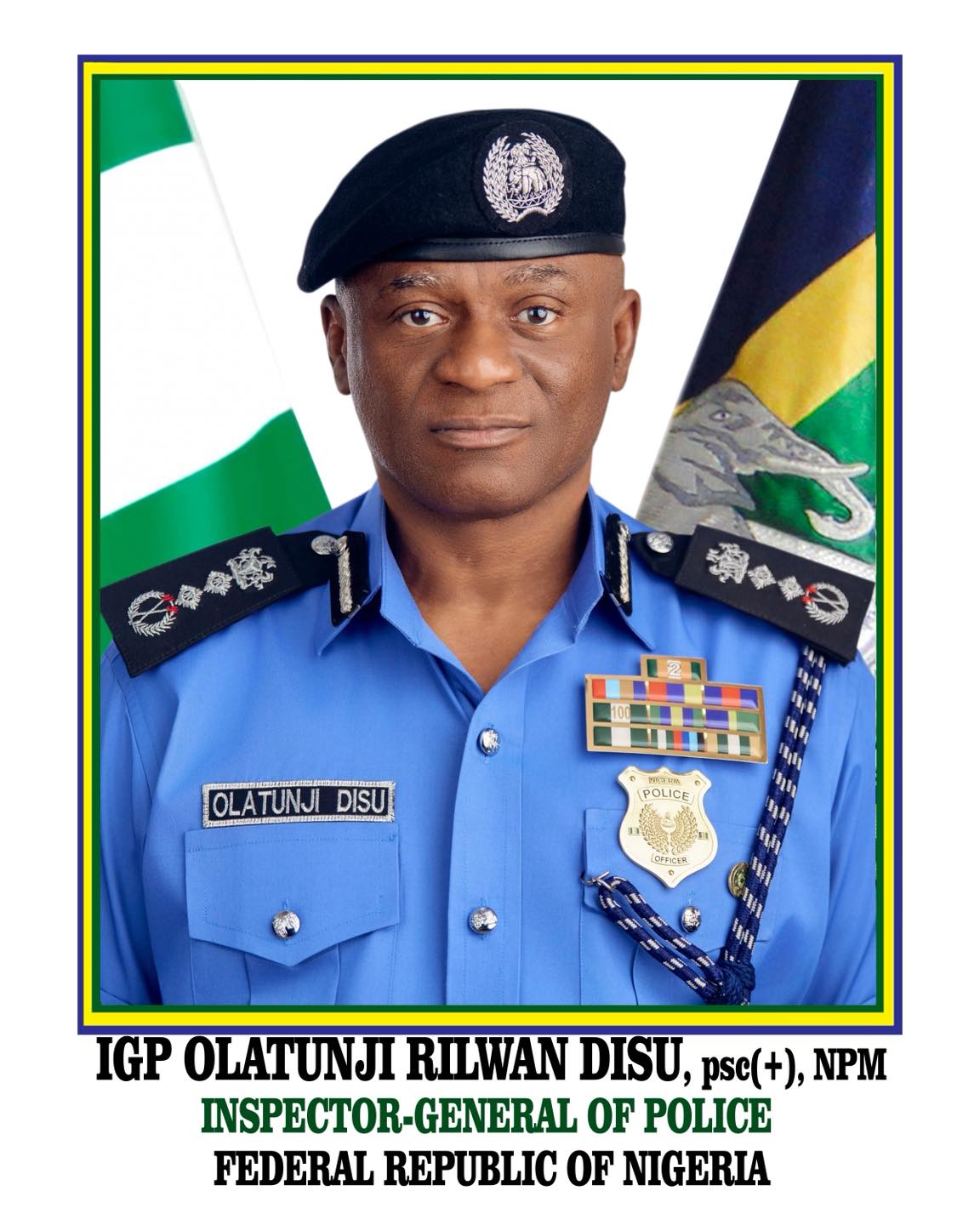
There are moments in the life of a nation when leadership is measured not merely by the ability to command institutions but by the courage to transform them. Such moments demand more than administrative competence; they require vision, strategic communication, and an unwavering commitment to rebuilding public confidence. The keynote address delivered on behalf of the Inspector-General of Police (IGP), Mr Olatunji Rilwan Disu, at the Lagos PR Fest 2026 grand finale was one of such defining moments.
Held at the iconic MUSON Centre, Onikan, Lagos, the event transcended the boundaries of a conventional police engagement. It became a national conversation on security, governance, public trust, and the indispensable role of strategic communication in nation-building.
More importantly, the IGP, who was represented at the event by AIG Simeon Udofia Akpanudom, Head of the Force Criminal Investigation Department (FCID) Annex, Alagbon Close, Ikoyi, revealed a policing philosophy that is quietly but deliberately redefining the image and operational culture of the Nigeria Police Force.
For decades, public perception of policing in Nigeria has largely been shaped by mistrust, misunderstanding, and an unfortunate history of strained relations between citizens and law enforcement agencies. While successive administrations have introduced reforms, many struggled to address the most fundamental ingredient of effective policing-public trust.
IGP Disu appears determined to confront that challenge from an entirely different perspective.
His declaration that “security is everyone’s business” was not a rhetorical flourish. It was a profound statement of intent. It reflected an understanding that sustainable security cannot be achieved through coercion alone but through partnership, inclusion, transparency, and continuous engagement with the people. Indeed, what the IGP has introduced is more than institutional reform. It is a comprehensive rebranding of policing itself.
Unlike cosmetic rebranding that focuses on uniforms, slogans, or public ceremonies, this initiative is rooted in changing institutional culture and public perception simultaneously. It seeks to replace fear with confidence, suspicion with collaboration, and silence with meaningful dialogue.
The brilliance of this approach lies in its recognition that trust is not demanded; it is earned.
Throughout the keynote, the IGP consistently emphasised evidence-based communication, accountability, and transparency as pillars upon which public confidence must be rebuilt. At a time when misinformation travels faster than facts, and public institutions are constantly subjected to intense scrutiny, his insistence that policing should be supported by credible information rather than propaganda reflects both wisdom and contemporary relevance.
Perhaps nowhere is this transformation more visible than in the establishment and expansion of the Violent Crimes Response Unit (VCRU). Rather than allowing achievements to remain hidden within internal reports, the Nigeria Police Force is increasingly communicating measurable outcomes, demonstrable operational effectiveness, and encouraging independent public assessment.
This deliberate openness and transparency represent a significant departure from the communication style traditionally associated with many security institutions.
Equally commendable is the renewed emphasis on accessible channels for complaints, feedback and citizen engagement. Every modern democratic institution understands that accountability strengthens authority rather than weakening it. By inviting public scrutiny instead of avoiding it, the Nigeria Police under IGP Disu is gradually redefining what institutional confidence should look like. The Inspector-General deserves particular commendation for recognising that public relations is not an appendage to policing but an operational necessity.
Far too often, public relations is misunderstood as image laundering or crisis management. In reality, effective public relations is about building relationships, creating understanding, managing expectations, and sustaining credibility. It is this broader and more professional understanding that permeated the Inspector-General’s address.
His decision to engage public relations professionals at Lagos PR Fest was therefore highly symbolic. It demonstrated that security communication must evolve beyond press statements announcing arrests or crime statistics. It must become a continuous conversation with citizens, communities, opinion leaders, professional bodies, and the media.
Equally remarkable is the renewed focus on community policing and the revitalisation of the Police Community Relations Committee (PCRC). These initiatives acknowledge an enduring truth: communities understand their security challenges better than distant bureaucracies.
By encouraging local participation, youth engagement, religious leaders, traditional institutions, and civil society organisations to become active stakeholders, the Nigeria Police is moving policing closer to the people it serves.
This approach is consistent with successful policing models across the world where intelligence flows more freely because communities trust law enforcement agencies enough to share information.
The emphasis on participatory campaigns such as “Security is Everyone’s Business” and “If you see something, say something” further reinforces this philosophy. These messages wisely redefine every citizen from being a passive observer into an active contributor to national security.
That represents strategic public relations at its finest. Perhaps the most compelling dimension of the Inspector General’s address is his deliberate connection between policing and nation-building.
Security does not exist in isolation. It supports economic growth, encourages investment, protects democratic institutions, and creates the stability necessary for social development. Safe highways promote commerce. Secure schools guarantee educational continuity. Protected communities attract investment. Professional law enforcement strengthens constitutional governance.
Viewed through this broader lens, policing becomes an essential instrument of national development rather than merely an agency of law enforcement. The Inspector-General’s appeal for “Nigeria First” narratives equally deserves commendation. In an era characterised by misinformation, polarisation, and divisive narratives, institutions must intentionally promote messages that unite rather than divide.
Strategic communication has become an important national asset. This is where professional public relations practitioners have an enormous responsibility. Their expertise extends beyond media visibility to fostering social cohesion, encouraging responsible public discourse, and strengthening confidence in democratic institutions.
The Nigerian Institute of Public Relations (NIPR), therefore, occupies a strategic position in supporting this national assignment.
Naturally, scepticism remains understandable. Public confidence, once diminished, cannot be restored overnight. Institutional reforms require consistency, measurable outcomes, and sustained leadership commitment.
Fortunately, the Inspector-General himself demonstrated refreshing realism by acknowledging that rebuilding trust remains an ongoing process. That honesty itself strengthens credibility.
His clearly articulated roadmap-rebuilding institutional credibility through transparency, strengthening community intelligence through grassroots participation, and promoting national cohesion through coordinated communication-provides a practical framework for long-term institutional renewal.
Importantly, these objectives align with internationally recognised principles of democratic policing. What distinguishes the current leadership is the willingness to place communication at the very centre of institutional transformation rather than treating it as an afterthought.
Leadership is often remembered less for the challenges inherited than for the direction established. Judging from the philosophy articulated at Lagos PR Fest 2026, IGP Disu is laying the foundation for a policing model that recognises that legitimacy derives not only from constitutional authority but from public confidence.
That distinction is profound. A police force may possess legal powers, but without public trust those powers become increasingly difficult to exercise effectively. Conversely, when citizens willingly cooperate, volunteer intelligence, respect lawful authority, and see themselves as partners, security becomes collective rather than confrontational.
That appears to be the future envisioned by the Inspector-General. His concluding appeal that all stakeholders must work together in transparency, accountability, and shared responsibility captures the essence of democratic policing in the twenty-first century.
Ultimately, the significance of the Lagos PR Fest address extends far beyond one conference or one keynote presentation. It represents a declaration that the Nigeria Police Force is prepared to measure success not only by arrests made or crimes prevented but also by relationships built, confidence restored, and communities united.
For me, the recent elevation by the IGP and express approval by the Nigerian Police Service Commission of some senior officers to the rank of Assistant Inspectors-General of Police (AIGs). Commissioners of Police (CPs) and others truly proves beyond reasonable doubt that the IGP is a man who understands that professionalism, strategic thinking and operational excellence are the defining features of global policing. In fact, analysts in particular and Nigerians of goodwill in general are beginning to view the recent appointment of IGP Disu as a very huge blessing to the nation.
If sustained with consistency, integrity, and measurable performance, this strategic shift may well become one of the most consequential institutional reforms in contemporary Nigeria. For at the heart of every peaceful nation lies a simple but enduring truth: security thrives where trust flourishes.
By placing strategic public relations at the centre of policing, IGP Disu has demonstrated an appreciation of that timeless principle. In doing so, he has presented Nigerians with something far more valuable than a communication strategy. He has presented a vision.
A vision in which the police badge symbolises not fear but reassurance; not distance but partnership; not mere authority but earned legitimacy. That is a vision worthy of national support, thoughtful reflection, and sustained implementation.
Utomi, a media specialist, writes from Lagos, Nigeria. He can be reached via Je*********@***oo.com/08032725374
By Gloria Onosode
For generations, conventional financial advice has treated debt like a trap — a final, desperate resort for emergency cash or a slippery slope toward financial instability. But as Nigeria’s economic terrain evolves, this defensive mindset is changing. Progressive business leaders, entrepreneurs, and forward-thinking individuals are realising that it can be an important financial tool for achieving personal or business objectives when used responsibly and within one’s repayment capacity.
To build a sustainable financial future, we must change our relationship with credit. Borrowing shouldn’t be a cycle of survival; it should form part of a broader financial plan designed to support sustainable growth. The secret lies in masterfully understanding borrowing for productive purposes and learning how to leverage purposeful borrowing to hit your most ambitious milestones.
At its core, the difference between constructive and destructive borrowing comes down to one fundamental principle: what does the cash do once it lands in your account?
Bad debt funds depreciating lifestyle assets or temporary consumption. Borrowing to buy luxury clothing, fund a lavish party, or upgrade to a consumer gadget that does not increase your income simply pulls future earnings forward to pay for a fleeting present moment. It drains cash flow without offering a return.
Conversely, good debt acts as an investment in your future self or your company. It is capital deployed to acquire assets, increase productivity, or generate recurring revenue that far outpaces the cost of the interest. When you borrow to buy a delivery truck for your logistics company, stock up on inventory ahead of a peak retail season, or fund a specialised certification, you aren’t spending money — you are investing in assets that may contribute to increased productivity and income generation.
When integrated into a clear, long-term plan, purposeful loans may enable eligible borrowers to respond more quickly to business opportunities that would otherwise take years to save for. For small and medium enterprises (SMEs), cash-flow timing mismatches are the silent killers of momentum. You might get a massive corporate purchase order but lack the immediate working capital to fulfil it. Waiting weeks to organically pool cash from existing revenue means losing the contract. Appropriately structured commercial financing can help businesses address temporary working-capital gaps, ensuring that viable opportunities turn into realised revenue.
In inflation-heavy environments, waiting to save up the full purchase price for vital business assets like manufacturing machinery, solar power installations, or commercial vehicles can backfire, as equipment costs often outpace savings rates. By using asset-backed financing, you can acquire the equipment today, put it to work immediately, and allow the asset to generate revenue that may contribute towards financing costs over time.
Investment in skills and capacity development can generate significant long-term benefits. Utilising credit to fund high-value education, technical upskilling, or operational training directly expands your earning capacity. The resultant career advancement or business efficiency multiplies your income potential for decades to come.
Shifting from a defensive borrowing stance to a wealth-creation strategy requires strict financial discipline. Truly responsible borrowing is anchored in three non-negotiable practices.
First, borrow only for a productive purpose. It can be tempting to redirect a portion of a business loan toward personal expenses. Resist the urge; borrowed funds should be applied primarily to the purpose for which the financing was obtained.
Second, know your repayment runway before you sign. Borrowing decisions should be supported by realistic cash-flow planning and repayment capacity assessments. Review your cash-flow data, factor in market fluctuations, and map out exactly how the investment will generate the funds needed to clear the balance.
Finally, prioritise speed and transparency. In today’s fast-moving market, opportunity doesn’t wait for weeks of manual paperwork. Borrowing decisions should be supported by realistic cash-flow planning and repayment capacity assessments that offer transparent pricing with no hidden fees, giving you the clarity needed to compute your precise cost of capital.
When you strip away the historical stigma surrounding credit, you find that borrowing is simply a neutral financial tool. In the hands of an undisciplined spender, it creates friction, but in the hands of a strategic planner, it can support business growth and financial planning when used responsibly.
As you look toward your next major milestone — whether that is expanding your storefront, digitising your corporate supply chain, or acquiring productive assets — Before taking on any borrowing commitment, carefully assess your financing needs, repayment capacity, and long-term financial objectives. Instead, ask yourself if your business can afford the cost of standing still. When used responsibly, purpose-driven credit can support individuals and businesses in achieving sustainable financial goals.
Responsible borrowing also means understanding that credit creates a legal repayment obligation. Borrowers should carefully assess affordability, understand all applicable charges, and avoid taking on debt beyond their repayment capacity.
Gloria Onosode is the Director of Enterprise Sales at FairMoney Business
By Winston Osuchukwu
Africa’s financial infrastructure is entering a defining phase. Digital adoption continues to accelerate, financial inclusion is deepening, and institutions across the ecosystem are investing in connected, data-driven services. According to the World Bank’s Global Findex Database, account ownership across Sub-Saharan Africa has expanded significantly over the past decade, while mobile money continues to process hundreds of billions of dollars annually. Sustained investment in Africa’s fintech ecosystem reflects the same growing confidence in the continent’s financial future.
As the ecosystem matures, success will depend less on isolated innovation and more on how institutions connect their capabilities. The next phase of financial infrastructure is being shaped by three interdependent pillars: connected ecosystems that widen the data available on each customer, data intelligence that turns that scattered data into a single coherent picture, and intelligent decision-making that turns insight into measurable outcomes.
Connected Ecosystems Create the Foundation for Intelligence
No single institution has a complete view of the financial ecosystem. Banks, fintechs, payment providers, telecommunications companies, regulators, and other participants each contribute different pieces of the picture. As these organisations become more connected through interoperable payment systems, shared infrastructure, and collaborative partnerships, financial services become more accessible and seamless for individuals and businesses alike.
Connectivity alone, however, is not enough. A more connected ecosystem also creates exponentially more data, and unless that information can be integrated and interpreted consistently, greater connectivity simply produces greater complexity. The value of collaboration therefore depends on the ability to transform fragmented information into a coherent picture.
Data Intelligence Creates Shared Understanding
Once data flows across connected ecosystems, the next challenge is making sense of it. Financial institutions need more than access to information; they need the ability to unify diverse data sources, identify meaningful patterns, and generate insights that accurately reflect customer behaviour, operational performance, and emerging risks.
Data intelligence provides this common understanding. It enables institutions to move beyond isolated datasets and develop a trusted, enterprise-wide view that supports regulatory compliance, operational efficiency, and customer-centric innovation. Yet even the clearest insight has limited value if it remains descriptive. Understanding what is happening is only useful when institutions can confidently decide what to do next.
Intelligent Decisions Drive Real Outcomes
This is where artificial intelligence, predictive analytics, and machine learning become transformative. Built on a foundation of connected ecosystems and high-quality data intelligence, these technologies enable organisations to make faster, more consistent decisions across lending, fraud detection, compliance, customer engagement, and strategic planning.
Rather than replacing human expertise, intelligent decision-making augments it by helping institutions anticipate change, respond proactively, and allocate resources more effectively. When decisions are powered by reliable data and supported by a connected financial ecosystem, organisations become more resilient, customers enjoy better experiences, and the entire financial value chain operates more efficiently.
Africa’s financial future will not be shaped by technology or data in isolation. Progress requires that these capabilities work together. Connected ecosystems generate the information. Data intelligence transforms that information into “features” – the meaningful attributes of a customer’s behaviour that a model can learn from. Intelligent decision-making algorithms then convert those “features” into action. Together, they form the foundation of a financial infrastructure that is more inclusive, resilient, and capable of supporting sustainable economic growth.
At Mathesis Analytics, we turn information into action – helping financial institutions transform complex and frequently unstructured data into meaningful insights they can act on – helping financial institutions make sense of complex, fragmented data and lend confidently to the people and businesses driving Africa’s economy.
Winston Osuchukwu is the Founder and CEO of Mathesis Analytics Inc.
