

Economy
Nigeria Still Safe to Borrow Additional N7.9trn—FSDH

By Dipo Olowookere
Some days ago, the Debt Management Office (DMO) released the public debt profile of the country and from their report, Nigeria’s debt stood at N24.4 trillion as at December 31, 2018.
The release of the report stirred another debate in the country, with different stakeholders appealing to federal government to reduce its borrowings.
But analysts at FSDH Research have said Nigeria still has room to borrow an additional N7.89 trillion before reaching a threshold of about N32 trillion.
In its report released this week, which was obtained by Business Post, the Lagos-based investment company said based on the fact that the public debt-to-GDP ratio of Nigeria, Africa’s largest economy, was still under 20 percent, precisely 18.89 percent, it can still get more loans to reach the 25 percent benchmark set for itself and the 56 percent international threshold set for countries in Nigeria’s peer group.
FSDH Research argued that countries like China, South Africa, India, UK and USA all have high debt-to-Gross Domestic Product (GDP) of over 50 percent, but stressed that they have successfully managed to deploy their borrowings into activities that can stimulate revenue generation including education, transportation, construction, security, technology, and other growth-enhancing infrastructure.
“By utilizing these borrowed funds in areas that improve the ease of doing business in their countries, they have been able to grow their economies further, create job opportunities, and create more avenues for their governments to grow their revenue,” the report said.
It advised the Nigerian government to diversify its revenue and create multiple sources so as to change the present narrative.
“Just as FSDH Research has suggested several times in our previous reports, there is an urgent need to expand the revenue base of the country through the growth of the non-oil sector.
“We suggest that the government should adopt strategies to increase and broaden its revenue. Some of these strategies include an increase in the tax base of the country (apart from an increase in the tax rate), removal of all administrative delays in obtaining licences and approvals (including titles to landed properties for building and agricultural purposes), the sale of unprofitable government assets and, removal of subsidies on electricity and Premium Motor Spirit (PMS).
“In addition, we emphasize that borrowing should be tied to specific projects that can improve the competitiveness of the country, such as the FGN Sukuk Bond.
“To conclude, as individuals and business entities in Nigeria, we can help government generate more revenue by paying our taxes and other dues as and when due. And government must surely reciprocate with the provision of appropriate facilities that will make life better for all,” it said.
Read the full report below
Have you ever had to borrow money and accumulate debt? Some individuals believe that debt is bad and as a result they live within their limited resources. But are debts really bad? Now, imagine that you run a chocolate-production business and you receive a large order to supply chocolates to a big customer who will surely pay you after supply.
After considering your resources, you find out that you do not have sufficient funds to purchase the raw materials required to produce the chocolates.
You are then faced with a decision to either borrow money from a willing lender to finance the operation and make your money later or not to borrow and lose the business. What will you do? It is your choice to make but borrowing is definitely a better option if the money is used for productive activities that have the capacity to pay back the debt as well as its associated interest.
Just as individuals and companies are faced with the dilemma of whether or not to borrow, countries also face the same problem.
Although it is difficult to find any country that does not borrow, there are key questions each country must ask. How much debt should they contract? What projects will the debt be used for? How will the loan be repaid on top of the associated interest? Whom should they approach to lend the money? What will be the impact of the loan servicing on the country’s ability to perform her obligations to the citizens? Some countries have shown that debt is not bad in itself. What truly matters is the productivity of the debt that is contracted.
Countries such as China, South Africa, India, UK and USA have high Debt-to-Gross Domestic Product (GDP) of over 50%. Our computation shows that despite the significant increase in Nigeria’s public debt in recent years, standing at N24 trillion, Nigeria’s Public Debt-to-GDP ratio is less that 20%. Based on this measure, Nigeria could borrow more.
The countries mentioned above, however, have managed to deploy their borrowings into activities that can stimulate revenue generation including education, transportation, construction, security, technology, and other growth-enhancing infrastructure. By utilizing these borrowed funds in areas that improve the ease of doing business in their countries, they have been able to grow their economies further, create job opportunities, and create more avenues for their governments to grow their revenue.
So, you might now be thinking, maybe debt is not bad after all. But, you must not be quick to say this. The matter of public debt must be weighed carefully and thoroughly. Just as there are countries that have done well because of increased borrowing, there are other countries whose high, unsustainable debt levels have not translated into economic development.
In reviewing Nigeria’s debt profile, FSDH Research observes that the level of debt has been on the increase over the years. As at December 2018, the total public debt increased to N24.39trillion. But this is not where the issue lies.
A further analysis shows that the Public Debt-to-GDP ratio is 18.89%, which is below the 25% benchmark the Federal Government of Nigeria (FGN) sets for Nigeria and the 56% international threshold set for countries in Nigeria’s peer group.
The 25% benchmark gives Nigeria a leeway to borrow an additional N7.89 trillion given her level of GDP. But before you are quick to celebrate, there is the need to consider one very important factor: the ability of the country to service the debt without causing untold hardship on the country.
In measuring the ability of a country to service her debt obligations, we look at the ratio of domestic debt service-to-FGN FAAC allocation.
This is where the problem lies for Nigeria. Low revenue generation makes it very difficult for the FGN to meet its debt obligations without sacrificing other important responsibilities of government.
FSDH Research notes that the current high debt service to revenue structure in Nigeria is unsustainably high and the high figure is due to the low revenue of the country. Although the strategies of the Debt Management Office (DMO) in debt management and the Central Bank of Bank of Nigeria (CBN) in monetary policy administration have reduced the interest burden of the government, Nigeria needs to accelerate revenue generation to enable it to meet all her debt obligations without stress.
The way to change this narrative is for Nigeria to diversify her revenue and create multiple sources. Just as FSDH Research has suggested several times in our previous reports, there is an urgent need to expand the revenue base of the country through the growth of the non-oil sector.
We suggest that the government should adopt strategies to increase and broaden its revenue. Some of these strategies include an increase in the tax base of the country (apart from an increase in the tax rate), removal of all administrative delays in obtaining licences and approvals (including titles to landed properties for building and agricultural purposes), the sale of unprofitable government assets and, removal of subsidies on electricity and Premium Motor Spirit (PMS).
In addition, we emphasize that borrowing should be tied to specific projects that can improve the competitiveness of the country, such as the FGN Sukuk Bond.
To conclude, as individuals and business entities in Nigeria, we can help government generate more revenue by paying our taxes and other dues as and when due. And government must surely reciprocate with the provision of appropriate facilities that will make life better for all.



By Adedapo Adesanya
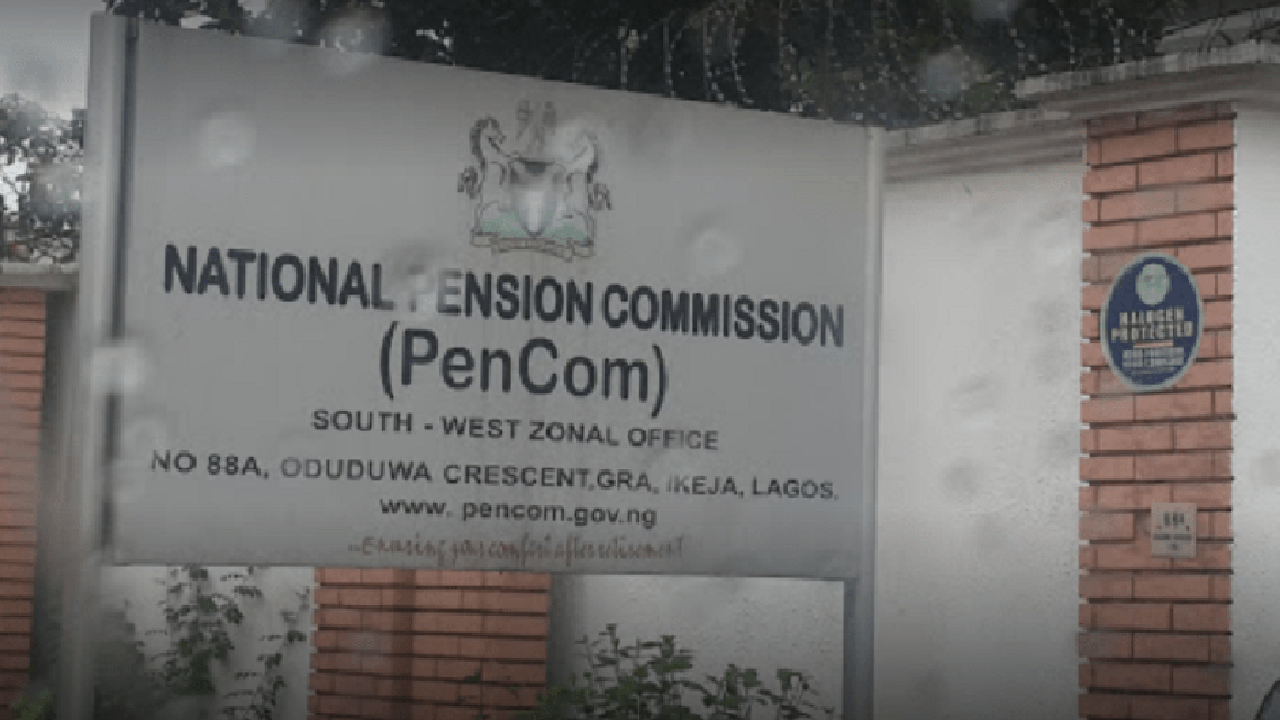
The National Pension Commission (PenCom) has defended its decision to allow Pension Fund Administrators (PFAs) to invest in the parent companies of their custodians, insisting that adequate safeguards are in place to protect contributors’ funds.
The director-general of the pension regulator, Ms Omolola Oloworaran, speaking on Tuesday during the Meet the Press Briefing at the Presidential Villa, Abuja, said the commission’s decision to relax the investment restriction followed a comprehensive risk assessment that found minimal conflict of interest.
She explained that under PenCom’s investment regulations, PFAs are only permitted to invest pension assets in carefully selected instruments that meet stringent criteria, including profitability, strong credit ratings and proven track records.
According to her, the commission regularly reviews its investment regulations, conducts routine examinations and spot checks on PFAs to ensure strict compliance with established risk management guidelines.
“PFAs cannot just go into the stock market and buy any kind of stock. There are strict guidelines. Companies must demonstrate profitability, have a proven track record and satisfy other criteria before pension funds can invest,” she said.
Ms Oloworaran noted that each PFA also operates under the oversight of a board, an investment committee and a risk management committee, providing additional layers of governance to safeguard contributors’ funds.
She said PenCom recently issued a circular allowing PFAs to invest in the parent companies of their custodians after determining that the potential conflict of interest was negligible.
The PenCom boss explained that the parent companies involved are largely Tier-1 banks, including First Bank, United Bank for Africa (UBA) and Zenith Bank, which she described as A-rated institutions with strong financial foundations.
She said the policy was intended to widen investment opportunities for pension funds without compromising safety.
Using Stanbic IBTC as an example, Ms Oloworaran explained that if its custodian is Zenith Bank, the previous restriction prevented the pension administrator from investing in Zenith Bank shares despite the bank’s strong performance.
“We reviewed the risks and any potential conflict of interest and found the risks to be very low. That is why we opened that investment window,” she said.

By Aduragbemi Omiyale
Analysts at Meristem Research have predicted that the inflation rate for June 2026 in Nigeria should marginally rise to 15.95 per cent on a year-on-year basis from the 15.93 per cent reported in May 2026.
The National Bureau of Statistics (NBS) is expected to release inflation numbers for last month later today, Wednesday, July 15, 2026.
In its report sighted by Business Post, Meristem Research said it expects inflationary pressures to re-emerge across key economies in the near term, as the re-escalation of the US-Iran conflict has reignited upward pressure on global oil prices.
It disclosed that this marks a sharp reversal from most of June, when the ceasefire between the two countries helped drive oil prices lower, raising expectations of some relief on the inflation front.
With conflicts now flaring up again, oil prices are likely to increase again, and the anticipated easing in energy-driven inflation may not materialise as broadly as earlier envisaged.
“Nonetheless, some relief is likely from the food segment, where robust supply conditions across major producing regions and softening demand should continue to ease food price pressures,” it stated.
The team also explained that it projected a 15.95 per cent inflation rate because of the lingering effects of persistent food price pressures.
“However, we expect core inflation to moderate as the sharp reversal in energy prices begins to filter through to transportation, distribution, and other energy-related costs, easing underlying price pressures.
“On a month-on-month basis, the combined effect of lower petrol prices, a relatively stable Naira, and the gradual pass-through of reduced energy costs across the supply chain should exert further downward pressure on inflation.
“Based on our assessment, food inflation is expected to remain the key swing factor, as seasonal pre-harvest supply constraints are likely to offset some of the gains from lower logistics costs,” it said.

By Adedapo Adesanya
The duo of Central Securities Clearing System (CSCS) Plc and Afriland Properties Plc weakened the NASD Over-the-Counter (OTC) Securities Exchange by 1.61 per cent on Tuesday, July 14.
CSCS Plc saw its stock value drop N9.08 to close at N82.40 per share compared with the preceding session’s N91.48 per share, and Afriland Properties Plc slid by 17 Kobo to sell at N15.00 per unit versus N15.70 per unit.
The losses recorded by the two securities pulled back the market capitalisation by N41.64 billion to N2.546 trillion from N2.587 trillion, and cracked the NASD Security Index (NSI) by 69.36 points to 4,242.31 points from 4,311.67 points.
It was observed that the exchange witnessed two price advancers during the session, led by FrieslandCampina Wamco Nigeria Plc, which gained N1.37 to end at N151.37 per share compared with the previous day’s N150.00 per share, and Food Concepts Plc chalked up 5 Kobo to settle at N2.50 per unit versus N2.45 per unit.
The volume of securities traded by market participants surged by 50.7 per cent to 13.7 million units from the previous 9.1 million units, while the value of securities went down by 79.7 per cent to N65.2 million from N320.4 million, and the number of deals crashed by 3.6 per cent to 27 deals from the previous session’s 28 deals.
At the close of transactions, Great Nigeria Insurance (GNI) Plc remained the most traded stock by value on a year-to-date basis, with the sale of 3.4 billion units for N8.4 billion, trailed by Infrastructure Credit Guarantee (Infracredit) Plc, which exchanged 2.3 billion units valued at N6.5 billion, and CSCS Plc with 73.9 million units transacted for N5.2 billion.
GNI Plc also closed the trading day as the most traded stock by volume on a year-to-date basis, with 3.4 billion units worth N8.4 billion, followed by Infracredit Plc with 2.3 billion units traded for N6.5 billion, and Resourcery Plc with 1.1 billion units valued at N415.7 million.
