

General
SERAP Demands Asset Declarations of Buhari, GEJ, OBJ, Govs

By Dipo Olowookere
A Freedom of Information (FoI) request has been sent to the Chairman of Code of Conduct Bureau (CCB), Mr Muhammed Isah, by a prominent anti-corruption group known as Socio-Economic Rights and Accountability Project (SERAP).
The group wants Mr Isah to use his “good offices and leadership position to urgently provide information on specific details of asset declarations submitted to the CCB by successive presidents and state governors since the return of democracy in 1999.”
According to SERAP, it is seeking information on “details of asset declarations by successive presidents and state governors between 1999 and 2019, including details of declarations made immediately after taking offices and thereafter, and for those who have left public offices, at the end of their term of office.”
The group also said it wants information “on the number of asset declarations so far verified by the CCB and the number of those declarations found to be false and deemed to be in breach of the Code of Conduct for Public Officers, by the Bureau.”
In the FOI request dated April 18, 2019, and signed by SERAP deputy director, Mr Kolawole Oluwadare, the organisation said, “While we welcome the judgment by the Code of Conduct Tribunal on Justice Walter Onnoghen, we now urge the CCB to extent its mandates to enforce constitutional provisions on asset declarations by public officers to cover elected officers and to vigorously pursue the prosecution of any such officers who use their powers either as presidents or state governors over public funds to enrich themselves.”
According to SERAP, “While judicial corruption is bad, the level of corruption involving many politicians since 1999 and the entrenched culture of impunity of perpetrators is equally appalling. Publishing the asset declarations of elected public officers since the return of democracy in 1999 to date would improve public trust in the ability of the Bureau to effectively discharge its mandates. This would in turn put pressure on public officers like presidents and state governors to make voluntary public declaration of their assets.”
The FOI request read in part: “SERAP is concerned that many politicians hide behind the fact that members of the public do not have access to their asset declarations to make false declarations, and to cover up assets illegally acquired in corruption or abuse of office. The CCB can use the opportunity presented by the Onnoghen judgment to increase the accountability of politicians through the asset declaration provisions if it is not to be accused of witch-hunting the judiciary.
“The grim condition of many of our citizens since 1999 has been worsened by the deterioration of public services whereby access to clean water and affordable health-care has become a pipe dream and the supply of electricity became epileptic and irregular due to years of grand corruption by many politicians at the highest level of government.
“We would be grateful if the requested information is provided to us within 14 days of the receipt and/or publication of this letter. If we have not heard from you by then, the Registered Trustees of SERAP shall take all appropriate legal action under the Freedom of Information Act to compel you to comply with our request.
“The persistent refusal by successive presidents and state governors to make public their asset declarations is entirely inconsistent with the letter and spirit of the 1999 Constitution, and has been particularly harmful to the country and its people, especially given the widespread evidence of grand corruption among politicians holding public offices in Nigeria.
“The Nigerian Constitution of 1999 (as amended) seeks to prevent corruption and abuse of office through its provisions on the declaration of assets not just by judicial officers but by all public officers including elected officers like presidents and governors.
“Nigerians can no longer accept the excuse by high-ranking government officers that declaring their assets before the CCB is enough, as such pretext is not supported by the oaths of office by elected public officers. The failure by successive presidents and state governors to voluntarily make public their asset declarations would seem to suggest that they have something to hide.
“Given that many public officers being tried for or convicted of corruption are found to have made a false declaration of their assets, the CCB should no longer allow politicians to undermine the sanctity and integrity of the asset declaration provisions of the Constitution by allowing them to continue to exploit legal gaps for illicit enrichment.
“SERAP believes that while elected public officers may not be constitutionally obliged to publicly declare their assets, the Freedom of Information Act 2011 has now provided the mechanism for the CCB to improve transparency and accountability of asset declarations by elected public officers.
“Asset declaration forms are public documents within the meaning of section 109 of the Evidence Act, and therefore, Nigerians are entitled to have access to such information. SERAP urges the CCB to vigorously push for change in law to provide penal sanctions for politicians that fail to make public their asset declarations.
“By Section 1 (1) of the Freedom of Information (FOI) Act 2011, SERAP is entitled as of right to request for or gain access to information, including information on the asset declarations by elected public officers since the return of democracy in 1999.
“SERAP notes that provisions on the declaration of assets by all public officers in Nigeria are entrenched in the Code of Conduct for Public Officers, contained in Part I of the Fifth Schedule to the 1999 Nigerian Constitution. The primary objective is to prevent corruption and abuse of office and to ensure transparency in public officers.
“SERAP also notes that public officers for the purposes of the Code include the President and the Vice-President of the Federation, state governors and their deputies; the President and Deputy-President of the Senate, the Speaker and Deputy-Speaker of the House of Representatives and Speakers, the Chief justice of Nigeria, justices of the Supreme Court, the President and justices of the Court of Appeal, and other judicial officers and all staff of courts of law.”
SERAP, therefore, urged the CCB to disclose including by publishing on a dedicated website, details of asset declarations submitted by presidents and state governors since the return of democracy in 1999; disclose details on the number of asset declarations so far verified by the CCB and the number of those declarations found to be false and deemed to be a breach of the Code of Conduct for Public Officers by the Bureau; and immediately take cases of false asset declarations to the Code of Conduct Tribunal for effective prosecution of suspects, and include banning the politicians involved from holding public offices for at least a period of 10 years and seeking refund of stolen public funds as part of the reliefs to be sought before the Tribunal.
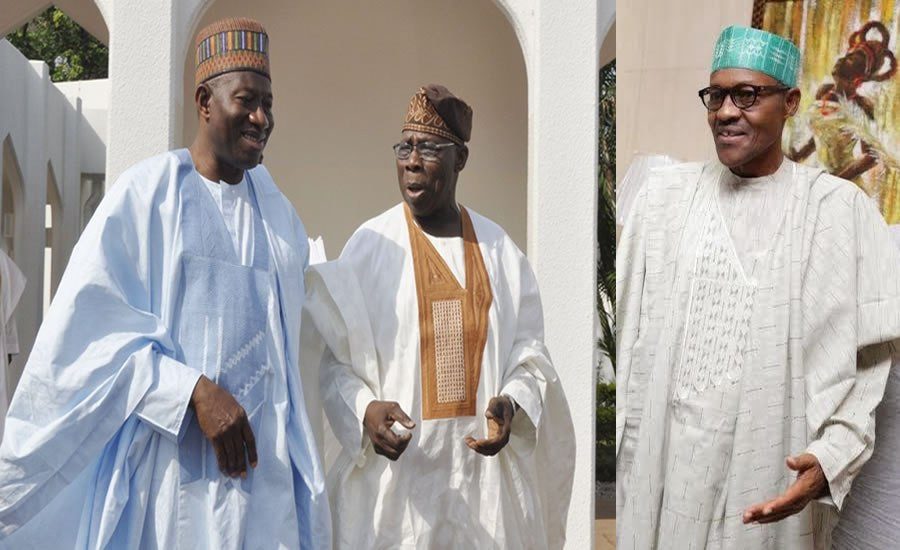
Business Post reports that since 1999, four persons have governed Nigeria as Presidents and they are Mr Olusegun Obasanjo, late Mr Umaru Musa Yar’Adua, Mr Goodluck Ebele Jonathan and Mr Muhammadu Buhari.



By Adedapo Adesanya
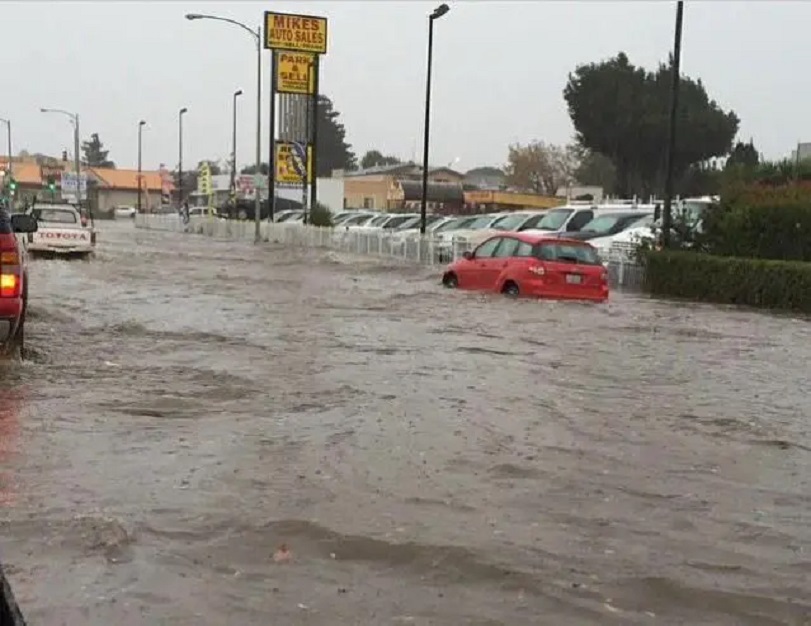
The Nigeria Hydrological Services Agency (NiHSA) has warned that 17 states across the country face a medium flood risk between July 21 and July 27, 2026, urging governments, emergency agencies and residents in vulnerable communities to take immediate precautionary measures to minimise potential loss of lives and property.
The warning was contained in the agency’s National Flood Advisory (Alert No. NFA-2026-200) issued on Tuesday, following hydrological assessments indicating rising water levels in several rivers and critical monitoring stations nationwide.
Director-General and Chief Executive Officer of NiHSA, Mr Umar Mohammed, said the forecast identified Bauchi, Edo, Imo, Kaduna, Plateau and Benue among the states expected to experience flooding during the period, alongside 11 others.
According to Mohammed, the latest hydrological data revealed that water levels at key monitoring stations, including Saminara on the Karam River, Waya Dam Site on the Waya River and Amber on the Amber River, have exceeded established watch and warning thresholds, increasing the likelihood of localised flooding along major river channels and adjoining floodplains.
He disclosed that 16 hydrological gauging stations across the country have recorded elevated river stages, placing several communities at heightened risk of inundation.
“Our hydrological monitoring network indicates that river stages at critical monitoring stations have exceeded watch and warning thresholds. Communities located along these river channels face imminent localised flooding, and we strongly advise state governments, local authorities and residents in flood-prone areas to take immediate preventive action,” Mohammed said.
NiHSA’s impact assessment showed that Bauchi State has the highest level of exposure, with 1,841 communities, 145 schools, 101 health facilities and eight markets identified within areas vulnerable to flooding.
In Edo State, the agency identified 148 communities, 131 schools, 123 health facilities, four markets, seven religious centres and approximately seven hectares of farmland as being at risk.
The advisory also listed 415 communities, 423 schools, 198 health facilities, 49 markets, 111 religious centres and 75 hectares of farmland in Imo State as vulnerable to flooding, while Kaduna State has 168 communities, 16 schools, three health facilities and three religious centres within areas likely to be affected.
For Plateau State, NiHSA identified 205 communities, 137 schools, 44 health facilities, 16 markets, 81 religious centres and 64 hectares of farmland as susceptible to flooding, while Benue State has five communities, eight schools, two health facilities and four religious centres within the projected flood-risk zone.
The agency urged the National Emergency Management Agency, NEMA, State Emergency Management Agencies, SEMAs, local government authorities and community leaders to activate emergency response measures without delay.
Among its recommendations, NiHSA advised the immediate evacuation of residents, livestock and valuables from flood-prone communities to designated safe locations, while emergency agencies were urged to pre-position food supplies, medical equipment, potable water and other relief materials in vulnerable areas.
The agency also called for the activation of community-based early warning systems, continuous public sensitisation, regular clearing of blocked drainage channels and strict adherence to safety guidelines, warning residents against attempting to walk, drive or ride through flooded roads or fast-flowing water.
NiHSA further advised state governments and the public to monitor its daily flood forecasts and advisories to support timely decision-making and reduce the impact of anticipated flooding during the forecast period.
By Adedapo Adesanya
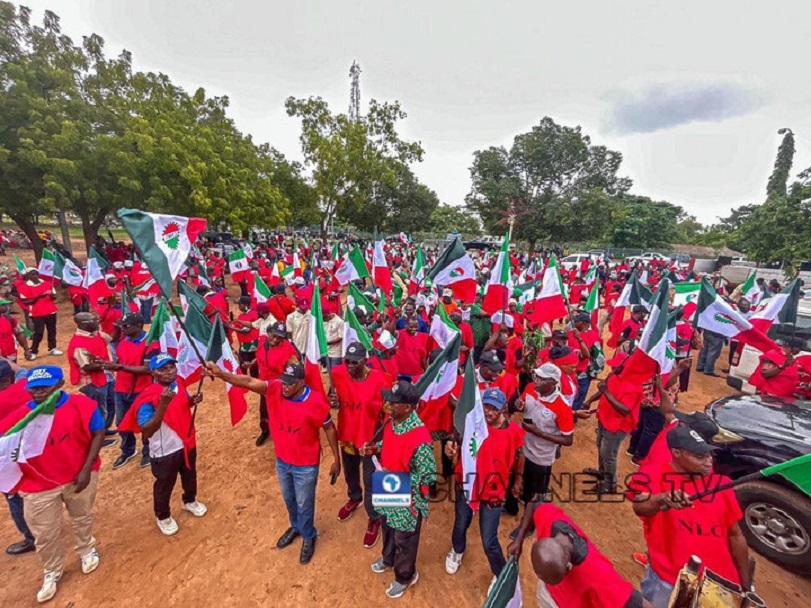
The Nigeria Labour Congress (NLC) has warned that it is ready for a major nationwide struggle to secure a new national minimum wage and better pensions for retired workers.
NLC President, Mr Joe Ajaero, said the union would not accept a review of workers’ salaries without a corresponding increase in pension benefits, adding that organised labour would also push for the creation of a National Minimum Pension.
Mr Ajaero made this known during the commissioning of the Comrade Godwin Abumisi Pensioners Legacy House and Multipurpose Hall in Abuja, noting that rising inflation and the high cost of living have made the current minimum wage and pension inadequate, leaving many workers and retirees struggling to survive.
“We are currently preparing for a major national struggle for a comprehensive review of the national minimum wage,” Mr Ajaero said.
“But it is no longer acceptable to discuss the welfare of workers without also discussing the welfare of those who have retired after years of service.”
He said the NLC would campaign for both a new minimum wage and a National Minimum Pension.
“It is a historical injustice that men and women who devoted their youth and productive years to serving this nation should be forced to live below the poverty line after retirement,” he said.
According to the unionist, the rising cost of food, healthcare and transportation has made life increasingly difficult for pensioners.
“We cannot continue to allow our senior citizens to survive on pensions that have become poverty wages. Every retiree deserves to live with dignity after decades of faithful service to the nation,” he added.
The NLC president urged pensioners to remain united and prepare for the struggle ahead, describing the newly inaugurated Legacy House as a centre for mobilisation and solidarity
He also called on workers to stand together, saying unity would strengthen labour’s ability to compel the government to fulfil its obligations to both serving workers and retirees.
Mr Ajaero further demanded the immediate payment of outstanding pension arrears and the implementation of a pension system that guarantees every retiree a decent standard of living.
“Together, we shall continue to fight until every Nigerian worker and pensioner receives the justice, respect and welfare they deserve,” he said.
By Adedapo Adesanya
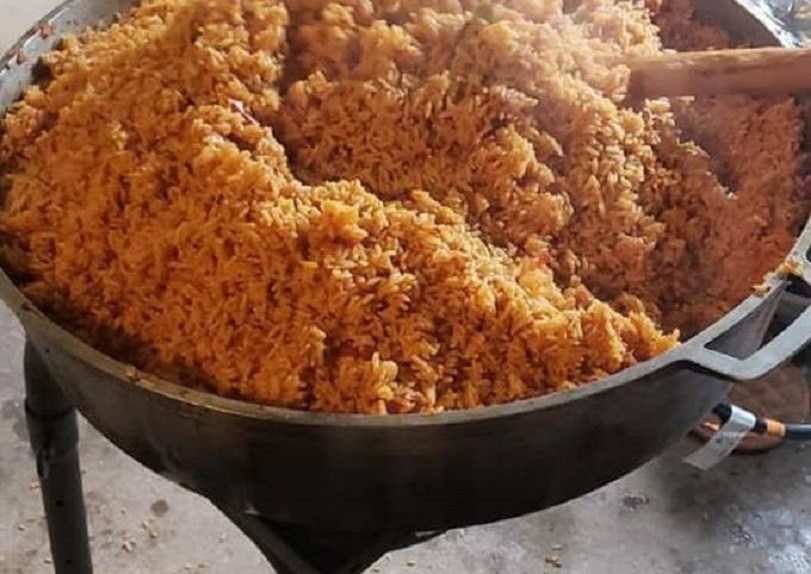
Preparing a pot of Nigeria’s most valued delicacy, jollof rice, costs as much as N29,578 in June 2026 compared to N25,798 in July 2025, an increase of 14.6 per cent, according to a new survey by SBM Intelligence.
The data and research firm, in its Jollof Index Q2 2026 report, titled Rebasing, Redefining, and the Weather’s Toll on the Pot, stated that it rebased the index in the July edition to a higher standard as of July 2025 and introduced re-standardised ingredient measures.
According to the report, the index now more accurately captures how households navigate the current affordability crisis.
The study collected monthly price data on 12 key ingredients: rice, vegetable oil, turkey or chicken, beef, tomatoes, pepper, onions, tinned tomatoes, salt, curry, thyme, and seasoning cubes from 13 markets across Nigeria’s six geopolitical zones.
The markets include Nyanya and Wuse II (North Central), Bauchi (North East), Kano (North West), Awka and Onitsha (South East), Port Harcourt, Calabar Municipal, and Bayside Mbakpa (South South), and Bodija, Dugbe, Trade Fair, and Balogun (South West).
The report stated that the upward trajectory in the cost of jollof rice since July 2025 was non-linear, with prices dipping in September and October 2025 before accelerating from November through the first half of 2026.
It revealed that the index has risen from N4,087 in July 2016 to N29,578 in June 2026, a staggering 624 per cent increase over 10 years.
“The data confirms that food inflation is not a cyclical phenomenon but a structural crisis, embedded in Nigeria’s failure to secure supply chains, stabilise its currency, invest in agricultural resilience, and now adapt to a changing climate,” the SBM survey stated.
Throughout the second quarter of 2026, Nigeria’s agricultural supply chain has been gripped by a compounding crisis driven by extreme weather patterns and structural logistical failures, the report stated.
From April through June, reports from urban markets across the country- Port Harcourt, Calabar, Onitsha, Lagos, Ibadan, Bauchi, Kano, and Abuja- revealed a consistent pattern of food scarcity and sharp price volatility.
Meanwhile, the National Bureau of Statistics (NBS) said Nigeria’s food inflation stood at 17.52 per cent on a year-on-year basis in June.
“The crisis has been most acute for perishable crops, particularly tomatoes and peppers, but its reach has extended to staples such as yams, plantains, garri, and even grains.
“Across every region, the story is the same: heavy rains have flooded roads, damaged farmland, delayed harvests, and driven up transport costs. Consumers are adapting, but their options are narrowing,” the report stated.
According to the report, consumers across the country are responding in similar ways: buying in smaller quantities, substituting fresh produce with dried or processed alternatives, and reducing portions.
“But these are coping strategies, not solutions,” the report added.
Geographically, the gap between Nigeria’s cheapest and most expensive markets has widened to N14,700.
According to the SBM report, Calabar Municipal is the most expensive market to cook a pot of jollof rice at N34,750, while Awka is the cheapest at N22,050.
“The most expensive markets are either in the South-South (where protein costs and import restrictions have surged) or in Lagos (the import gateway).
“The cheapest markets are in the South-east, which has benefited from local farming and shorter supply chains,” the report stated.
In North-central, ingredient prices at Abuja’s two markets, Nyanya and Wuse II, rose significantly.
Over the year to June 2026, Nyanya rose from N24,300 to N25,450, a modest 4.7 per cent increase, while Wuse II climbed from N28,150 to N29,200, a 3.7 per cent increase.
The report stated that Abuja’s food economy is fundamentally distorted by its dependence on distant supply corridors.
“Every grain of rice, every tomato, every onion must travel from Benue, Kaduna, Nasarawa, Niger, or beyond.
“When diesel prices surge, when insecurity blocks roads, when checkpoints multiply, or when heavy rains flood roads, Abuja’s markets feel it first and most acutely,” the report stated.
In the North-east, Bauchi recorded the most dramatic price movement of any market. The index fell from N38,850 in July 2025 to N32,350 by June 2026, a 16.7 per cent decline.
This correction followed a period of hyperinflation in mid-2025, during which Bauchi’s index peaked above N41,000.
“The decline reflects a combination of factors: a localised influx of early harvest yields, a collapse in demand as prices became unsustainable, and some improvement in supply routes,” the report stated.
In the North-west region, Kano’s Jollof Index rose from N24,520 in July 2025 to N25,820 in June 2026, a 5.3 per cent increase.
The modest rise showed a deeper reality because Kano’s index has been structurally expensive for years, driven by high protein costs and logistical challenges in moving goods into the region.
“Customers will have less money to spend on beauty products when they are struggling to buy food,” a cosmetics seller in Kano captured the sentiment.
Additionally, the South-east remains Nigeria’s cheapest region for jollof, but the gap with the rest of the country is narrowing.
At Awka, the index price of jollof rice rose from N21,700 in July 2025 to N22,050 in June 2026, a 1.6 per cent increase, while the index price at Onitsha market climbed from N22,200 to N22,550, a similar increase.
“These are the only markets below N23,000. The region’s relative affordability reflects its strong local farming culture and shorter supply chains,” the report stated.
It further clarified that the trend is upward because of the South-east’s reliance on food imports from North-central states for staples such as yams and vegetables.
The report stated that this reliance exposed the region to the same transport cost increases that impact Abuja and Kano.
The South-south region recorded the steepest increases of any zone, driven by a combination of structural shifts, policy changes, weather disruptions, and logistics costs.
Port Harcourt rose from N26,400 in July 2025 to N31,200 in June 2026, an 18.2 per cent increase.
Calabar Municipal jumped from N25,500 to N34,750, a 36.3 per cent surge, while Bayside Mbakpa climbed from N25,500 to N34,650, a 35.9 per cent increase.
The South-west region, and Lagos in particular, recorded dramatic price increases.
According to the report, the index price at Trade Fair and Balogun markets rose from N23,200 in July 2025 to N34,700 in June 2026, a 49.6 per cent increase, the sharpest of any market.
“The surge reflects Lagos’s position as Nigeria’s import gateway,” the SBM report stated.
According to the survey, when global oil prices spike, when the naira weakens, when shipping costs rise, or when heavy rains disrupt supply routes, Lagos feels it first.
The Iran war fuel shock in March 2026 pushed both markets from N20,400 in February to N25,200 in March, a 23.5 per cent monthly increase, the report stated.
The upward momentum continued through April, May, and June.
At Ibadan’s markets, Bodija and Dugbe, prices rose more moderately but still significantly.
Both increased from N25,930 in July 2025 to N28,550 in June 2026, a 10.1 per cent rise.
“The gap between Lagos and Ibadan has widened, reversing a trend of convergence seen in previous years.
“In Oyo State, researchers reported that fresh pepper, tomatoes, yam, and plantain are in extreme short supply,” the report stated.
