

Banking
How Etiebet’s 2016 Letter Offers New Clues to N2.4bn Debt to Access Bank

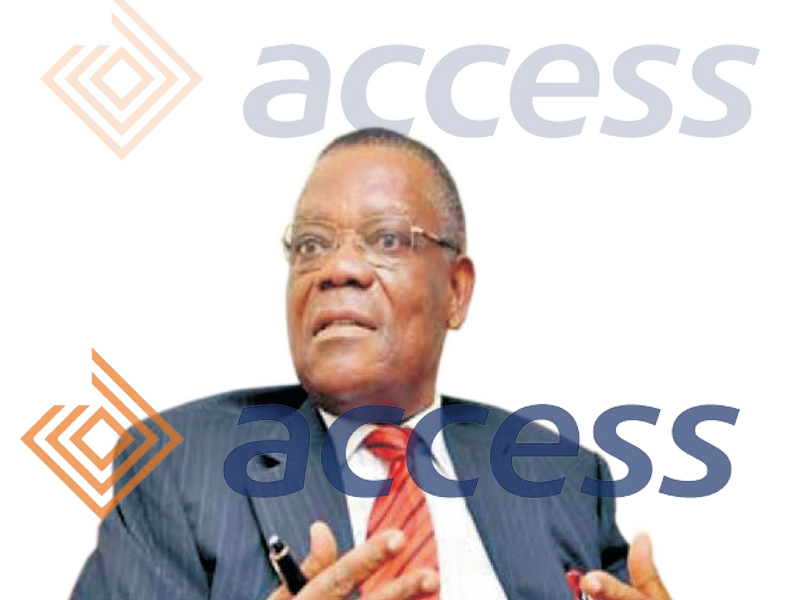
In a letter dated November 9, 2016 written by former petroleum minister and All Progressive Congress (APC) chieftain, Don Etiebet, in respect of what is turning out to be a messy N2.4 billion indebtedness by an oil and gas company, Top Oil, to Access Bank Plc, appears to offer a new narrative to the dispute.
Writing in his capacity as chairman of Top Oil and Gas Company Limited, the letter shows an admission by Etiebet of the indebtedness and profuse pleading for time to resolve the matter with the principal parties, CASTOIL that appear to have brought the business from Mobil Oil Nigeria Limited, for which Top Oil was hoping to profit from as a third party participant.
However, the Etiebet letter seen by Business A.M. among the documents making the court rounds, also shows while CASTOIL had the direct supply business with Mobil Oil, Top Oil made have found the business very attractive as to take full responsibility of sourcing the funds, hence the Import Finance Facility (IFF) made available to it by the bank for the purpose of importation of Automotive Gas Oil (AGO) for supply to Mobil.
In the letter addressed to “The Manager, Access Bank Plc, Business Banking Division, Chevron Roundabout Branch, Lekki” with the heading, “RE: US$6.3 MILLION OUTSTANDING L/C PAYMENT”, Etiebet refers to the ‘demands’ by the manager for the payment of an outstanding letter of credit (LC) of $6,382,666.00, “which was used to import 10,000MT of AGO to supply Mobil Oil Nigeria Limited from Augusta Energy.”
In what appears to suggest an apology over the situation, Etiebet then wrote: “I regret that this payment is still outstanding till today. The true and correct position is that Top Oil and Gas Development Company Limited (TOPOIL) carried out this contract with a third party, CAST OIL and GAS LIMITED (CASTOIL) which brought the project from Mobil Oil Nigeria Limited. TOPOIL did not deal directly with Mobil Oil as it is common practice in the industry that companies cooperate to execute the project of this nature and share the profit,” Etiebet wrote.
He went on to explain that after an initial payment made by the third party, CASTOIL, the latter failed to make a further payment, suggesting this to be the reason for the delay and failure to redeem the letter of credit sum.
“Unfortunately, after the initial payment of N170,000,000.00 from CASTOIL into TOPOIL account with Access Bank Plc in August 2015 as agreed, CASTOIL failed to make further payments. CASTOIL then request (sic) TOPOIL to give it some time to reconcile certain issues with Mobil Oil and in the process issued TOPOIL a “PAYMENT COMMITMENT” in the sum of N1,321,431,000.00, which is what CASTOIL owed TOPOIL for the L/C at N200/$ at that time plus other costs and to pay up in three instalments by the 31st of August 2015 as per attached CASTOIL letter,” Etiebet, in the letter, also referred to how the Economic and Financial Crimes Commission (EFCC) had become involved, expressing confidence that the money would be paid to TOP OIL for it to settle Access Bank, what it owes it.
The letter further reads: “When the commitment was not honoured, TOPOIL reported the case to the security agencies. In the process of the investigations, CASTOIL entered into another agreement with TOPOIL to pay up by the end of November 2015, with understanding to pay interests and any forex variation from N200/$ to the fx rate at the time of completion of payment. The case is being handled by the EFCC with CASTOIL’s Managing Director, Mr TunjiAmushan being on Administrative Bail with sureties and his International Passport impounded as he reports to the EFCC every Thursday with promises to pay up. EFFCC has assured us that they would recover all the money plus interest and FX variation from him before long plus other sanctions.”
The letter showed that apparently while TOPOIL was trying to resolve whatever difficulties it was having with CASTOIL over the payment it did not inform or carry along with its bankers.
In further demonstration of remorse, therefore, Etiebet then stated in the letter: “I am very sorry that this was not reported to you before now because we thought CASTOIL would pay up as has been promised since last year for us to liquidate the outstanding L/C payment. So I take this opportunity to commit to you that the debts of US$6,382,666 to your bank shall, meanwhile, be paid from alternative sources including profits TOPOIL would be making from its current contracts with NNPC-Retail to supply AGO to Total-Offshore. “With other contracts in the pipeline including the supply of PMS to NNPC-Retail, I hereby give my personal undertaking to pay all the outstanding in the US$6,382,666 within 90 days. I want to let you know that we all in TOPOIL regret this unfortunate situation but thank you so much for your continued understanding and cooperation,” Etiebet concluded his rapprochement to the bank.
Sources close to the situation said nothing came out of the promises made in this 2016 letter as the bank did not receive any payment. The bitter contestation of the indebtedness that is currently going on would shades this profound apologetic and hugely conciliatory position in this letter and raises questions about how things got to this point and what, if any, could be the underlying motive behind a complete repudiation of the debt that in this November 9, 2016 letter was fully admitted. In an advertorial widely published in the media, Obodex Nigeria Limited, a company in which Etiebet has large interest and is chairman, claims that it does not owe any debt to Access Bank, a claim which seems to contradict the November 9, 2016 letter.
FACT SHEET TO POINT OF DISAGREEMENT
On November 21, 2014, Access Bank, following an accepted offer letter to the TOPOIL provides a US$6 million Import Finance Facility (IFF) to facilitate the importation of Automotive Gas Oil (AGO) for supply to Mobil Producing Unlimited by TOPOIL. The facility was tenured for a year with a maximum of 90 (ninety) days circle. In addition to the US$6 million IFF, TOPOIL was also availed a N100 million Revolving Time Loan vide the same offer letter for the purpose of facilitating the payment of Custom duties and other related Logistics.
This was also tenured for 1 (one) year with a maximum of 90 (ninety) days circle. Several Letters of Credit (LCs) were issued on the facilities, but only 1 (one) remained unpaid which is A2015C1091CL. The facts on the stated LC are stated below: In April 2015 TOPOIL submitted a Proforma Invoice valued at $5,802,500.00 and informed Access Bank it had an order from Mobil. Consequently, LC A2015C1091CL was issued in favour of a company called Augusta Energy SA (“Beneficiary”).
Upon presentation of all shipping documents required for this particular LC, funds were remitted by the bank to the beneficiary. In 2016, Access Bank increased the TOPOIL’s IFF from US$6 million to US$12 million and this was communicated to TOPOIL in an offer letter dated January 20, 2016. When the facility was not paid, the chairman of TOPOIL, Don Etiebet wrote to Access Bank in a letter dated November 9, 2016 that the LC was done with a third party known as Cast Oil & Gas Limited and committed to repay the Customer’s indebtedness.
Due to TOPOIL’s failure to repay the sum of US$6,382,665.71 at the expiration of the facility, the said amount was converted into a N2.2 billion Term Loan through an offer letter dated July 4, 2017 and the unutilized sum of US$5,617,334.29 on the US$12million IFF was also converted to a N1,463,000.000.00 Time Loan through the same offer letter. The N1,463,000.000.00 Time Loan was, however, never utilised by the TOPOIL.


By Modupe Gbadeyanka
The verification of the depositors of the 46 microfinance banks, whose operating licenses were revoked by the Central Bank of Nigeria (CBN) over a week ago, has commenced.
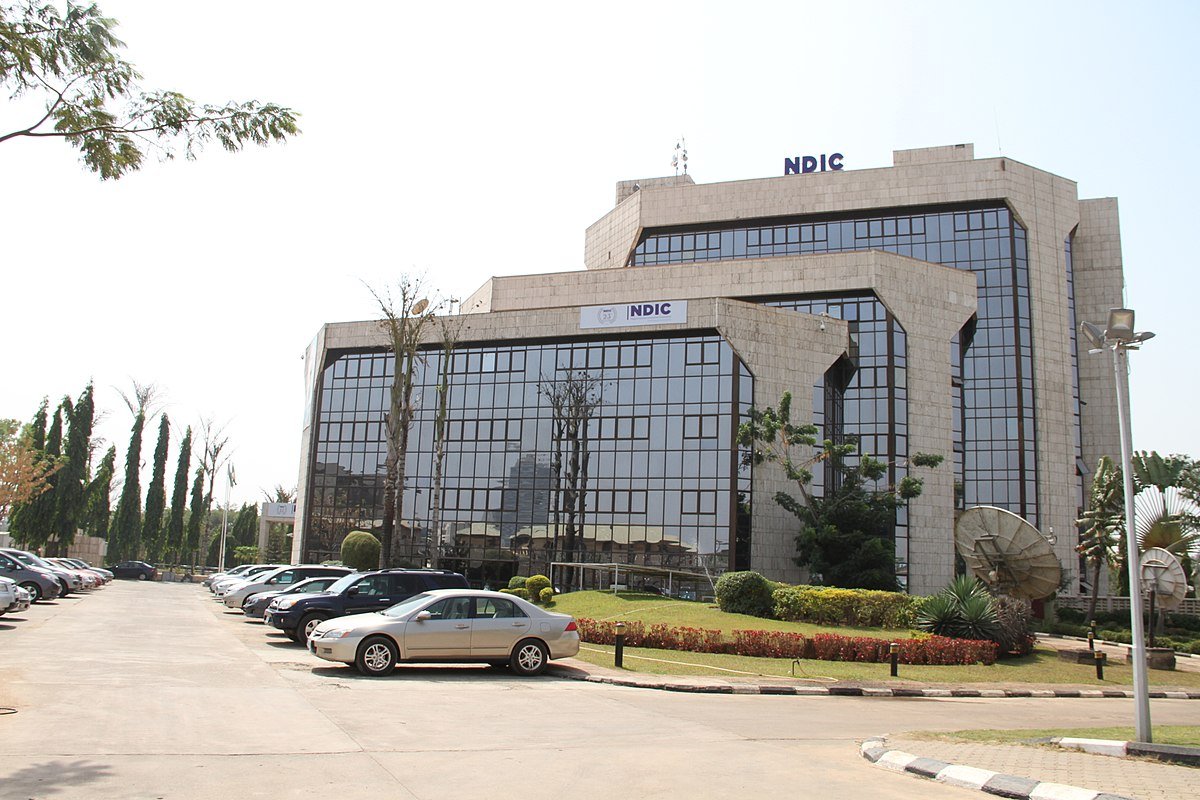
The exercise, aimed at refunding those whose funds were trapped in the small lenders, is being conducted by the Nigeria Deposit Insurance Corporation (NDIC).
In a statement on Thursday, the agency said its staff members have been positioned at the offices of the affected banks across the country to attend to depositors.
It was disclosed that depositors of the defunct banks, who had their Bank Verification Numbers (BVNs) linked to their accounts in the failed banks, will be paid through their alternative accounts in existing banks.
However, depositors whose BVNs were not linked to their accounts in the failed banks have been encouraged to visit the affected banks’ offices with proof of account ownership, a passport photograph, verifiable means of identification (Driver’s Licence, Permanent Voter’s Card, International Passport or National ID Card) and BVN.
NDIC also stated that depositors can alternatively file their claims online through its website: www.ndic.gov.ng, to complete the Pre-Verification Claims Form by clicking on the Search Bar, and typing Pre-Verification Claims Form; opening the Form and filling in their details. They can also do so by clicking the link: https://ndic.gov.ng/ndic-pre-verification-claims-form/ or by visiting any of the NDIC offices closest to them to file their claims.
For further enquiries, the corporation can be reached on any of the following lines: 09037273810, 09038197064, 08104220807, 09064657140.

By Adedapo Adesanya
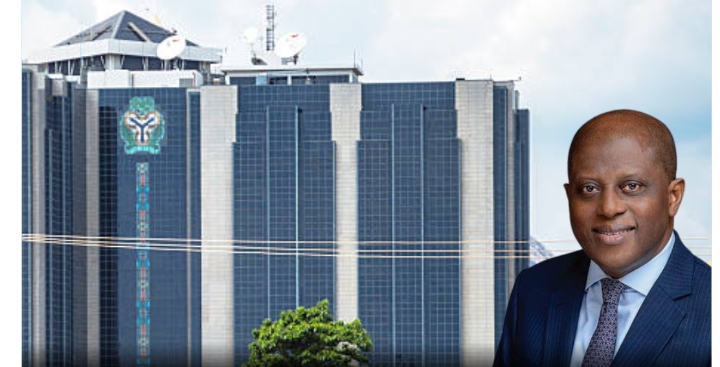
Nigeria’s Bank Verification Number (BVN) enrolment has slowed significantly in 2026 following the introduction of a stricter regulatory framework by the Central Bank of Nigeria (CBN), with the latest data from the Nigeria Inter-Bank Settlement System (NIBSS) showing that registrations are on course to fall well below last year’s record.
The BVN database stood at 69.55 million as of July 5, 2026, up from 69.32 million in June, indicating that only 228,947 new registrations were recorded over the period. Since the end of 2025, when the database stood at 67.8 million, total enrolments have increased by 1.75 million.
At the current pace, however, BVN registrations are unlikely to match the 4.3 million new enrolments recorded in 2025, suggesting a sharp deceleration in growth this year.
The slowdown comes after the CBN introduced a revised BVN regulatory framework in March, with the new rules taking effect on May 1, 2026. The framework tightened controls around enrolment, identity verification and fraud monitoring as part of efforts to strengthen the integrity of the banking system.
Among the key changes was the introduction of a minimum enrolment age of 18 years, effectively preventing minors from registering for a BVN.
The new framework also limits customers to a one-time change of the phone number linked to their BVN and requires financial institutions to place BVNs linked to suspected fraudulent transactions on a temporary watch-list for up to 24 hours while investigations are carried out.
The stricter rules contrast with last year’s surge in registrations, which was largely driven by the introduction of the Non-Resident Bank Verification Number (NRBVN) initiative that enabled Nigerians in the diaspora to complete BVN enrolment remotely, removing physical barriers and expanding access to the financial system.
Launched on February 14, 2014, the BVN scheme was introduced by the CBN in collaboration with the Bankers’ Committee, NIBSS and German technology firm Dermalog to assign every bank customer a unique biometric identity that can be verified across Nigeria’s banking industry.
By Adedapo Adesanya
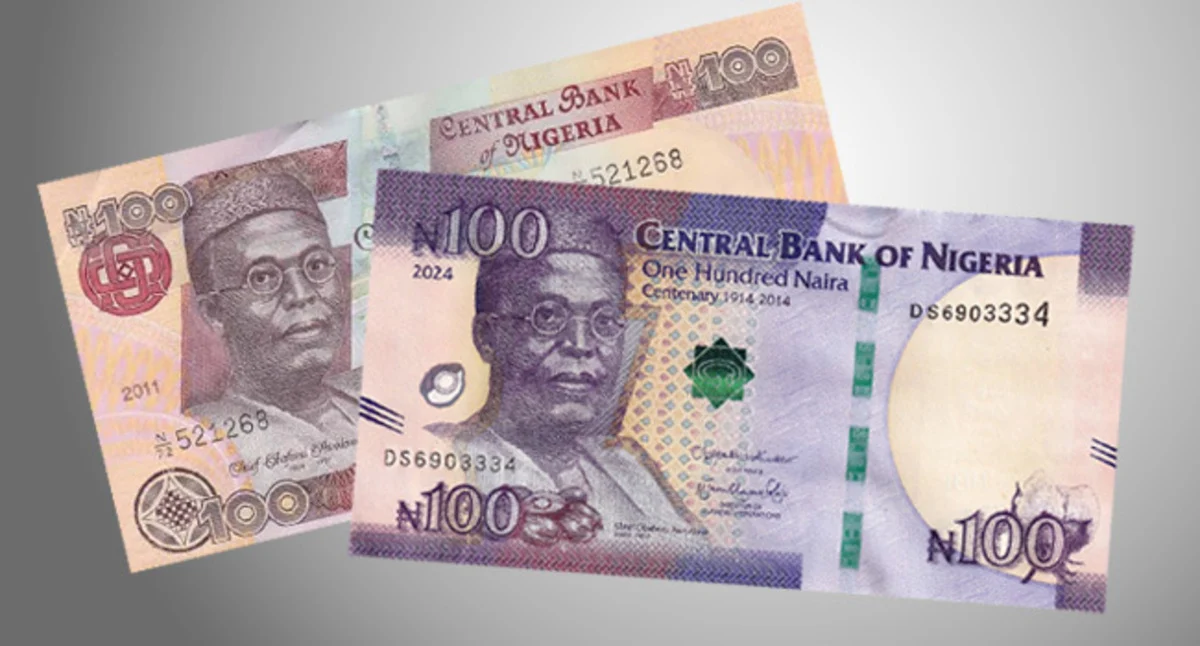
The Central Bank of Nigeria (CBN) has clarified that both the standard N100 banknote and the commemorative N100 banknote remain valid legal tender across the country, urging members of the public and businesses to accept both notes for all transactions amid reports that the standard version is being rejected in some quarters.
In a release signed by its Acting Director of Corporate Communications, Mrs Hakama Sidi-Ali, “the CBN reiterates that both the commemorative N100 banknote and the standard N100 banknote remain legal tender in Nigeria and must be accepted for all transactions nationwide. The commemorative N100 banknote, which was introduced to mark Nigeria’s centenary, did not replace the existing standard N100 banknote.”
The apex bank warned that rejecting the standard N100 banknote violates the provisions of the CBN Act and undermines public confidence in the national currency.
According to the bank, individuals, businesses, financial institutions, and other economic agents who reject the note could face appropriate enforcement measures.
The CBN reiterated its commitment to safeguarding the integrity of the naira, ensuring confidence in all duly issued banknotes, and promoting seamless currency circulation throughout the economy.
The central bank also advised members of the public to accept all banknotes legally issued by the bank and encouraged anyone seeking clarification to use its official communication channels.
First introduced on December 1, 1999, the N100 note which features the portrait of Chief Obafemi Awolowo on the front and Zuma Rock on the reverse, was last updated in 2014, when the CBN issued a commemorative version to mark Nigeria’s centenary, introducing enhanced security features such as a Quick Response (QR) code, window micro-optics, improved tactile markings for the visually impaired, and stronger anti-counterfeiting elements.
Unlike the N200, N500 and N1,000 notes, which were redesigned in 2022 under former CBN Governor Godwin Emefiele, the N100 note has remained unchanged since the centenary update, with both the standard and commemorative versions continuing to circulate.
