

Economy
Overnight Rate Drops to 6.57% as OMO Maturities Bolster Liquidity

By Modupe Gbadeyanka
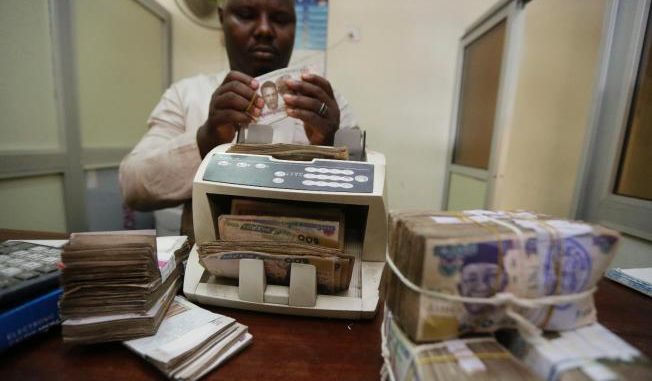
There was a significant decline in the average money market rates on Thursday amid absence of OMO sales by the Central Bank of Nigeria (CBN) to soak excess liquidity in the financial system.
Business Post reports that liquidity was further boosted yesterday with the inflows from OMO maturities.
Consequently, the average money market rates depreciated by 4 percent to close at 6.22 percent at close of business.
This came on the back of the 4 percent decline recorded each by the overnight and open buy back (OBB) rates.
While the overnight rate dropped to 6.57 percent from 10.57 percent, while the OBB rate fell to 5.86 percent from 9.86 percent.
Barring a renewed OMO sale by the CBN today, the rates are expected to remain relatively stable at the present level.
Meanwhile, the secondary market of treasury bills remained firmly bullish, with yields declining by 0.19 percent on the absence of an OMO auction by the CBN despite the N107 billion in OMO T-bills maturities.
Some market players also sought to cover lost out bids from the previous session’s NTB auction, where rates cleared significantly lower from their previous levels.
The one-month bill dropped 0.45 percent to close at 11.29 percent, the 3-month bill declined by 0.08 percent to 10.54 percent, the 6-month bill fell by 0.06 percent to 12.76 percent, while the 12-month bill depreciated by 0.15 percent to 13.87 percent.



By Adedapo Adesanya
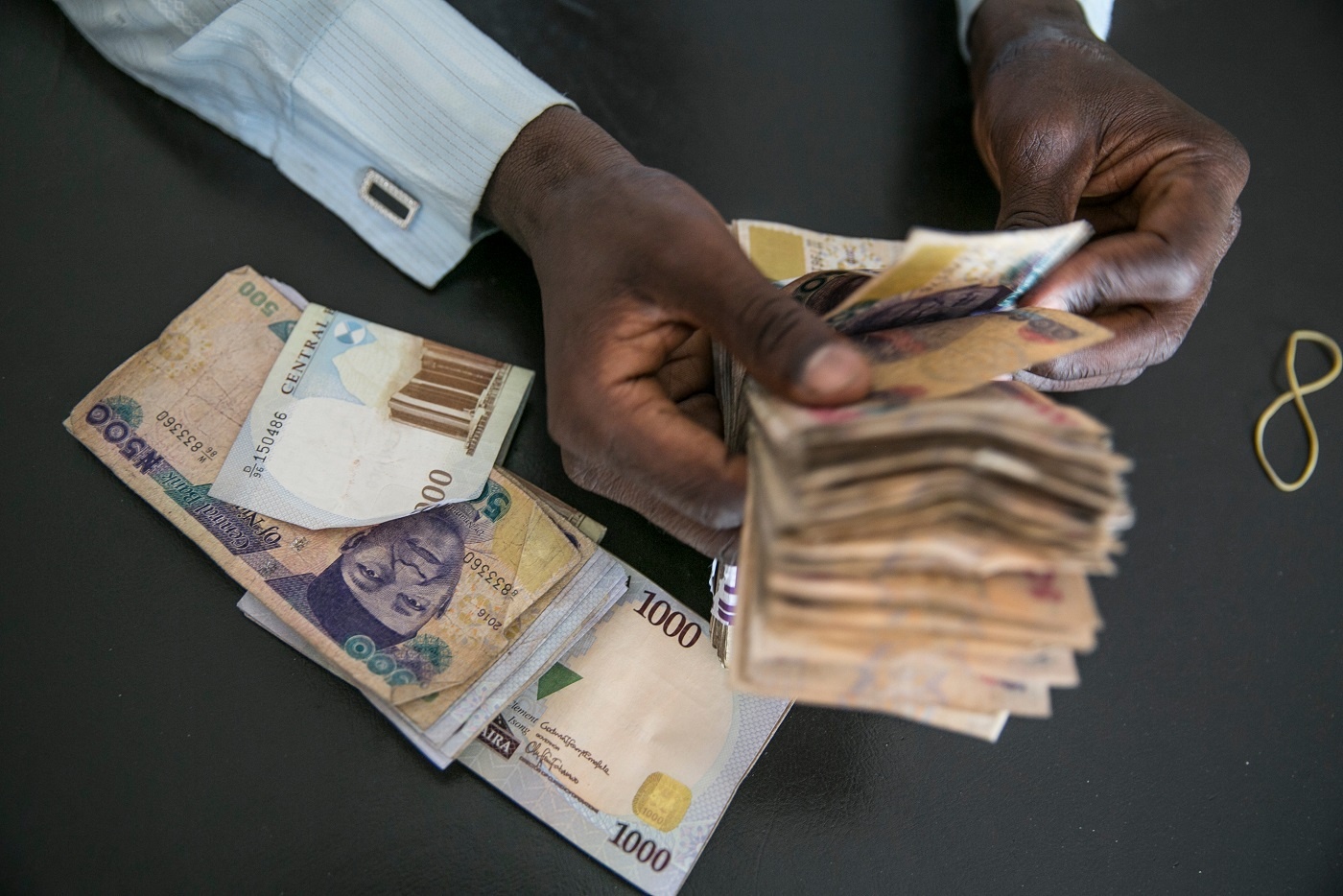
The Naira continued to gain ground against the US Dollar in the Nigerian Autonomous Foreign Exchange Market (NAFEX), as it further chalked up N2.26 or 0.16 per cent to sell for N1,370.15/$1 on Thursday, July 2, in contrast to Wednesday’s rate of N1,372.41/$1.
However, this was not the case for the domestic currency against the Pound Sterling at the same market window, the official market. It lost N10.44 to close at N1,832.17/£1 versus the previous day’s N1,821.73/£1, and fell against the Euro by N2.91 to trade at N1,568.28/€1 compared with the N1,565.37/€1 it was traded at midweek.
But at the black market, the Nigerian Naira gained N5 against the US Dollar yesterday to quote at N1,390/$1 versus the preceding session’s N1,395/$1, and at the GTBank FX counter, it appreciated by N7 to settle at N1,382/$1 versus N1,389/$1.
There are expectations that the Naira will remain within range as pressure from people taking half-year profits has tapered down while continued stronger policy signals from the Central Bank of Nigeria (CBN) back the market.
Data from the apex bank showed that interbank FX turnover declined to $85.517 million across 94 deals closed by financial institutions trading on behalf of their clients from $90.303 million the previous day.
The last two trading sessions have seen a sharp decline in interbank FX turnover, down from an intra-week high of $269.898 million, according to data obtained from the CBN.
Despite a sharp slowdown in CBN FX intervention, the broader expectation remains that the Naira will trade within a relatively stable range through the remainder of 2026.
As for the cryptocurrency market, a squeeze on bearish traders pushed Bitcoin (BTC) toward $62,000, capping the market’s first genuinely strong week since mid June. It improved its value by 1.8 per cent to $61,644.94.
Data from Coinglass showed that traders betting against crypto lost $281 million to liquidations over the past 24 hours, against $159 million in longs, out of $440 million in total forced closures across 95,690 traders.
Cardano (ADA) rose by 6.6 per cent to $0.1651, Ethereum (ETH) soared by 5.5 per cent to $1,716.65, Ripple (XRP) appreciated by 4.2 per cent to $1.10, Dogecoin (DOGE) grew by 3.3 per cent to $0.0751, Solana (SOL) also chalked up 3.3 per cent to sell at $80.95, Binance Coin (BNB) added 2.0 per cent to close at $562.22, and TRON (TRX) jumped by 1.0 per cent to $0.3186, while the US Dollar Tether (USDT) and the US Dollar Coin (USDC) remained unchanged at $1.00 each.

By Aduragbemi Omiyale
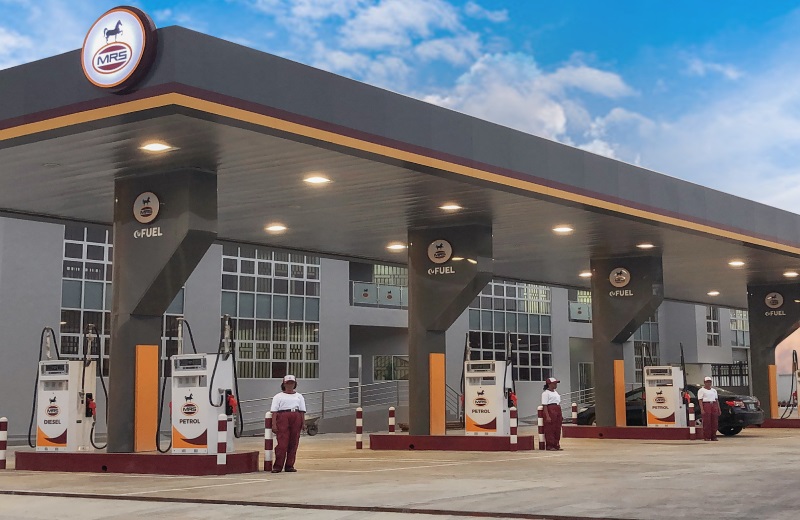
The gantry price of Premium Motor Spirit (PMS), otherwise known as petrol, has been cut down by Dangote Petroleum Refinery and Petrochemicals by N50 to N1,075 per litre from N1,125 per litre.
The company announced this reduction in a statement on Thursday, saying this move was to make the product available to consumers at lower prices.
The refinery explained that petroleum product pricing cannot mirror daily movements in international crude oil markets because crude is purchased weeks, and sometimes months, before it is processed.
According to the refinery, the petroleum products currently being supplied to the market are being produced from crude inventories acquired during periods of substantially higher prices.
It disclosed that the average landed cost of crude processed stood at approximately $124.80 per barrel in May and $95.25 per barrel in June, compared with the current international benchmark of about $71.01 per barrel.
The Lagos-based refinery also clarified that its crude procurement costs are not based solely on the headline ICE Brent benchmark commonly quoted in the media.
Rather, crude is purchased on a Dated Brent basis together with applicable market premiums, freight and logistics costs, resulting in actual feedstock costs that differ materially from benchmark prices.
Despite the sharp increase in crude acquisition costs during the period, Dangote Refinery said it deliberately refrained from transferring the full impact to consumers, choosing instead to absorb a significant portion of the additional costs in order to support market stability and cushion Nigerians from the volatility in global energy markets.
“[The latest] N50 per litre reduction is the fourth price cut in one month, bringing cumulative reductions to above N200 per litre on PMS. This approach ensures that pricing decisions are anchored on actual production economics and inventory costs rather than short-term fluctuations in international oil markets,” it said.
“Nigeria today benefits from the stabilising role of domestic refining capacity. The Dangote Petroleum Refinery currently supplies volumes sufficient to meet national demand, helping to strengthen energy security, eliminate dependence on imports, conserve foreign exchange and provide greater price stability for consumers and businesses,” it added.
The company expressed confidence that if international crude prices remain favourable and lower-cost feedstock continues to replace higher-priced inventories, Nigerians should expect further moderation in petroleum product prices.

By Adedapo Adesanya
Oil prices made marginal gains on Thursday as buyers sought to assure supply over the long Independence Day weekend in the world’s largest oil producer, the United States.
Brent futures settled at $71.80 a barrel, up 23 cents or 0.32 per cent, and the US West Texas Intermediate (WTI) crude finished at $68.69 a barrel, up 11 cents or 0.16 per cent.
Also, Qatar, which is mediating talks between the US and Iran, said progress has been made toward a permanent peace agreement ending the four-month war that shut the key oil shipping through the Strait of Hormuz.
The talks made “positive progress” on matters related to the memorandum that halted the war in June, a Qatar Foreign Ministry spokesperson said in a post on X. There was no sign yet that the sides made headway towards a lasting peace.
The next meeting between Iran and US negotiators will take place after the July 9 funeral processions for Iran’s late Supreme Leader Ayatollah Ali Khamenei.
Iran’s joint military command warned on Thursday that all oil tankers transiting the Strait of Hormuz must follow routes approved by Iran or face an immediate and forceful response. The warning, carried by Iranian state television, also cautioned that any US interference in the waterway would prompt a rapid and decisive reaction.
Tanker traffic has recovered from the near standstill seen during the height of the conflict. However, it is well below pre-war levels. According to AP, 258 vessels transited the strait last week, up from 138 the previous week, while traffic this week has settled into roughly 30 to 60 crossings per day—still nowhere near the roughly 130 daily transits seen before the war.
Despite this, Saudi oil giant Aramco, the world’s single largest crude oil exporter, has already managed to ship at least five supertankers from Ras Tanura through the strait.
UBS cut its Brent forecasts, citing the increase in oil shipping through the Strait of Hormuz, through which 20 per cent of the world’s oil is carried by tanker ships. The bank lowered its Brent crude price forecasts. It cut its third-quarter estimate by $25 per barrel to $80 and reduced its fourth-quarter forecast by $10 per barrel to $80. It trimmed its 2027 outlook by $10 per barrel to $75.

-
 Feature/OPED6 years ago
Davos was Different this year
-
Travel/Tourism10 years ago
Lagos Seals Western Lodge Hotel In Ikorodu
-

 Showbiz4 years ago
Estranged Lover Releases Videos of Empress Njamah Bathing
-
 Banking8 years ago
Sort Codes of GTBank Branches in Nigeria
-

 Economy3 years ago
Subsidy Removal: CNG at N130 Per Litre Cheaper Than Petrol—IPMAN
-

 Banking3 years ago
Sort Codes of UBA Branches in Nigeria
-

 Banking3 years ago
First Bank Announces Planned Downtime
-

 Sports3 years ago
Highest Paid Nigerian Footballer – How Much Do Nigerian Footballers Earn