

Economy
Nigerian Company Cancels $150m Milost Acquisition Deal

By Dipo Olowookere
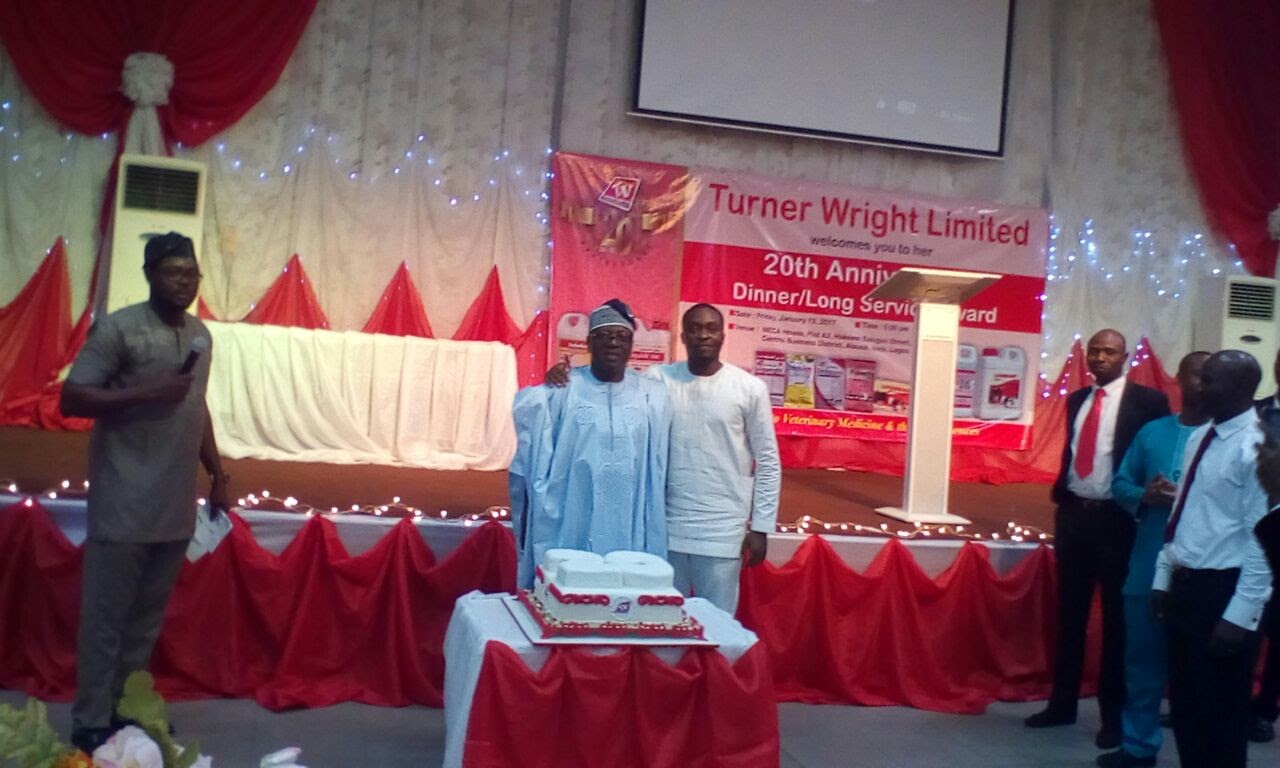
The business relationship between an American private equity firm, Milost, and that of a Nigerian company, Turner Wright Limited (TWL), has been terminated.
Milost had planned to acquire the indigenous manufacturer of veterinary pharmaceuticals for $150 million, but due to some reasons, the deal could not see the light of the day.
This is not the first time Milost is having a failed business dealings with Nigerian company. Its much-talked about investment in Unity Bank and others are still very fresh in the memory of observers in the Nigerian financial market.
In a report by The Nation, Turner Wright (TWL) Limited terminated its deal with Milost Global Incorporated and its associated companies because the foreign firms failed to honour the terms of the investment agreement.
The associated companies are Big Time Holdings Incorporated (BTHI) and Williamsville Smith Management Limited (WSML).
Milost had proposed to acquire 70 percent equity in TWL in a deal valued at $150 million with disbursements expected to be concluded within four years. The investment initially had WSML as the Special Purpose Vehicle (SPV) for the transaction but this failed to materilaise.
The deal was subsequently vested in BTHI, one of Milost’s publicly trading entities in the over-the-counter (OTC) market of the New York Stock Exchange (NYSE) through which it planned to raise capital and fund the transaction.
BTHI, like WSML before it, then proceeded to have an agreement with Turner Wright which would cede 70 per cent of the Nigerian company to BTHI through a share exchange upon funding and disbursement of agreed capital.
Chairman/Chief Executive Officer, Turner Wright Limited, Dr Tunde Lawal, said the indigenous firm decided to terminate the agreement with effect from May 14, 2019 because of non-performance on the part of both Milost and BTHI.
According to him, the objective of the share exchange agreement had not materialised by dint of non-performance on the part of both parties and as such shares were never exchanged between Turner Wright and BTHI.
“This brings to a close the relationship between Turner Wright Limited and BTHI,” Mr Lawal said.
With this development, analysts noted that Turner Wright’s fortunes have returned to status quo without encumbrance.
In May 2018, TWL had executed an agreement with the New York-based Milost Global Inc involving $50 million equity and $100 million convertible note.




By Adedapo Adesanya
The National Insurance Commission (NAICOM) has said the passage of the National Insurance Regulatory Commission Bill by the Senate will unlock greater investment in Nigeria by strengthening regulatory oversight, enhancing investor confidence and creating a more transparent and accountable insurance industry.
Describing the development as a significant milestone in efforts to strengthen the regulatory framework of Nigeria’s insurance industry, the commission particularly praised the leadership of the Senate and the Chairman of the Senate Committee on Banking, Insurance and Other Financial Institutions, Mr Adetokunbo Mukail Abiru, for their roles in securing the successful passage of the Bill in the Red Chamber.
According to NAICOM, the proposed legislation will enhance regulatory oversight, improve transparency and accountability, and boost public confidence in the insurance sector.
The commission said the bill is expected to attract greater investment into the industry, promote sustainable growth, and deliver benefits to policyholders, insurance operators, and the wider economy.
NAICOM also noted that the Senate’s commitment to advancing reforms in the insurance sector would support the modernisation of insurance regulation and strengthen financial inclusion across the country.
It added that the passage of the Bill reflects the legislature’s resolve to protect the interests of citizens while promoting the stability of Nigeria’s financial system.
The Commission reaffirmed its readiness to ensure the effective implementation of the new legal framework once the Bill receives presidential assent, pledging continued collaboration with industry stakeholders to position the insurance sector as a key driver of national economic development.
Earlier this week, the Senate passed the much-anticipated bill to repeal and re-enact the law establishing the National Insurance Commission (NAICOM), paving the way for the regulatory agency to be renamed the Insurance Regulatory Commission (IRC).
The legislation, titled the Insurance Regulatory Commission (Establishment) Bill, 2026, was passed after the Senate considered and adopted the report of its committee on banking, insurance and other financial institutions.
According to lawmakers, the outgoing National Insurance Commission Act 1997 is outdated and does not adequately address the emerging economic growth, needs and development of the country’s insurance business and projections.

By Aduragbemi Omiyale
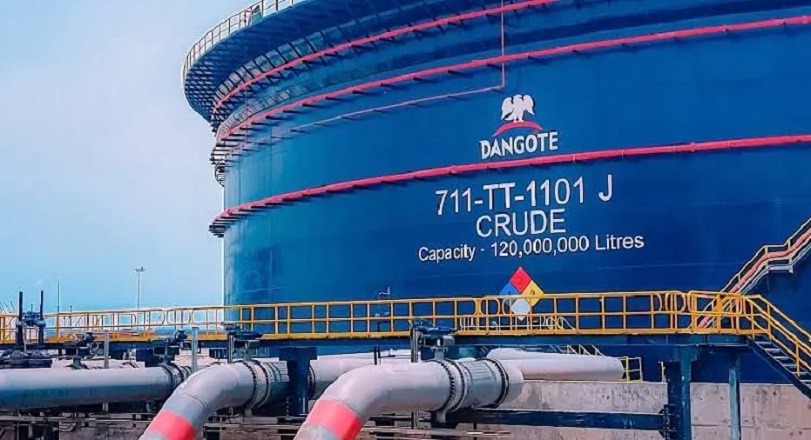
About $2.5 billion has been raised by Dangote Petroleum Refinery and Petrochemicals FZE (DPRP) from its private equity placement.
The exercise, Business Post learned, attracted broad participation from international and African institutional investors, sovereign-related investment vehicles, development finance institutions, strategic partners, and individual investors.
Notable participants included the Africa Finance Corporation (AFC) and India Infra Buildco, an investment vehicle facilitated by the African Export-Import Bank (Afreximbank), reflecting deep and diversified confidence in DPRP’s long-term prospects.
The transaction is believed to be Africa’s largest publicly disclosed primary equity private placement, marking a significant milestone in the history of the organisation and demonstrating strong investor confidence in the refinery’s long-term growth strategy, including raising its current capacity from 700,000 barrels per day to 1.4 million barrels per day.
The capital raise is the first equity funding round involving external investors beyond the company’s legacy shareholder base, underscoring the growing attractiveness of DPRP as a world-class energy and industrial enterprise. The strong investor response further reinforces confidence in the company’s vision and its ability to deliver sustainable value over the long term.
The proceeds from the placement will be deployed to support the continued expansion of the refinery and petrochemical complex, strengthen the company’s capital structure, and enhance financial flexibility to pursue future growth opportunities.
With the successful completion of the placement, DPRP is well-positioned to accelerate its long-term growth strategy while strengthening Africa’s energy security through world-scale refining and petrochemical capacity.
“This transaction represents a strategic step to deepen and further institutionalise the Enterprise’s shareholder base, while raising capital to complement our internal cash flows and external funding as DPRP advances its expansion agenda.
“It also demonstrates our unwavering commitment to developing Africa’s refining and petrochemical capacity, reducing dependence on imported petroleum products and strengthening the continent’s energy security,” the chief executive of Dangote Industries Limited and Chairman of DPRP, Mr Aliko Dangote, stated.
Also, the chief executive of Dangote Petroleum Refinery, Mr David Bird, said the overwhelming investor response validates the company’s operational performance and growth outlook.
“The exceptional demand we witnessed is a testament to our operational excellence, execution capability and the confidence investors have in DPRP’s leadership and future potential,” he remarked.
By Aduragbemi Omiyale
Shareholders of Transcorp Plc should expect their phones to buzz with bank alerts very soon, as the board has proposed the payment of an interim dividend of 40 Kobo per share for the first half of the 2026 fiscal year.
The company announced the cash reward payment to investors in the unaudited financial statements submitted to the Nigerian Exchange (NGX) Limited.
The interim dividend would be paid on Tuesday, July 28, 2026, subject to appropriate withholding tax deduction and to shareholders whose names appear in the Register of Members as of the close of business on Thursday, July 23, 2026.
Analysis of the results showed that the conglomerate delivered a strong revenue and profit performance, with improved margins and ratios notwithstanding challenges in the operating environment.
The performance was driven by the organisation’s disciplined cost management and operational efficiency, underpinned by a resilient business strategy and solid corporate governance ethos.
In the period under review, the power sector was impacted by gas supply constraints, as well as grid-related challenges, which saw a reduction in the overall power supply in the country.
Similarly, the hospitality business continues to innovate and leverage its assets to deliver superior service excellence.
These challenges impacted Transcorp’s earnings, which contracted to N241.5 billion in the first half of this year from N279.0 billion in the corresponding period of 2025, while profit after tax moderated to N54.4 billion from N65.2 billion in H1 2025.
“These results reflect the quality of the underlying business and resilience of the group’s earnings. Despite a lower revenue base arising from sector-wide power infrastructure constraints, we expanded our profit-before-tax margin to 31.4 per cent, from 30.7 per cent in the prior period, a direct result of disciplined cost optimisation and operational efficiency across our businesses.
“Our financial position remains strong, with a robust equity base which grew to N367.8 billion by half-year 2026. Our strength is hinged on the diversified earnings capability from key sectors, including the hospitality business, which grew its profit after tax by 21 per cent. This financial foundation gives us the confidence to protect and grow long-term value for our shareholders as operating conditions normalise,” the Chief Financial Officer of Transcorp, Mr Festus Izevbizua, stated.
Also, the chief executive of the firm, Mr Owen Omogiafo, said, “Despite disruptions to power transmission infrastructure and a challenging macroeconomic environment, Transcorp delivered a strong profit and an even stronger balance sheet, a reflection of our operational discipline and efficiency.
“At Transcorp Group, our operations are driven by our purpose to improve lives and transform Africa. We continue to create impact in the sectors that matter most to Nigeria’s future, and that same conviction continues to guide us through every phase of the cycle.
“Despite the constrained grid infrastructure seen in the first half of the year, we forged ahead, engaging with strategic partners to deliver much-needed power to Nigerians.
“Through our 5,000-capacity, multi-purpose event facility, Transcorp Centre, and our flagship 1,000-key Transcorp Hilton Abuja, we have continued to make the Federal Capital Territory the preferred location for business and leisure.
“Our strategy is clear, our balance sheet is robust, and our confidence in the value we are creating for our shareholders remains firm.”
