Connect with us

General

Sahara Group Triggers New Thinking on Energy, Investment, Journalism at Asharami Square 3.0

Published

on

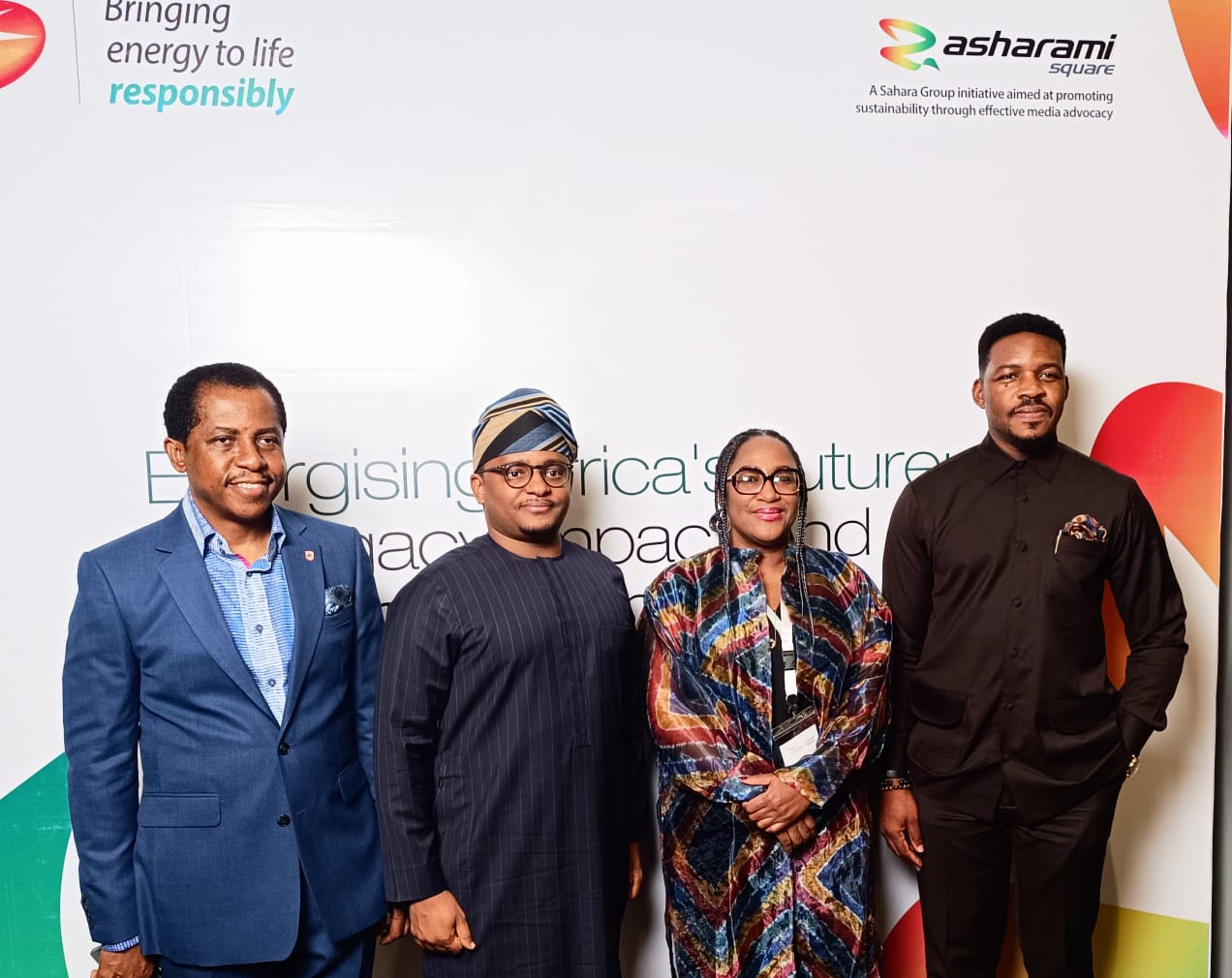
Asharami Square 3.0

By Dipo Olowookere

The need for new thinking on energy transition, infrastructure financing and energy journalism has been emphasised by a leading energy company, Sahara Group.

The organisation, at the 2026 Asharami Square held in Lagos on Wednesday, July 22, stressed the need for solution-based journalism for better results.

At the event themed Energising Africa’s Future: Legacy, Impact and Transformation, the Director of Governance and Sustainability at Sahara Group, Ms Ejiro Gray, in her opening remarks, noted that Africa’s energy future must be shaped by local realities, calling for more balanced, evidence-based journalism capable of interrogating the complexities of energy transition, development and sustainability.

“Effective journalism should not only tell us what happened; it should help us understand why it matters, whose interests are affected and what perspectives are missing from the conversation,” she posited.

The Special Adviser to the President on Power Infrastructure, Mr Sadiq Wanka, in his keynote address, highlighted the opportunities emerging within Nigeria’s electricity sector as reforms continue to open new pathways for investment.

He stated that reforms across the sector were creating opportunities in embedded generation, mini-grids, renewable energy, transmission infrastructure and industrial power solutions, while urging journalists to delve deeper into policy reforms, investment opportunities and implementation outcomes.

“The issue is no longer technology. The real challenge is mobilising capital at scale, structuring bankable opportunities and creating an ecosystem that attracts long-term financing,” Mr Wanka said.

At a panel session featuring the Director of Institute of Continuing Education of the University of Lagos, Prof. Abigail Ogwezzy-Ndisika; the chief executive of the Lagos State Electricity Regulatory Commission (LASERC), Ms Temitope George; and the Managing Director of Chapel Hill Denham, Ms Kemi Awodein, it was echoed that Africa possesses significant pools of capital capable of supporting infrastructure development, but that unlocking investment requires stronger governance, investor confidence and better project preparation.

“Energy reporting must go beyond headline events and announcements. Journalists need to ask deeper questions, examine the evidence and connect policy decisions to their impact on communities and everyday lives,” Prof Ogwezzy-Ndisika stated at the panel moderated by the Associate Editor for Africa at Argus Media, Mr Adebiyi Olusolape.

Ms Awodein, during the panel which explored the question: Who is financing Africa’s energy future? Pointed out that “Nigeria has demonstrated that domestic capital can finance transformational infrastructure at scale. The real differentiator is governance, transparency and a clear pathway to value creation.”

Business Post reports that one of the major highlights of the programme was the unveiling of the Asharami Square Energy Reporting Fellowship, which the Head of Corporate Communications at Sahara Group, Mr Bethel Obioma, said was designed to deepen journalists’ understanding of the technical, commercial, environmental and policy issues shaping the energy sector.

He disclosed that this aligns with Sahara Group’s Beyond XXX vision of investing in people and platforms that will help shape Africa’s future, adding that Prof Ogwezzy-Ndisika will serve as the lead assessor for the programme.

“Through the Asharami Square Energy Reporting Fellowship, we are investing in the capacity of journalists to tell more solutions and evidence-based stories that reflect the realities, opportunities and challenges of Africa’s energy transition,” he stated.

Since its launch in 2024, Asharami Square has continued to advance informed dialogue, strategic partnerships and practical solutions that support Africa’s evolving energy landscape and reinforce Sahara Group’s commitment to delivering impact beyond its first three decades.
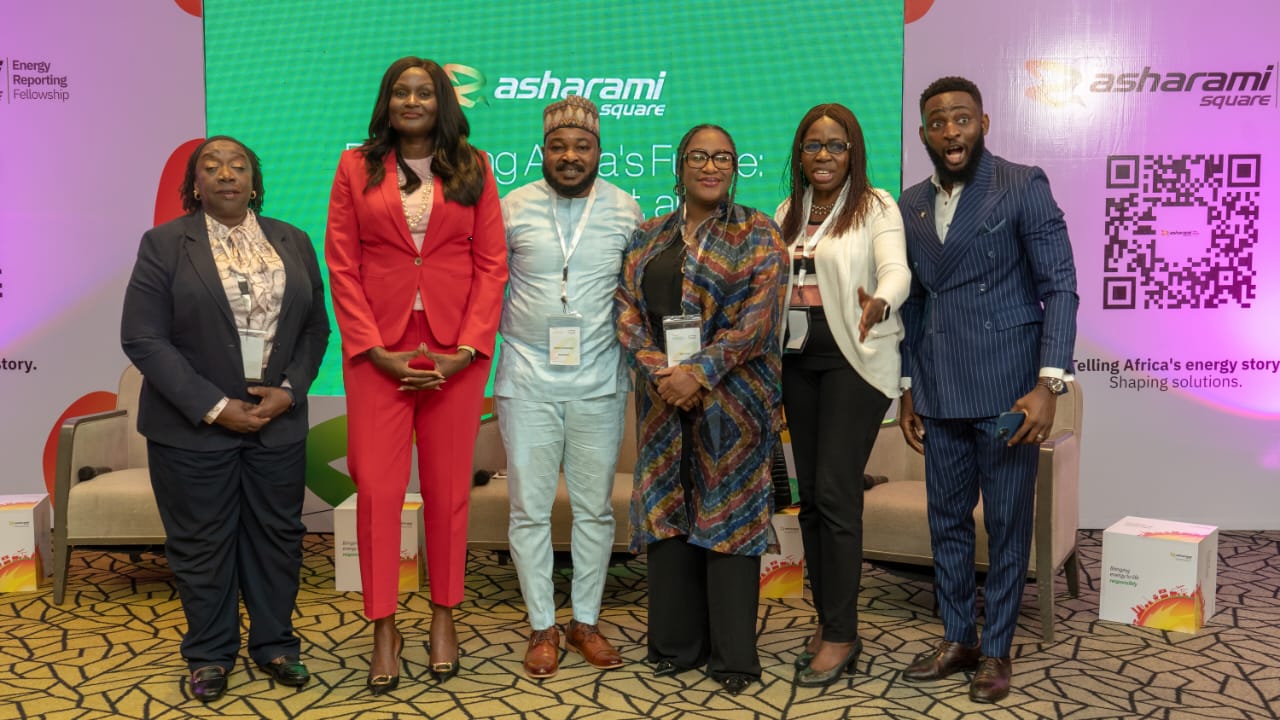
Asharami Square 3.0 panel

Click to comment

Leave a Reply

Your email address will not be published. Required fields are marked *

General

Tinubu Pledges to Revive Nigerian Moribund Refineries

Published

on

nnpc refineries

By Modupe Gbadeyanka

The Nigerian refineries will not be allowed to waste away, given the huge investments made over many years, President Bola Tinubu has declared.

Speaking on Thursday in Abuja, the President assured that in-depth research, restructuring, and leadership will reposition the moribund oil facilities to deliver value and profit.

Responding to a request by the Nigerian Union of Petroleum and Natural Gas Workers (NUPENG), led by its leader, Mr Salimon Akanni Oladiti, to revive the nation’s oil refineries, Mr Tinubu explained that the challenges confronting the refineries would be addressed through a systematic, evidence-based approach rather than short-term interventions.

According to him, the federal government will encourage detailed research and technical assessments to identify the structural, operational, financial and managerial challenges affecting the facilities and develop sustainable solutions.

“The refineries that you mentioned are going to come back to work; we’re just building a very firm, resetting, and structural reworking of the economy of it. Ordinary flame and smoke of a refinery doesn’t mean that it’s working until it’s profitable and yields the value for which it is built.

“I’m not a man who goes looking back on everything because I’ve accepted the assets and liabilities of my predecessor. No matter what has happened in the years past, it’s now my responsibility as president to fix it and make it work for the greatest common good of our population. I take responsibility for that, and we will do it.

“I will just appeal to all of you to let us work diligently and passionately on this democracy. Democracy is about celebration of freedom and opportunity that must be cherished by all of us, just like a painful childbirth, but the joy is everlasting and long. And I promise you, you will enjoy a better Nigeria,” the President was quoted as saying in a statement signed by his spokesman, Mr Bayo Onanuga.

Responding to the remark on the implementation of local government autonomy, President Tinubu promised that the constitutional issues involved in its implementation are being reviewed for possible fine-tuning. He appealed for understanding among stakeholders.

He also took the opportunity to acknowledge a former President of the Union, the late Frank Kokori, for his role in deepening democracy in Nigeria.

“You brought good memories of my relationship with Frank Kokori; may his soul rest in peace. We struggled for this democratic dispensation together, and it was very tough for us to have this democracy, and you have been a very good partner of the government in progress,” he said.

Mr Tinubu also promised the NUPENG executives more inclusion in the implementation of the Presidential Initiative on Compressed Natural Gas. He, however, challenged them to make the effects of the CNG drive get down to the commuters.

In his remarks, the Minister of Information and National Orientation, Mr Mohammed Idris, commended NUPENG for acknowledging the positive outcomes of President Tinubu’s reform agenda, stating that this mutual understanding has reduced friction between trade unions and the government.

On his part, Mr Oladiti commended the President for taking the bold decision to end the fuel subsidy regime, describing the policy as a courageous step that has saved the country from decades of financial drain and depletion of national reserves.

According to him, the decision to remove the fuel subsidy has begun to yield enormous benefits for the country by freeing resources for critical infrastructure development and other sectors of the economy.

He particularly commended President Tinubu’s renewed commitment to rehabilitating and constructing major highways across the country, especially the ongoing construction of the 750-kilometre Lagos-Calabar Coastal Highway and the 1,068-kilometre Sokoto-Badagry Superhighway as major examples of infrastructure projects.

“For our members, a good road is the difference between arriving home safely and never arriving at all. Every stretch of highway rehabilitated or constructed means fewer accidents, fewer spillages, fewer lives lost, and less stress for the men behind the wheels.

“Mr President, that is a reform our members feel in their bones, and for it we say thank you because our tanker drivers and other road users are already seeing the benefits of the rehabilitation and construction of federal highways,” he said.

Continue Reading

General

State Police: Memorandum Submission Deadline Shifts to August 21

Published

on

state police1

By Adedapo Adesanya

The Presidential Working Group on the National Policing Bill has extended the deadline for the submission of memoranda and position papers on the proposed legislation to Friday, August 21, 2026, at 5:00 p.m. West Africa Time.

In a statement signed by the Chief of Staff to the President and Chairman of the Presidential Working Group, Mr Femi Gbajabiamila, the group said the extension was intended to ensure that interested individuals, institutions and organisations have adequate opportunity to make substantive contributions to the proposed legislation.

“The Presidential Working Group is committed to ensuring that the process of developing the National Policing Bill benefits from broad consultation and the informed perspectives of Nigerians and relevant stakeholders,” the statement read.

The proposed legislation is intended to provide the operational, administrative, institutional and funding framework necessary for an effective policing architecture that responds to Nigeria’s evolving security needs, while providing appropriate safeguards for accountability, professionalism and the protection of citizens’ rights.

“Given the significance of the proposed reform to the future of policing and internal security in Nigeria, the Working Group considers it important that stakeholders are afforded more opportunity to make substantive and technically sound contributions to the process,” the statement said.

The former lawmaker said legal practitioners, civil society organisations, security sector professionals, state governments, professional bodies, academics, experts and interested members of the public are encouraged to take advantage of the extended window to submit their memoranda and position papers, exclusively through the official National Policing Bill portal, nationalpolicingbill.com, on or before the new deadline.

According to him, developing an effective policing framework required careful consideration of a number of critical issues, including sustainable funding, command and control structures, recruitment and training standards, operational jurisdiction, inter-agency coordination, accountability mechanisms and safeguards against political interference or abuse.

“These considerations underscore the importance of robust stakeholder engagement in developing a framework that is effective, accountable, sustainable and responsive to the peculiar security needs of communities across the federation,” he added.

He noted that at the conclusion of its assignment, the Presidential Working Group will present a final, implementation-ready draft of the National Policing Bill for onward legislative processing.

The Presidential Working Group appreciated stakeholders who had already made submissions and encouraged others intending to participate in the process to take advantage of the extension.

The National Policing Bill portal went live on August 3, 2026, when Gbajabiamila first announced the public consultation window during a press briefing on the reform, at the time indicating that submissions would close after roughly two weeks.

The Working Group is expected to present the completed Executive Bill package to President Bola Tinubu for review on September 3, 2026.

Continue Reading

General

Insecurity Affecting Operations, Revenue Generation—Nigeria Customs

Published

on

Nigeria Customs Service

By Adedapo Adesanya

The Nigeria Customs Service (NCS) says the prevailing insecurity in parts of the country is negatively affecting its operations and revenue generation.

The Assistant Comptroller-General of Customs and Zonal Coordinator, Zone B, Mrs Nsikak Umoh, disclosed this in Minna while inspecting the Niger/Kogi Area Command Headquarters and engaging with vehicle importers on the operational challenges confronting the command.

Mrs Umoh said insecurity was not peculiar to the Niger/Kogi Area Command, but affected several Customs formations across the North-West, including Sokoto, Kebbi, Katsina and Zamfara states.

“The security challenge is not peculiar to only Niger/Kogi Area Command. The whole of North-West comprising Sokoto, Kebbi, Katsina and Zamfara States, which are all under my command, are facing the same security challenge,” she said.

According to her, the security situation had exposed customs personnel to increasing threats, with some officers killed or injured in the course of performing their duties, adding that the development had forced some commands to scale down their operations or adopt more cautious approaches, thereby affecting revenue collection.

Mrs Umoh explained that the service was encouraging its officers to adopt intelligence-led operations to minimise risks while ensuring that legitimate Customs duties continued.

“But we are trying our best to encourage them to use an intelligence-based operating system to do their job, and that is why in most of the commands, we have a reduction in revenue collections,” she added.

The ACG also expressed concern over the impact of insecurity on the physical and psychological wellbeing of Customs personnel, noting that some officers had developed health complications, including hypertension, due to fear and stress associated with their duties.

Despite the security challenges, Umoh said the Niger/Kogi Area Command had continued to perform strongly in revenue generation, disclosing that the command had surpassed its monthly revenue target of N17 million, generating more than N200 million as of August 12.

She commended the officers and stakeholders in the command for sustaining revenue collection despite the difficult operating environment.

Continue Reading