

Economy
Stocks Shed N110bn as Investors Await Buhari’s Team

By Dipo Olowookere
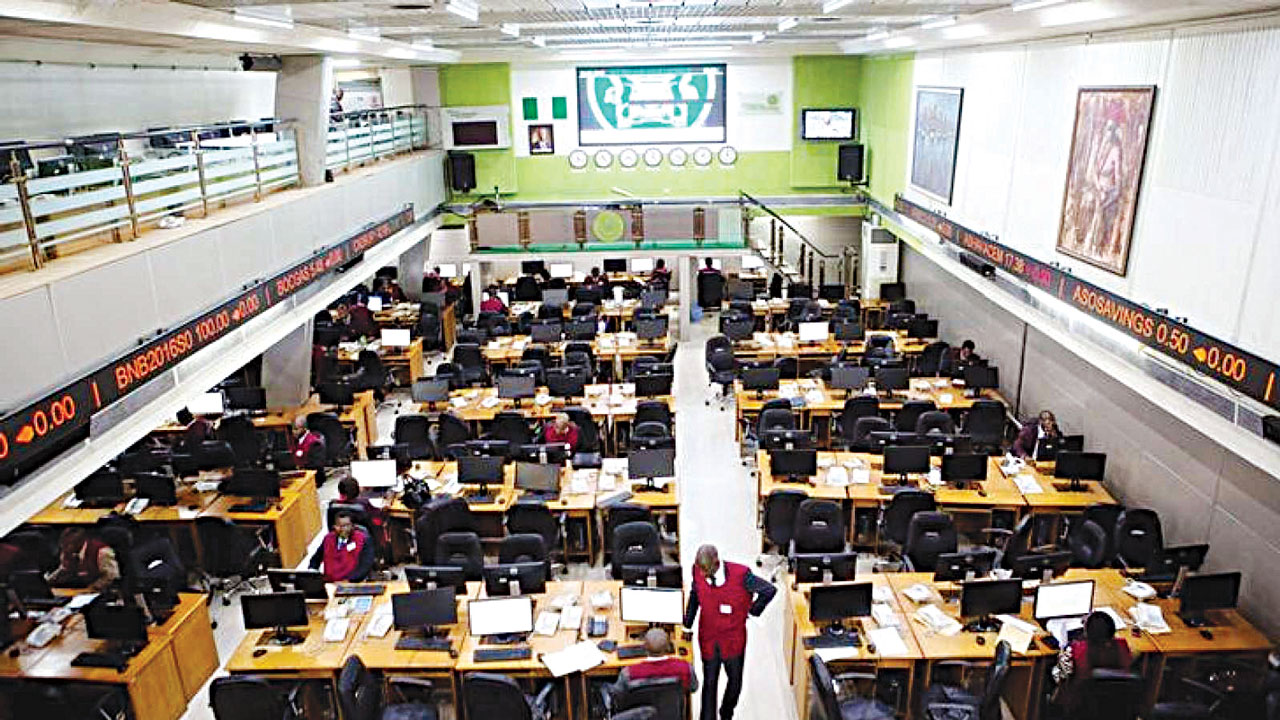
The stock market commenced trading for the new week on a negative note on Monday with a 0.79 percent loss as the wait for news of the release of ministerial list to the Senate for confirmation continues.
During his term in office in 2015, President Muhammadu Buhari waited for nearly six months to announce his cabinet members and this had a negative effect on the economy, which eventually slipped into recession some months later.
On May 29, 2019, Mr Buhari was sworn into office for a second term, having emerged winner of the keenly contested presidential election held in February.
Nearly two months after he officially commenced the second part of his 8-year rule as President of Nigeria and barely five months after he won the election, Mr Buhari is yet to announce those who will help him achieve his ‘next level’ campaign slogan. Last week, he was reported to have asked the Senate for more time to choose those he personally knows well into his cabinet.
As investors await his team, the stock market continues to bleed further as evident in the year-to-date loss yesterday, which extended to 9.83 percent.
Business Post reports that the All-Share Index (ASI) depreciated by 228.76 points to finish at 28,341.03 points, while the market capitalisation reduced by N110 billion to close at N13.812 trillion.
The negative sentiment on Monday was hugely impacted by the performance of 21 counters which declined during the day as against the 10 price gainers recorded at the session.
Total Nigeria topped the losers’ chart yesterday with a price depreciation of N10 to settle at N130 per unit. Dangote Cement, which followed, went down by N3 to finish at N170 per share.
GTBank lost 90 kobo to end at N29 per share, MTN Nigeria fell by 65 kobo to close at N129 per share, while Eterna declined by 25 kobo to settle at N3.40k per unit.
At the other end, Nestle Nigeria emerged the best performing stock at the market on Monday, appreciating by N33 to finish at N1228 per unit.
Nigerian Breweries gained 50 kobo to close at N58.50k per share, while Conoil increased its share value by 40 kobo to settle at N20.40k per share.
In addition, Vitafoam garnered 16 kobo to finish at N3.70k per unit, while Dangote Flour went up by 10 kobo to close at N17.50k per share.
At the market yesterday, investors transacted a total of 175.2 million shares worth N2.2 billion executed in 3,111 deals, with Waic Insurance emerging as the most traded with a total of 42 million units sold for N16.8 million.
UBA traded 24.2 million shares worth N142 million, GTBank sold 16 million equities valued at N478.8 million, LASACO Assurance exchanged 15.1 million shares for N4.7 million, while Transcorp transacted 14.6 million equities worth N15 million.




By Aduragbemi Omiyale
Shareholders of Unilever Nigeria Plc will receive an interim dividend of N2 per share, the board of the organisation has said.
The cash reward was announced after the company released its financial statements for the first half of the year ended June 30, 2026.
The payment will be made on Friday, August 14, 2026, only to investors whose names appear on the Register of Members at the close of business on Friday, July 31, 2026.
A quick look at the financial performance of the firm in the first six months of this year showed that revenue improved by 22.22 per cent to N119.9 billion from the N98.1 billion achieved in the corresponding period of last year.
A rise in earnings also resulted in a 16.43 per cent surge in cost of sales, though this did not shrink the gross profit, which rose by 29.93 per cent to N54.7 billion from N42.1 billion. The operating profit stood at N24.4 billion in the period under review, higher than N18.8 billion in the same period of 2025, while the net finance income contracted by 9.43 per cent to N4.8 billion from N5.3 billion due to elevated borrowing costs.
Business Post reports that despite higher taxes paid in the first six months of 2026, the net profit grew by 8.33 per cent to N15.6 billion from N14.4 billion, enabling the board to pass on value to shareholders for their faith in the firm.


By Adedapo Adesanya
The NASD Over-the-Counter (OTC) Securities Exchange opened the week with a 0.52 per cent rise on Monday, July 20, driven by renewed buying interest.
The volume of securities traded during the opening session surged by 6,663.3 per cent to 52.6 million units from the previous 777,002 units, and the value of securities rose by 200.9 per cent to N191.2 million from the preceding session’s N104.2 million, while the number of deals depreciated by 15.2 per cent to 28 deals compared to the preceding session’s 33 deals.
Great Nigeria Insurance (GNI) Plc remained the most active stock by value on a year-to-date basis, with 3.4 billion units sold for N8.4 billion, followed by Infrastructure Credit Guarantee (Infracredit) Plc with 2.3 billion units valued at N6.5 billion in trades, and Central Securities Clearing System (CSCS) Plc with 75.4 million units exchanged for N5.3 billion.
GNI Plc also closed the day as the most traded stock by volume on a year-to-date basis, with 3.4 billion units worth N8.4 billion, followed by Infracredit Plc with 2.3 billion units transacted for N6.5 billion, and Resourcery Plc with 1.1 billion units traded for N415.7 million.
Yesterday, there were two price gainers and three price losers, led by FrieslandCampina Wamco Nigeria Plc, which slid by 66 Kobo to end at N141.15 per unit versus last Friday’s N141.81 per unit, Food Concepts Plc lost 24 Kobo to close at N2.31 per share versus N2.55 per share, and Geo-Fluids Plc declined by 17 Kobo to settle at N2.25 per unit compared with the previous closing price of N2.42 per unit.
Conversely, CSCS Plc chalked up N5.19 to close at N99.33 per share versus N94.14 per share, and Mass Telecoms Plc appreciated by 3 Kobo to sell at 35 Kobo per unit from 32 Kobo per unit.
As a result, the market capitalisation increased by N13.57 billion to N2.606 trillion from N2.593 trillion, and the NASD Security Index (NSI) gained 22.6 points to quote at 4,343.27 points, in contrast to the previous 4,320.67 points.
By Adedapo Adesanya
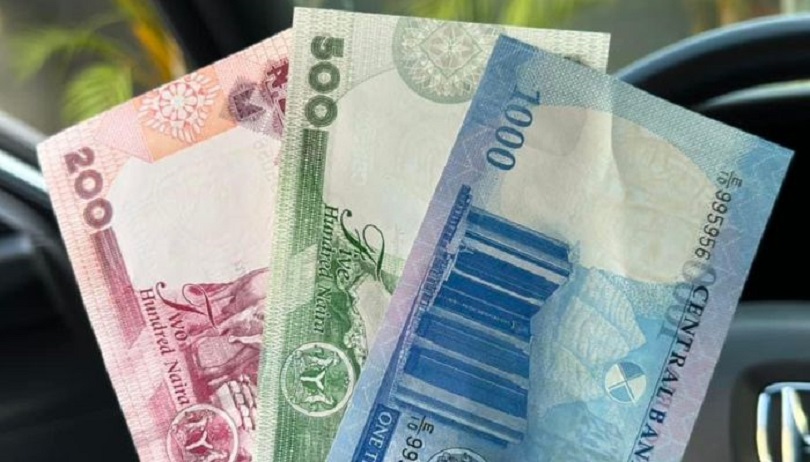
The Naira almost traded flat against the United States Dollar in the Nigerian Autonomous Foreign Exchange Market (NAFEX) on Monday, July 20. It gained 7 Kobo during the session to sell at N1,380.11/$1, in contrast to last Friday’s value of N1,380.18/$1.
It also appreciated against the Euro in the same market window during the session by N1.64 to close at N1,575.95/€1 versus the preceding session’s N1,576.99/€1, but depreciated against the Pound Sterling by N2.93 to trade at N1,857.35/£1 compared with the previous trading day’s N1,854.42/£1.
At the GTBank forex desk, the Nigerian Naira lost N1 against the US Dollar to quote at N1,389/$1 versus N1,388/$1, and at the black market, it traded flat at N1,405/$1.
Data from the Central Bank of Nigeria (CBN) showed that interbank FX turnover settled at $266.2 million, 7.5 per cent lower than the previous close of $287.8 million. Also, the number of deals at the interbank FX market declined to 68 from 106.
Despite this, there are signals that the Naira has pillars that can prop up its stability. Updated data from the apex bank showed Nigeria’s gross foreign exchange reserves increased to $51.92 billion as of July 16, 2026, reflecting continued improvements in the country’s external position.
A slew of analysts predict further increases will lift the gross balance above $52 billion this week, the highest seen since 2009.
Also, there are expectations that the country will be able to boost remittances into the country to $1 billion on a monthly basis by the end of the year; this will help ease pressure on the FX markets.
Meanwhile, in the crypto market, Bitcoin (BTC) climbed to about $65,500, reaching a two-week high, as the semiconductor selloff that dragged crypto lower last week reversed and Asian chip stocks led a broad risk rally. It rose by 2.4 per cent to $65,676.01.
There was also support from five straight days of inflows into US spot Bitcoin ETFs totalling more than $600 million, marking the strongest stretch of institutional buying since mid-July.
Cardano (ADA) jumped by 8.3 per cent to $0.1756, Ethereum (ETH) grew by 4.0 per cent to $1,930.33, Ripple (XRP) improved by 3.9 per cent to $1.13, Solana (SOL) appreciated by 3.2 per cent to $78.34, Binance Coin (BNB) added 1.9 per cent to sell for $575.34, and Dogecoin (DOGE) expanded by 1.7 per cent rise to $0.0729.
However, TRON (TRX) declined by 0.1 per cent to $0.3261, and the US Dollar Tether (USDT) and the US Dollar Coin (USDC) traded flat at $1.00 each
